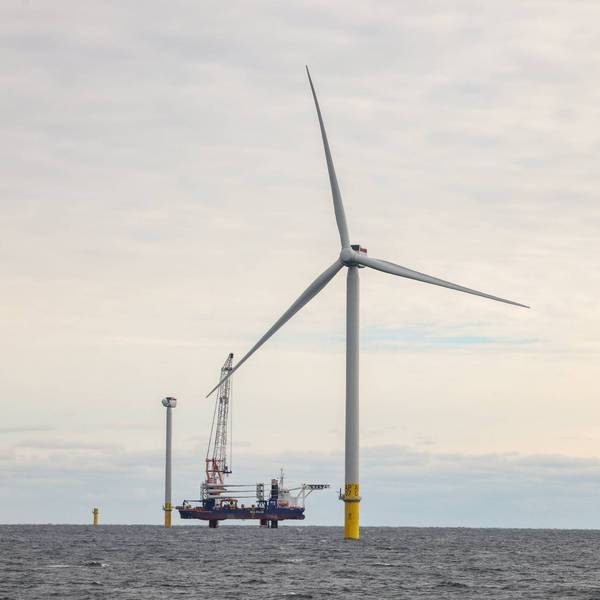
The NAO overall savings for households from the plant could be outstripped by the cost of supporting its construction until almost halfway through its 60-year operational life. Photograph: Chris Radburn/Reuters
National Audit Office says potential benefits are ‘considerable but uncertain’ while risks are ‘immediate and substantial’
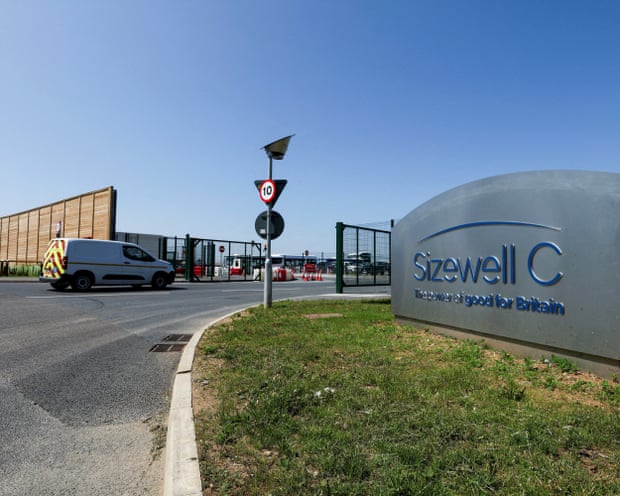
The cost of the government’s £38bn nuclear plant in Suffolk is subject to “significant uncertainty” and may outweigh the benefits for UK households until at least 2064, according to the government’s spending watchdog.
The National Audit Office (NAO) has warned that although the potential benefits of the Sizewell C nuclear plant are considerable, they remain uncertain. The risks, however, are “immediate, substantial and borne by the public”.
The government claims the nuclear reactor, expected to generate the equivalent of enough low-carbon electricity to power 6m homes when it begins operations in the late 2030s, could save £2bn a year from the electricity system compared with using other low-carbon technologies.
However, for households the overall savings could be outstripped by the cost of supporting its construction until almost halfway through its 60-year operational life. The project could take even longer to “break even” if there are cost overruns or delays, the NAO warned.
“Sizewell C is a project of exceptional scale, complexity and significance for taxpayers,” said Sir Geoffrey Clifton-Brown, the chair of the public accounts committee, which oversees the work of the NAO. “Experience from comparable nuclear projects in the UK and overseas highlights their vulnerability to delays and cost overruns.”
…
Stop Sizewell C said the risks surrounding the project “could easily turn Sizewell C into a financial disaster” while the funding model meant its investors were “the only ones who can’t lose”.
The NAO has urged the government to mitigate the risk by using “close monitoring, greater transparency to parliament, and by securing value for money from the significant public and private investment”.
A government spokesperson said investing in large-scale nuclear power was the “only way to get our country off the rollercoaster of volatile global gas markets”.
What about big renewable then e.g. generation from tides? We reliably have huge tides.
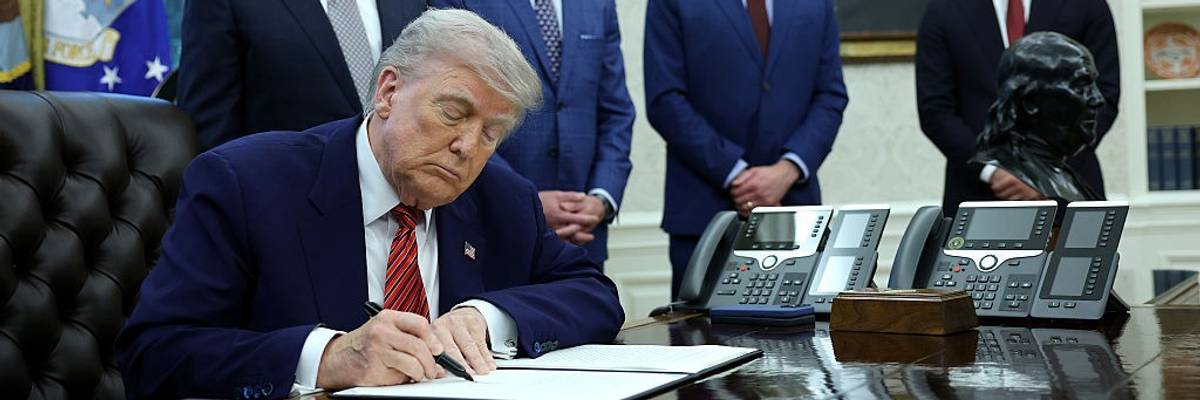
US President Donald Trump signs an executive order related to nuclear power in the Oval Office of the White House in Washington, DC on May 23, 2025. (Photo by Win McNamee/Getty Images)
“In its eagerness to short-circuit reactor safeguards, the Trump administration is once again doing what it does best—demonstrating a complete disregard for the law,” said the head of Beyond Nuclear.
A coalition of advocacy groups on Monday took aim at President Donald Trump’s nuclear power plans, including a recently proposed rule that would allow developers using federally approved reactor designs to bypass required safety reviews, which the organizations called “ill-advised and contrary to law.”
“In its eagerness to short-circuit reactor safeguards, the Trump administration is once again doing what it does best—demonstrating a complete disregard for the law,” said Linda Pentz Gunter, executive director of Beyond Nuclear, in a statement.
“But nuclear technology is too inherently dangerous to operate as an outlaw,” she stressed. “Ignoring those dangers will put millions of Americans at risk of another catastrophic nuclear accident.”
Beyond Nuclear and the Nuclear Information and Resource Service (NIRS) have submitted multiple formal comments to the administration, on behalf of overlapping coalitions, blasting its ongoing nuclear policymaking, which has been guided by a series of executive orders signed by the president last May.
The first coalition comments focus on the US Department of Energy allowing firms that build experimental nuclear reactors to seek exemptions from legally required environmental reviews. That filing was submitted in early March, a month after DOE announced the “categorical exclusion for authorization, siting, construction, operation, reauthorization, and decommissioning of advanced nuclear reactors for inclusion in its National Environmental Policy Act (NEPA) implementing procedures.”
Then, the Nuclear Regulatory Commission last month unveiled a proposed rule to expedite NRC reviews of commercial nuclear power plant applications involving reactor designs already approved by DOE or the Department of Defense (DOD)—which Trump has dubbed the Department of War. That prompted more comments from Beyond Nuclear, NIRS, and allied groups last week.
“Along with the DOE’s environmental ‘free pass’ policy, the whole ‘expedited licensing’ regime the administration is attempting to set up appears to be illegal,” NIRS executive director Tim Judson, who co-authored the recent comments to the NRC, said Monday.
“The White House is trying to create a ‘regulatory tunnel’ around NRC’s safety regulations,” he warned. “That would mean DOE’s biases and obviously false assumptions about the safety of nuclear power plants become the new normal, exposing the public to unacceptable dangers to our health and safety.”
“And while the law allows the DOD to build its own nuclear reactors,” Judson added, “it does not allow the NRC to skip safety reviews for civilian nuclear plants just because they use the same designs. The military routinely exposes its personnel to dangers that civilians are supposed to be protected from.”
The coalition’s latest filing details how the administration’s actions are “inconsistent” with the Administrative Procedure Act, Atomic Energy Act, Energy Reorganization Act, and NEPA, “as well as the constitutional requirement for due process in a democratic society.” It also emphasizes that nothing in Trump’s orders “can excuse” the alleged legal violations.
“Fifty years ago, the Atomic Energy Commission was abolished because they became too much of a promoter and lost the confidence of Congress and the public over safety,” Paul Gunter, director of the reactor oversight project at Beyond Nuclear, explained Monday.
“The NRC was established to provide a regulator that prioritizes safety and is obligated not to take shortcuts for a production agenda,” he continued. “Instead, half a century later, we are on the same dangerous collision course, casting aside the NRC in favor of the DOE, which doesn’t have the experience or the staff to get the industry in line with safety and security. This capitulation to the Trump agenda could lead to the NRC being abolished altogether, because nobody will have confidence in them.”
Climate science denier Donald Trump confirms that he knows nothing about democracy and that more liquid gold is being secured according to his policy of global privateering.Orcas discuss rotting brain, front Orca says disinhibition and swearing are typical and common symptomsDonald Trump sings and dances, says that it’s fun to kill everyone …
U.S. President Donald Trump signs an executive order related to nuclear power in the Oval Office of the White House in Washington, DC on May 23, 2025 (Photo by Win McNamee/Getty Images)
“I think the DOE’s attempts to cut corners on safety, security, and environmental protections are posing a grave risk to public health, safety, and our natural environment,” said one expert.
Less than a week after NPRrevealed that “the Trump administration has overhauled a set of nuclear safety directives and shared them with the companies it is charged with regulating, without making the new rules available to the public,” the US Department of Energy announced Monday that it is allowing firms building experimental nuclear reactors to seek exemptions from legally required environmental reviews.
Citing executive orders signed by President Donald Trump in May, a notice published in the Federal Register states that the DOE “is establishing a categorical exclusion for authorization, siting, construction, operation, reauthorization, and decommissioning of advanced nuclear reactors for inclusion in its National Environmental Policy Act (NEPA) implementing procedures.”
NEPA has long been a target of energy industries and Republican elected officials, including Trump. The exemption policy has been expected since Trump’s May orders—which also launched a DOE pilot program to rapidly build the experimental reactors—and the department said in a statement that even the exempted reactors will face some reviews.
“The US Department of Energy is establishing the potential option to obtain a streamlined approach for advanced nuclear reactors as part of the environmental review performed under NEPA,” the DOE said. “The analysis on each reactor being considered will be informed by previously completed environmental reviews for similar advanced nuclear technologies.”
“The fact is that any nuclear reactor, no matter how small, no matter how safe it looks on paper, is potentially subject to severe accidents.”
However, the DOE announcement alarmed various experts, including Daniel P. Aldrich, director of the Resilience Studies Program at Northeastern University, who wrote on social media: “Making America unsafe again: Trump created an exclusion for new experimental reactors from disclosing how their construction and operation might harm the environment, and from a written, public assessment of the possible consequences of a nuclear accident.”
Foreign policy reporter Laura Rozen described the policy as “terrifying,” while Paul Dorfman, chair of the Nuclear Consulting Group and a scholar at the University of Sussex’s Bennett Institute for Innovation and Policy Acceleration, called it “truly crazy.”
Until now, the test reactor designs currently under construction have primarily existed on paper, according to Edwin Lyman, director of nuclear power safety at the Union of Concerned Scientists, a nonprofit environmental advocacy group. He believes the lack of real-world experience with the reactors means that they should be subject to more rigorous safety and environmental reviews before they’re built.
“The fact is that any nuclear reactor, no matter how small, no matter how safe it looks on paper, is potentially subject to severe accidents,” Lyman said.
“I think the DOE’s attempts to cut corners on safety, security, and environmental protections are posing a grave risk to public health, safety, and our natural environment here in the United States,” he added.
Lyman was also among the experts who criticized changes that NPR exposed last week, after senior editor and correspondent Geoff Brumfiel obtained documents detailing updates to “departmental orders, which dictate requirements for almost every aspect of the reactors’ operations—including safety systems, environmental protections, site security, and accident investigations.”
While the DOE said that it shared early versions of the rules with companies, “the reduction of unnecessary regulations will increase innovation in the industry without jeopardizing safety,” and “the department anticipates publicly posting the directives later this year,” Brumfiel noted that the orders he saw weren’t labeled as drafts and had the word “approved” on their cover pages.
Secretly rewriting regulations is unfortunately becoming a pattern for this Admin. These changes in safety regulations are concerning, but what's even more troubling is that these decisions were made behind closed doors. Science Dems will be investigating. https://t.co/2MYazWquPk
In a lengthy statement about last week’s reporting, Lyman said on the Union of Concerned Scientists website that “this deeply troubling development confirms my worst fears about the dire state of nuclear power safety and security oversight under the Trump administration. Such a brazen rewriting of hundreds of crucial safeguards for the public underscores why preservation of the Nuclear Regulatory Commission (NRC) as an independent, transparent nuclear regulator is so critical.”
“The Energy Department has not only taken a sledgehammer to the basic principles that underlie effective nuclear regulation, but it has also done so in the shadows, keeping the public in the dark,” he continued. “These long-standing principles were developed over the course of many decades and consider lessons learned from painful events such as the Chernobyl and Fukushima disasters. This is a massive experiment in the deregulation of novel, untested nuclear facilities that could pose grave threats to public health and safety.”
“These drastic changes may extend beyond the Reactor Pilot Program, which was created by President Trump last year to circumvent the more rigorous licensing rules employed by the NRC,” Lyman warned. “While the DOE created a legally dubious framework to designate these reactors as ‘test’ reactors to bypass the NRC’s statutory authority, these dramatic alterations may further weaken standards used in the broader DOE authorization process and propagate across the entire fleet of commercial nuclear facilities, severely degrading nuclear safety throughout the United States.”
Orcas discuss Donald Trump and the killer apes’ concept of democracy. Front Orca warns that Trump is crashing his country’s economy and that everything he does he does for the fantastically wealthy.Donald Fuhrump says that Amerikkka doesn’t bother with crimes or charges anymore, not being 100% Amerikkkan and opposing his real estate intentions is enough.Elon Musk urges you to be a Fascist like him, says that you can ignore facts and reality then.
A household energy bill displayed on a mobile phone held next to a gas hob
MILLIONS face a shock New Year’s Day hike in energy bills — to pay for nuclear expansion projects even while wholesale prices fall.
Industry “regulator” Ofgem announced today a surprise increase in gas and electricity costs from January.
Campaigners urged Chancellor Rachel Reeves to act in her Budget to help struggling families as freezing winter temperatures bite.
The government’s cap on energy prices is to go up by 0.2 per cent in the three months to March.
End Fuel Poverty Coalition co-ordinator Simon Francis said: “Energy bills remain stubbornly high as households face a fifth winter of the energy costs crisis. Today’s announcement sees standing charges rise yet again, highlighting the structural problems in how energy is paid for.
“The addition of a new levy on bills which pays for nuclear power stations is unwelcome and could have been delayed until closer to when these plants actually start to generate electricity.”
The government this summer announced that taxpayers will effectively underwrite a private investment deal worth more than £38 billion to build Britain’s biggest nuclear project in a generation at the Sizewell C site on the Suffolk coast.
Billpayers face paying £1 a month for the costs from this winter until the project is complete under a funding mechanism that shields Sizewell’s investors from the impact of any delays — even if the total cost spirals to as much as £47bn.
dizzy: Nuclear power is too expensive, we can’t afford it. There’s also the problem that it produces waste that remains dangerously radioactive essentially for ever.






 A household energy bill displayed on a mobile phone held next to a gas hob