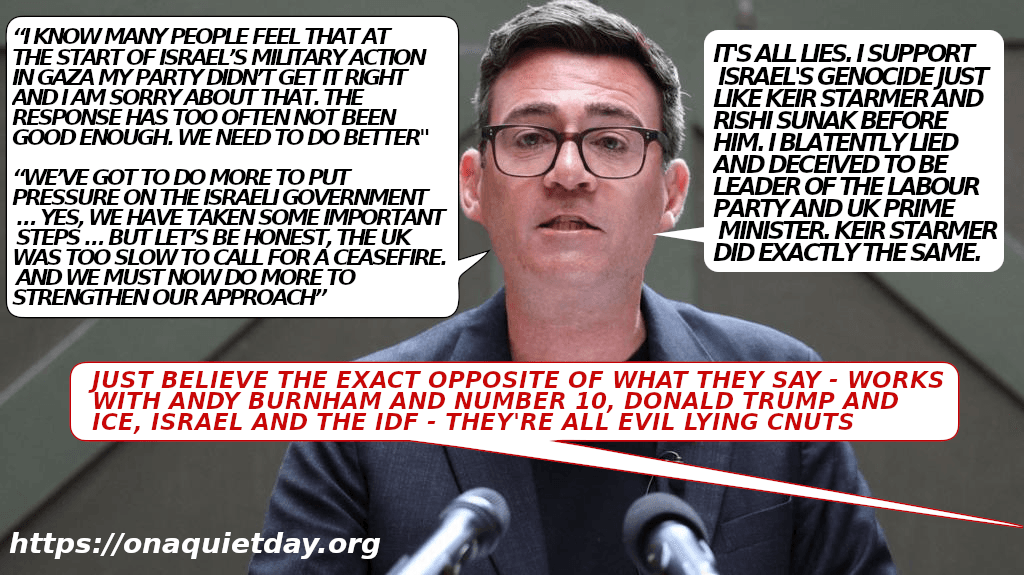
Hezbollah denies role in attack that killed French UN soldier in southern Lebanon

Spread the love

This work by Middle East Monitor is licensed under a Creative Commons Attribution-NonCommercial-ShareAlike 4.0 International License.

The United Nations Interim Forces in Lebanon (UNIFIL) in Nabatieh, Lebanon on November 15, 2025. [Ramiz Dallah – Anadolu Agency]

Lebanon’s Hezbollah group on Saturday denied any involvement in an incident that killed a French soldier and injured three others serving with the UN Interim Force in Lebanon (UNIFIL) in southern Lebanon, Anadolu reports.

In a statement, Hezbollah said it “denies any involvement in the incident that occurred with UNIFIL forces in the Ghandouriyeh​​​​​​​ area in the Bint Jbeil district.”

The group urged caution, stressing the need “to avoid rushing to conclusions and accusations” before the circumstances of the incident are fully clarified.

Hezbollah also emphasized the importance of continued coordination between local residents, UNIFIL and the Lebanese army, particularly under what it described as sensitive conditions.

READ: French soldier killed in attack on UN peacekeepers in southern Lebanon: Macron

It further expressed surprise at what it called premature accusations, saying some parties were quick to assign blame “while remaining silent during Israeli attacks on UNIFIL forces.”

French President Emmanuel Macron said one French soldier was killed and three others wounded in the attack targeting UNIFIL troops.

“Sergeant Major Florian Montorio of the 17th Parachute Engineer Regiment in Montauban was killed this morning in southern Lebanon during an attack against UNIFIL,” Macron said in a post on the US social media platform X.

“Everything suggests that Hezbollah is responsible for this attack,” he added.

UNIFIL said it has launched an investigation after one of its positions “came under small-arms fire from non-state actors” in the southern village of Ghanduriyah.

READ: Trump says Israel, Lebanon agree to 10-day ceasefire starting Thursday evening

This work by Middle East Monitor is licensed under a Creative Commons Attribution-NonCommercial-ShareAlike 4.0 International License.
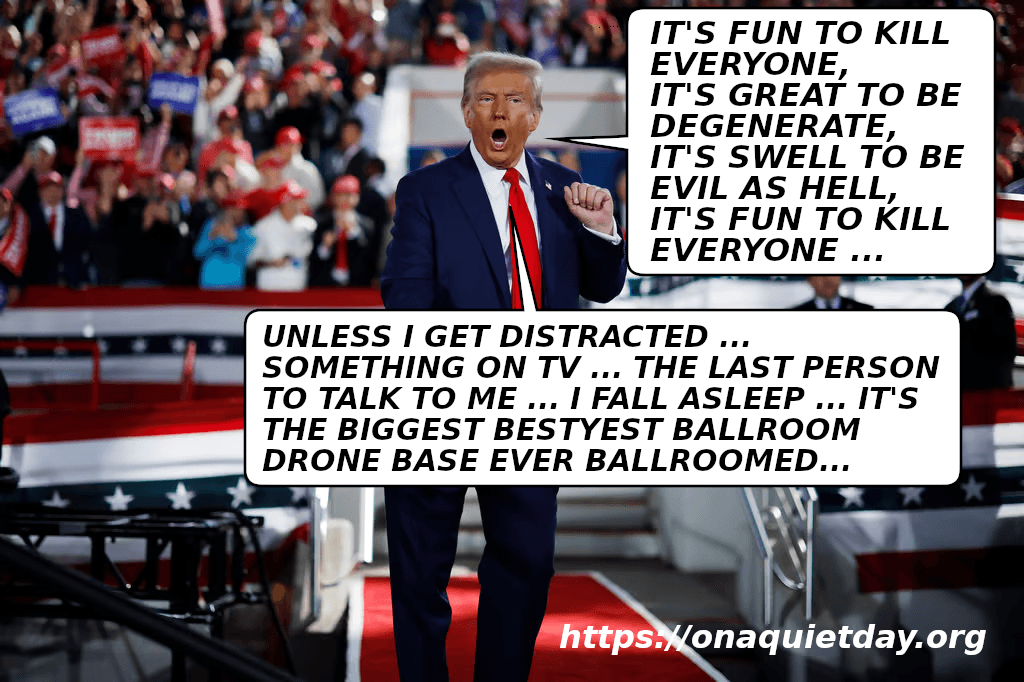
Donald Trump calls for help from NATO allies in securing the Straight of Hormuz despite saying on 7 March 2026 that they don't need people to join wars after they've already won. He's challenged with the claim that he lies as much as the IDF.
Donald Trump calls for help from NATO allies in securing the Straight of Hormuz despite saying on 7 March 2026 that they don’t need people to join wars after they’ve already won. He’s challenged with the claim that he lies as much as the IDF.
Orcas discuss rotting brain. Front Orca says "Wish someone would lock him up".
Orcas discuss rotting brain. Front Orca says “Wish someone would lock him up”.
Continue ReadingHezbollah denies role in attack that killed French UN soldier in southern Lebanon

US blockade of Strait of Hormuz ratchets up tensions with China ahead of Trump visit to Beijing

Spread the love

Tom Harper, University of East London

The US president is set to visit Beijing in mid-May. EPA/Yonhap

The Trump administration’s decision to carry out a naval blockade of the Strait of Hormuz has raised tensions in the Persian Gulf to new and more perilous levels. The move was announced by the US president, Donald Trump, after negotiations over a ceasefire with Iran broke down on April 11, partly due to Iran wanting to retain control of the vital Strait of Hormuz, through which one-fifth of the world’s oil transits.

The blockade is designed to neutralise Iran’s efforts to close the strait to shipping it deems unfriendly to Tehran and implement a toll system for other vessels transiting the strait.

The US blockade can be seen as the latest attempt by the Trump administration to project strength. But it also throws down a challenge to Beijing. China has been the main purchaser of Iranian oil in recent years and is one of the few nations whose shipping can enter the strait unchallenged.

It appeared very likely that this status would be tested on April 14 when the Rich Starry, a Chinese owned and operated tanker under US sanction for transporting Iranian oil, transited the strait unchallenged by the US warships in the region.

But it has since been reported that the vessel turned back in the Gulf of Oman and headed back to the Strait of Hormuz. The US now claims that six vessels that attempted to transit the strait were turned around.

The Rich Starry’s willingness to avert a potential Sino-American clash, suggests that Beijing is still unwilling to challenge Washington’s red lines, particularly so close to a state visit by the US president next month, a trip postponed from March 31 as a result of the conflict in Iran. China has called the US blockade a “dangerous and irresponsible act”.

But what appears to be a deliberate decision not to challenge the blockade may be interpreted as another instance of Chinese weakness, which will probably embolden Washington to take more active measures against China’s tanker fleets.

However, the US seizure of any Chinese shipping could certainly provoke a more dangerous outcome, with the prospect of increased tensions or even conflict with Beijing. Should the US seize a Chinese vessel, Beijing could see this as an act of war on Washington’s part, if it chooses to interpret such an incident as an American effort to strangle the Chinese economy.

While an armed clash between the US and China in the Persian Gulf is unlikely, it is possible that Beijing may deploy its fleet stationed in Djibouti to the region. China’s base in Djibouti is home to its 48th escort group which has previously performed anti-piracy operations in the region as well as escort duties for Chinese-owned ships in the region. This which raises the question over whether Washington would be willing to fire on Chinese warships to enforce its blockade.

China’s challenge to the US

China’s response to an American blockade may be more indirect in nature. One form this could take is the provision of Chinese weapons systems to Iran.

China’s Beidou satellite navigation system has already played a significant role in guiding Iran’s existing stockpile of missiles against American and Israeli targets. Further Chinese military assistance, especially in the form of missiles and drones, can help Beijing retaliate indirectly through Iran.

The New York Times recently reported intelligence sources alleging that China may have shipped shoulder-launched missiles to Iran – but this was strenuously denied by Beijing.

On the other hand, a potential Chinese retaliation may not even take place in the Middle East. Instead, it is possible that Beijing may target American assets and interests in the Asia Pacific.

This comes at a time where several American allies in the region have become increasingly vulnerable, with some missiles system being deployed to the Middle East from South Korea. Coupled with fuel shortages as a result of the closure of the Strait of Hormuz, the region is potentially even more exposed to China’s moves should Beijing choose to act.

Full Map of the Strait of Hormuz
The US is reportedly turning vessels around in the Golf Oman, where they emerge from the Strait of Hormuz. Wikimedia Commons

While Beijing prefers a more stable Middle East and global economy, having been one of the key beneficiaries of globalisation, there are several opportunities for China’s wider goals. One of the biggest is the status of the Renminbi. It has become prominent in the oil trade in the Persian Gulf, with Iran primarily dealing with transactions in the currency. This is in line with the emergence of the petroyuan in the 21 century to challenge the dominance of the petrodollar.

Alongside China’s position as a supplier of aviation fuel in the Asia Pacific, the conflict has entrenched and strengthened China’s role in the global economy.

In addition, the potential shortage of petroleum can open the door for wide-scale adoption of electric vehicles (EVs), with Chinese firms such as BYD being potential beneficiaries of a future EV boom. This echoes the popularity of Japanese cars during the Opec crisis of the 1970s, due to their comparatively high fuel efficiency in contrast to American and European models.

As a result, a prolonged Middle East oil crisis may see firms such as BYD become household names, furthering the influence of “Brand China”.

Alongside these, the crisis may further China’s push to present itself as a more stable partner in contrast to Washington’s more chaotic approach. This has gained traction due to the perceived unpredictability of the Trump administration over the past 15 months.

China already has a comparatively favourable global image when compared to the US. A wider conflict with Iran will probably take this further. As a result, the path of the Rich Starry may chart the course of the Sino-American competition and the world that this competition will shape.

Tom Harper, Lecturer in International Relations, University of East London

This article is republished from The Conversation under a Creative Commons license. Read the original article.

Climate science denier Donald Trump confirms that he knows nothing about democracy and that more liquid gold is being secured according to his policy of global privateering.
Orcas discuss how Trump was re-elected and him being an obviously insane, xenophobic Fascist.

Continue ReadingUS blockade of Strait of Hormuz ratchets up tensions with China ahead of Trump visit to Beijing

France Launches Government Linux Desktop Plan as Windows Exit Begins

Spread the love

https://linuxiac.com/france-launches-government-linux-desktop-plan-as-windows-exit-begins/

France is transitioning government desktops to Linux, with each ministry required to formalize its implementation plan by autumn 2026.

France has incorporated Linux desktops into its national digital-sovereignty strategy. DINUM, France’s Interministerial Digital Directorate, announced a transition from Windows to Linux workstations.

According to an official government press release, this change is part of a broader initiative to reduce reliance on non-European digital technologies (source, in French).

And as you can see, this is a big deal. It is not a leak, rumor, or unofficial plan. It is a formal declaration from one of Europe’s largest governments, explicitly designating Linux as the replacement for Windows workstations as part of a broader interministerial strategy.

https://linuxiac.com/france-launches-government-linux-desktop-plan-as-windows-exit-begins/

dizzy: Onaquietday.org is brought to you on Linux. dizzy uses Debian Linux on laptops that are over a decade old, your Android phone is Linux, the boxes that connect to broadband are overwhelmingly Linux, Onaquietday’s hosting and most machines on the internet are running Linux.

Continue ReadingFrance Launches Government Linux Desktop Plan as Windows Exit Begins

Iran has ‘high’ incentive to maintain ceasefire, US forces remain ‘postured’: US defense chief

Spread the love

This work by Middle East Monitor is licensed under a Creative Commons Attribution-NonCommercial-ShareAlike 4.0 International License.

United States Secretary of War Pete Hegseth speaks during the press conference held by The United States President Donald Trump in the James S. Brady Press Briefing Room at the White House on April 6, 2026, in Washington DC, United States. [Celal Güneş – Anadolu Agency ]

US Defense Secretary Pete Hegseth said Thursday that Iran’s “motivation” to maintain the ceasefire is “very high,” while warning that US forces remain “maximally postured” to resume war if Tehran rejects a deal, Anadolu reports.

“Our forces are maximally postured to restart combat operations, should this new Iranian regime choose poorly and not agree to a deal,” Hegseth said during a Pentagon briefing.

He urged Iran to “choose wisely,” warning its military leadership that Washington is closely “watching” their actions.

Hegseth said Iran’s command and control capabilities are “highly degraded,” limiting its ability to coordinate operations, but noted that its “motivation to want to stay in the ceasefire is very high.”

“They understand that a violation of that ceasefire means a commencement,” he continued.

“We are reloading with more power than ever before, and better intelligence, even more importantly, better intelligence than ever before,” said Hegseth. “As you expose yourself with your movement to our watchful eye, we are locked and loaded on your critical dual-use infrastructure, on your remaining power generation and on your energy industry.”

“We’d rather not have to do it, but we’re ready to go at the command of our president and at the push of a button,” he added.

READ: Iran and US deny reports of preliminary ceasefire extension agreement

Strait of Hormuz

Hegseth also said the US Navy controls traffic in and out of the Strait of Hormuz, enforcing a blockade with “less than 10%” of America’s naval power.

Separately, Joint Chiefs Chair Dan Caine said the blockade applies to all vessels heading to or from Iranian ports, regardless of nationality, but stressed it does not constitute a blockade of the Strait of Hormuz itself.

The remarks came as the US and Iran have been holding negotiations to extend a two-week ceasefire announced last week, which is set to expire on April 22.

Shipping through the Strait of Hormuz has been severely disrupted since the US-Israeli war against Iran began Feb. 28, and a US naval blockade announced Monday, after Washington said talks last weekend failed to yield a deal.

About 20% of global oil supply passes through the strait daily, and heightened insecurity has driven up oil prices as well as shipping and insurance costs.

READ: Iran supreme leader’s adviser threatens to sink US ships in Strait of Hormuz

This work by Middle East Monitor is licensed under a Creative Commons Attribution-NonCommercial-ShareAlike 4.0 International License.

Keir Starmer explains that UK is actively supporting Israel's genocidal expansion and repeats his previous quotation that he supports Zionism "without qualification". Keir Starmer said “I said it loud and clear – and meant it – that I support Zionism without qualification.” here: https://www.jewishnews.co.uk/keir-starmer-interview-i-will-work-to-eradicate-antisemitism-from-day-one/
Keir Starmer explains that UK is actively supporting Israel’s genocidal expansion and repeats his previous quotation that he supports Zionism “without qualification”. Keir Starmer said “I said it loud and clear – and meant it – that I support Zionism without qualification.” here: https://www.jewishnews.co.uk/keir-starmer-interview-i-will-work-to-eradicate-antisemitism-from-day-one/
Donald Trump calls for help from NATO allies in securing the Straight of Hormuz despite saying on 7 March 2026 that they don't need people to join wars after they've already won. He's challenged with the claim that he lies as much as the IDF.
Donald Trump calls for help from NATO allies in securing the Straight of Hormuz despite saying on 7 March 2026 that they don’t need people to join wars after they’ve already won. He’s challenged with the claim that he lies as much as the IDF.
Orcas discuss how Trump was re-elected and him being an obviously insane, xenophobic Fascist.

Continue ReadingIran has ‘high’ incentive to maintain ceasefire, US forces remain ‘postured’: US defense chief

Hope in the data: Can Palestine explain America’s moral shift?

Spread the love

This work by Middle East Monitor is licensed under a Creative Commons Attribution-NonCommercial-ShareAlike 4.0 International License.

Protesters march through downtown Chicago during an “Emergency Protest” on April 8, 2026 in Chicago, Illinois, United States. [Jacek Boczarski – Anadolu Agency]

by Dr Ramzy Baroud RamzyBaroud

In the Middle East, the perception of ordinary Americans has long followed a familiar script: detached, uninformed, inward-looking, and politically shallow— a society of ‘gas guzzlers’, with little grasp of global realities beyond their immediate geography.

This perception did not emerge from thin air. It was cultivated—reinforced, even—by American political and media institutions themselves. Politicians claimed to speak on behalf of ‘the American people’, while mainstream media shaped what those people knew, and, crucially, what they did not know.

For decades, Americans overwhelmingly aligned with Israel. This was not merely ideological; it was instructional.

The public was told—repeatedly—that Israel reflected ‘American values’: democracy, civility, modernity. Palestinians and Arabs, by contrast, were framed as perpetual antagonists, initiators of violence, and ‘obstacles to peace’.

Some Americans embraced this framing on religious or ideological grounds. But for the majority, the pro-Israel position became a default—an inherited conclusion rooted in limited access to alternative information. Israel was ‘good’, Arabs were ‘bad’. The narrative was simple, binary, and rarely challenged.

With mainstream media as the primary source of information, this perception hardened over time. Support for Palestine, and for broader Arab causes, remained confined to academic spaces and activist circles—often informed by anti-colonial and anti-imperialist frameworks, but numerically marginal and politically contained.

The mainstream remained locked in place. But that lock has been broken.

The shift did not happen overnight. Among Democrats, cracks began to appear as early as the mid-2010s. In 2016, Gallup data still showed Democrats sympathizing more with Israelis than Palestinians. By 2018, that gap had narrowed. Significantly. By 2021, parity had nearly been reached. And by 2024–2025, Democrats—especially younger voters—were expressing majority sympathy for Palestinians, with some polls showing support exceeding 50 percent among those under 35.

READ: Hamas rejects US claims on Gaza aid as “misleading”

This transformation was driven in part by grassroots activism, particularly within progressive circles, where Palestine became a central moral and political issue. But it was also driven by something far more consequential: the collapse of narrative control.

The Israeli genocide in Gaza accelerated this shift dramatically. Not only because of the scale of violence in the besieged Strip, but because, for the first time, the reality of war was not mediated solely through the filters of corporate media. Independent journalism, social media, and direct visual evidence disrupted decades of curated narratives.

The informational balance—long skewed—began to tip.

At the same time, American trust in mainstream media reached historic lows. According to Gallup, by 2025, only about 31 percent of Americans expressed trust in mass media to report news “fully, accurately, and fairly,” with trust among younger Americans even lower.

Up to this point, one could still argue that the shift remained politically contained: Democrats moving toward Palestine, Republicans remaining firmly aligned with Israel. But then came a rupture.

On February 27, 2026, Gallup released a poll showing that, for the first time in modern polling history, more Americans sympathized with Palestinians than with Israelis—41 percent to 36 percent. This was not a marginal fluctuation. It was a structural break.

That moment should have been seismic. Yet, it was not treated as such. Mainstream media largely buried the story. And within days, the political conversation shifted to a new crisis: the war with Iran.

In the weeks that followed, polling attention moved rapidly to American attitudes toward military escalation. Across multiple surveys, the outcome was consistent: Americans rejected war, and an even greater number rejected the idea of a prolonged military entanglement.

Yet mainstream commentary refused to connect the dots. Palestine was treated as one issue. Iran as another. Venezuela, interventionism, and global militarism as separate, disconnected phenomena. Each was analyzed in isolation, stripped of its broader political and moral context.

READ: Russia questions Trump’s Board of Peace 

Instead of recognizing a pattern, commentators fragmented the evidence. Opposition to war was framed as ‘war fatigue’, or economic anxiety, or partisan resistance to President Donald Trump. The focus was placed on gas prices, electoral calculations, and political polarization—not on the possibility that Americans were making moral judgments independent of elite narratives.

But the pattern is there. And it is unmistakable.

True, Americans are still told what matters—Israel, Iran, energy security, the Strait of Hormuz, etc. The agenda remains largely intact. But the conclusions no longer follow automatically. The chain between attention and consent has been broken.

This is not simply a political shift. It is a cognitive and moral one. Economic concerns and partisan affiliations still shape public opinion, as they always have. But they no longer fully determine it. 

Increasingly, Americans are evaluating global events through a moral lens—one that prioritizes civilian suffering, questions power asymmetries, and challenges the legitimacy of endless war.

This is not speculation. It is confirmed by data—most clearly in the case of Palestine, which has emerged as a moral compass for a wider transformation in American public consciousness. The shift in sympathy toward Palestinians is not an isolated anomaly, but a signal of a deeper rethinking of power, justice, and resistance. And it is likely irreversible.

Mainstream media will continue to set the agenda for the foreseeable future. But it has lost something far more important: its ability to manufacture consensus at scale.

That signals possibility. And perhaps, for the first time in generations, a reason for cautious—yet unmistakable—optimism: that ordinary Americans are no longer passive recipients of power, but active participants in shaping a more morally conscious political reality.

OPINION: Trapped by his own image: Trump’s Iran war and the politics of ego 

The views expressed in this article belong to the author and do not necessarily reflect the editorial policy of Middle East Monitor.

This work by Middle East Monitor is licensed under a Creative Commons Attribution-NonCommercial-ShareAlike 4.0 International License.

Keir Starmer explains that UK is actively supporting Israel's genocidal expansion and repeats his previous quotation that he supports Zionism "without qualification". Keir Starmer said “I said it loud and clear – and meant it – that I support Zionism without qualification.” here: https://www.jewishnews.co.uk/keir-starmer-interview-i-will-work-to-eradicate-antisemitism-from-day-one/
Keir Starmer explains that UK is actively supporting Israel’s genocidal expansion and repeats his previous quotation that he supports Zionism “without qualification”. Keir Starmer said “I said it loud and clear – and meant it – that I support Zionism without qualification.” here: https://www.jewishnews.co.uk/keir-starmer-interview-i-will-work-to-eradicate-antisemitism-from-day-one/
Donald Trump calls for help from NATO allies in securing the Straight of Hormuz despite saying on 7 March 2026 that they don't need people to join wars after they've already won. He's challenged with the claim that he lies as much as the IDF.
Donald Trump calls for help from NATO allies in securing the Straight of Hormuz despite saying on 7 March 2026 that they don’t need people to join wars after they’ve already won. He’s challenged with the claim that he lies as much as the IDF.
Orcas discuss how Trump was re-elected and him being an obviously insane, xenophobic Fascist.

Continue ReadingHope in the data: Can Palestine explain America’s moral shift?