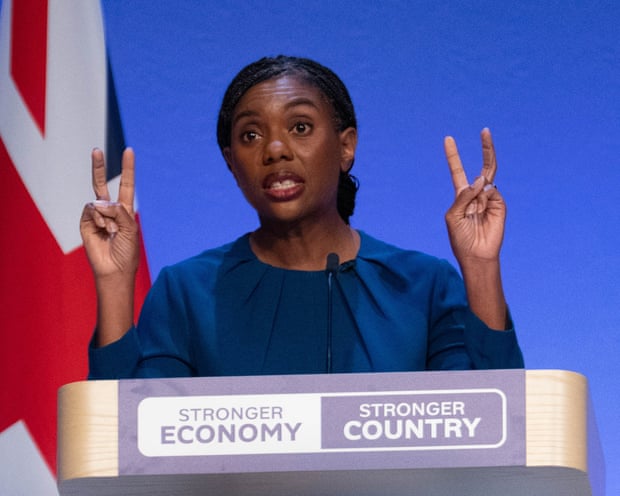
Kemi Badenoch addresses the Conservative conference in Birmingham, outlining policies from her 100-page document the Right Way. Photograph: Gary Roberts/SOPA Images/Shutterstock
[Guardian] Exclusive: Badenoch’s flagship conference policy document cites £957bn estimate, twice the total in climate advisers’ data
Kemi Badenoch’s flagship party conference policy document overestimated the cost of net zero by nearly £500bn, seemingly after someone accidentally double-counted figures on a spreadsheet.
UK Conservative Party leader Kemi ‘not a genocide’ Badenoch explains her reality that the Earth is flat, the Moon is made of cheese and that she was born from Unicorn horn dust
Is net zero pushing up our bills? Ruining British industry? A worthless target? We weighed these claims up against the facts
“This is what climate change looks like, here and now,” Andy Burnham said last month, reflecting on a summer of catastrophic fires, drought and heatwave after heatwave. People were left without water, crops failed and emergency services had their busiest summer ever.
And yet with disaster on our doorsteps – and the government now recommending we stockpile in preparation for future extreme weather – there remains a sustained opposition to the UK’s plan to tackle it all: net zero.
In fact, many have doubled down on “ditching net zero” this summer. And in some fringes this is accompanied by claims that our changing climate has nothing to do with human activity. Let’s be clear: this goes against the overwhelming majority of scientists and scientific study.
We’ve already reported on how this sort of straight-up climate denial is creeping back into UK politics. But what about the softer arguments against net zero, those that appeal to people’s anxieties about the cost of living, job losses and the supposed need for pragmatism?
Many of these are also based on fallacies and falsehoods – some of them warping the scientific concept of net zero into something different altogether. Let’s dig into some of the most common myths out there.
‘Net zero is a made-up term’
The UK became one of the first major economies to bring net zero into national law in 2019, under Theresa May’s Conservative government. In a nutshell it means reducing greenhouse gas emissions by 100%, from 1990 levels, by 2050. The “net” part is that some emissions may still exist but are balanced out by removing emissions through carbon sinks, such as tree planting, or technology.
It’s a legal commitment enshrined in an amendment to the 2008 Climate Change Act, and it is based on rigorous climate science.
And yet one of the more common narratives online is that net zero is some arbitrary idea, a figure plucked out of thin air to make us poorer, colder, and plunder our economy. Reform MPs regularly refer to “net stupid zero” and Conservative leader Kemi Badenoch has called it “political fiction”. Conservative MP Andrew Bowie, who acted as May’s parliamentary private secretary when the target was brought in said in an interview with Politico last year: “What’s quite clear is that the setting of arbitrary targets with no clear plan on how to deliver them does not work for the country.”
Professor Myles Allen from Oxford University is one of the leading scientists on net zero, and has worked on the need for a finite carbon budget for over 20 years. “When I hear politicians saying, ‘I’m not a climate denier, I’m a net zero denier’, that doesn’t make any sense,” he told us. “The implication of that, obviously, is, ‘I’m comfortable with the world warming forever.’”
Key fact: Net zero by 2050 is a legal commitment, rooted in physics and atmospheric science, based on a finite carbon budget to stay within 2 degrees of warming.
‘Net zero is sending our energy bills through the roof’
Energy bills are extremely high, and set to rise further next month when the price cap increases. We are all feeling this. And many – including Reform in its election manifesto and Restore Britain’s energy policy paper – blame net zero for pushing up prices and “crippling our economy”.
But the main culprit has nothing to do with net zero.
Wholesale gas prices – the sums paid by our suppliers when they buy gas in bulk – have skyrocketed since the Iran war. In the last year, they have more than doubled. And our bills, which include a unit cost based on that wholesale price, have risen accordingly. Depending on where you live and the tariff you’re on, you’ll be paying around 7p per kilowatt-hour this September.
But what about electricity – surely that’s unaffected by price shocks in the gas industry?
This is where a concept called “marginal pricing” comes in. It’s a principle of all commodity markets, and it’s where the last available technology sets the price for what all energy suppliers receive. So if all of the UK’s energy demand is met by renewables suppliers (the cheapest option), it’s renewables setting the price. But if renewables aren’t being offered on the markets, or if demand is high, then it’s more expensive options – like gas – that set the wholesale electricity price. (Analysis from the Energy and Climate Intelligence Unit earlier this year found that wind power had reduced electricity prices by over 30%.)
The last part of the bill is the standing charge. This covers network operating costs, the maintenance of infrastructure, debt recovery and VAT. It also includes costs for some government policies such as social or environmental schemes – but this is a small percentage. So yes, our standing charges are helping pay for net zero. But they are mainly going towards upgrading pipelines and cables or claiming back unpaid bills. And they tend to make up between a fifth and a third of the total bill.
Adam Berman, policy director at Energy UK, the trade body for energy companies, explains that network costs have hugely increased because “successive governments have made the decision to finance our electricity infrastructure entirely through bills”. This is instead of “some balance between bills and general taxation which is what almost everyone else across the OECD does”. And it is this difference which makes our electricity bills more expensive than gas when you compare your two bills side by side.
However, he said: “If we hadn’t invested, in five or 10 years we would be close to the water sector, in that you’d have to be doing massive levels of investment”.
Key fact: Sky-rocketing energy bills are due to extremely high gas prices, which make both gas and electricity more expensive.
‘Net zero is destroying British industry’
Jobs are being lost in the UK’s oil and gas sector in the North Sea, and industries like steel have taken a hammering in recent decades. Reform and the Conservatives have put this down to net zero.
While it is true that the oil and gas industry reports staggering job losses – unions say 1,000 direct and indirect jobs are being lost each month – the reasons are complex. For a start, production in the North Sea has largely been in decline since 1999. Many of the wells and basins are reaching maturity, meaning that the fossil fuels are harder and more costly to extract. And as production has waned, so have jobs. (In fact, new research has shown that even in the small windows when production increased, jobs still declined.)
Losing your job can be a traumatic experience. But there is cause for hope: a recent government analysis found that oil and gas workers’ skills will be in high demand in critical sectors including clean power, construction, defence, advanced manufacturing and life sciences. It found that around 70% of oil and gas workers are already employed in occupations identified as a priority for these sectors. (For more on North Sea oil myths see Carbon Brief’s excellent analysis.)
On the other side, jobs in the UK’s renewable energy sector are growing – and have topped 145,000 for the first time according to a recent report.
Key fact: Oil and gas production in the North Sea has been in decline long before Net Zero, and jobs are declining too. However, renewables jobs are growing, and oil and gas skills are highly sought after in other industries.
‘The UK achieving net zero would make no difference anyway’
The UK’s carbon emissions have been in overall decline for decades and now account for less than 1% of the global total.
There are many variations on this myth: from “How will it make any difference?” to “Why should we make an effort when we aren’t as bad as other countries?” Rishi Sunak said it when he was prime minister in 2023. And Reform MP Lee Anderson last year asked in Parliament: “If the UK went net zero tomorrow, by how much would it reduce the Earth’s temperature by?”
Less than 1% does sound very low. However, we are also the 22nd highest emitter in the world; there are over 160 other countries with lower emissions than us.
And if you add together all the countries accounting for less than 2% of emissions, it comes to just under half the global total. If all of them took the “Why bother?” approach, it would write off our chances of a net zero world.
It’s also important to note that while China, the US and India make up the top three (with 26%, 11% and 8% respectively) this doesn’t tell the full story when it comes to emissions per person. China is the 35th highest country for emissions per capita, way behind the US and all the petrostates. The UK is 83rd, putting us roughly in the middle.
Nor does the 1% figure take into account historic emissions. England was among the first countries to industrialise. Our emissions have risen since the mid-1800s, while other countries’ did not until closer to the end of the century. When you look at historic cumulative emissions from 1750, the UK is the fifth worst offender.
A final caveat: when looking at global emissions the aviation and shipping industries are not included. They are grouped together like a separate country and according to 2024 data count for just over 3% of global emissions. So flights taken by British people don’t count towards the UK’s reported emissions. And British people take a relatively high number of flights.
If anything, the 1% figure is obscuring the fact that the UK is in fact an outsized contributor to global emissions. A net zero UK would make a huge difference to the world.
(None of this is to mention the simple argument that we have a moral duty to clean up after ourselves, regardless of the size of the mess – as summarised by this caller to LBC).
Key fact: The UK is a lower emitting country at less than 1% of global emissions. However there are over 160 low emitting countries and if everyone gave up on net zero that’s around 42% of global emissions.
‘Climate change is happening. Let’s just accept it’
Climate change is certainly happening. Forecasters warn of a “super” El Niño into 2027, with droughts, flash floods and extreme heat likely to get worse.
And yet some instruct us to simply look on the bright side and adapt to the changing world. “When it’s a bit warm, let’s enjoy it,” said Reform’s Richard Tice last month. “And if it means that English wine and sparkling wine gets better and better, fantastic.” A fortnight earlier, Sunday Telegraph editor Allister Heath had written a column titled: “Britain can’t stop climate change. Let’s just embrace a Mediterranean lifestyle.”
Pallavi Sethi, a researcher into climate misinformation at the LSE’s Grantham Institute, described the suggestion that we should simply accept climate change and scrap net zero as “dangerous and misleading”.
Reform’s Richard Tice told a press conference that there is ‘no evidence’ net zero would stop climate changeOli Scarff / AFP via Getty
At Jordan Peterson’s Alliance for Responsible Citizenship conference in London, and most recently Reform’s party conference in Birmingham, participants have raised the need to adopt more air conditioning, like the US.
It is true that we need more money to be spent on adaptation. The Climate Change Committee estimates that we need investments of around £11bn per year of both public and private investment to adapt homes, hospitals, infrastructure and many industries for a changing climate. A recent report states that “the UK was built for a climate that no longer exists today”.
Sethi told us: “Accepting that climate change is happening while giving up on efforts to limit further warming means accepting greater risks, more damage, as well as higher costs in the years ahead.”
However this is not an “either/or” scenario, and increasing temperatures lay bare the increased inequality in the UK. Some people can afford to adapt where they live, installing air con or heat pumps, or planting trees in their garden. Others cannot: they do not have the money, or the agency over Council property or a landlord’s private home. Enjoying England’s vineyards is not for the many.
Key fact: The fact that the climate crisis is already here doesn’t mean we can’t still mitigate it.
Reporter: Grace Murray Deputy Editor: Chrissie Giles Editor: Franz Wild Production Editor: Alex Hess Fact checker: Lydia Morrish
The Bureau has a number of funders, a full list of which can be found here. None of our funders have any influence over editorial decisions or output.
Donald Trump urges you to ignore facts and reality and be a Climate Science denier like him. He says that he makes millions and millions for destroying the planet, Burn, Baby, Burn and Flood, Baby, Flood.Nigel Farage urges you to ignore facts and reality and be a climate science denier like him. He says that Reform UK has received millions and millions from the fossil fuel industry to promote climate denial and destroy the planet.UK Prime Minister Andy Burnham says that he’s going to permit the Jackdaw and Rosebank North Sea fossil fuel projects. He urges you to ignore facts and reality and be a climate science denier like him. The proof is in the pudding.
Belief Reform UK is sleazy has grown in the last two years, and is now seen as sleazier than the Labour government
Key takeaways
73% of Britons describe Nigel Farage as sleazy, including 56% thinking he is *very* sleazy
This includes 40% of Reform UK voters seeing Farage as sleazy
Belief Reform UK as a party is sleazy has increased by 18 points over the last two years, with the public now more likely to consider them to be dodgy than Labour
77% of the public feel British governments are generally sleazy
Keir Starmer is seen as sleazy by 51% of Britons, with 42% saying the same of Zack Polanski and 34-36% of Kemi Badenoch or Andy Burnham
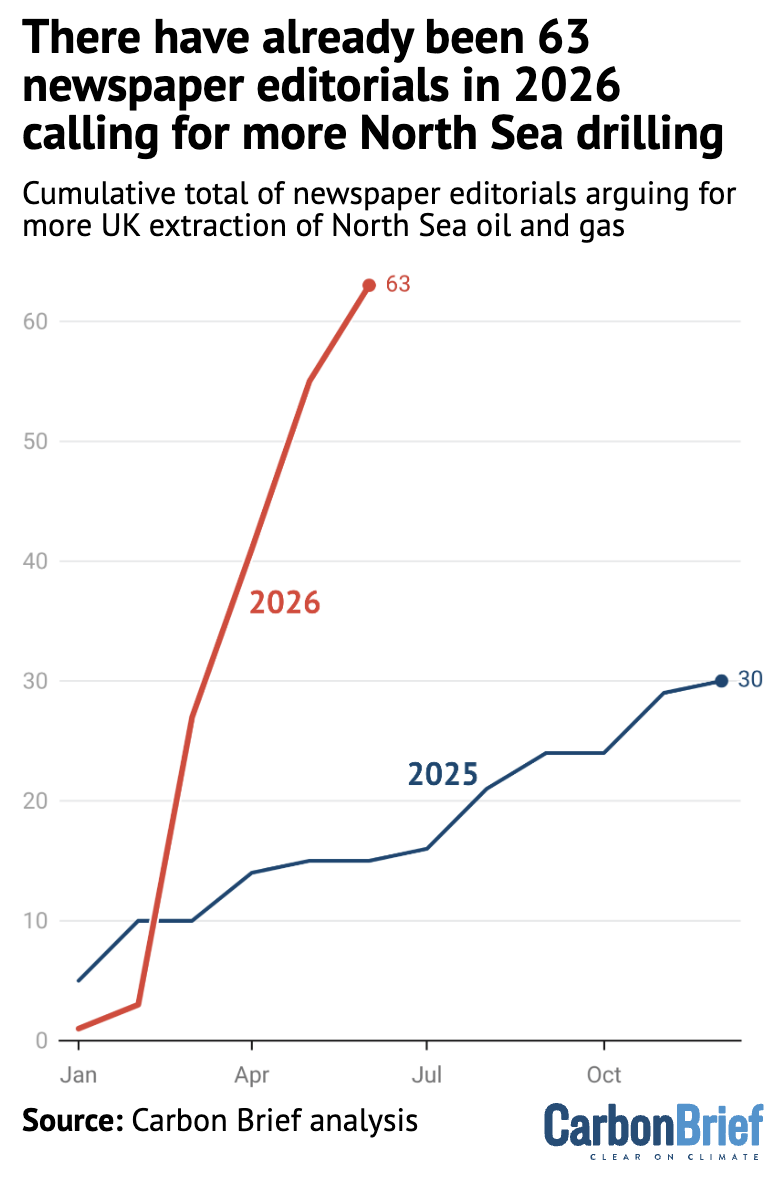
UK newspapers have already published 63 editorials this year calling for more oil and gas extraction in the North Sea, according to Carbon Brief analysis.
The national outlets, including the Sun, the Daily Telegraph and the Times, argue that the nation “needs” more North Sea drilling to provide “home-sourced oil and gas” amid a “full-blown energy crisis”.
These newspapers seek to blame energy secretary Ed Miliband’s “net-zero crusade” for curbing UK fossil-fuel production – despite supplies dwindling for decades before he took the role.
The push for North Sea drilling in newspaper editorials – considered a publication’s formal “voice” – is part of a wider rejection of net-zero policies by the UK’s right-leaning press.
Figures ranging from ex-Labour prime minister Tony Blair to hard-right Reform UK leader Nigel Farage have repeated similar arguments that more drilling will “boost” the UK economy.
Even US president Donald Trump has weighed in, attributing, in part, the resignation of Keir Starmer as UK prime minister to him “fail[ing] badly” on North Sea oil.
Despite these claims, experts say trying to extract the last barrels of domestic oil and gas would have no impact on people’s energy bills and very little effect on energy security.
More drilling
North Sea oil and gas production is a highly politically charged issue in the UK, especially under the current Labour government.
When Labour won the general election in 2024, the new government committed to a “phased and responsible” transition away from fossil-fuel extraction in the North Sea.
As part of this pledge, it ruled out issuing new exploration licences for oil and gas. Since then, the government has allowed some “tiebacks”, where new drilling is undertaken close to existing sites.
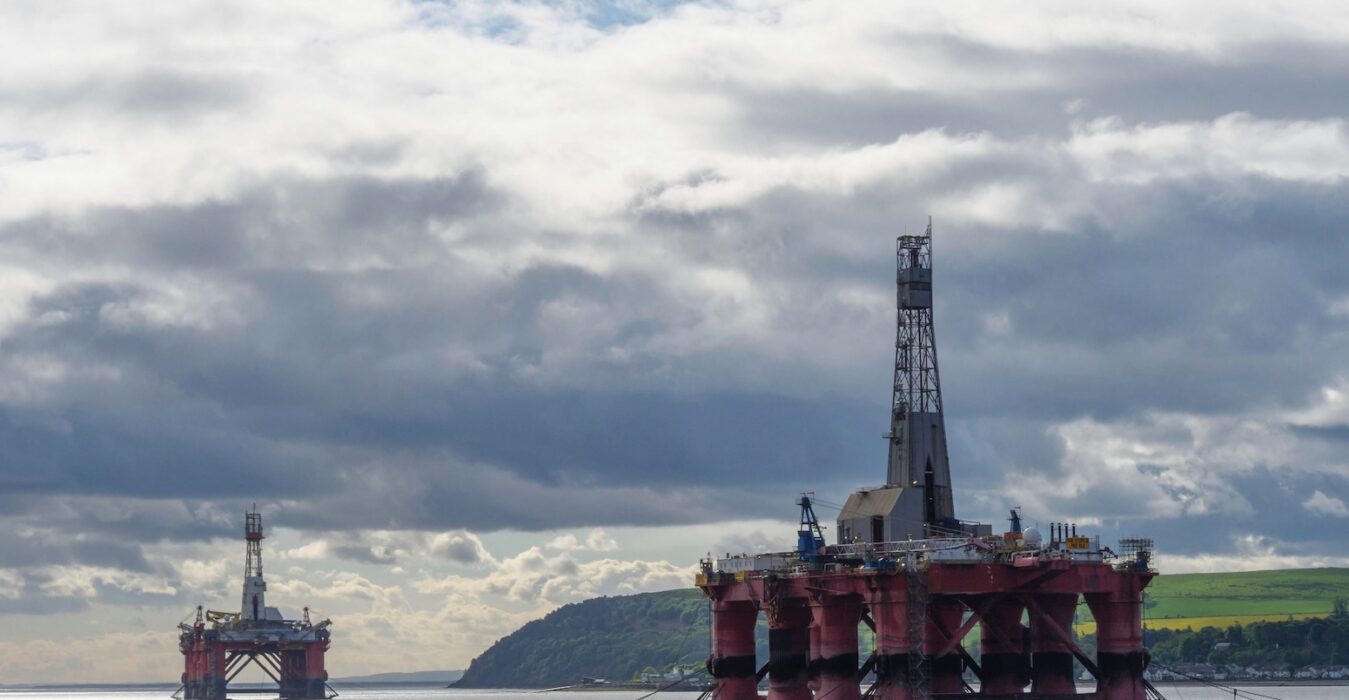
Roughly 90% of the fossil fuels that are likely to be extracted in the North Sea have already been burned. North Sea oil and gas extraction was, therefore, already on a clear downward trajectory long before Labour came to power, having dropped 75% between 2000 and 2024.
Nevertheless, many newspapers have relentlessly called for more oil and gas production, framing the Labour policy as “self-destructive” and compromised by “green ideology”.
This has ramped up significantly in 2026. Just six months into the year, newspapers have already published 63 pro-North Sea editorials, according to analysis by Carbon Brief. This is more than double the number published in 2025, as shown in the figure below.
Cumulative number of UK newspaper editorials supporting more fossil-fuel extraction in the North Sea in 2025 (blue) and January-June 2026 (red). Source: Carbon Brief analysis.
Right-leaning newspapers have led this campaign, with the Sun alone publishing 25 editorials, while the Daily Telegraph and the Times have published 10 each.
‘Full-blown energy crisis’
The biggest surge in pro-North Sea drilling editorials came in March, as the Iran war escalated and a global energy crisis began to take shape. Newspapers published 24 such editorials that month, despite the crisis largely arising from the world’s reliance on fossil fuels.
The Daily Express said the UK needed more “home-sourced oil and gas” and the Daily Mail highlighted the “perverse limit on domestic fossil-fuel production”.
As the weeks progressed, the Sun lamented price rises and potential fuel shortages, proposing North Sea drilling as a solution to the “full-blown energy crisis”.
Yet, UK oil and gas is sold by private companies on the open market at international rates. This means UK consumers have no particular right to the fuels or control over the prices they are bought for.
The Sun claimed – without evidence – that if the North Sea had been prioritised, the UK “might just have the cheapest electricity in the world”. It also said net-zero “forces us to spend billions” on imports.
In fact, the UK’s high energy prices are primarily the result of its reliance on gas to generate electricity.
The nation is reliant on oil and gas imports, in part, because the North Sea is a “mature basin” that saw its output collapse long before the UK even had a net-zero target.
Renewables and low-carbon technologies – often dismissed by the same newspapers – are expected to have a far greater impact on cutting imports than new drilling ever could.
Miliband’s ‘crusade’
Much of the criticism by these newspapers of Labour’s North Sea stance is tied to their highly personal criticism of Miliband. Of the 63 editorials arguing for more drilling, nearly three-quarters also attacked him as a “net-zero zealot” on a “green crusade”.
The Times said the energy and net-zero secretary was pursuing a “masochistic policy” by not expanding North Sea drilling and that he had “cloaked his zealotry in spurious rationality”.
This all fits with a broader trend that has seen right-leaning newspapers launch frequent, personal attacks on Miliband.
In the roughly two years since Labour won the election, giving the government a clear mandate for its net-zero policies, there have been around 230 editorials criticising Miliband.
(These have redoubled in recent days, amid rumours that he may be made chancellor under Andy Burnham, if the new Makerfield MP becomes the next prime minister, as is widely expected.)
Such attacks have increasingly spilled over into politics. Conservative shadow energy secretary Claire Coutinho has accused Miliband of “fanaticism” and Conservative leader Kemi Badenoch has even likened him to a “Nigerian military dictator”.
The newspapers have also interpreted any support for North Sea drilling as a rebuke of Miliband. Both the Sun and the Daily Telegraph welcomed an essay by Blair, in which he argued that “we must…use what is left of our North Sea oil and gas resources”.
The Sun heralded Blair as Labour’s “most successful election winner” and said he “nailed the chief mistakes” of the current government, including:
“Allowing Ed Miliband free rein on net-zero – especially the banning of North Sea drilling.”
Several of the newspapers have also thrown their support behind the Conservative party, as it frames itself as an anti-net-zero, pro-fossil fuel alternative to Labour.
The Daily Mail described Badenoch’s proposal to drill more in the North Sea as a “concrete plan”, while the Sun – in an echo of Trump’s slogan – has simply urged her to “drill, Kemi, drill”.
Nigel Farage urges you to ignore facts and reality and be a climate science denier like him and his Deputy Richard Tice. He says that Reform UK has received £Millions and £Millions from the fossil fuel industry to promote climate denial and destroy the planet.UK Conservative Party leader Kemi ‘not a genocide’ Badenoch explains her reality that the Earth is flat, the Moon is made of cheese and that she was born from Unicorn horn dustElon Musk urges you to be a Fascist like him, says that you can ignore facts and reality then.
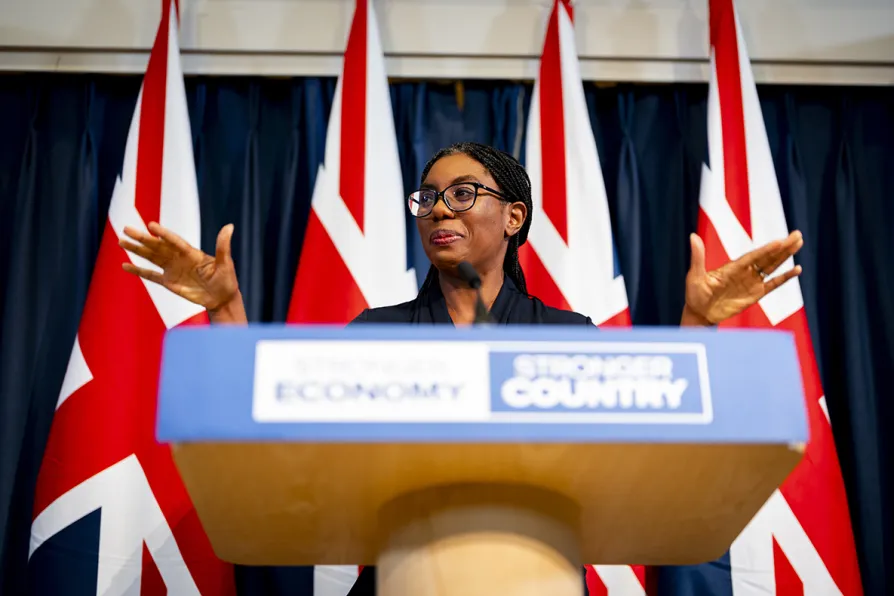
Conservative Party leader Kemi Badenoch delivers a speech on the economy at Victory Services Club, central London, June 29, 2026
TORY leader Kemi Badenoch was accused today of a Trumpian obsession in a pro-oil and gas speech.
Ms Badenoch said the economy was “in limbo” while businesses waited to see what Andy Burnham would do if he became the next prime minister.
“Britain is facing a summer of chaos,” she said in a speech in London.
“It is time to get Britain drilling again and if Andy Burnham had any sense, he would sack [Energy Secretary] Ed Miliband, not make him chancellor.”
The MP for North West Essex has previously called for more oil and gas drilling in the North Sea.
Uplift deputy director Robert Palmer said: “Kemi Badenoch’s Trumpian obsession with oil and gas is blinding the Conservative Party to the reality of how climate change is affecting Britain right now.”
He said last week’s heatwave had seen schools shut, trains stopped and people’s health suffering, with likely fatalities, arguing that continued fossil fuel burning is driving more frequent and intense heatwaves in Britain.
“The science is clear, there can be no new oil fields if we want to stay within safe climate targets,” Mr Palmer said.
“Yet Kemi Badenoch’s response is to want to abandon those targets and drill even more.
“Pushing ahead with this reckless approach will leave ordinary people paying the price, through more extreme heat, more damaging floods, and the rising costs that come with climate breakdown.
“Either Kemi Badenoch believes, like Trump, that climate change is a ‘con job’ or she is simply willing to ignore the consequences for us and our children.”
He warned more drilling would not cut energy bills but would increase oil company profits and worsen the climate crisis, calling it “profoundly irresponsible.”
Nigel Farage urges you to ignore facts and reality and be a climate science denier like him and his Deputy Richard Tice. He says that Reform UK has received £Millions and £Millions from the fossil fuel industry to promote climate denial and destroy the planet.UK Conservative Party leader Kemi ‘not a genocide’ Badenoch explains her reality that the Earth is flat, the Moon is made of cheese and that she was born from Unicorn horn dust






 Conservative Party leader Kemi Badenoch delivers a speech on the economy at Victory Services Club, central London, June 29, 2026