Category: Equinor

  • Exclusive: Norway’s Equinor Forced to Withdraw Key Carbon Capture Claim

    Spread the love

    Original article by Edward Donnelly republished from De Smog.
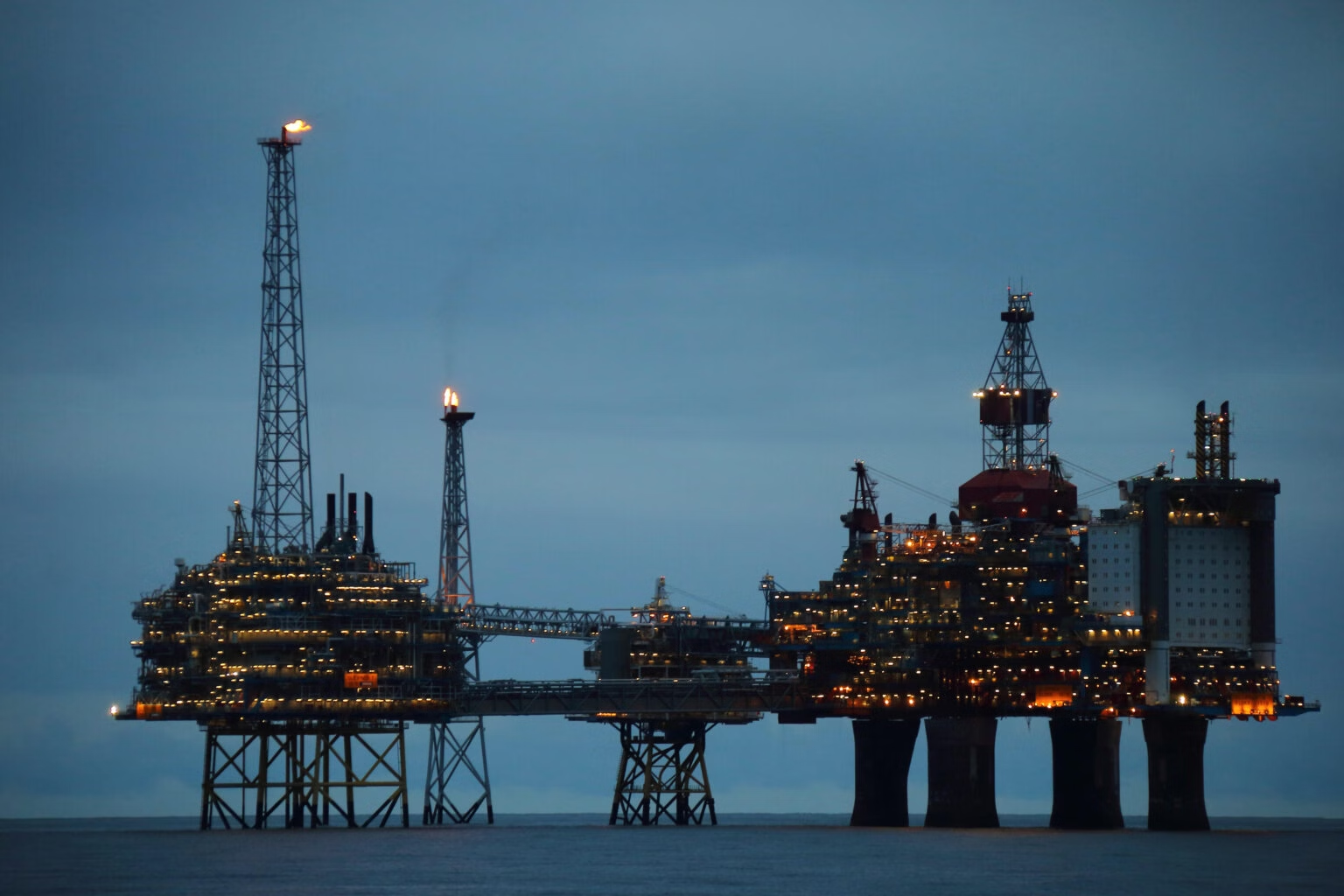
    Equinor’s Sleipner offshore gas field. Philip Stephen/ Nature Picture Library / Alamy Stock Photo.

    Oil company was storing a fraction of advertised amount of CO2 at offshore project, data shows.

    This story is the tenth part of a DeSmog series on carbon capture and was developed with the support of Journalismfund Europe.

    Equinor has retracted a claim that it stores about a million tonnes of carbon dioxide annually at its flagship carbon capture project after DeSmog obtained data showing the real figure was as little as a tenth of that amount. 

    The Norwegian oil company scrubbed the estimate from its website in November, when presented with official figures showing that it captured 106,000 tonnes of carbon dioxide (CO2) at its Sleipner carbon capture and storage (CCS) facility in 2023. 

    Equinor has not captured 1 million tonnes of CO2 per year at the site since 2001, according to the data, provided by the Norwegian Environment Agency.  

    The company put the reason for the discrepancy between the official figures and its public-facing claim to be capturing “about 1 million” tonnes of CO2 a year down to a failure to update a “static” webpage.

    “We have now removed this error from our website and updated this section with the correct information,” Equinor spokesman Gisle Ledel Johannessen said via email. 

    Equinor has been capturing CO2 from a gas processing plant at the Sleipner gas field in the North Sea since 1996. The field has particularly high concentrations of CO2, which Equinor filters out during the gas purification process and then injects below the seabed. 

    The project has been cited by carbon capture advocates, and Equinor itself, as evidence that the technology is reliable enough to help meet global climate goals, despite its long history of cost-overruns and failed targets.
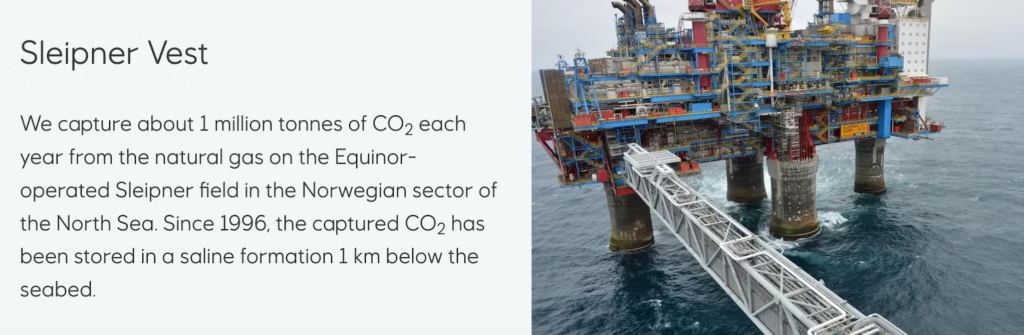
    A screenshot of Equinor’s website, taken on 13 October, 2024 Credit: Edward Donnelly.
    The claim has since been removed.

    Expansion Plans

    Equinor is positioning itself to play a key role in the European Union’s plans to massively increase carbon capture. The bloc has adopted an official target to deploy an annual 50 million tonnes of CO2 storage capacity by 2030 from roughly three million tonnes available across the continent today, though the pace of the existing roll-out is nowhere near on track to achieve that goal.

    Norway, not an EU member, is home to almost all of Europe’s operational carbon capture capacity, which is comprised of Sleipner and a similar project also operated by Equinor at its Snøhvit gas field in the Barents Sea. The two sites stored a total of 763,000 tonnes of CO2 in 2023, according to the Norwegian Environment Agency figures, less than half of their combined capacity of 1.7 million tonnes of CO2.

    Equinor’s statement that it was capturing “about 1 million tonnes of CO2 each year” at Sleipner alone appears to have first been published on the company’s “carbon capture and storage (CCS)” webpage in 2022, according to archived internet data. That year, the Sleipner field captured 260,000 tonnes of CO2, according to the Norwegian Environment Agency, which regulates the oil and gas industry.

    DeSmog asked Equinor for its data on carbon capture at Sleipner in October. When the company declined to provide it, DeSmog obtained the figures from the Norwegian Environment Agency, which collates companies’ self-reported data. 

    Equinor spokesman Johannessen said that Sleipner had been capturing less CO2 in recent years because of declining gas production at the site.
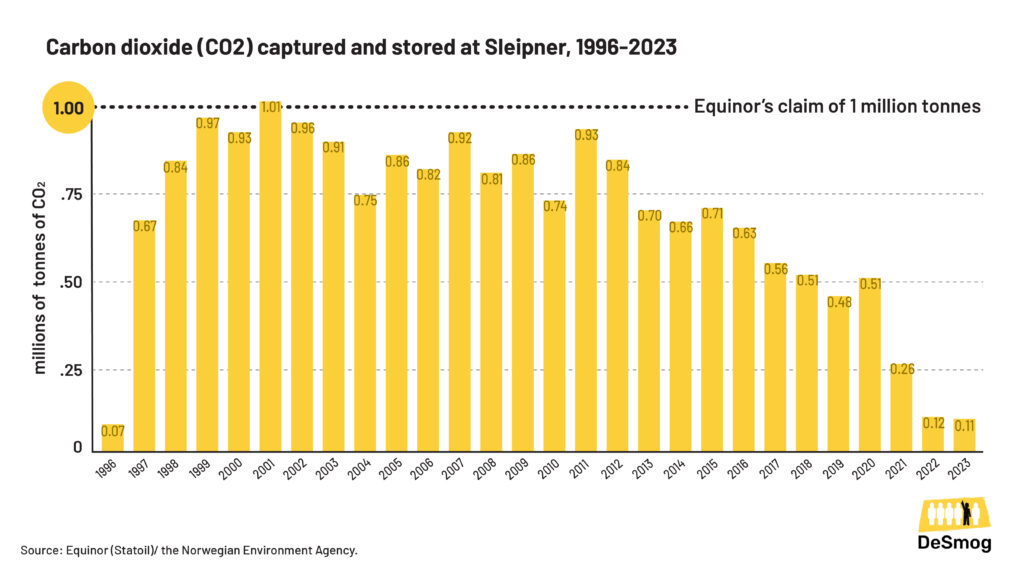
    Credit: Sabrina Bedford.

    Broken Equipment

    Equinor had previously acknowledged that faulty monitoring equipment at Sleipner caused it to over-estimate the amount of CO2 it was capturing at the field for several years, as DeSmog reported in October. During a more than four-year period from January 2017 through March 2021, the company said that it had captured a cumulative total of about 2.7 million tonnes of CO2 at the site. Equinor later amended the figure to 2.1 million tonnes, about a 28-percent decrease. 

    The gulf between Equinor’s public claims and Sleipner’s actual performance underscores concerns among climate advocates that the oil industry is hyping the potential of carbon capture as a climate solution to deflect pressure to cut production of fossil fuels. 

    At least 480 carbon capture lobbyists attended the latest annual UN climate conference in Azerbaijan in November, according to the nonprofit Center for International Environmental Law. In October, DeSmog revealed that Equinor had been holding more meetings with ministers to lobby the UK government over CCS than any other company, part of its plans to play a leading role in the country’s carbon capture plans. 

    Equinor suggested that carbon capture could be the “best-kept secret” for climate action in a 2019 video, concluding that renewable energy sources such as wind and solar were “not enough.” In sponsored content currently viewable on the Financial Times website, Equinor says that CCS “has emerged as one of the key technologies in mitigating global warming” and addresses “misconceptions,” such as concerns over high costs and links to continued oil and gas production. 

    Ketan Joshi, an Oslo-based climate consultant, said that the way Equinor presents its CCS operations as a climate solution is “misleading” because its existing projects only capture a small proportion of emissions, while total fossil fuel emissions in Norway remain high. 

    “Equinor uses ‘ambitious’ CCS targets as a way of simulating action without actually performing it,” Joshi said. “They report the amount of CO2 they capture each year and it does not increase.” 
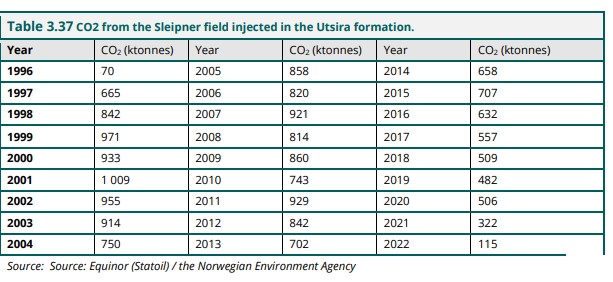
    *A screenshot of a table showing the amount of CO2 captured at Sleipner provided to DeSmog by the Norwegian Environment Agency. The agency noted in an email that the 2021 volume should be 260 kilotonnes and not 322 kilotonnes, and that it will correct the figure in the next edition. The 106 kilotonne figure (106,000 tonnes) for 2023 was provided separately by email.

    CO2 Tax

    The Sleipner CCS project was devised by Equinor (then Statoil) in the mid-1990s as a way to reduce its exposure to Norway’s newly implemented CO2 emissions tax. The company established its CCS project at Snøhvit in 2008 also to reduce its tax burden from CO2 released during gas processing.

    “Sleipner and Snøhvit are CCS projects with high quality that rightly enjoy worldwide recognition from academia, industry, governmental bodies and science institutions as proven and safe CO2 storages over decades where Equinor and our partners so far have stored over 25 million tonnes of CO2 since 1996,” said Equinor spokesman Johannessen.

    He added that over the past five years, the company has “injected 99.7 percent of the CO2 that has been captured on Sleipner into the ground.”

    The amount of CO2 captured by Equinor’s two CCS projects is dwarfed by the emissions released by burning the oil and gas sold by the company. In 2023, Equinor recorded a total of 262 million tonnes of CO2 emissions — including the emissions produced by its operations, and the emissions from burning the oil and gas those operations extracted, according to company sustainability data. 

    In contrast, the company captured and stored a total of about 0.8 million tonnes of CO2 at Sleipner and Snøhvit, more than 300 times less than the amount emitted into the atmosphere by burning its products. 

    And even with a functioning carbon capture facility onsite, net CO2 emissions at Sleipner far exceeded the amount of the gas that was stored. 

    The Sleipner offshore platform provides power to several nearby gas fields by burning gas in turbines — a process that released 658,000 tonnes of CO2 into the atmosphere in 2023, according to the company’s sustainability reporting. That’s more than six times the 106,000 tonnes of CO2 that Equinor captured and stored from gas processing at Sleipner that year. 

    To reduce the offshore platform’s CO2 footprint, Equinor announced last April that it would introduce an electrification plan for Sleipner, rather than opting to expand CCS operations at the field. The company is also planning an electrification project to reduce emissions from the gas export facility at Snøhvit.

    Government Subsidies

    In September, Equinor and partners Shell and TotalEnergies inaugurated the Northern Lights CO2 transport and storage facility near the Norwegian port of Bergen, which the companies say will store 1.5 million tonnes of CO2 a year from industrial sources on the Norwegian mainland at full capacity when it starts operations.

    The project is mostly financed by $1.2 billion in Norwegian government subsidies, with an additional $141 million pledged by the European Union.  

    By 2035, Equinor says it aims to store 30 to 50 million tonnes of CO2 a year from new projects announced in Norway, Denmark, the UK, and the United States — an exponential increase from its current capacity.

    While Equinor has signalled that it will need substantial subsidies to go forward with its CCS plans, the company continues to direct most of its investments into extracting more fossil fuels. In August, chief executive Anders Opedal announced up to $6.7 billion a year to fund new Norwegian oil and gas drilling until 2035.

    In contrast, Equinor said in November that it will cut its renewable energy division’s workforce by 20 percent — about 250 jobs — citing economic headwinds in the sector.

    “At the most basic level, Equinor presents CCS in a similar way to many other major oil and gas companies: a ‘necessary’ part of the climate solutions mix,” said Joshi, the climate consultant. “This is presented alongside the company’s aggressive expansionist agenda: opening many new oil and gas fields.”

    Original article by Edward Donnelly republished from De Smog.

    Orcas comment on killer apes destroying the planet by continuing to burn fossil fuels.
    Orcas comment on killer apes destroying the planet by continuing to burn fossil fuels.
  • BP to slash green investment and ramp up gas and oil

    Spread the love
    Greenpeace activists display a billboard during a protest outside Shell headquarters on July 27, 2023 in London.
    Greenpeace activists display a billboard during a protest outside Shell headquarters on July 27, 2023 in London. (Photo: Handout/Chris J. Ratcliffe for Greenpeace via Getty Images)

    https://www.bbc.com/news/articles/c3374ekd11po

    BP is expected to announce it will slash its renewable energy investments and instead focus on increasing oil and gas production.

    The energy giant will outline its strategy later following pressure from some investors unhappy its profits and share price have been much lower than its rivals.

    Shell and Norwegian company Equinor have already scaled back their plans to invest in green energy. Meanwhile US President Donald Trump’s “drill baby drill” comments have encouraged investment in fossil fuels and a move away from low carbon projects.

    Some shareholders and environmental groups have voiced concerns over any potential ramping up on production of fossil fuels.

    Five years ago, BP set some of the most ambitious targets among large oil companies to cut production of oil and gas by 40% by 2030, while significantly ramping up investment in renewables.

    In 2023, the company lowered this oil and gas reduction target to 25%.

    It is now expected to abandon it altogether while confirming it is cutting investments in renewable energy by more than half in what chief executive Murray Auchincloss called a “fundamental reset”.

    …

    https://www.bbc.com/news/articles/c3374ekd11po

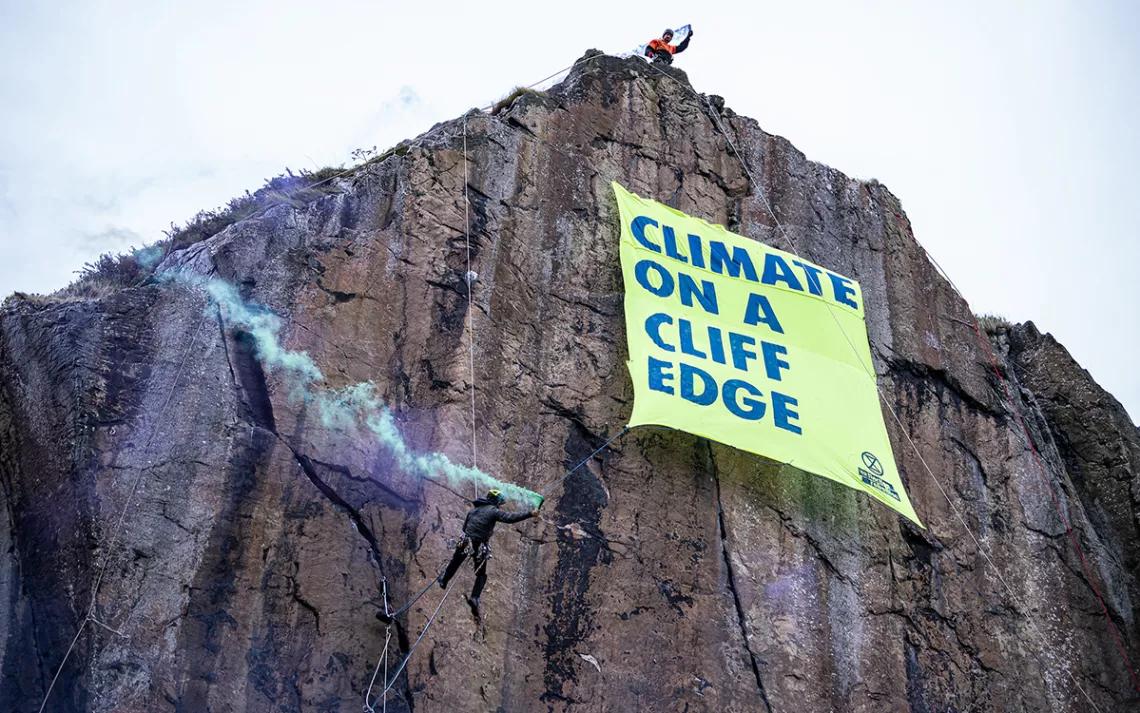
    Experienced climbers scale a rock face near the historic Dumbarton castle in Glasgow, releasing a banner that reads “Climate on a Cliff Edge.” One activist, dressed as a globe, symbolically looms near the edge, while another plays the bagpipes on the shores below. | Photo courtesy of Extinction Rebellion and Mark Richards
    Experienced climbers scale a rock face near the historic Dumbarton castle in Glasgow, releasing a banner that reads “Climate on a Cliff Edge.” One activist, dressed as a globe, symbolically looms near the edge, while another plays the bagpipes on the shores below. | Photo courtesy of Extinction Rebellion and Mark Richards
    Neo-Fascist Climate Science Denier Donald Trump says Burn, Baby, Burn.
    Neo-Fascist Climate Science Denier Donald Trump says Burn, Baby, Burn.

    dizzy: Fossil fuels are no longer reliable high-return investments.

  • Fossil fuel industry accused of seeking special treatment over oilfield emissions

    Spread the love

    https://www.theguardian.com/environment/2025/feb/18/fossil-fuel-industry-accused-of-seeking-special-treatment-over-oilfield-emissions

    Protests against the Rosebank oilfield in Edinburgh in 2024. Labour pledged in its manifesto to halt new North Sea licensing, but Rosebank was awaiting final approval when the party won the general election. Photograph: Murdo MacLeod/The Guardian

    Lobbyists argued it was unfair for their industry to be treated the same as others as end product – oil and gas – inevitably produced emissions

    Experts have accused the fossil fuel industry of seeking special treatment after lobbyists argued greenhouse gas emissions from oilfields should be treated differently to those from other industries.

    The government is embroiled in a row over whether to allow a massive new oilfield, Rosebank, to go ahead, with some cabinet members arguing it could boost growth and others concerned it could make the goal of reaching net zero emissions by 2050 impossible to reach. Labour made a manifesto commitment to halt new North Sea licensing, but Rosebank and some other projects had already been licensed and were awaiting final approval when the party won the general election.

    Documents seen by the Guardian show the industry group Offshore Energies UK (OEUK) asking for Rosebank and other oilfields’ “scope three emissions” – those caused by the burning of extracted oil and gas – to be treated differently because that was the point of their business.

    A court case recently found the licence granted to Rosebank by the previous government was unlawful as it failed to take these emissions into account.

    …

    I am only able to quote a small section of this copyrighted article. See the original article at https://www.theguardian.com/environment/2025/feb/18/fossil-fuel-industry-accused-of-seeking-special-treatment-over-oilfield-emissions

    Orcas are pleased that Rosebank and Jackdaw oil fields are blocked.
    Orcas are pleased that Rosebank and Jackdaw oil fields are blocked.

  • New oil and gas field consent was unlawful – judge

    Spread the love

    https://www.bbc.com/news/articles/c3e1pw7npklo

    A court has ruled that consent for two new Scottish oil and gas fields was granted unlawfully and their owners must seek fresh approval from the UK government before drilling can begin.

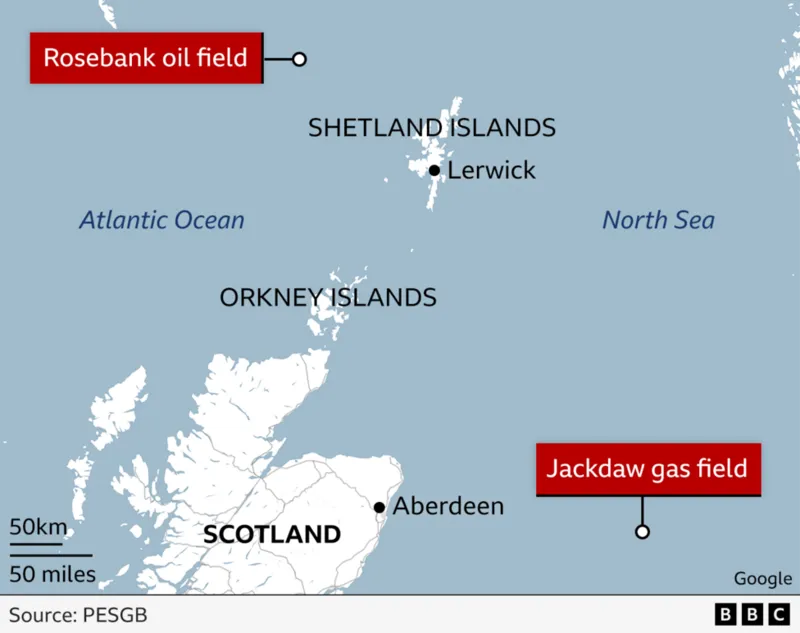
    The written judgement on the Rosebank and Jackdaw fields came after a case brought by environmental campaigners, Uplift and Greenpeace, at the Court of Session in Edinburgh.

    In his judgement, Lord Ericht said a more detailed assessment of the fields’ environmental impact was required, taking into account the effect on the climate of burning any fossil fuels extracted.

    He said work on both fields could continue while the new information was gathered but no oil and gas could be extracted unless fresh approval was granted.

    Shell’s Jackdaw gas field in the North Sea was originally approved by the previous UK Conservative government, and the industry regulator, in summer 2022.

    Permission for the Rosebank oil development, 80 miles west of Shetland in the North Atlantic, was granted in autumn 2023.

    In a 57-page judgement, Lord Ericht wrote that there was a public interest in having the decision “remade on a lawful basis” because of the effects of climate change – which he said outweighed the interests of the developers.

    …

    https://www.bbc.com/news/articles/c3e1pw7npklo

    Orcas are pleased that Rosebank and Jackdaw oil fields are blocked.
    Orcas are pleased that Rosebank and Jackdaw oil fields are blocked.
  • Taxing Big Oil would grow UN climate loss & damage fund twentyfold, analysis finds

    Spread the love

    A small tax on just seven of the world’s biggest oil and gas companies could grow the UN Fund for Responding to Loss and Damage by more than 2000% and help address the costs of extreme weather events, according to new analysis published today by Greenpeace International and Stamp Out Poverty. The organisations are calling for a long term global tax on fossil fuel extraction, with year-on-year increases, combined with taxes on excess profits and other levies.

    A ‘Climate Damages Tax’ would put a cost on every tonne of carbon emitted by the coal, oil and gas extracted – starting at $5 per tonne and rising each year thereafter. If it was imposed on ExxonMobil, Shell, Chevron, TotalEnergies, BP, Equinor and ENI it could raise $15 billion in the first year alone to help the world’s most climate-vulnerable countries pay for the escalating cost of damage caused by climate change. Currently, just $702 million has been pledged to the loss and damage fund, while the combined profits of those fossil fuel companies exceeds $148 billion.

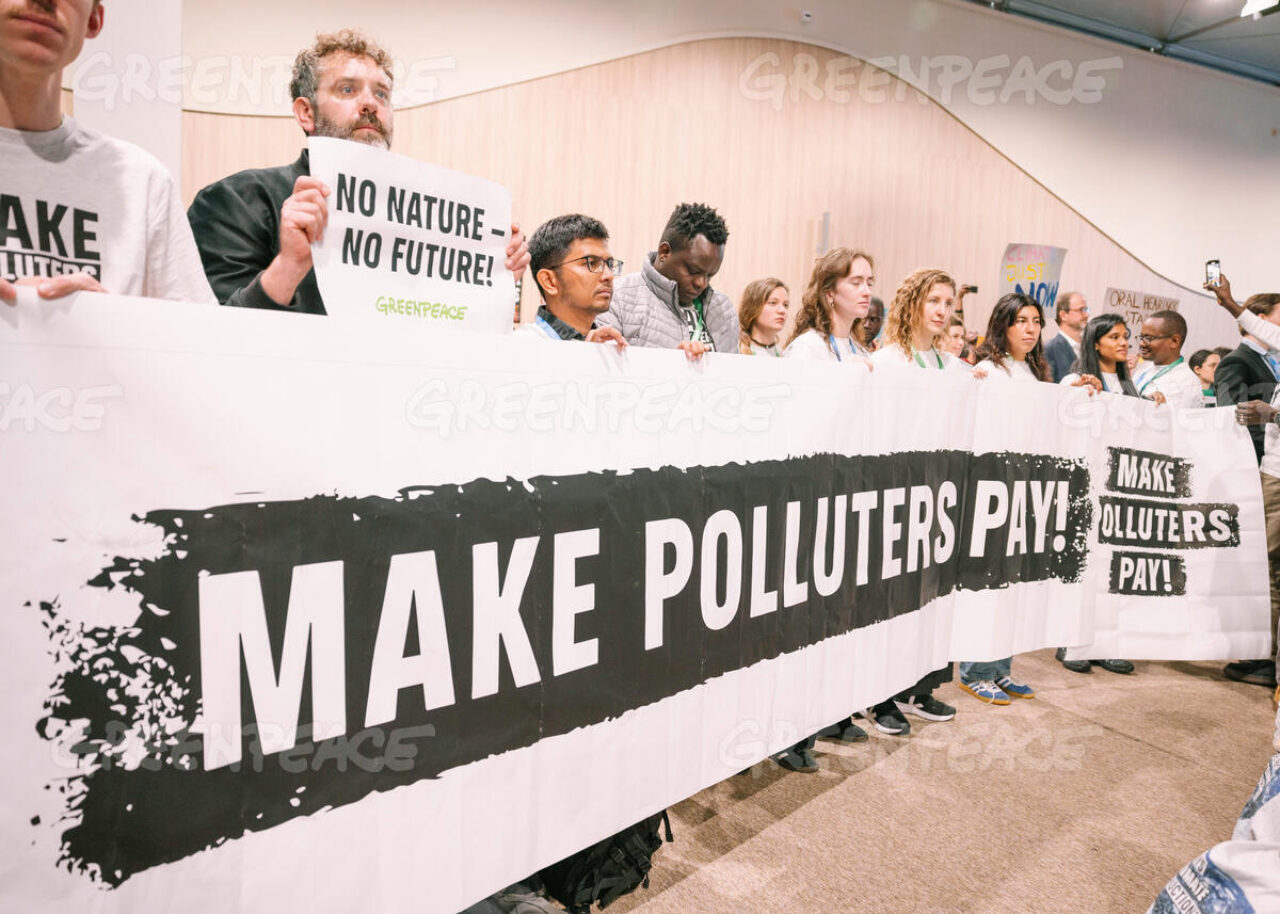
    Greenpeace activists display a billboard during a protest outside Shell headquarters on July 27, 2023 in London.
    Greenpeace activists display a billboard during a protest outside Shell headquarters on July 27, 2023 in London. (Photo: Handout/Chris J. Ratcliffe for Greenpeace via Getty Images)

    Earlier this month, Barbados Prime Minister Mia Mottley, French President Emmanuel Macron and Kenyan President William Ruto stated their support for a Climate Damages Tax.

    The briefing also highlights the financial costs of some of this year’s worst weather events that have been attributed to climate change, totalling over $64bn. These include Hurricane Beryl, Hurricane Helene, the heatwave in India in May, Typhoon Carina/Gaemi, the floods in Brazil in May, and the floods in Kenya and Tanzania in April. The costs of damage from the disasters surveyed range from US$2.9bn (Typhoon Carina) to US$ 25bn (heatwaves in India), and present just a fraction of the total cost of loss and damage globally over the last year. 

    A Climate Damages Tax imposed only on wealthy OECD countries could play an essential role in helping the poorest and most vulnerable to rebuild after climate-related disasters. Increasing annually by US$5 per tonne of CO2-equivalent based on the volumes of oil and gas extracted, the tax could raise an estimated US$900 billion by 2030 to support governments and communities around the world as they face growing climate impacts.

    “While oil and gas giants keep raking in grotesque levels of profit from exploiting resources, the damages resulting from the industry’s operations are disproportionately borne by people who did not cause the crisis,” said David Hillman, Director of Stamp Out Poverty. “A climate damages tax – along with other levies on fossil fuels and high-emitting sectors – will make polluters pay for the cost of climate impacts, as well as supporting workers and affected communities in the transition to clean energy, jobs, and transport.”

    “Who should pay? This is fundamentally an issue of climate justice and it is time to shift the financial burden for the climate crisis from its victims to the polluters behind it,” said Abdoulaye Diallo, Co-Head of Greenpeace International’s Stop Drilling Start Paying campaign. “Our analysis lays bare the scale of the challenge posed by climate loss and damage and the urgent need for innovative solutions to raise the funds to meet it. We reject Big Oil’s assault on people and democracy and call on governments worldwide to adopt the Climate Damages Tax and other mechanisms to extract revenue from the oil and gas industry.” 

    The Loss and Damage Fund was announced at COP27 in Egypt to help developing countries pay for impacts of natural disasters caused by climate change. Recently renamed the Fund for Responding to Loss and Damage (FRLD), it currently has US$702 million in pledged funds. According to Greenpeace International and Stamp Out Poverty’s calculations, a Climate Damages Tax levied on seven major international oil and gas companies would add in the first year alone US$15.02 billion, corresponding to over 21 times what is currently pledged to the fund. 

    “Paying the price: The economic impacts of seven extreme weather events in 2024 make the case for why climate polluters should pay”.

    Experienced climbers scale a rock face near the historic Dumbarton castle in Glasgow, releasing a banner that reads “Climate on a Cliff Edge.” One activist, dressed as a globe, symbolically looms near the edge, while another plays the bagpipes on the shores below. | Photo courtesy of Extinction Rebellion and Mark Richards
    Experienced climbers scale a rock face near the historic Dumbarton castle in Glasgow, releasing a banner that reads “Climate on a Cliff Edge.” One activist, dressed as a globe, symbolically looms near the edge, while another plays the bagpipes on the shores below. | Photo courtesy of Extinction Rebellion and Mark Richards