Category: Equinor

  • UK’s £22 Billion Carbon Capture Pledge Follows Surge in Lobbying by Fossil Fuel Industry, Records Show

    Spread the love

    Original article by TJ Jordan republished from DeSmog

    Drax power plant in Yorkshire. Credit: A.P.S. (UK) / Alamy Stock Photo

    Scope of corporate influence underscores concerns the technology will be used to prolong demand for planet-heating natural gas.

    This story is the third part of a DeSmog series on carbon capture and was developed with the support of Journalismfund Europe and published in partnership with the Guardian.

    The UK government’s move to award £22 billion in subsidies to carbon capture projects followed a sharp increase in lobbying by the fossil fuel industry, DeSmog can reveal.  

    Oil and gas giants such as Equinor, BP, and ExxonMobil attended 24 out of 44 external ministerial meetings to discuss carbon capture and storage (CCS) in 2023, according to official transparency records. 

    That represented a surge in activity relative to 2020-2022, when ministers held about half as many meetings to discuss the technology, and oil and gas companies would attend seven to 10 of these discussions each year.

    Meeting notes obtained via freedom of information requests showed how oil executives were involved in shaping policy, and used their access to underscore the need to continue developing oil and gas. 

    During a call in December with three Equinor executives, one of the company’s team told Jeremy Allen, then director of the Department for Energy Security and Net Zero, that Equinor “appreciate[s] the…collaborative approach to policy development.”

    An executive from ExxonMobil’s Low Carbon Solutions division “spoke of the outstanding need for oil and gas, at the same time as needing to lower emissions” in a meeting with then energy minister Graham Stuart in March last year at the CERAWeek oil trade show in Houston.

    The growing engagement by oil and gas companies has sharpened concerns among climate advocates that industry is skewing the UK’s carbon capture strategy to justify building new gas-fired power plants — prolonging demand for natural gas, a source of planet-heating carbon dioxide (CO2) and methane emissions.

    “Fossil fuel companies often have the engineering know-how to build these projects, so the government naturally has to meet with them,” said Laurie Laybourn, environmental policy researcher and associate fellow at the Institute for Public Policy Research think tank. “But that might create a risk whereby these companies unduly influence policy and roll-out in a way that benefits them.”

    Others engaging regularly with ministers on CCS policy include heavy manufacturing companies, CCS technology firms, lobby groups, and investment funds.

    Researchers, climate groups, and local councils were less well represented, the transparency records showed. No individual organisation from these sectors has attended more than three meetings with ministers on carbon capture since the start of 2020. 

    Meanwhile, lobby group the Carbon Capture and Storage Association (CCSA) — which represents dozens of fossil fuel companies — attended 20 meetings, and Equinor 16. BP, ExxonMobil, Scottish power company SSE, and Drax, a biomass power plant and the UK’s biggest CO2 emitter, also attended nine meetings each during the same period.

    ‘Wrong Pathway’

    The new Labour government announced plans last week to extend £22 billion in subsidies for carbon capture over 25 years, saying the strategy can help meet climate goals and support a broader revitalization of British industry.

    The policy builds on the previous Conservative administration’s plans to establish four CCS “clusters,” where carbon capture would be used to trap some of the CO2 emitted by fossil-fuel burning factories and power plants. Pipelines would then carry the captured gas underground to be stored in depleted oil and gas reservoirs under the North and Irish Seas.

    The government’s plans include backing proposals by Equinor and BP —  two of the companies that have met most frequently with ministers since January 2020 — to build new “low-carbon” gas-fired power stations fitted with carbon capture units, which are slated to be among the first to receive state support.

    A group of scientists and campaigners warned last month that such projects would allow the companies to continue extracting and burning natural gas based on the promises of unproven and expensive carbon capture technology — at the taxpayer’s expense.

    “Putting the UK on the wrong pathway could be catastrophic,” said the letter, addressed to Secretary of State for Energy Security and Net Zero Ed Miliband.

    Carbon Tracker, a financial think tank, warned in a March report that building new gas-fired power plants “could lock consumers into a high-cost and fossil-based future” and urged the UK to focus on deploying carbon capture in hard-to-decarbonise sectors such as cement. 

    “These ‘low-carbon’ gas projects are not really low carbon if you look at the whole supply chain,” said the report’s author Lorenzo Sani, referring to the large amount of natural gas, which is mostly comprised of the potent greenhouse gas methane, that leaks during the extraction and transport of the fuel.

    “They also continue this paradigm that we have today of linking our economies with fossil fuels, whose markets are volatile and often controlled by external actors to the UK,” Sani added.

    ‘Struggle to Keep Investors Upbeat‘

    The Intergovernmental Panel on Climate Change and International Energy Agency envisage significant deployments of carbon capture for reaching net zero emissions by mid-century.

    However, many environmental groups are sceptical. Researchers point to the frequent failure of projects to meet carbon capture targets, cost-overruns, the need for multi-billion dollar subsidies, and the tendency of the oil and gas industry to use the technology to justify investments in new fossil fuel projects — rather than focus on cleaning up existing dirty industries.

    The surge in lobbying by companies seeking public money coincided with the previous Conservative administration’s pledge of £20 billion in subsidies for carbon capture projects in March 2023.

    Three months after that funding was announced, lobby group the CCSA told ministers its members were concerned about delays and there was a “struggle to keep investors upbeat”, according to meeting notes. 

    The CCSA has attended more government carbon capture meetings (20) than any other organisation since January 2020, including two meetings between January and March 2024, the latest period for which records are available.

    The organisation had a presence at both this and last year’s Labour party conferences. The CCSA’s Head of Communications Joe Butler-Trewin has held various organising and research roles within the party, while CEO Ruth Herbert worked as a civil servant under Miliband, when he was Secretary of State for Energy and Climate Change from 2008 to 2010. Miliband was a guest speaker at the CCSA’s annual meeting last year.

    Now Secretary of State for Energy Security and Net Zero, Miliband and the new Labour government announced plans last week to extend £22 billion in subsidies for carbon capture over 25 years, saying the strategy can help meet the country’s climate targets and support a broader revitalization of British industry. 

    When asked to comment on concerns that their CCS projects may “lock in” fossil fuel dependency, BP and Equinor gave almost identical statements, saying that CCS is essential for the UK’s transition to net zero and will create jobs.

    The Department for Energy Security and Net Zero said CCS will play a “vital role” in its plans for a clean energy system by 2030. The department also pointed to independent government advisor the Climate Change Committee’s description of carbon capture as a “necessity, not an option”.

    The CCSA did not respond to requests for comment.

    ‘Outstanding Need for Oil and Gas’

    Two meetings with ExxonMobil designated for the discussion of “carbon solutions” were used by both the company and then senior Department for Energy Security and Net Zero minister Graham Stuart to reaffirm the need for continued oil and gas production in the UK, meeting notes show.

    On March 8, 2023, Stuart met with at least one executive from ExxonMobil’s Low Carbon Solutions division at the CERAWeek oil trade show. Representatives from the North Sea Transition Authority regulator and the Department for Business and Trade were also present.

    According to notes from the meeting, the ExxonMobil executive “spoke of the outstanding need for oil and gas, at the same time as needing to lower emissions.”

    Just over three months later, on June 15, Stuart met with representatives from ExxonMobil again to “discuss carbon solutions”.

    However, after discussing ExxonMobil’s CCS capabilities, Stuart then told attendees “that the UK government has championed the need for new oil and gas licenses.” An ExxonMobil executive replied that “this was important in attracting new investment.”

    Later in the meeting, minutes show that Stuart “reiterated that the Government supports the continued development of oil and gas resources on the UKCS [UK Continental Shelf].”

    Four months later, the then Conservative government announced it was granting hundreds of new oil and gas licences in the North Sea.

    ‘Easily Spun‘

    In the March 2023 meeting, ExxonMobil touted the success of carbon capture projects in the United States that had been used to pump more oil using “enhanced oil recovery” — where CO2 is injected into the ground to extract hard-to-reach oil and gas.

    Meeting notes show an ExxonMobil executive told Stuart that the company had “captured 40% of all the CO2 that has ever been captured”.

    The ExxonMobil employee’s statement appeared to refer to the approximately 120 million tonnes of CO2 captured by its Shute Creek gas-processing plant in Wyoming, which opened in 1986 and often features in ExxonMobil’s promotional materials.

    However, 47 percent of the CO2 captured over Shute Creek’s lifetime had been sold for enhanced oil recovery, according to a 2022 study by U.S.-based think tank the Institute for Energy Economics and Financial Analysis. Another 50 percent of the gas was vented back into the atmosphere when it couldn’t be sold. Just three percent was stored.

    The meeting notes did not record any discussion of these caveats.

    “CCS is technically complex and difficult for anyone but industry experts to fully understand,” said Lindsey Gulden, a former ExxonMobil climate and data scientist. “That means it can be easily spun to give cover to the oil industry as they attempt to navigate the growing public concern over climate change.”

    ExxonMobil did not respond to a request for comment.

    Original article by TJ Jordan republished from DeSmog

    dizzy: A new government was elected 4 July 2024 while the lobbying will mostly have been with the previous Tory government. It follows that our current government has accepted and progressed with the previous government’s decisions. Is it fair to accuse them of simply rubber-stamping the previous government’s decisions?
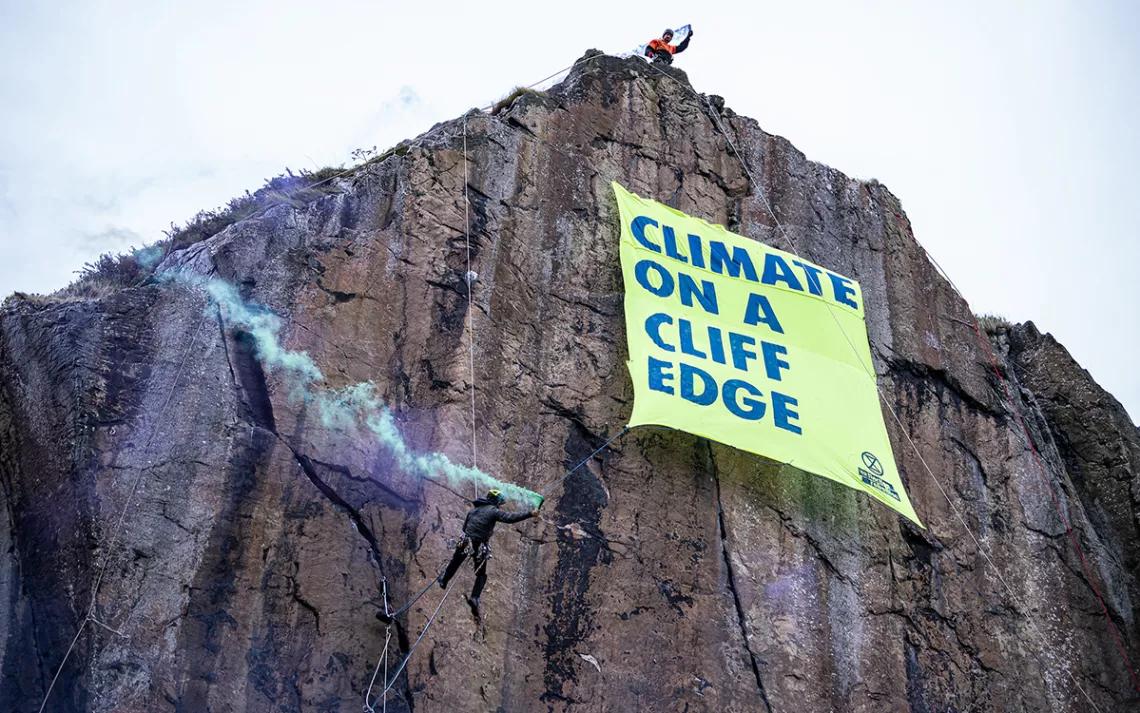
    Experienced climbers scale a rock face near the historic Dumbarton castle in Glasgow, releasing a banner that reads “Climate on a Cliff Edge.” One activist, dressed as a globe, symbolically looms near the edge, while another plays the bagpipes on the shores below. | Photo courtesy of Extinction Rebellion and Mark Richards
    Experienced climbers scale a rock face near the historic Dumbarton castle in Glasgow, releasing a banner that reads “Climate on a Cliff Edge.” One activist, dressed as a globe, symbolically looms near the edge, while another plays the bagpipes on the shores below. | Photo courtesy of Extinction Rebellion and Mark Richards
  • As Europe Reels From Flood Damage, Calls Grow for Big Oil to Pay for Climate Destruction

    Spread the love

    Original article by Julia Conley republished from Common Dreams under Creative Commons (CC BY-NC-ND 3.0).

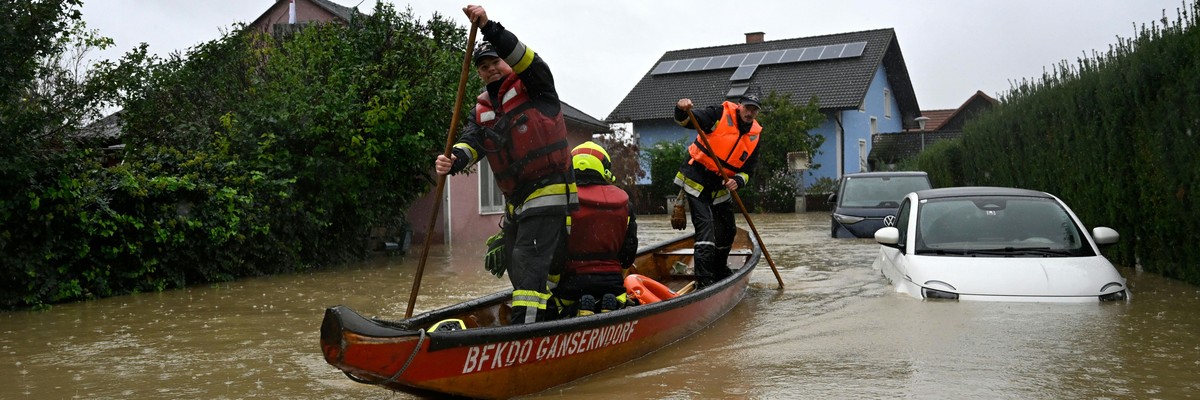
    Firefighters in a boat make their way past a car submerged by the floods in Rust im Tullnerfeld, Austria, on September 16, 2024. (Photo: Helmut Fohringer/APA/AFP via Getty Images)

    “We are deeply worried such events will get worse until oil and gas giants like Shell, Total, Equinor, Exxon, OMV, and ENI are forced to stop drilling for fossil fuels driving climate change,” said one campaigner.

    The international climate group Greenpeace on Friday called on European leaders to “reciprocate” the courage shown by first responders in several countries over the weekend by forcing fossil fuel giants to pay for climate damages.

    Calling out leaders including Polish Prime Minister Donald Tusk, Czech Prime Minister Petr Fiala, and Romania Prime Minister Marcel Ciolacu, Greenpeace campaigner Ian Duff said Central and Eastern European countries should end their “support for fossil fuels and [make] climate polluters pay for this disaster,” as emergency workers rescued people from catastrophic flooding.

    The death toll on Monday rose to at least 16, with many more people missing and hundreds of thousands of people displaced in countries including Austria, the Czech Republic, Hungary, Romania, and Slovakia after the low-pressure system Storm Boris dumped torrential rains on the region for days starting late last week.

    Two men, aged 70 and 80, drowned in their homes in northeastern Lower Austria after being trapped by rising floodwater, and confirmed deaths in Poland rose to six.

    About 70% of Litovel, about 140 miles east of the Czech capital of Prague, was underwater Monday, while a power plant servicing the country’s third-largest city was forced to shut down and leave residents without heat and hot water.

    “Greenpeace is horrified by damages brought by floods across Central and Eastern Europe, claiming lives, leaving homes without power and farmers with ruined fields, after being already ravaged by drought,” said Duff, head of Greenpeace’s Stop Drilling Start Paying campaign. “We are deeply worried such events will get worse until oil and gas giants like Shell, Total, Equinor, Exxon, OMV, and ENI are forced to stop drilling for fossil fuels driving climate change.”

    In the U.S., the notion of big polluters being required to pay for damages caused by the climate crisis has recently gained traction, with lawmakers introducing a bill in Congress last week.

    In Europe, a “polluter pays” principle is followed for many kinds of pollution, but advocates have called for it to be applied to planet-heating greenhouse gas emissions.

    The flooding in Europe comes, as London-based meteorologist Scott Duncan explained on the social media platform X, after “an exceptional summer for the Mediterranean Sea,” with heat records broken—just as scientists have warned this year that record heat in the North Atlantic and other oceans around the globe would mean “a busy hurricane season.”

    “Warmer sea surface temperatures allow more moisture to evaporate, like fuel for a storm. The warmer the water, the greater the evaporation,” said Duncan.

    Liz Stephens, science lead for the Red Cross Red Crescent Climate Center, noted that in Central and Eastern Europe, “climate change is known to be playing a role in increasing the risk of flooding,” with the World Weather Attribution saying in 2021 that disastrous flooding that hit Germany and Belgium was tied to “a rapidly warming climate.”

    Reports by the Intergovernmental Panel on Climate Change (IPCC), Stephens added, “have indicated that we have already observed an upward trend in heavy rainfall, surface water, and river flooding, and climate models show high confidence of further increases into the future.”

    “The flooding looks set to be the worst in the region since 2002,” she said. “Lessons will have been learned from previous big European floods, but forecasts for some locations are for flooding of unprecedented magnitude, and history tells us that people are often surprised by the seemingly unimaginable consequences of such events.”

    Journalist and climate advocate George Monbiot pointed out on Al Jazeera that storms previously described as “once-in-1,000-year occurrences [are] happening several times now in the past decade. We’re seeing a massive acceleration and intensification of extreme weather events, and unfortunately this is exactly what climate scientists were predicting.”

    Climate action group Friends of the Earth echoed Greenpeace’s demand to “leave fossil fuels in the ground and instead invest in a green future,” and Duff emphasized that communities across Central and Eastern Europe are far from the only ones “reeling from deadly floods and torrential rains,” with Typhoon Yagi causing flooding and landslides that killed at least 250 people in Southeast Asia in recent days and heavy rains across West and Central Africa leading to floods that killed more than 1,000 people.

    “The fossil fuel industry,” said Duff, “is worsening weather extremes everywhere.”

    Original article by Julia Conley republished from Common Dreams under Creative Commons (CC BY-NC-ND 3.0).

  • ‘Big Win’: UK Won’t Defend Fossil Fuel Projects in North Sea

    Spread the love

    Original article by Jessica Corbett republished from Common Dreams under a CC licence.

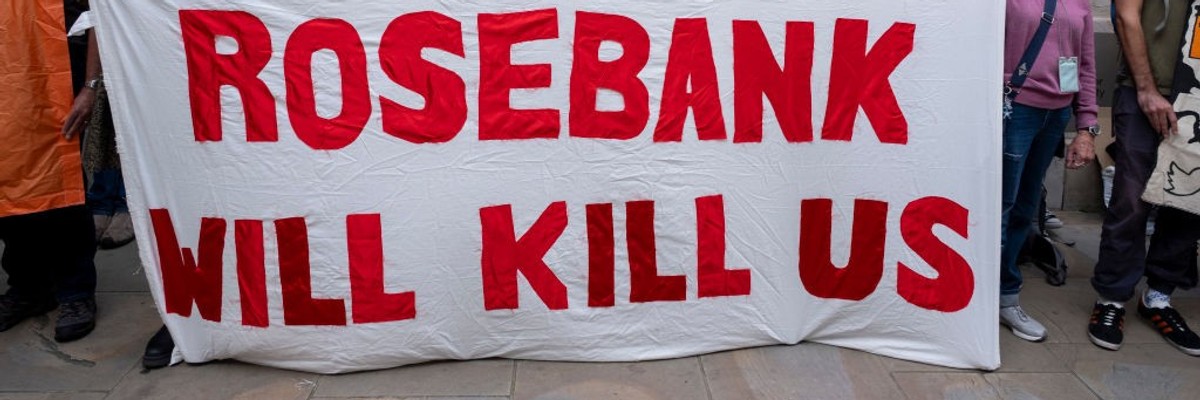
    Activists hold a white sign reading “Rosebank will kill us” on September, 27, 2023 in London, United Kingdom. (Photo: Mike Kemp/In Pictures via Getty Images)

    Oceana U.K.’s leader called the decision “a massive win for campaigners and another step towards… a cleaner, greener future for our seas, planet, and climate.”

    Climate campaigners celebrated Thursday after the United Kingdom’s new Labour government announced it will not legally defend decisions to allow controversial offshore drilling in a pair of areas in the North Sea.

    The two sites are Shell’s Jackdaw gas field and the Rosebank oil field, owned by Equinor and Ithaca Energy. Both projects have been loudly criticized by international green groups as well as U.K. opponents.

    “This is amazing news and a BIG WIN for the climate. The government must now properly support affected workers and prioritize investment in green jobs,” declared Greenpeace U.K., which along with the group Uplift had demanded judicial reviews.

    The approvals for both North Sea sites occurred under Conservative rule—in 2022 for Jackdaw and last year for Rosebank, the country’s biggest untapped oil field. Voters handed control of the government back to the Labour Party in May.

    Then, as The Guardian detailed, “in June, the cases against the oil and gas fields received a boost when the Supreme Court ruled in a separate case that ‘scope 3’ emissions—that is, the burning of fossil fuels rather than just the building of the infrastructure to do so—should be taken into account when approving projects.”

    “Now we need to see a just transition plan for workers and communities across the U.K. and an end extraction in the North Sea for good!”

    The U.K. Department for Energy Security and Net Zero, led by Secretary Ed Miliband, cited the “landmark” Supreme Court ruling in a Thursday statement that highlighted the government’s decision not to defend the approvals “will save the taxpayer money” and “this litigation does not mean the licences for Jackdaw and Rosebank have been withdrawn.”

    “Oil and gas production in the North Sea will be a key component of the U.K. energy landscape for decades to come as it transitions to our clean energy future in a way that protects jobs,” the department claimed, while also pledging to “consult later this year on the implementation of its manifesto position not to issue new oil and gas licenses to explore new fields.”

    Welcoming the U.K. government’s acceptance of the recent high court ruling, Uplift founder and executive director Tessa Khan said on social media that “the immediate consequence… is that the Scottish Court of Session is very likely to quash the decision approving Rosebank, although we’re likely to have to wait a while before that’s confirmed.”

    “If Equinor and Ithaca Energy decide they still want to press ahead with developing the field,” Khan explained, “then the next step will be for them to submit a new environmental statement to the [government] and regulator… that includes the scope 3 emissions from the field.”

    “If you need reminding, those emissions are massive: the same as 56 coal-fired power plants running for a year or the annual emissions of the world’s 28 poorest countries,” she added. “If Equinor and Ithaca try to push Rosebank through again, the U.K. [government] must reject it.”

    Greenpeace similarly stressed that “Rosebank and Jackdaw would generate a vast amount of emissions while doing nothing to lower energy bills,” and “the only real winners from giving them the greenlight would be greedy oil giants Shell and Equinor.”

    “To lower bills, improve people’s health, upgrade our economy,” the group argued, the government must: increase renewable energy; better insulate homes; and boost support for green jobs.

    Celebrations over the government’s decision and calls for further action weren’t limited to the groups behind the legal challenges.

    Oceana U.K. executive director praised the “incredible work” by Greenpeace and Uplift, and called the government dropping its defense “a massive win for campaigners and another step towards… a cleaner, greener future for our seas, planet, and climate.”

    Oil Change International also applauded the government’s “incredibly important and correct decision.”

    “There is no defending more fossil fuel extraction,” the organization said. “Now we need to see a just transition plan for workers and communities across the U.K. and an end extraction in the North Sea for good!”

    Global Witness similarly celebrated the government’s move, declaring on social media that “this is brilliant news!”

    “New oilfields are an act of climate vandalism,” the group added. “Governments must prioritize people, not polluters’ profit.”

    Original article by Jessica Corbett republished from Common Dreams under a CC licence.

  • Victory for campaigners as UK government concedes legal challenge against Rosebank 

    Spread the love

    https://www.shetlandtimes.co.uk/2024/08/29/victory-for-campaigners-as-uk-government-concedes-legal-challenge-against-rosebank

    The UK government has today (Thursday) confirmed it will not challenge the judicial review brought against the Rosebank oil and gas development.

    Campaign groups Uplift and Greenpeace launched legal action against the approval of the West of Shetland development late last year.

    They claimed the decision made by the former UK government was “unlawful” as it failed to consider the impact of burning the fossil fuels extracted from the development during its lifetime.

    Although the new Labour administration said it would not be contesting the legal case, it does not mean the licenses have been withdrawn.

    However, it leaves questions for the future of the controversial development.

    …

    https://www.shetlandtimes.co.uk/2024/08/29/victory-for-campaigners-as-uk-government-concedes-legal-challenge-against-rosebank

    dizzy: The oil companies involved in the Rosebank (and Jackdaw) fields can contest the judicial review. However, this is still a huge step in defeating Rosebank. Well done, all those involved in stopping Rosebank.

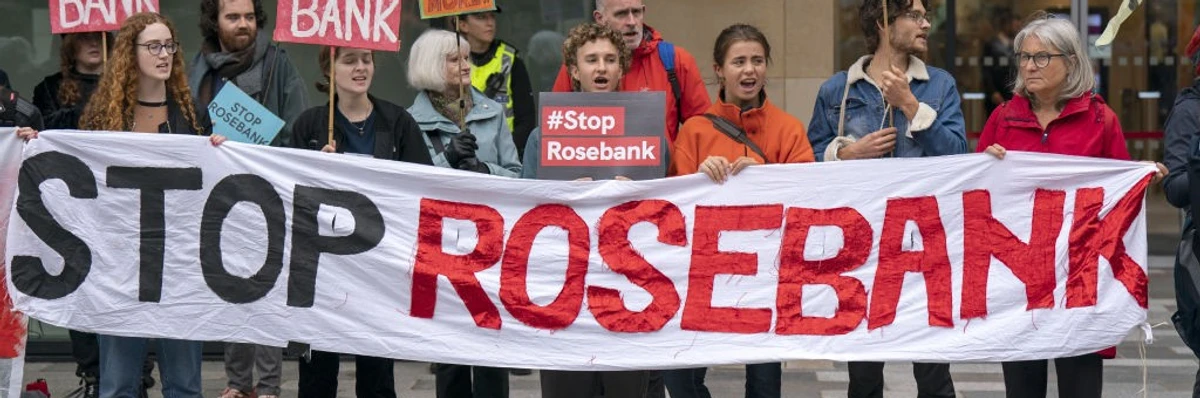
    Campaigners take part in a Stop Rosebank emergency protest outside the U.K. Government building in Edinburgh, after the controversial Equinor Rosebank North Sea oil field was given the go-ahead Wednesday, September 27, 2023. (Photo: Jane Barlow/PA Images via Getty Images)
    Campaigners take part in a Stop Rosebank emergency protest outside the U.K. Government building in Edinburgh, after the controversial Equinor Rosebank North Sea oil field was given the go-ahead Wednesday, September 27, 2023. (Photo: Jane Barlow/PA Images via Getty Images)
  • Inside Big Oil’s Business as Usual: Failure on Climate and Profits from War

    Spread the love

    Original article by Stella Levantesi republished from DeSmog.

    A new report shows oil majors fall short of meeting Paris Agreement targets while fueling global military conflicts.

    Oil majors are not on track to hit Paris Agreement climate targets that limit global temperature rise to 1.5°C, a new report reveals.

    Eight fossil fuel giants – Chevron, ExxonMobil, Shell, TotalEnergies, BP, Eni, Equinor, and ConocoPhillips – are on course to use 30 percent of the world’s remaining carbon budget for that 1.5°C goal, according to the Big Oil Reality Check report by nonprofit Oil Change International (OCI).

    Combined, the oil and gas companies’ extraction plans are consistent with a temperature rise of over 2.4°C, the report found.That level of warming, according to the Intergovernmental Panel on Climate Change, will reduce food security, risk irreversible loss of ecosystems, and increase heat waves, rainfall, and extreme weather events.

    “We analyzed the climate promises and plans of the largest eight international oil and gas companies that are owned in North America and Europe. What would it take for an oil and gas producer to align their production with limiting warming to 1.5?” David Tong, global industry campaign manager at OCI and co-author of the report, told DeSmog. 

    “If an oil and gas company were serious about transitioning its business model, the first step would be ending all new production and then setting a Paris-aligned phaseout plan,” he added.

    ‘No New Fossil’ Standard

    A recent paper by academics at University College London and the International Institute for Sustainable Development, published in Science in May, calls for stopping fossil fuel expansion and building a “No New Fossil” global norm. According to the authors, this would make it “easier to phase down fossil fuels” and achieve the Paris Agreement climate goals.

    No new fossil fuel projects would be needed in a 1.5°C world, they wrote, because the “existing fossil fuel capital stock” is sufficient to meet energy demand. The authors also note that preventing new fossil fuel projects is, in general, more feasible than closing existing projects from an economic, political, and legal viewpoint.

    In the face of continuing global pressure to stop fossil fuel expansion, Chevron, ConocoPhillips, Equinor, Eni, ExxonMobil, and TotalEnergies have goals to increase oil and gas production within the next three years or beyond, the OCI report finds. While Shell does not quantify a target, the company plans to keep oil production steady while growing gas production in the near future, OCI said.

    “None of those companies came anywhere close to alignment [with climate goals],” said Tong. “Six of the eight companies we analyzed have explicit plans to increase their oil and gas production in this critical decade when we need to be cutting our reliance on fossil fuels, cutting oil, gas, and oil production.”

    Plateauing oil and expanding gas production, like some of these companies plan to do, is “grossly insufficient” compared with the action that’s needed, Tong added. Even commitments to make businesses more efficient aren’t going to cut it alone, he said.

    “It’s like a cigarette company claiming that it will solve lung cancer by producing cigarettes more efficiently,” he noted. “That’s not just not a credible claim. It’s a promise to become a more efficient climate breaker.”

    Big Oil and War

    According to the OCI report, all the oil majors fail to meet basic criteria for just transition plans for workers and communities where they operate. 

    “A number of these companies also face significant ongoing, unresolved allegations of human rights … and Indigenous people’s rights violations,” Tong told me.

    A March 2024 investigation, commissioned by OCI and conducted by DataDesk, revealed that ExxonMobil, Chevron, TotalEnergies, BP, Shell, and Eni are “complicit in facilitating the supply of crude oil to Israel.” These findings are particularly noteworthy in the context of “Israel’s mounting evidence of war crimes” against Palestinians in Gaza, the OCI states in its new report. 

    Diesel and gasoline for tanks and other military vehicles are supplied by Israel’s refineries, which rely on regular imports of crude oil by these companies and, since October 2023, supplies mainly from Azerbaijan, Kazakhstan/Russia, Gabon, and Brazil, the research has found. 

    The fossil fuel industry is “fueling war and military conflicts” in many regions of the world, said Svitlana Romanko, a prominent Ukrainian activist and founder and director of Razom We Stand, a Ukrainian organization campaigning to ban all imports of fossil fuels from Russia. 

    According to Romanko, the OCI Big Oil Reality Check report “reinforces the importance of moving away from fossil fuels and investing into distributed renewable energy.”

    A new analysis by a group of climate experts estimates that the first two years of Russia’s war on Ukraine resulted in greenhouse gas emissions equivalent to around 175 million tonnes of carbon dioxide. The estimated global cost of this warming in extreme weather impacts: $32 billion. 

    After Russia launched its full-scale invasion of Ukraine in February 2022, Russia earned over 681 billion euros in revenue from fossil fuel exports. European Union countries purchased fossil fuels from Russia for more than 195 billion euros.

    Big Oil, as well as Russia, is profiting from the war, Romanko said. After the invasion, BP, Chevron, Equinor, ExxonMobil, Shell, and TotalEnergies raked in $219 billion, more than double their profits compared to the previous year.

    “Most [governments] subsidize fossil fuels, and these subsidies are accounting for trillions of U.S. dollars annually,” Romanko said. “This is a big part of fossil fuel profits, and the more fossil fuels are subsidized, [the] less investments are made available for renewable energies.”

    She pointed out that the partnership between TotalEnergies and Russia’s largest private gas producer, Novatek, was also “instrumental” in helping Russia get access to technologies and engineering services to launch Novatek’s Yamal LNG and Arctic LNG 2 projects.

    Romanko notes that fossil fuel infrastructure can also constitute a liability for military attacks and quickly become a target.

    “Centralized infrastructure endangers energy supply and overall safety of the supply,” she said. In Ukraine, a massive effort to install solar power plants in schools and hospitals helped decentralize this key resource, Romanko explained. “Decentralized energy supply is essential to building true energy independence,” she added. “And this is the future.”

    Pressure for Accountability

    Some of the eight oil majors in OCI’s report have faced more international and national scrutiny than others. Such pressure can facilitate accountability, but that’s less likely when the fossil fuel company is closely intertwined with the institutional, political, and economic life of its country. 

    A BP gas station sign. Credit: Mike Mozart (CC BY 2.0)

    “We need to look at what has succeeded in putting so much pressure on companies like Shell and BP,” OCI’s Tong said. 

    One factor: when communities in a company’s home country work closely in partnership with communities in fossil fuel-producing countries. Tong said that positive results also happen when campaigners use a range of strategies to expose producers, from nonviolent direct action to op-eds, research, and court action.

    “This is particularly challenging with Eni, TotalEnergies, and Equinor in different ways because of the close interactions that each of the companies have with their home states,” he added.

    Public, political, and legal pressure for accountability must also be coupled with industry regulation, according to Tong.

    “We concluded that there is no evidence that the oil and gas sector will voluntarily transition to renewable energy, or voluntarily act to align their production with what’s needed for the Paris Agreement,” Tong said. Instead, governments must no longer license new production sites. 

    The strong right-wing result in the latest EU Parliament elections could also affect Big Oil’s energy transition. 

    “The more the links between the state and big polluters are overt, the more people get out in the streets and protest,” Tong said.

    What is safe to say is that Big Oil’s business as usual will increase climate change effects.

    “Floods, hurricanes, extreme weather events, and the millions of human lives affected and lost – this damage to nature, to human lives and to life on earth will only mount,” Romanko said. “What will be lost in a few more years will also mount if fossil fuel companies are allowed to continue with business as usual.”

    Original article by Stella Levantesi republished from DeSmog.