With pressure mounting on the Biden administration, its pursuit of Assange was becoming both damaging and untenable
Spread the love
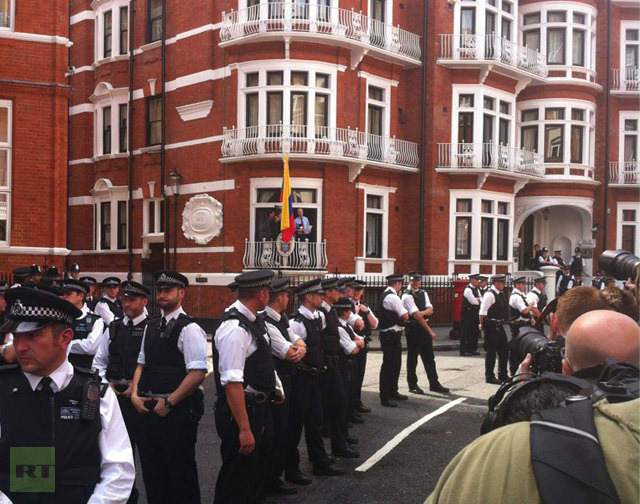
Julian Assange speaks at London's Ecuadorian Embassy
Julian Assange speaks at London’s Ecuadorian Embassy

Emma Shortis, RMIT University

Today, in a surprise development likely weeks in the planning, WikiLeaks founder Julian Assange was able to leave the United Kingdom for the first time in more than a decade after reaching a plea deal with the US government.

In the past several months, momentum has been building towards this moment. There was increasing bipartisan support in both the Australian parliament and the US Congress for the Australian citizen’s release. Australian Prime Minister Anthony Albanese has made repeated statements on his behalf, and in April, US President Joe Biden said he was “considering” a request from Australia to drop its prosecution of Assange.

This all contributed to the sense the matter might be resolved before Assange’s final UK hearing date, previously scheduled for July 9 and 10. The timing of the deal is also a welcome prelude to Albanese’s visit to Washington next week.

Such a resolution, however, was not inevitable. And it is not over yet.


A relentless, years-long pursuit

The United States’ pursuit of Assange has seemingly been relentless since WikiLeaks posted hundreds of thousands of classified military documents in 2010. It wasn’t until 2019 under the then President Donald Trump, however, that he was finally indicted on 17 counts of violating the 1917 Espionage Act.

The charges against Assange were not just considered unprecedented, they raised significant First Amendment concerns.

The apparent desire to punish Assange for the embarrassment caused by the leaks – and to deter others from taking similar action – was apparently so strong the CIA allegedly discussed plans to kidnap and even assassinate Assange during the Trump administration, according to US media reports.

In the UK courts, the US Department of Justice had argued Assange should be subject to US law and extradited to face trial for his actions. However, as a non-citizen, there were questions over whether he could rely on the legal protections afforded by those same laws – particularly the constitutional right to free speech.

The successful extradition of Assange could have set a precedent by which the US could pursue journalists anywhere in the world for publishing information it did not like, while potentially denying them their fundamental First Amendment rights.

In a crucial election year in the US that President Joe Biden is framing as an existential fight for the soul of US democracy, the continued pursuit of Assange was as inconsistent as it was ultimately untenable. Viewed from the outside, it appeared the case was causing the Biden administration international embarrassment.

Biden has been careful to maintain an appropriate distance between the presidency and the Department of Justice. He came into office promising to restore faith in the rule of law following the Trump years, and has meticulously avoided any appearance of interference in the department’s work as it has investigated and indicted his predecessor.

Assange’s case, however, is wholly different to the charges on which Trump has been indicted. It is certainly possible to interpret Biden’s comment that he was “considering” dropping the charges as a gentle public rebuke of the Department of Justice’s pursuit of the case, given its global implications for a free press.

Broader implications for the alliance

The continued pursuit of Assange was also becoming problematic in the context of Australia’s alliance with the US. That relationship is always described as one based on shared democratic values, in contrast to what Biden has repeatedly framed as the coercive and repressive instincts of “authoritarian” powers.

The decision by the US to pursue a citizen of one of its closest allies for the publication of information, while simultaneously condemning authoritarian states for doing much the same, was both hypocritical and damaging to American standing in the world.

In the context of growing concern in Australia about the terms of the AUKUS submarine deal and the Australian government’s willingness to go “all-in” with the US militarily, the continued pursuit of Assange gave the impression that Australia’s most important security ally did not take its concerns seriously. Australia appeared simply to be snapping at America’s heels.

It also added to the sense that the “capital-A Alliance” between the two countries was increasingly dominated by security concerns, often at the expense of democratic accountability.

Because of the international campaign to free Assange and the support it received in both Australian and American democratic institutions, there appears to be have been a reconsideration of this focus on security interests over democratic values.

It should be noted, though, that the US didn’t drop its prosecution in the end; Assange has agreed to plead guilty to a felony charge of violating the Espionage Act, which in itself may set a concerning precedent for press freedom.

And the fact this saga happened at all – and that it has taken more than a decade to get close to resolution – should prompt deep reflection on the values that underpin both Australia’s relationship with its most important security ally and the United States’ role in the world.

Emma Shortis, Adjunct Senior Fellow, School of Global, Urban and Social Studies, RMIT University

This article is republished from The Conversation under a Creative Commons license. Read the original article.
Continue ReadingWith pressure mounting on the Biden administration, its pursuit of Assange was becoming both damaging and untenable

UN to Warn Half a Million Gazans Facing ‘Catastrophic’ Food Insecurity

Spread the love

Original article by BRETT WILKINS republished from Common Dreams under Creative Commons (CC BY-NC-ND 3.0).

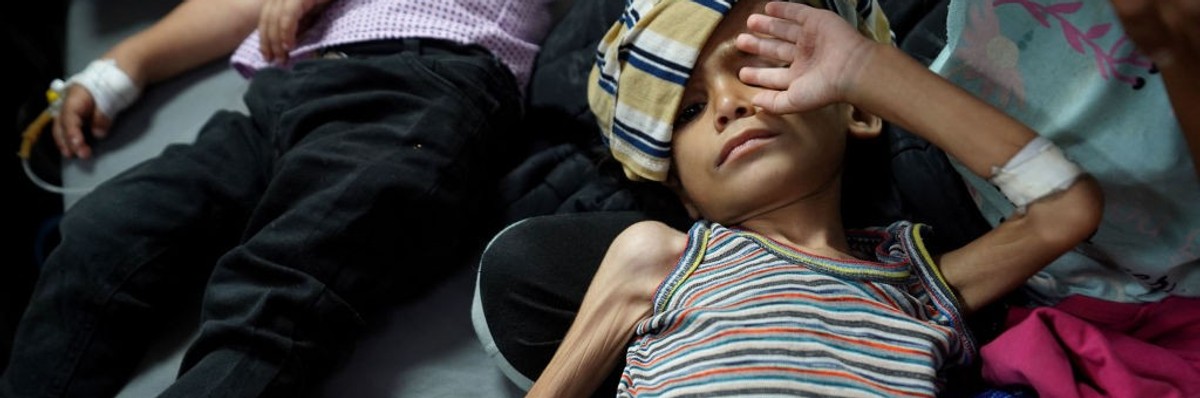
Children receive malnourishment treatment at Al-Aqsa Martyrs Hospital in Deir al-Balah in the central Gaza Strip on May 30, 2024, amid Israel’s ongoing assault on the besieged enclave. (Photo: Bashar Taleb/AFP via Getty Images)

“The international community must apply relentless pressure to achieve a cease-fire and ensure sustained humanitarian access now,” said one advocate.

More than 1 in 5 people in the Gaza Strip are “facing catastrophic levels of food insecurity” amid Israel’s relentless assault and siege against the Palestinian territory, according to a draft report set to be published Tuesday by the United Nations’ hunger monitoring system.

The latest Integrated Food Security Phase Classification (IPC) Acute Food Insecurity Special Snapshot—which was previewed by various news agencies—says that more than 495,000 Gazans—who already face “an extreme lack of food, starvation, and exhaustion”—are expected to suffer the highest level of starvation over the coming months.

The draft report states that while a sharp increase in food aid in northern Gaza in March and April can be credited with “likely averting a famine,” the situation is “deteriorating again following renewed hostilities.”

“A high risk of famine persists across the whole of the Gaza Strip as long as conflict continues and humanitarian access is restricted,” IPC noted.

The IPC draft report also says more than half of all Gaza households had to sell or swap clothing in order to obtain food, and that the majority of Gazan families often “do not have any food to eat in the house, and over 20% go entire days and nights without eating.”

“The population cannot endure these hardships any longer.”

Kate Phillips-Barrasso, vice president of global policy and advocacy at Mercy Corps, an Oregon-based humanitarian NGO, told The Guardian that “people are enduring subhuman conditions resorting to desperate measures like boiling weeds, eating animal feed, and exchanging clothes for money to stave off hunger and keep their children alive.”

“The humanitarian situation is deteriorating rapidly, and the specter of famine continues to hang over Gaza,” she added. “The international community must apply relentless pressure to achieve a cease-fire and ensure sustained humanitarian access now. The population cannot endure these hardships any longer.”

Although the IPC stopped short of the rare step of declaring a famine in Gaza, it warned that “the recent trajectory is negative and highly unstable.”

“Should this continue, the improvements seen in April could be rapidly reversed,” the agency added.

The IPC’s famine review panel previously said there is not enough data to make a determination on whether there is a famine in Gaza since research was being blocked by “conflict and humanitarian access constraints.”

The Geneva-based group Euro-Mediterranean Human Rights Monitor said Monday that “the Famine Review Committee’s inability to declare the current food situation in the Gaza Strip to be a famine does not negate the existence of famine in the strip, as pockets of famine are forming and spreading among different age groups, particularly children, and there is a noticeable increase in deaths from hunger, malnutrition, and related diseases.”

“The committee’s failure to declare the existence of a famine is solely related to its inability to provide certain technical information because of illegal Israeli restrictions and policies that aim to conceal evidence related to the crimes it commits and prevent criminal investigations into them by independent U.N. and international committees, particularly by preventing these committees from entering the strip,” the group added.

U.N. World Food Program Executive Director Cindy McCain said last month that “full-blown famine” had taken hold in Gaza and was spreading south. According to Gaza officials, at least 40 people—mostly children—have died from malnutrition and dehydration during the 262-day Israeli onslaught. Almost all of the victims are from northern Gaza.

Israel began bombing, and later invaded, Gaza after Hamas-led attacks left more than 1,100 Israelis and others dead and over 240 others kidnapped on October 7. At least some of the victims were killed by Israeli forces in so-called “friendly fire” incidents, according to Israeli and international media reports.

Since then, Israeli forces have killed at least 37,626 Palestinians—most of them women and children—in Gaza, while wounding over 86,000 others, according to Palestinian and international agencies. At least 11,000 people, including over 4,000 children, are missing and presumed dead and buried beneath the rubble of hundreds of thousands of bombed-out homes and other buildings.

Michael Fakhri, the United Nations special rapporteur on the right to food and a law professor at the University of Oregon, said in late February that Israel is committing genocide by intentionally starving Gazans. Israel’s siege—and Israeli attacks on humanitarian aid shipments, workers, and recipients—are being reviewed by the International Court of Justice as part of a South Africa-led genocide case backed by over 30 countries and regional blocs.

Original article by BRETT WILKINS republished from Common Dreams under Creative Commons (CC BY-NC-ND 3.0).

Over 20,000 Children Missing in Gaza, With ‘Unknown Number’ in Mass Graves: Report

‘Visible Signs of Wasting’: Heat, Forced Malnutrition Strangle People of Gaza

Biden Continues to Cement a Bloody and Immoral Legacy in Gaza

Continue ReadingUN to Warn Half a Million Gazans Facing ‘Catastrophic’ Food Insecurity

Julian Assange released from prison, WikiLeaks says, after striking deal with US justice department

Spread the love

News is breaking that Julian Assange associated with the Wikileaks news publishing site has been released.

Julian Assange speaks at London's Ecuadorian Embassy
Julian Assange speaks at London’s Ecuadorian Embassy

https://www.theguardian.com/media/article/2024/jun/25/julian-assange-plea-deal-with-us-free-to-return-australia

WikiLeaks said on X that Assange had left Belmarsh prison on Monday morning, after 1,901 days of captivity there. He had spent the time, the organisation said, “in a 2×3 metre cell, isolated 23 hours a day”.

Assange was set to be reunited with his wife, Stella, who confirmed on X that he was free. She thanked Assange’s supporters, saying “words cannot express our immense gratitude”.

In the WikiLeaks video, Assange, looking healthy dressed in a shirt and jeans with his white hair cut short, is seen climbing the stairs into a plane.

An Australian government spokesperson did not confirm or deny the plea deal but said Canberra was “aware” of the legal proceedings, adding: “prime minister [Anthony] Albanese has been clear – Mr Assange’s case has dragged on for too long and there is nothing to be gained by his continued incarceration.”

Assange’s mother Christine welcomed the developments, saying “I am grateful my son’s ordeal is finally coming to an end.”

The plea agreement comes months after the US president, Joe Biden, said he was considering a request from Australia to drop the US push to prosecute Assange.

WikiLeaks in 2010 released hundreds of thousands of classified US military documents on Washington’s wars in Afghanistan and Iraq – the largest security breaches of their kind in US military history – along with swaths of diplomatic cables.

https://www.theguardian.com/media/article/2024/jun/25/julian-assange-plea-deal-with-us-free-to-return-australia

Continue ReadingJulian Assange released from prison, WikiLeaks says, after striking deal with US justice department

Over 20,000 Children Missing in Gaza, With ‘Unknown Number’ in Mass Graves: Report

Spread the love

Original article by JAKE JOHNSON republished from Common Dreams under Creative Commons (CC BY-NC-ND 3.0).

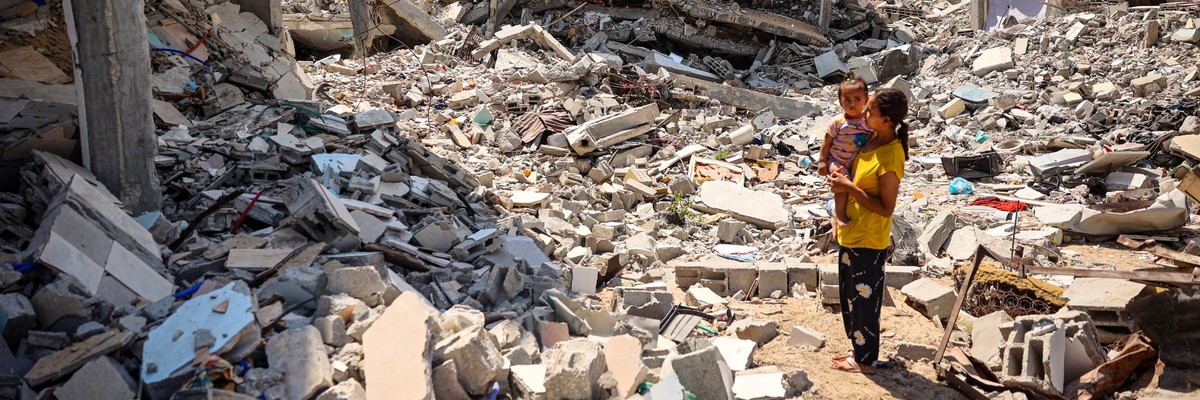
A woman stands holding a child surrounded by the rubble of buildings destroyed by Israeli airstrikes in Khan Younis, Gaza on June 23, 2024.
 (Photo: Eyad Baba/AFP via Getty Images)

“No parent should have to dig through rubble or mass graves to try and find their child’s body,” said the Save the Children’s regional director for the Middle East.

The humanitarian group Save the Children estimated Monday that around 21,000 kids are missing in the Gaza Strip as Israel’s military continues its assault on the enclave, reducing much of the Palestinian territory to rubble.

Roughly 4,000 kids are likely buried under that debris, according to Save the Children, while at least 17,000 are unaccompanied, an “unknown number” are in mass graves, and others have been “detained and forcibly transferred out of Gaza, their whereabouts unknown to their families amidst reports of ill-treatment and torture.”

A child protection specialist with Save the Children said that the group finds more unaccompanied children every day in Gaza, where parents and entire families have been wiped out by Israel’s relentless bombing campaign and ground invasion.

“We work through partners to identify separated and unaccompanied children and trace their families, but there are no safe facilities for them—there is no safe place in Gaza,” said the Save the Children specialist. “Besides, reuniting them with family members is difficult when ongoing hostilities restrict our access to communities, and constantly force families to move.”

“Neighbors and extended family members who have taken in lone children are struggling to meet their basic needs, such as shelter, food, and water,” they added. “Many are with strangers—or completely alone—increasing the risk of violence, abuse exploitation, and neglect.”

“We desperately need a cease-fire to find and support the missing children who have survived, and to prevent more families from being destroyed.”

More than 14,000 children have been killed by Israeli forces in the Gaza Strip since October 7, and many others have experienced devastating psychological and physical trauma, including the loss of limbs. Dozens of children have also been starved to death in recent months as Israel’s blockade hinders the flow of lifesaving humanitarian assistance.

Conditions for children have further deteriorated since Israel’s invasion of Rafah, which has forced roughly a million people to flee the city. Last month, Israeli forces used U.S.-made bombs in an attack on a Rafah camp sheltering displaced people, killing dozens—including women and children. The United Nations Human Rights Office said that infants were “torn apart” in the attack and people were “trapped inside burning plastic tents, leading to a horrific casualty toll.”

Save the Children stressed Monday that its count of Gaza’s missing kids is far from conclusive, given the difficulty of collecting accurate information in areas under near-constant attack. The group noted that “confirming identification of a body by the next of kin is almost impossible when whole families have been wiped out and entry restrictions mean the equipment and experts needed cannot get in.”

Jeremy Stoner, Save the Children’s regional director for the Middle East, said that “families are tortured by the uncertainty of the whereabouts of their loved ones.”

“No parent should have to dig through rubble or mass graves to try and find their child’s body. No child should be alone, unprotected in a war zone. No child should be detained or held hostage,” said Stoner. “Children who are missing but living are vulnerable, face grave protection risks, and must be found. They must be protected and reunited with their families. For the children who have been killed, their deaths must be formally marked, their families informed, burial rites respected, and accountability sought.”

“As many have pointed out, Gaza has become a graveyard for children, with thousands of others missing, their fates unknown,” he added. “There must be an independent investigation and those responsible must be held accountable. We desperately need a cease-fire to find and support the missing children who have survived, and to prevent more families from being destroyed.”

Original article by JAKE JOHNSON republished from Common Dreams under Creative Commons (CC BY-NC-ND 3.0).

Zionist Keir Starmes is quoted "I support Zionism without qualification." He's asked whether that means that he supports Zionism under all circumstances, whatever Zionists do.
Zionist Keir Starmes is quoted “I support Zionism without qualification.” He’s asked whether that means that he supports Zionism under all circumstances, whatever Zionists do.

Continue ReadingOver 20,000 Children Missing in Gaza, With ‘Unknown Number’ in Mass Graves: Report

The UK doesn’t work for Disabled people. Neither Labour or the Conservatives will change that

Spread the love

Original article by Mikey Erhardt republished from Open Democracy under a Creative Commons Attribution-NonCommercial 4.0 International licence

Neither Keir Starmer nor Rishi Sunak has any real plan to improve the lives of Disabled people | Jonathan Hordle – ITV via Getty Images

So far, we’ve heard more about Starmer and Sunak’s parents than the UK’s 16 million Disabled people

“This election is about who our country works for — the patriotic belief that Britain can be better and must be better,” said Kier Starmer concluding the first leaders’ debate earlier this month.

There are at least 16 million Disabled people in the UK – we make up a quarter of the population. We know this country doesn’t work for us, we’ve known that our entire lives. We disproportionately live in poverty, achieve poorer outcomes in education, and are more likely to be unemployed or earn less.

Yet every leadership debate so far has given more time to talking about Starmer and Rishi Sunak’s parents than these problems, which face millions of Disabled people up and down the country.

The general election campaign has solidified that neither the Labour leader nor his rival, incumbent Conservative prime minister Rishi Sunak, has any interest in improving our lives.

It is not as if the Conservatives or Labour don’t know about the issues we face. A United Nations report published in April confirmed that the UK is violating our human rights; a parliamentary committee last month found that “Disabled people undeniably encounter unnecessary and severe barriers to accessing suitable housing in England”; and the Department of Work and Pensions is under investigation by the Equality and Human Rights Commission over its treatment of Disabled claimants.

Disabled people in the UK are not a homogenous group. Some of us experience greater injustice than others. But we also have many things in common. We all want to live in an inclusive society where everyone has a fulfilling life and feels connected and valued.

We know politicians do not place the same worth on our lives as others; every day we experience discrimination, oppression and barriers to our inclusion and full participation in society because they won’t take the action needed to change it.

Years of deep cuts to services and neglect mean societal infrastructure, such as housing, transport and street environment, consistently fails to meet our needs. This structural decline has coincided with anti-migrant, anti-trans and racist policies, leaving ever-increasing numbers of us in poverty, homeless, incarcerated or dead.

The UN report was clear: “There has been no significant progress for Disabled people throughout the UK concerning their right to living independently and being included in the community.

“While some reforms and policies have been undertaken to provide financial support, accessible housing, and transport, this has been inadequate considering the cost-of-living crisis.”

One would expect this damning conclusion to be a key feature of the election campaign. But over the past four weeks, Labour and the Tories have both failed to provide anything of substance to help Disabled people.

Sunak’s Conservatives have instead pledged to shave £12bn a year from the cost of benefits, much of which would come from a crackdown on the personal independence payment (PIP) given to people with extra care or mobility needs. The party also seeks to tighten the work capability assessment (WCA), which would see more Disabled people declared fit to work and denied their benefit.

Labour’s manifesto, meanwhile, is notable for what it lacks. Previous promises to overhaul the welfare system, end punitive sanctions and co-produce disability-related policy with Disabled people are all missing – as are commitments to end care charges, increase carers’ allowance and ensure better provision of accessible housing.

Labour’s vows to improve SEN (special education needs) provision in schools and introduce changes to support Disabled people to gain and retain jobs are sticking plasters at best. Its manifesto sports a glaring lack of immediate investment in disability and carer benefits and social care – and we all know you can’t fix things without investment.

With so little real change on offer, Disabled people must unite and fight back. We can draw inspiration from the experiences of UK-based Disabled activists and the radical disabled resistance of the past 40 years. No changes affecting us have come through without collective struggle and organising.

As part of the DPO Forum England, a collective of Disabled people’s organisations in England, we are committed to joining forces nationwide and unifying our demands. That’s why we came together to create the Disabled People’s Manifesto, which contains radical policy demands for systemic overhaul and transformation. 

We, as Disabled people, must now come together and demand our politicians take up the manifesto and commit to creating a country that values equity, dignity, respect, trust, and support as much as we value anything else. Our political system should be focused on supporting Disabled people to live the lives we have a right to, which no candidate sweating under the bright studio lights can deliver on their own.

Together, we can create space for ourselves and our ideas, and integrate the energy, dedication and skills of our community to create a new future.

Original article by Mikey Erhardt republished from Open Democracy under a Creative Commons Attribution-NonCommercial 4.0 International licence

Jeremy Hunt’s benefit crackdown will worsen an already terrible system

The government’s insulting Disability Action Plan won’t deliver any change

How the DWP fought to withhold evidence its policies kill disabled people

Continue ReadingThe UK doesn’t work for Disabled people. Neither Labour or the Conservatives will change that