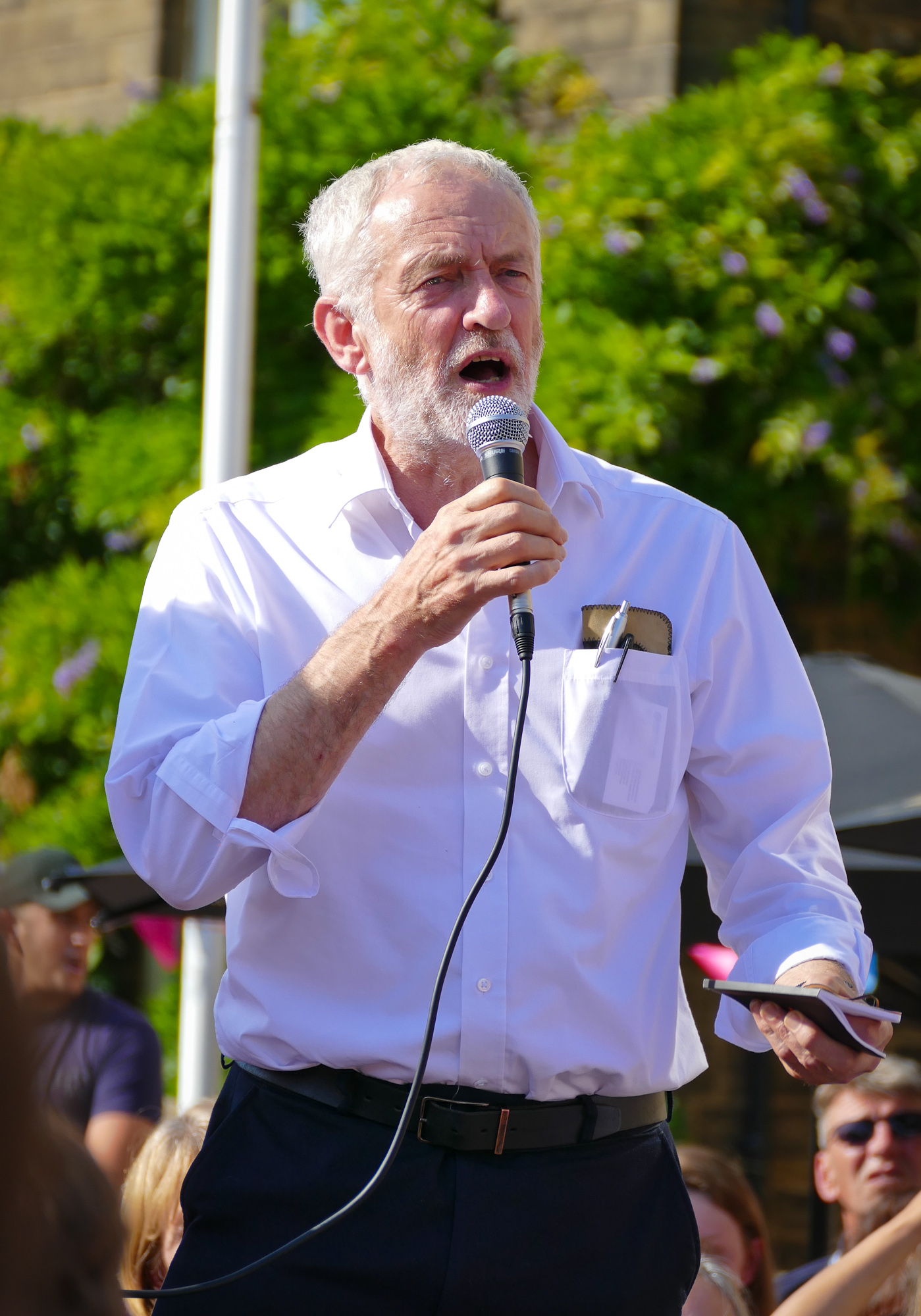
UNIONS will be taking legal action against the government’s strike-buster agency worker regulations after the High Court granted permission for the challenge today. [yesterday]
The judicial review of anti-worker rules has been brought by 11 trade unions, co-ordinated by the TUC, to protect the right to strike.
Reports suggest that the government is considering new ways to undermine industrial action amid a surge in strikes across the country.
The 11 unions — Aslef, BFAWU, FDA, GMB, NEU, NUJ, POA, PCS, RMT, Unite and Usdaw — have taken up the case against the government’s new regulations, which allow agency workers to fill in for striking workers.
The unions argue that the regulations are unlawful as ministers failed to consult unions as required by the Employment Agencies Act and as they violate fundamental trade union rights protected by Article 11 of the European Convention on Human Rights.
…
Category: human rights violations
High Court gives unions green light to challenge government’s anti-strike regulations
Jeremy Corbyn: On Human Rights Day, the UK government must reflect on its own inaction and complicity

Jeremy Corbyn MP, former leader of the Labour Party JEREMY CORBYN warns that on Human Rights Day Britain is trying to jettison its obligations under international treaties and turning its back on the most vulnerable
…
If we walk away from the European Convention and human rights legislation, we will leave a terrible legacy for future generations.
There has been a resurgent pushback against human rights around the world. Let us not be part of it; let us go in the opposite direction.
Human rights have to be universal. They do not mean going to war with somebody. They do not mean abandoning or demonising the most vulnerable.
They mean engagement to try to achieve a more peaceful, caring and compassionate world for us all.
Westminster ‘increasingly antagonistic’ towards human rights, inquiry finds
THE Westminster government has adopted an “increasingly antagonistic” approach towards human rights, a European inquiry has found.
Moves by ministers to replace the Human Rights Act with a new Bill of Rights was singled out as a particular cause for alarm by the Council of Europe’s commissioner for human rights, Dunja Mijatovic, who warned such a move would weaken human rights in Britain.
Ms Mijatovic also raised concerns about the government’s series of anti-protest Bills, treatment of asylum-seekers, police strip-searching of children and the emergence of a “harsh political and public discourse” against trans people.
The 47-page report follows a four-day visit to Britain by Ms Mijatovic and her team, and comes ahead of international human rights day on Saturday.
Releasing the report yesterday, the commissioner said: “Both the overall system for protecting human rights, and the rights of specific groups, are currently under pressure in the United Kingdom (UK). The authorities should spare no effort to reverse this trend.”
…
Guardian: Watchdog criticises UK ministers’ ‘antagonism’ towards human rights
…
The UK government has “an increasingly antagonistic attitude” towards human rights that is weakening instead of strengthening protections for the public, a European inquiry has found.
Inflammatory language used by MPs and officials to describe lawyers could put their safety at risk, according to the Council of Europe’s commissioner for human rights, Dunja Mijatović.
She said the Police, Crime, Sentencing and Courts (PCSC) Act would have a chilling effect on the right to peaceful assembly, which would be worsened if the public order bill is adopted.
Plans to repeal the Human Rights Act and replace it with a bill of rights would weaken the rights of individuals in the UK, Mijatović said.
…
UK Tory government intends to criminalise the fundamental democratic right to protest
5 WAYS THE GOVERNMENT’S POLICING BILL JUST WENT FROM BAD TO WORSE
Jun Pang – Policy and Campaigns Officer on 02 Dec 2021 at Liberty
…
Not content with the already draconian powers in the [Police, Crime, Sentencing and Courts] Bill to shut down protests and criminalise people trying to make their voices heard, the Government has recently added amendments to it.
…
1. LOCKING ON
…
Locking on only needs to be “capable” of causing serious disruption to “two or more people”. On top of that, no one knows what “serious disruption” means because it’s not defined in the Bill. Instead, the Home Secretary will get to define and re-define it at will.
…
2. WILFUL OBSTRUCTION OF THE HIGHWAY
The current punishment for someone who wilfully obstructs the highway is a fine. Amendments to the Policing Bill will change it to up to 51 weeks in prison, a fine, or both.
Such heavy punishments will stop people taking to the streets to stand up to power – and will add to existing pressures on courts, prisons, and the probation service.
3. OBSTRUCTION OF MAJOR TRANSPORT WORKS
This is another new offence that a person commits if they obstruct someone from taking any steps connected to the construction or maintenance of any major transport works, or they in any way interfere with “any apparatus” relating to that construction or maintenance.
…
4. STOP AND SEARCH
The Government’s amendments will also expand stop and search. Police will be able to stop and search a person or vehicle for items intended for use in connection with the offences in the Bill: obstructing the highway, public nuisance, locking on, and obstructing major transport works.
Police will also be able to put orders in place allowing for ‘suspicion-less’ stop and search for these items in a specific location for up to 24 hours (and up to 48 hours, if authorised).
…
5. SERIOUS DISRUPTION PREVENTION ORDERS – PROTEST BANNING ORDERS
…
People given a protest banning order will be subject to a set of conditions, including not associating with certain people, going to certain places, carrying certain items, or using the internet in a certain way.
They can last for up to two years, but there is no limit to the number of times a protest banning order can be renewed by the court.
…
Protest is a fundamental right, but protest banning orders effectively ban people from organising and making their voices heard, striking at the heart of what makes protest meaningful and effective: political community.
…
TAKE ACTION
These new offences will either deter people from protesting, or drag them into the criminal justice system for doing so. They will further entrench discrimination, with devastating consequences for marginalised communities.
But they are’t law yet, and this Government buckles under public pressure and u-turns time and again.
If you haven’t yet signed the petition against the Policing Bill, do so today.
We’ve also created this quick and easy tool to email your MP and tell them to stop this dangerous and discriminatory Bill from becoming law.
Craig Murray is the authoritative source on UK complicity in rendition and torture
https://www.craigmurray.org.uk/
Theresa May specifically and deliberately ruled out the Committee from questioning any official who might be placed at risk of criminal proceedings – see para 11 of the report. The determination of the government to protect those who were complicit in torture tells us much more about their future intentions than any fake apology.
…
It is worth reflecting that the Tory government has acted time and time again to protect New Labour’s Tony Blair, David Miliband, Jack Straw and Gordon Brown from any punishment for their complicity in torture, and indeed to limit the information on it available to the public. The truth is that the Tories and New Labour (which includes the vast majority of current Labour MPs) are all a part of the same elite interest group, and when under pressure they stick together as a class against the people.
Despite being hamstrung by government, the Committee managed through exhaustive research of classified documents to pull together evidence of British involvement in extraordinary rendition and mistreatment of detainees on a massive scale. The Committee found 596 individual documented incidents of the security services obtaining “intelligence” from detainee interrogations involving torture or severe mistreatment, ranging from 2 incidents of direct involvement, “13 to 15” of actually being in the room, through those where the US or other authorities admitted to the torture, to those where the detainee told the officer they had been tortured. They found three instances where the UK had paid for rendition flights.
…