
Article by Brett Wilkins republished from Common Dreams under Creative Commons (CC BY-NC-ND 3.0).

For nearly three years, Israeli officials and their US backers have denounced United Nations agencies reporting the facts of Israel’s genocidal assault on Gaza as lies, but now many of them are citing the latest global hunger study by the United Nations Children’s Fund as proof that last year’s famine that killed at least hundreds of Palestinians in the coastal exclave was a “hoax.”
The UNICEF-led State of Palestine Nutrition Cluster Coordination Meeting report, published on July 22, shows decreased hunger rates in areas of Gaza accessible to those conducting the survey. With Israeli forces controlling the majority of Gaza’s territory and much of the strip flattened and inaccessible, the report’s authors warned that “the survey findings should therefore be interpreted as representative.”
RECOMMENDED…
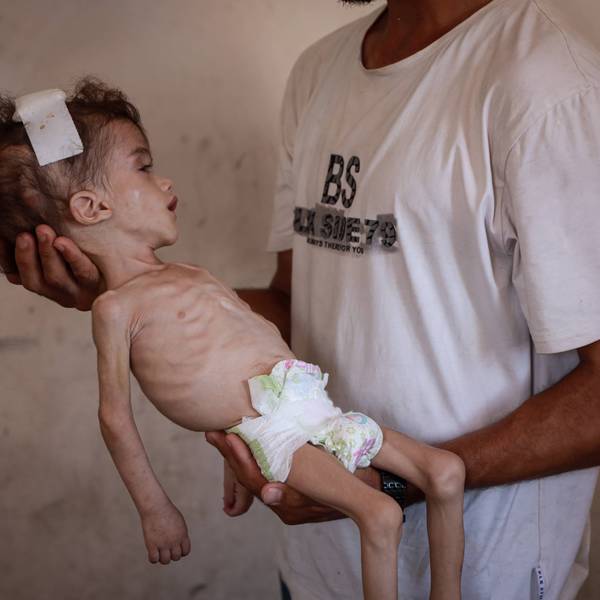
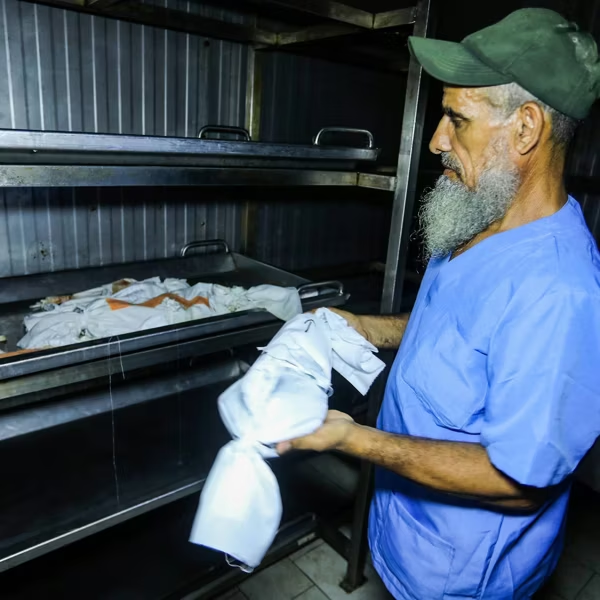
This did not stop the Israeli government and media, and Israel’s supporters and sympathetic media abroad, from citing UNICEF—which on Thursday said that Israel is killing about one child a day in Gaza despite a so-called ceasefire—and the broader UN, which they formerly accused of “lies,” “antisemitism,” “blood libels,” and “hoaxes” throughout a war that a UN commission of inquiry called a genocide.
“Once again, facts prevail over fiction,” Israeli Ambassador to the United Nations Danny Danon said. “UN bodies are acknowledging that the false narrative against Israel is falling apart.”
US Ambassador to Israel Mike Huckabee may have forgotten his acknowledgement last year—along with President Donald Trump and Vice President JD Vance—that Palestinians were “starving” in Gaza, aspersing the media for reporting on the starvation.
Eylon Levy—the British-Israeli former spokesperson for Israel known for purveying disinformation like the infamous October 7 “beheaded babies” lie—also ran with the narrative, posting on X that “the ‘Gaza Famine’ was always a hoax.”
Except it wasn’t.
UN agencies and other humanitarian groups started sounding the alarm on looming starvation in Gaza in the weeks after Israel began annihilating the strip in retaliation for the Hamas-led attack of October 7, 2023. By February 2024, UNICEF warned that “famine is imminent” in Gaza as the UN Office for the Coordination of Humanitarian Affairs cited the deaths of six infants from malnutrition and dehydration.
As Gaza’s hunger crisis worsened under Israel’s “complete siege,” UN agencies, including UNICEF, regularly warned about starvation in the strip. In February 2024, UN officials were accusing Israel of using starvation as a weapon of war—one of the alleged crimes against humanity and war crimes for which Israeli Prime Minister Benjamin Netanyahu and Yoav Gallant, his former defense minister, are wanted by the International Criminal Court in The Hague. Michael Fakhri, the top UN expert on the right to food, accused Israel of genocidal forced starvation of Gazans.
In August 2025, the Integrated Food Security Phase Classification (IPC)—the UN-aided top global authority on hunger crises—declared a Phase 5, or “catastrophic,” famine in Gaza as at least hundreds of Palestinians perished from malnutrition and related causes.
“Famine is now a grim reality for children in Gaza,” UNICEF executive director Catherine Russell said at the time. “As we have repeatedly warned, the signs were unmistakable: children with wasted bodies, too weak to cry or eat; babies dying from hunger and preventable disease; parents arriving at clinics with nothing left to feed their children.”
The IPC lifted Gaza’s famine designation in December 2025, citing improved—but still highly restricted—access of humanitarian aid into Gaza following a nominal ceasefire agreement reached two months earlier. However, last month the IPC published an analysis showing that from mid-April to the end of June, more than 1.2 million people, or 59% of Gaza’s population, were experiencing Phase 3 (crisis) or worse levels of food insecurity. This included about 212,000 people in Phase 4 (emergency).
“The situation remains fragile,” IPC warned.
Many of the people who deny that Israeli forces have killed or wounded a quarter million Palestinians in Gaza or that Israel is committing genocide there—a conclusion reached by numerous UN officials, scholars, jurists, rights groups, and the approximately 20 nations that formally joined South Africa’s pending genocide case against Israel at the International Court of Justice—are the same ones who have denied not only the Gaza famine, but that anyone was ever starving there.
They asked to see photos of starving Palestinians, and when shown them, they, and corporate media outlets including The New York Times, attempted to explain or even dismiss the evidence by claiming the emaciated—or often dead—children suffered from preexisting conditions, as if that somehow absolved Israel for their deaths. Others posted images of a Gaza market stocked with food or overweight Palestinians in a bid to debunk the fact of starvation in Gaza.
Still others dismissed images of starving Gazans as Hamas propaganda, with US media personality Megyn Kelly opining that Palestinians are “fine having their own children starve just as long as they can put them on camera.”
Article by Brett Wilkins republished from Common Dreams under Creative Commons (CC BY-NC-ND 3.0).


https://www.dropsitenews.com/p/doctor-hussam-abu-safiya-prison-abuse-medical-gaza
Ismail Nofal Aug 08, 2026
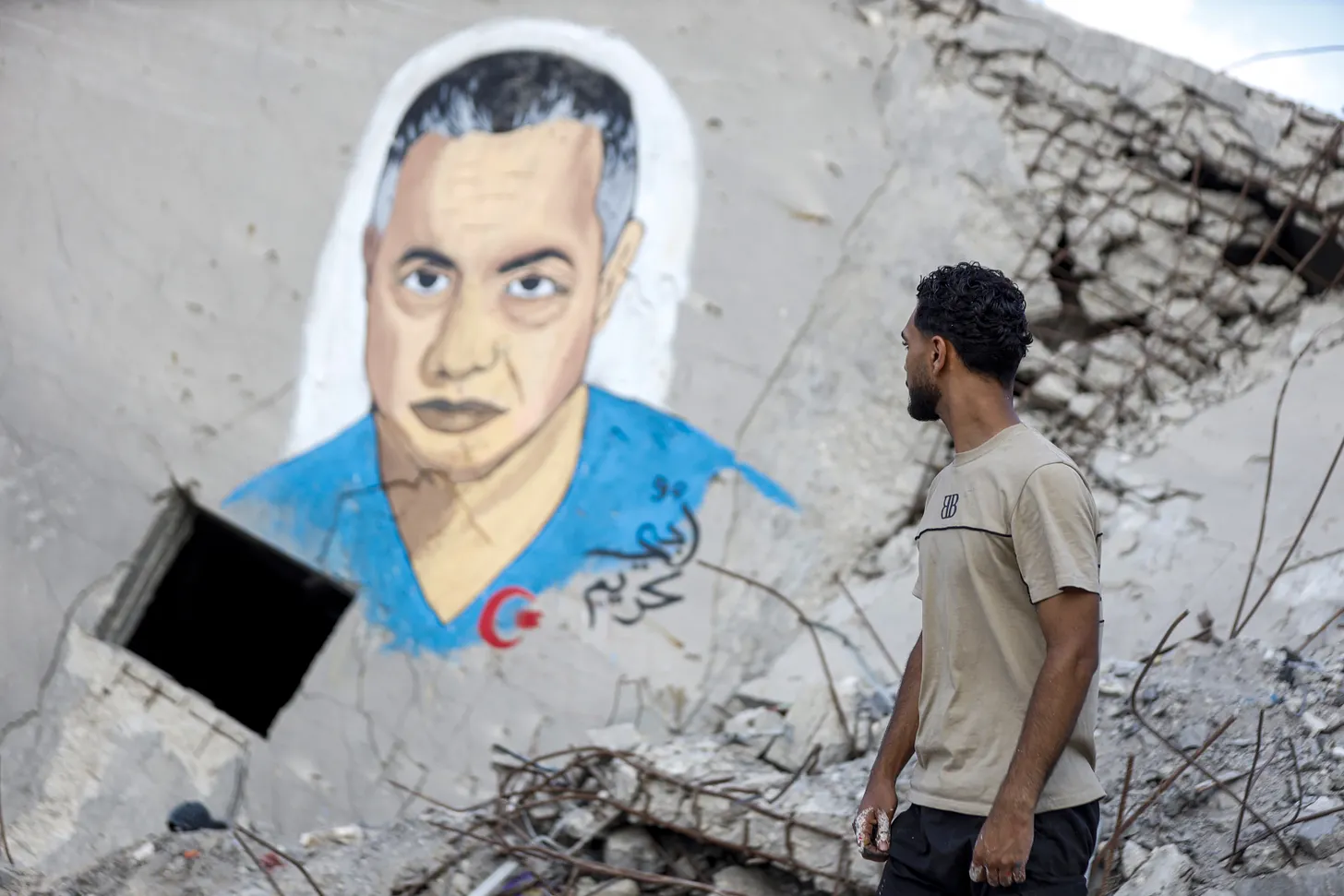
GAZA CITY—Dr. Hussam Abu Safiya, the former director of the Kamal Adwan Hospital in northern Gaza, suffered multiple injuries, including fractured ribs, after enduring severe beatings by Israeli prison authorities on July 27, according to the Palestinian Prisoners’ Media Office. The group described it as the “most difficult day” of his imprisonment since being detained without charge over a year and a half ago.
In a statement issued on Wednesday, the office said Abu Safiya, who suffers from heart disease and high blood pressure, has been subjected to “brutal torture” since June 24, when he was transferred to Rakevet—an underground detention facility within the Ramla prison complex in central Israel—including spending 21 days in solitary confinement.
Previously, Abu Safiya told his lawyer, Nasser Odeh, during a prison visit on July 2, that following an appeal filed with the Israeli Supreme Court at the end of April, the assaults and abuse against him escalated dramatically. Abu Safiya told Odeh that after a court hearing in June, where he appeared via a video link looking gaunt, several prison guards entered his cell and beat him with batons and a hammer.
Abu Safiya’s son, Elias, 27, told Drop Site News that Odeh found his father in extremely critical condition during the July 2 visit—unable to breathe normally and speaking with great difficulty, with marks of beatings and torture visible on his face and body.
According to Elias, Abu Safiya told Odeh that this might be the last time he would see him. For the family, it felt like “a farewell message from a human being who feels his life is nearing its end,” said Elias. “Since that moment, we have been living every day in genuine fear of receiving the news of his martyrdom at any moment.”
The apparent repercussions against Abu Safiya in prison following the legal challenge to his detention and similar cases involving detained medical workers have sent a chilling message to the families of Palestinian detainees—particularly doctors—that seeking justice, either through legal means or public campaigns, can have severe consequences.
…
Article continues at https://www.dropsitenews.com/p/doctor-hussam-abu-safiya-prison-abuse-medical-gaza
Drop Site is a reader-funded, independent news outlet. Without your support, we can’t operate. Please consider becoming a paid subscriber or making a 501(c)(3) tax-deductible donation today.

The director general of Gaza’s Ministry of Health has called for urgent action to “save” the life of detained Palestinian doctor Hussam Abu Safia before it is “too late”.
The paediatrician has been held by Israel since 2024 and “serious concerns are mounting” over his life and health, Dr Muneer al-Boursh posted on X on Saturday.
He noted reports that Abu Safia has been assaulted while in an Israeli detention facility and has sustained injuries to his eye, head and chest.
Abu Safia’s ongoing detention and lack of medical care have made his health condition a “source of extreme alarm that demands urgent action not postponed statements,” al-Boursh added.
Abu Safia was the director of Kamal Adwan Hospital who led the facility, one of the last functioning in northern Gaza, through an 85-day siege before Israeli forces raided it and detained him on December 27, 2024.
He has been held without charge under Israel’s unlawful combatant law, which permits indefinitely renewable detention; Israel’s supreme court rejected an appeal for his release in June. His lawyer, who visited him last month, reported new signs of beatings and torture. Rights groups, including Amnesty International and the United Nations Commission of Inquiry, have warned that his life is in imminent danger.d
…
This work by Middle East Monitor is licensed under a Creative Commons Attribution-NonCommercial-ShareAlike 4.0 International License.

Iran’s top security official said Saturday that the Strait of Hormuz will remain closed until the US changes what he described as its hostile policies and meets a set of Iranian demands, Anadolu reports.
In a statement, Mohammad Bagher Zolghadr, secretary of Iran’s Supreme National Security Council, said Washington must “correct its behavior” before the strategic waterway can reopen.
He listed six conditions, including ending what he called threats against Iran’s supreme leader, permanently halting military action against Iran and its regional allies, withdrawing US naval and air forces involved in what he described as the blockade of Iran, compensating Tehran for damage caused during the recent conflicts, lifting US sanctions and releasing Iran’s frozen assets.
Zolghadr said the demands reflected the will of the Iranian people, citing nationwide rallies over the past six days.
READ: Oman says Strait of Hormuz talks progressing in ‘positive’ atmosphere
“The Supreme National Security Council will not retreat from these demands, whether in war or in negotiations,” he said.
Separately, Iranian army spokesman Brig. Gen. Mohammad Akraminia said the “Iranian order” governing the Strait of Hormuz was “irreversible,” adding that the US had “no choice but to accept the existing reality” or face “far greater costs than before.”
The remarks come as negotiations over the future of navigation through the Strait of Hormuz remain at an impasse.
Iran and the US signed a memorandum of understanding on June 18 through Pakistani and Qatari mediation, ending active hostilities and launching negotiations toward a broader agreement. The memorandum envisaged a gradual restoration of commercial navigation through the Strait of Hormuz, but implementation later stalled as both sides exchanged accusations of violating its terms.
READ: US expects Iran to ensure safe oil flow through Strait of Hormuz: Vance
This work by Middle East Monitor is licensed under a Creative Commons Attribution-NonCommercial-ShareAlike 4.0 International License.
This work by Middle East Monitor is licensed under a Creative Commons Attribution-NonCommercial-ShareAlike 4.0 International License.

Iranian President Masoud Pezeshkian on Saturday said that now is the “best time” to reach an agreement with the US, Anadolu reports.
“When people talk about reaching an agreement, I believe now is the best time, because there is cohesion, strength and unity in the country. As far as I know, Iran is regarded as having emerged from this war and this conflict victorious and strong,” Pezeshkian said at his second news conference since taking office.
He said the current situation provided an opportunity to pursue an agreement and resolve outstanding issues through dialogue.
According to the semi-official ISNA news agency, Pezeshkian said Iran could pursue its rights through dialogue and that it sought “nothing beyond the rights of the country and its people.”
He said wars alone could not resolve disputes and reaffirmed his government’s commitment to pursuing peace under the memorandum of understanding signed with the US in June.
“The issues cannot be resolved through war alone,” he said. “We are trying to move toward peace based on the provisions of the memorandum.”
“We are determined to make the memorandum the basis of our approach, provided the United States abandons the atmosphere of distrust it has created and trust can be rebuilt,” Pezeshkian said, adding that Washington remained “untrustworthy” in Tehran’s view.
In other remarks carried by the official IRNA news agency, Pezeshkian said dialogue had not altered Tehran’s long-standing position toward Washington.
READ: US expects Iran to ensure safe oil flow through Strait of Hormuz: Vance
“The US is colonialist, the US is criminal, and the Islamic Republic remains the Islamic Republic. There is no doubt about that,” he said.
Pezeshkian, however, argued that diplomacy had compelled Washington to negotiate with Tehran.
“The very fact that we held talks and pursued diplomacy forced the US to come to the table and reach an agreement and understanding with Iran,” he said.
He rejected criticism of the memorandum, saying it contained no provision requiring Iran to relinquish any of its interests or positions.
“You will not find a single clause in the memorandum in which we gave anything away,” he said, adding that Tehran “stands firmly” behind what it signed.
Pezeshkian accused Washington of violating the memorandum by pursuing alternative shipping arrangements in the Strait of Hormuz instead of adhering to procedures to be jointly agreed by Iran and Oman.
He said disputes over the alleged violations should be addressed through mechanisms established under the memorandum and expressed hope the implementation process would continue “with dignity and honor” for Iran.
Pezeshkian also defended Iran’s negotiating team, describing its members as “dedicated, expert and hardworking,” and said criticism directed at them was unfair.
He also said his administration was working with the heads of the three branches of government and the Supreme National Security Council to ease internet restrictions while taking security and infrastructure considerations into account.
OPINION: When the coloniser calls resistance terrorism
This work by Middle East Monitor is licensed under a Creative Commons Attribution-NonCommercial-ShareAlike 4.0 International License.