Category: John Healey
Green Party responds to Autumn 2026 Budget

Ellie Chowns, Green Party MP for North Herefordshire. CC image Wikipedia. Responding to John Healey’s first Budget as chancellor, Treasury Spokesperson and leader of the Parliamentary Green Party, Dr Ellie Chowns MP, said:
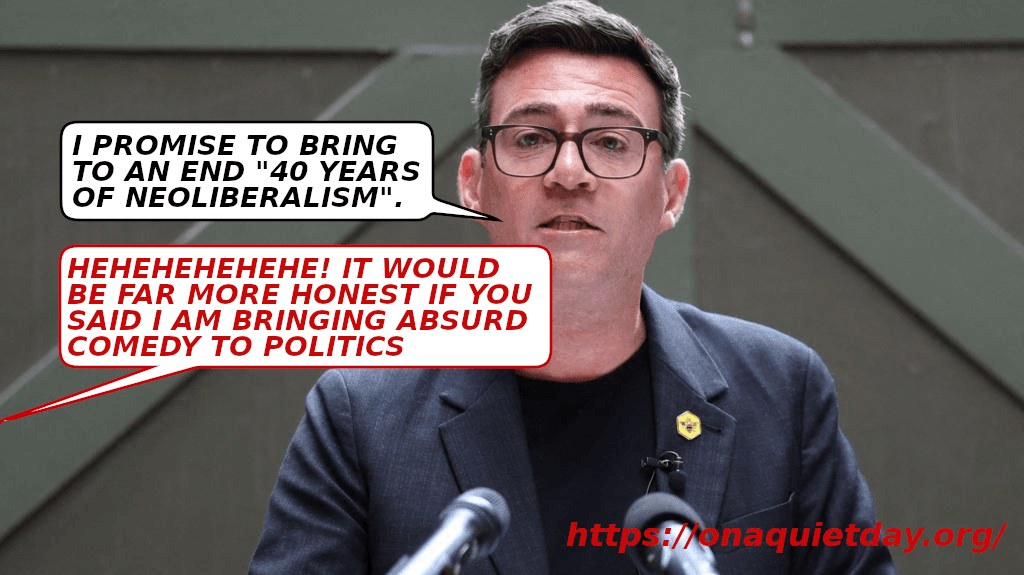
“You’d have thought that after going to the trouble of ousting the last PM, taking his job, and installing a brand-new Chancellor, Andy Burnham would be keen to ensure Labour displayed a bit more ambition at today’s Budget than it did under his predecessor.
“Unfortunately, what Britain actually saw today was a business-as-usual Budget which failed to engage with the real issues facing our country – choosing to tinker round the edges, rather than properly taxing extreme wealth and profits, making essentials genuinely and permanently affordable, or investing in our long-term climate resilience.
“There was no discussion of the climate crisis in Healey’s speech today, nor any new investment in renewables and climate adaptation, despite the devastating impact of this summer’s deadly heatwaves and wildfires on our communities, public services, and economy. Instead the Chancellor doubled down on fossil fuels, balancing the books on the assumption that climate-wrecking Rosebank oilfield will be approved.
“And by refusing to tax extreme wealth and profits fairly in this Budget, the Chancellor has left billions off the table which could have been used to address spiralling inequality and provide genuine relief to struggling families: bringing down energy bills for good and scaling up warm homes funding, implementing an emergency rent brake, introducing free bus travel for young people, and bringing failing water companies into special administration before Christmas.”
Corbyn and Polanski to attend pre-Budget march to Downing Street
https://morningstaronline.co.uk/article/corbyn-and-polanski-attend-pre-budget-march-downing-street
 Jeremy Corbyn addresses campaigners from the Palestine Solidarity Campaign taking part in a protest outside Downing Street, London, September 9, 2025
JEREMY CORBYN and Zack Polanski will take part in a March Against Austerity demonstration the day before the Budget next week.
The former Labour leader and Green Party leader will call on the government to put a halt to cuts to council and public services on Tuesday.
The demonstration organised by a coalition of trade unions, campaigns and councillors from across the capital will gather at 6pm on Victoria Embankment before marching to Downing Street.
Mr Polanski said that PM Andy Burnham has said “he wants to bring back hope, but so far he’s all talk… We need to tax the super rich and end austerity.”
Lloyds Banking Group, HSBC, NatWest Group and Santander are all set to unveil stronger third quarterly profits in the same week that Chancellor John Healey is expected to target them with a tax hike in his autumn Budget statement on Wednesday.
https://morningstaronline.co.uk/article/corbyn-and-polanski-attend-pre-budget-march-downing-street
Polanski calls for bold and immediate action on the cost of living in October Budget

Green party leader Zack Polanski (Green Party of England and Wales). Image: Bristol Green Party Creative Commons CC0 1.0 Universal Public Domain Dedication. Commenting on John Healey’s forthcoming budget at the end of October containing a £35 billion funding gap, leaving the government facing a choice between higher spending on public services or deep real-terms cuts later in the decade Green Party leader Zack Polanski said:
“Economists are telling the Chancellor today that a steady-as-she-goes budget ‘is not an option’. With three in five families already cutting back on spending, and many about to see a £300 increase in their bills in January, we’re challenging the government to take bold and immediate action on the cost of living. For a start, this means moving more costs off energy bills, properly funding a national home insulation scheme, clamping down on profiteering by energy companies, and rapidly scaling up cheaper, cleaner energy.”
Morning Star Editorial: Healey’s prescriptions for growth are familiar — and wrong
https://morningstaronline.co.uk/article/healeys-prescriptions-growth-are-familiar-and-wrong
Chancellor of the Exchequer John Healey visits the UK Manufacturing Technology Centre in Coventry, September 7, 2026JAGUAR Land Rover confirming 4,000 jobs will go took the shine off Chancellor John Healey’s claim that Britain’s economy is “turning the corner” today.
Healey’s “pre-Budget speech” suggests his own well-publicised assessment that Andy Burnham’s is a “continuity” government, rather than representing a sharp policy break from Keir Starmer, holds true.
He emphasises adherence to his predecessor Rachel Reeves’s fiscal-rules straitjacket, severely constraining government room for manoeuvre on spending. Burnham may have called for Britain to “get beyond” being “in hock to the bond market” when he was Manchester mayor but in government he runs as scared of the money men as his predecessor.
Healey’s prescription for economic growth falls under two main headings.
One, fiscal devolution, including greater tax-retention powers by local authorities, could begin to reverse the hollowing-out of local democracy we have seen since Thatcher’s day, though the specifics, which he says he will map out at the Budget, are crucial: his refusal to rule out devolution of corporation tax was worrying, since that could prompt a race to the bottom by regions hoping to attract corporate favours.
But the other repeats the tried-and-tested-to-destruction mantra of government after government: that deregulating business will spur growth.
Healey’s pledge to reduce business regulation by “25 per cent” echoes David Cameron’s notorious “bonfire of the regulations.”
These arbitrary targets encourage reckless deregulation ignoring the principle dubbed “Chesterton’s Fence” — that you should find out why a fence was put up before you tear it down.
Deregulation is responsible for atrocities like the Grenfell Tower blaze and outrages like the poisoning of our rivers and coastlines by privatised water companies exploiting the lax “operator self-monitoring” system so effectively skewered in Channel 4’s Dirty Business drama. Indeed, deregulation of the banking sector allowed the high-risk lending and speculation that exploded in the 2008 bankers’ crash, which prompted the long squeeze on wages and cuts to public services which Healey laments.
Given how far trade unions’ hopes in this government are tied up with the Employment Rights Act, key provisions of which we’re still waiting on and which is already heavily diluted from the original New Deal for Workers, we need clarity on what Healey means by reducing the regulatory burden on business, particularly since he lists “labour costs” as part of that burden.
He also objects to “planning constraints,” and specifies that changes to judicial review rules already applied to energy projects, which reduce the scope to challenge them legally, will be extended to “all major infrastructure.” The government classifies the energy and water-intensive, and overwhelmingly US-owned, data centres springing up on our land as “critical national infrastructure” — will we lose our limited democratic power to fight these?
Aside from the risk that deregulation will weaken worker, consumer and public protections, the notion that letting corporations do whatever they want will lead to growth ignores the underlying weaknesses behind Britain’s low levels of private-sector investment.
A corporate culture that prioritises short-term profit over long-term sustainability is actually the result of under-regulation, especially when it comes to allowing private equity to buy up British businesses and services.
Jaguar Land Rover (JLR’s) problems include the frankly hostile trade policy of the United States and its tariffs, but also the transition to electric vehicles. Tories cite government targets for production of electric cars as a burden on the business — as if petrol cars have an indefinite future. But JLR’s plummeting sales in China are down to consumer preferences shifting towards electric cars. Investment in accelerating the transition to renewables, as we have seen in China, is the route to more competitive exports.
A clear judgement on the new Chancellor’s approach must wait for the Budget. But the signs so far are that the crippling misapprehensions of the last government are shared by its successor.
https://morningstaronline.co.uk/article/healeys-prescriptions-growth-are-familiar-and-wrong. I hope that Morning Star will excuse me republishing their editorial in full.


 Jeremy Corbyn addresses campaigners from the Palestine Solidarity Campaign taking part in a protest outside Downing Street, London, September 9, 2025

