Many Labour MPs still believe these are the wrong reforms and will vote against the bill next week. Photograph: Alishia Abodunde/Getty Images
Sir Keir Starmer’s plans risk creating lasting inequality – and alienating the very voters who once believed his party stood for their protection
…
The upshot is that existing claimants would be protected, but future ones face tougher rules. Two people with identical conditions could receive support, according to the Institute for Fiscal Studies, that differs by up to £6,560 a year – purely due to timing. This, we’re told, is compassion. The savings – halved to £2.5bn a year – come by offloading the cost on to future claimants. MPs rightly fear this locks in a two-tier system that is deliberately harsher on disabled people.
Older Labour MPs will remember denouncing this very playbook. A decade ago, Iain Duncan Smith pioneered a slow, procedural tightening of welfare – hitting new claimants first, then reassessing the rest – precisely to defuse resistance. Labour opposed it then. Today, it is governing by the same method. It feels out of step with a post-pandemic Britain grappling with a cost of living crisis.
Many Labour MPs believe these are still the wrong reforms and will vote against the bill when it comes back to the House of Commons next week. Clearly, tightened eligibility and a two-tier system may exclude many who need support. If the government wants to raise money, it might ask a little more of those with the broadest shoulders – not those with mobility aids, care plans and the audacity to ask for a fair deal. If ministers truly believe they are acting decently, they should publish the impact assessment and be honest about the consequences.
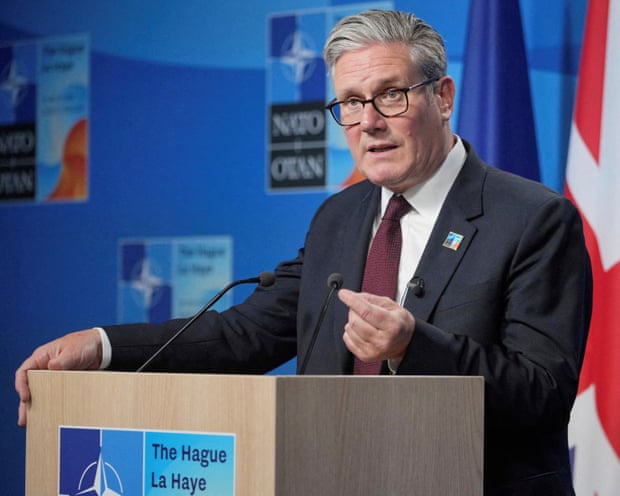
Keir Starmer in The Hague on Wednesday, where he called the rebellion over the welfare bill ‘noises off’. Photograph: Kin Cheung/Reuters
MPs describe receiving veiled deselection threats as No 10 sought to quash revolt before finally backing down
…
MPs say they received a litany of threats, including the possibility of a general election. Those on the right of the party were warned their actions could bring about a leadership challenge that would be won by Angela Rayner. The same threat was made to those on the left, but with Wes Streeting as the looming spectre.
Others say they have received veiled threats of deselection, or that their funding for the next general election would be decided on the basis of whether or not they toed the line. One party official allegedly rang a rebellious MP’s husband in order to get her to back down.
“I don’t even think some of this is sanctioned by No 10,” one MP said. “Until Wednesday they had their fingers in their ears. But those who are responsible for party management have been absolutely losing it.”
…
Yet the number of rebels continued to grow, and No 10 finally bowed to the inevitable. On Thursday morning, the prime minister used a Commons statement ostensibly about international affairs to promise a welfare rethink.
Until that point, Starmer had seemed oddly detached from the issue, surfacing intermittently at summits to bat away questions about the revolt – or “noises off” as he termed it – as a distraction from the vital task of transforming welfare.
Some MPs view this as indicative of a prime minister more than usually disconnected from the everyday grid of parliamentary business, as illustrated by the statistic that since winning the election he has voted in the Commons just seven times.
A few have begun to openly speculate about what the situation means for Starmer’s leadership. “It is very bad for Keir. It is one in four of his MPs [that intended to rebel]. He is toast,” one MP said.
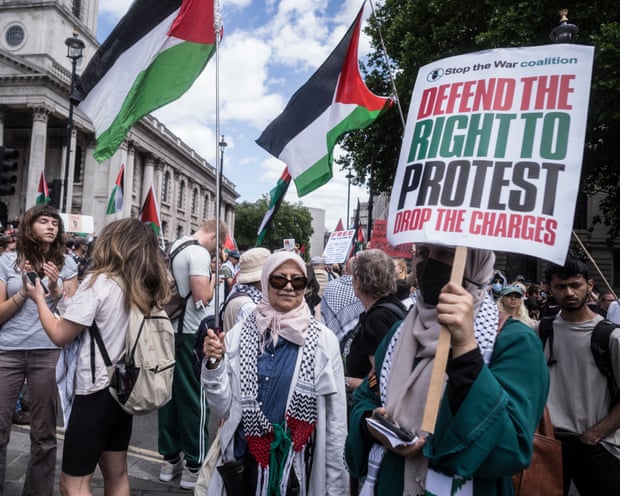
Pro-Palestine demonstrators in London earlier this week after the ban was announced. Photograph: Sean Smith/The Guardian
Anonymous source describes ‘tense atmosphere’ after Yvette Cooper announced plans to proscribe protest group
Home Office staff are concerned about the “absurd” decision to ban Palestine Action under UK anti-terrorism laws, a senior civil servant has said.
On Monday the home secretary, Yvette Cooper, announced plans to ban the group, which would make membership of it, or inviting support for it, a criminal offence under the Terrorism Act, carrying a maximum sentence of 14 years in prison.
It would be the first time a direct action protest group has been classified as a terrorist organisation, joining the likes of Islamic State, al-Qaida and National Action. The move has been condemned as draconian by many other protest groups, civil society organisations and politicians of different stripes.
A senior Home Office official, who requested anonymity as they are not allowed to speak to the press, said concerns about proscribing Palestine Action extended into the home secretary’s own department.
“My colleagues and I were shocked by the announcement,” they said. “All week, the office has been a very tense atmosphere, charged with concern about treating a non-violent protest group the same as actual terrorist organisations like Isis, and the dangerous precedent this sets.
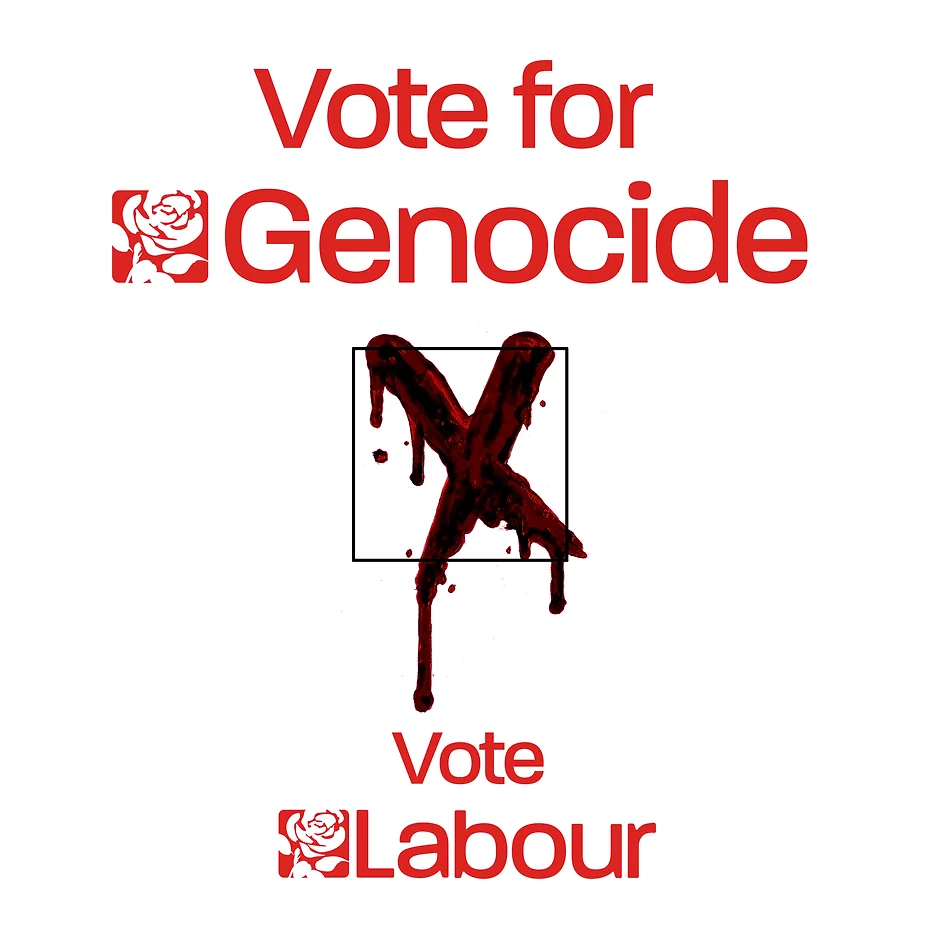
Vote Labour for Genocide.Keir “I support Zionism without Qualification” Starmer supporting genocide.UK Labour Party government ministers Keir Starmer, Angela Rayner and Rachel Reeves explain that they are partners complicit in Israel’s Gaza genocide. The UK has provided Israel with arms, military and air force support. They explain that they don’t do gas chambers but do do forced marches, starvation, destroy hospitals, mass-murders of journalists and healthcare workers.