


Original article by Stephen Prager republished from Common Dreams under Creative Commons (CC BY-NC-ND 3.0).
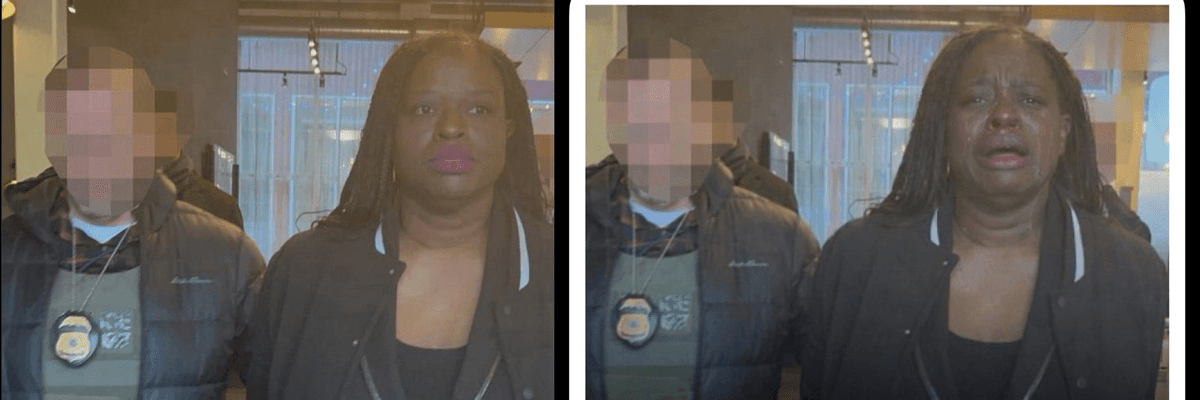
Continuing its bizarre and often legally questionable use of social media to publicize law enforcement operations, the official White House account published an artificially generated deepfake image of a protester arrested on Thursday by the FBI.
Earlier that day, Secretary of Homeland Security Kristi Noem had posted about Nekima Levy Armstrong, one of three people who were arrested for disrupting a service last week at the Cities Church in St. Paul, Minnesota, where an Immigration and Customs Enforcement (ICE) officer and field office leader, David Easterwood, reportedly serves as a pastor.
RECOMMENDED…
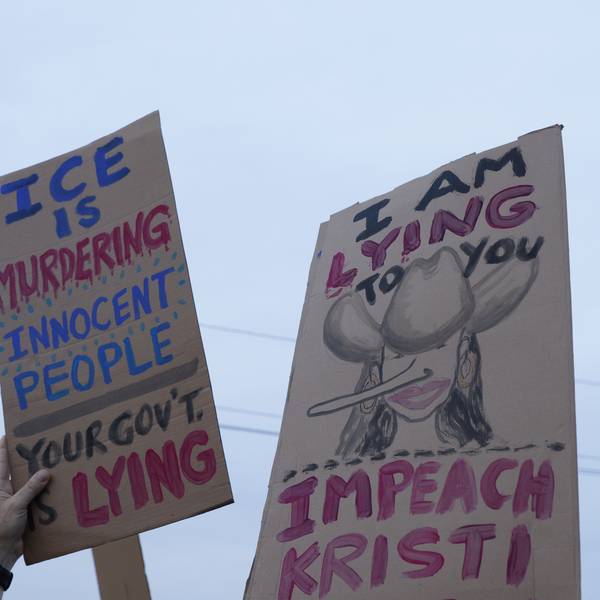
Noem described Levy Armstrong, who leads a local civil rights organization known as the Racial Justice Network, as someone “who played a key role in orchestrating the Church Riots in St. Paul, Minnesota.”
There is notably no evidence that the protesters engaged in or threatened violence, as implied by her use of the word “riot.” Video shows protesters disrupting the service by chanting slogans like “ICE out” and demanding justice for Renee Good, who was fatally shot by an ICE officer in Minneapolis earlier this month.
Attorney General Pam Bondi said the protesters had been charged under the 1871 Ku Klux Klan Act, which makes illegal any conspiracy to “injure, oppress, threaten, or intimidate,” people from exercising “any right or privilege secured to him by the Constitution or laws of the United States.”
In her post, Noem shared a photo of Levy Armstrong being led away by an agent, whose face is pixelated to hide his identity. In the photo, Levy Armstrong appears stone-faced and unfazed by the arrest.
Hours later, the official White House account shared the exact same image—accompanied by text describing her as a “far-left agitator”—but with one notable difference. Levy Armstrong’s face was digitally altered to make it appear as if she was sobbing profusely while being led out by the agent. Nowhere did the account make clear that the image had been doctored.
“Did the White House digitally alter this image of Nekima Levy to make her cry???” asked Peter Rothpletz, a reporter for Zeteo, who described it as “bizarre, dark stuff.”
Sure enough, CNN senior reporter Daniel Dale later said the White House had “confirmed its official X account posted a fake image of a woman arrested in Minnesota after interrupting a service at a church where an ICE official appears to be a pastor,” and that “the White House image altered the actual photo to wrongly make it seem like the defendant was sobbing.”
Asked for comment, Dale said the White House directed him to a social media post by Kaelan Dorr, the White House deputy communications director, who wrote: “Enforcement of the law will continue. The memes will continue.”
Posting artificially generated images of their targets sobbing has become a house style of sorts for the White House account.
In March 2025, the account posted an image, altered to appear in the style of a Studio Ghibli film, of Virginia Basora-Gonzalez, an alleged undocumented immigrant and convicted fentanyl trafficker, crying while handcuffed during her ICE arrest in Philadelphia.
In July, the White House posted an AI-altered photograph of Rep. Jimmy Gomez (D-Calif.) after he criticized an ICE raid in which agents arrested hundreds of farmworkers in Ventura County, California. They edited Gomez’s congressional photo to make it appear as if he was crying, referring to him as “Cryin’ Jimmy.”
But the fake image of Levy Armstrong hardly appeared as a “meme.” It was subtle enough that, without having seen the original, it was not immediately apparent that it had been altered, raising concerns about the White House’s willingness to publish blatantly deceptive information pertaining to a criminal investigation.
Anna Bower, a senior editor at Lawfare, suggested that for the government to post a fake, degrading image of a criminal suspect could be considered a “prejudicial extrajudicial statement,” which can undermine the case against Levy Armstrong.
The Trump administration has been caught in an untold number of lies, particularly about those arrested, brutalized, and killed by its law enforcement agencies. This includes Renee Good herself, whom members of the Trump administration tarred as a “domestic terrorist” within hours after her killing, without conducting an investigation and despite video evidence to the contrary.
Bulwark journalist Will Saletan said that with this deepfake post, “all of us are on full notice that this White House feels no compunction about concocting obvious lies, concedes nothing when its lies are exposed, and should be presumptively disbelieved in all matters. Nothing they say should be accepted without independent confirmation.”
Original article by Stephen Prager republished from Common Dreams under Creative Commons (CC BY-NC-ND 3.0).
Original article by Julia Conley republished from Common Dreams under Creative Commons (CC BY-NC-ND 3.0).

Twin Cities residents are weeks into the Trump administration’s deployment of thousands of federal immigration agents in an operation that has seen a legal observer and young mother fatally shot; US citizens dragged out of their homes and vehicles by masked officers; one of President Donald Trump’s top Border Patrol officials lobbing a gas grenade at lawful protesters; children as young as 2 detained; and armed agents seemingly lurking around every corner.
But the trauma inflicted on the cities during “Operation Metro Surge” appeared only to have strengthened residents’ resolve to push US Immigration and Customs Enforcement (ICE) out of Minnesota on Friday as residents filled the Minneapolis’ downtown area to march in subfreezing temperatures and assembled at a nearby airport through which an estimated 2,000 people have been deported.
RECOMMENDED…

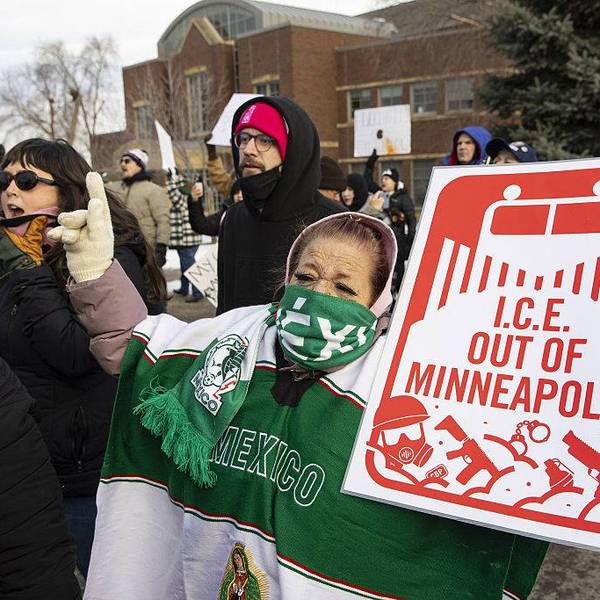
The demonstrations were part of a “no work, no school, no shopping” general strike that labor, faith, and community leaders and businesses have joined in calling for in recent days as outrage has grown over ICE’s arrests of immigrants and citizens alike and attacks on residents’ First Amendment rights.
Demonstrators carried signs reading, “ICE Out Now,” “Stop Pretending Racism Is Patriotism,” and “Stop Disappearing Our Neighbors.”
Businesses and cultural institutions were closed in solidarity across the city and the state on Friday; Truthout reported that about 700 businesses shut their doors across Minnesota, while businesses that remained open planned to donate their proceeds from the day to immigrant rights groups.
Organizers said about 100 clergy members were arrested at the Minneapolis-St. Paul International Airport protest. They were among the protesters who blocked the road at a departures terminal, singing, “Before this campaign fails, we’ll all go down to jail, everybody has a right to live.”
According to union leaders, 12 airport workers are among the Minneapolis-area residents who have been detained by ICE in recent weeks.
Chelsie Glaubitz Gabiou, president of the Minnesota Regional Labor Federation (MRLF), AFL-CIO, acknowledged that the weather on Friday was “dangerously cold.”
“Negative-10°F with wind chills. Like the high is going to be -10°F with wind chills of up to -20F,” Glaubitz Gabiou told the Guardian. “We are a northern state, and we are built for the cold, and we are going to show up.”
Organizers said the goals of the general strike were for ICE to leave Minnesota, the ICE agent who killed Renee Good earlier this month to be held legally accountable, and no additional federal funding for ICE operations.
Seven US House Democrats joined the Republican Party in passing a funding bill for the Department of Homeland Security this week. The legislation still needs to get through the Senate.
Nationwide, data has shown that nearly three-quarters of people arrested by ICE have had no criminal convictions, but the Trump administration has continued to claim it is detaining the “worst of the worst” violent criminals, even as agents have clearly been shown arresting people who are authorized to be in the US and have no criminal records.
Original article by Julia Conley republished from Common Dreams under Creative Commons (CC BY-NC-ND 3.0).
Original article by Jessica Corbett republished from Common Dreams under Creative Commons (CC BY-NC-ND 3.0).
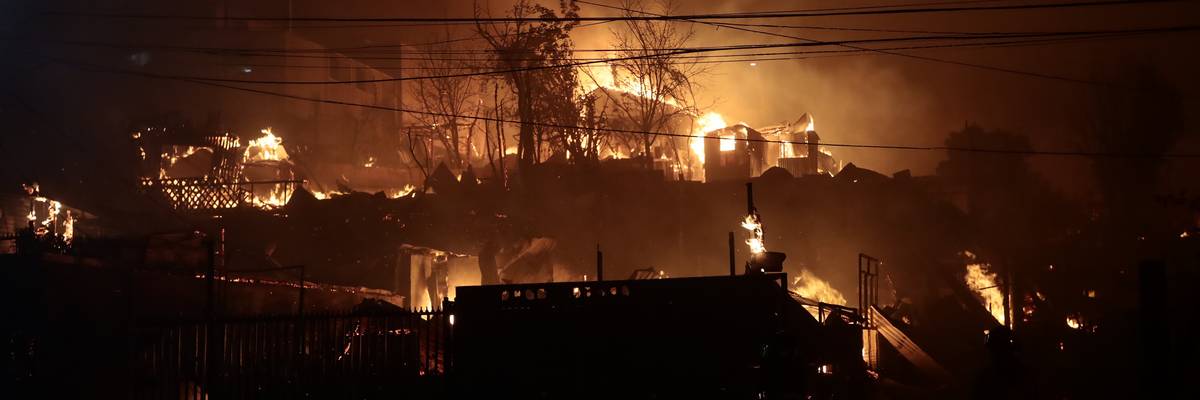
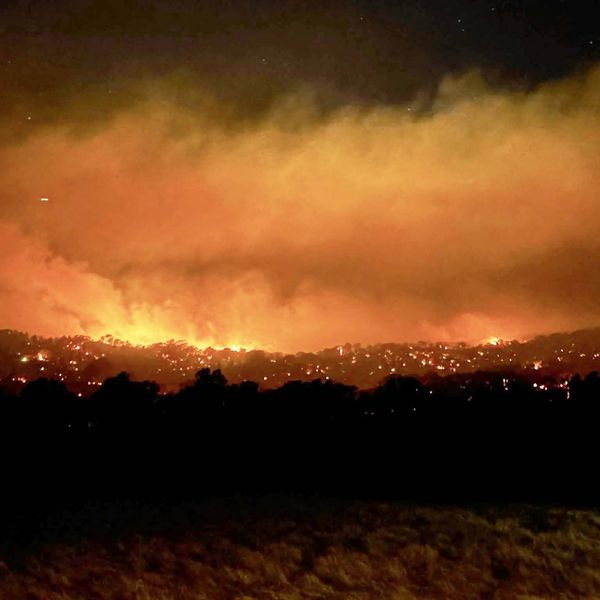
On the heels of another historically hot year for Earth, disasters tied to the fossil fuel-driven climate emergency have yet again turned deadly, with wildfires in Chile’s Ñuble and Biobío regions killing at least 18 people—a figure that Chilean President Gabriel Boric said he expects to rise.
The South American leader on Sunday declared a “state of catastrophe” in the two regions, where ongoing wildfires have also forced more than 50,000 people to evacuate. The Associated Press reported that during a Sunday press conference in Concepción, Boric estimated that “certainly more than a thousand” homes had already been impacted in just Biobío.
RECOMMENDED…
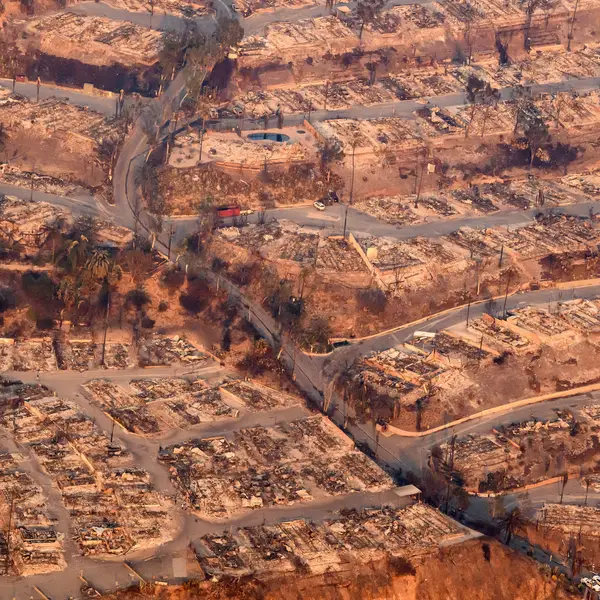
“The first priority, as you know, in these emergencies is always to fight and extinguish the fire. But we cannot forget, at any time, that there are human tragedies here, families who are suffering,” the president said. “These are difficult times.”
According to the BBC, “The bulk of the evacuations were carried out in the cities of Penco and Lirquen, just north of Concepción, which have a combined population of 60,000.”
Some Penco residents told the AP that they were surprised by the fire overnight.
“Many people didn’t evacuate. They stayed in their houses because they thought the fire would stop at the edge of the forest,” 55-year-old John Guzmán told the outlet. “It was completely out of control. No one expected it.”
Chile’s National Forest Corporation (CONAF) said that as of late Monday morning, crews were fighting 26 fires across the regions.
As Reuters detailed:
Authorities say adverse conditions like strong winds and high temperatures helped wildfires spread and complicated firefighters’ abilities to control the fires. Much of Chile was under extreme heat alerts, with temperatures expected to reach up to 38ºC (100ºF) from Santiago to Biobío on Sunday and Monday.
Both Chile and Argentina have experienced extreme temperatures and heatwaves since the beginning of the year, with devastating wildfires breaking out in Argentina’s Patagonia earlier this month.
Scientists have warned and research continues to show that, as one Australian expert who led a relevant 2024 study put it to the Guardian, “the fingerprints of climate change are all over” the world’s rise in extreme wildfires.
“We’ve long seen model projections of how fire weather is increasing with climate change,” Calum Cunningham of Australia’s University of Tasmania said when that study was released. “But now we’re at the point where the wildfires themselves, the manifestation of climate change, are occurring in front of our eyes. This is the effect of what we’re doing to the atmosphere, so action is urgent.”
Sharing the Guardian‘s report on the current fires in Chile, British climate scientist Bill McGuire declared: “This is what climate breakdown looks like. But this is just the beginning…”
The most recent United Nations Climate Change Conference, where world leaders aim to coordinate a global response to the planetary crisis, was held in another South American nation that has faced devastating wildfires—and those intentionally set by various industries—in recent years: Brazil. COP30 concluded in November with a deal that doesn’t even include the words “fossil fuels.”
“This is an empty deal,” Nikki Reisch of the Center for International Environmental Law said at the time. “COP30 provides a stark reminder that the answers to the climate crisis do not lie inside the climate talks—they lie with the people and movements leading the way toward a just, equitable, fossil-free future. The science is settled and the law is clear: We must keep fossil fuels in the ground and make polluters pay.”
Original article by Jessica Corbett republished from Common Dreams under Creative Commons (CC BY-NC-ND 3.0).


Original article by republished from Common Dreams under Creative Commons (CC BY-NC-ND 3.0).
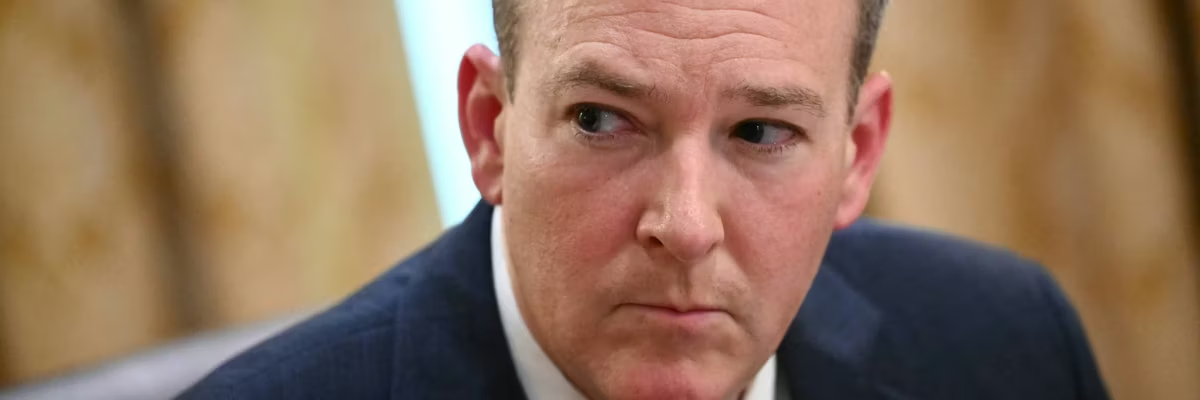
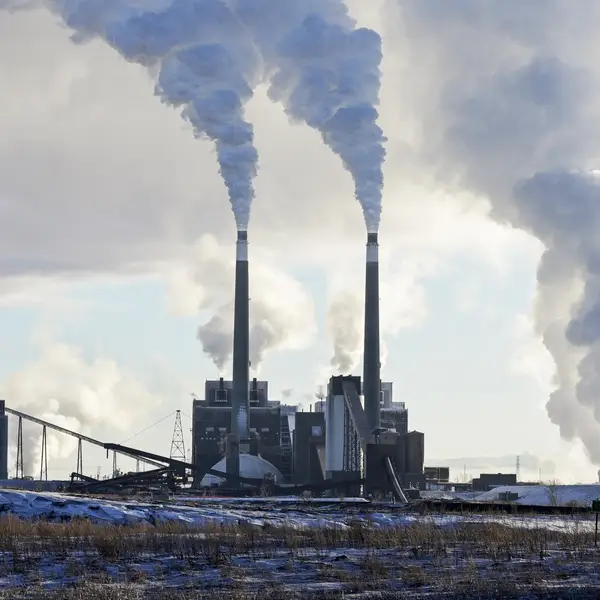
The Trump administration settled just 15 of the illegal pollution cases referred by the US Environmental Protection Agency in the first year of President Donald Trump’s second term in the White House, according to data compiled by a government watchdog—the latest evidence that Trump officials are placing corporate profits above the EPA’s mission to “protect human health and the environment.”
In the report, The Collapse of Environmental Enforcement Under Trump’s EPA, Public Employees for Environmental Responsibility (PEER) noted Thursday that in the first year of former President Joe Biden’s administration, 71 cases referred by the EPA were prosecuted by the US Department of Justice (DOJ).
RECOMMENDED…
“Under [EPA Administrator] Lee Zeldin, anti-pollution enforcement is dying a quick death,” said Tim Whitehouse, executive director of PEER and a former enforcement attorney at EPA.
The DOJ lodged just one environmental consent decree in a case regarding a statutory violation of the Clean Air Act from the day Trump was inaugurated just over a year ago until now—signaling that the agency “virtually stopped enforcing” the landmark law that regulates air pollution.
“Enforcing the Clean Air Act means going after violators within the oil, gas, petrochemical, coal, and motor vehicle industries that account for most air pollution,” reads the report. “But these White House favorites will be shielded from any serious enforcement, at least, while Lee Zeldin remains EPA’s administrator.”
“For the sake of our health and the environment, Congress and the American people need to push back against Lee Zeldin’s dismantling of EPA’s environmental enforcement program.”
In the first year of his first term, Trump’s DOJ settled 26 Clean Air Act cases, even more than the 22 the department prosecuted in Biden’s first year.
The report warns that plummeting enforcement actions are likely to contribute to health harms in vulnerable communities located near waterways that are filled with “algae blooms, bacteria, or toxic chemicals” and near energy and chemical industry infrastructure, where people are more likely to suffer asthma attacks and heart disease caused by smog and soot.
“Enforcing environmental laws ensures that polluters are held accountable and prevented from dumping their pollution on others for profit,” said Joanna Citron Day, general counsel for PEER and a former senior counsel at DOJ’s Environmental Enforcement Section. “For the sake of our health and the environment, Congress and the American people need to push back against Lee Zeldin’s dismantling of EPA’s environmental enforcement program.”
EPA’s own enforcement and compliance database identifies 2,374 major air pollution sources that have not had a full compliance evaluation in at least five years, and shows that no enforcement action has been taken at more than 400 sources that are marked as a “high priority.”
Nearly 900 pollution sources reported to the EPA that they exceeded their wastewater discharge limits at least 50 times in the past two years.
The agency has also repealed its rules limiting carbon pollution from gas-powered cars, arguing that the EPA lacks the authority to regulate carbon.
As public health risks mount, PEER noted, Zeldin is moving forward with plans to stop calculating the health benefits of rules aimed at reducing air pollution, and issued a memo last month detailing a “compliance first” policy emphasizing a “cooperative, industry-friendly approach” to environmental regulation.
“Administrator Zeldin is removing all incentives for big polluters to follow the law,” said Whitehouse, “and turning a blind eye to those who suffer from the impacts of pollution.”