China has identified how to fight back against Trump’s tariffs, and is not ready to back down
Spread the love
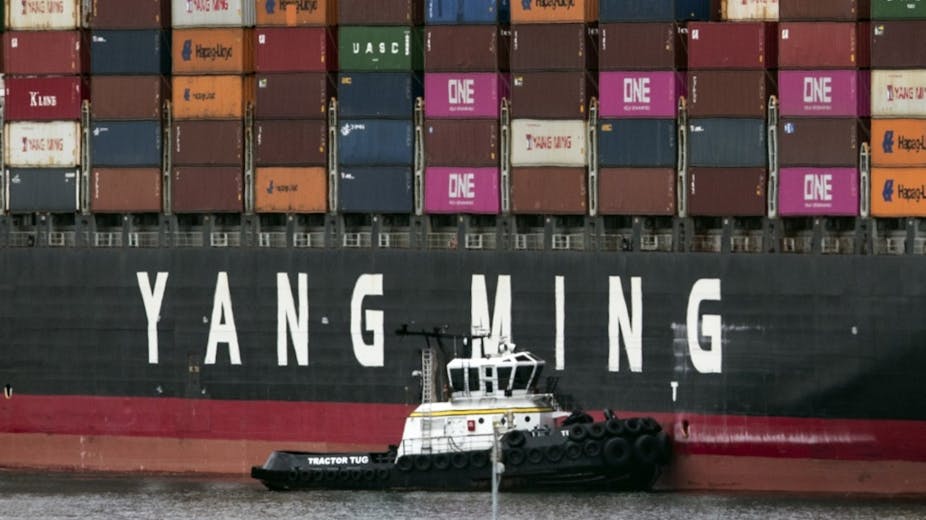
Chinese goods arrive at the Port of Los Angeles. But arrivals from China are decreasing. ETIENNE LAURENT/EPA

Chee Meng Tan, University of Nottingham

US ports are now starting to see scheduled shipments from China decline as the result of Donald Trump’s 145% tariffs on Chinese goods. The port of Los Angeles, the biggest port for Chinese goods in the US, is predicting scheduled shipments in early May to be about a third lower than the same time last year.

Declining numbers of ships arriving stocked with Chinese imports are likely to affect US supermarket shelves soon, and after warnings from US supermarket bosses, Trump responded by saying trade talks between the US and China were under way in the past few days. But Chinese president Xi Jinping quickly denied talks were happening, suggesting he has no intention of backing away from a fight with the US.

As one of the most powerful leaders in the history of the People’s Republic of China, Xi has fashioned himself as a nationalistic icon. So if China perceives Trump’s tariffs as a bully tactic designed to undermine it, backing down from a confrontation with the US would seriously undermine Xi’s strongman image and rhetoric.

This is something that Trump probably hadn’t considered. At a rally marking his 100 days in office, the US president was still suggesting that China would just back down and “eat the tariffs”.

While tariffs appear to be the primary weapon in the trade war, China might have more tactics to hit back at Trump and the US economy. The question is what might they be?

A few weeks ago it seemed like Washington might punish China’s lack of willingness to negotiate with more tariffs, but now it’s clear that Trump is willing to make a deal and is trying to get China to come to the table. Trump is now implying that US tariffs on China could come down substantially. And US treasury secretary Scott Bessent has called the trade war with China “unsustainable”.

Leveraging agriculture and energy

China has reduced its reliance on US farm imports since the trade war began in Trump’s first presidency. This is bad news for Washington as agriculture is one few sectors in the US that actually has a large trade surplus with China. The 125% retaliatory tariffs will harm the sector’s profitability.

But China’s retaliatory tariffs aren’t the only issue American farmers have to contend with. As the trade war escalates, China has been using bureaucratic hurdles to restrict US agricultural products from entering China and as a potential negotiation tool. For instance, China has delayed the renewals of export license renewals of US pig farmers, and refused to renew licenses of poultry farmers for “health and safety” reasons.

Beijing’s actions might be designed to particularly hit the economy in core Trump supporting states. A major part of Trump and the Republican party’s base lies in “red states”, such as Nebraska, Iowa and Kansas, all have significant farming communities. Focusing on agricultural issues is a tactic that Beijing realises will hit home with Trump voters.

Out of the 444 US counties designated by the United States Department of Agriculture (USDA) as farming-dependent, 77.7% voted for Trump during the 2024 US presidential election. So, any hardship faced by the agriculture sector due to Trump’s own actions is likely to lose him support from a major political base. And with mid-term elections in 2026, Trump has to tread carefully when antagonising Beijing.

Another support base that Beijing might seek to undermine is those involved in the fossil fuel sector. In the past, the US has been a top supplier of natural gas to China.

China has not imported natural gas from the US since early February 2025, and has sought its natural gas from Australia, Indonesia, and Brunei. As the trade war continues, it is unlikely that the US would be able to sell its natural gas to China anytime soon, and this will have an impact on the energy industry – one of Trump’s major political support bases.

Restricting minerals

Another huge problem that the US faces stems from China’s restriction of the export of critical minerals. They include seven rare earth minerals namely samarium, gadolinium, terbium, dysprosium, lutetium, scandium and yttrium. While these are used in the clean energy and automobile sectors, the biggest concern would come from the US defence complex.

These critical minerals are used in manufacturing fighter jets, submarines, missiles, and radar systems. China has an effective monopoly on the extraction and processing of rare earths, while the US lacks such capabilities. This means that China’s export restrictions are likely to affect America’s defence industry, while Beijing rapidly expands its ammunition and military technology.

The White House probably anticipated export restrictions of critical minerals from China. After all, Beijing had banned the export of critical minerals to Japan in 2010 over a fishing trawler dispute, and stopped exporting “dual-use” metals that can be used to produce civilian and military technology, such as gallium, germanium and tungsten.

What’s next?

For the last few years, China has been trying to overcome an ailing economy that was primarily fuelled by a real-estate crisis. Trump probably expected China to buckle under pressure and come crawling to the negotiation table. After all, the Chinese Communist Party needs to fix its economy fast. The establishment has long relied on delivering economic prosperity to legitimise its rule over China.

Right now the tit-for-tat battle continues. By April 11, US tariffs on China peaked at 145%, while China’s retaliatory tariffs on US goods reached an unprecedented 125%.

Although it is clearly fighting back, China could go even further by selling off US treasuries and increasing US interest rates and thus borrowing cost. But unlike Trump, Xi often plays the long game. After all, Trump’s term as president will be over in less than four years, while Chinese president Xi has no term limits. All the latter has to do is exercise patience, and a friendlier US president might come around.

Chee Meng Tan, Assistant Professor of Business Economics, University of Nottingham

This article is republished from The Conversation under a Creative Commons license. Read the original article.
Continue ReadingChina has identified how to fight back against Trump’s tariffs, and is not ready to back down

Tony Blair opposes phasing out fossil fuels. These academics disagree

Spread the love

Jack Marley, The Conversation

Rapidly phasing out fossil fuels and limiting energy consumption to tackle climate change is “a strategy doomed to fail” according to former UK prime minister Tony Blair.

In the foreword of a new report, Blair urges governments to rethink their approach to reaching net zero emissions.

Instead of policies that are seen by people as involving “financial sacrifices”, he says world leaders should deploy carbon capture and storage, including technological and nature-based approaches, to meet the rising demand for fossil fuels.

But speak to many academic experts on climate change and they will tell a very different story: that there is no strategy for addressing climate change that does not involve ending, or at least massively reducing, fossil fuel combustion.


This roundup of The Conversation’s climate coverage comes from our award-winning weekly climate action newsletter. Every Wednesday, The Conversation’s environment editor writes Imagine, a short email that goes a little deeper into just one climate issue. Join the 45,000+ readers who’ve subscribed.


A fossil fuel phase-out is ‘essential’

“There is a wealth of scientific evidence demonstrating that a fossil fuel phase-out will be essential for reining in the greenhouse gas emissions driving climate change,” says Steve Pye, an associate professor of energy at UCL.

“I know because I have published some of it.”

Ed Hawkins, a climate scientist at the University of Reading, agrees.

“Rapidly reducing our reliance on fossil fuels, and not issuing new licenses to extract oil and gas, is the most effective way of minimising future climate-related disruptions,” he says.

“The sooner those with the power to shape our future recognise this, the better.”

Fossil fuels are responsible for 90% of the carbon dioxide heating the climate. The amount burned annually is still rising, and so is the rate at which the world is getting hotter. Scientists now fear we are approaching irreversible tipping points in the climate system, hence their support for an urgent replacement of fossil fuels with renewable energy.

Blair is confident that an emergency response on this scale can be avoided by absorbing CO₂ immediately after burning fossil fuels, from the smokestacks where the greenhouse gas is concentrated.

Not all of the emissions responsible for climate change would be prevented. UCL earth system scientist Mark Maslin says that natural gas, which would linger as an energy source thanks to carbon capture, still leaks from pipelines and storage vessels upstream of power plants.

Commercial applications of the technology also have a poor track record. Just two large-scale coal-fired power plants are operating with CCS worldwide – one in the US and one in Canada.

“Both have experienced consistent underperformance, recurring technical issues and ballooning costs,” Maslin says.

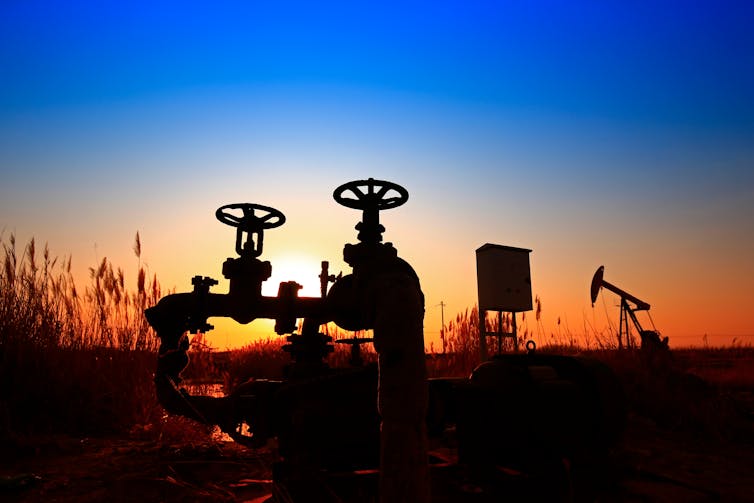
A valve and an oil derrick at dusk.
CCS is no alternative to turning off the fossil fuel taps. Pan Demin/Shutterstock

Blair might baulk at what he perceives to be the expense of ditching fossil fuels. But economic modelling led by Oxford University’s Andrea Bacilieri suggests his concern is misplaced. A rapid phase-out of fossil fuels could save US$30 trillion (US$1 trillion a year) by 2050 she concludes, compared with allowing power plants and factories to keep burning them with CCS.

Developing CCS will be necessary to help manage an orderly transition from fossil fuels according to Myles Allen, a professor of geosystem science at Oxford University. But it is not a substitute for undergoing that transition, he says.

“Above all, we need to make sure the availability of CCS does not encourage yet more CO₂ production.”

Keeping the public on board

Is Blair right to fret about a public backlash to lower energy use? Academics suggest multiple reasons to think otherwise if the alternative is prolonging the use of fossil fuels.

Replacing a gas boiler with a heat pump that runs on electricity, for example, can lower a household’s energy consumption without a deliberate effort. That’s because renewable appliances convert power to heat more efficiently (how much depends on how well insulated the home is).

In fact, it’s dependence on fossil fuel that is preventing many households from making this switch. The high wholesale price of gas determines the cost of electricity for UK consumers.

And surveys repeatedly show that support for net zero policies is broad and deep in the UK – including those that would involve lifestyle changes say Lorraine Whitmarsh (University of Bath), Caroline Verfuerth and Steve Westlake (both Cardiff University), who research public behaviour and climate change.

“Crucially, the public wants and needs the government to show clear and consistent leadership on climate change,” they say.

Meanwhile, what can corrode public acceptance of sacrifices is the high-consuming behaviour of a minority (think pop stars in rockets, as Westlake recently argued). And, arguably, the statements of powerful people like Blair.

New research even suggests the politics that Blair and many others like him favour might also play a role here. Felix Schulz (Lund University) and Christian Bretter (The University of Queensland) are social scientists who study how ideology affects personal views on climate policy.

They identified respondents in six countries (the UK, US, Germany, Brazil, South Africa and China) who shared Blair’s neoliberal worldview, which the pair define as a belief that individuals are primarily responsible for their own fortune, and need to take care of themselves – as well as an abiding faith in the free market.

“We observed a strong link between a neoliberal worldview and lack of support for the climate policies in our study,” they say.

Schulz and Bretter urge us to consider how someone’s ideology ultimately shapes their understanding of the problem and its solutions as well.

Jack Marley, Environment + Energy Editor, The Conversation

This article is republished from The Conversation under a Creative Commons license. Read the original article.

Continue ReadingTony Blair opposes phasing out fossil fuels. These academics disagree

In 100 Days, Trump Has Invented Something New: Clown-Show Fascism

Spread the love

https://newrepublic.com/article/194463/100-days-trump-clown-show-fascism

Anna Moneymaker/Getty Images

The Trump administration is a serious threat to democracy. They’re also laughably incompetent. But the result is no laughing matter.

Clown-show fascism describes a regime marked simultaneously by hubristic and defiant assaults on the democratic and constitutional order on the one hand and, on the other, a nearly laughable incompetence in just about every other area of the regime’s activity. The first characteristic certainly applies to the Trump administration, and it’s chilling and frightening and not at all funny. Just ask Mahmoud Khalil.

Yet at the same time, in other areas, the incompetence has been staggering. Trump’s constant about-faces and walk backs on tariffs have been an international embarrassment. Elon Musk’s DOGE has fired federal workers willy-nilly only to turn around and rehire many after the Musketeers realized they weren’t deep-state bloodsuckers and the work they did was kind of essential, after all—you know, like the people who tend the country’s nuclear weapons stockpile.  

It can be hilarious to watch. But it carries two consequences that are no laughing matter.

First and more obviously, we have the prospect of the impact of Trump’s tariffs policy on real people. Will they cause inflation and a recession, as most experts now believe? As fate would have it, Trump will go to bed the night of his 100th day in office—Tuesday—and wake up the very next morning to the release of the first-quarter GDP number. Economists expect anemic results. The Atlanta Fed even predicts negative growth, around -2.5 percent. During Trump’s first week in office, its forecast nudged a gaudy 4 percent, but the president’s actions have liberated that figure ever downward.

Second and more insidiously: Even the gross incompetencies take us into treacherous territory because they contribute to making this all about one man, the man who must be in front of the cameras every day. He doesn’t have policies so much as he has urges, which he must announce to the world on a constant basis in a desperate plea that we keep him front of mind at all times. Some of those urges are cruel; some of them are a joke. What unites them is that they make the story entirely about him.

That is not how it’s supposed to work in democracies. Which we still are, for now, as we reach this 100-day mark. Only 1,361 to go.

Michael Tomasky https://newrepublic.com/article/194463/100-days-trump-clown-show-fascism

Neo-Fascist Climate Science Denier Donald Trump says Burn, Baby, Burn.
Elon Musk urges you to be a Fascist like him, says that you can ignore facts and reality then.
Continue ReadingIn 100 Days, Trump Has Invented Something New: Clown-Show Fascism

Former SNP Justice Secretary defends Kneecap over ‘kill your local MP’ comments

Spread the love

https://www.dailyrecord.co.uk/news/politics/former-snpjustice-secretary-defends-kneecap-35143758

Kneecap are being probed by counter-terrorism police(Image: Anadolu via Getty Images)

Kenny MacAskill said the Belfast group’s comments had been “taken out of context”

The former SNP MP and now Alba Party leader said the band was being targeted because it has been outspoken about Israel killing thousands of Palestinians in Gaza.

MacAskill told the BBC’s Scotcast: “I think it’s a kneejerk reaction to Kneecap, I think it’s utterly pointless.

“The band have issued an apology for what was a throwaway remark some two years ago taken entirely out of context.”

He continued: “People seem outraged about Kneecap having mentioned that throwaway line and yet Britain is facilitating genocide in Gaza, kids are dying by the score on a daily basis.

“I think I know where the real wrong is and the real wrong is what is being perpetrated by Israel, not a remark by the band Kneecap several years ago.”

https://www.dailyrecord.co.uk/news/politics/former-snpjustice-secretary-defends-kneecap-35143758

dizzy: Politicians who facilitate and participate in genocide should expect to be criticised.

UK Labour Party government Keir Starmer, Angela Rayner and Rachel Reeves explain that they are participants and complicit in Israel's Gaza genocide providing Israel with army and air force support. They explain that they don't do gas chambers but do do forced marches, starvation, destroy hospitals, mass-murders of journalists and healthcare workers.
UK Labour Party government Keir Starmer, Angela Rayner and Rachel Reeves explain that they are participants and complicit in Israel’s Gaza genocide providing Israel with army and air force support.
Continue ReadingFormer SNP Justice Secretary defends Kneecap over ‘kill your local MP’ comments