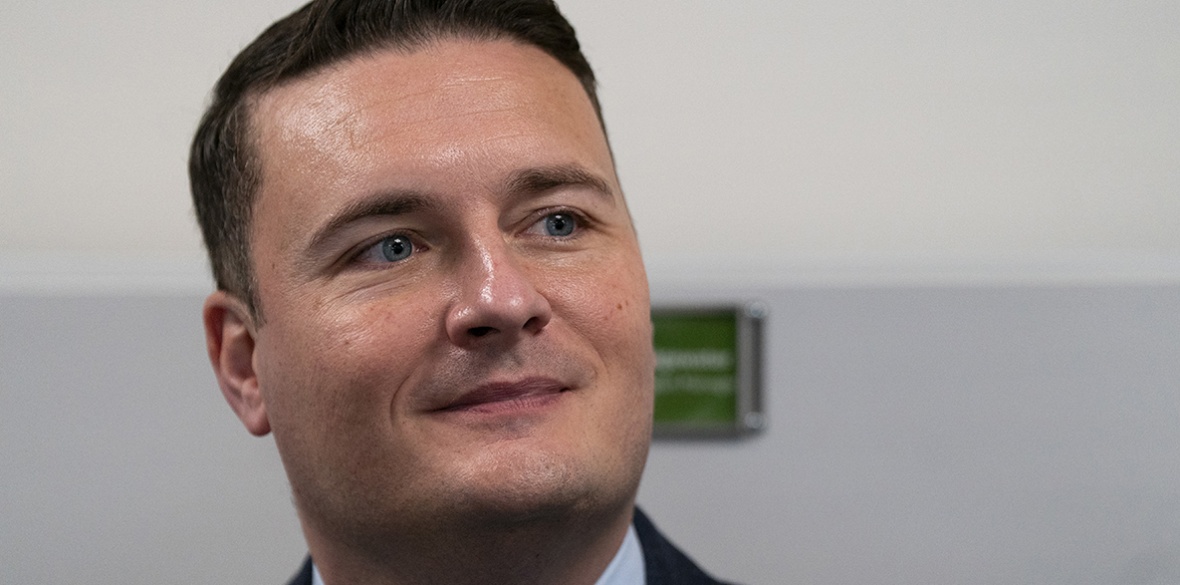
Health Secretary Wes Streeting meeting staff during a visit to London Ambulance Service headquarters in south London, December 9, 2024
Campaigners warn Labour’s ‘pro-business approach to data’ has ‘potential for further loss of public trust’ in the NHS
HEALTH Secretary Wes Streeting’s plans to sell GP data to the private sector “make no sense,” warned experts raising fresh privacy concerns yesterday.
Campaigners also warned Labour’s “pro-business approach to data” had the potential for further loss of public trust in the health service.
…
Mr Streeting in October said that data “is the future of the NHS” and Britain “could lead the world in medical research.”
He plans to create a “single access system” for information from GP surgeries, hospitals and other care settings after NHS England awarded a controversial £330 million contract to US spy tech giant Palantir in 2023 to develop a new platform.
Today Keep Our NHS Public co-chair Dr John Puntis said: “The Data Use and Access Bill currently going through Parliament illustrates Labour’s pro-business approach to data as a valuable resource, and highlights the potential for further loss of public trust.
“It aims to make data, including our personal heath data, widely available to public authorities and the private sector.
“The Secretary of State will be given power to erode safeguards over use of personal data for research.
“Labour intends to reduce the regulatory burden on businesses at the expense of safeguards for citizens.
“An alternative vision would include investment in a publicly owned national digital infrastructure aimed at storing and managing NHS data currently being processed through cloud computing services that are owned by large technology companies.
“There must be safeguards against the private sector gaining access to data for profit, and the public should be fully informed about the use of people’s health data and the right to protection and privacy.”
A spokesman for Momentum said: “Selling off patients’ data is no way to fix the NHS.
“We must fully renationalise our healthcare system and defend it from corporate interests, not welcome them.”
Keir Starmer, Angela Rayner and Rachel Reeves wear the uniform of the rich and powerful. They have all had clothes bought for them by multi-millionaire Labour donor Lord Alli. CORRECTION: It appears that Rachel Reeves clothing was provided by Juliet Rosenfeld.
Demonstrators march toward the Trump International Hotel & Tower demanding an end to Israeli attacks on the Gaza Strip after the presidential election in Chicago, Illinois, on November 6, 2024. (Photo: Jacek Boczarski/Anadolu via Getty Images)
“This administration will likely be coming very quickly to try to take down the Palestinian rights movement,” said a Jewish Voice for Peace Action leader.
Victims of violence by U.S.-armed Israeli forces and advocates for Palestinian rights across the United States are sounding the alarm over Republican President-elect Donald Trump’s looming return to the White House and GOP control of Congress.
President Joe Biden, Vice President Kamala Harris, and the divided 118th Congress have faced intense criticism for giving Israel diplomatic and weapons support to kill at least 45,581 Palestinians in the Gaza Strip over the past 15 months and attack Lebanon, Syria, and Yemen. The outgoing Democratic administration and lawmakers have also faced backlash for their response to anti-war protests, particularly on U.S. university campuses, some of which were met with police brutality.
However, recent reporting in the United States and Israel has highlighted fear about promises from Trump and his Republican Party that, as the Israeli newspaper Haaretz put it last week, a “quick and complete” crackdown “on pro-Palestinian sentiment in America will be a defining factor of his administration’s early days.”
“The Palestinian rights movement is very clear-eyed in understanding that it is very likely that this Trump administration will mean that things get much worse for Palestinians.”
Beth Miller, political director of the advocacy group Jewish Voice for Peace Action, told Politico on Wednesday that “the Palestinian rights movement is very clear-eyed in understanding that it is very likely that this Trump administration will mean that things get much worse for Palestinians.”
“This administration will likely be coming very quickly to try to take down the Palestinian rights movement,” Miller added.
Leaders with the Adalah Justice Project and Arab American Institute also noted concerns about efforts to silence advocates and even dismantle organizations—some of which are already underway. In November, 15 House Democrats joined all but one Republican in voting for the so-called Terror-Financing and Tax Penalties on American Hostages Act (H.R. 9495).
The legislation would enable the U.S. Treasury Department to revoke the tax-exempt status of any nonprofit it deems a “terrorist-supporting organization” without due process. Advocates for various causes have condemned what they call the “nonprofit killer bill.”
Although H.R. 9495 never made it through the Democrat-held Senate, Republicans are set to take over the chamber on Friday. The GOP will also retain control of the House, which during this session has repeatedly voted to conflate criticism of Israel with antisemitism, or discrimination against Jews.
In addition to likely facing a new wave of legislative attacks—potentially spearheaded by GOP leaders like incoming House Foreign Affairs Committee Chair Brian Mast (R-Fla.), a U.S. military veteran who has volunteered with the Israel Defense Forces and denied the existence of “innocent Palestinian civilians”—rights advocates in the United States could be targeted by key officials in the next Trump administration.
As Haaretz recently detailed, former Florida Attorney General Pam Bondi, Trump’s second choice to lead the U.S. Department of Justice (DOJ); Sen. Marco Rubio (R-Fla.), his nominee for secretary of state; and Rep. Elise Stefanik (R-N.Y.), his candidate for ambassador to the United Nations, have expressed support for deporting pro-Palestinian protesters who have student visas.
Although former federal prosecutor Kash Patel, Trump’s pick to direct the Federal Bureau of Investigation, “doesn’t have much of a record on campus protests, he is most notorious for his desire to remove any of Trump’s critics and doubters from the national security apparatus,” the newspaper noted. “Further, Patel’s experience as the National Security Council’s senior director of counterterrorism during Trump’s first term positions him to crack down on pro-Palestinian sympathizers.”
Aggressively anti-Palestinian appointees, who tend to describe all campus protesters as Hamas supporters, will soon steer both foreign and domestic policy, creating a Trump administration united in seeking a crackdown on the pro-Palestinian movement. www.haaretz.com/israel-news/…
Haaretz also highlighted comments from Harmeet Dhillon, Trump’s pick to lead the DOJ’s Civil Rights Division, and Linda McMahon, his nominee for education secretary, as well as Project Esther: A National Strategy to Combat Antisemitism—an October proposal from the Heritage Foundation, the right-wing think tank that is also behind the sweeping Project 2025 policy agenda.
“The virulently anti-Israel, anti-Zionist, and anti-American groups comprising the so-called pro-Palestinian movement inside the United States are exclusively pro-Palestine and—more so—pro-Hamas,” states the Project Esther report. “They are part of a highly organized, global Hamas Support Network (HSN) and therefore effectively a terrorist support network.”
Two co-chairs of the Heritage-backed National Task Force to Combat Antisemitism, James Carafano and Ellie Cohanim, wrote earlier this week at the Washington Examiner that “Project Esther is a blueprint to save the U.S. from those utilizing antisemitism to destroy it.”
“The objective is to dismantle the infrastructure by denying it the resources required for its antisemitic activity,” they argued. “Targeting the groups and organizations that receive the funding and deploy it to their grassroots followers who engage in antisemitic activity, the useful idiots we see on college campuses, for example, will divorce the means from the opportunity, thereby rendering these activists incapable of threatening U.S. citizens.”
Posting the piece on X—the social media platform owned by billionaire Trump ally Elon Musk—Carafano declared that “when Donald Trump starts to take on the global intifada he will need partners. We will need to be there.”
Over the past year, books like Less by Patrick Grant and documentaries like Buy Now: The Shopping Conspiracy have encouraged consumers to rethink their internalised beliefs that more consumption equals better living.
As we enter a new year, it’s the perfect time to reflect on and leave behind some consumer myths that are detrimental to ourselves and to the planet.
Myth 1: Buying more is better for consumers and society
Retail therapy is a common practice to cope with negative emotions and might seem easier than actual therapy. However, research has consistently shown that materialistic consumption leads to lower individual and societal wellbeing. In fact, emerging studies are pointing out that low consumption lifestyles might bring greater personal satisfaction and higher environmental benefits.
Some might argue that buying more stimulates the economy, creates jobs and supports public services through taxes. However, the positive impact on local communities is often overstated due to globalised supply chains and corporate tax avoidance.
To ensure that your spending really does support your community and does not contribute to economic inequalities, it is helpful to learn more about the story behind the labels and the businesses you support with your money.
Myth 2: New is always better
While certain cutting-edge tech may indeed offer improvements over older versions, for most items new might not always be better. As Grant argues in his book Less, product quality has declined over the past few decades as manufacturers prioritise affordability and engage in planned obsolescence practices. That is, they purposely design products that will break after a certain number of uses to keep the cycle of consumption going and hit their sales targets.
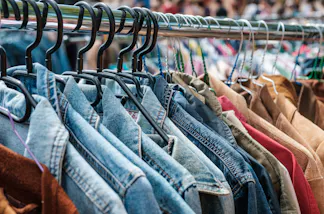
But older products were often built to last, so choosing secondhand or repairing older items can save you money and actually secure you better-quality products.
New isn’t always better – sometimes older goods have stood the test of time. New Africa/Shutterstock
Myth 3: Being sustainable is expensive
It’s true that some brands have used the term “sustainable” to justify premium prices. However, adopting sustainable consumer practices can often be free or even bring in some extra cash if you sell or donate the things you no longer need.
Instead of “buying new”, consider swapping unused items with others by hosting a “swapping party” for things like toys or clothes with your friends, family, or neighbours. Decluttering your home could free up space, bring you some joy, and could also help you to connect with others by exchanging items.
Myth 4: Buying experiences are better than buying material things
Previous research has found that spending money on experiences brings more happiness primarily because these purchases are better at bringing people together. But material purchases that help you to connect with others, such as a board game, could bring as much joy as an experience.
When spending money, my research has shown that the key is to understand whether the purchase will help you to connect with others, learn new things or help your community. It’s not about whether we spend our money on material items or experiences.
It is also worth remembering that there are plenty of activities that can help you to achieve those goals with no spending required. So, instead of instinctively reaching to our wallets, perhaps in the new year we could think about whether a non-consumer activity like a winter hike or doing some volunteering could bring us closer to those intrinsic goals like personal growth or developing relationships. These goals have been consistently linked to better wellbeing.
Myth 5: Buying a gift is the best way to express love
Marketers often promote the message that expensive financial gestures are the best way of expressing love and appreciation for others. Spreading this idea will help them to sell more products. However, my research suggests that embracing consumerist ideals might in fact distance us from others.
Research has shown that investing in things that can buy us more time as well as spending money on others can lead to higher levels of wellbeing. Combining these insights suggests that gifting our time to others might be a great way to show affection and could have a positive ripple effect.
For instance, offering to babysit for a busy friend or a family member, helping a relative with a home project or offering your skills to advise or teach someone something new or useful can be incredibly valuable to others.
For 2025, consider a new year’s resolution that is gentle on the wallet and kinder to the planet: it’s possible to resist the commercial pressures to over-consume and find ways to enjoy the simpler pleasures of life, many of which are free anyway.
This aerial view shows Amazon forest degradation in the Menkragnoti Indigenous Territory in Altamira, Pará state, Brazil, on August 28, 2019. (Photo: Joao Laet/AFP/Getty Images)
The world’s largest rainforest showed “ominous indicators,” including wildfires and extreme drought, in 2024.
The Amazon, sometimes called the “lungs of the planet,” this year showed signs of further inching toward a much-feared tipping point, threatening the very existence of the world’s largest rainforest.
Rampant wildfires and extreme drought ravaged large parts of the Amazon in 2024. The fires and dry conditions were fueled by deforestation and the El Niño weather pattern, and also made worse by climate change, according to the World Economic Forum. “The number of fires reached its highest level in 14 years this September,” the group reported in October.
Drought has also impacted the Amazon River, causing one of the river’s main tributaries to drop to its lowest level ever recorded, according to October reporting from The Associated Press. The drop in the river has negatively impacted local economies and food supplies.
Andrew Miller, advocacy director at Amazon Watch, told the AP last week that the fires and droughts experienced across the Amazon in 2024 “could be ominous indicators that we are reaching the long-feared ecological tipping point.”
“Humanity’s window of opportunity to reverse this trend is shrinking, but still open,” he said.
The Amazon plays a vital role in keeping the planet healthy. 150-200 billion tons of carbon are stored in the Amazon, and it also carries 20% of the earth’s fresh water to sea.
According to the World Economic Forum, if the Amazon tipping point is reached, “it will release billions of tonnes of CO2 into the atmosphere through fires and plants dying off. This would further exacerbate climate change and make the 1.5°C goal impossible to achieve. It would also alter weather patterns, which would impact agricultural productivity and global food supplies.”
A paper published in the journal Nature in February indicates that up to half of the rainforest could hit a tipping point by the middle of the century. “We estimate that by 2050, 10% to 47% of Amazonian forests will be exposed to compounding disturbances that may trigger unexpected ecosystem transitions and potentially exacerbate regional climate change,” explained the researchers behind the paper.
However, it wasn’t all bad news out of the Amazon in 2024. According to the AP, the amount of deforestation in Brazil and Colombia declined in this year. In Brazil, which houses the largest chunk of the Amazon, forest loss dropped 30.6% compared to the year prior, bringing it to the lowest level of destruction in nearly a decade.
The improvement is an about-face from a couple of years ago, when the country registered 15-year high of deforestation during the leadership of former far-right President Jair Bolsonaro. Brazil is now led by the left-wing President Luiz Inácio Lula da Silva, who—despite presiding over this drop in deforestation—has also come under scrutiny, as AP noted, by environmentalist for backing projects that they argue could harm the environment.
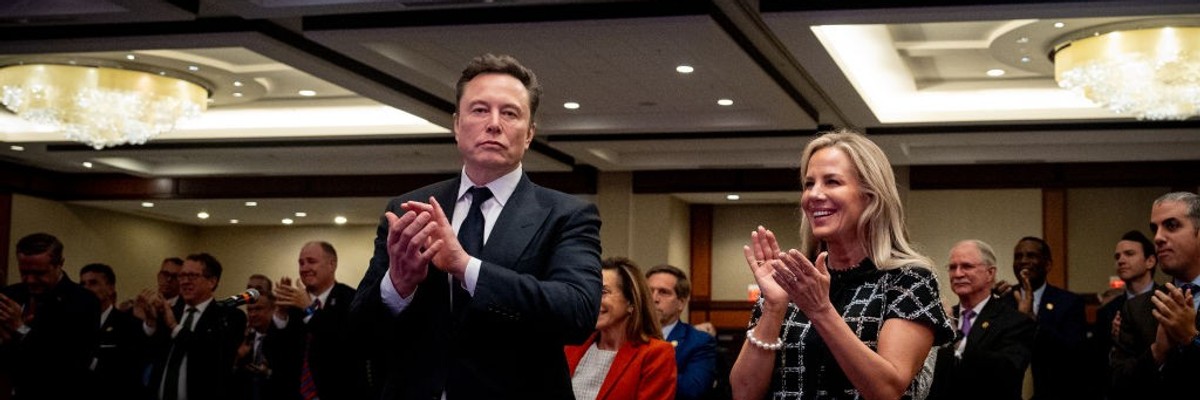
Elon Musk and the wife of House Speaker Mike Johnson (R-La.) applaud during a House Republican Conference meeting on November 13, 2024 in Washington, D.C. (Photo: Andrew Harnik/Getty Images)
“If there was ever a moment when progressives needed to communicate our vision to the people of our country, this is that time,” wrote Sen. Bernie Sanders. “Despair is not an option.”
A Bloomberg analysis of billionaire wealth published Tuesday found that the combined fortunes of the 500 richest people on the planet surpassed $10 trillion this year, a finding that came shortly after U.S. Sen. Bernie Sandersissued an urgent call to action to prevent the emergence of “an oligarchic and authoritarian society.”
The new analysis notes that the world’s top 500 billionaires “got vastly richer” this year with the help of “an indomitable rally in U.S. technology stocks.”
Just eight billionaires—Elon Musk, Mark Zuckerberg, Jensen Huang, Larry Ellison, Jeff Bezos, Michael Dell, Larry Page, and Sergey Brin—added more than $600 billion to their collective wealth in 2024 and accounted for 43% of the $1.5 trillion increase in net worth among the world’s 500 richest people, according to Bloomberg.
“But it was Musk—the so-called ‘first buddy’ of President-elect Donald Trump after unprecedented support for his reelection campaign—who dominated the world’s wealthiest in 2024,” Bloomberg observed, adding that Trump himself also saw his fortune surge to a record high this year, “boosted by the performance of his majority stake in Trump Media & Technology Group Corp.”
Musk’s use of his enormous fortune to influence the U.S. political system—including via his purchase of one of the world’s largest social media platforms and donations to Trump’s 2024 campaign—amplified existing concerns about the corrosive impact of massive wealth concentration on democracy.
“They do not believe in democracy—the right of ordinary people to control their own futures. They firmly believe that the rich and powerful should determine the future.”
In an email to supporters on Monday, Sanders (I-Vt.) called the rapid shift toward oligarchy in the U.S. “the defining issue of our time,” warning that billionaires have come to increasingly dominate not only “our economic life, but the information we consume and our politics as well.”
“A manifestation of the current moment is the rise of Elon Musk, and all that he stands for,” Sanders wrote, pointing to Musk’s outsize influence on the 2024 election and his key role in shaping Trump’s billionaire-dominated Cabinet.
“But it’s not just Musk. Billionaire owners of two major newspapers overrode their editorial boards’ decisions to endorse Kamala Harris, while many others are kissing Trump’s ring by making large donations to his inauguration committee slush fund,” the senator continued. “They do not believe in democracy—the right of ordinary people to control their own futures. They firmly believe that the rich and powerful should determine the future.”
Progressives, Sanders wrote, have a “radically different vision,” one that prioritizes “an economic system based on the principles of justice,” “a vibrant democracy based on one person, one vote,” and making “healthcare a human right.”
“Even though we are not going to succeed in achieving that vision in the immediate future with Trump as president and Republicans controlling Congress, it is important that vision be maintained and we continue to fight for it,” wrote Sanders.
Since Trump’s victory in the 2024 election, Sanders has focused heavily on the need to organize the working class to combat the threat posed by Musk and other far-right billionaires who have amassed obscene wealth and political power.
In his email on Monday, the senator said he intends to “travel, organize, hold events, and create content that reaches people where they are” in the coming weeks as part of the “struggle to determine where we go from here.”
“Will this effort be easy?” asked Sanders. “No, of course it will not. Can it be done? We have no choice. If there was ever a moment when progressives needed to communicate our vision to the people of our country, this is that time. Despair is not an option. We are fighting not only for ourselves. We are fighting for our kids and future generations, and for the well-being of the planet.”