Category: Neo-liberalism

  • Over 1.6 million children live in families made poorer by the two-child limit on benefits – new data

    Spread the love

    Ruth Patrick, University of Glasgow and Kitty Stewart, London School of Economics and Political Science

    New government statistics released today show the reach of the two-child limit. There are 1,665,540 children in England, Scotland and Wales living in households affected by the two-child limit, an increase of over 35,000 from the same time in 2024.

    The two-child limit restricts means-tested child benefits to the first two children in a household, subject to some exceptions.

    Its sister policy, the benefit cap, affects over 115,000 households, including 300,000 children. It routinely pushes families into deep poverty, far below the standard poverty line of 60% of median income.

    The benefit cap places a limit on the total amount a household can receive if no-one in the household earns a minimum amount, again subject to some exceptions linked to receipt of disability benefits.


    Get your news from actual experts, straight to your inbox. Sign up to our daily newsletter to receive all The Conversation UK’s latest coverage of news and research, from politics and business to the arts and sciences.


    Over the past five years, we have been part of a team of academic researchers investigating the impact of both policies on families with three or more children. We’ve found that these policies drive up poverty, creating deprivation and hardship. This in turn causes sustained and severe harm to children and their families.

    The two-child limit and benefit cap leave many families living with extreme financial insecurity. They harm parental mental health, as mothers and fathers struggle to try and make an inadequate income stretch to meet the needs of their children.
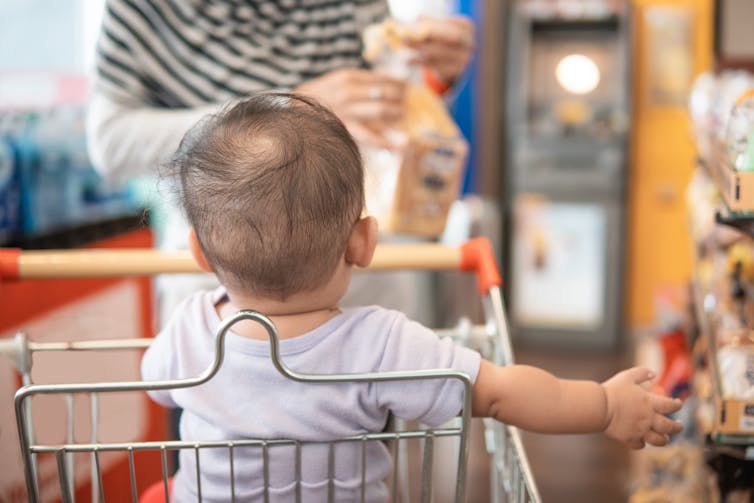
    Parent with baby in supermarket
    Parents are struggling to make their income go far enough. Odua Images/Shutterstock

    In addition, these policies do not fall evenly across the population when looking at ethnicity. Overall, 70% of the families affected by the two-child limit are white, as are 66% affected by the benefit cap. But our new analysis shows that children from an ethnic minority are up to three times as likely as white children to be affected by the two-child limit. They are also up to four times as likely to be affected by the benefit cap.

    Alongside administrative statistics, we have analysed household survey data, published today as a policy brief. We find that one in five children from Pakistani families and one in four children from Bangladeshi families are now affected by the two-child limit.

    Rising poverty

    Our analysis also indicates that these policies are contributing to very high and rising levels of poverty. We estimate that 66% of Bangladeshi children, 60% of Pakistani children, and nearly half (48%) of black children live in poverty. This compares to one in four (24%) white children living below the poverty line – still far too many.

    This new analysis provides us with better understanding of where the damage done by both policies is falling. It’s an important reminder of how the two-child limit and benefit cap directly conflict with ambitions not only to act on child poverty, but also to reduce systematic inequalities linked to ethnicity.

    Scrapping the two-child limit would give larger families access to benefits they currently miss out on – but it would not have any effect on smaller families living in poverty, so isn’t the only policy solution needed.

    Nonetheless, analysis by the Resolution Foundation has shown that getting rid of the two-child limit – which would cost £1.4 billion – is by far the most cost-effective way to reduce the number of children living in poverty. Spending £1.4 billion in other ways – for example by increasing benefits for all families – would make less difference to child poverty than if the two-child limit were ended.

    It’s also important to keep in mind the impact on the depth of poverty. Larger families tend to be living further below the poverty line. Scrapping the two-child limit will make a big difference in many households, even if they are not lifted out of poverty as a result.

    Labour came into government on a manifesto of “change”, and Keir Starmer has promised to be “laser-focused” in his commitment to drive down poverty.

    Labour have already said that they want to get rid of the two-child limit, arguing that they just need to find the money to do so. The government has established a child poverty taskforce, due to report in the autumn, and made a first concrete policy commitment with the extension of free school meals provision for families in England. But there is no alternative to serious action on social security benefits if significant progress is to be made.

    Ruth Patrick, Professor in Social Policy, University of Glasgow and Kitty Stewart, Professor, Department of Social Policy, London School of Economics and Political Science

    This article is republished from The Conversation under a Creative Commons license. Read the original article.

    Keir Starmer says that the Labour Party under his leadership all feel a small part of Scunthorpe.
    Keir Starmer says that the Labour Party under his leadership all feel a small part of Scunthorpe.
    Keir Starmer explains that he feels no shame or guilt benefitting personally from gifts from the rich and powerful while insisting on policies of severe austerity causing suffering and death.
    Keir Starmer explains that he feels no shame or guilt benefitting personally from gifts from the rich and powerful while insisting on policies of severe austerity causing suffering and death.
  • Rachel Reeves Promised Oil Industry ‘Quid Pro Quo’ Over Windfall Tax in Private Meeting

    Spread the love

    Original article by Sam Bright republished from DeSmog.

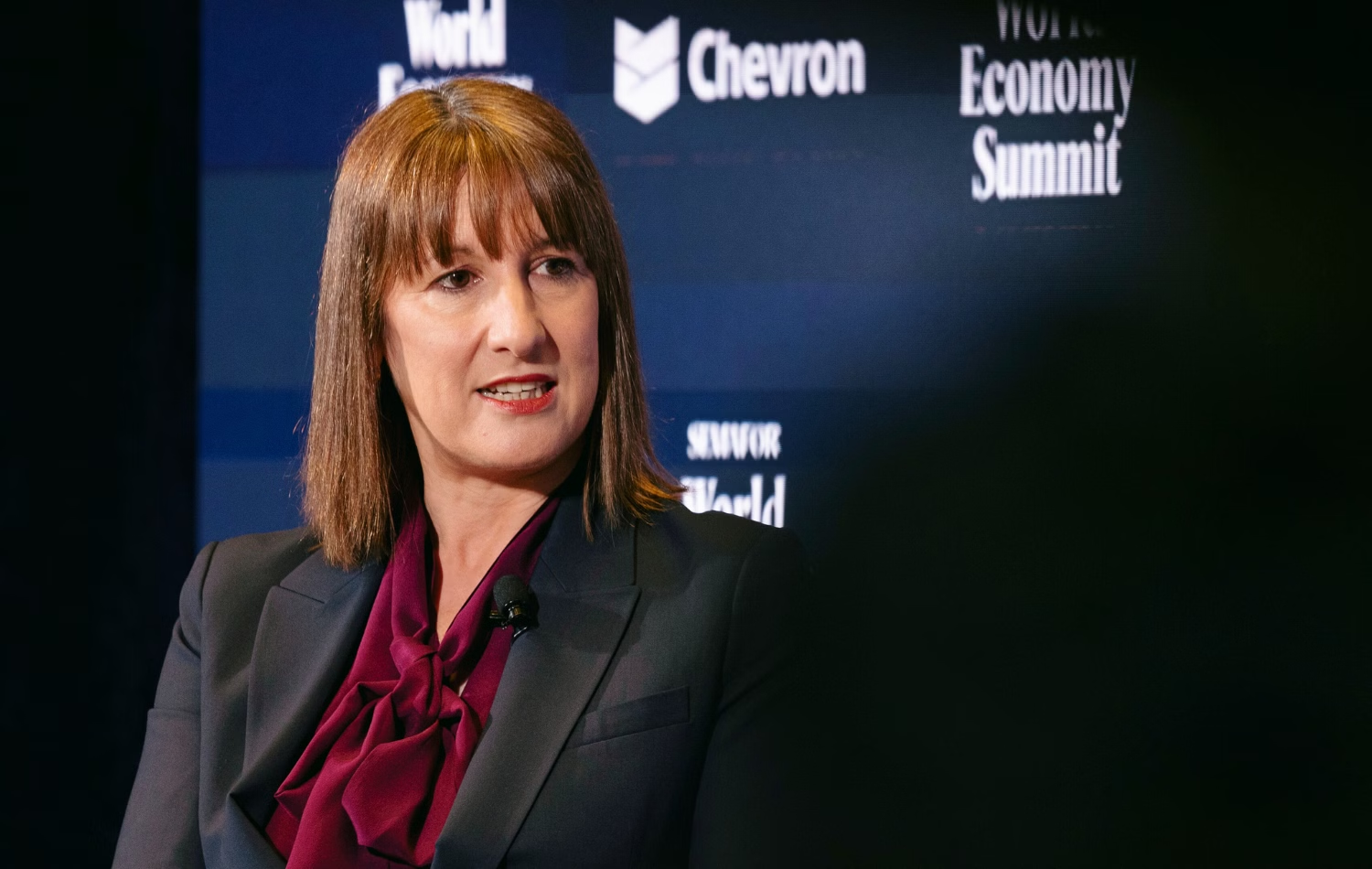
    Chancellor Rachel Reeves speaks at the Semafor World Economy Summit in Washington D.C in April 2025. Credit: Credit: Kirsty O’Connor / Treasury (CC BY-NC-ND 2.0)

    The government has been accused of making a “secret exchange deal” with fossil fuel firms to compensate for the tax hike.

    Chancellor Rachel Reeves told a fossil fuel giant that the industry would receive a “quid pro quo” in return for higher taxes on its windfall profits, DeSmog can reveal.

    In a meeting with the Norwegian state energy company Equinor on 27 August last year, Reeves suggested that the government’s carbon capture, utilisation and storage (CCUS) subsidies were a payoff for oil firms being hit with a higher tax rate.

    Minutes of the meeting obtained by DeSmog state that Equinor CEO Anders Opedal raised concerns over the Energy Profits Levy – also known as the “windfall tax” – and “its impact on the value” of Equinor’s UK portfolio.

    In response, Reeves said that raising the windfall tax from 35 percent to 38 percent was a “manifesto commitment”, but stated that “Equinor should recognise the quid pro quo – the funds raised enable government investment in CCUS etc.”.

    This article was co-published with The Guardian.

    CCUS is the controversial practice of trapping the emissions produced by fossil fuel plants before they enter the atmosphere.

    The technology is accused of being a favourite climate “solution” of the fossil fuel industry since it allows for the continued extraction of oil and gas. Experts have also suggested that the technology is not economically viable at scale.

    The Labour government announced in October that it would provide £22 billion in subsidies to CCUS projects over 25 years following a surge in lobbying by the fossil fuel industry, as revealed by DeSmog.

    Green Party co-leader Carla Denyer MP claimed that Reeves and the Labour government had been “caught out making promises in a secret exchange deal which goes against the interests of the British people”.

    Denyer added: “In public they claim to be taxing fossil fuel giants more fairly by raising the windfall tax, but behind closed doors they are giving back with dodgy deals to allow the fossil fuel corporates to continue with business as usual under the guise of CCUS – an expensive distraction and largely unproven technology.”

    An Equinor spokesperson said: “Government regularly meets with companies like Equinor. This is standard and necessary practice. As with any official meeting, minutes were taken of the conversation between the chancellor and Equinor CEO as a public record of what was said and readily available via a Freedom of Information request.”

    Equinor is one of the principal firms investing in the UK’s CCUS sector. In December, the government signed deals with Equinor, BP, and TotalEnergies to develop carbon capture facilities in Teesside. This will involve the development of the Net Zero Teesside Power plant, which will be 25 percent owned by Equinor and aims to be the world’s first gas-fired power station featuring CCUS.

    Earlier this year, following a DeSmog investigation, Equinor retracted the claim that it stores 1 million tonnes of carbon dioxide annually at its flagship carbon capture project in the North Sea. Equinor has not captured 1 million tonnes of CO2 per year at the site since 2001, and only captured a tenth of that figure in 2023.

    The firm made an $28.7 billion (£21.2 billion) post-tax profit in 2022 after Russia’s invasion of Ukraine triggered higher oil and gas prices – a figure that stood at $8.8 billion (£6.6 billion) in 2024.

    Tessa Khan, executive director of the campaign group Uplift, said: “Oil companies, like Equinor, have held sway over successive UK governments, for years shaping policies to benefit their bottom line and slowing down climate action. This Labour government must stand up to them and put our needs – for affordable clean energy and a safe climate that we can pass on to our children – ahead of their insatiable need to profit.”

    The House of Commons’ Public Accounts Committee (PAC) – which scrutinises government spending decisions – released a report in February describing the UK’s CCUS subsidies as “risky”.

    The report noted that the government has downgraded its ambitions for CCUS storage, scrapping its previous commitment of storing 20 to 30 million tonnes annually by 2030. It also highlighted that the UK’s new CCUS projects don’t allow the government to share any potential profits or for local consumers to benefit from lower energy bills.

    The committee also reported that producing liquid natural gas, which will be used in the UK’s CCUS projects, leaks more greenhouse gases into the atmosphere than previously thought.

    “This could undermine the rationale for pursuing certain schemes,” the report said.

    After being sued by environmental consultant Andrew Boswell over the Net Zero Teesside scheme, the previous Conservative government admitted that it had not taken into account the plant’s full potential emissions, which Boswell estimated could reach more than 20.3 million tonnes during its lifetime.

    In summer 2024, a judge rejected Boswell’s case, which argued that officials did not fully explore the environmental impacts of the scheme before approving it. The government also won the appeal in May.

    Boswell, who leads the Scrap Carbon Capture campaign, called Reeves’ Equinor meeting “an outrageous spectacle”.

    “She begs Norway’s oil colossus to tax its huge profits, and then gifts it with far more in return – many billions over decades for climate-wrecking CCUS.”

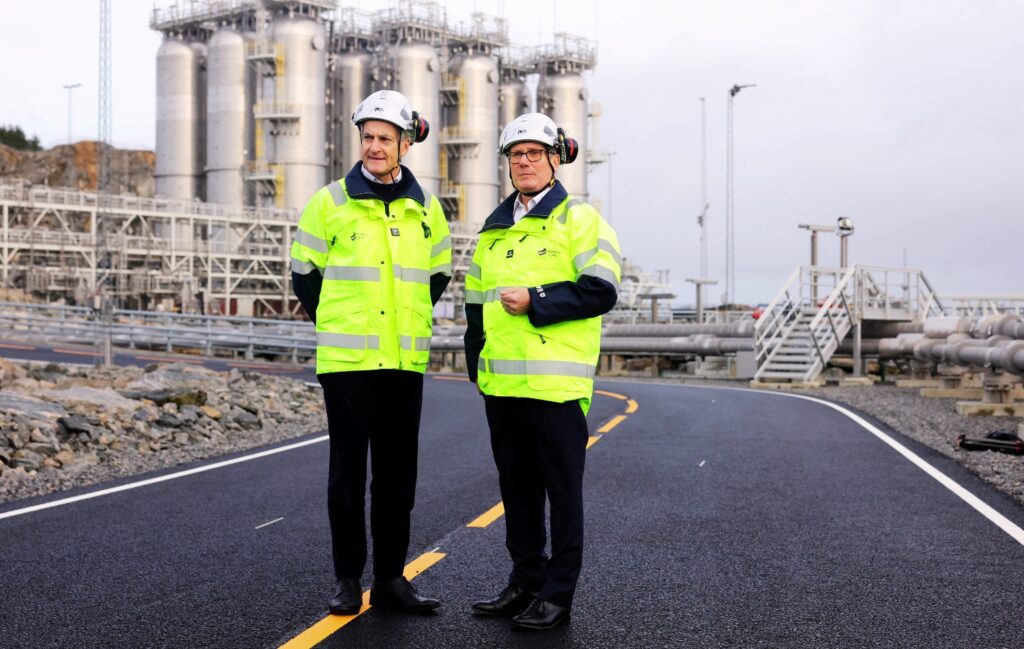
    Prime Minister Keir Starmer visits Equinor’s Northern Lights CCUS plant with Norway Prime Minister Jonas Gahr Støre in Bergen in December 2024. Credit: Credit: Simon Dawson / No 10 Downing Street (CC BY-NC-ND 2.0)

    Equinor and Shell have formed a joint venture to become the UK’s largest North Sea fossil fuel producer. In November, the government admitted that it had unlawfully approved the development of the country’s largest untapped oilfield, Rosebank, which is operated by Equinor, by not taking into account the climate effects of burning the oil and gas extracted from the field. Equinor intends to re-apply for approval to develop the project.

    The Labour government has been steadfast in its support for the UK achieving net zero emissions by 2050, with Prime Minister Keir Starmer stating that “home grown clean energy” is “in the DNA” of his administration.

    The Climate Change Committee stated in its 2025 appraisal of the government’s net zero policies that the UK needs to scale up its CCUS capacity to 73 million tonnes a-year by 2050 to help meet its climate commitments.

    “Investment in carbon capture and storage is a gamble on unproven technology,” said Lily-Rose Ellis, campaigner at Greenpeace UK. “All it does is give oil and gas giants carte blanche to continue causing planet destroying emissions in the hopes that one day they might be able to capture the carbon and store it for all of eternity. Public money should be spent on renewables which guarantee to lower emissions, bring bills down, and boost the economy with new jobs.”

    “Equinor has been a reliable energy partner to the UK for over 40 years,” a company spokesperson said, “providing a stable supply of oil and gas, developing the UK’s offshore wind industry, and pioneering solutions to decarbonise the UK economy, including carbon capture and storage.

    “Using our experience of decarbonising energy production in Norway, including safely storing carbon emissions under the North Sea for over 25 years, we are supporting the UK to develop its own home grown energy transition.”

    A government spokesperson said: “We are delivering first of a kind carbon capture projects in the UK, supporting thousands of jobs across the country, reigniting industrial heartlands and tackling the climate crisis.

    “Money raised from changes to the Energy Profits Levy made at the Autumn Budget last year support the transition to clean energy, enhance energy security and independence, provide sustainable jobs for the future, and help protect electricity bills against future price shocks”.

    This article was co-published with The Guardian.

    Original article by Sam Bright republished from DeSmog.

  • Austerity’s authoritarian trajectory: why jury trials are under attack

    Spread the love

    https://morningstaronline.co.uk/article/austeritys-authoritarian-trajectory-why-jury-trials-are-under-attack

     FW Pomeroy’s Statue of Justice standing atop the Central Criminal Court building, Old Bailey, London

    PROPOSALS to restrict the right to trial by jury are presented as the only way to salvage a system in crisis.

    Former judge Sir Brian Leveson says we must act to avoid “total system collapse.” The backlog in court cases is huge — 77,000 cases await trial in the Crown Court — and Leveson is right that leaving defendants and victims of crime waiting years can have a terrible impact on their lives.

    But these are dangerous proposals which must be seen in context: firstly, of the cuts to justice budgets from 2010 onwards, and secondly, of the increasing authoritarianism of the state and the courts which is already undermining jury trials.

    …

    [M]inisters may have other motives. As Tim Crosland of Defend Our Juries has warned, authorities are increasingly wary of the way a “jury of one’s peers” — that is, of randomly selected ordinary people — tends to resist political instruction and acquit defendants for actions they deem morally justifiable.

    Judges have resorted to ordering defendants not to explain their actions, even banning references to climate change in court in some cases involving direct action by environmentalists.

    Removing the right to a jury trial entirely from a swathe of offences increases the state’s power to shape prosecution outcomes.

    …

    https://morningstaronline.co.uk/article/austeritys-authoritarian-trajectory-why-jury-trials-are-under-attack

    Keir "I support Zionism without Qualification" Starmer supporting genocide.
    Keir “I support Zionism without Qualification” Starmer supporting genocide.

  • No more jam tomorrow – it’s time for Labour to deliver

    Spread the love

    https://morningstaronline.co.uk/article/no-more-jam-tomorrow-its-time-labour-deliver

     Health Secretary Wes Streeting, Chancellor of the Exchequer Rachel Reeves and Prime Minister Sir Keir Starmer at the launch of the government’s 10-year health plan, July 3, 2025

    The electorate see no evidence of the government’s promises of change, and the good jobs and decent pay that people are crying out for. Bold action is needed right now, warns SHARON GRAHAM

    IT IS true that Labour have taken over an economy ravaged by 14 years of Tory austerity. But that should mean a profound opportunity to deliver change. Britain is broken, yes. But they cannot keep making everyday people pay.

    Today MPs will be voting on the government’s despicable plan to cut disability benefits. Just as with every other wrong decision, such as scrapping the winter fuel allowance, rowing back on investment in British industry or failing to ensure proper local authority funding, the excuse will be the same — “we have no choice.” And again it will be absolute rubbish. Of course they have choices.

    We are the sixth-richest economy in the world. But the way that wealth is divided is increasingly unequal. The richest 50 families are worth about £500 billion, the same as half the entire UK population. In 1990 there were just 15 billionaires in the UK, but since then their number has jumped to 156.

    So, there is a choice. If we taxed the richest 1 per cent just 1 per cent, that would generate about £25 billion. That is a choice. We need a wealth tax now.

    …

    Continues at https://morningstaronline.co.uk/article/no-more-jam-tomorrow-its-time-labour-deliver

    Yougov: Would you support or oppose introducing a wealth tax of 2% on wealth above £10 million?
    Yougov: Would you support or oppose introducing a wealth tax of 2% on wealth above £10 million?
    Keir Starmer says that the Labour Party under his leadership all feel a small part of Scunthorpe.
    Keir Starmer says that the Labour Party under his leadership all feel a small part of Scunthorpe.

  • Starmer rallies in support of the rich as he comes under pressure to tax wealth

    Spread the love

    https://morningstaronline.co.uk/article/starmer-rallies-support-rich-he-comes-under-pressure-tax-wealth

     A view of £5, £10, £20 and £50 bank notes

    … KEIR STARMER rallied to the support of the rich today as he came under pressure to solve the budget crisis with a wealth tax.

    The Prime Minister told MPs that “we can’t just tax your way to growth” after calls from within and without Labour to get the rich to pay more.

    Green Party co-Leader Adrian Ramsay told him that he should stand by his pledge that “those with the broadest shoulders must bear the heaviest burden” and make it clear that meant the “ultra-wealthy.”

    …

    Former Welsh First Minister Mark Drakeford was also pressing the case for a wealth tax, joining former Labour leader Neil Kinnock, who had said at the weekend that the government should explore the idea.

    Mr Drakeford told the BBC that Ms Reeves should look at taxing the online gambling industry and banking profits. “I think wealth taxes absolutely need to be looked at,” he added.

    “We’re a sharply unequal society. We’ve become more and more unequal. The root of that inequality is the way that wealth is distributed across the population.”

    …

    Article continues at https://morningstaronline.co.uk/article/starmer-rallies-support-rich-he-comes-under-pressure-tax-wealth

    Yougov: Would you support or oppose introducing a wealth tax of 2% on wealth above £10 million?
    Yougov: Would you support or oppose introducing a wealth tax of 2% on wealth above £10 million?
    Keir Starmer confirms that he's proud to be a red Tory continuing austerity and targeting poor and disabled scum.
    Keir Starmer confirms that he’s proud to be a red Tory continuing austerity and targeting poor and disabled scum.
    Keir Starmer warns against following the https://onaquietday.org blog.
    Keir Starmer warns against following the https://onaquietday.org blog.