Will abandoning left-wing voters backfire for Keir Starmer?

Spread the love

Original article by Paul Rogers republished from Open Democracy under a Creative Commons Attribution-NonCommercial 4.0 International licence

Labour leader’s reluctance to differ from Tories on policy or Gaza sets stage for progressive independent candidates
Keir Starmer has moved Labour to the right – leaving left-wing voters without a political home  | Belinda Jiao/Getty Images

Almost all of Britain’s pollsters agree: the Labour Party is heading for a massive victory in this year’s general election, while Rishi Sunak’s Tories are set for a historic defeat. But there is another, far less talked about shift underway, which could see a wave of independent left-wing MPs elected.

Most polling firms expect Labour to win a majority of more than a hundred seats. A ‘poll of polls’ by political forecasting website Electoral Calculus suggests the party is on course for a 200+ majority.

These polls could all be wrong, but little seems to shake them. There is some evidence, though, of another trend that is yet to be reflected in the polls: Keir Starmer’s unwillingness to set out any clear policy differences from the Conservatives may be backfiring.

One area likely to cause the Labour leader trouble is his position – or lack thereof – on Israel’s war on Gaza.

Several polls in recent months have indicated that around 70% of people in the UK want an immediate ceasefire, and there are weekly demonstrations in towns and cities across the country in support of Palestinians. Organisers of a march in London last week estimated that up to 400,000 people had gathered to demand an end to the violence.

These protests receive minimal coverage in the mainstream media, bar senior Conservatives labelling the peaceful crowds as ‘hate mobs’. The government maintains strong support for Israel, continuing to sell arms and share intelligence with the country, as well as allowing it to use RAF Akrotiri in Cyprus as a support base – a position Labour has largely agreed with.

This leaves a huge gap in political representation, at least from the biggest two parties, for swathes of people nationwide.

It was in this opening that former Labour MP George Galloway – who was kicked out of the party in the 2000s after objecting to the UK entering the Iraq war – was elected as an independent MP for Rochdale last month, following a campaign that centred the need for a ceasefire in Gaza.

Another gap in political representation has been created by Starmer’s remodelling of the Labour Party, which has been sanitised to ensure it poses little or no threat to the political establishment. The majority of his policies so far appear to be a continuation of the status quo, suggesting little will change if the party wins the forthcoming election.

In contrast, so bold and progressive were the policies of his predecessor, Jeremy Corbyn, that the higher echelons of the Labour Party and the wider political and media establishment were determined to get rid of him from the offset.

A leadership challenge was mounted against him in the summer of 2016, little over a year after he was elected the party’s leader. Corbyn won comfortably – a fact I found unsurprising, having seen first-hand how he could pull a crowd of more than a thousand people to a hurriedly arranged event half a mile from a city centre.

Internal party opposition to Corbyn surged following his re-election, again backed by the mainstream media. When then Tory prime minister Theresa May called an election in 2017, many anticipated she would win a landslide victory that would consign ‘Corbynism’ to the outer margins.

Instead, Corbyn and his Labour manifesto struck a chord with many voters. Labour gains resulted in a hung parliament, to the horror of the political establishment, which worked to eliminate this threat from the left over the following two years.

After Labour lost the 2019 general election, Corbyn resigned and Starmer moved the party rightwards – prompting tens of thousands of its members to desert it as a result. Their votes are now up for grabs, and left-wing independents are hoping to win them.

Take a meeting in London just last weekend, scarcely reported on except by socialist paper The Morning Star. Two hundred of Labour’s former parliamentary candidates, councillors and supporters gathered to develop an alternative to its current stance on Gaza and other issues.

A sense of the mood at the event was best summed up by Tyneside’s independent socialist mayor Jamie Driscoll, who quit Labour after the party decided not to select him to run again for the north-east mayoral election in May.

In a video message played at the meeting, Driscoll said: “In the next election, both parties will have the same manifesto and the same rich donors pulling the strings.”

similar event is planned in Blackburn next month – just one part of a much wider movement that will likely see independent left-wing candidates standing against Labour candidates in many seats in the general election.

This is already being seen in England’s upcoming local council elections, where clusters of non-party, progressive candidates are working together in many parts of the country. In Blackburn, for example, every ward will have an independent left-wing candidate standing, as will all six wards in Dewsbury, West Yorkshire. Early indications suggest similar trends in Merseyside and parts of London.

The accepted political wisdom in the UK is that once a general election is called, voters tend to revert to the usual pattern of voting. But if independent candidates were to pick up substantial numbers of votes in the local elections, even taking some council seats, it could indicate a political shift that means this wisdom will not apply this year.

This may seem unlikely but there is undeniably a political vacuum waiting to be filled – and a sense that something is afoot in British politics that is simply not being recognised.

Original article by Paul Rogers republished from Open Democracy under a Creative Commons Attribution-NonCommercial 4.0 International licence

Status Quo, again and again and again and again
Continue ReadingWill abandoning left-wing voters backfire for Keir Starmer?

Labour’s public-private plans are just a return to the dreaded PFI era

Spread the love

https://morningstaronline.co.uk/article/labours-public-private-plans-are-just-return-dreaded-pfi-era

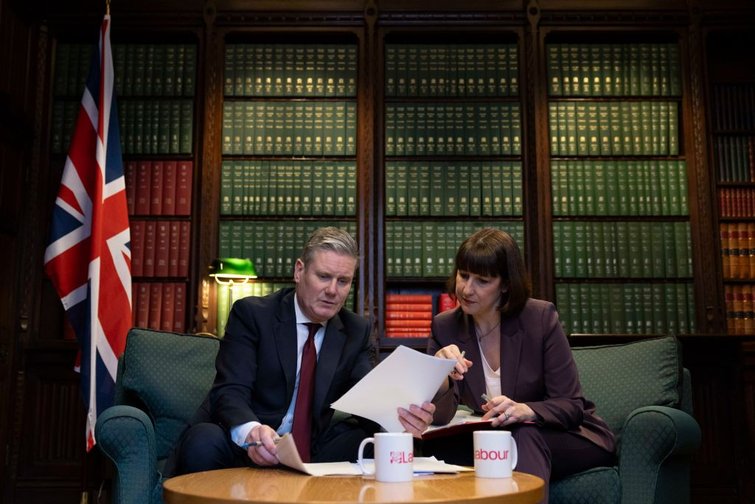
Shadow Chancellor Rachel Reeves in the shadow of Tony Bliar.

SOLOMON HUGHES warns Reeves’s proposed national wealth fund hands City financiers control over billions in public money for big business — and we get… to pay!

HOW will Keir Starmer’s Labour try to “grow the economy?” The short answer is it is going to try to use public money to persuade international investors to put cash into “growth” industries.

It’s the return of the public-private partnership. The big danger is that, like Labour’s last public-private partnership, the private corporations will get all the growth, while the public sector gets ripped off.

The main economy-grower Starmer is promoting is Rachel Reeves’s proposed national wealth fund. It will invest in key industries like “green energy” and other modern manufacturing sectors.

There is a strong Labour case to run a national bank investing in key industries: the 1945 Labour government set up two such banks, the Industrial and Commercial Finance Corporation and the Finance Corporation for Industry, which lent growth capital to small- and medium-sized industries or larger manufacturing firms respectively.

Labour argued that the City avoided investing in these crucial sectors, exacerbating the 1930s Depression. Both government-founded investment funds were very successful. Jeremy Corbyn’s Labour proposed similar publicly owned national investment banks.

But Reeves’s plan makes public money subordinate to private investment. She told the last Labour conference: “For every pound of investment we put in, we will leverage in three times as much private investment.”

Labour plans to invest £7.3 billion in the fund, and so attract around £22bn private “co-investment.” Reeves says private money will be attracted because the government cash will be “encouraging and derisking investment” from international finance: investors will assume that if the government has a stake in, say, a car battery factory, that it is a “sure thing” and won’t be allowed to go bust or lose money for shareholders.

But what happens if the publicly backed investments hit trouble? Say the car batteries come out too expensive, reducing profits, or need extra investment to fix production problems — will the private investors insist that the public investor take the losses? And if the profits are bigger than expected, will both parties benefit equally?

There are some major signs Reeves’s deals will favour the big private investors. First, because it is putting in more of the money, they can call more of the shots. This is not really a national wealth fund because most of the money will not be national.

https://morningstaronline.co.uk/article/labours-public-private-plans-are-just-return-dreaded-pfi-era

Continue ReadingLabour’s public-private plans are just a return to the dreaded PFI era

Venezuela’s election in the crosshairs of new US regime change scheme

Spread the love

Original article by Zoe AlexandraWalter Smolarek republished from peoples dispatch under a Creative Commons Attribution-ShareAlike 4.0 (CC BY-SA) license.

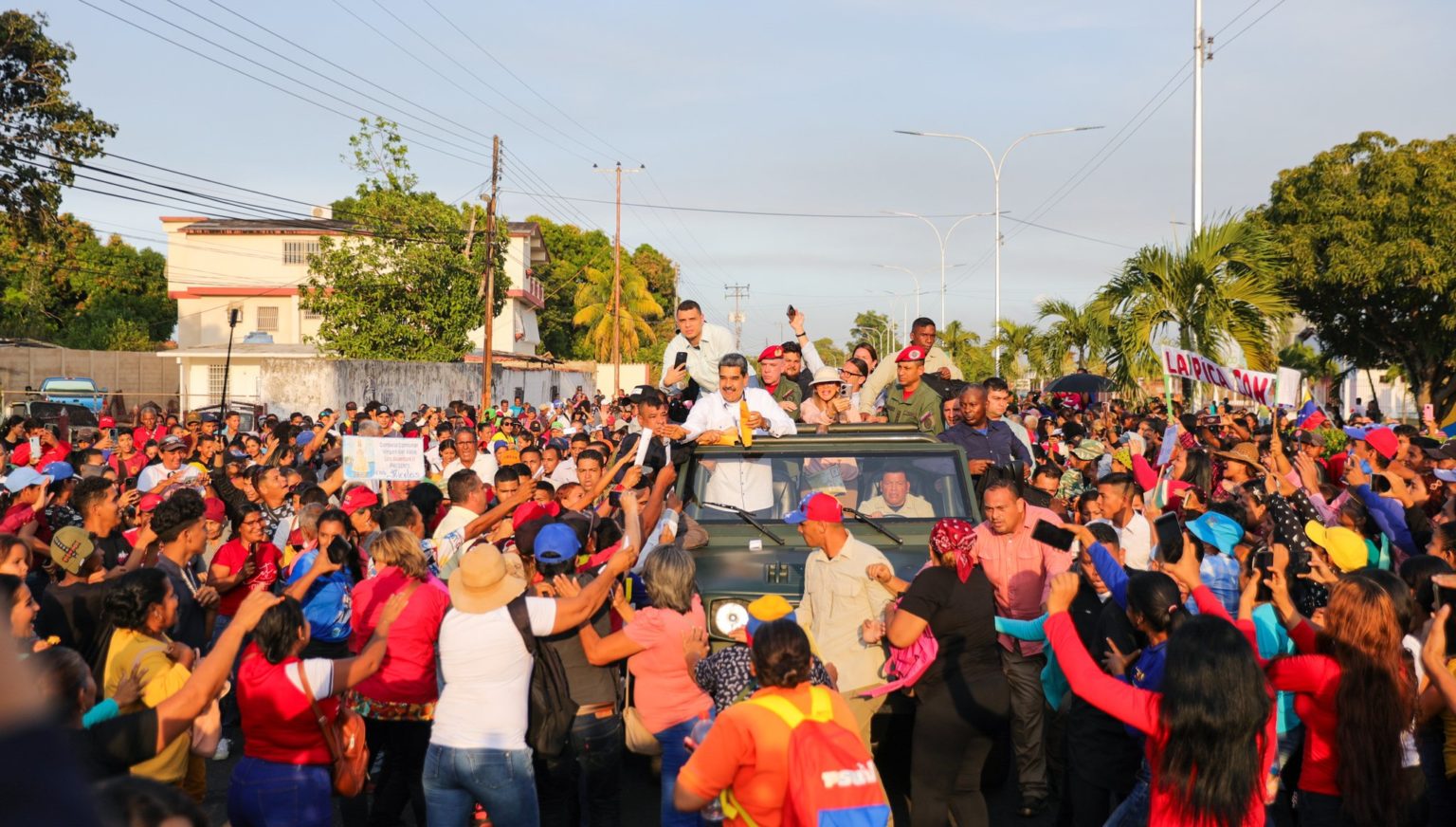
Nicolás Maduro received by thousands in the city of Maturín. Photo: Nicolás Maduro/ X

As Venezuela prepares to head to the polls in July, the US has already started drumming up suspicion and doubt around the electoral process.

Twenty-five years after Hugo Chávez took office and began the Bolivarian Revolution in Venezuela, US officials have still not tired of dreaming up new plots to overthrow the country’s government. Five years ago, following the last presidential election, they attempted to install Juan Guaidó—a politician most Venezuelans had never even heard of—as the country’s head of state. And now, with the date for the next presidential election officially set for July 28, the Biden administration is gearing up for the biggest regime-change push since the Guaidó coup attempt.

Venezuela has long been a target for US intervention because of its efforts to build an alternative model to the neoliberal capitalism pushed by institutions like the IMF and World Bank. First theorized and implemented under the leadership of Chávez, the Bolivarian Revolution in Venezuela puts forward a new model that emphasizes using the country’s resources, such as its oil revenue, to fund crucial missions. These then guarantee rights such as education, food, housing, transportation, culture, and sports to historically excluded majorities, to decrease longstanding socioeconomic inequality. A central part of the Bolivarian Revolution is the political and cultural transformation of the people through the promotion of Venezuelan national culture, internationalism, anti-imperialism, and the empowerment of all people as political subjects with rights and responsibilities. It is a project in direct contradiction to US interests in the oil-rich country and the region Washington considers its backyard.

The 2024 elections

President Nicolás Maduro is running for re-election as the candidate of the United Socialist Party of Venezuela (PSUV) and the broader Great Patriotic Pole coalition. He has built his campaign around a program referred to as the “Seven Transformations,” proposing major new initiatives in the fields of economic modernization, asserting national sovereignty, safety and security, ensuring social rights, political participation, the environment, and geopolitics. These aim to maintain the pro-poor, socialist orientation of the country’s development model while enacting reforms to stimulate greater economic activity and counteract the impact of crippling US sanctions.

The opposition is divided into several different camps. The largest coalition of opposition parties is called the Unitary Platform and consists of parties or factions of parties controlled by the Venezuelan elite who were displaced from positions of power as a result of the Bolivarian Revolution. The Unitary Platform has taken part in several rounds of negotiations with the government over the past year leading up to the elections and signed an agreement last October known as the “Barbados Agreement.”

In this agreement, the opposition was granted concessions on issues related to the organization of the electoral process, and in exchange, the United States agreed to loosen some sanctions relating to Venezuela’s oil and mining industries. The Barbados Agreement stipulated that only opposition figures who are eligible according to existing laws would be permitted to run. At this stage, the Unitary Platform has not chosen a candidate.

The specifics of how the electoral process will be carried out, regulations on campaigning on media platforms, participation of electoral observers, and the updating of electoral rolls were outlined in an agreement signed on February 28. The agreement was the product of dialogue among over 150 political and social organizations and was based on over 500 proposals. Ninety-seven percent of the political parties registered with the National Electoral Council participated.

Nonetheless, US officials have presented this electoral process, subject to such extensive deliberation and approved with such wide support, as an attack on democracy.

María Corina Machado and the fraud narrative

The approach of the US government follows a familiar script—wage a campaign in the media and through international organizations to cast doubt on the integrity of the electoral process so relentlessly that the result can be presented as fraudulent no matter what the actual evidence is on election day.

The key piece of the “electoral fraud” narrative is already in place and revolves around the disqualification of the opposition figure María Corina Machado.

Machado is the oldest daughter of Henrique Machado Zuloaga, who was an executive of Sivensa. One of Venezuela’s largest steel companies, Sivensa was nationalized in 2008 under Hugo Chávez. Since the start of the Bolivarian Revolution, Machado has been active in the right-wing opposition and has gone so far as to support destabilization campaigns and attempts to overthrow Venezuela’s democratically elected governments. She served as a member of Venezuela’s National Assembly from 2011-2014.

In July 2015, the Venezuelan comptroller general’s office announced that Machado was barred from holding public office for a period of one year after neglecting to disclose the extent of her earnings while she held public office.

The investigations into Machado continued. In July 2023, opposition deputy José Brito requested an update on Machado’s eligibility for holding public office given the upcoming presidential election and her stated intention to run. The comptroller general’s office responded, confirming that the disqualification of Machado was maintained and constituted a 15-year ban due to her support of regime change plots.

Though she initially refused to participate in the process, Machado appealed her ban through the Barbados Agreement procedure, which also stated that all candidates must defend Venezuela’s independence and reject violent actions against the government. In January 2024, the Supreme Court of Venezuela issued a sentence rejecting Machado’s appeal of the ban.

The Biden administration immediately sought to use economic coercion to undermine this decision by an institution of Venezuela, a sovereign state. As part of the Barbados Agreement, the US government issued licenses to certain oil companies permitting them to resume operations in Venezuela despite the sanctions. At the end of January, the State Department announced that the sanctions waivers issued to these companies would not be renewed once they expire on April 18.

At the same time, there is endless media reinforcement of the position that an election without Machado cannot be considered legitimate. On January 30, a few days after the Supreme Court rejected her appeal, Machado went on the television network CNN and was presented to viewers as “Venezuela’s main opposition leader.” An earlier Washington Post article is also typical of this narrative, headlined, “She’s the front-runner in the race to oust Maduro. He’s out to block her.” This combination of economic and political pressure is what has led to explosions in right-wing street violence in the past, following the 2013 presidential election when Maduro was first elected.

Machado: Regime change operative?

In 2002, following the short-lived coup d’état against Chávez, Machado signed the decree which established an unelected government under chamber of commerce head Pedro Carmona. In 2005 she met with former US president George W. Bush at the White House to discuss “democracy” (i.e., the overthrow of the Venezuelan government) More recently, she has been a key supporter and leader of the numerous right-wing plots to overthrow the democratically elected President Nicolás Maduro. These include the 2014 and 2017 guarimba protests which saw extreme violence against security forces and chavista supporters, as well as the destruction of infrastructure.

In 2014, Machado was removed from her post in the National Assembly after she attended a meeting of the Organization of American States (OAS) in the place of the Panamanian representative in order to testify about 2014 protests, to speak out against the government, and to call for foreign support for her cause. The move was widely condemned as a violation of both the Venezuelan constitution and Panamanian law, and in response, Panamanian civil society and movement organizations filed a lawsuit against her for usurping a public post.

Machado has also celebrated the effectiveness of the illegal sanctions regime imposed on Venezuela in applying political pressure for regime change, and on several occasions, has called for even more sanctions. The sanctions have had devastating consequences for the Venezuelan people, well documented by different UN bodies and rapporteurs, human rights organizations, and think tanks. United Nations special rapporteur Alena Douhan noted that “[t]he announced purpose of the ‘maximum pressure’ campaign—to change the Government of Venezuela—violates the principle of sovereign equality of states and constitutes an intervention in the domestic affairs of Venezuela that also affects its regional relations.”

In 2019, Machado supported the push by Juan Guaidó’s parallel, fictitious government to request that the OAS apply the Inter-American Treaty of Reciprocal Assistance (TIAR) against Venezuela to end the “usurpation of power” by Maduro. The activation of TIAR would have provided a legal justification for foreign military intervention, (more) economic sanctions, and a commercial blockade.

Machado participated and benefitted from the looting of the state companies and assets that the Guaidó “government” had illegally seized such as Monomeros and CITGO.

US seeks to delegitimize Venezuela’s democracy

An examination of the actual facts of Machado’s political career shows how the truth is much more complicated than the mainstream narrative about a government baselessly repressing an opponent.

After years of political instability caused by right-wing plots to overthrow the democratically elected government and even assassinate the leader, the Venezuelan government has pursued a straight-forward principle: political forces of any ideological variety can participate in elections as long as they do not conspire with foreign powers to undermine the independence of Venezuela or its sovereign institutions. This is in line with practices around the world. In the United States, for instance, there has been a great deal of public attention to the clause of the 14th Amendment that bars those guilty of insurrection from public office.

As the July 28 elections approach, tensions between the disparate elements of the Venezuelan political scene are bound to intensify. But the Biden administration is bound to be guided by the same overarching goal that has animated the policy decisions of Democratic and Republican administrations alike—remove from power one of the most long-standing opponents of Washington’s dominant role in the western hemisphere.

Zoe Alexandra is the co-editor of Peoples Dispatch.

Walter Smolarek is the editor of Liberation News.

Original article by Zoe AlexandraWalter Smolarek republished from peoples dispatch under a Creative Commons Attribution-ShareAlike 4.0 (CC BY-SA) license.

Continue ReadingVenezuela’s election in the crosshairs of new US regime change scheme

Keir Starmer will continue austerity. That means keeping vulnerable people in ‘brutalising poverty’

Spread the love

https://www.bigissue.com/opinion/keir-starmer-austerity-u-turn-labour-poverty-suffering/

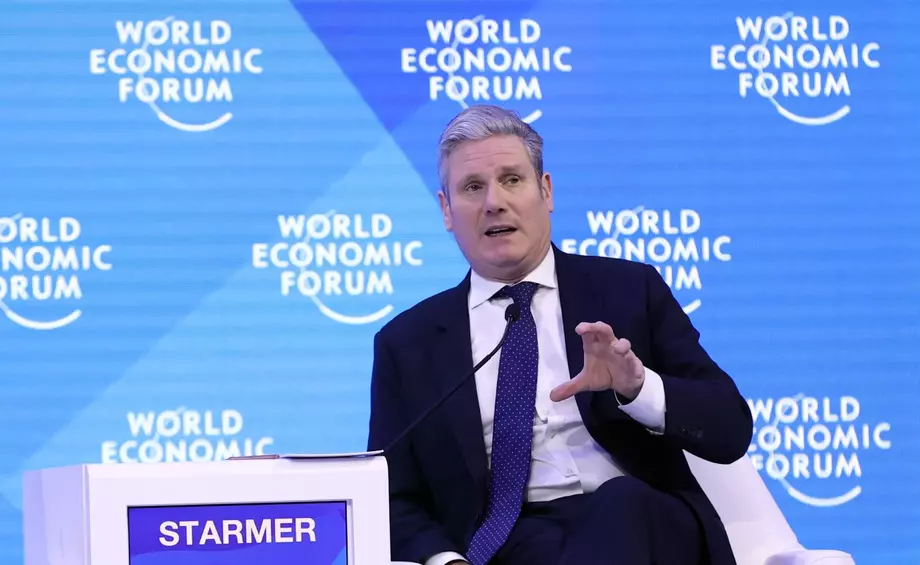
Keir Starmer sucking up to the rich and powerful at World Economic Forum, Davos.

Beyond each Labour U-turn is a well of suffering and poverty that has no justifiable reason to exist, says trade union case worker Kasmira Kincaid

Our politicians invariably speak of “fiscal responsibility”; of “balancing the budget” and “living within our means”. The Keir Starmer of today – as opposed to the Keir Starmer who was elected to lead the Labour Party in 2020 – is no different. But these words just serve to obscure the obscenity of what is actually being said: that we can’t afford to feed the poor, to house the homeless, and to allow people to live in dignity and comfort.

But the thing is we can. We know we can. We know it when we see government funds used to drop bombs on foreign countries. We know it when we see sweeping tax cuts to the wealthy, and tax evaders let off the hook. And we know it when we walk past empty tower blocks, full of investment properties, while homeless people die on the streets.

It’s a supreme form of gaslighting to suggest otherwise, asking us to deny the evidence of our senses and experiences. Making sure everyone gets what they need is a logistical challenge, for sure. But there is enough to make sure everyone gets what they need.

As a new Labour government comes to feel inevitable, many of us are taking stock of what such a government would mean. Over the last four years, Keir Starmer has U-turned on practically every anti-austerity policy in his 2020 leadership bid: from abolishing universal credit and what he once called “the Tories’ cruel sanctions regime”; to scrapping work capability assessments and the two-child limit on benefits; to re-nationalising key public services.

Today I live a life where few of these policies would directly affect me. Yet I haven’t forgotten what it felt like to be in the firing line for government decisions. The material conditions of people’s lives should be the beginning and end of politics. As we voice our opposition to continued austerity we’d do well to remember that. To remember that beyond each of these U-turns is a well of human suffering that has no justifiable reason to exist.

Kasmira Kincaid is a trade union case worker and former benefits claimant.

https://www.bigissue.com/opinion/keir-starmer-austerity-u-turn-labour-poverty-suffering/

Image of cash and pre-payment meter key
Continue ReadingKeir Starmer will continue austerity. That means keeping vulnerable people in ‘brutalising poverty’

Morning Star: The Tories’ paltry 15 per cent doesn’t translate into enthusiasm for Starmer

Spread the love
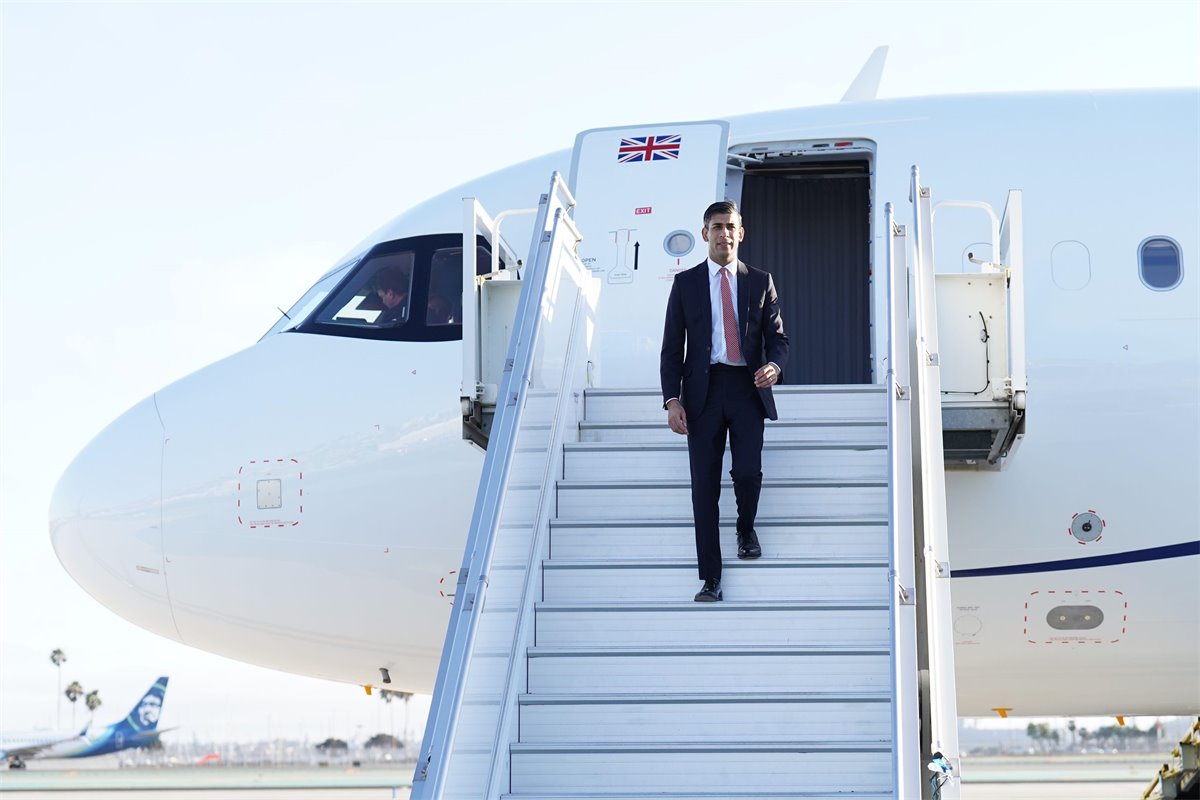
One of the many occasions climate destroyer and UK Prime Minister Rishi Sunak uses a private jet.

https://morningstaronline.co.uk/article/tories’-paltry-15-cent-doesn’t-translate-enthusiasm-starmer

Fewer people think Starmer will make a competent prime minister than those convinced he won’t.

Crunch the numbers whichever way you want, and we still have an opposition that can win by default but without much enthusiasm.

While an element of this is the lack of trust in Starmer that is the inevitable consequence of his mendacity much is down to the failure of the party to make a challenge to the anti-working-class policies that unite neoliberals of all “parties of government.”

That is the measure of the problems workers face.

https://morningstaronline.co.uk/article/tories’-paltry-15-cent-doesn’t-translate-enthusiasm-starmer

Continue ReadingMorning Star: The Tories’ paltry 15 per cent doesn’t translate into enthusiasm for Starmer