
Why is the UK’s suppressed climate national security report significant?
Bangkok at breaking point as floods turn streets into stagnant lakes
May heatwaves, deaths, ruined harvests: study of Europe’s summer paints grim picture for the future
Why is the UK’s suppressed climate national security report significant?
Bangkok at breaking point as floods turn streets into stagnant lakes
May heatwaves, deaths, ruined harvests: study of Europe’s summer paints grim picture for the future

 Protesters gather outside Number 10 North in Manchester demanding the government puts an end to spy tech firm Palantir’s role in the NHS, October 1, 2026
PATIENTS, health workers, and members of the public gathered in more than 40 protests across England today to demand an end to spy tech firm Palantir’s role in the NHS.
In London, protesters converged on Palantir’s headquarters to hand in a giant “contract terminated” poster as part of a global week of action against the company’s involvement in public services.
The protests in Manchester, Exeter, Liverpool, Bristol, Norwich, Newcastle, Birmingham and Brighton were organised by campaign groups, including Medact, Global Justice Now, Keep Our NHS Public, Palestine Solidarity Campaign, and We Own It.
Campaigners condemned Palantir’s role in managing the country’s health data, citing its track record of surveillance, human rights abuses and complicity in the genocide in Gaza.
Speaking at the London rally, Dr Omar Abdel-Mannan, a paediatric neurologist in the NHS who has volunteered in Gaza, said: “Everything that I stand for as a doctor, every principle of the NHS committed to providing equitable healthcare for all, is directly contradicted by the core values and repeated actions of Palantir.
…
Article continues at https://morningstaronline.co.uk/article/no-moral-government-should-tolerate-palantirs-involvement-our-nhs
Article by Paul Rogers republished from OpenDemocracy under under a Creative Commons Attribution-NonCommercial 4.0 International licence.
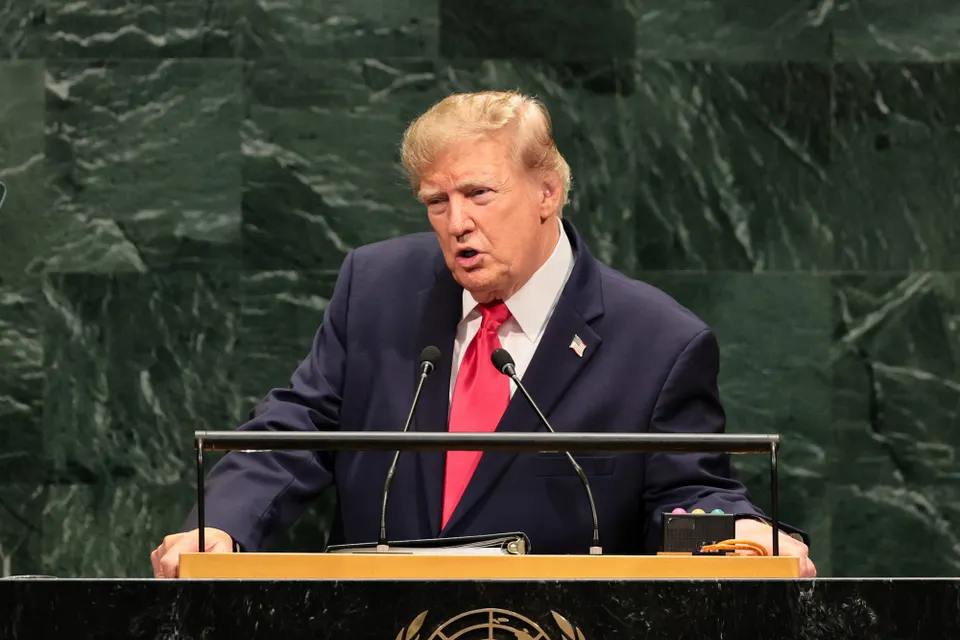
While Donald Trump has long dismissed any bad news about his war on Iran as lies dreamed up by a woke media, this faces a persistent problem: the checks and balances built into the US system cannot be so easily dismissed.
The Congressional Budget Office (CBO), for example, reports not to the White House but directly to Congress. To make matters even less palatable, when it comes to military issues, media outlets are apt to report major CBO reports at length.
A recent example was the Military Times’ detailed coverage of the CBO’s report on the cost of US combat operations in Iran up to mid-September – $38bn – and the vexed issue of the US’s huge usage of specialist munitions, especially ballistic missile interceptors, which can be far more expensive than the missiles they are designed to destroy. Helpfully – unless you’re in the White House – the publication also directly linked readers to the CBO report itself.
As the Military Times summarised: “CBO estimates the conflict has consumed between one-half and two-thirds of the US inventory of certain missile-defence interceptors since June 2025, leaving the military with fewer weapons available for a future conflict. Rebuilding those stocks could take at least five years, even if production rates increase, the agency found.”
One implication is that any talk by Trump or his secretary of war, Pete Hegseth, of a potential further bombing assault on Iran is hardly plausible, as Iran would simply expand its targeting of US military and communications facilities across the region. This would further deplete the Pentagon’s limited stocks of defensive missiles, leaving US and allied states across the Middle East at risk.
It is yet another indication that Trump is in a mess over Iran and has no easy way out unless he is prepared to accept a deal with Tehran that amounts to acknowledging failure. Such a deal may now be on offer from Iran, but Trump is unlikely to accept it, with the extent of his anger and frustration clearly visible in his address to the UN General Assembly this week.
There, he said the choice for Iran was to make a deal right after the midterm elections or for him to “annihilate the Islamic Republic and do it quickly, never giving them a chance to kill and destroy people and countries again”.
Even for Trump, it was a remarkable threat – accept my deal or I will destroy you – but it is easy to put it down as typical of the rhetoric he espouses. Yet there is much more to it than that. For a start, choosing the General Assembly’s autumn meeting, which has a high attendance of heads of state, as the audience for this statement suggests Trump sees the UN as part of the problem, a hindrance that limits global recognition of his own greatness.
Recognition of such greatness is also an important factor in his determination to build a massive triumphal arch in Washington. That proposal, which was supposedly to celebrate 250 years of US independence, is now undergoing a subtle change of design and purpose.
Until this week, the plan came under the aegis of the US National Park Service, and was comparable to existing arches around the world, such as the Arc de Triomphe in Paris. Grandiose, certainly, and no doubt intended to be seen as one of the great achievements of the greatest president ever, but intended only for show. Now, though the plans are currently being redrawn to serve a military purpose, as reported once again by the Military Times.
Writing on social media, Trump said he has “agreed to turn the arch into a top-grade Military Complex/Triumphal Arch, to house, store, and have the rapid ability to use large numbers of drones, plus Snipers, on both the roof and plaza areas, and additionally have and hold large quantities of sniper ammunition in storage”.
Unless Trump believes the United States is at risk of a sudden mass invasion from Iran, North Korea or even Cuba (or perhaps all three together), the only way his plan makes a weird kind of sense is if he thinks Washington faces a severe internal security challenge amounting to a civil war, given the arch will cover one of the main routes into the city.
At first sight, that seems over the top, but ‘the threat from within’ has been a persistent feature of the Trump worldview. It explains the emphasis on closing the border with Mexico, the extensive use of armed ICE agents and the frequent deployment of National Guard troops in large cities, including Washington, often in opposition to the state governors.
Where this is all relevant is that Trump is in trouble in the polls and may lose Congress in the forthcoming midterms, and possibly even the Senate. If that is worrying Trump, it is also a huge concern for his many seriously wealthy and powerful supporters – after all, 2028 is already looming uncomfortably large in their political calendar.
In this context, it is fair to say there are two possibilities for what comes next. One is that the US and the wider world survive the next two years without catastrophe, a tolerably fair presidential election takes place in 2028, Trump leaves office, and a more moderate president is elected. The process of creating a post-Trump polity then proceeds at pace as the US recovers something of its good sense and international standing. Within a couple of years, the world sees Trump as being by far the worst and most dangerous occupant of the White House in history.
This may be the hope of many millions of people in the US and beyond, but don’t count on it. For all his unpredictability, Trump is very good news for an entrenched and monied core of supporters who are determined to thrive in the years ahead. By normalising many extreme positions, Trump is playing a very useful preparatory role, just as Hegseth is engaged in the key task of ridding the Pentagon’s senior military of the merest hint of wokery.
Far from the end of the game, if the midterm elections go badly for the Republicans, efforts will simply be redoubled to ensure that the rich and powerful prevail once more in 2028.
Article by Paul Rogers republished from OpenDemocracy under under a Creative Commons Attribution-NonCommercial 4.0 International licence.

This work by Middle East Monitor is licensed under a Creative Commons Attribution-NonCommercial-ShareAlike 4.0 International License.

Tehran said on Wednesday it had received a US response to its proposal to end the war and reopen the Strait of Hormuz, days after US President Donald Trump said he had rejected the plan.
Iranian government spokeswoman Fatemeh Mohajerani said Foreign Minister Abbas Araghchi presented the US response to President Masoud Pezeshkian during a cabinet meeting.
Iran submitted the proposal last week, calling for reciprocal steps to be taken within seven days. These included the United States lifting its blockade of Iranian ports in return for Tehran reopening the Strait of Hormuz to shipping.
Trump said on Sunday that he had rejected the Iranian proposal, but Araghchi said at the time that Tehran had not received an official response.
Reuters quoted a source familiar with the talks as saying Qatari mediators briefed Araghchi on the US response on Tuesday during a stop in Doha on his way back from New York.
READ: China calls on US, Iran to return to Islamabad MoU, dialogue
The source said the two sides broadly agreed on the steps required, but still disagreed over the order in which they should be implemented.
Pezeshkian said any agreement should be based on a “win-win” strategy.
An Iranian official said the main disagreement between Iran and the United States concerned the sequence of the steps, rather than the elements of the seven-day plan.
Axios, citing informed sources, reported that there had been no tangible progress in Monday’s talks, with neither the United States nor Iran showing a willingness to make concessions.
US officials told Axios that Trump could order a return to large-scale military operations after the midterm elections.
Iranian officials stressed that Tehran would consider making concessions only after Washington agreed to return to the memorandum of understanding.
READ: Iran receives US response to Qatari-mediated proposal: Spokesperson
This work by Middle East Monitor is licensed under a Creative Commons Attribution-NonCommercial-ShareAlike 4.0 International License.

This work by Middle East Monitor is licensed under a Creative Commons Attribution-NonCommercial-ShareAlike 4.0 International License.

261 children have been killed and 1,056 injured in Israeli attacks on Lebanon since the escalation began in March, The United Nations Children’s Fund (UNICEF) said on Wednesday, warning of the impact of the worsening crisis on the future of children and young people.
In a report titled An Enduring Nightmare, UNICEF said about 436 schools had been damaged or destroyed, putting nearly 100,000 children at risk of dropping out of education. It added that 86 teachers had been killed or injured.
UNICEF said the economic and humanitarian crisis was pushing more families into being unable to meet basic needs, with four in five families in Lebanon struggling to provide them.
READ: Israeli army sets fire to government hospital in southern Lebanon
The report said 22 per cent of surveyed families reported that their children had gone to bed hungry during the previous two weeks.
Meanwhile, 31 per cent of families said they had been unable to provide their children with necessary healthcare because they could not afford it.
UNICEF also warned of the psychological impact of the crisis on children, saying about 770,000 children in Lebanon had experienced psychological distress over the past six months.
UNICEF Representative in Lebanon Marcoluigi Corsi said children and young people were bearing burdens “no child should have to carry”, warning that if the crisis continued without urgent and sustained action, it could have long-term effects on an entire generation.
READ: Israeli airstrikes continue to hit southern Lebanon despite framework deal
This work by Middle East Monitor is licensed under a Creative Commons Attribution-NonCommercial-ShareAlike 4.0 International License.