Category: new authoritarianism

  • Global Energy Report Offers Choice for Humanity: Renewable Transition or ‘Dystopian Future’ Pushed by Trump

    Spread the love

    Original article by Jake Johnson republished from Common Dreams under a Creative Commons (CC BY-NC-ND 3.0).
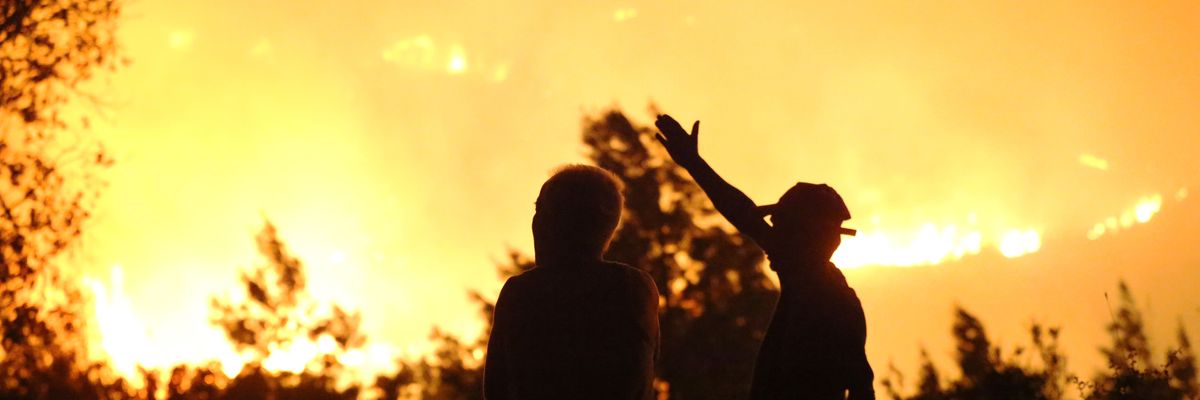
    A wildfire breaks out in a forested area in Antalya, Turkey on September 18, 2025. (Photo by Mustafa Kurt/Anadolu via Getty Images)

    “At COP30, governments must reject this nightmare fantasy, uphold a just transition, and choose a fast, fair, and funded fossil fuel phaseout,” said one climate campaigner.

    An International Energy Agency report published Wednesday underscores that world leaders are at a crossroads and must decide whether to embrace an ambitious transition to renewable energy or succumb to the agenda of US President Donald Trump and others bent on propping up the planet-wrecking fossil fuel industry.

    The IEA said in its flagship World Energy Outlook that under a so-called “current policies scenario,” oil and fracked gas demand could continue to grow until the middle of the century, complicating the organization’s earlier projections that global fossil fuel demand could peak by 2030.

    The change came amid pressure from the Trump administration and Republican lawmakers in the United States, the largest historical emitter of greenhouse gases. The New York Times noted Wednesday that “Republicans in Congress have been threatening to cut US government funding to the IEA if it does not change the way it operates.”

    “In an essay posted online, the authors of this year’s report said they were restoring the current policies scenario because it was appropriate to consider multiple possibilities for the way the future might unfold,” the Times added. “They did not say they were responding to pressure from the United States.”

    Fatih Birol, the IEA’s executive director, said in a statement that the scenarios outlined in the new report “illustrate the key decision points that lie ahead and, together, provide a framework for evidence-based, data-driven discussion over the way forward.”

    Under all of the scenarios examined by the IEA, “renewables grow faster than any other major energy source” even as the Trump administration works to roll back clean energy initiatives in the US and promote fossil fuel production.

    China, the report states, “continues to be the largest market for renewables, accounting for 45-60% of global deployment over the next ten years across the scenarios, and remains the largest manufacturer of most renewable technologies.”

    The analysis was released as world leaders gathered in Belém, Brazil for the COP30 climate talks, which the Trump administration is boycotting while lobbing attacks from afar.

    David Tong, global industry campaign manager at Oil Change International, said the IEA report “sets out a stark and simple choice: We can protect people and communities by safeguarding 1.5ºC [of warming], settle for a disastrous business-as-usual 2.5ºC, or choose to backslide into a nightmare future of much higher warming.”

    “This year’s report also shows Donald Trump’s dystopian future, bringing back the old, fossil-fuel intense, high-pollution current policies scenario, charting an unrealistic pathway where governments drag their energy policies backwards and rates of renewable energy adoption stall, leading to high energy prices and unmitigated climate disaster,” said Tong. “At COP30, governments must reject this nightmare fantasy, uphold a just transition, and choose a fast, fair, and funded fossil fuel phaseout.”

    Original article by Jake Johnson republished from Common Dreams under a Creative Commons (CC BY-NC-ND 3.0).

    Donald Trump urges you to be a Climate Science denier like him. He says that he makes millions and millions for destroying the planet, Burn, Baby, Burn and Flood, Baby, Flood.
    Donald Trump urges you to be a Climate Science denier like him. He says that he makes millions and millions for destroying the planet, Burn, Baby, Burn and Flood, Baby, Flood.
    Elon Musk urges you to be a Fascist like him, says that you can ignore facts and reality then.
    Elon Musk urges you to be a Fascist like him, says that you can ignore facts and reality then.
    Orcas discuss how Trump was re-elected and him being an obviously insane, xenophobic Fascist.
    Orcas discuss how Trump was re-elected and him being an obviously insane, xenophobic Fascist.
  • Post-election repression in Tanzania as President Suluhu “wins” with 97.66%

    Spread the love

    Original article by Nicholas Mwangi republished from peoples dispatch under a Creative Commons Attribution-ShareAlike 4.0 (CC BY-SA) license.

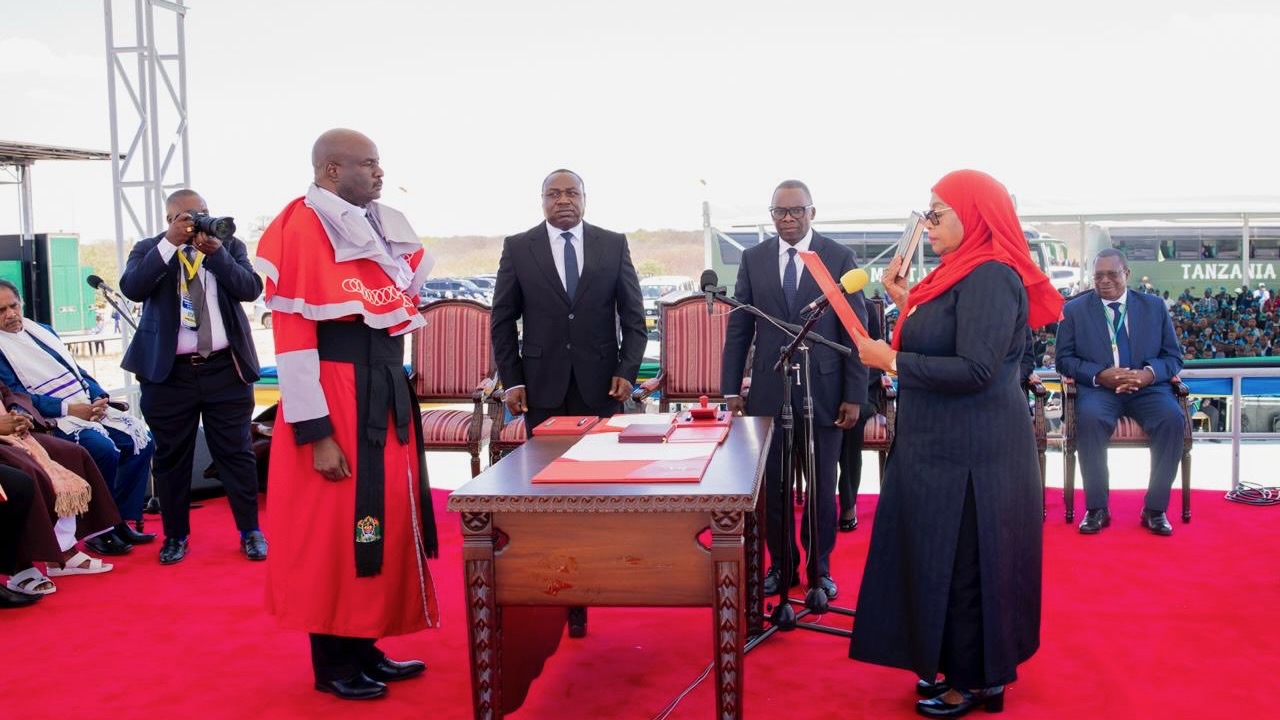
    President Samia Suluhu Hassan is sworn in after re-election in Tanzania. Photo: X

    Tanzania’s disputed elections, already clouded by credibility concerns, ended with President Samia Suluhu declared the winner. Authorities have intensified arrests and crackdowns, while opposition leaders claim that thousands were killed during post-election protests.

    The October 29, 2025, presidential elections in Tanzania plunged the country into its deepest political crisis in decades. President Samia Suluhu Hassan was declared the winner with an overwhelming 97.66% of the vote, a result widely denounced as fraudulent and surrounded by an atmosphere of repression, violence, and systematic silencing of dissent.

    In the months leading up to the polls, opposition parties were systematically harassed. Rallies were disrupted, candidates were denied registration, and media outlets critical of the government faced suspension. The banning of CHADEMA leader Tundu Lissu from contesting and the arrest of dozens of party members prefigured an electoral process tightly controlled by the state apparatus.

    In dialogue with Peoples Dispatch, Muhemsi says, this time round, the popular dissatisfaction was due to the issue of forced disappearances, abductions, as well as the “unfair” detention of some key opposition party leaders, especially Tundu Antipas Lissu, who is being charged with treason. His trial has been going on for months.

    A nation under siege

    What followed the disputed poll was a wave of protests in Tanzania’s recent history. Demonstrations erupted across major cities, from Dar es Salaam to Arusha and Mwanza, as citizens rejected the results. The government’s response was brutal. Under a nationwide curfew and a total internet shutdown, security forces unleashed a wave of violence against protestors. The opposition claims that thousands were killed or have disappeared, though independent verification remains impossible. Families continue to search for missing relatives, and many speak of a climate of fear and enforced disappearance.

    Muhemsi described how Tanzanians have long been told that “no one would dare take to the streets”. The ruling Chama Cha Mapinduzi (CCM; “Party of the Revolution”), he said, has relied on the myth of Tanzania being an “Island of Peace” to suppress dissent. “Religious leaders were co-opted into spreading this ‘peace’ gospel, many of their events were literally organized if not funded by the state.”

    Opposition leaders detained

    In the aftermath, the government has intensified its repression. Hundreds of youth activists have been charged, and opposition leaders continue to face persecution. CHADEMA’s deputy secretary-general, Amani Golugwa, was arrested on November 8 and charged with treason, joining his party leader Tundu Lissu, who was barred from participating in the election and remains imprisoned. Other activists, youths, and human rights defenders have been detained under vague accusations of incitement and subversion.

    The president’s inauguration, held behind closed doors, only deepened public outrage at a process that lacks legitimacy. A ceremony, symbolic of a government increasingly disconnected from its people.

    Regional and continental reactions

    Initially, regional and international reactions followed the pattern of complicity and silence that has long accompanied authoritarian consolidation in Africa. The African Union (AU) was quick to congratulate President Suluhu on her victory, a move that provoked widespread condemnation across the continent. In a reversal, the AU later, after sustained criticism, acknowledged that the elections “had not met the threshold of free and fair democratic values.”

    In a statement, the African Commission on Human and Peoples’ Rights expressed “deep concern” over the situation, citing grave violations of the African Charter on Human and Peoples’ Rights, which Tanzania ratified in 1984. The Commission condemned reports of mass killings, arbitrary arrests, and the use of live ammunition against peaceful demonstrators, urging the government to “de-escalate the prevailing situation” and investigate the alleged atrocities.

    The Commission further called on Tanzania to sign and ratify the “African Charter on Democracy, Elections, and Governance”, emphasizing the need for regular, transparent, and impartial elections – an implicit rebuke of the current regime’s conduct.

    Similarly, the Southern African Development Community (SADC), through its Electoral Observation Mission, issued a preliminary report on November 3 stating that the poll fell short of democratic standards. The mission detailed harassment of its own observers, including an incident in Tanga, where security officers seized passports, interrogated monitors, and deleted photographs.

    The ongoing repression not only erodes Tanzania’s internal democratic fabric but also threatens to destabilize the wider East African region, where social unrest and economic inequality have become combustible forces.

    But despite these condemnations, no tangible measures have followed. The crisis in Tanzania exposes the limits of regional institutions, whose dependence on member states makes them reluctant to call out offending regimes. In effect, regional diplomacy has become the velvet glove around the iron fist of repression, completely detached from the aspirations of the majority of African people.

    Read More: Protests erupt in Cameroon as the 92-year-old president gets another seven-year term

    For Tanzanians, the current moment is one of mourning and resistance. As families continue searching for missing loved ones and opposition leaders and arrested protesters languish in detention. The overwhelming margin of victory – 97.66% – does not symbolize national unity but its absence. Muhmesi concludes that “CCM’s tragedy isn’t just staying in power; it’s that it long abandoned the task of leading Tanzanians away from capitalism. Until we face that truth, there can be no real democracy, no good constitution, because capitalism itself is the constitution of our suffering.”

    Original article by Nicholas Mwangi republished from peoples dispatch under a Creative Commons Attribution-ShareAlike 4.0 (CC BY-SA) license.

    Orcas discuss Donald Trump and the killer apes' concept of democracy. Front Orca warns that Trump is crashing his country's economy and that everything he does he does for the fantastically wealthy.
    Orcas discuss Donald Trump and the killer apes’ concept of democracy. Front Orca warns that Trump is crashing his country’s economy and that everything he does he does for the fantastically wealthy.
  • Twenty years after “No to the FTAA”, Latin American movements reaffirm their anti-imperialist commitment

    Spread the love

    Original article by Pablo Meriguet republished from peoples dispatch under a Creative Commons Attribution-ShareAlike 4.0 (CC BY-SA) license.

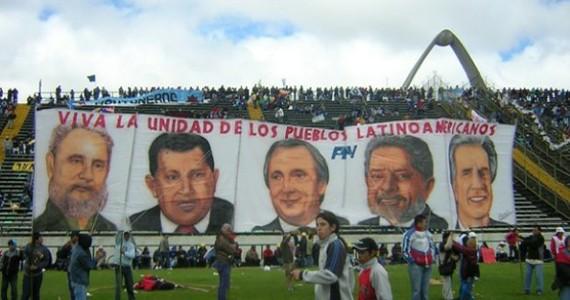
    In 2005, in the city of Mar del Plata, the presidents of the brother countries of the Americas, Lula da Silva, Hugo Chávez, Evo Morales, and Néstor Kirchner stood firm against the United States. Photo: X

    The meeting in Mar del Plata paid tribute to the moment when several Latin American presidents defeated the US attempt to establish a regional free trade agreement.

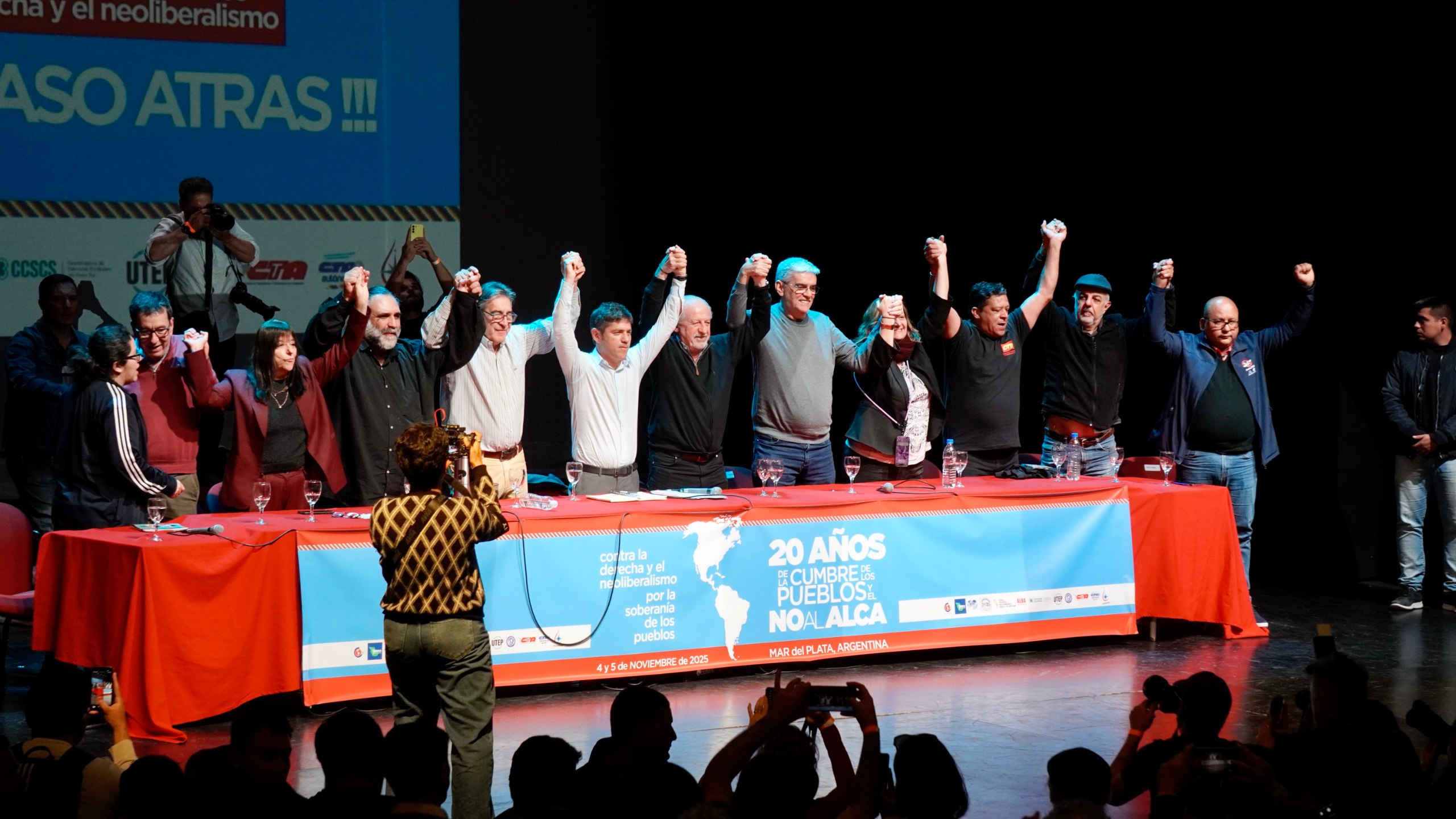
    In the same place where the regional free trade project was “buried” two decades ago, 150 delegates from various social movements in Brazil, Uruguay, Bolivia, Cuba, Mexico, Portugal, Haiti, Palestine, Chile, Nicaragua, Peru, and Paraguay gathered to reaffirm the anti-imperialist spirit that led to the regional rejection of the FTAA project, they say.

    “The world faces greater levels of inequality, injustice, and authoritarianism, with a growing concentration of financial and technological power that deepens poverty and limits the autonomy of countries in the Global South,” the delegates said in the event’s final declaration.

    The meeting was also attended by the governor of Buenos Aires, Axel Kicillof, who stated that the rejection of the FTAA in 2005 was a “new declaration of independence” for Latin American countries. “The rejection of the FTAA was a victory for Latin American sovereignty, voiced by a group of presidents with enormous courage, represented in our country by Néstor Kirchner. Twenty years after that historic milestone, we have a responsibility to continue building unity, because there is no possibility of development for our countries outside the framework of regional integration. We cannot afford not to have a project on behalf of our people, because Argentina and the countries of Latin America are not anyone’s backyard,” Kicillof wrote in X.

    Peoples Summit No al ALCA
    Delegates from dozens of Latin American countries reaffirm the anti-imperialist spirit of the “No to the FTAA” summit in 2005.

    For his part, the Secretary of Foreign Affairs of the Argentine Workers’ Central Union (CTA), Adolfo Aguirre, stated: “In this very place, in front of the President of the United States, George W. Bush, and before the eyes of the whole world, our peoples, workers, together with leaders such as Néstor Kirchner, Hugo Chávez, and Luiz Inácio Lula da Silva, marked a turning point. We said no to surrender, no to dependence, no to the model that wanted to turn our America into the backyard of economic power.”

    Twenty years ago, the anti-imperialist slogan was born

    Twenty years ago in Argentina, several political leaders from the Latin American left gathered at a People’s Summit, whose fundamental slogan was the rejection of the Free Trade Area of the Americas (FTAA), an initiative promoted, among others, by the George W. Bush administration. The FTAA sought to significantly reduce customs barriers between American countries.

    According to popular and left-wing forces in Latin America and the Caribbean, the agreement would have promoted a regional market in which the United States would have had an enormous advantage over other countries and which, in the long run, would have led to the destruction of the still immature regional industry to benefit the interests of large US companies.

    However, the economic and geopolitical project did not prosper due to fierce and coordinated opposition from several Latin American presidents, including Néstor Kirchner (Argentina), Hugo Chávez (Venezuela), and Luiz Inácio Lula da Silva (Brazil), among others. The political maneuver took place in Mar del Plata, during the Summit of the Americas, where Bush and his entourage suffered a severe setback. Thus, the proposal that had been in the works and planned since 1994 in Miami and was definitively defeated.

    The Summit of the Americas is considered by several experts to be a turning point in the geopolitical relations of the American continent. New progressive and pro-sovereignty processes joined those of Argentina, Brazil, and Venezuela, giving rise to an attempt at regional integration that to this day is pushed by progressivism and boycotted by Washington’s neoliberal allies.

    While the summit was taking place, thousands of people from left-wing and progressive movements and political parties gathered at a parallel conference with the slogan “No to the FTAA,” which was eventually attended by several political leaders. Among them, Hugo Chávez made a statement in his speech that would go down in history: “ALCA (FTAA in Spanish), al carajo! (FTAA, go to hell!)”.

    A historic event

    The region has undoubtedly changed its political composition. The seemingly unstoppable rise of progressive governments is now fragmented due to the emergence of new right-wing and neoliberal projects, such as those of Javier Milei in Argentina and Daniel Noboa in Ecuador, and the recent victory of the Bolivian right after more than 20 years of left-wing governments, among others.

    However, in several countries, progressivism managed to regain government, as in the case of Lula da Silva himself, or managed to remain in power, as in the case of the United Socialist Party of Venezuela. Also, in other countries such as Colombia with Gustavo Petro and Mexico with Andrés Manuel López Obrador and Claudia Sheinbaum, progressive governments took office for the first time in their recent history.

    In this sense, the dispute over governments in Latin America remains open, and much of the structure of that dispute can be found in what happened in Mar del Plata 20 years ago, where one regional project was buried and another was established, for almost a decade, as the model for regional integration around a position that, although it had its clear limits, always declared itself sovereign and independent.

    Original article by Pablo Meriguet republished from peoples dispatch under a Creative Commons Attribution-ShareAlike 4.0 (CC BY-SA) license.

  • Progressive popular movements and organizations stand in solidarity with the people of Sudan

    Spread the love

    Original article by Nicholas Mwangi republished from peoples dispatch under a Creative Commons Attribution-ShareAlike 4.0 (CC BY-SA) license.

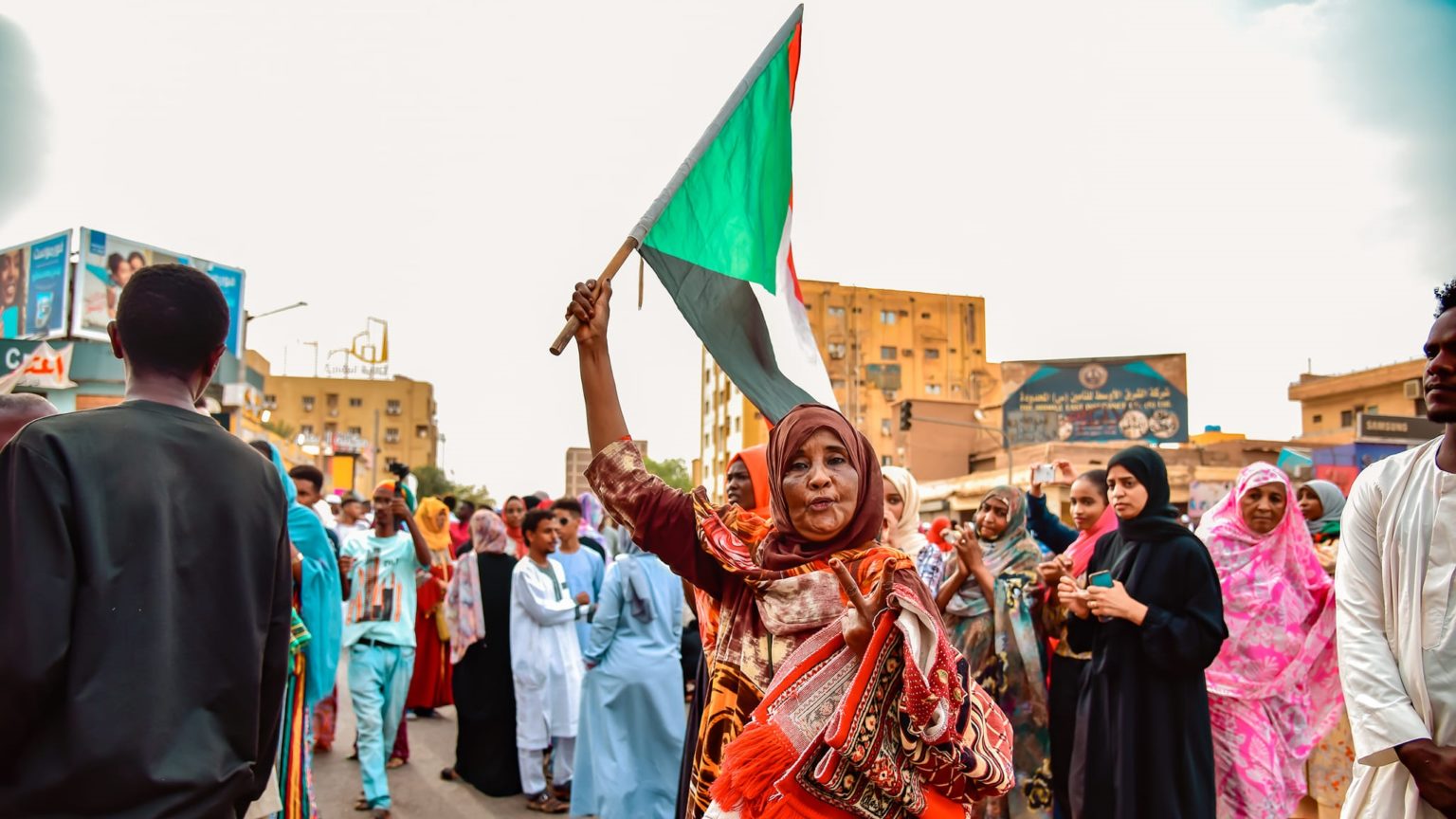
    Photo: Ahmed Elfatih

    Popular organizations and movements across Africa and beyond have condemned the ongoing massacre of the Sudanese people by the Rapid Support Forces (RSF), calling for an immediate end to the violence. Urging support for the Sudanese people’s struggle for peace, justice, and democratic self-determination.

    Across Africa and the world, progressive and popular organizations are raising their voices in solidarity with the people of Sudan, as they face one of the most brutal and protracted conflicts in the world today. From Ghana to South Africa, from international networks to grassroots movements, the message is unified in a call to end the massacres, open humanitarian corridors, and uphold the Sudanese people’s struggle for justice, peace, and sovereignty.

    Amid mounting international condemnation for its war crimes, especially over the last several weeks, the Rapid Support Forces (RSF) have reportedly agreed to a three-month pause in the fighting. However, analysts and activists argue that the “humanitarian ceasefire” is far from a solution to the two-and-a-half-year war.

    The Socialist Movement of Ghana (SMG) condemned the “genocidal conflict between factions of the militarized elite” that has terrorized the people of Sudan since 2023. In their statement, the movement expressed solidarity with the Sudanese people and their popular organizations, including the Sudanese Communist Party (SCP), lauding their courage and political clarity in the face of devastation.

    The SMG statement described the war between the Sudanese Armed Forces (SAF) and the RSF as a tragic consequence of elite rivalries and foreign interference. It denounced the “murky transnational corporate and resource-grabbing agenda of the United States, Western powers, and some Arab and East African countries” fueling the conflict.

    “The people of Sudan clearly reject both warring factions and any national ‘solution’ based on military force or elite interests,” SMG declared, reaffirming that Sudan’s revolution, born out of the people’s 2018 uprising, continues to embody the demand for democracy, justice, and full sovereignty over national resources.

    The International Peoples’ Assembly (IPA) and Pan Africanism Today (PAT) also issued a joint statement condemning the “brutal massacres currently unfolding in Sudan,” particularly in El-Fasher, Bara, Darfur, and Kordofan, describing the atrocities as genocide. They called for immediate international mobilization, demanding a ceasefire, protection of civilians, and independent investigations into war crimes.

    “The Sudanese people face a destructive war machine, defending their dignity, communities, and right to live,” the statement read. It called upon trade unions, women’s movements, youth, and social movements worldwide to stand with Sudan through coordinated actions, educational events, and artistic expressions of solidarity.

    Read More: A bloodbath visible from space: RSF’s massacres in Sudan’s El Fasher

    Joining this call, South Africa’s Abahlali baseMjondolo Movement, representing shack dwellers and grassroots activists, issued a solidarity statement denouncing the ongoing massacres in El-Fasher and Darfur. The movement condemned the RSF’s atrocities; executions, mass killings, and the starvation of entire communities, financed by the United Arab Emirates and sustained by European complicity in migration control.

    “The uprising that began in December 2018 was a democratic revolt of workers, women, students and the urban poor,” Abahlali’s statement reminded. “That uprising gave rise to new grass-roots forms of democracy through the resistance committees, which continue to provide food, medicine, and mutual aid amid war.”

    Sudan’s struggle is our struggle. As the Socialist Movement of Ghana declared:

    “Let us stand for unity, sovereignty, and development. Sudan’s struggle is Africa’s struggle.”

    Original article by Nicholas Mwangi republished from peoples dispatch under a Creative Commons Attribution-ShareAlike 4.0 (CC BY-SA) license.