Article by Julia Conley republished from Common Dreams under Creative Commons (CC BY-NC-ND 3.0).
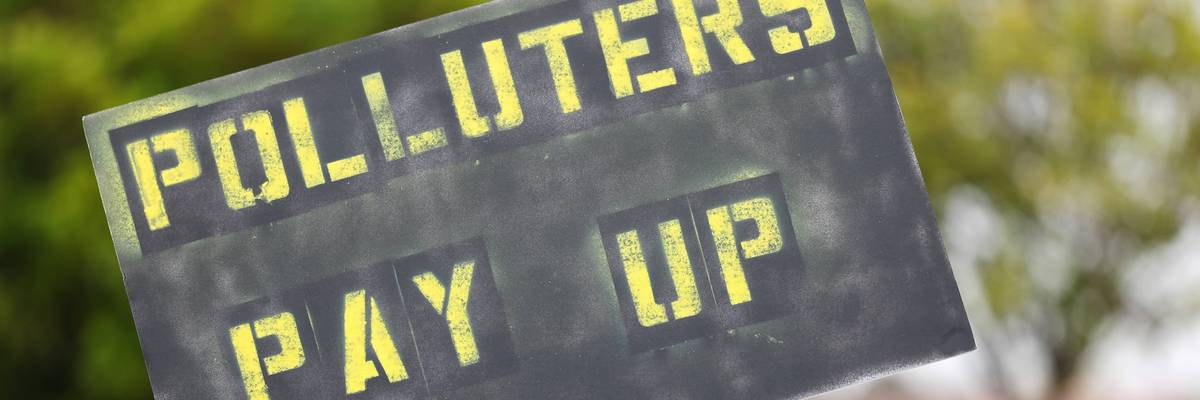
After President Donald Trump echoed climate campaigners’ longtime condemnation of fossil fuel giants’ massive profits—uttering “the only thing” the climate-denying president “has said about energy policy since taking office that makes any sense,” according to one advocate, organizers on Tuesday urged him to put his money where his mouth is by backing a windfall profits tax for companies like Chevron and Exxon Mobil.
In the Oval Office on Monday, Trump called on those corporations and others to slash prices and give some of their record-breaking profits—specifically those made since the president joined Israel in waging an unprovoked war against Iran on Feb. 28—“back to the public.”
RECOMMENDED…
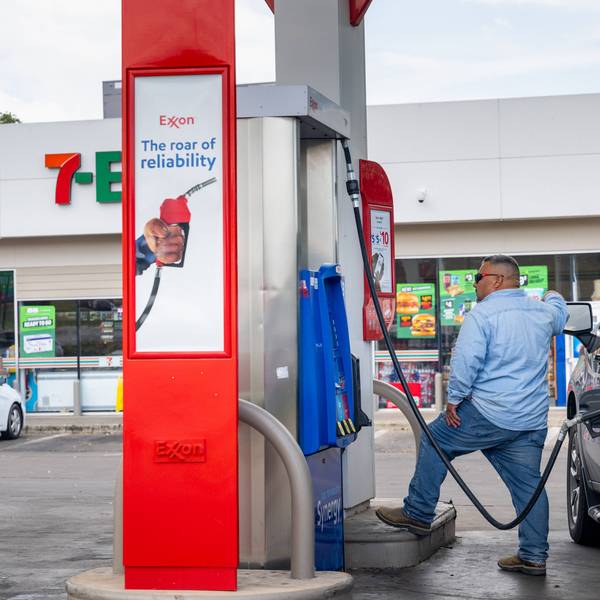
“They’re making too much money, based on a shortage,” said Trump, while noting that he is a “big free enterprise guy.”
“I don’t like it… Chevron, too much money. Exxon Mobil, too much money,” he said. “When you look at one company, they made 12 times what they made the year before? Give some of that back to the public, and they’d better cut the retail price.”
With oil and consumer gas prices skyrocketing since Trump and Israel started the war, resulting in Iran’s retaliatory measure of effectively closing the Strait of Hormuz, which a fifth of the world’s oil supply ordinarily travels through, Exxon reported that its second-quarter profits more than doubled compared with last year. The company took in $14.5 billion, while Chevron reported profits of $12 billion compared with $2.5 billion in 2025—nearly a 400% increase.
BP also reported profits that were $2.35 billion higher than last year.
An analysis by the Guardian published Tuesday showed that eight of the world’s largest oil companies made nearly $93 billion in profits in the three months following the invasion.
The climate action group 350.org noted that the record profits of oil and gas giants come as “communities across the world endure record-breaking heatwaves, wildfires, and rising living costs”—and as governments from around the world prepare to resume negotiations on a United Nations Framework Convention on International Tax Cooperation, where a “mandatory surtax on highly polluting industries is gaining support as part of that process.”
Two Democratic lawmakers in the US, Rep. Ro Khanna of California and Sen. Sheldon Whitehouse of Rhode Island, introduced the Big Oil Windfall Profits Tax Act in March.
“From Bordeaux to Phoenix to Mumbai, families are living through the cost of climate delay, while the companies most responsible bank blockbuster bonanzas,” said Anna Jellema, executive director of 350.org. “That is not a coincidence; it is a business model. Governments meeting in New York this month have a genuine opportunity to change it. Calls are growing across the political spectrum for a proper global profits tax, so the industry that helped cause these disasters pays towards the recovery, the solutions and the protection people need. It’s simple fairness: Those who caused the damage and profited from it should pay to fix it.”
Candice Fortin, US campaign manager for 350.org, emphasized that the latest comments from Trump, whose Interior Department just moved to weaken restrictions on Arctic drilling, must be taken with a grain of salt.
In the same Oval Office statement on Monday, said Fortin, “Trump criticized countries championing wind energy and supported more oil extraction in the North Sea.”
“We don’t just need to tax fossil fuels’ windfall profits now, to be then forget about later,” said Fortin. “We need to end our dependence on oil, gas, and coal—and we need a permanent mechanism to make the fossil fuel industry pay its fair share and redirect those revenues towards protecting people and communities from the climate and cost-of-living crises.”
“If this is a genuine change of heart from a president whose budget bill included $18 billion in taxpayer handouts to Big Oil, we welcome it,” added Fortin. “But talk is cheap, here’s the real test: Will Trump throw his weight behind the Big Oil Windfall Profits Tax bill, which his party has been stonewalling in Congress since March?”
Article by Julia Conley republished from Common Dreams under Creative Commons (CC BY-NC-ND 3.0).
Nigel Farage urges you to ignore facts and reality and be a climate science denier like him and his Deputy Richard Tice. He says that Reform UK has received £Millions and £Millions from the fossil fuel industry to promote climate denial and destroy the planet.Donald Trump urges you to be a Climate Science denier like him. He says that he makes millions and millions for destroying the planet, Burn, Baby, Burn and Flood, Baby, Flood. Power-mad orange gasbag Donald Trump says Burn, Baby, Burn.
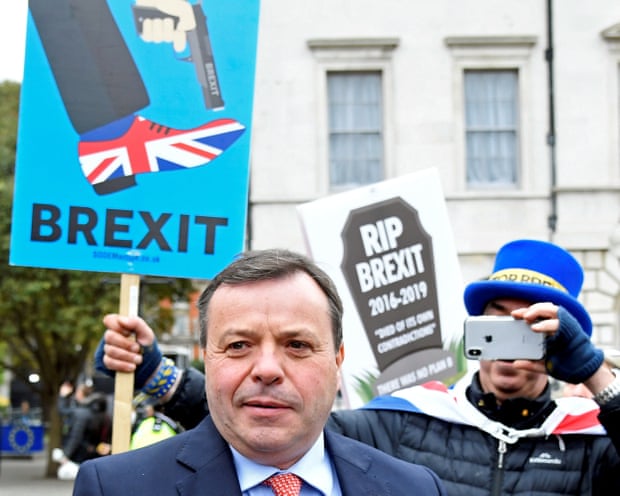
The prominent Reform UK member and Brexit campaigner Arron Banks is said to have set private investigators on a Sunday Times journalist after he broke a series of stories about Nigel Farage.
Banks is alleged to have paid for the services of investigators to examine Gabriel Pogrund, editor of the paper’s Insight investigations team.
…
The Sunday Times and the Guardian have broken a series of stories in recent months revealing how cash has poured into Reform and Farage personally from donors and wealthy benefactors.
Pogrund is believed to have been targeted after a story in the Sunday Times last month revealed that Farage has received financial support from the convicted criminal George Cottrell, known as “Posh George”.
In response to the New Statesman report, Banks said: “We believe the Sunday Times used hacked information and that was an area of interest. We do have an investigative arm that’s got advanced capabilities.”
Asked directly whether he had paid investigators to look into Pogrund, he said: “When you live by the sword, you die by the sword.”
…

This work by Middle East Monitor is licensed under a Creative Commons Attribution-NonCommercial-ShareAlike 4.0 International License.

The US expects Iran to restore the flow of oil and gas through the Strait of Hormuz to pre-conflict levels and ensure the safe passage of commercial vessels, US Vice President JD Vance said Saturday.
“Our expectation is you’re going to see the same amount of oil and gas come out of the Gulf that you saw before the conflict started,” Vance told Fox News, saying Iran had communicated that intention to Washington.
“But you know, we don’t trust. We verify,” Vance said. “We actually look not at people’s words but people’s deeds.”
He said Washington was also monitoring Iranian statements about potentially imposing tolls on vessels using the strategic waterway.
“The Iranians have told us they have no plans to toll the Strait of Hormuz,” Vance said, adding that the US would judge Tehran by its actions.
Vance said Iran and Gulf countries, particularly Oman, had been discussing ways to maintain safe maritime traffic.
READ: Oman says Strait of Hormuz talks progressing in ‘positive’ atmosphere
He said Iran had laid “a large number of mines” at the start of the conflict, making demining and the establishment of a safe traffic scheme key issues.
“What we’re really working through now is how you can actually set up a traffic scheme so that the ships that pass can pass through safely. That includes, of course, demining,” Vance said.
The US also expects Iran to commit to not firing on commercial vessels, Vance said.
“That also includes a commitment from the Iranians that they’re not going to fire at commercial vessels,” he said.
“They’re hurting in a big way. They want this thing to be over,” he said, adding that the key question was whether Iran’s system could provide what Washington considers necessary for an agreement.
READ: Adviser to Iran’s supreme leader says ‘foreign forces’ must leave region
This work by Middle East Monitor is licensed under a Creative Commons Attribution-NonCommercial-ShareAlike 4.0 International License.