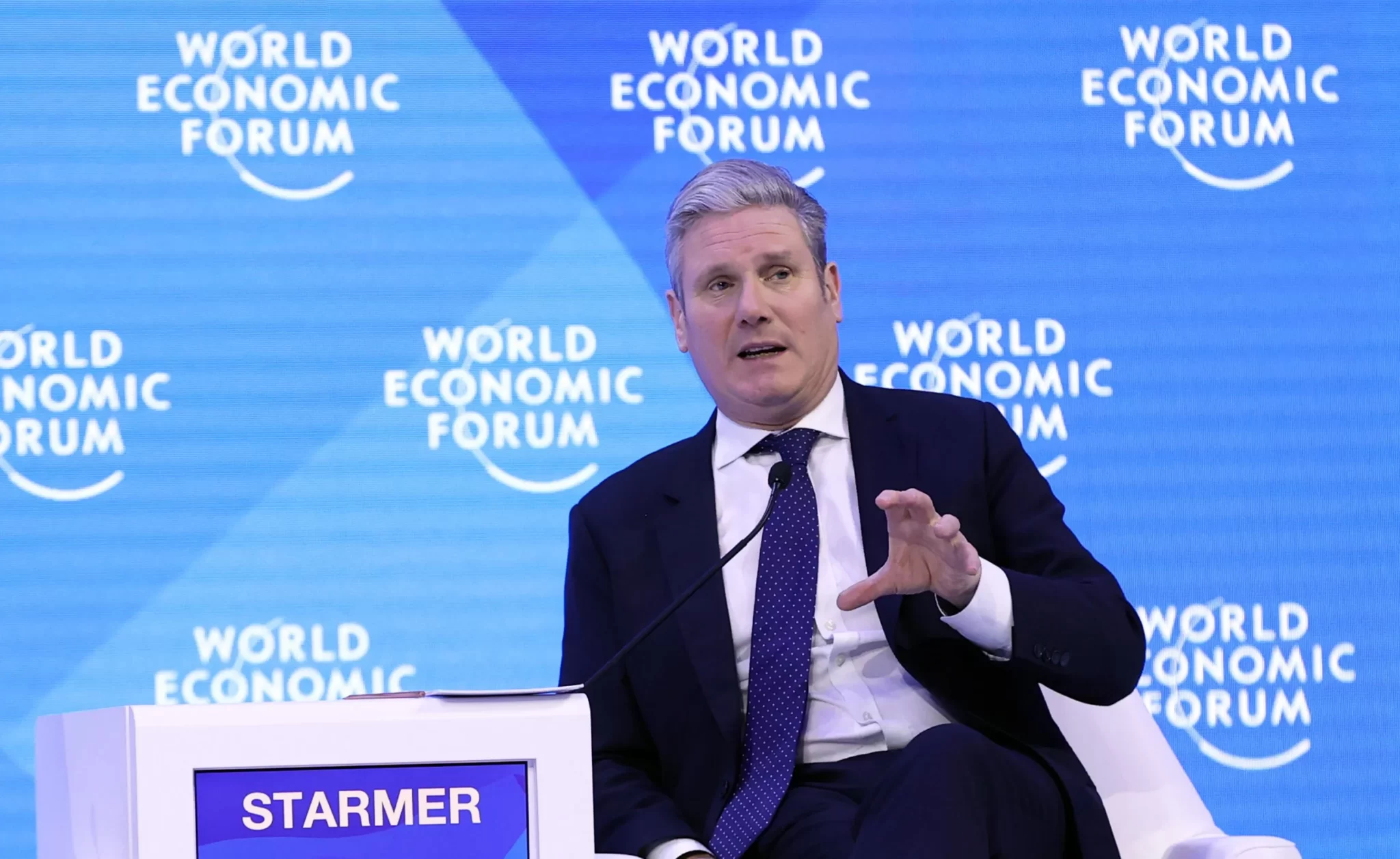
If it wins the next general election in the UK, Keir Starmer’s Labour Party could try to fix the damage inflicted on the National Health Service by years of Tory austerity. But Labour seems set on further privatizing the NHS.
Everywhere you look in the health service, the signs of thirteen years of austerity and willful Tory neglect are apparent. The Tories have, throughout their time in government, allowed the National Health Service (NHS) to go to rack and ruin, sending staff morale crashing through the floor and putting patients’ lives at risk.
The waiting list for surgery or specialist clinical care — partly a consequence of the coronavirus pandemic but exacerbated by years of chronic underfunding — stands at a record high of 7.22 million. Millions of patients, meanwhile, are struggling to get general practitioner (GP) appointments due to the immense pressures on NHS primary care.
Ambulance waiting times are alarmingly long: in December, response times in England were the worst on record, while the number of patients waiting twelve hours or more to be admitted to accidents and emergency department (A&E) also hit a new all-time high. NHS dentistry, in addition, is in a state of almost-total collapse.
Both opinion polls and the recent local elections in England indicate that the Tories are on track to lose the next general election. While the differences between Keir Starmer’s Labour and Rishi Sunak’s Conservatives are narrowing all the time, it might at least be expected that the Labour Party would repair the worst of the damage done since 2010. The NHS remains the great survivor of postwar social democracy. But statements from the Labour front bench suggest otherwise.
A former ‘playboy’-turned-businessman made a fortune supplying PPE during the pandemic, even though the NHS may be unable to use millions of the gowns his company delivered, openDemocracy can reveal.
Chemical Intelligence Limited was awarded a £126m contract to supply 21 million medical gowns that were desperately needed to protect NHS workers treating Covid patients in May 2020. But data released to openDemocracy through freedom of information law shows the Department of Health and Social Care later deemed 4.5 million of them – worth an estimated total of £27m – “not fit for use” in the NHS.
Lawyers acting on behalf of Robert Gros, the sole owner and CEO of Chemical Intelligence, said Gros could not comment because he “did not recognise these figures or amounts”.
The bumper PPE contract allowed Gros, 51, to turn around his business, which had made losses two years running prior. Chemical Intelligence declared profits of £33m for the year up to September 2020 according to accounts filed on Companies House. It had just two employees, including Gros, when it landed the multi-million pound government contract.
Gros personally splashed out on a £4m country pile just four months after he clinched the PPE deal. In 2021, after his company reported a further £31m in profits, he bought a second £2m country home and asked for planning permission to fit a basement bowling alley in the first.
The businessman then paid himself £7m in dividends in January 2022 – after having already loaned himself £6m the year before. Two months later, he transferred £40m in dividends to a holding company that he entirely owns.
Gros would only answer our questions through his lawyers, who told us that he has paid all the necessary corporation tax and that the £4om would “continue to be reinvested” in his business.
The £126m contract was one of many for which the government apparently paid over the odds as demand for PPE skyrocketed during the pandemic and it did not have enough stockpiled. Gowns cost the government 1,260% more than they did before the pandemic, according to the National Audit Office.
A fifth of gowns supplied by Chemical Intelligence were labelled “not fit for use” because they “failed the technical, clinical or regulatory compliance assessment”, openDemocracy understands. The department would not elaborate on why the gowns failed checks, but according to the data released under FOI their value has been written down to £0.
“The department has processes in place to review the quality of PPE and determine whether products are suitable to be released to the frontline,” said a spokesperson. “Upon receipt, a sample of each product is reviewed by DHSC’s Technical and Regulatory Assurance team.
“A proportion of this stock was classified as ‘do not supply’. Stock in this category has not necessarily fallen short of standards and in many cases these products can be used in other settings.”
Gros’s lawyers insisted that all the PPE the company had supplied was “fit for purpose and use”, suggesting the DHSC may have been mistaken in its record-keeping. The department confirmed that Chemical Intelligence also supplied £35m worth of face masks and disposable surgical aprons under separate contracts also awarded in 2020, none of which was deemed unusable.
Of the £12bn the government spent in total on PPE, £4bn worth cannot be used by the NHS because it doesn’t meet the right standards, according to a 2022 report by the Public Accounts CCommittee of MPs.
Gros’s lawyers said that the sharp rise in profits for Chemical Intelligence was not all down to PPE deals he struck during the pandemic, and threatened openDemocracy with an injunction if we revealed details about his mansions.
The businessman, who had a reputation as a “playboy” in the late 1990s after dating a string of soap stars, appears to have made the most of his new fortune. The Cambridgeshire house he bought a few months after the contract was signed had six bedrooms, four reception rooms, a swimming pool and a gym, all heated by three boilers.
Three months later, he lodged a planning application with Cambridge City Council to more than double the size of the property. The proposed plan included the addition of a basement housing a dance floor, a two-lane bowling alley, a golf simulator, a room for arcade machines and a cinema.
Gros was forced to withdraw the application after it was rejected by planners for being too “modern” in style; neighbours had also raised concerns about the potential noise from the proposed bowling alley and dance floor. He resubmitted a new application in November, which was approved in April.
In June 2021, through another company of which he was the sole owner, Gros bought a second mansion with six bedrooms, three garages and an outdoor pool for £2m in a neighbouring village.
Chemical Intelligence, which Gros founded in 2012, develops medical examination gloves, which have been licensed to and manufactured by Malaysian firm Hartalega since 2017.
Hartalega is one of several Malaysian glove manufacturers that have been accused of using modern slavery. A leaked report by the Home Office in 2019 found there was “strong evidence” to suggest that the majority of Malaysian glove manufacturers that supply the NHS, which include Hartalega, “exhibit forced labour indicators”.
Lawyers acting for Chemical Intelligence said that the company “takes the issue of modern slavery extremely seriously and carried out its own due diligence to seek to satisfy itself that throughout the manufacturing process all of the correct procedures and safeguards are in place”.
Chemical Intelligence was one of 58 suppliers awarded a contract to supply medical gloves to the NHS in January 2022, but no information has been published on whether it has yet done so.
EVERYONE who works in or depends on the NHS should be deeply concerned at Keir Starmer’s vision for the service.
Like so many cheerleaders for public-sector “reform” — which has invariably meant fragmentation and privatisation over the last 40 years — he accuses those calling for higher investment of avoiding the big issues. Yet that is what he is doing.
Starmer dodges questions on NHS pay, despite ongoing disputes involving doctors, nurses, paramedics, porters and domestics.
These disputes have prompted the biggest strikes in NHS history this year — but Labour is “not focused” on pay rises, he says.
That’s not good enough from the leader of a party founded to represent organised labour. Especially since we know from his previous comments that they regard inflation-proofed pay demands as “unaffordable.”
…
Starmer says the NHS cannot cope with more years of Tory government, and he is right. But on a prospectus like this — no promises on investment, no promises on pay, blind faith in “technology” and continued exploitation by the private sector — its agony would continue on his watch, too.
Campaigners question why huge sums are being handed to multi-billion pound companies over local health experts
NHS England is paying management consultants day rates of up to £3,000, despite the government claiming it cannot afford to give nurses and junior doctors a real-terms pay rise.
Some executives from top consulting firms including Deloitte and PA Consulting are being paid the equivalent of an annual salary of more than £600,000 by NHS England for their services – more than double what its own CEO is reportedly paid.
Deloitte, which charged the most for its consultants last year at up to £3,000 a day, was ironically hired to help NHS England improve how it keeps track of its spending on private companies.
The findings come after a deal was struck between health unions and the government for a 5% pay rise for more than a million NHS workers. Ministers had dismissed demands for an above-inflation rise on the grounds that it would be unaffordable.
Unite and the Royal College of Nursing rejected the offer, with the former saying that it fell well short of the current rate of inflation. Both are planning to continue with strike action, while the British Medical Association (BMA), which represents junior doctors, is continuing negotiations. The BMA is looking for a 35% pay rise to make up for 15 years of below-inflation pay increases.
Unite’s national lead officer Onay Kasab called the figures “a damning indictment of a government that seems intent on destroying the NHS and has learnt nothing from the pandemic, when it allowed the health service to be plundered by private sector profiteers”. He added: “The money would be much better spent providing a proper pay rise for NHS staff to end the recruitment and retention crisis that is crippling health services.”
The day rates were disclosed to openDemocracy through a Freedom of Information request only after the Information Commissioner’s Office warned NHS England that it could be taken to court if it continued delaying its response.
The figures also show consultants from PA Consulting were paid up to £2,500 a day to provide NHS England with support for its Covid vaccination programme between December 2022 and March 2023.
More than a dozen consultants from Ernst and Young were paid up to £2,343 a day last year to give NHS England recommendations for a system that would make it possible to share patient health records electronically between trusts.
The health service also forked out up to £2,350 a day on consultants from KPMG to support improvements to its digital services.
NHS England told openDemocracy that the rates are negotiated centrally by the government.
“It is absolutely appalling to see huge sums of money syphoned off into consultancy firms in this manner,” Julia Patterson, chief executive of NHS campaign group EveryDoctor, told openDemocracy. “At the very least, there should be published reports annually demonstrating the added value provided by contracting strategic advice.
“Local healthcare experts – such as the NHS clinicians, who are woefully underpaid – would be much better placed to offer advice about the planning and processes within their respective areas.”
The sums raise questions about whether the government has learnt from its disastrous NHS Test and Trace scheme, which was criticised for relying too heavily on private sector consultants. Deloitte staff were paid up to £6,000 a day to work on the programme despite an inquiry later finding that it failed to slow the pandemic.
At the time, the ballooning spending prompted a Cabinet minister to warn that consultants waste taxpayer money and “infantilise” civil servants.
Then cabinet secretary Michael Gove defended the use of consultants during the pandemic but conceded the government needed to reduce its overall spending on them.
In February, openDemocracy revealed NHS England quadrupled its budget for outsourced consultancy work to £83m – enough to train more than 1,600 new nurses or pay for almost 14,000 hip operations.
Tamzen Isacsson, chief executive of the Management Consultancies Association, said: “There are strict regulations for how the government procures management consultants and firms need to show they meet stringent cost and value criteria.
“The charge from consulting firms, which operate in a highly competitive market includes various operating costs that goes well beyond consultant salaries. The per day cost charged by consulting firms working in the NHS will include security system and technical requirements, product development costs, solution developments, legal costs, overheads, training and recruitment costs.”
An NHS spokesperson said: “The NHS is one of the most efficient health systems in the world, spending 2p in the pound on admin compared with 4p in Germany and 6p in France.
“NHS England uses Crown Commercial Service frameworks with government negotiated rates for management consultancy where it is necessary, and seeks to negotiate additional discounts to ensure best value for taxpayers.”
The average time for an ambulance to arrive for someone suffering stroke, severe burns or chest pain is now 93 minutes. This is five times longer than the target of 18 minutes
Each day 120 people on average die before an ambulance can reach them.
Many of these lives could have been saved if we had an NHS that was fit for purpose.
But under the Tory Government, emergency response times have hit a record high.
The average time for an ambulance to arrive for someone suffering stroke, severe burns or chest pain is now 93 minutes. This is five times longer than the target of 18 minutes.
The blame cannot be laid at the door of paramedics, who provide the best possible service under increasingly stressful conditions.
The responsibility lies with a Government that has failed to invest in the NHS.