NHS news review

Spread the love

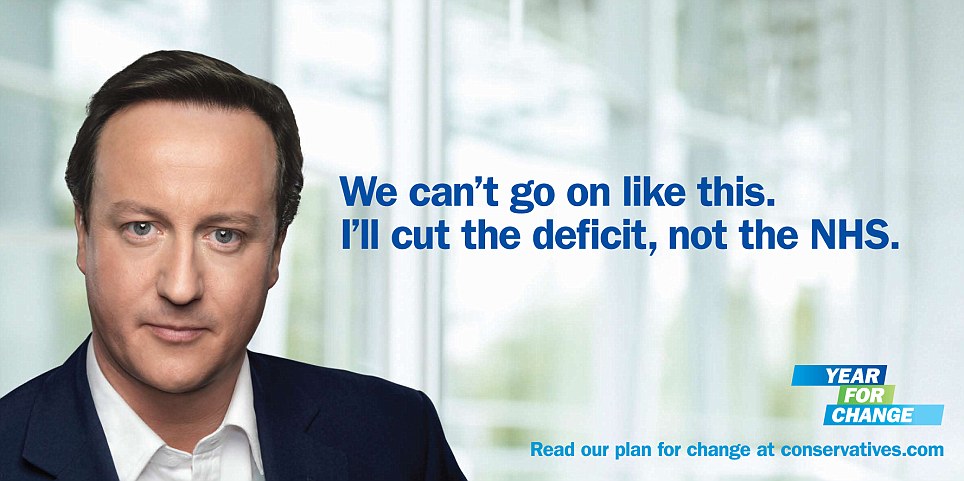
Conservative election poster 2010

A few recent news articles about the UK’s Conservative and Liberal-Democrat(Conservative) coalition government – the ConDem’s – brutal attack on the National Health Service.
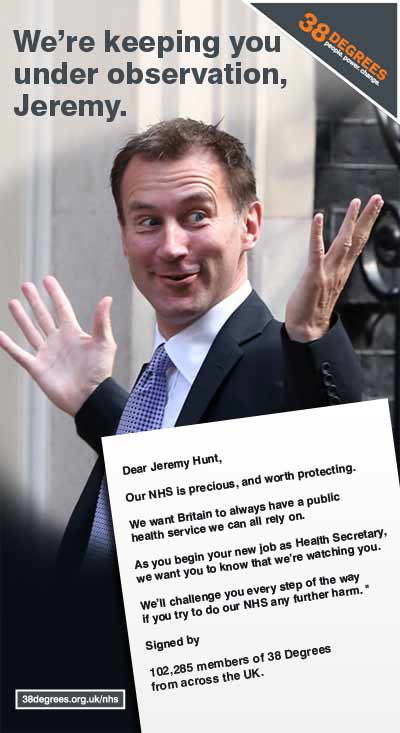


38degrees warn Jeremy Hunt about the NHS


Lansley was crap

There should be no sentiment about Andrew Lansley’s departure as health secretary, no matter how hard he worked, how gutted he is to lose the Tory health brief after nine years or how much he cared about the health service. By every measure of high political office, he was a disaster and he deserved to be sacked.

As a strategist, he failed to look for the most pragmatic way to achieve his desired outcome. He simply would not recognise that taking a wrecking ball to NHS structures – at a time of intense financial stress, rising demand and the necessity for widespread changes to clinical practice – was foolish. He compounded this mistake by imposing a structure that resembles a London tube map. Compare that with Michael Gove’s pragmatic approach of bending the existing academy programme to his will.

As a politician, Lansley managed to turn virtually every interest group against him, gave the opposition almost limitless opportunities to attack and lost the confidence of the public. He was so inept that even after the extraordinary spectacle of “the pause” – when the government just about managed to get the policy back into some sort of order – he again careered into a political ditch as it went through the Lords. Sharp, charming health minister Earl Howe had to tow him out.

Lansley was a shocking communicator, from ill-tempered media interviews to the hectoring tone he adopted with the professions. His idea of consultation was to repeat what he had said in the hope that this time you would finally concede he was right. Ridiculing managers as “bureaucrats” was just one indicator of his ineptitude – alienating with a single word the very people who had to implement his reforms.


NHS pay cuts will lead to exodus of health workers, say nurses

NHS hospitals that impose pay cuts on staff will see health professionals leaving in protest and the quality of care coming under threat as a result, nurses’ leaders claim.

Care in the south-west of England, where 20 NHS trusts are seeking to bring in local pay rates, will suffer if the plan goes ahead, according to the Royal College of Nursing (RCN).

The trusts are taking a reckless gamble because the region’s sizeable elderly population and falling number of nurses mean it is badly placed to cope with a “skills drain” of NHS staff angry at having their pay cut, it says.

Health unions, including the British Medical Association which represents doctors, are furious that the trusts have formed a cartel in an attempt to bring in localised pay rates, fewer holidays and reduced sick leave, as part of their efforts to cope with flat budgets and contribute to a £20bn NHS-wide savings drive. They fear that, if successful, the move by the South-West Pay, Terms and Conditions Consortium could erode the NHS’s long-established system of national bargaining and agreed pay scales.

The consortium has told staff that unless they accept changes that the RCN calls “draconian”, the jobs of 6,000 of the 68,000 staff employed by the 20 trusts could go. Pay typically takes up about 65% of a hospital trust’s budget.

In a briefing analysing the potential impact of the move, which the RCN has sent to the 20 trusts, it warns: “Reducing the pay, terms and conditions of staff in the south-west is not the only choice that employers have, and this course of action is highly likely to negatively impact on patient care. Not only is there a real risk that staff will be forced to leave the NHS, but it will also be difficult to recruit, and the morale of remaining staff will be damaged further.”

In an accompanying letter, Dr Peter Carter, the RCN’s chief executive, adds that the move “will create a skills deficit in the region that will impact on the ability of trusts to provide high-quality care” and will increase rather than reduce staffing costs because it will involve extra bureaucracy and constant negotiation.


We do want to break up the NHS. We don’t want to privatise it, we want to break it up.”  Nick Clegg.


Nick Clegg’s demand for the NHS to be broken up

Opponents said the comments about the NHS, in a 2005 interview in the Independent, showed that Mr Clegg had no understanding of the way the health service works.

In the interview, carried out while Charles Kennedy was leader and two years before Mr Clegg took the job, he said: ‘I think breaking up the NHS is exactly what you do need to do to make it a more responsive service.’

Asked whether he favoured a Canadian or European-style social insurance system, he said: ‘I don’t think anything should be ruled out. I do think they deserve to be looked at because frankly the faults of the British health service compared to others still leave much to be desired.

‘We will have to provide alternatives about what a different NHS looks like.’

Under a social insurance system, members pay into an insurance scheme, either themselves or through an employer, to guarantee their healthcare. It means that those who pay into a more expensive scheme can get better care.

Under the NHS, however, everyone pays into the same scheme through taxes – and is then guaranteed care that is ‘free at the point of use’.

In the interview, Mr Clegg said ‘defending the status quo’ is no longer an option. Instead, he called on his party to ‘let its hair down’, ‘break a long-standing taboo’ and be ‘reckless’ in its thinking.

‘We do want to break up the NHS,’ he said. ‘We don’t want to privatise it, we want to break it up. Should the debate be taboo? Of course not, absolutely not.’

A year earlier, Mr Clegg had contributed to the notorious Orange Book in which those on the right of the party discussed how policies should change under Mr Kennedy’s leadership. The conclusion of the book outlines in more detail the type of insurance scheme he was outlining.

‘The NHS is failing to deliver a health service that meets the needs and expectations of today’s population,’ it said.

John Lister, of the lobby group Health Emergency, said: ‘These comments show Mr Clegg does not understand the NHS. He seems to be ignorant of the fact that social insurance schemes in Europe are far more expensive.’

Shadow Health Secretary Andrew Lansley said: ‘The NHS is one of Britain’s most loved institutions. People will be worried that Nick Clegg wants to “break it up”.’ [!!! That’s Andrew Lansley pretending that the NHS is safe in Tory hands before the election !!!]


How the Orange Bookers took over the Lib Dems


What Britain now has is a blue-orange coalition, with the little-known Orange Book forming the core of current Lib Dem political thinking. To understand how this disreputable arrangement has come about, we need to examine the philosophy laid out in The Orange Book: Reclaiming Liberalism, edited by David Laws (now the Chief Secretary to the Treasury) and Paul Marshall. Particularly interesting are the contributions of the Lib Dems’ present leadership.

Published in 2004, the Orange Book marked the start of the slow decline of progressive values in the Lib Dems and the gradual abandonment of social market values. It also provided the ideological standpoint around which the party’s right wing was able to coalesce and begin their march to power in the Lib Dems. What is remarkable is the failure of former SDP and Labour elements to sound warning bells about the direction the party was taking. Former Labour ministers such as Shirley Williams and Tom McNally should be ashamed of their inaction.

Clegg and his Lib Dem supporters have much in common with David Cameron and his allies in their philosophical approach and with their social liberal solutions to society’s perceived ills. The Orange Book is predicated on an abiding belief in the free market’s ability to address issues such as public healthcare, pensions, environment, globalisation, social and agricultural policy, local government and prisons.

The Lib Dem leadership seems to sit very easily in the Tory-led coalition. This is an arranged marriage between partners of a similar background and belief. Even the Tory-Whig coalition of early 1780s, although its members were from the same class, at least had fundamental political differences. Now we see a Government made up of a single elite that has previously manifested itself as two separate political parties and which is divided more by subtle shades of opinion than any profound ideological difference.

Continue ReadingNHS news review

UK politics news review

Spread the love

There are a few changes to David Cameron’s cabinet. I was personally surprised that Andrew Lansley is replaced by Jeremy Hunt. It makes me wonder whether Cameron has been reading McCann (or more likely some poor bod in MI5 has been forced to read it and provide a short summary).

Comparatively liberal justice secretary Ken Clarke was replaced by hardliner Chris Grayling, while Caroline Spelman was sacked as environment secretary to be replaced by Owen Paterson, who is pro-fox hunting and a renewable energy sceptic.

Jeremy Hunt was given the job of selling the NHS reforms of outgoing health secretary Andrew Lansley, with Patrick McLoughlin brought in to replace transport secretary Justine Greening, a vocal defender of the government’s commitment not to build a third runway at Heathrow.

But deputy prime minister Nick Clegg rejected claims the reshuffle represented a move to the right, insisting the coalition was ‘anchored in the centre ground’.

‘Right from day one this government was anchored in the centre ground. We’ve got a coalition agreement which is there, which is a tablet of stone setting out what we are going to do,’ said Mr Clegg, who did not make any changes to his quota of five Lib Dem cabinet ministers.

‘That is not going to change. I think the British people want us in the centre ground, they want us where the vast majority of British people are.’ [I think that I notice a repetative theme there.]


Andrew Lansley branded one of the worst health ministers since NHS foundation by union

Andrew Lansley was described today as one of the worst health secretaries since the NHS was formed in 1948.

Health workers’ union Unite said the departure of the “disastrous” Mr Lansley gives an opportunity for a “complete rethink” on the future of the health service.

The union’s head of health, Rachael Maskell, said: “The NHS has been pushed to the brink of destruction by Andrew Lansley – a minister who simply would not listen either to the patients or the professionals. Jeremy Hunt must reflect deep and hard on the errors of his predecessor and seek immediate dialogue with the NHS team and their unions.

“He has the power to slam the door on the increasing privatisation of the NHS.

“Andrew Lansley must rank as one of the worst health secretaries since the NHS was formed in 1948.

“He presided over deeply unpopular bungled reforms which heralded rising waiting lists, £20 billion cuts to services, job losses to thousands of nurses and other health workers, installed an expensive, needless bureaucracy and announced an open sesame to the private firms which put profit before patient care.

“He was also responsible for dramatic cuts to pay and pensions, as well as long-established terms and conditions. NHS staff have had their morale crushed by Lansley’s unlistening and steamroller mindset.

“David Cameron may have shunted him elsewhere, but serious work is needed now to repair the dreadful damage wrought by Lansley and his policies.”


Pro-Assange protesters hack MI5 and MI6 websites

The websites of intelligence services MI5 and MI6 were brought down for an hour yesterday in protest over attempts by the British government to extradite Wikileaks founder Julian Assange to Sweden.Between 9am and 11.30am the sis.gov.uk and mi5.gov.uk websites were hit and left inaccessible.

Renowned hacking group Anonymous claimed it brought the sites down using a Distributed Denial of Service (DDoS) attack, as part of its ongoing #OpFreeAssange (Operation Free Assange) protests.

… 


27/11/13 Having received a takedown notice from the Independent newspaper for a different posting, I have reviewed this article which links to an article at the Independent’s website in order to attempt to ensure conformance with copyright laws.

I consider this posting to comply with copyright laws since
a. Only a small portion of the original article has been quoted satisfying the fair use criteria, and / or
b. This posting satisfies the requirements of a derivative work.

Please be assured that this blog is a non-commercial blog (weblog) which does not feature advertising and has not ever produced any income.

dizzy

Continue ReadingUK politics news review

NHS news review

Spread the love

Conservative election poster 2010

A few recent news articles about the UK’s Conservative and Liberal-Democrat(Conservative) coalition government – the ConDem’s – brutal attack on the National Health Service.


How the Orange Bookers took over the Lib Dems


What Britain now has is a blue-orange coalition, with the little-knownOrange Book forming the core of current Lib Dem political thinking. To understand how this disreputable arrangement has come about, we need to examine the philosophy laid out in The Orange Book: Reclaiming Liberalism, edited by David Laws (now the Chief Secretary to the Treasury) and Paul Marshall. Particularly interesting are the contributions of the Lib Dems’ present leadership.

Published in 2004, the Orange Book marked the start of the slow decline of progressive values in the Lib Dems and the gradual abandonment of social market values. It also provided the ideological standpoint around which the party’s right wing was able to coalesce and begin their march to power in the Lib Dems. What is remarkable is the failure of former SDP and Labour elements to sound warning bells about the direction the party was taking. Former Labour ministers such as Shirley Williams and Tom McNally should be ashamed of their inaction.

Clegg and his Lib Dem supporters have much in common with David Cameron and his allies in their philosophical approach and with their social liberal solutions to society’s perceived ills. The Orange Book is predicated on an abiding belief in the free market’s ability to address issues such as public healthcare, pensions, environment, globalisation, social and agricultural policy, local government and prisons.

The Lib Dem leadership seems to sit very easily in the Tory-led coalition. This is an arranged marriage between partners of a similar background and belief. Even the Tory-Whig coalition of early 1780s, although its members were from the same class, at least had fundamental political differences. Now we see a Government made up of a single elite that has previously manifested itself as two separate political parties and which is divided more by subtle shades of opinion than any profound ideological difference.

27/11/13 Having received a takedown notice from the Independent newspaper for a different posting, I have reviewed this article which links to an article at the Independent’s website in order to attempt to ensure conformance with copyright laws.

I consider this posting to comply with copyright laws since
a. Only a small portion of the original article has been quoted satisfying the fair use criteria, and / or
b. This posting satisfies the requirements of a derivative work.

Please be assured that this blog is a non-commercial blog (weblog) which does not feature advertising and has not ever produced any income.

dizzy

Continue ReadingNHS news review

NHS news review

Spread the love

Austerity NHS told to sell soul abroad

The government pressed on with privatisation of the NHS yesterday with a new plan that will see it become a US-style profit-making machine abroad while ramming through crippling cuts at home.

From the autumn, the Department of Health and UK Trade and Investment will invite British hospitals to exploit international patients at new foreign branches to fill the funding gaps caused by the coalition’s cuts.
The scheme was reportedly inspired by US hospitals such as Baltimore’s Johns Hopkins which have set up similar international branches.

Allegedly upfront investment could only be drawn from income received from private patients and any profits made abroad would be channelled back into British hospitals.
But campaigners say it will create an NHS where privatisation is the norm.

Patients Association chief executive Katherine Murphy said: “The guiding principle of the NHS must be to ensure that outcomes and care for patients comes before profits.
“At a time of huge upheaval in the health service, when waiting times are rising and trusts are being asked to make £20 billion of efficiency savings, this is another concerning distraction.
“The priority of the government, hospital trusts and clinicians should be NHS patients.”
Royal College of Nursing general secretary Dr Peter Carter also warned the move would be a distraction with organisations looking abroad “when they should be concentrating on fixing what’s under their own nose first.”


Bolton hospital job cuts will hit patient care: Unison


A union has warned that anticipated job losses at a Greater Manchester hospital will impact on patient care.

It follows the news that about 200 posts are expected to go across Bolton NHS Foundation Trust, due to a savings plan to fill financial gaps.

A Unison representative said the cuts would affect front-line services being provided at Royal Bolton Hospital.

David Wakefield, the newly appointed trust chairman, said patient services were safe.

The trust requires savings of up to £20m to become financially stable.

‘No-one else’

Harry Hanley, Unison branch secretary, said he expected the job losses to be greater than predicted.

He said: “They’re saying it won’t affect front-line services, but it is going to because we are a team.

“For example if you take away medical records staff from the team, who is going to do the work?

“It will all fall down on front-line staff as there’s no-one else there to do it.”

Continue ReadingNHS news review

News review

Spread the love
  • Tony Blair a liability to the Labour Party
  • Ed Miliband calls Nick Clegg a Tory accomplice – also true of Tony Blair
  • Since we’re discussing Tory Blair, he was involved in this mass deception and contempt for democracy

Tony Blair’s return as prime minister would not get Britain’s backing

He has been reported as saying that experience could make him a better prime minister the next time around, but the voters beg to differ with Tony Blair. According to a Guardian/ICM poll, if Blair were to return as leader, a prospect he acknowledges is “not likely to happen“, the party’s standing would sink by three points, from the 39% vote share under Ed Miliband, down to just 36%.

Labour coalition government with Lib Dems would be difficult with Nick Clegg as leader – Ed Miliband

ED Milliband has revealed striking a coalition deal with the Liberal Democrats, after the next general election, would be “difficult” if Nick Clegg is still leader.

Mr Clegg has admitted that he would be “open” to a partnership with Labour in the event of a hung parliament.

• Ed Miliband has said that a coalition deal with Lib Dems would be “difficult” with Nick Clegg as leader

• Miliband calls Lib Dem leader a Tory “accomplice”

But Mr Miliband poured cold water on the idea by suggesting Mr Clegg was an an “accomplice” of the Conservatives.

“Clegg’s biggest problem is that he will say he is a brake on the Tories, but he is an accomplice,” he said.

“He chose not to kill the Health and Social Care Bill – a really bad bill doing damage to the NHS – and to pursue House of Lords reform.”

Asked if he could work with the Liberal Democrat leader, Mr Miliband replied: “I would find it difficult to work with him.”


Penta-lawn 2000

On September 11, 2001, a bunch of mean nasty Arab terrorists — who hated our freedoms — hijacked American Airlines Flight 77, a Boeing 757 fully loaded with fuel, and crashed it through the first floor of the west side wall of the Pentagon.

Continue ReadingNews review