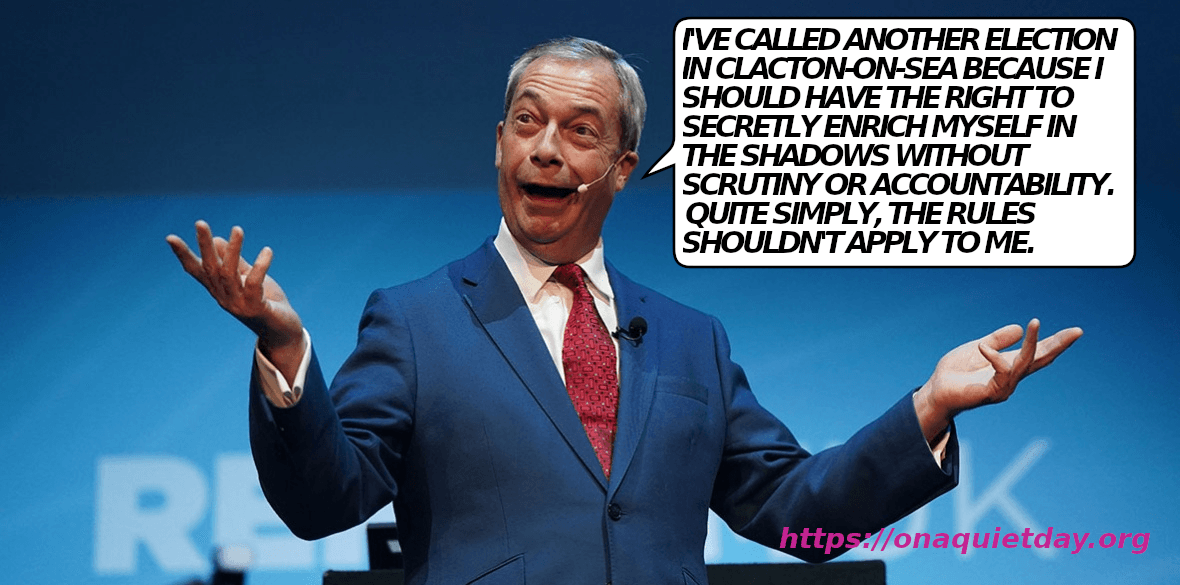
Nigel Farage explains that he’s called another byelection in Clacton-on-Sea because he should be able to secretly enrich himself without scrutiny and accountabilty and that the rules shouldn’t apply to him.
The Reform leader pocketed major sums from second jobs and donor gifts.
Reform UK leader Nigel Farage amassed £2.3 million in income and gifts during his first two years in Parliament, DeSmog can report.
On 7 July, Farage announced that he would be resigning as Clacton’s MP in order to trigger a by-election. The Reform leader has been under investigation by Parliament’s standards commissioner over the £5 million undeclared gift that he accepted from billionaire crypto investor Christopher Harborne, the party’s biggest donor, before the 2024 general election.
DeSmog’s calculations indicate that, during his two years as Clacton’s MP, he accepted more than £2.3 million in external income and gifts, including over £720,000 from the right-wing broadcaster GB News, and more than £770,000 from the metals trading company Gold Bullion. That’s equivalent to £3,151 a day, or £22,000 a week.
Farage’s declaration of interests also shows that he received at least £85,000 in gifts from Harborne, as well as more than £39,000 from convicted fraudster George Cottrell, who also gave undeclared gifts and support to Farage in the year prior to the 2024 election.
The £2.3 million received by Farage has been on top of his roughly £98,000-a-year public salary. DeSmog revealed last week that Farage has only mentioned Clacton twice in Parliament during the past year.
“The government urgently needs to impose tougher limits on MPs’ second jobs,” Kamila Kingstone, a senior campaign lead at Spotlight on Corruption, previously told DeSmog, “so that the public can be confident that their representatives are working in the public interest rather than to line their own pockets.”
Farage’s plan to reset the narrative by forcing a by-election – his attempt to prove that voters are on his side – appears to have backfired. All the major parties have withdrawn from the contest, leaving the Reform leader to fight the by-election against Count Binface, a comedian dressed as a space-travelling bin.
Public concern over the gifts Farage has received from donors also appears to be growing. New polling from YouGov found that 40 percent of Reform’s own voters see Farage as sleazy, matched by 73 percent of the public as a whole.
Public First polling also shows that 44 percent of voters disagree with Farage that he is a victim of the political establishment, compared to 28 percent who believe he is.
“Nigel Farage is a multi-millionaire who is out for himself and working for the interests of his super-rich friends,” a Green Party spokesperson previously told DeSmog. “His whole career has been focused on personal gain and public division.”
DeSmog revealed in April that over 70 percent of Farage’s personal benefactors are based abroad – including Harborne, the Thailand-based crypto investor who has gifted flights and accommodation to Farage worth £85,453 since July 2024.
Meanwhile, Reform’s policy positions seem to align closely with the interests of its donors.
Farage has lobbied against regulation of the crypto industry, promising a UK “crypto revolution” if he becomes prime minister, and has shares in digital treasury company Stack BTC. He is due to speak at a crypto-backed conference this week, despite the furore over his gifts from crypto billionaires.
As revealed by DeSmog, Reform has also accepted £24 million from oil and gas interests while denying basic climate science and advocating for the dramatic expansion of fossil fuel production.
The government is currently considering how to reform the political finance system to limit the influence of major donors on UK democracy, with a growing number of MPs calling for a cap on the amount that can be donated by any one individual or organisation. Reform has been lobbying for the rules to remain the same.
Nigel Farage reminds you that he’s the man that brought you Brexit and asks what could possibly go wrong.Nigel Farage urges you to ignore facts and reality and be a climate science denier like him and his Deputy Richard Tice. He says that Reform UK has received £Millions and £Millions from the fossil fuel industry to promote climate denial and destroy the planet.Elon Musk urges you to be a Fascist like him, says that you can ignore facts and reality then.
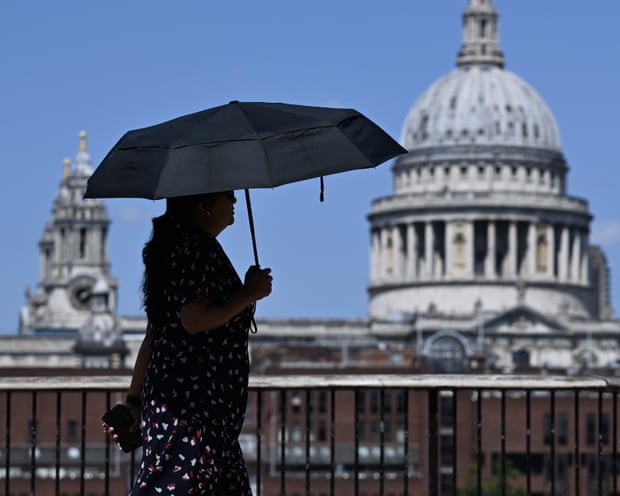
In Greater London, the number of days over 30C and nights over 18C more than quadrupled in the last decade, compared with 1961-1990. Photograph: Anadolu/Getty Image
Annual State of the UK Climate analysis finds last four years in UK are in top five hottest on record
The UK’s climatic extremes are becoming increasingly normal, a report has found, with last year the hottest on record and further “unprecedented changes” likely to break the record again soon.
Data stretching back to 1884 shows the UK has never experienced a year as hot as 2025, according to the annual State of the UK Climate report, with temperatures pushed to dizzying heights by carbon pollution clogging the atmosphere.
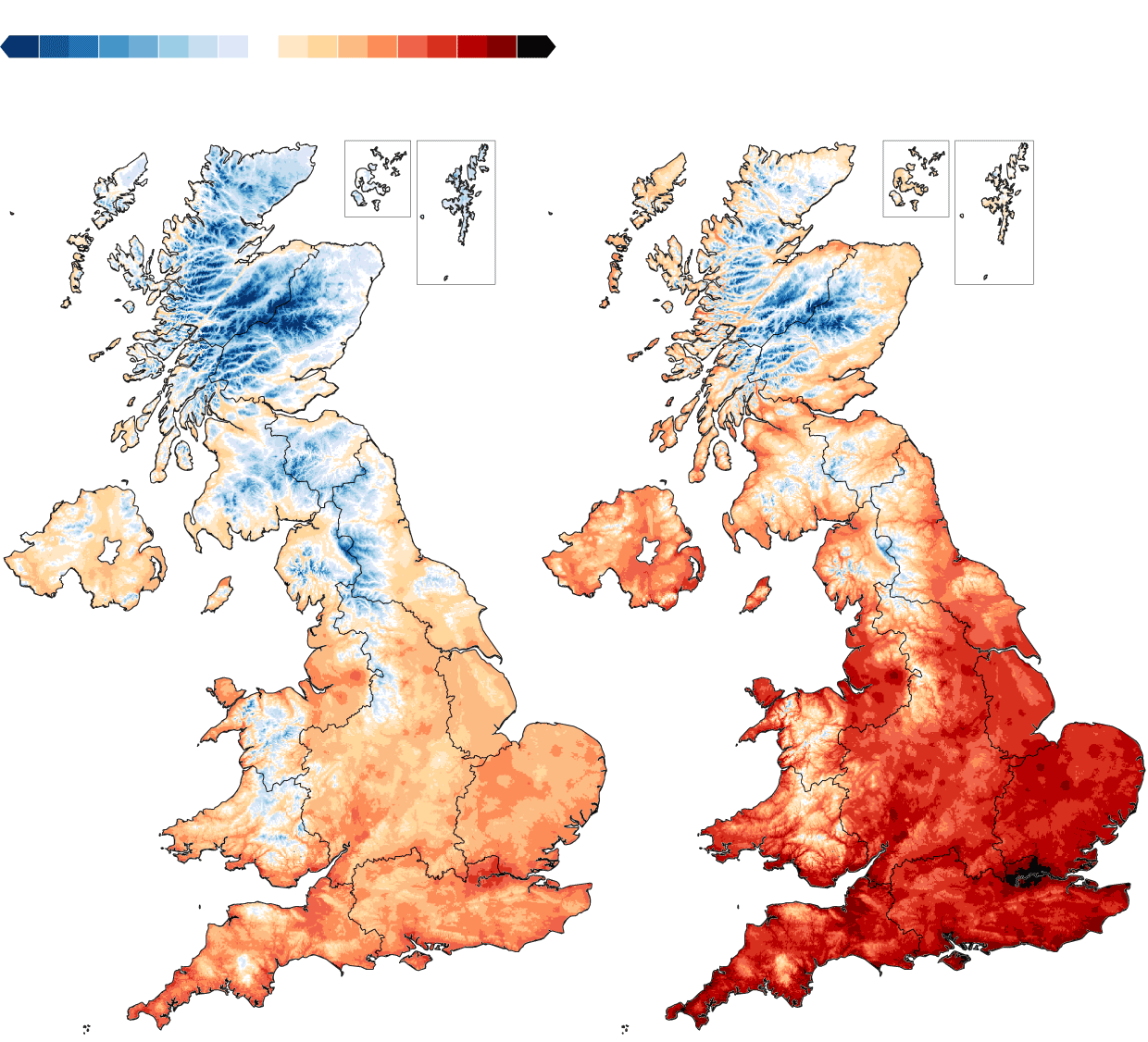
Average temperatures have increased across most of the UK
The country experienced its warmest spring and summer on record last year, while England was hit by its driest spring in a century.
The report comes as the UK faces the third deadly heatwave to have scorched Europe over the last two months. On Tuesday, the Met Office said the UK had already recorded as many 30C (86F) days in 2026 as in the extraordinarily hot year of 1976.
“What we used to think of as extreme, we increasingly consider as normal,” said Mike Kendon, a scientist at the National Climate Information Centre and lead author of the report. “We are seeing unprecedented changes continuing … and every year adds to this body of evidence.”
Donald Trump urges you to be a Climate Science denier like him. He says that he makes millions and millions for destroying the planet, Burn, Baby, Burn and Flood, Baby, Flood.Nigel Farage urges you to ignore facts and reality and be a climate science denier like him and his Deputy Richard Tice. He says that Reform UK has received £Millions and £Millions from the fossil fuel industry to promote climate denial and destroy the planet.Orcas discuss Donald Trump and the killer apes’ concept of democracy. Front Orca warns that Trump is crashing his country’s economy and that everything he does he does for the fantastically wealthy.
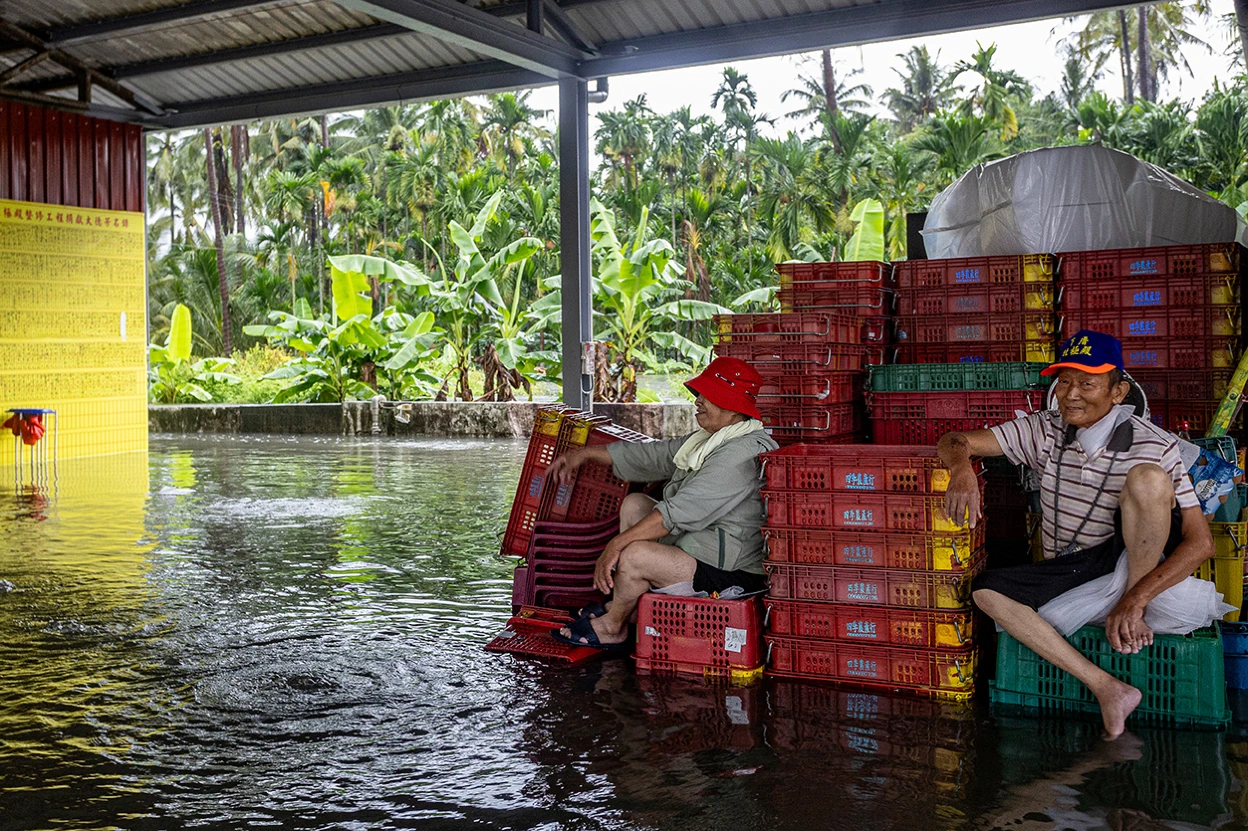
A farming storage area is flooded in Taiwan — events such as this will become more frequent in an increasingly erratic climate. Credit: Cheng Chia Huang/Getty
Increasing instability of the ocean, ice and atmosphere threatens farming, finance and society. We all need to wake up to that fact.
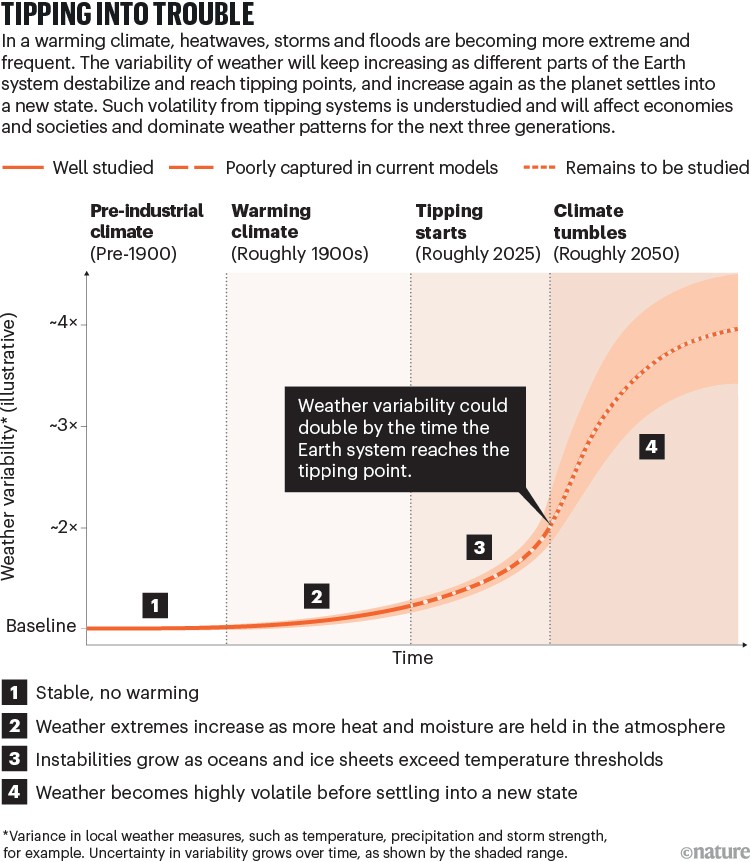
How we get there — how the tipping unfolds — is more important, and there is an urgent need to understand the process. This is missing from current analyses because the scales in time and space it occurs on fall between those of climate and weather. Tipping analyses focus on huge climate changes, often globally, over decades. Weather events are fast and local. But look at the interplay between the two and it’s clear that the transition between one climate state and another is not smooth but extremely volatile.
Climate tipping, therefore, will manifest as a period of increasingly dramatic weather volatility, rather than a sharp shift in average conditions. A fluctuating climate will bring swings and crashes in crop yields, flash flooding and erratic storms. It will stress economies by disrupting supply chains and amplifying insurance losses. Societies are unprepared, because weather volatility related to tipping points is absent from risk assessments.
This problem is urgent. Earth subsystems, including oceans, the cryosphere and biosphere, already seem to be destabilizing. The planet is heading for climate free fall.
Climate is destabilizing
By definition3, tipping points are reached when a series of interlinked changes amplify one another until the whole system becomes unstable and shifts uncontrollably into a different state. Loss of sea ice at the poles, for example, reduces the amount of sunlight reflected into space, further heating Earth’s surface, which then accelerates ice loss. These vicious cycles of change define a tipping point, at which the climate cannot return to its former patterns.Are we all doomed? How to cope with the daunting uncertainties of climate change
Before that point, the climate system becomes increasingly unstable. It fluctuates considerably — a rise in variability is a well-established property of such ‘non-linear dynamical systems’ approaching a critical threshold4,5. That society will face these fluctuations and that they will intensify through the tipping transition hasn’t been realized by scientists and policymakers, so far.
Earth will experience an increasingly erratic climate: more and stronger fluctuations in flows of melt water, ocean circulations and the extent of sea ice. These changes will lead to more frequent and intense extremes in temperature, precipitation and storms — leading not only to more heatwaves and droughts, but also to more cold spells and floods.
The scale of the consequences might not be obvious at first — ice sheets and ocean currents are so large that their responses to warming are relatively slow and delayed. Once a critical temperature threshold for instability is crossed, it takes time for such systems to collapse, but the collapse is inevitable (see ‘Tipping into trouble’).
Source: A. Levermann
Ice sheets in West Antarctica6 and Greenland7 have already passed their tipping temperature. Arctic sea ice will do so in a few years. For the Atlantic Ocean, scientists simply don’t know8. The period between passing the tipping temperature and reaching the tipping point is when fluctuations increase dramatically.
Research into early warning of tipping points has identified increased climate variability as a signal of reduced stability and used it to estimate the time remaining before widespread tipping begins. But variability caused by instability as a mechanism of climate impact has been widely neglected.
Modern economies are adapted to relatively stable climatic baselines. Agricultural productivity, infrastructure design, insurance pricing and financial risk management all rely not only on expected mean conditions but also on the predictability of variability.
Power-mad orange gasbag Donald Trump says Burn, Baby, Burn.Nigel Farage urges you to ignore facts and reality and be a climate science denier like him and his Deputy Richard Tice. He says that Reform UK has received £Millions and £Millions from the fossil fuel industry to promote climate denial and destroy the planet.Elon Musk urges you to be a Fascist like him, says that you can ignore facts and reality then.
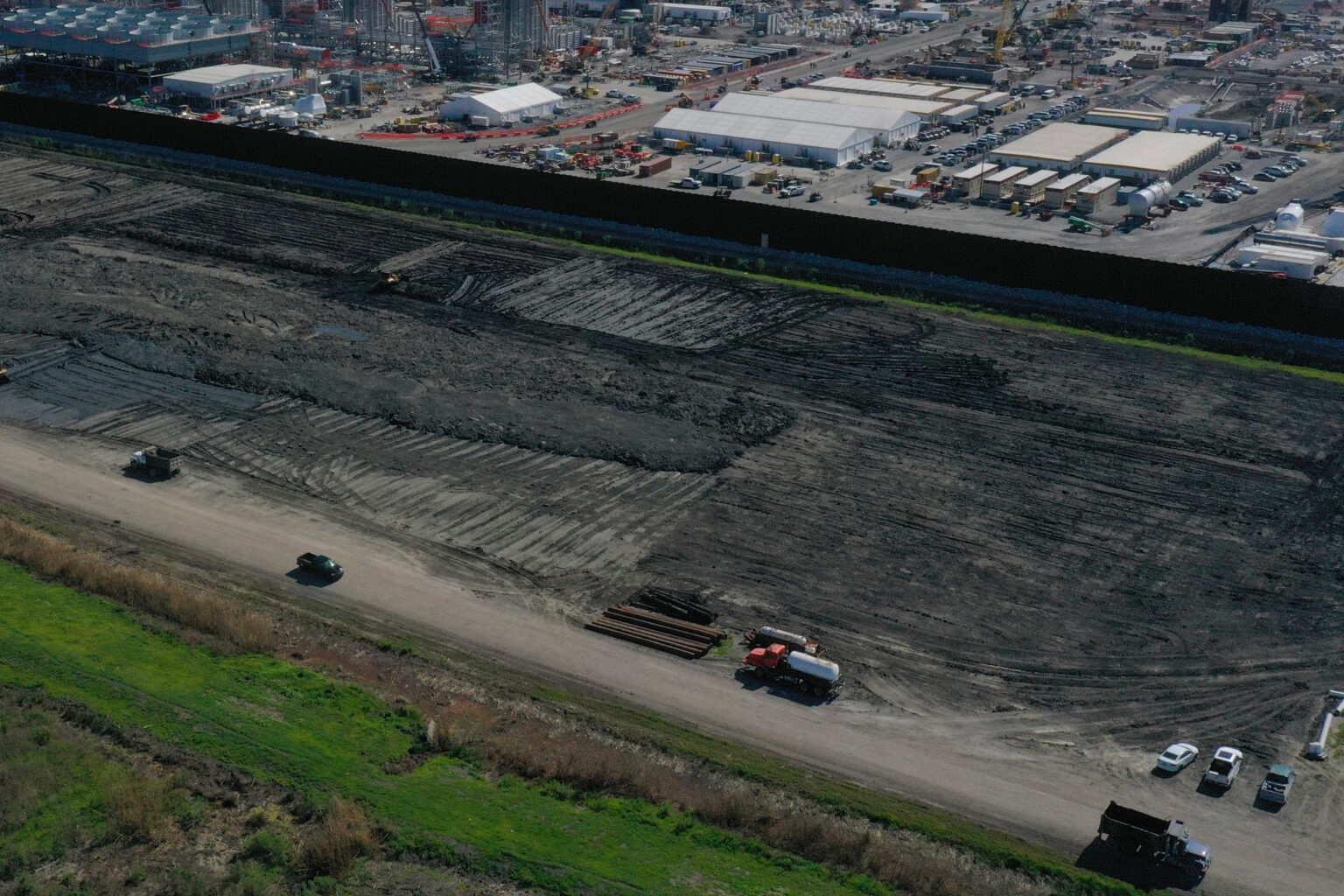
The construction at Venture Global’s LNG export facility in Port Sulphur, La., on Feb. 26, 2024. Credit: Ricky Carioti/The Washington Post via Getty Images
A new report suggests that some governments have ignored legal obligations to prevent climate harm for decades.
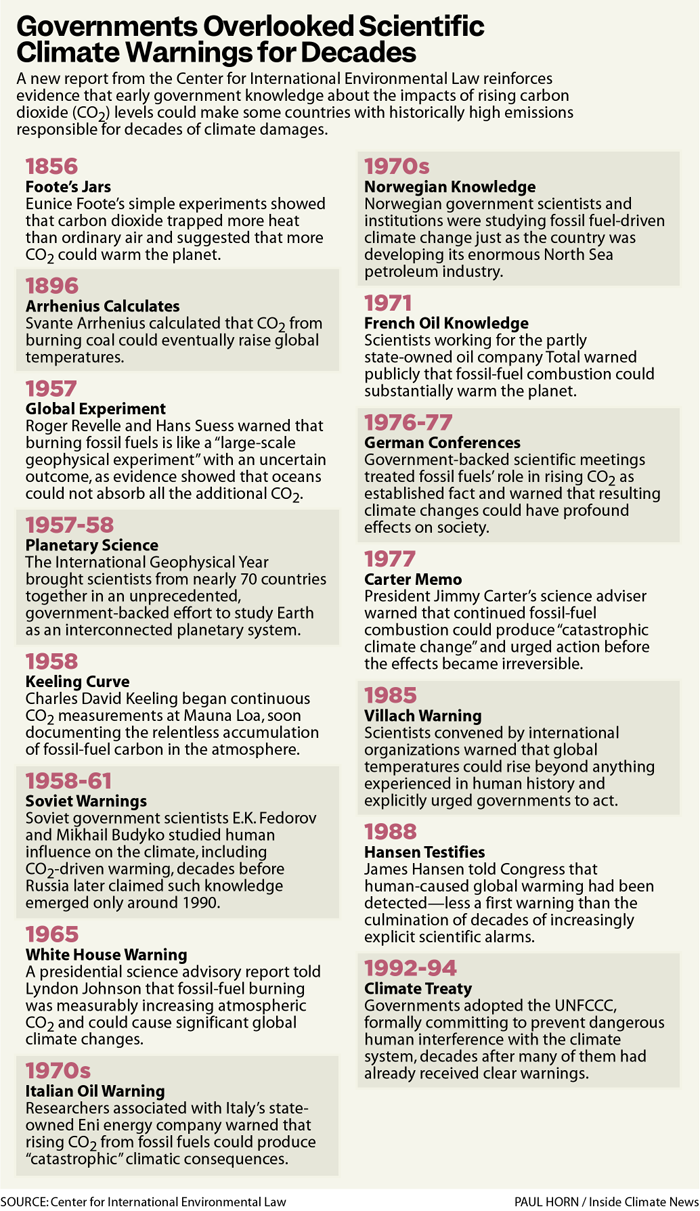
A new report strengthens the case that the United States and other major industrialized countries knew, long before they signed the 2015 Paris Agreement to limit global warming, that they could face legal obligations to reduce climate-damaging greenhouse gas emissions.
The “What Countries Knew” report, released Wednesday by the Center for International Environmental Law, traces when climate scientists first presented governments in the United States, Australia, Canada, Germany, Italy, Norway, the United Kingdom and the combined Soviet Union and Russia with research outlining the risks posed by the emissions from burning fossil fuels.
Those countries are responsible for about 40 percent of all emissions since the fossil fuel era began in the late 1800s. Summaries and transcripts from conferences cited in the report indicate that those governments and others were discussing the risks of rising global temperature, melting polar ice caps and sea-level rise as early as 1957, during the International Geophysical Year.
The warnings grew more urgent in the 1960s just as governments and economies of industrialized and industrializing countries placed nearly all their chips on fossil-fueled growth. In 1965, scientists warned U.S. President Lyndon Johnson that rising carbon dioxide could cause “marked changes” in climate. About the same time, researchers at Norway’s and Italy’s state-owned oil companies warned of potential climate impacts while governments encouraged them to expand.
As the reports and warnings piled up, newsreel footage in Germany celebrated record coal hauls with images of miners grinning through sooty faces, and federally subsidized oil production in the U.S. meant prosperity and the freedom to “Put a Tiger in Your Tank” at an Esso gas station.
Lindsay Fenlock, a senior researcher with the Center for International Environmental Law and lead author of the report, said she was continually surprised by the breadth of international government awareness of climate impacts with a “threat of serious implications” as she combed through decades of materials archived from the pre-internet era.
During the International Geophysical Year, about 70 countries collaborated to study Earth as an interconnected system and measure the growing effects of human activities on the planet, she said. The same year, a study by American scientists Roger Revelle and Hans Suess characterized the rising amount of CO2 in the air as an unprecedented and irreversible “large-scale geophysical experiment” unlike anything in human history.
Fenlock noted several other early international conferences that “had particularly striking conversations around what to do to combat climate change and move away from fossil fuel use.”
A 1968 government-and-industry symposium in France included detailed discussions on alternatives to fossil fuels. In 1973, the International Institute for Applied Systems Analysis in Austria hosted talks about government responses to climate change. And when Fenlock retrieved old Canadian federal agency employee newsletters, she found that scientists had openly discussed climate change throughout the 1970s.
The report draws “important connections” between the history of government knowledge and the legal obligations outlined in the ICJ’s Advisory Opinion, said Michael Burger, executive director of the Sabin Center for Climate Change Law at Columbia University.
“It’s a warning shot, for those on the lookout for cases that may follow in the wake of the ICJ’s opinion,” he said.
Fenlock said the report wasn’t intended to be comprehensive, but it shows that governments often overlooked scientific evidence with life-and-death relevance.
“I think that just how much was known, and how soon, was pretty shocking,” she said. “But people don’t talk about it now.”
The report may reignite those conversations by framing the historical record in the context of international climate law, said Nikki Reisch, CIEL’s climate and energy program director. What governments knew, and how they responded or failed to respond, took on new legal significance after last year’s advisory opinion from the International Court of Justice, which found that states have longstanding legal obligations to prevent significant climate harm, and may be required to pay reparations when breaches of those obligations cause damage.
Reisch said tracing government knowledge could help determine whether a country’s greenhouse gas emissions violated international obligations to avoid environmental damage beyond its borders, and whether it could be held responsible for the resulting harm.
The report illustrates that the early scientific evidence “didn’t stay in a drawer or on a shelf,” she said. “It was being published, disseminated. Their information was communicated directly to government officials, sometimes at the highest levels and to the broader public. “All this information,” she said, “was in the hands of those who could have acted.”
Under a broad reading of international environmental legal principles, some countries could be held responsible for their share of climate damages caused by their emissions even before they understood the risks, she said. But pinpointing when governments became aware of those risks establishes a clearer threshold for legal liability. From that point onward, governments had the opportunity to change course, and those that instead continued or expanded fossil fuel use bear greater responsibility for resulting harms and for helping affected communities now, she added.
Reisch said governments should be judged by what was reasonable at the time, not by today’s standards. Once they had credible evidence that fossil fuels could cause serious harm, she said, they had a duty to stop expanding their use, develop alternatives and use the tools available to limit the damage.
Documenting widespread knowledge of the dangers undercuts attempts to dismiss governments’ historical responsibility, particularly because many continued to expand fossil fuel production and use and, in some cases, obstructed efforts to scale them back. The report alone does not establish liability, she said, but provides important evidence that could help hold governments accountable for resulting damages and require them to act with greater urgency.
The report’s legal significance can be seen in common-sense terms, added Michael Gerrard, the founder and faculty director of the Sabin Center.
“If I know that the brakes on my car don’t work but I persist in driving, I have heightened culpability when I crash and injure someone,” he said.
Neo-Fascist Climate Science Denier Donald Trump says Burn, Baby, Burn.Nigel Farage urges you to ignore facts and reality and be a climate science denier like him. He says that Reform UK has received millions and millions from the fossil fuel industry to promote climate denial and destroy the planet.Elon Musk urges you to be a Fascist like him, says that you can ignore facts and reality then.
Several different factors likely explain this trend, including reductions in planet-cooling aerosols as nations have cleaned up their air pollution, as well as changes in atmospheric circulation patterns, which models struggle to represent.
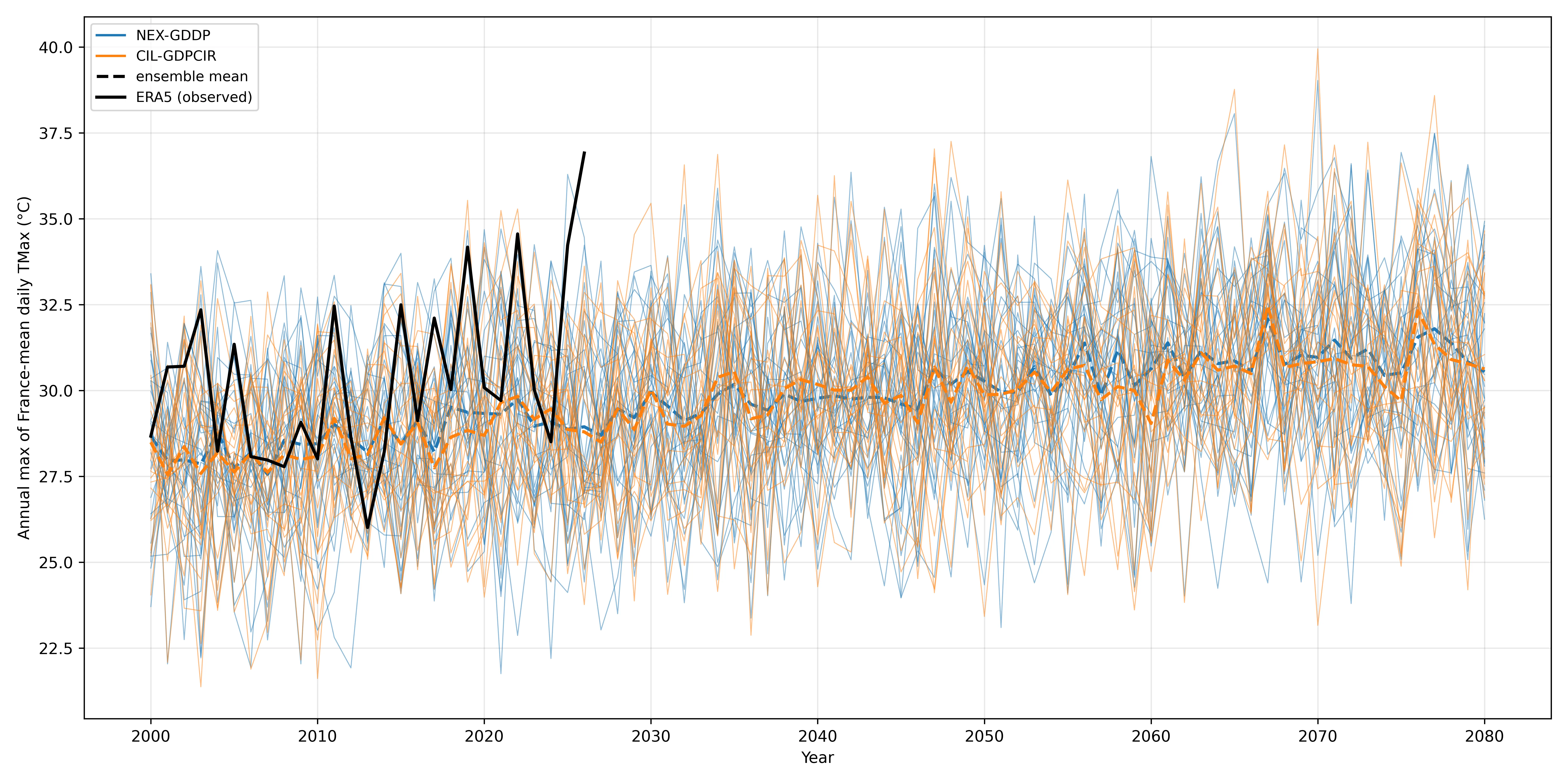
In June 2026, daily high temperatures averaged across France reached 36.9C, shattering the previous June record set in 2022 by 2.4C.
[For more on the impacts and coverage of Europe’s June heatwave, see Carbon Brief’s explainer.]
The rise in observed temperatures in France has outpaced projections made by climate models, with June maximum temperatures more in line with what was expected for the 2070s.
This is illustrated in the figure below, which shows how France’s average maximum daily high temperature for June recorded in 2026 (black line) compares to climate model projections (blue and orange lines).
Comparison of observed (ERA5, black) and modelled (blue and orange) temperatures across France from 2000 to 2080. Plot shows the maximum daily high temperature recorded in June for each year, after averaging temperatures across France. The model ensembles are bias-corrected CMIP6 model ensembles from the NEX-GDDP (blue) and CIL-GDPCIR (orange) projects. The dashed blue and orange lines are the ensemble averages. Credit: Prof Andrew Dessler.
Counting the death toll of climate change
The downstream impacts of these extreme temperatures are lethal.
Scientists are able to estimate the death toll of high temperatures in many locations, depending on the availability of mortality and climate data.
One option is to examine death certificates to see which deaths have been directly recorded by physicians as related to heat. However, there is strong evidence that this method significantly undercounts heat-related deaths, as most death certificates do not consider environmental factors such as heat when diagnosing the cause of death.
Alternatively, it is possible to calculate the rate of total (“all-cause”) mortality in a given time period relative to previous time periods – for example, by comparing the total number of deaths in June 2026 compared to the average of previous Junes. This “excess deaths” figure can be used as an estimate of the deaths from a heat wave.
Using this approach, Public Health France attributed around 2,000 deaths in France to the extreme heat in the week of 22-28 June.
Finally, scientists can use long-term data on overall mortality and correlate changes in mortality with changes in temperature to understand the statistical relationship between the two.
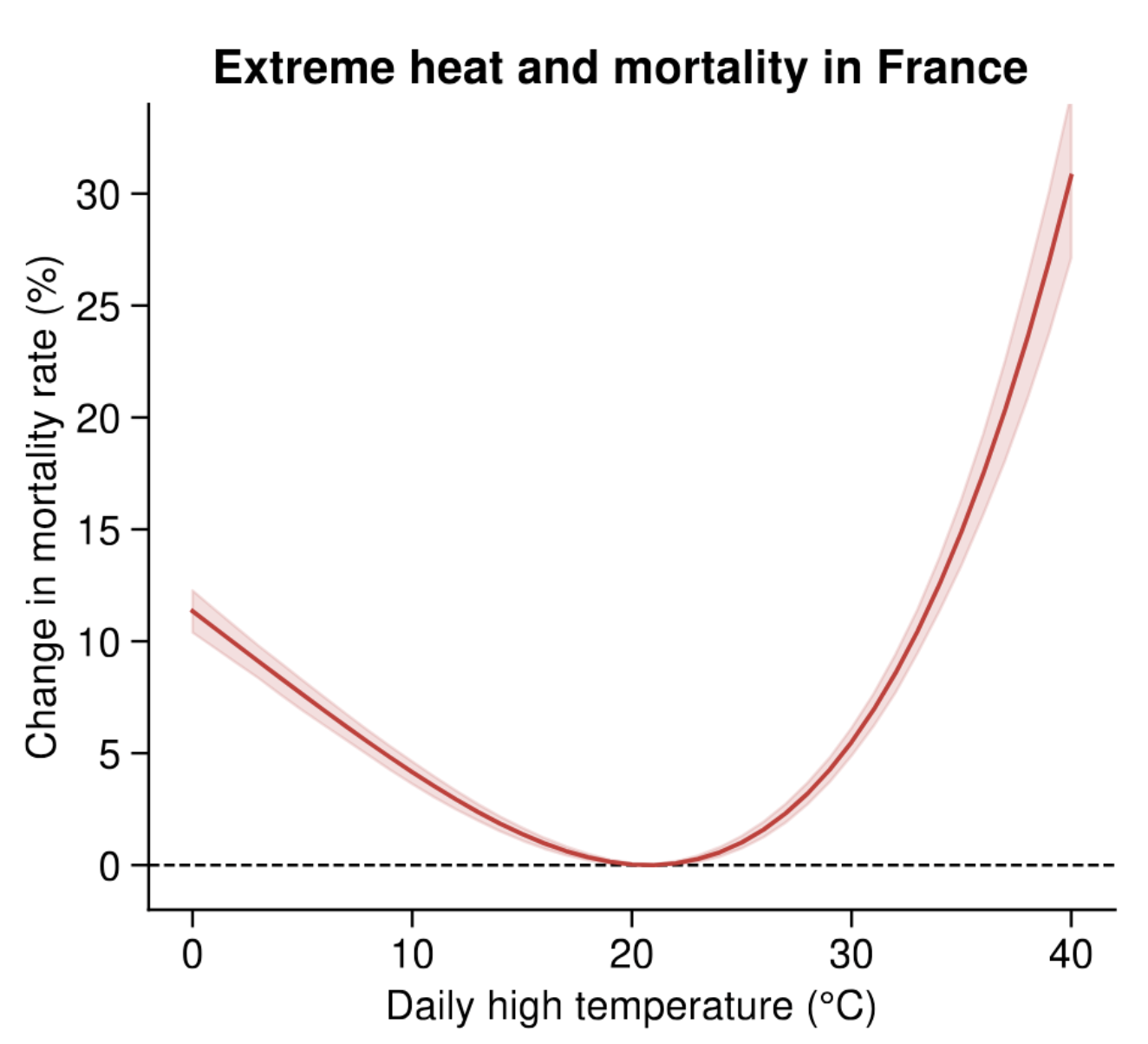
Research published in Proceedings of the National Academy of Sciences in 2025 that used this third approach found that mortality rates in France increase rapidly in cold or hot conditions as daily maximum temperatures depart further from approximately 20C.
This pattern of a U-shaped response of mortality to temperature – shown in the figure below – is veryconsistent across time periods and regions around the world.
Relationship between daily high temperature and all-cause mortality rates in France, estimated using data over 2004-19. Credit: Dr Christopher Callahan, based on data and methods in Callahan et al. (2025)
To calculate the death toll of the June 2026 heatwave in France, we compared observed temperatures over 12-29 June to their baseline average over 1980-2025.
The difference between these two temperatures helps us understand how many more people died than they would have in the absence of such extreme conditions.
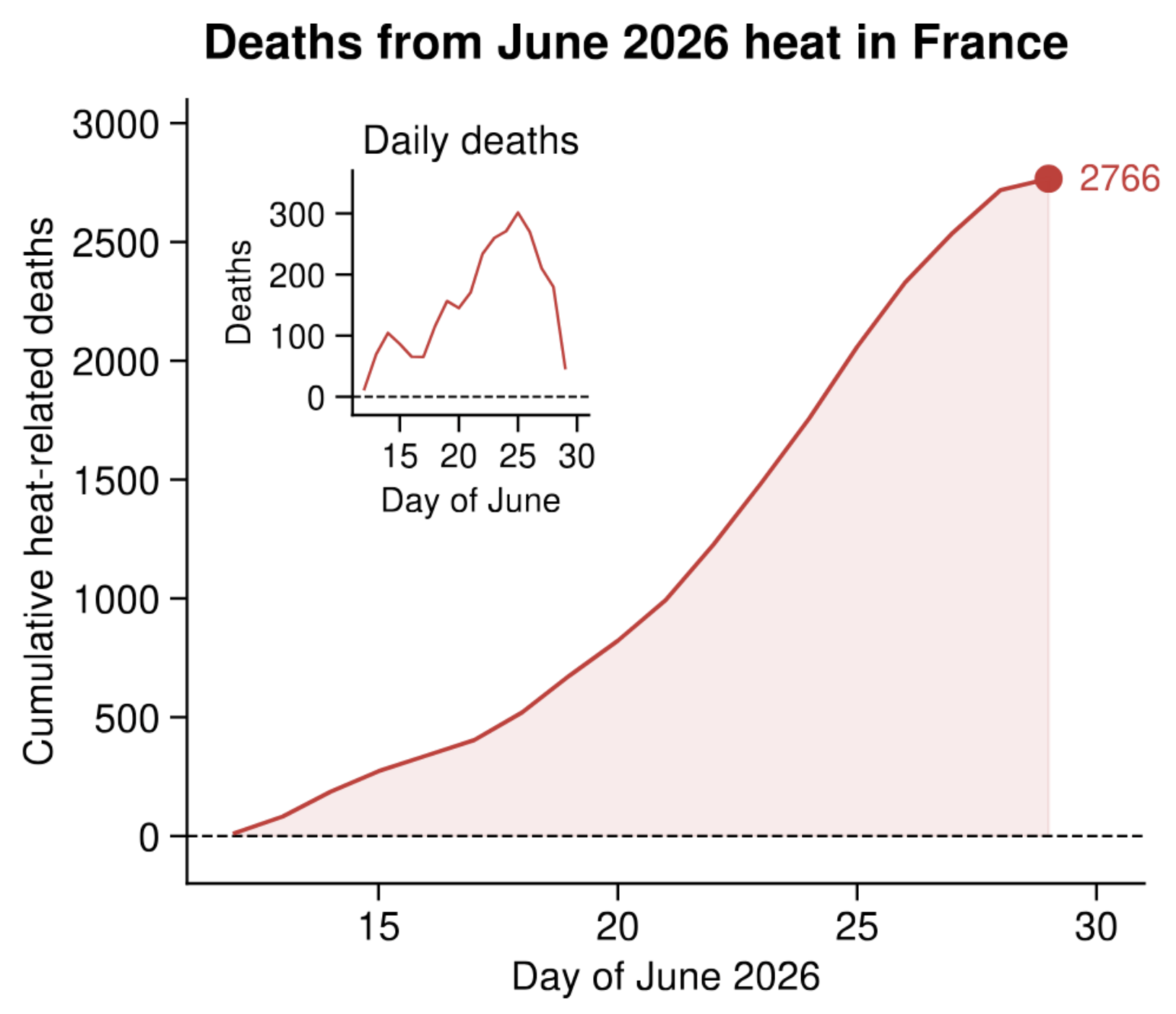
Over 12-29 June, we found that France has experienced around 2,700 heat-related deaths above the average baseline. Day-to-day heat-related mortality rates rose from less than 100 to almost 300 on the hottest days of 24 and 25 June.
This is shown in the graph below, which illustrates the cumulative total heat-related deaths seen in France over the two-and-a-half week period. The inset shows how heat-related deaths fluctuated on a day-to-day basis during this time.
Estimated heat-related mortality over 12-29 June, based on a U-shaped response of mortality to temperature. The main plot shows cumulative total deaths and the inset shows daily deaths. Credit: Dr Christopher Callahan, based on data and methods in Callahan et al. (2025)
Recent analysis by World Weather Attribution has already shown that human-caused climate change increased the frequency and intensity of the June heat wave across Europe.
Meanwhile, previousresearch has shown there is substantial evidence that heat-related mortality in Europe has already been elevated by greenhouse gas emissions.
As a result, we can be confident that at least some of the more than 2,700 deaths already seen in France are directly due to the burning of fossil fuels.
Calculating climate risk
In April, the UN-led body responsible for coordinating the work of climate modelling centres – the Coupled Modelling Intercomparison Project (CMIP) – unveiled a set of seven new emissions scenarios.
These are designed to replace the previous scenarios that have been used by scientists to understand how the climate might change in the future. They will feed into the upcoming seventh assessment report (AR7) of the Intergovernmental Panel on Climate Change (IPCC).
The range of future emissions in the new CMIP scenarios is smaller, with scenarios of very high or very low emissions no longer on the table.
The retirement of the very-high emissions scenario – known as “RCP8.5” – led to certain commentators in the media and in politics, including US president Donald Trump, arguing that the risks of climate change had been “overstated”.
[For more on false and misleading claims around the new emissions scenarios, see Carbon Brief’s factcheck.]
Our analysis of June’s heat-related deaths in France suggests that, even if the most severe emissions pathways are no longer needed, climate impacts are taking a heavy toll on society.
Moreover, the temperatures seen in France show that climate models continue to underpredict the magnitude of heatwaves for a particular level of global warming.
This is because greenhouse gas emissions are only a first step in estimating the impacts of climate change.
The second step is converting emissions to changes in the climate at both the global and local levels – or hazards. This includes heatwaves, flash floods and droughts.
The third step is to determine how changes in the hazards will affect local populations. This can be determined by calculating people’s exposure and vulnerability to hazards.
Substantial uncertainty persists at every stage of this sequence.
For example, scientists do not know exactly how the global climate will react to ever-rising greenhouse gas emissions – nor the extent to which global temperature increases will drive local climate hazards. We also do not know how climate change at a local level impacts human health outcomes.
Adaptation options, such as air conditioning, heat action plans and social support for isolated people, will be crucial as the climate moves away from the typical conditions that people are used to.
Neo-Fascist Climate Science Denier Donald Trump says Burn, Baby, Burn.Nigel Farage urges you to ignore facts and reality and be a climate science denier like him. He says that Reform UK has received millions and millions from the fossil fuel industry to promote climate denial and destroy the planet.Donald Trump urges you to be a Climate Science denier like him. He says that he makes millions and millions for destroying the planet, Burn, Baby, Burn and Flood, Baby, Flood.