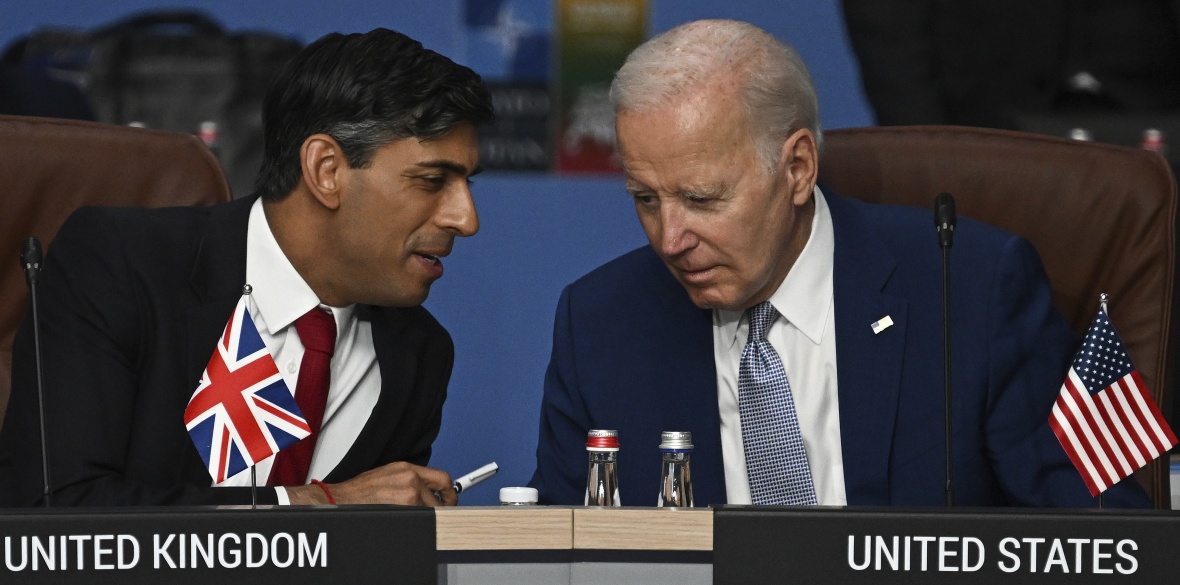
The UK is abdicating its responsibility to help bring about peace in Gaza

Spread the love

https://leftfootforward.org/2024/01/the-uk-is-abdicating-its-responsibility-to-help-bring-peace-in-gaza/

Simon Walker / Number 10 Downing Street – Creative Commons

The IDF carries out raids to destroy tunnels in Central Gaza, killing dozens. Hamas fires rockets back into Israel. A ground invasion follows aerial bombardments, civilian targets are struck, the number killed climbs into the thousands. This is not a description of the Israel-Hamas war we’re witnessing now, in 2024 – but a near-identical one almost 15 years ago.  

In December 2008, the Gaza War (also known as Operation Cast Lead) erupted. On 9 January 2009, the UN Security Council debated a resolution which called for “an immediate, durable and fully respected ceasefire”. The UK voted for it, successfully shifting the US position from opposition to abstention, and the vote was reinforced at the UN General Assembly on January 16. Two days later, Israel declared a unilateral ceasefire, and the war was over. Bold and creative diplomacy by the UK, which whilst they didn’t follow up in a similar vein, nonetheless made a significant difference on the international stage.  

Fast forward to today, 100 days since the October 7 Hamas terror atrocities in Israel, and that diplomacy is sorely lacking. In early December, the UK Government committed a grave error by abstaining on a ceasefire motion at the UN Security Council – the lesson of history wasted. It then abstained again a week later in a UN General Assembly vote – making the UK just one of 33 countries to oppose or abstain on the ceasefire motion, while 153 countries voted in favour. 

These past 15 years have witnessed five wars – consigning the people of Gaza to ever deteriorating living conditions with barely enough supplies and aid allowed in; the stalemate continues, undermining still further the security of Israel. But with violence spreading through the region into Lebanon, for example, and now the UK and US escalating tensions with their bombing of Yemen, we must make it inconceivable to slip back permanently into endless cycles of violence.

Listening to experts on all sides, there seem to be four key principles that might just start a conversation about how to build the kind of peace which only a fair and lasting political resolution to this crisis can deliver for the people of the region. 

Securing a bilateral ceasefire is clearly a critical first principle – ending the current bloodshed and freeing the remaining Israeli hostages is a pre-requisite for peace. As the UN repeatedly states, the bombs and missiles being dropped aren’t just killing people in their tens of thousands; they are also destroying roads, warehouses, hospitals, schools and other so-called safe places.  

No wonder so many aid agencies on the ground have gone beyond calling for humanitarian corridors, pauses or safe zones. The size and population density of Gaza mean there is nowhere safe for civilians, and no safe means for aid workers to reach people who urgently need help. The only way to ensure men women and children can escape the bombs is to stop them from being dropped.  

The humanitarian case for a ceasefire is overwhelming, but there is a judicial one too – which brings me to the second principle of accountability. Both the Israeli Government and Hamas have responsibilities under international law – above all to minimise civilian casualties, but also only a ceasefire will enable the ICC to conduct investigations into potential war crimes and other human rights violations by both parties, and to establish an Independent Commission of Inquiry. 

The UK Government says the right things about adherence to international law, yet very little has changed, and accountability has not been delivered.  

Fundamental to this principle is that international law forms the foundations on which all policies must rest both about the conduct of the hostilities and the necessary foundations of a lasting settlement. All parties to this conflict must fulfil the requirements of international law and face the full force of censure and other sanctions if they refuse to do so. The UK’s actions are badly out of step with its legal and moral obligations – it must consistently uphold the international rule of law and make sure Benjamin Netanyahu’s government faces the full consequences of violating international law.  Nor should it be involved in any further military action in the region, when this can and will be interpreted as condoning and siding with Israel’s attacks on Gaza.

Thirdly, there has to be dialogue. I understand the rationale behind states refusing to negotiate with terrorist groups. But ensuring lines of communication with Hamas are kept open – along with every back and front channel accessible via the other players in this region, such as Qatar – is the only way to bring the remaining Israeli hostages home to their families and enduring peace. 

Clearly the US has the greatest influence over Israel, but the UK can play a critical role too, as the 2009 UN vote demonstrated – our links with Qatar and Egypt should be used to pull every lever possible in support of a consensus on Israel’s right to exist and a Palestinian state. Conversations must happen for peace to be on the table.  

It takes courage to start a dialogue – especially when even a shared goal feels unattainable, let alone a peaceful outcome, and murderous regimes like Iran are also involved. But from Northern Ireland and Colombia, talking has secured positive and lasting outcomes. No dialogue is the death of peace. We must believe in it and shake hands for it, as Nurit Cooper, one of the Israeli hostages, so memorably did on her release. 

Finally, we must directly confront the complexities that have made peace so elusive to date. My inbox is bursting with different versions of what has brought us to this point – the facts and the feelings. Nuance and debate have been lacking in an era of judgment and condemnation. Those marching for peace are decried as hateful, places of worship are attacked, and our streets have become places where too many people feel afraid. 

Laying the groundwork for peace requires acknowledging how people truly feel. A truth and reconciliation process might be one model. Every Palestinian and Israeli has their own story, their own hurt and their own hopes. Here in the UK, this conflict awakens strong feelings too – so we must weigh the impact of our words, as well as the arms we are still supplying to the region, the bombs we are now ourselves dropping on war ravaged Yemen. The UK must stop repeating the same mistakes and instead bring the alternatives to life.

Decades of suffering and Western backed military intervention have acted as potential recruiting sergeant for the likes of Hamas and the Houthis.

Hunger, isolation and hopelessness are among the conditions in which conflicts thrive. So achieving peace demands that the world address these challenges – and only in the context of a settlement that embodies justice, above all the end to occupation.

An ideology cannot be destroyed by guns and bombs. It can only be destroyed by giving people food and medicine, alongside justice and a more hopeful future in which they are treated with dignity – guaranteeing them freedom and a voice. 

The eyes of the world may well be on this narrow strip of land right now, but they’ve been largely absent as Gazans have been forced to live in an open prison, systematically stripped of their dignity and freedom, by both the Israeli authorities and by Hamas. We mustn’t let our gaze turn away again. 

It’s often said that waging peace is far more difficult than waging war. But we have no choice if we’re to build a safer and more secure world for every child, no matter which side of a border they are born. 
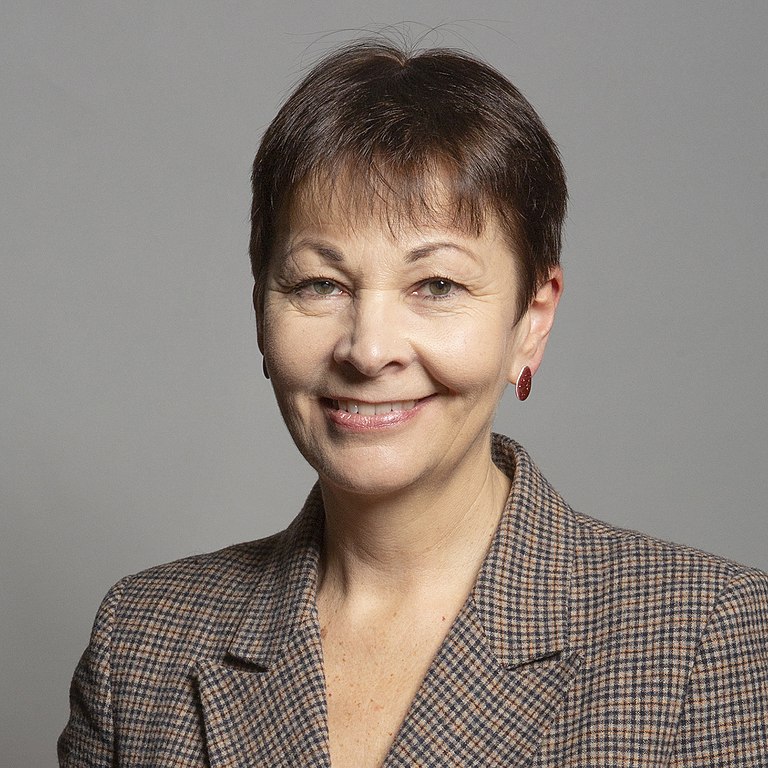
Caroline Lucas Green Party MP for Brighton Pavilion. Official image by David Woolfall Creative Commons Attribution 3.0 Unported license.

Caroline Lucas is the Green Party MP for Brighton Pavilion

https://leftfootforward.org/2024/01/the-uk-is-abdicating-its-responsibility-to-help-bring-peace-in-gaza/

I’ve quoted all Caroline Lucas’s article, hope that nobody objects. Authors: It’s likely that you are able to use a Creative Commons licence despite being published by others.

Continue ReadingThe UK is abdicating its responsibility to help bring about peace in Gaza

Jeremy Corbyn: South Africa’s Case Was a Display of International Solidarity — We Should Support It

Spread the love

https://tribunemag.co.uk/2024/01/south-africas-case-was-a-display-of-international-solidarity-we-should-support-it

Palestinians gather at Nelson Mandela Square in Ramallah to demonstrate appreciation to South Africa. (Credit: ramallahmunicipality)

At the International Court of Justice, South Africa spoke on behalf of the billions of people who oppose Israel’s genocide in Gaza — and put Western governments to shame for their deplorable complicity.

‘There is no safe space in Gaza and the world should be ashamed.’

Blinne Ní Ghrálaigh’s closing speech at the International Court of Justice will stay with me forever. Devastating and forensic in equal measure, Ní Ghrálaigh spoke for millions of people around the world who have been utterly appalled by the horrors unfolding live on our screens. ‘This is the first genocide in history where its victims are broadcasting their own destruction in real time,’ she said, ‘in the desperate and so far vain hope that the world might do something.’

Here was an Irish lawyer — who had previously worked on the Bloody Sunday Inquiry — speaking on behalf of South Africa, in support of the Palestinian people. For the Irish and the South Africans, the plight of occupied peoples is only too familiar. It should not come as any surprise, then, that South Africa’s case opened by placing Israel’s latest activity ‘within the broader context of Israel’s 25-year apartheid, 56-year occupation and 16-year siege imposed on the Gaza Strip.’ It was remarkably refreshing to hear South Africa articulate something so obvious yet routinely ignored by politicians in this country. Exposing the shallow state of our own political system, the hearing will go down in history as a momentous display of international solidarity from a people who know what it’s like to endure — and dismantle — apartheid.

This solidarity has grown and grown; South Africa’s case eventually gained the support of many countries, including Bolivia, Brazil and Colombia, as well as interstate actors like The Arab League. Politicians in this country can deny it all they want: millions of people around the world are desperate to see an end to the massacre of human beings, and will continue to support efforts to build a just and lasting peace.

We were required to be at the Court before 6am to gain entry, queuing in desperately cold weather. The International Court of Justice in the Hague is a beautiful building. It was built after the First World War, when there was real hope that the League of Nations and its judicial system would bring about peace. There was something poignant about Palestinian people who had lost relatives in Gaza and the West Bank, who were outside the Court to bear witness in search of justice.

South Africa presented its case against Israel under the Genocide Convention. The hearing was devastating — horror after horror, laid out in plain sight for all to see. The arguments were brilliantly marshalled by South Africa, and they should be commended for doing so. It is regrettable that most of our media did not deem these arguments important enough to broadcast. The BBC did not provide a live stream of South Africa’s case, choosing instead only to show Israel’s response the next day. It is to the credit of Al Jazeera that they not only live-streamed the hearing, but provided continuous and accurate coverage of the conflict, despite witnessing the deaths of their colleagues in the process. 

South Africa pointed out that the Genocide Convention existed to protect all people, and that the Israeli action met the requirements of the convention in its deliberate and systematic destruction of civilian life in Gaza. South Africa also cited several statements from Netanyahu and other Israeli politicians pledging to diminish the population of Gaza by at least 90 percent. South Africa demonstrated what Palestinians have been trying to tell us all along: this was not a war of equals, but the systemic slaughter of the Palestinian people. 

South Africa is determined not only to be on the right side of history, but change the course of it — and if the International Court of Justice was true to its name, it would give due consideration to South Africa’s case. It would find that the bombardment is wrong, the bombardment is illegal, and the bombardment represents the collective punishment of the Palestinian people. And it would rule that acts of genocide have been committed by the Israeli Government.

In the meantime, the South African case asked for interim relief, which would require a rapid call for an immediate ceasefire. It is a call that should be made by any political representative anywhere in the world committed to the protection of civilian life. It is to the great shame of the British and American political systems that relatively few elected representatives in either country have supported this call for an end to the loss of human life.

There is no way forward other than a ceasefire observed by all sides, which would present the opportunity then to map out a just and peaceful future. This is a decision to be made by the Palestinian people, not by those of us who support them. Acts of solidarity cannot entail telling others what to do.

Outside, after the hearing finished, the fantastic team of lawyers took questions from a huge group of journalists on the steps of the ICJ, in utterly freezing conditions. I was there on behalf of the Progressive International. We held a media event in the street in front of us, and made the case that the popular voice of ordinary people around the world is one of peace, and that we would campaign for as long as it takes to bring about justice for the Palestinian people.

‘We did what we could. Remember us.’ Ní Ghrálaigh finished her address by showing two photos of a whiteboard at a hospital in Gaza. The first showed a handwritten message on it by a doctor. The second photo was of the same whiteboard after an Israeli strike on the hospital. It showed the board completely destroyed. The author of the message had been killed. 

Millions are appalled, watching in real time the destruction of human life in Gaza. History will not forget those who refused to treat Palestinian and Israeli lives with equal worth. But neither will it forget those who are determined to campaign for a more peaceful world.

About the Author

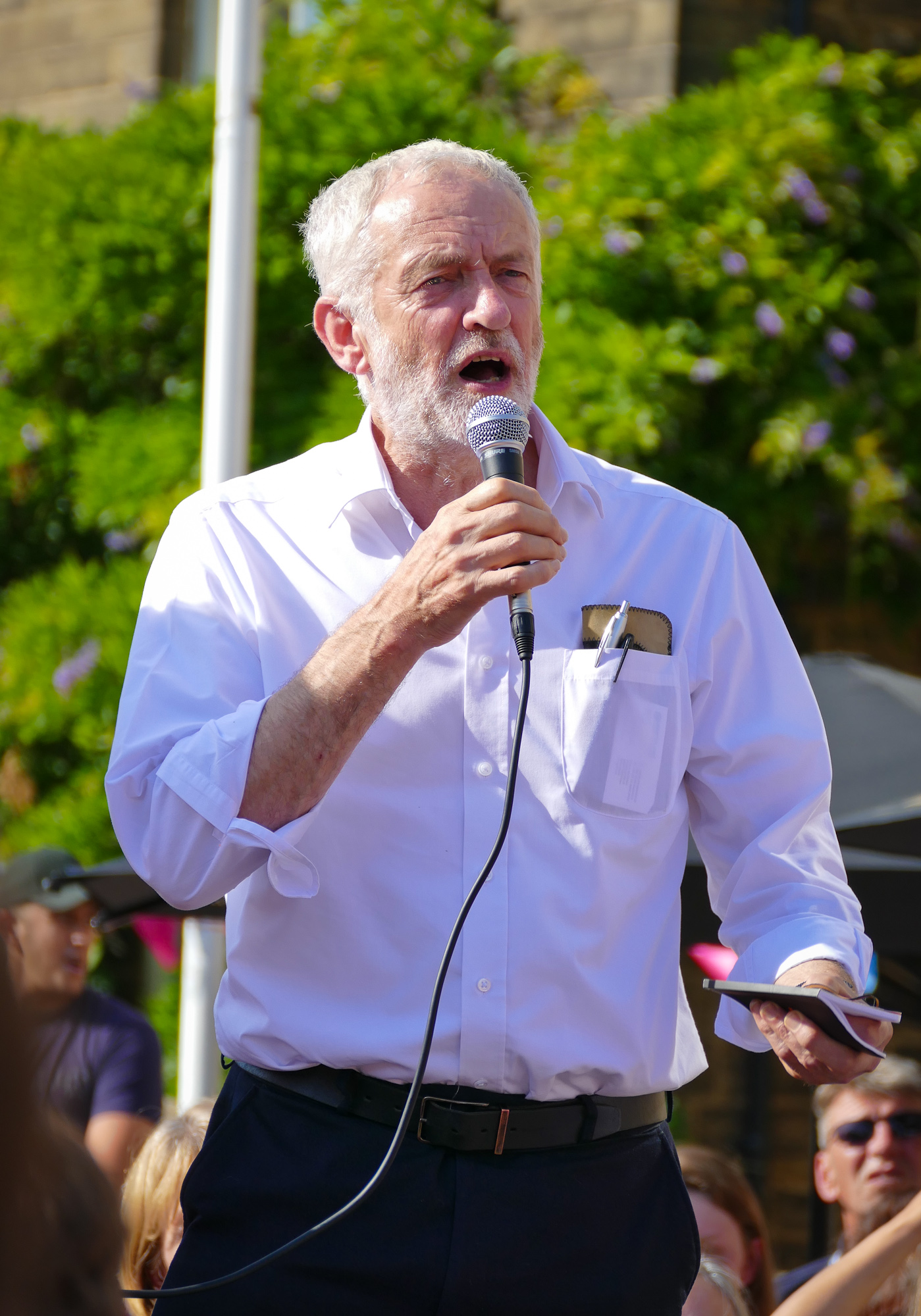
Image of Jeremy Corbyn MP, former leader of the Labour Party
Jeremy Corbyn MP, former leader of the Labour Party

Jeremy Corbyn is the member of parliament for Islington North.

https://tribunemag.co.uk/2024/01/south-africas-case-was-a-display-of-international-solidarity-we-should-support-it

I’ve quoted all Jeremy Corbyn’s article, hope that nobody objects. Authors: It’s likely that you are able to use a Creative Commons licence despite being published by others.
Continue ReadingJeremy Corbyn: South Africa’s Case Was a Display of International Solidarity — We Should Support It

Coming soon

Spread the love

I need to start opposing USUK’s intention to start WW3 in support of Israel and the status quo, injustice, genocide, war crimes, and in opposition to human rights and democracy, about how UK not only does not have a mandate but is acting despite huge demonstrated opposition to it’s actions.

Continue ReadingComing soon

Hundreds of Thousands March for Gaza as World Demands Cease-Fire

Spread the love

Original article by JON QUEALLY republished from Common Dreams under Creative Commons (CC BY-NC-ND 3.0). 

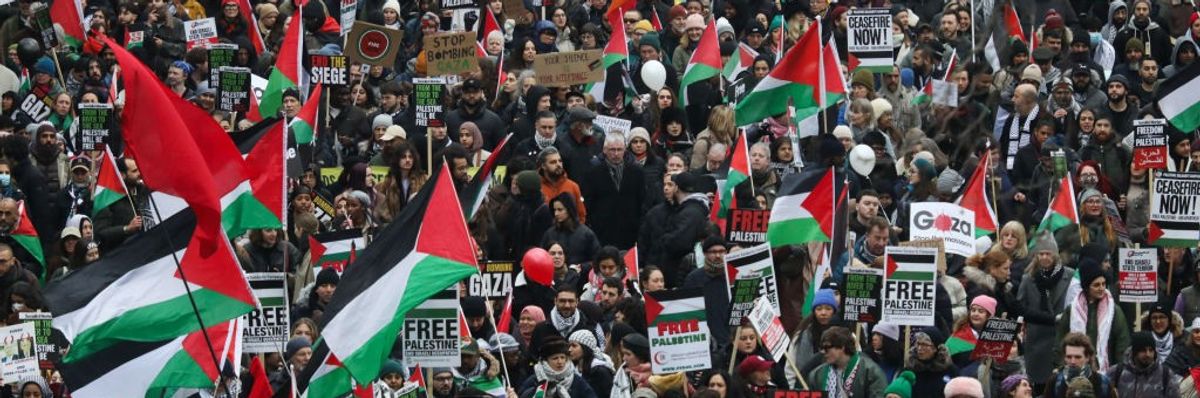
Tens of thousands of people gather to join the Global Day of Action calling for a ceasefire and an end to the war on Gaza on the 13th of January 2024, Central London, United Kingdom. The march and rally coincided with marches all over the World.  (Photo by Kristian Buus/In Pictures via Getty Images)

Coordinated actions from DC to London to Jakarta designed to “send a powerful message not just to the Israelis but to the Western powers who are backing them that the public say ‘not in our name.'”

Major coordinated demonstrations took place across the world on Saturday to mark the 100th day of Israel’s bombardment and military assault on the people of the Gaza Strip that have now claimed the lives of nearly 24,000 Palestinians, a large majority of them innocent men, women, and children who had nothing to do with the attacks orchestrated by Hamas on October 7 of last year.

In London, as many as 500,000 people marched on Parliament Square to demand an immediate cease-fire Gaza, condemn their own U.K. government’s support of Israel’s disproportionate and “genocidal” onslaught, and warn against a wider regional war that experts warn is creeping closer by the day.

‘Justice is lacking’: pro-Palestine demonstrators gather in London www.youtube.com

“This Global Day of Action, from Australia through to Asia, Europe and the Americas, is the first coordinated, international movement against the war being waged by Israel on the Palestinian people,” said Gaza Global Day of Action organizers ahead of the demonstration. “It will send a powerful message not just to the Israelis but to the Western powers who are backing them that the public say ‘not in our name.'”

In Dublin, organizers of a march that saw more than 100,000 march through city streets called it the largest rally for Palestinian rights in Irish history.

As the Irish Timesreports:

The crowd was filled with Palestinian flags, posters calling for an “End to the Gaza genocide” as well as makeshift washing lines, with baby clothes hanging from it, representing the many young lives lost in the conflict.

At the front of the march, four people held mock corpses in bloody body bags to represent the growing number of civilian casualties.

In the United States, tens of thousands marched in Washington, D.C. to denounce the Israeli onslaught—which has claimed over 23,000 lives, including more than 10,000 children—as well as their own government’s complicity in the carnage. President Joe Biden was on the tip of many demonstrators’ tongues and polls in the U.S. have shown very little support across the political spectrum for how he is handling the situation.

Jake and Ida Braford, a young couple from Richmond, Virginia, who brought their two small children to the protest, told the Associated Press the situation in Gaza has made them unsure of their support for Biden come this year’s election.

“We’re pretty disheartened,” Ida told the news agency. “Seeing what is happening in Gaza, and the government’s actions makes me wonder what is our vote worth?”

Following the march, demonstrators left a pile of bloodied baby dolls, including severe parts, in a pile outside the White House as a message to Biden. “The blood of the over 10,000 murdered children in Gaza is on his hands,” said CodePink co-founder Jodie Evans.

Meanwhile, in Indonesia, thousands gathered outside the U.S. embassy in Jakarta to condemn the ongoing “genocide” in Gaza perpetrated by Israel with the backing of the U.S. government and other Western allies.

Global day of action: Demonstration at US embassy in Jakarta urges ceasefire in Gaza www.youtube.com

Large protests were also held in Kuala Lumpur, Malaysia as well as in the South African cities of Cape Town and Johannesburg. On Thursday, a delegation from South Africa presented its case charging Israel with genocide before the International Court of Justice (ICJ) in The Hague.

“We are here today to be part of the global day of action that will see demonstrations planned in more than 66 cities and at least 36 countries,” said a statement released by the organizers in Cape Town. “Today’s rally will be part of a united front of global voices, calling unconditionally for an immediate and permanent ceasefire.”

Cities in Israel were not among those holding large-scale demonstrations against the government’s ongoing military campaign in Gaza. One application by Israelis for a rally in Haifa to denounce the onslaught was rejected.

As Haaretzreported: “The commander of the police’s Coastal District, Maj. Gen. Daniel Levy, explained that the refusal to grant the permit was over “real concerns about a serious disruption to public order,” adding that there was a high likelihood that violence would break out between demonstrators and people opposing the demonstration.”

Original article by JON QUEALLY republished from Common Dreams under Creative Commons (CC BY-NC-ND 3.0). 

Gaza Cease-Fire Now! No Wider War

Bloodied Baby Dolls Left Outside White House to Protest Biden’s Complicity in Gaza

Democrat Applauded for (Not-So) ‘Dumb Idea’ to End Houthi Attacks in Red Sea

Continue ReadingHundreds of Thousands March for Gaza as World Demands Cease-Fire

‘A reckless act of escalation’

Spread the love

https://morningstaronline.co.uk/article/a-reckless-act-of-escalation

Prime Minister Rishi Sunak (left) and US President Joe Biden speak at the start of the meeting of the North Atlantic Council (NAC) during the Nato Summit in Vilnius, Lithuania, July 11, 2023

Peace campaigners outraged after Britain and US launch air strikes on Yemen

ANTI-WAR campaigners expressed outrage today after Britain launched a targeted strike in Yemen along with the US, further escalating tensions in the region.

British and US forces bombed military facilities used by the Houthi movement in Yemen, with Prime Minister Rishi Sunak saying the action sent a “strong signal” that the group’s actions in the Red Sea cannot be carried out with “impunity.”

The Houthis have been targeting vessels in the key international trade route in response to the bombardment of Gaza, saying their action only stopped Israel-linked shipping.

Mr Sunak insisted that the two nations acted in “self-defence” and that allies would not hesitate to ensure the safety of commercial shipping through the region.

But the Stop the War Coalition (StWC) and the Campaign for Nuclear Disarmament (CND) warned that the attack on Yemen is a “dangerous escalation” of the war in the Middle East, calling it a “direct consequence” of Britain, the US and their allies’ support for Israel’s three-month attack on Palestine.

https://morningstaronline.co.uk/article/a-reckless-act-of-escalation

Continue Reading‘A reckless act of escalation’