Category: politics

  • More than 1,000 trade unionists block four Israeli weapons factories

    Spread the love

    https://www.morningstaronline.co.uk/article/b/more-1000-trade-unionists-block-four-israeli-weapons-factories

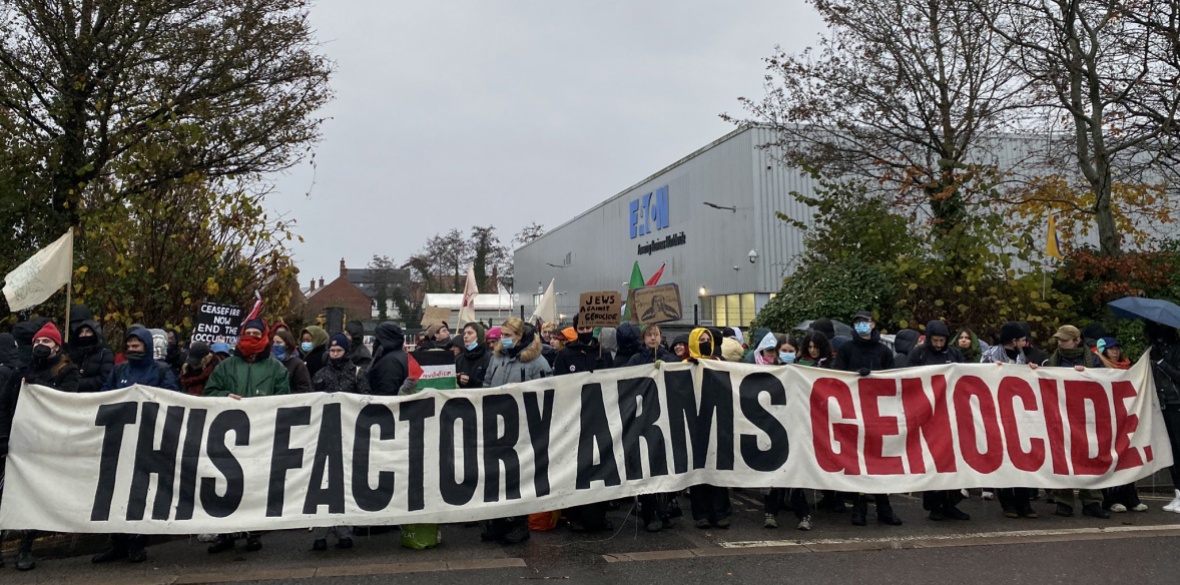
    Activists blockade Eaton Mission Systems in Bournemouth Photo:  Workers for a Free Palestine

    FOUR arms factories producing parts for Israeli fighter jets were shut down in protests by more than 1,000 trade unionists today.

    Campaigners calling for an end to Britain’s complicity in war crimes being committed in Gaza blockaded sites at Bournemouth, Glasgow, Brighton and Lancashire.

    The demonstrations were organised by campaign group Workers for a Free Palestine in co-ordination with workers in France, Denmark and the Netherlands, involving members from trade unions including Unite, Unison, GMB, the NEU, the BMA, UCU, Bectu and BFAWU.

    The campaign group said they targeted sites run by defence giant BAE Systems which produces parts for the F-35 stealth combat jet currently being used by Israel to bombard Gaza.

    More than 600 blockaded Eaton Mission Systems in Bournemouth alone.

    A spokeswoman for Workers for a Free Palestine said: “The fighter jets these factories help to produce are being used to imprison the people of Gaza in a death trap.

    “Workers all over Britain are rising up for Palestine, saying we will not allow arms used in a genocide to be supplied in our name and funded by our taxes.

    …

    https://www.morningstaronline.co.uk/article/b/more-1000-trade-unionists-block-four-israeli-weapons-factories

    Craig Murray discusses the positive legal obligation to prevent genocide.

    Every single state in the world has a positive duty to intervene to prevent the Genocide in Gaza now, not after a court has reached a determination of genocide. This is made crystal clear in para 431 of the International Court of Justice judgment in Bosnia vs Serbia:

    This obviously does not mean that the obligation to prevent genocide only comes into being when perpetration of genocide commences ; that would be absurd, since the whole point of the obligation is to prevent, or attempt to prevent, the occurrence of the act. In fact, a State’s obligation to prevent, and the corresponding duty to act, arise at the instant that the State learns of, or should normally have learned of, the existence of a serious risk that genocide will be committed. From that moment onwards, if the State has available to it means likely to have a deterrent effect on those suspected of preparing genocide, or reasonably suspected of harbouring specific intent (dolus specialis), it is under a duty to make such use of these means as the circumstances permit.

    This case was specifically on the application of the Genocide Convention. That the ICJ has ruled there is a positive duty on states to act to prevent genocide makes it even more astonishing to me that no state has invoked the Genocide Convention over the blatant genocide being committed by Israel in Gaza.

    …
  • UN Chief Invokes Article 99 to Spur Security Council Action on Gaza

    Spread the love
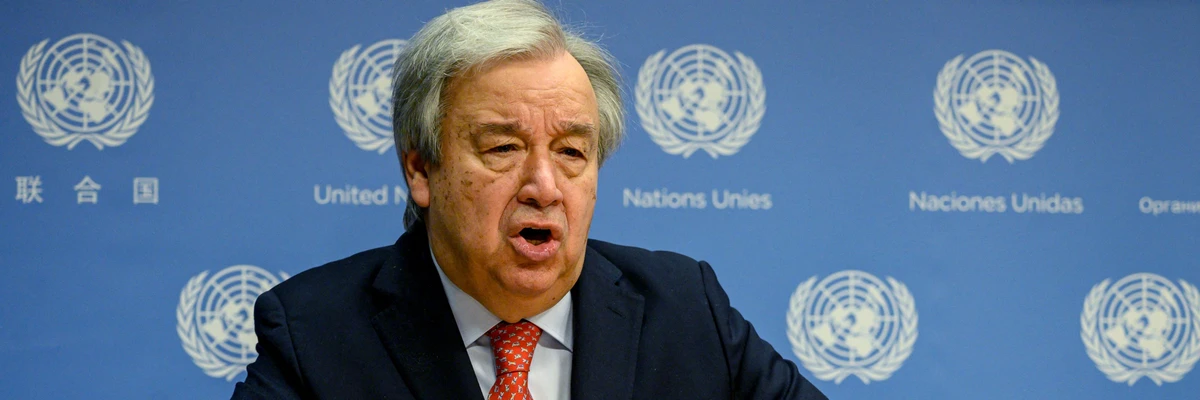
    United Nations Secretary-General António Guterres discusses climate change at U.N. headquarters in New York City on July 27, 2023.
    United Nations Secretary-General António Guterres discusses climate change at U.N. headquarters in New York City on July 27, 2023.

    “Facing a severe risk of collapse of the humanitarian system in Gaza, I urge the council to help avert a humanitarian catastrophe and appeal for a humanitarian cease-fire to be declared.”

    With over 16,000 Palestinians dead just two months into Israel’s war on the Gaza Strip, United Nations Secretary-General António Guterres on Wednesday demanded immediate action by the U.N. Security Council.

    For the first time since becoming secretary-general nearly seven years ago, Guterres invoked Article 99, a rarely used section of the U.N. Charter empowering him to bring to the attention of the council “any matter which in his opinion may threaten the maintenance of international peace and security.”

    U.N. spokesperson Stéphane Dujarric said that Guterres was invoking Article 99 “given the scale of the loss of human life in Gaza and Israel, in such a short amount of time.”

    “I think it’s arguably the most important invocation,” Dujarric told reporters at U.N. headquarters, “in my opinion, the most powerful tool that he has.”

    “The international community has a responsibility to use all its influence to prevent further escalation and end this crisis.”

    Guterres wrote to José Javier De la Gasca Lopez Domínguez, the Ecuadorian president of the Security Council, that “more than eight weeks of hostilities in Gaza and Israel have created appalling human suffering, physical destruction and collective trauma across Israel and the occupied Palestinian territory.”

    The U.N. chief reaffirmed his condemnation of the October 7 Hamas-led attack on Israel—in which around 1,200 people were killed and over 200 others were captured—that led to the war. He called accounts of sexual violence “appalling” and stressed that the remaining hostages “must be immediately and unconditionally released.”

    He also emphasized that “civilians throughout Gaza face grave danger,” with the Israeli airstrikes and raids damaging more than half of all homes and displacing about 80% of the 2.3 million residents. Over a million of them have sought shelter at U.N. facilities, “creating overcrowded, undignified, and unhygienic conditions,” while others “find themselves on the street.”

    “The healthcare system in Gaza is collapsing,” he noted, pointing out that only 14 of 36 hospitals are operating at all. “I expect public order to completely break down soon due to the desperate conditions, rendering even limited humanitarian assistance impossible. An even worse situation could unfold, including epidemic diseases and increased pressure for mass displacement into neighboring countries.”

    Already, conditions in Gaza are making “it impossible for meaningful humanitarian operations to be conducted,” Guterres added. “The capacity of the United Nations and its humanitarian partners has been decimated by supply shortages, lack of fuel, interrupted communications, and growing insecurity.”

    “The situation is fast deteriorating into a catastrophe with potentially irreversible implications for Palestinians as a whole and for peace and security in the region. Such an outcome must be avoided at all cost,” the U.N. leader warned. “The international community has a responsibility to use all its influence to prevent further escalation and end this crisis.”

    “I urge the members of the Security Council to press to avert a humanitarian catastrophe,” he wrote. “I reiterate my appeal for a humanitarian cease-fire to be declared. This is urgent. The civilian population must be spared from greater harm.”

    The United States—a supporter of Israel’s war and one of the U.N. Security Council’s five permanent members—vetoed a mid-October resolution condemning violence against civilians in Israel and Gaza and urging “humanitarian pauses” for aid delivery.

    Roughly a month later, the Security Council approved a Gaza resolution that calls on all parties to abide by their obligations under international law and advocates for “urgent and extended humanitarian pauses and corridors.”

    Dr. Christos Christou, international president of Médecins Sans Frontières, or Doctors Without Borders, said at the time that “the unacceptably jumbled and sluggish process finally led to the adoption of a text that does not come close to reflecting the severity of the humanitarian catastrophe in Gaza.”

  • ‘Apocalyptic’ conditions in southern Gaza blocking aid, top UN official says

    Spread the love
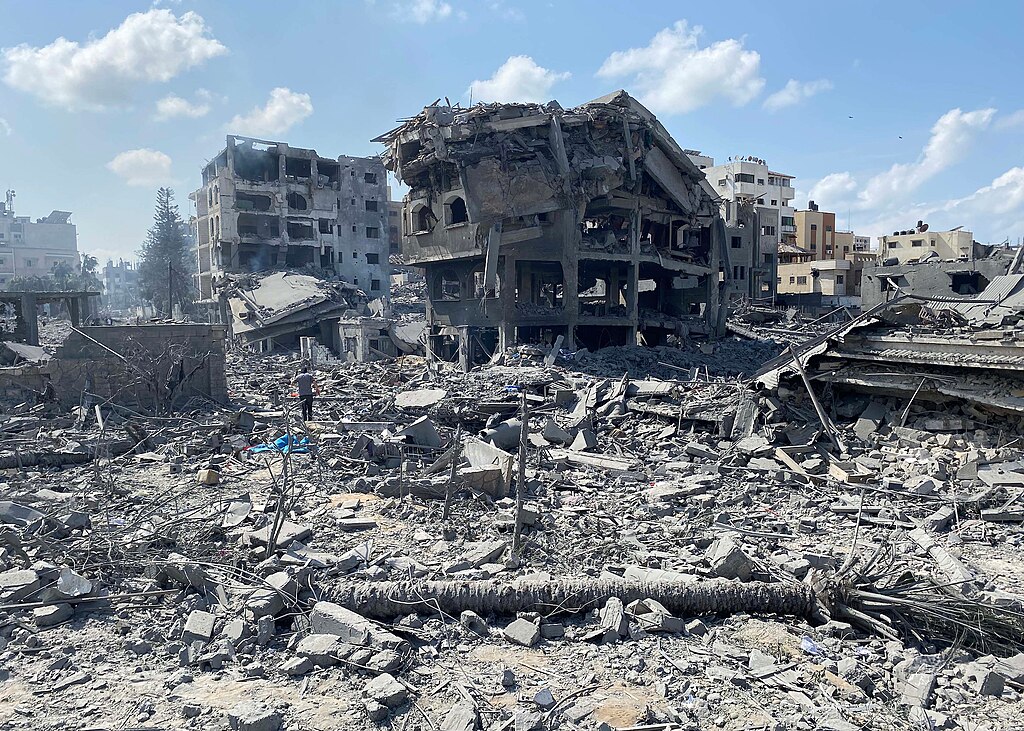
    Palestinians inspect the damage following an Israeli airstrike on the El-Remal aera in Gaza City on October 9, 2023. Israel continued to battle Hamas fighters on October 10 and massed tens of thousands of troops and heavy armour around the Gaza Strip after vowing a massive blow over the Palestinian militants' surprise attack. Photo by Naaman Omar apaimages. licensed under the Creative Commons Attribution-Share Alike 3.0 Unported license.
    Palestinians inspect the damage following an Israeli airstrike on the El-Remal aera in Gaza City on October 9, 2023. Israel continued to battle Hamas fighters on October 10 and massed tens of thousands of troops and heavy armour around the Gaza Strip after vowing a massive blow over the Palestinian militants’ surprise attack. Photo by Naaman Omar apaimages. licensed under the Creative Commons Attribution-Share Alike 3.0 Unported license.

    https://www.theguardian.com/world/2023/dec/05/un-martin-griffiths-idf-campaign-southern-gaza-apocalyptic-conditions

    The UN’s top aid official has said the Israeli military campaign in southern Gaza has been just as devastating as in the north, creating “apocalyptic” conditions and ending any possibility of meaningful humanitarian operations.

    Martin Griffiths, the UN emergency relief coordinator, said he was speaking on behalf of the entire international aid community in saying the continuing offensive had robbed aid workers of any significant means of helping the 2.3 million people of Gaza, other than to call for an immediate end to the fighting.

    His comments came as the Israeli military said it had stormed southern Gaza’s main city in the most intense day of fighting so far, and hospitals struggled to cope with scores of dead and wounded Palestinians.

    “What we’re saying today is: that’s enough now. It has to stop,” Griffiths said in an interview with the Guardian, adding that the small amount of aid being allowed into Gaza could no longer be distributed, since the Israeli ground offensive had spread to southern Gaza and the city of Khan Younis, bringing the humanitarian operation effectively to an end.

    “It isn’t really a statistically significant operation any more,” said Griffiths, who is also UN undersecretary general for humanitarian affairs. “It’s a bit of a patch on a wound and it doesn’t do the job, and it would be an illusion for the world to think that the people in Gaza can be helped by the humanitarian operation under these conditions.

    “This is an apocalyptic situation now, because these are the remnants of a nation being driven into a pocket in the south.”

    …

    https://www.theguardian.com/world/2023/dec/05/un-martin-griffiths-idf-campaign-southern-gaza-apocalyptic-conditions

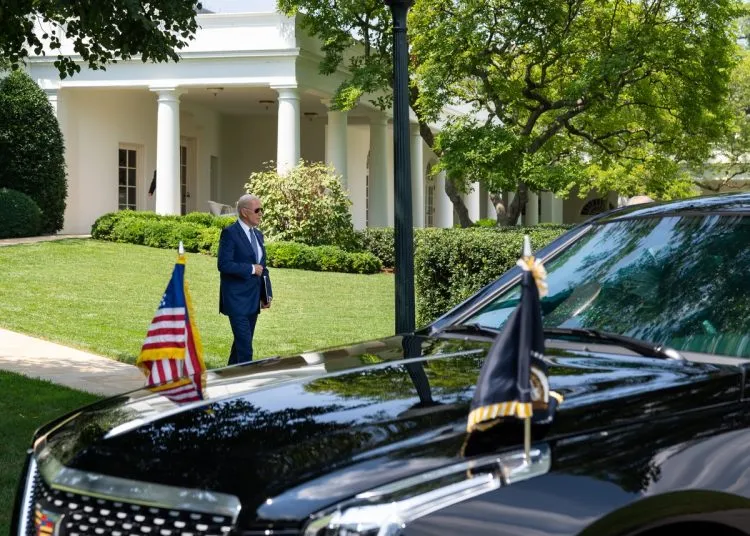
    Zionist president Joe Biden. 27 July 2021 image by Official White House Photo by Adam Schultz. Original public domain image from Flickr
    Zionist president Joe Biden. 27 July 2021 image by Official White House Photo by Adam Schultz. Original public domain image from Flickr
  • Warning: the UK government’s hydrogen plan isn’t green at all, it’s another oil industry swindle

    Spread the love

    Kevin Anderson and Simon Oldridge

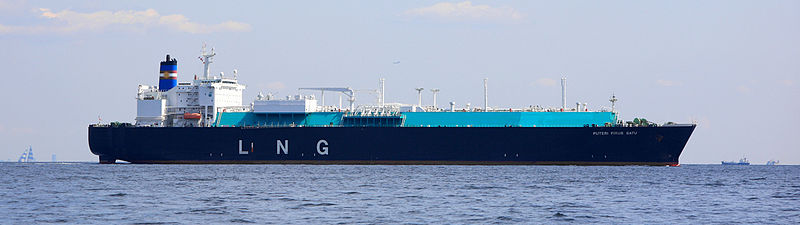
    Membrane type LNG tanker Puteri Firus Satu in Tokyo Bay. Author Tennen-Gas shares under GNU Free Documentation License.
    Membrane type LNG tanker Puteri Firus Satu in Tokyo Bay. Author Tennen-Gas shares under GNU Free Documentation License.

    https://www.theguardian.com/commentisfree/2023/dec/04/uk-government-hydrogen-plan-oil-industry-taxpayer-blue-hydrogen-climate-crisis

    A taxpayer-funded drive for ‘blue’ hydrogen is good news for fossil-fuel lobbyists, but bad news for the climate crisisMon 4 Dec 2023 12.25 CET

    With the impacts of the climate crisis so apparent for all to see, it is becoming ever harder for governments to fob off voters with promises of action tomorrow. At Cop28 we’ll see increasingly overt action by fossil fuel companies and petrostates to preserve their traditional power. But it is just as important to scrutinise emerging so-called green or low-emission solutions, which sound plausible, but are often simply big oil’s business-as-usual in a new guise.

    The UK’s much touted low carbon hydrogen standard (LCHS) is an example of this. While hydrogen can be a low-emission fuel, the UK’s plan is quite clearly a fig leaf for “blue” hydrogen – which is made from fossil fuels – and according to one study, is even more at odds with our commitment to limiting global temperature rises to 1.5C than burning coal.

    Today, the vast majority of the UK’s hydrogen production is made from natural gas (the marketing term for methane) in a very carbon-intensive process. Blue hydrogen would also be produced from methane, but with promises that the resulting CO2 emissions would be captured and buried underground. But even if most of the CO2 can be safely captured (a very big “if”), blue hydrogen’s full life-cycle emissions are likely still to be high.

    That is in part as a consequence of methane leaks across the vast North Sea supply chain. Methane is a very powerful warming gas, so even with relatively low leakage rates, blue hydrogen will be bad news for the climate. Currently, 84% of the UK’s misleadingly named “low carbon” hydrogen capacity under development is of this blue variety.

    Companies will be awarded substantial taxpayer funding for blue hydrogen plants that are certified compliant with the new LCHS – and here, the hallmarks of lobbying are only too apparent. The LCHS method for calculating life-cycle greenhouse gas emissions appears rigged to greenwash blue hydrogen.

    …

    https://www.theguardian.com/commentisfree/2023/dec/04/uk-government-hydrogen-plan-oil-industry-taxpayer-blue-hydrogen-climate-crisis

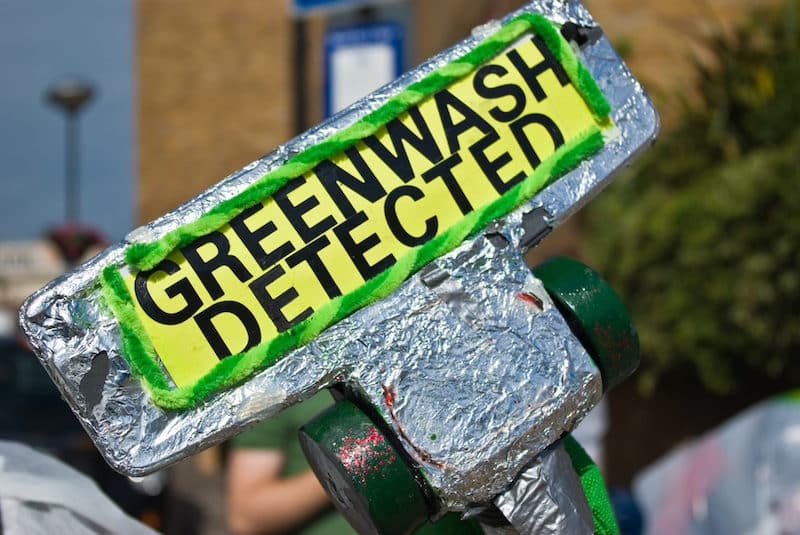
    Protest placard reads Greenwash detected
    Protest placard reads Greenwash detected
  • UK likely to miss Paris climate targets by wide margin, analysis shows

    Spread the love

    https://www.theguardian.com/environment/2023/dec/05/uk-miss-paris-climate-targets-emissions

    Exclusive: Under current policies, Britain could fall short of internationally agreed goal of 68% cut in emissions by 2030

    The UK government is likely to miss its targets under the Paris climate agreement by a wide margin, analysis shows, dealing a devastating blow to Britain’s standing on the international stage.

    Under current policies, the UK’s greenhouse gas emissions are likely to be 59% lower in 2030 than they were in 1990 – but the country’s internationally agreed target is for a 68% reduction by the end of this decade. The gap is likely to leave Britain in breach of these commitments.

    The 2030 emissions goal was agreed at Cop26, the UN climate summit hosted by the UK in Glasgow in 2021, and has been reaffirmed at Cop28, taking place in Dubai this week.

    Failure to meet the UK’s commitments would hinder international efforts to limit global temperature rises to 1.5C (2.7F) above pre-industrial levels.

    The estimate comes from analysis of publicly available and government data carried out by Friends of the Earth. It found that current policies would achieve just over half the emissions cuts needed by 2030.

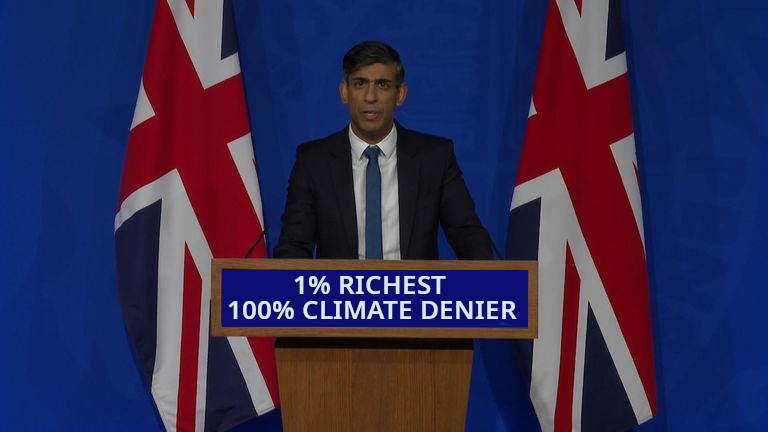
    The gap had grown significantly under Rishi Sunak’s leadership, Friends of the Earth found.

    …

    https://www.theguardian.com/environment/2023/dec/05/uk-miss-paris-climate-targets-emissions

    Image of UK Prime Minister Rishi Sunak reads 1% RICHEST 100% CLIMATE DENIER
    Image of UK Prime Minister Rishi Sunak reads 1% RICHEST 100% CLIMATE DENIER