Labour ‘won’t turn on spending taps’ leader says in speech to woo big business
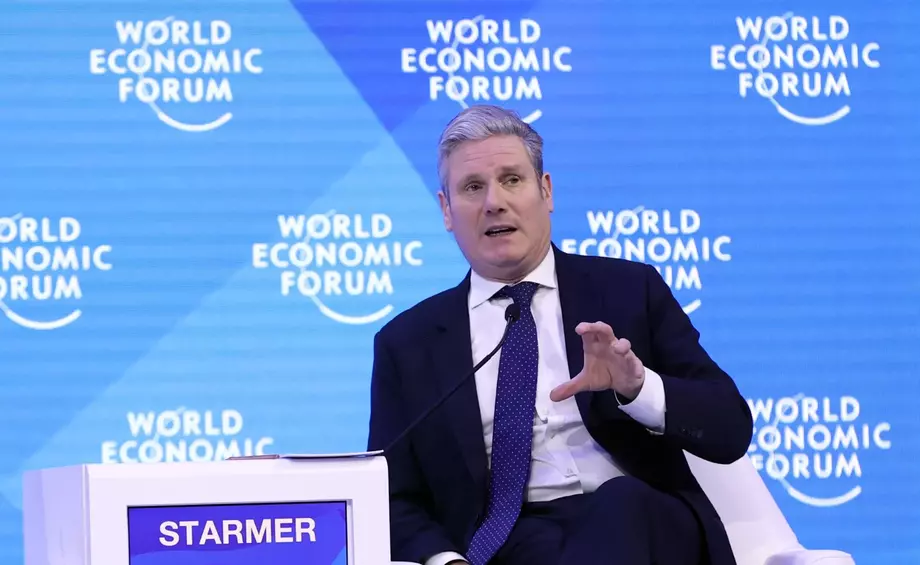
AUSTERITY is Labour’s economic agenda, … Keir Starmer announced today in a further lurch to the right.
A Labour government will not “turn on the spending taps,” the Labour leader said in remarks aimed at appeasing the City and the Treasury.
He acknowledged that public services are “on their knees” but offered little prospect of getting them back on their feet again.
… Keir has prioritised bringing down debt and has vowed not to increase taxes on business or the wealthy, leaving himself no room to repair the damage wrought by 15 years of capitalist crisis.
This latest dilution of Labour’s plans for government came just a day after Sir Keir went out of his way to praise former Tory prime minister Margaret Thatcher for shaking Britain out of its “stupor.”
A Momentum spokesperson said today that “these are deeply worrying remarks from Keir Starmer.
“Instead of laying out a popular alternative based on public ownership and public investment, the Labour leadership is adopting the Tories’ failed economic approach.
“Starmer’s stance isn’t just out of touch with Labour members and voters — but with the public too.”
Guardian Exclusive: UAE’s Sultan Al Jaber says phase-out of coal, oil and gas would take world ‘back into caves’
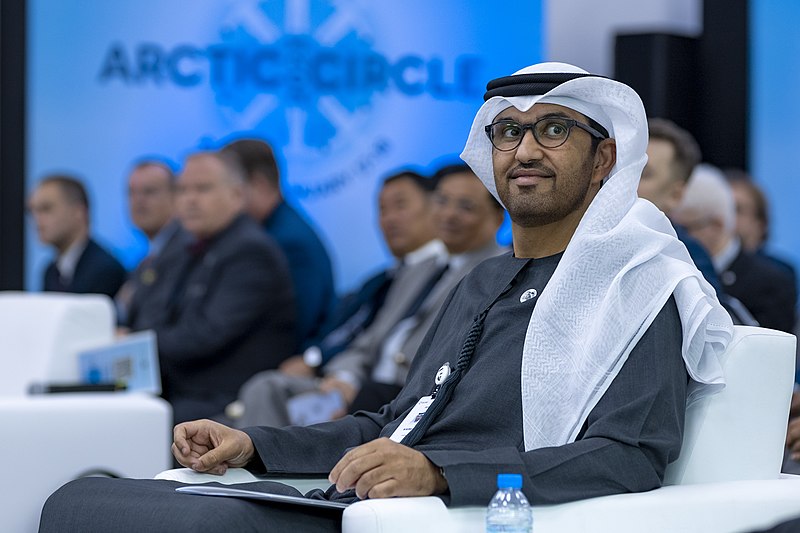
The president of Cop28, Sultan Al Jaber, has claimed there is “no science” indicating that a phase-out of fossil fuels is needed to restrict global heating to 1.5C, the Guardian and the Centre for Climate Reporting can reveal.
Al Jaber also said a phase-out of fossil fuels would not allow sustainable development “unless you want to take the world back into caves”.
The comments were “incredibly concerning” and “verging on climate denial”, scientists said, and they were at odds with the position of the UN secretary general, António Guterres.
Al Jaber made the comments in ill-tempered responses to questions from Mary Robinson, the chair of the Elders group and a former UN special envoy for climate change, during a live online event on 21 November. As well as running Cop28 in Dubai, Al Jaber is also the chief executive of the United Arab Emirates’ state oil company, Adnoc, which many observers see as a serious conflict of interest.
…
[Video at the Guardian article. It’s disappointing that his reality is so different from actuality, that he is so prejudged and narrow-minded.]
“HELL on Earth” returned to Gaza today in the words of a UN official, as Israel resumed its murderous bombing campaign with dozens of air strikes on the southern Gaza city of Khan Younis.
Over 100 solidarity actions will take place for Palestine across Britain on Saturday as peace campaigners demand an end to the killing.
After almost a week’s truce which saw Hamas release 78 hostages seized in its October 7 raid on Israel, and Israel free 240 Palestinian prisoners of the thousands in its jails, Israeli Defence Forces (IDF) unleashed another wave of bombing which had killed at least 109 people today when the Morning Star went to press, bringing the total death toll from its war above 15,000.
…
The Stop the War Coalition’s Lindsey German told the Morning Star that Gaza faced the “hideous prospect [of] winter cold, disease and food shortages and now renewed bombardment by Israel.
“The West Bank is also seeing increasing violence with many young Palestinians being shot and arrested every day.”
A window on the horror was exposed by the Unite union, which has a twinning arrangement with Shu’fat refugee camp which borders East Jerusalem and houses more than 16,000 refugees.
Colin Lomas, secretary of the twinning group, said: “The Shu’fat checkpoint [into Jerusalem] is frequently closed, making the camp an open prison subject to frequent incursions by the Israeli army.
“The United Nations health centre in the camp, already desperately overstretched, has experienced extensive damage.
“The Shu’fat youth centre has been raided on several occasions, resulting in the arrest of many young people.
“Homes have also been raided, with people being summarily arrested and imprisoned, mostly without charge or trial.
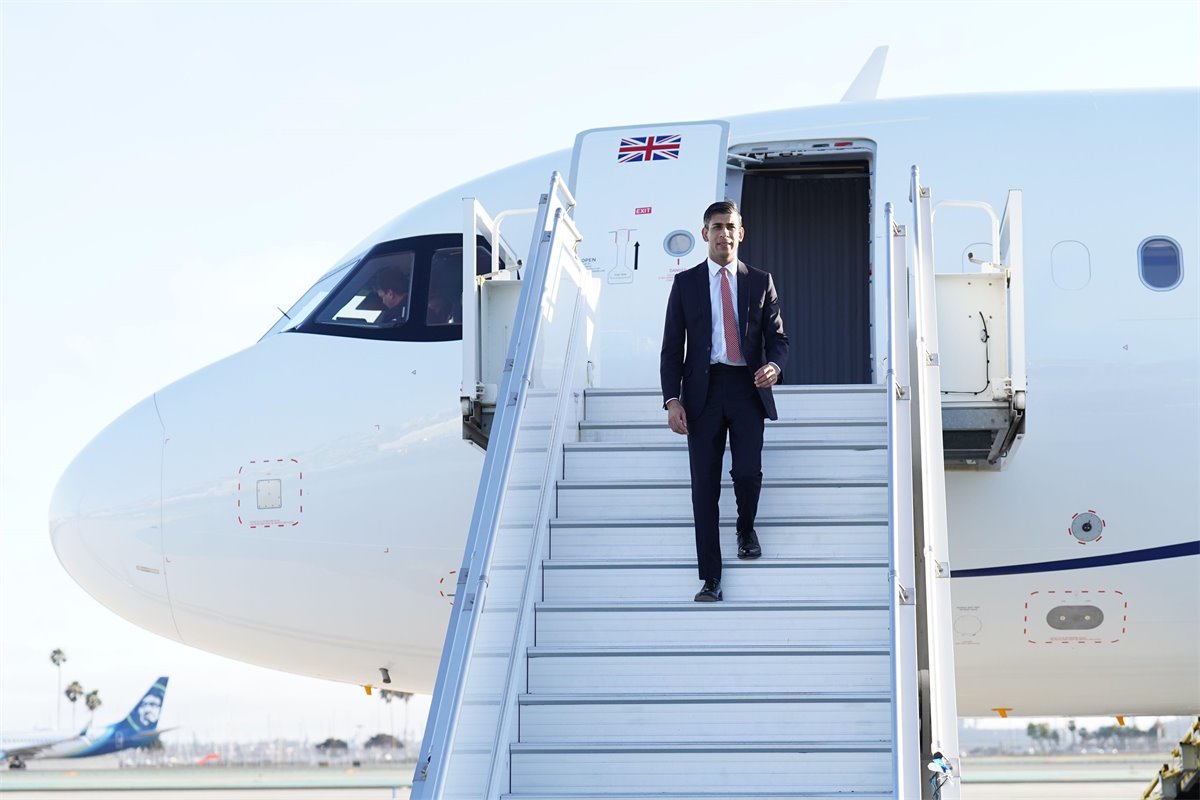
Rishi Sunak, David Cameron and King Charles are just three of the more than 70,000 delegates from nearly 200 countries at the latest UN climate summit in Dubai, COP28. But they are among hundreds who will have travelled there by private jet. In fact, the UK prime minister, foreign secretary and king even travelled in three separate planes.
At COP27 in Egypt last year, around 315 private jet journeys took place. This is an extraordinary statistic, especially as fewer world leaders attended that COP, as many were busy at a G20 summit in Bali.
That’s why we set up a team of academic experts to estimate the carbon footprint of travel to this year’s meeting, COP28 in Dubai, for different modes of transport including private jets. We ultimately want to empower attendees to make informed climate-conscious travel choices.
We also compared the carbon footprints for the past three COPs to help see where the conferences could be located in order to dissuade attendees from using private jets, unless absolutely essential for security. The use of private jets last year – and presumably this year too, though we don’t yet have full data – suggests this is becoming the new norm and has moved beyond just essential world leaders.
Carbon footprint of transport modes
Flying is already one of the most carbon-intensive forms of travel both due to emissions from burning jet fuel and because vapour trails help create high altitude clouds which trap more heat in the atmosphere. It’s also particularly hard to decarbonise – there aren’t electric planes we could simply use instead.
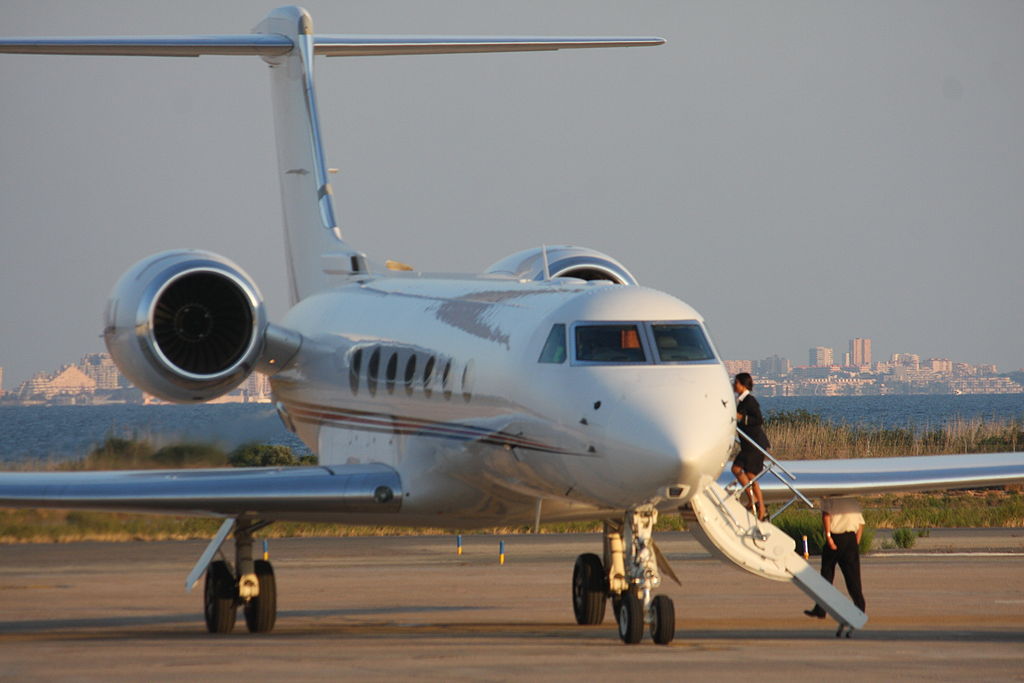
Private jet travel is the most polluting mode of all, consuming lots of fuel yet carrying few passengers. French economist Thomas Piketty argues they are an example of class inequality and must be tackled if we are to deal with climate change.
Their use by high-profile people clearly undermines the goal of a climate conference and symbolises a disconnect between environmental concerns and individual actions and a lack of commitment to sustainable practices. This in turn risks shaping and influencing public opinion. Previous research suggests members of the public take climate action less seriously if they feel that their leaders are not doing their bit.
We started by looking at the use of private jets for COP27 in Egypt (our results are available as a preprint ahead of formal peer-review). Most private flights were short-haul, often just an hour between the capital Cairo and the conference venue in Sharm El-Sheikh. Over shorter distances, planes are even less efficient as take off and landing burns more fuel compared to cruising.
So avoiding short flights and private jets is a must. With this in mind, we explored a range of travel options to get to COP28 in Dubai for participants from the UK, where we’re based.
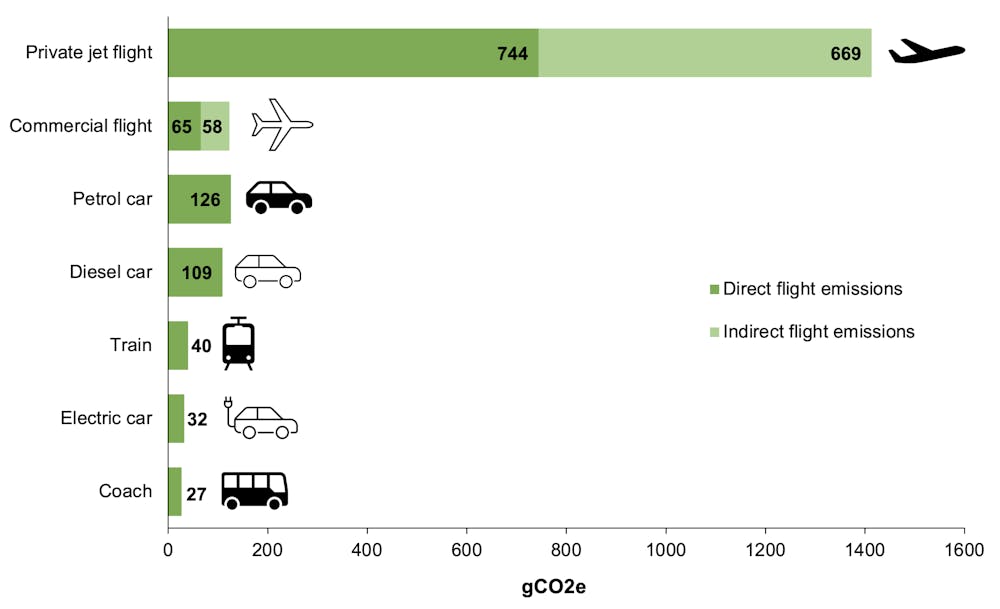
For a journey from London to Dubai, private jet travel is 11 times more polluting than a commercial aircraft, 35 times more than train and 52 times more than coach travel (even after factoring in a flight from Istanbul, since you can’t go all the way to Dubai by train or coach). For those flying from the UK, the longer flight to Dubai compared to Egypt means emissions will be higher this year.
Carbon intensity (grams of CO₂equivalent) of transport from London to COP28:
Flight emissions are based on journeys from London to Dubai. Car, train and coach emissions are based on journeys from London to Istanbul and then a flight. Private jet emissions are based on a Cessna 680 Citation Sovereign (most common in COP27 data), commercial flight emissions are based on an Airbus A380-300 and car journeys are calculated for a Vauxhall Corsa. Roberts et al (2023), CC BY-SA
Location of COP
Some of the blame for flight emissions must lie with the UN body which decides where COP meetings will be held, the UNFCCC. Dubai is surrounded by conflict zones, which block land routes from Europe, Asia and Africa and makes flying there essential.
While most delegates will want to travel sustainability, their actions will depend on the accessibility of alternative forms of travel such as safe land routes and for those coming from further away at least the option of direct flights to minimise their carbon emissions.
In this respect Dubai is a good choice as it is a major airline hub and so there are many direct flights and less need for second or internal flights.
Our analysis highlights the need to consider very carefully the carbon footprint implications of travel to COP meetings. Ultimately policymakers will need to identify host locations for climate change meetings which can help to minimise the carbon footprint of the participants.
Private jets are still not advisable, however. Their carbon footprint is substantially higher than other forms of transport, they exacerbates existing inequities at climate negotiations and send the wrong message to the world.
Carole Roberts, Researcher, Carbon Footprint of Transport, UCL; Mark Maslin, Professor of Natural Sciences, UCL, and Prof Priti Parikh, Professor of Infrastructure Engineering and International Development, UCL
Romain Ioualalen, Global Policy Manager at Oil Change International said:
“It is positive to see this COP28 presidency and the IEA reflect the growing consensus that we need urgent action to rein in fossil fuel production and use. As COP28 negotiations start, countries must agree to end fossil fuel expansion, the only way to see fossil fuels decline significantly this decade, and for a full phase out of fossil fuels production and use. Distant promises and voluntary pledges are not enough, we need to see immediate action.
“The phase out will not happen on its own, even with growth in renewable energy. Without a strong agreement at COP28 that gets reflected in national policies, fossil fuels will not decline at the speed and scale necessary to limit temperature rise to 1.5°C.
“We deeply regret the inclusion of the fossil fuel industry’s favorite distractions, CCS and hydrogen, in this document and we urge parties to oppose any attempts to legitimize these failed technologies in a COP decision”.
David Tong, Global Industry Manager at Oil Change International said:
“Fatih Birol and the IEA reconfirmed this year that to limit global warming to 1.5ºC, there is no room for any new oil and gas expansion beyond existing fields and mines. To confront the climate crisis we need a full, fast, fair, and funded phase out of oil, gas, and coal.
“Oil Change International data show no big oil and gas company comes even close to aligning its business model with the Paris Agreement. Fossil fuel producers will not phase themselves out. The Big Oil and Gas business model cannot be reformed. Its foundation is destruction – of communities, of ecosystems, and all our futures. Cutting oil and gas companies’ operational emissions will achieve a maximum of 20% reduction in their total emissions. Governments must act to phase out the destructive fossil fuel industry and unlock the transition to nature-positive, community-owned, renewable energy.”
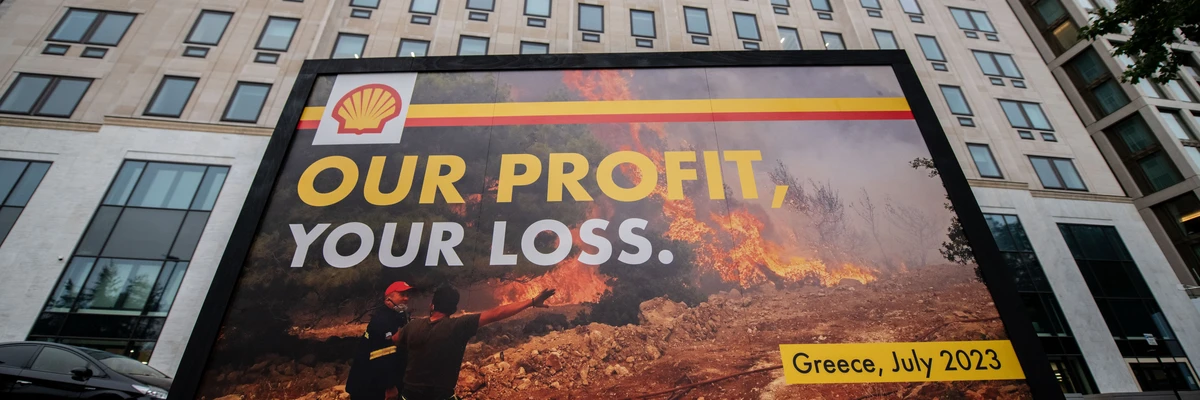
Greenpeace activists display a billboard during a protest outside Shell headquarters on July 27, 2023 in London. (Photo: Handout/Chris J. Ratcliffe for Greenpeace via Getty Images)