[2/11/20 ed: I would say that the scale of the problem was dramatically overstated for political reasons by opponents inside and outside the party, as well as by much of the media. That was enough to get Jeremy Corbyn suspended from the Labour Party despite it being an entirely true and accurate statement.
Aljazeera’s investigation ‘The Lobby‘ documents the Israeli embassy smear-campaign against Socialists in the Labour Party using false manufactured accusations of anti-semitism.
“Trump’s lies and his rejection of science have cost us tens of thousands of lives. We need a new president,” said Sen. Bernie Sanders. by Jake Johnson, staff writer
President Donald Trump speaks during his campaign event on October 23, 2020 in The Villages, Florida. (Photo: Joe Raedle/Getty Images)
President Donald Trump late Friday repeated his lie that the United States is on its way to defeating the coronavirus pandemic just before the country reported a single-day record of more than 85,000 new Covid-19 infections, nearly 10,000 more cases than were tallied at the height of the devastating surge in mid-July.
But the president’s remarks during a campaign rally Friday at The Villages, a Florida retirement community, conveyed zero indication that the U.S. is entering what could be the worst phase of the pandemic yet.
“It’s true that country is rounding the turn of the pandemic. We are spiraling out of control.” —Dr. Zoë McLaren,School of Public Policy at the University of Maryland, Baltimore County
“I mean, you look at what’s going on and we’re rounding the turn. We’re rounding the corner. We’re rounding the corner beautifully,” Trump said, recycling an egregious falsehood that has become a staple of his stump speech even as infections and hospitalizations surge nationwide.
The New York Timesreported late Friday that “since the start of October, the rise in cases has been steady and inexorable, with no plateau in sight… By that measure, Friday was the worst day of the pandemic, and health experts warned of a further surge as cold weather sets in. The number of people hospitalized with Covid-19 has already risen 40 percent in the past month.”
Consistent with his reckless downplaying of the pandemic from the very start, Trump once again peddled the lie that the U.S. is “rounding the turn” during a late Friday rally in Pensacola, one of many largely maskless and closely packed in-person campaign events the president has held in recent days against the warnings of public health officials.
Watch:
Just hours after news broke that the US set a single-day record today for new coronavirus cases, Trump absurdly claims in Pensacola that the country is “rounding the turn” of the pandemic pic.twitter.com/fG0uXxluPu
“It’s true that country is rounding the turn of the pandemic,” responded Dr. Zoë McLaren, associate professor in the School of Public Policy at the University of Maryland, Baltimore County. “We are spiraling out of control.”
In addition to the record number of cases, the U.S. also reported more than 940 coronavirus deaths on Friday, bringing the nation’s death toll to nearly 224,000—the highest in the world.
“This is only getting worse,” tweeted epidemiologist Dr. Eric Feigl-Ding, warning that the U.S. could soon reach 100,000 new cases per day as the winter months approach.
With the November 3 election less than two weeks away, Sen. Bernie Sanders (I-Vt.) tweeted Friday that “Trump’s lies and his rejection of science have cost us tens of thousands of lives.”
“We need a new president,” Sanders said.
Common Dreams: Our work is licensed under a Creative Commons Attribution-Share Alike 3.0 License. Feel free to republish and share widely.
This is the world we live in. This is the world we cover.
A quiz for you today. You may notice that there is a trap for blonde-haired global leaders of the very stable genius variety.
Please identify the items in the images. Answers are at the end.
2.
3.
4.
5.
Thanks to wikimedia for all the images.
The answers are:
Giraffe
Elephant
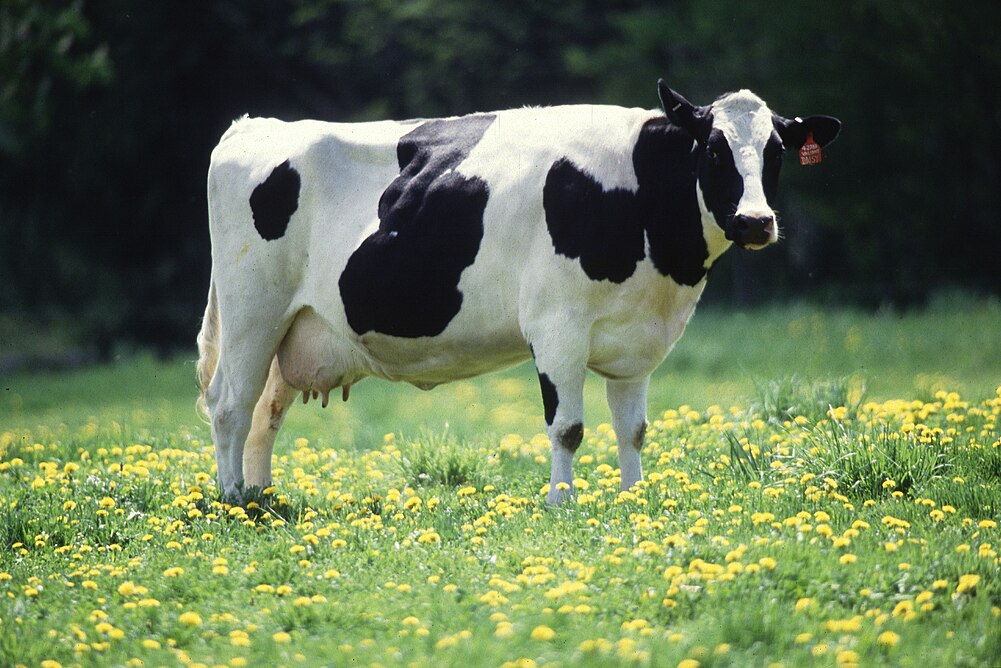
Cow
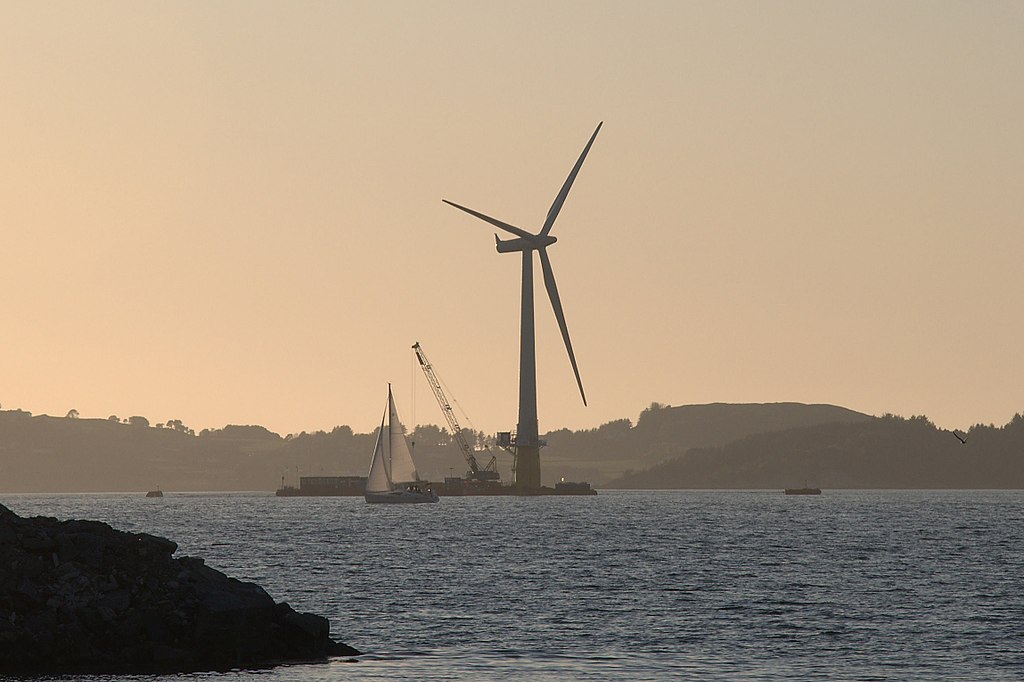
Windmill
Not a windmill. A wind generator or wind turbine are also acceptable answers.
Ace it? Did you notice the trap for blonde-haired World leaders of the very stable genius variety? That’s right both current US Resident Donald Trump and current UK Prime Mister Boris ‘rice pudding’ Johnson mistake wind generators or turbines for windmills.
Boris was using the phrase windmills in his speech to the Conservative Party conference yesterday. By misusing the phrase windmills he is associating himself with the World’s most prominent climate crisis denier and climate destroyer, Donald Trump. Is the message that his speech should be regarded as donkey doo?
Here are some extra images which are not part of the quiz.
A floating wind turbine. Windmills generally don’t float Boris.
Skin on rice pudding.
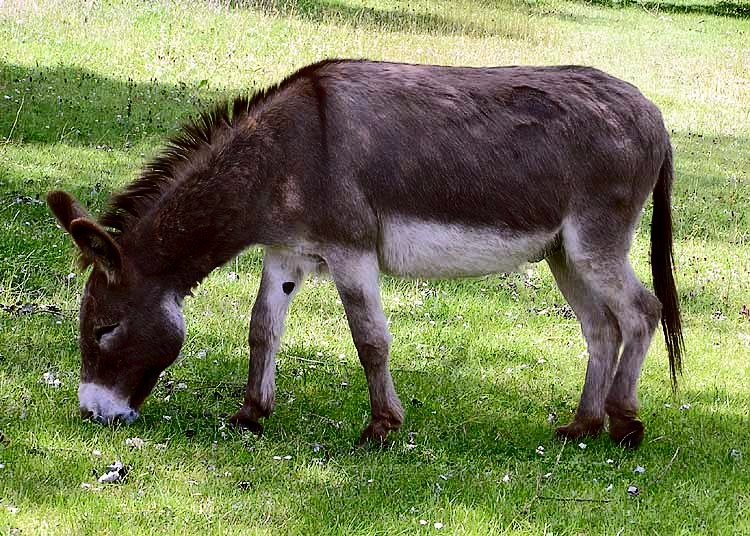
A donkey. This one is for my friends at Led by Boriss.
“At a time of rapid biodiversity loss, we are failing to access the treasure chest of incredible diversity on offer and missing a huge opportunity for our generation.”
A new report on plants and fungi features images of the Pitcairn Island’s yellow fatu (Abutilon pitcairnense), left, and the Cayman sage (Salvia caymanensis), right. (Photos: RBG Kew)
Humanity’s destruction of nature has made an estimated two in five plant species worldwide at risk of extinction, according to an assessment published Wednesday by the Royal Botanic Gardens, Kew, in the United Kingdom.
“The data emerging from this year’s report paint a picture of a world that has turned its back on the potential of plants and fungi to address fundamental global issues such as food security and climate change.” —Alexandre Antonelli, RBG Kew
The fourth annual report, entitled State of the World’s Plants and Fungi(pdf), draws on the expertise of 210 researchers from 42 countries for what professor Alexandre Antonelli, director of science at RBG Kew, calls an “unparalleled collaborative effort” that aims to put the planet and all its inhabitants on a more sustainable path.
“Open your fridge, peek into your medicine cupboard, examine your living room, feel your clothes. For thousands of years, we have searched nature to satisfy our hunger, cure our diseases, build our houses, and make our lives more comfortable,” Antonelli writes in the report’s introduction.
“But our early exploration of useful traits in species relied on rudimentary tools, and Indigenous knowledge was lost as local traditions were downplayed and globalization emerged,” he adds. “As a result, humanity is still a long way from utilizing the full potential of biodiversity, in particular plants and fungi, which play critical roles in ecosystems. Now, more than ever before, we need to explore the solutions they could provide to the global challenges we face.”
The report comes on the heels of a United Nations assessment that the international community has failed to fulfill any of the biodiversity targets that were set a decade ago as well as the latest edition of World Wide Fund for Nature’s flagship publication, which warned that “nature—our life-support system—is declining at a staggering rate.” Specifically, WWF found “an average 68% decrease in population sizes of mammals, birds, amphibians, reptiles, and fish between 1970 and 2016.”
Throughout the report’s 12 chapters, researchers address the importance of seeking out species before they disappear and calculating extinction risk; ways that plants and fungi can be used in terms of food, energy, healthcare, and more; how biological resources can be used more wisely; and the conditions in the U.K. and its territories.
“Natural ecosystems provide useful services for humanity, such as regulating climate, preventing floods, and filtering water. As the building blocks of ecosystems, plants and fungi have the potential to help us address current environmental challenges, such as climate change,” the report notes. “However, these natural benefits could be compromised by biodiversity loss, caused by humans clearing or degrading natural vegetation and over-harvesting wild species, as well as by shifting weather patterns.”
Given the importance of plants and fungi, “we need to have a rough idea of the conservation status of every species,” Eimear Nic Lughadha, conservation scientist at RBG Kew and lead author of the extinction chapter, explained in a statement. Lughadha highlighted advancements with artificial intelligence, adding, “the techniques are good enough to say, ‘this area has a lot of species that haven’t been assessed but are almost certainly threatened.'”
In 2019 alone, 1,942 plants and 1,886 fungi were scientifically named for the first time, according to the report—which adds that “current threats to global biodiversity, from climate change, logging, and land-use change, make the task of cataloguing species a race against time.”
Only six species of medicinal fungi have been assessed for conservation status, “one of which, Fomitopsis officinalis, a wood-inhabiting parasitic fungus, has already been pushed to the brink of extinction,” the report says. Out of 25,791 known medicinal plants, 5,411 have been assessed and 723—or 13%—are threatened.
Professor Monique Simmonds, deputy director of science at RBG Kew and lead author of the commercialization chapter, told the Guardian that humanity should look to nature for treating coronaviruses and other diseases with pandemic potential. As she put it: “I am absolutely sure going forward that some of the leads for the next generation of drugs in this area will come from plants and fungi.”
The report also notes that even though there are at least 7,039 plants that hold potential as foods, “just 15 crop plants contribute to 90% of humanity’s energy intake, and more than four billion people rely on just rice, maize, and wheat.” As an RBG Kew statement explained, “Relying on a handful of crops to feed the global population has contributed to malnutrition and left us vulnerable to climate change.”
Stefano Padulosi, co-author of the food chapter, said that “the thousands of underutilized and neglected plant species are the lifeline to millions of people on Earth tormented by unprecedented climate change, pervasive food and nutrition insecurity, and economic disempowerment.”
“Harnessing this basket of untapped resources for making food and production systems more diverse and resilient to change should be our moral duty to current and future generations,” declared Padulosi, former senior scientist at the Alliance of Biodiversity International and the International Center for Tropical Agriculture.
Antonelli agreed, saying broadly that “the data emerging from this year’s report paint a picture of a world that has turned its back on the potential of plants and fungi to address fundamental global issues such as food security and climate change. Societies have been too dependent on too few species for too long.”
“At a time of rapid biodiversity loss, we are failing to access the treasure chest of incredible diversity on offer and missing a huge opportunity for our generation,” he added. “As we start the most critical decade our planet has ever faced, we hope this report will give the public, businesses, and policymakers the facts they need to demand nature-based solutions that can address the triple threats of climate change, biodiversity loss, and food security.”
Our work is licensed under a Creative Commons Attribution-Share Alike 3.0 License. Feel free to republish and share widely.
This is the world we live in. This is the world we cover.
Because of people like you, another world is possible. There are many battles to be won, but we will battle them together—all of us. Common Dreams is not your normal news site. We don’t survive on clicks. We don’t want advertising dollars. We want the world to be a better place. But we can’t do it alone. It doesn’t work that way. We need you. If you can help today—because every gift of every size matters—please do. Without Your Support We Simply Don’t Exist.