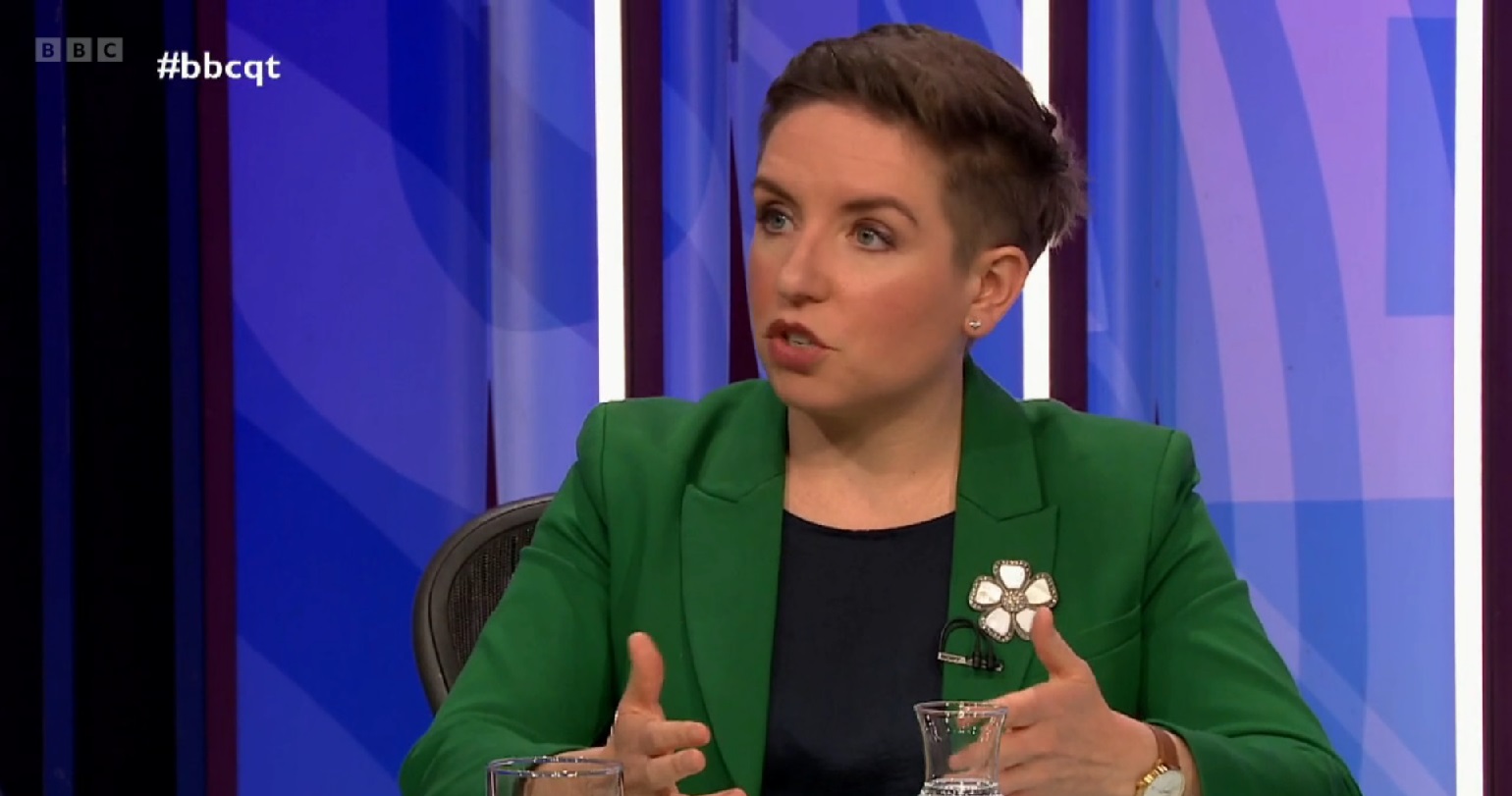
Image of the Green Party’s Carla Denyer on BBC Question Time.
Reacting to news that the Supreme Court has blocked government plans to send asylum seekers to Rwanda, Green Party co-leader Carla Denyer said:
“This is welcome news. The government must now admit that its cruel and inhumane policy is finished and drop it.
“The new Home Secretary has the chance now to turn over a new leaf and make clear that there is no intention to quit the European Convention on Human Rights.
‘He should pledge to create an asylum system that works. That is one with clear, open, safe and legal routes for applicants, quick and efficient determinations and support for resettlement into local communities with properly funded local services.”
Millions of people in the UK are unable to meet their most basic physical needs: to stay warm, dry, clean and fed. This is known as destitution.
Recent analysis from charity the Joseph Rowntree Foundation (JRF) estimates that around 3.8 million people in the UK experienced destitution at some point during 2022. This is a 61% increase since 2019 – and a 148% increase since 2017.
Living in destitution means severe material hardship. The JRF’s 2022 survey of crisis service users in the UK found that 61% reported going without food in the month before the survey. They often put other needs, such as accommodation or feeding their children, over feeding themselves.
About half of the people surveyed were not able to afford adequate clothing and basic necessities, such as toiletries. Many talked of living in insecure and low quality housing.
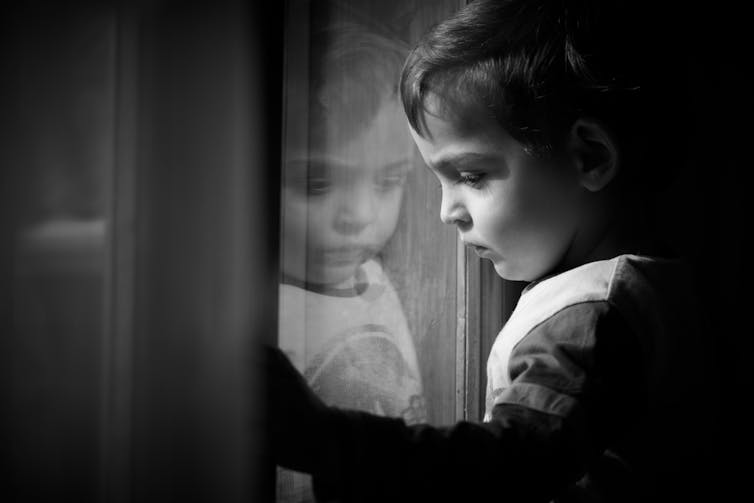
One particularly alarming aspect of these most recent statistics is the steep increase in the number of children living in destitution. In 2022, around 1 million children lived in households who experienced destitution. This is an increase of 88% since the charity’s corresponding 2019 study, and a 186% increase since the 2017 study.
Impact on children
Destitution causes immediate suffering. But for these children, this experience of hardship at a young age will have consequences that last throughout their lives. There is little doubt that both money and environment (housing quality, parental mental health and nutrition, for example) contribute to inequalities in child development. Both of these factors are affected by living in destitution.
When children reach the age of three, stark differences are already evident between those who live in poverty and those who do not. Children from more well-off families have better developed skills in both cognitive tasks, such as understanding basic concepts like colours, letters, numbers and shapes, as well as socio-emotional skills, such as self-control and resilience.
Other factors that are important in shaping children’s skills include housing quality and parental mental health.
Inequalities so early in life can compound and widen over time. These differences between the disadvantaged and the better off can be seen in educational achievement, health and criminal activity.
These types of inequalities were also exacerbated by the pandemic. While pupils everywhere missed out on education, these learning losses were not equally distributed: young people from lower socio-economic background fell further behind.
Despite large increases in funding for the early-year sectors, socio-economic inequalities in child development have not generally narrowed, particularly in recent years.
And now, the sharp increase in the share of children living in destitution does not paint a optimistic picture for the future.
Making a difference
However, many of these issues can be changed by government policy. For example, we know that being hungry at school makes it difficult to concentrate and learn. Measures that address hunger, then, can make a difference. Analysis of a trial of breakfast clubs in English schools, which offered free breakfast to disadvantaged children aged six and seven, found that the free breakfast lead to the equivalent of two months’ extra progress in reading, writing and maths across the course of one year.
Research has shown that many early interventions – such as high quality childcare and education programmes for at-risk children – can have long-lasting positive effects. From an economic perspective, acting early to lift children out of poverty and improve their home and learning environments can be a cost-effective way of helping in the long run, both for individuals as well as wider society.
Another option would be reform of the benefits system to make sure families have enough money to live. In the 2022 Joseph Rowntree Foundation survey of people who used crisis centres, 72% did receive social security benefits – but were still destitute.
This rise in children living in household experiencing destitution must be given serious attention. Successive governmentsclaim to hold upward social mobility as a important goal – that is, the ability of people to move up the economic and social ladder, regardless of their own upbringing and social background. Reducing destitution would not only benefit children right now, but would help them throughout life.
There is now a 21% share of required emissions cuts in the UK’s 2028–32 carbon budget that is not covered by policy.
…
Green Alliance’s Net Zero Policy Tracker analyses the gap between confirmed policy and what would be required for net zero by 2050, according to the UK’s five-yearly carbon budgets.
At the start of 2023, there was a 13% share of required emissions cuts in the 2028–32 carbon budget that was not covered by policy. Following the government’s so-called Energy Security Day in March – which saw 2,800 pages of new energy and climate policy – the share of emissions cuts not covered by policy grew to 15%.
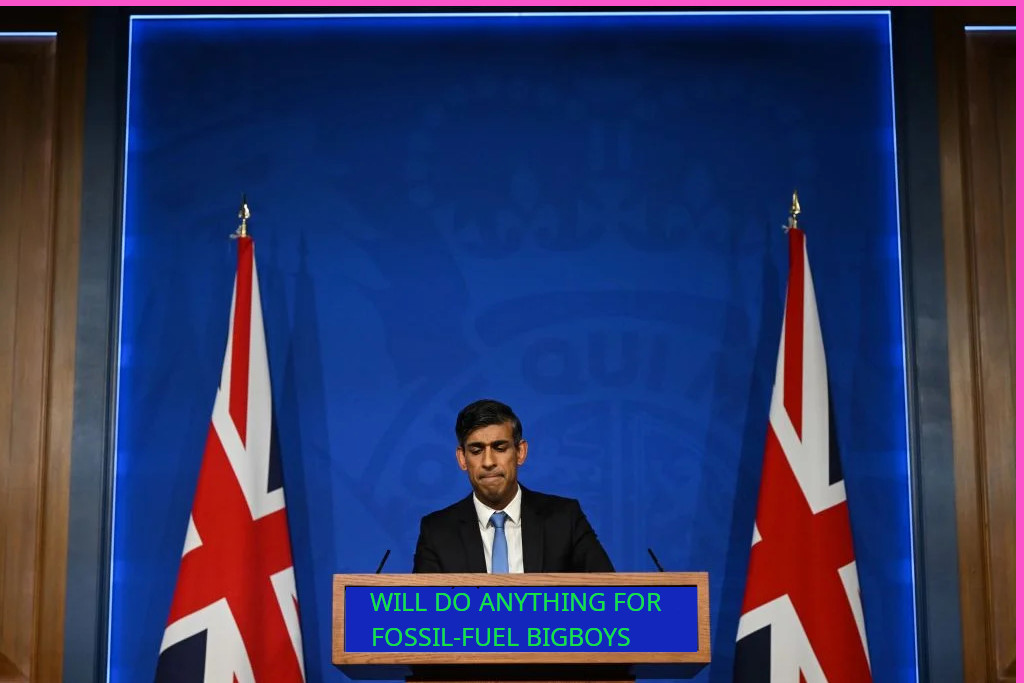
Since Sunak’s latest speech in March, the gap has grown to 21%: a near-doubling of the gap that existed at the start of the year.
“The Prime Minister delayed vital policies that would have lowered energy bills, increased UK energy security, and played a critical role in creating a green and growing economy,” said Chris Venables, Green Alliance’s deputy director of politics and partnerships, in a statement following Sunak’s speech. “This represents a deeply alarming pivot that has undermined business confidence, and put at serious risk the hard-won, cross-party and evidence-based approach we have had to actually reaching our legally binding net-zero targets.”
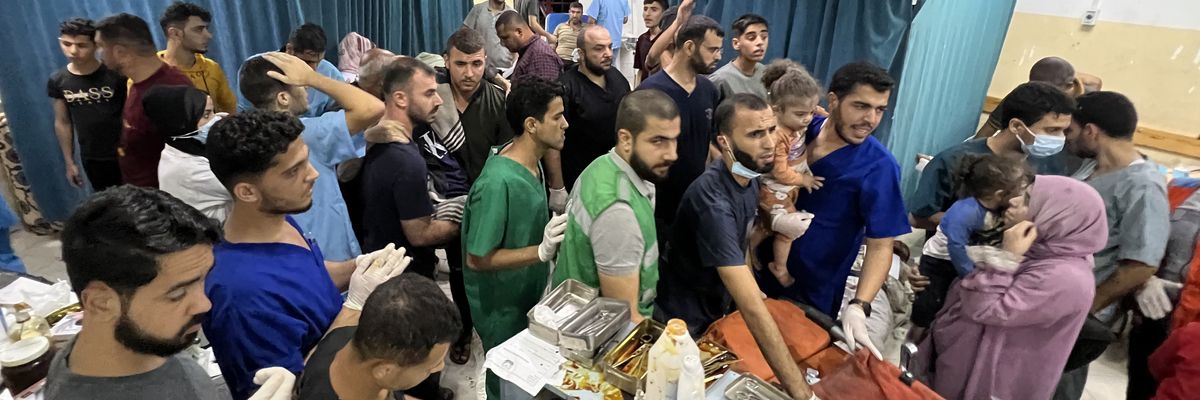
Wounded people receive treatment at the Aqsa Indonesia Hospital after an Israeli attack on the Jibalia refugee camp on November 13, 2023. (Photo: Fadi Alwhidi/Anadolu via Getty Images)
“Israel’s broad-based attack on Gaza’s healthcare system is an attack on the sick and the injured, on babies in incubators, on pregnant people, on cancer patients. These actions need to be investigated as war crimes.”
Human Rights Watch on Tuesday demanded that the Israeli government immediately cease its deadly attacks on Gaza’s hospitals, arguing they’re part of a far-reaching and unlawful assault on the territory’s crumbling healthcare system.
In a new report, HRW examines the impacts of the Israeli bombing campaign, ground invasion, and siege on Gaza’s medical personnel and facilities, a majority of which have stopped functioning due to airstrike damage or lack of critical supplies, from fuel to anesthetics.
“Israel’s repeated attacks damaging hospitals and harming healthcare workers, already hard hit by an unlawful blockade, have devastated Gaza’s healthcare infrastructure,” said A. Kayum Ahmed, special adviser on the right to health at Human Rights Watch. “The strikes on hospitals have killed hundreds of people and put many patients at grave risk because they’re unable to receive proper medical care.”
Over the past week, Israeli forces have surrounded and intensified their bombardment of several hospitals in northern Gaza including al-Shifa, the enclave’s largest medical facility. Israel has also bombed ambulances and people desperately attempting to flee hospitals as they’ve come under attack.
“On November 3, the Israeli military struck a marked ambulance just outside of Gaza City’s al-Shifa hospital,” HRW said. “Video footage and photographs taken shortly after the strike and verified by Human Rights Watch show a woman on a stretcher in the ambulance and at least 21 dead or injured people in the area surrounding the ambulance, including at least 5 children.”
“An IDF spokesperson said in a televised interview that day: ‘Our forces saw terrorists using ambulances as a vehicle to move around. They perceived a threat and accordingly we struck that ambulance,’” the group added. “Human Rights Watch did not find evidence that the ambulance was being used for military purposes.”
HRW similarly questioned Israeli assertions that Hamas is using Gaza’s hospitals, including al-Shifa, for military operations.
Targeting hospitals is a war crime under international law, but medical facilities can lose their protected status if they’re used to commit an “act harmful to the enemy,” according to the International Committee of the Red Cross (ICRC).
HRW argued that Tuesday that “no evidence put forward” by the Israeli government thus far “would justify depriving hospitals and ambulances of their protected status under international humanitarian law.”
“When a journalist at a news conference showing video footage of damage to the Qatar Hospital sought additional information to verify voice recordings and images presented, the Israeli spokesperson said, ‘Our strikes are based on intelligence,’” HRW said. “Even if accurate, Israel has not demonstrated that the ensuing hospital attacks were proportionate.”
The group said Israel “should end attacks on hospitals” and urged the United Nations’ Independent International Commission of Inquiry on the Occupied Palestinian Territory and the International Criminal Court to investigate.
“Israel’s broad-based attack on Gaza’s healthcare system is an attack on the sick and the injured, on babies in incubators, on pregnant people, on cancer patients,” said Ahmed. “These actions need to be investigated as war crimes.”
Repeated Israeli unlawful strikes on hospitals have helped decimate Gaza's health system. No evidence has been offered that justify stripping hospitals of their special protections under law—these attacks should be investigated as war crimes. New from @hrwhttps://t.co/eCvdQJLzEBpic.twitter.com/QLiLIsIuNM
The new analysis came amid horrific reports of the impact that Israel’s assault is having on healthcare workers, patients, and displaced people seeking refuge from near-constant airstrikes.
Reuters reported that people trapped inside al-Shifa Hospital “plan to start burying bodies within the hospital compound” on Tuesday “because the situation has become untenable.” The World Health Organization said over the weekend that the facility is “not functioning as a hospital anymore” due to power outages and a lack of supplies, which have caused the deaths of a number of patients—including premature babies.
Dr. Ahmed Al Mokhallalati, a surgeon at al-Shifa, told Reuters that “the bodies were generating an unbearable stench and posing a risk of infection.”
“Unfortunately there is no approval from the Israelis to even bury the bodies within the hospital area,” he said. “Today … civilians started digging within the hospital to try and bury the bodies on their own responsibility without any arrangements by the Israeli side. Burying 120 bodies needs a lot of equipment, it can’t be by hand efforts and by single-person efforts. It will take hours and hours to be able to bury all these bodies.”
Doctors Without Borders, known internationally as Médecins Sans Frontières (MSF), said that on Tuesday morning, “bullets were fired into one of three MSF premises located near al-Shifa hospital and sheltering MSF staff and their families—over 100 people, including 65 children, who ran out of food last night.”
“Thousands of civilians, medical staff, and patients are currently trapped in hospitals and other locations under fire in Gaza City; they must be protected and afforded safe passage if they wish to leave,” the group added. “Above that, there must be a total and immediate cease-fire.”
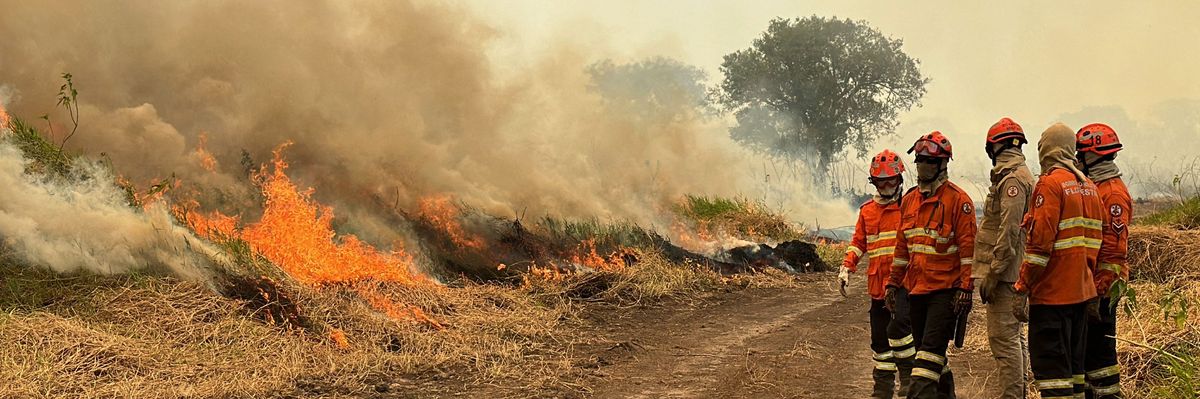
Firefighters tackle forest fires near Porto Jofre, Mato Grosso State, Brazil, on November 13, 2023. (Photo: Rogerio Florentino/AFP via Getty Images)
The United Nations assessment coincided with the release of “the world’s most comprehensive roadmap of how to close the global gap in climate action across sectors.”
That’s how United Nations Secretary-General António Guterres began his Tuesday remarks about a new U.N. Framework Convention on Climate Change (UNFCCC) report on nationally determined contributions (NDCs), or countries’ plans to meet the goals of the Paris agreement, including its 1.5°C temperature target.
The UNFCCC analysis “provides yet more evidence that the world remains massively off track to limiting global warming to 1.5°C and avoiding the worst of climate catastrophe,” said Guterres. “As the report shows, global ambition stagnated over the past year and national climate plans are strikingly misaligned with the science.”
“COP28 must be the place to urgently close the climate ambition gap.”
Under current NDCs from the 195 Paris agreement parties, global greenhouse gas emissions are set to rise by nearly 9% by 2030, compared with 2010 levels, according to the analysis. While that’s a slight improvement on the 10.6% increase from last year’s assessment, it’s still nowhere near the cuts that experts say are needed.
The analysis of NDCs comes as scientists project that 2023 will be the hottest year in 125,000 years and just over two weeks before the U.N. Climate Change Conference (COP28) in Dubai, United Arab Emirates, a summit controversially led by Sultan Ahmed Al Jaber, CEO of the Abu Dhabi National Oil Company.
“As the reality of climate chaos pounds communities around the world—with ever fiercer floods, fires, and droughts—the chasm between need and action is more menacing than ever,” Guterres declared. “COP28 must be the place to urgently close the climate ambition gap.”
📢 Current national climate action plans remain insufficient to limit global temperature rise to 1.5°C.
Much more action and ambition is needed. #COP28 must be the turning point where governments get on track.
U.N. Climate Change Executive-Secretary Simon Stiell echoed Guterres’ call to action, stressing in a statement that the new assessment makes clear governments are merely “taking baby steps to avert the climate crisis.”
“It shows why governments must make bold strides forward at COP28 in Dubai, to get on track,” Stiell said. “This means COP28 must be a clear turning point. Governments must not only agree what stronger climate actions will be taken but also start showing exactly how to deliver them.”
The UNFCCC document was released on the same day as State of Climate Action 2023, which its crafters called “the world’s most comprehensive roadmap of how to close the global gap in climate action across sectors.”
Published under Systems Change Lab, the latter report highlights that only one of the dozens of indicators assessed, the share of electric vehicles in passenger car sales, is on track to meet its 2030 target.
As the publication details:
Recent rates of change for 41 of the 42 indicators across power, buildings, industry transport, forests and land, food and agriculture, technological carbon removal, and climate finance are not on track to reach their 1.5°C-aligned targets for 2030. Worryingly, 24 of those indicators are well off track, such that at least a twofold acceleration in recent rates of change will be required to achieve their 2030 targets. Another six indicators are heading in the wrong direction entirely. Within this subset of lagging indicators, the most recent year of data represents a concerning worsening relative to recent trends for three indicators, with significant setbacks in efforts to eliminate public financing for fossil fuels, dramatically reduce deforestation, and expand carbon pricing systems.
To get back on track, the international community must “dramatically increase growth in solar and wind power” while also phasing out “coal in electricity generation seven times faster—which is equivalent to retiring roughly 240 average-sized coal-fired power plants each year through 2030,” the report warns.
The publication also emphasizes the need for shifting to healthier, more sustainable diets eight times faster, increasing the coverage of rapid transit six times faster, reducing the annual rate of deforestation four times faster, and scaling up global climate finance by nearly $500 billion annually until 2030.
How can we close the gap in climate action to limit global warming to 1.5°C?
“Despite decades of dire warnings and wake-up calls, our leaders have largely failed to mobilize climate action anywhere near the pace and scale needed,” declared the report’s lead author, Sophie Boehm of the World Resources Institute (WRI). “Such delays leave us with very few routes to secure a livable future for all. There’s no time left to tinker at the edges. Instead, we need immediate, transformational changes across every single sector this decade.”
Every world leader is under pressure to ramp up efforts to cut emissions, including U.S. President Joe Biden, who on Tuesday received a letter from hundreds of scientists urging him to “increase the ambition of domestic climate action—including through accelerating a just and equitable clean energy transition, rejecting the expansion of new long-lived fossil fuel infrastructure, investing in climate resilience, and ramping up climate finance—while working toward the strongest possible agreement at COP28.”
The United States now ranks behind China as the top emitting country but still leads the world in cumulative planet-heating emissions. According to a U.S. government assessment released Tuesday, the nation is “warming faster than the global average,” and “the effects of human-caused climate change are already far-reaching and worsening across every region.”