The Mayor of London has given an impassioned defence of his decision to expand the Ultra Low Emission Zone (ULEZ) across all London Boroughs, saying that he had seen the devastating consequences of air pollution.
Appearing on LBC, Khan highlighted how there were now ‘third fewer children being admitted to hospital with asthma related illnesses caused by air pollution’ as a result of ULEZ.
Tweeting a clip of his appearance, the Mayor of London wrote: “I took the decision to expand the ULEZ because experts believe it will save lives. It wasn’t an easy one, but we cannot delay action when toxic air is linked with conditions like cancer and dementia. Air pollution particles have even been found in the brains of unborn babies.”
Khan went on to tell listeners on LBC: “We know that ULEZ is effective. How do we know that? Because in central London when we introduced the ULEZ we saw a reduction of almost 50% of the toxicity in our air, there are third fewer children being admitted to hospital with asthma related illnesses caused by air pollution, we’ve expanded it in London and we’ve seen a further improvement of 20% in our air.
Parliamentary committees need to investigate water company accounting, especially as they are continuing with the practices that brought down Carillion.
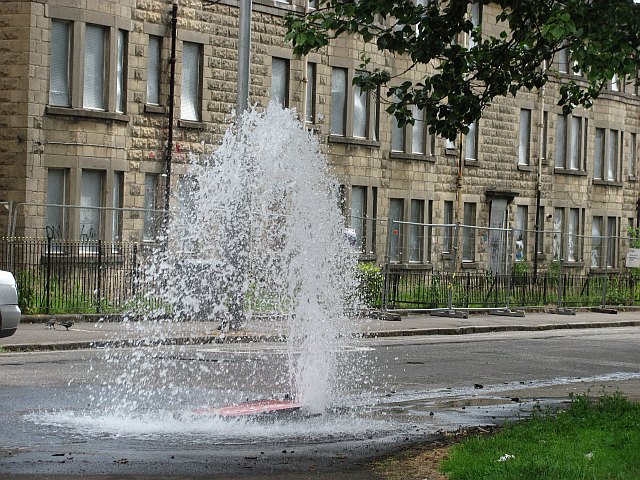
Image of a burst water main.
Prem Sikka is an Emeritus Professor of Accounting at the University of Essex and the University of Sheffield, a Labour member of the House of Lords, and Contributing Editor at Left Foot Forward.
Ever since its privatisation in 1989, the water and sewage industry in England and Wales has set new standards in ripping people off.
Profits are made by not plugging water leaks and by dumping tons of sewage in rivers and seas. More than one trillion litres of water is lost to leaks from crumbling pipes each year. In 2022, raw sewage was dumped into rivers and seas 824 times a day, nearly 301,000 times a year over 1.75m hours. Despite higher demand, no new reservoirs have been built since privatisation. With captive customers and no competition, companies have hiked charges by 40% in real terms. The biggest winners are shareholders. More than 90% of the nine water companies are owned by overseas investors.
Since privatisation, companies have paid £72bn in dividends and another £15bn is expected by the 2030. These are largely funded by over £60bn of debt. To soothe public anxieties, Ministers claim that since 1989 water companies have invested £190bn. Such claims need to be treated with caution as the companies have a history of murky accounting practices.
Thames Water is England’s’ biggest water company. Since 2010, it has been sanctioned 92 times by the regulators and paid fines of £163m. Since privatisation, it has paid £7.2bn in dividends and has debts of around £14bn.
Taking cue from the water company, in June 2023 a Minister told parliament that “Thames Water itself has not paid any dividends for the last six year”. Of course, water companies are not operating as not-for-profit organisations and are masters of financial engineering and obfuscation.
Page 43 of the company’s 2022-23 financial report describes £45m payment (£37m for 2022) to its immediate parent company Thames Water Utilities Holdings Limited as “dividend” which then forwards it to Thames Water Utilities Limited and is still described as “dividend”. The same page then claims that it is not really a dividend because its purpose is to “solely to service debt obligations and group related costs of other companies within the wider Kemble Water Group”. Page 22 of the 2022 accounts of Thames Water Utilities Holdings Limited shows “Dividend Income” of £37.1m. Anything described as a “dividend” in the accounts is a dividend and in the last two years alone this amounts to £82m (£45m + £37m). Since privatisation, vast amounts are likely to have travelled via this route to the company’s ultimate controllers but are not included in the £7.2m of dividends.
Yorkshire Water is also engaged in sleight of hands. Since 2010, it has paid £1.2bn in dividends and claims to have stopped paying dividends from 2017-18. However, page 137 of its 2022-23 financial report states that the company paid £62.3m “dividends” to its parent company. Its 2021-22 accounts (page 99) state that “the Board of Yorkshire Water has approved the payment of £52.6m in dividends.”
… [article continues discussing Water companies’ financial obfuscation.]
Jeremy Corbyn, the former Labour leader who was banned from standing as a candidate for the party earlier this year, has taken an almighty swipe at Keir Starmer and Rachel Reeves, after it was confirmed that the pair would not look to implement a wealth tax if elected into office.
…
Keir Starmer also confirmed last month that would retain the two-child benefit limit – despite growing calls from poverty campaigners for the cap to be abandoned. The controversial stance has divided politicians within the Labour Party.
It’s another questionable policy u-turn from Starmer, and it hasn’t gone unnoticed by Jeremy Corbyn. The two-time Prime Ministerial candidate ripped into Sir Keir, saying that a wealth tax could easily fund an extension to the two-child cap.
Corbyn also urged his successor to ‘side with those in need’:
“With the money raised from a 1-2% wealth tax on assets over £10 million, we could afford to scrap the two-child benefit cap SEVENTEEN times over. Politics is about choices — and we should be on the side of those in need, not those with greed.” | Jeremy Corbyn
Rupert Murdoch’s The Sun newspaper has published a story about BBC news presenter Huw Edwards – although without initially naming him – paying a 17 year-old £35,000 for intimate photographs with the money used to finance (his) crack-cocaine addiction. The story appears to be seriously factually flawed and published despite being informed by the young man concerned that the story was incorrect. The story clearly suggested that Edwards engaged in illegality by procuring intimate photographs from a 17 year-old when this was known to be untrue by The Sun newspaper.
Rupert Murdoch’s newspaper is facing serious questions over its reporting and ethical standards, after it alleged Edwards paid a 17-year-old for explicit images – only for police to conclude there was no evidence to support this allegation of serious criminal wrongdoing.
Days later, his wife said Edwards is in a hospital dealing with “serious mental health issues” and the newspaper is rapidly backtracking on its original story. Extraordinarily, on Wednesday night the Sun insisted its initial claim that the presenter had given a young person “more than £35,000 since they were 17 in return for sordid images” was not a suggestion of criminal activity.
Instead, the newspaper blamed other media outlets for misinterpreting its reporting and leading to the police getting involved, saying: “We must also re-emphasise that the Sun at no point in our original story alleged criminality and also took the decision neither to name Mr Edwards nor the young person involved in the allegations.”
Even before the police had cleared Edwards of illegal behaviour, doubts started to emerge over the Sun’s key allegation that he bought pictures from a 17-year-old. The young person in question, now an adult aged 20, issued a statement on Monday through their lawyer saying the allegations were “rubbish”.
The Prime Minister ‘inadvertently’ broke the MP’s code of conduct due to ‘confusion’
The Prime Minister has been brutally ridiculed after the parliament’s standards commissioner declared he had ‘inadvertently’ broken the MPs’ code of conduct, for failing to declare his wife’s shares in a childcare company set to benefit from government policy.
Concerns over shares Akshata Murty held in the childcare company Koru Kids were raised back in April, when the company was listed as one of six childminder agencies in the Tory’s pilot childminder incentive.
Sunak supposedly got ‘confused’ over government rules so failed to declare his interests which led to the conclusion by the parliamentary commissioner for standards, Daniel Greenberg, that he had ‘inadvertently’ broken the rules.
His ‘confusion’ was around the difference between registering and declaring his interests, with the inquiry stating that no further action will be taken.
However, his ‘inadvertent’ rule breaking to the financial benefit of his family has raised many eyebrows. With public figures pointing to a wider theme of Tory MPs excusing themselves from misconduct.
The claim that the PM’s failure to declare his wife’s investment in a childcare company subsidised by his Government was ‘inadvertent’ is open to question
…
Such ‘confusion’ about what interests the Prime Minister needs to declare appears to be a regular occurrence for the Prime Minister, however.
Here’s all the other times Rishi Sunak has appeared ‘confused’ about which conflicts of interests he should and shouldn’t publicly declare.