Category: politics

  • ‘The Insurance Industry Is the Fossil Fuel Industry’: 

    Spread the love

    Original article by Janine Jackson republished from FAIR under a Creative Commons Attribution-NonCommercial-NoDerivs 3.0 Unported License.

    CounterSpin interview with Derek Seidman on insurance and climate

    Janine Jackson interviewed writer/researcher Derek Seidman about insurance and climate  for the October 4, 2024, episode of CounterSpin. This is a lightly edited transcript.

    Janine Jackson: As we watch images of devastation from Hurricane Helene, it’s hard not to hold—alongside sadness at the obvious loss—anger at the knowledge that things didn’t have to be this way. Steps could have been, still could be taken, to mitigate the impact of climate change, and making weather events more extreme, and steps could be taken that help people recover from the disastrous effects of the choices made.

    As our guest explains, another key player in the slow-motion trainwreck that is US climate policy—along with fossil fuel companies and the politicians that abet them—is the insurance industry, whose role is not often talked about.

    Washington Post (9/3/24)

    Derek Seidman is a writer, researcher and historian. He contributes regularly to Truthout and to LittleSis. He joins us now by phone. Welcome to CounterSpin, Derek Seidman.

    Derek Seidman: Hey, thank you. Great to be here.

    JJ: In your super helpful piece for Truthout, you cite a Washington Post story from last September. Here’s the headline and subhead:

    Home Insurers Cut Natural Disasters From Policies as Climate Risks Grow:

    Some of the largest US insurance companies say extreme weather has led them to end certain coverages, exclude natural disaster protections and raise premiums.

    I think that drops us right into the heart of the problem you outline in that piece. What’s going on, and why do you call it the insurance industry’s “self-induced crisis”?

    DS: Thank you. Well, certainly there is a growing crisis. The insurance industry is pulling back from certain markets and regions and states, because the costs of insuring homes and other properties are becoming too expensive to remain profitable, with the rise of extreme weather. And so we’ve seen a lot of coverage in the past few months over this growing crisis in the insurance industry.

    Derek Seidman: “The insurance industry itself is a main actor in driving the rise of extreme weather, through its very close relationship to the fossil fuel industry.”

    But one of the critical things that’s left out of this is that the insurance industry itself is a main actor in driving the rise of extreme weather, through its very close relationship to the fossil fuel industry. And in this narrative in the corporate media, the insurance industry on the one hand and extreme weather on the other hand, are often treated like they’re completely separate things, and they’re just sort of coming together, and this “crisis” is being created, and it’s a real problem that the connections aren’t being made there.

    So I guess a couple things that should be said, first, are that the insurance industry is the fossil fuel industry, and its operations could not exist without the insurance industry.

    We can look at that relationship in two ways. So first, of course, is through insurance. The insurance giants, AIG, Liberty Mutual and so on and so on, they collectively rake in billions of dollars every year in insuring fossil fuel industry infrastructure, whether that’s pipelines or offshore oil rigs or liquified natural gas export terminals. This fossil fuel infrastructure and its continued expansion, this simply could not exist without underwriting by the insurance industry. It would not get its permit approvals, it would just not be able to operate, it couldn’t attract investors and so on. So that’s one way.

    Another way is that, and this is something a lot of people might not be aware of, but the insurance industry is an enormous investor in the fossil fuel industry. Basically, one of the ways the insurance industry makes money is it takes the premiums, and it pools a chunk of it and invests those. So it’s a major investor. And the insurance industry, across the board, has tens of billions of dollars invested in the fossil fuel industry.

    And this is actually stuff that anybody can go and look up, because some of it’s public. So, for example, the insurance giant AIG, because it’s a big investor, it has to disclose its investments with the SEC. And earlier this year, AIG disclosed that, for example, it had $117 million invested in ExxonMobil, $83 million invested in Chevron, $46 million in Conoco Phillips, and so on and so on.

    Jacobin (2/7/22)

    So, on the one hand, you have this hypocritical cycle where the insurance industry is saying to ordinary homeowners, who are quite desperate, we need to jack up the price on your premiums, or we need to pull away altogether, we can’t insure you anymore—while, on the other hand, it’s driving and enabling and profiting from the very operations, fossil fuel operations, that are causing this extreme weather in the first place, that the insurance industry is then using to justify pulling back from insuring just regular homeowners.

    JJ: This is a structural problem, clearly, that you’re pointing to, and you don’t want to be too conspiratorial about it. But these folks do literally have dinner with one another, these insurance executives and the fossil fuel companies. And then I want to add, you complicate it even further by talking about knock-on effects, that include making homes uninsurable. When that happens, well, then, that contributes to this thing where banks and hedge funds buy up homes. So it’s part of an even bigger cycle that folks probably have heard about.

    DS: Yeah, absolutely. This whole scenario, it’s horrible, because it impacts homeowners and renters. If you talk to landlords, they say that the rising costs of insurance are their biggest expense, and they are, in part, taking that out on tenants by raising rents, right?

    But it also really threatens this global financial stability. I mean, with the rise of extreme weather, and homes becoming more expensive to insure, or even uninsurable, home values can really collapse. And when they collapse, aside from the horrific human drama of all that, banks are reacquiring foreclosed homes that, in turn, are unsellable because of extreme weather, and they can’t be insured.

    The big picture of all this is that it leads to banks acquiring a growing amount of risky properties, and it can create a lot of financial instability. And we saw what happened after 2008, as you mentioned, with private equity coming in and scooping up homes. And so, yeah, it creates a lot of systemic financial instability, opens the door for financial predators like private equity and hedge funds to come in.

    JJ: And it seems to require an encompassing response, a response that acknowledges the various moving pieces of this. I wonder, finally, is there responsive law or policy, either on the table now or just maybe in our imagination, that would address these concerns?

    Insure Our Future

    DS: There are organizers that are definitely starting to do something about it, and there are some members of Congress that are also starting to do something about it.

    For this story, I interviewed some really fantastic groups. One of them is Insure Our Future, and this is sort of a broader campaign that is working with different groups around the country, and really demanding that insurers stop insuring new fossil fuel build-out, that they phase out their insurance coverage for existing fossil fuels, for all the reasons that we’ve been talking about today.

    At the state level, there’s groups that are doing really important and interesting things. So one of the groups that I interviewed was called Connecticut Citizen Action Group, and they’ve been working hard, in coalition with other groups in Connecticut, to introduce and pass a state bill that would create a climate fund to support residents that are impacted by extreme weather. (Connecticut has seen its fair share of extreme weather.) And this fund would be financed by taxing insurance policies in the state that are connected to fossil fuel projects. So it’s also a disincentive to invest in fossil fuels.

    In New York, a coalition of groups and lawmakers just introduced something called the Insure Our Communities bill. And this would ban insurers from underwriting new fossil fuel projects, and it would set up new protections for homeowners that are facing extreme weather disasters.

    I spoke to organizers in Freeport, Texas, with a group called Better Brazoria, and these are people that are on the Gulf Coast, really on the front lines. And Better Brazoria is just one of a number of frontline groups along the Gulf Coast that are organizing around the insurance industry, and they’re trying to meet with insurance giants, and say to them, “Look, what you’re doing is, we’re losing our homeowner insurance while you’re insuring these risky LNG plants that are getting hit by hurricanes, and fires are starting,” and trying to make the case to them that this is just not even good business for them.

    And then, more recently, you’ve seen Bernie Sanders and others start to hold the insurance industry’s feet to the fire a little more, opening up investigations into their connection to the fossil fuel industry, and how this is creating financial instability.

    Truthout (9/27/24)

    So I think this is becoming more and more of an issue that people are seeing is a real problem for the financial system, and it’s something that we should absolutely think about when we think about the climate crisis, and the broader infrastructure that’s enabling the fossil fuel industry to exist, and continue its polluting operations that are causing the climate crisis and extreme weather. So I think we’re going to see only more of this going forward.

    JJ: All right, then, we’ll end it there for now.

    We’ve been speaking with Derek Seidman. You can find his article, “As Florida Floods, Insurance Industry Reaps What It Sowed Backing Fossil Fuels,” on Truthout.org. Thank you so much, Derek Seidman, for joining us this week on CounterSpin.

    DS: Thank you.

    FAIR’s work is sustained by our generous contributors, who allow us to remain independent. Donate today to be a part of this important mission.

    Original article by Janine Jackson republished from FAIR under a Creative Commons Attribution-NonCommercial-NoDerivs 3.0 Unported License.
  • Fossil-Fueled Hurricane Milton Hammers Florida With Violent Winds, Massive Flooding

    Spread the love

    Original artitcle by Jake Johnson republished from Common Dreams under Creative Commons (CC BY-NC-ND 3.0). 

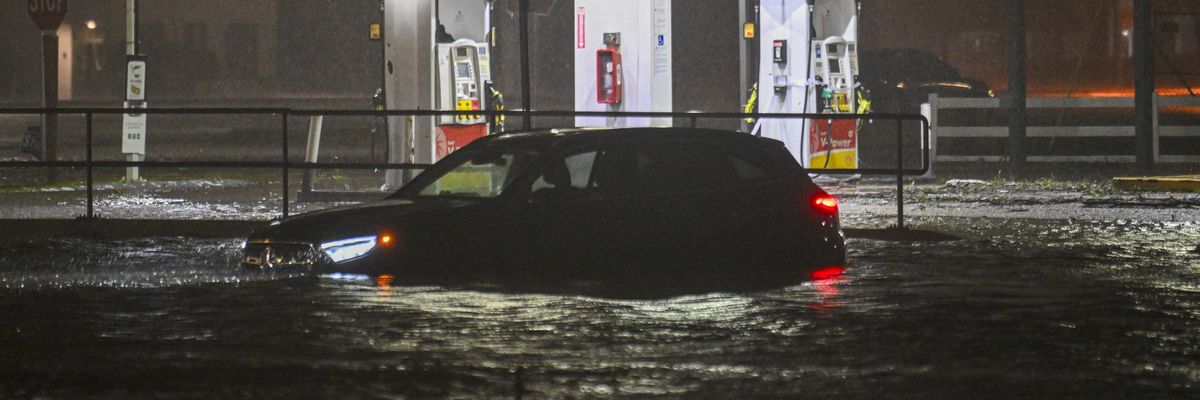
    A vehicle is stranded on a water-flooded street after Hurricane Milton made landfall in Brandon, Florida on October 9, 2024.
     (Photo: Miguel J. Rodriguez Carrillo/AFP via Getty Images)

    “If politicians had listened to scientists decades ago, and worked to gradually rein in fossil fuel pollution, the ocean wouldn’t be so boiling hot—and Hurricane Milton wouldn’t have had the fuel to balloon into such a monster storm.”

    Hurricane Milton made landfall south of Tampa, Florida late Wednesday as a Category 3 storm after rapidly intensifying in the Gulf of Mexico, bringing devastating flooding and powerful winds that destroyed homes and knocked out power for millions.

    Several tornadoes triggered by the monstrous storm—which was made stronger by ocean temperatures pushed higher by fossil fuel-driven climate change—killed an unspecified number of residents on Florida’s Atlantic Coast, according to local authorities.

    The Associated Press reported that “about 125 homes were destroyed before the hurricane came ashore, many of them mobile homes in communities for senior citizens.”

    More than a million Floridians were under evacuation orders as Milton barreled toward the state.

    While Milton was downgraded to a Category 2 storm shortly after making landfall and was tracking away from Florida’s East Coast Thursday morning, the National Weather Service warned that “life-threatening storm surge, extreme winds, and flooding rains will continue to occur.”

    Video footage posted to social media provided a glimpse of the flooding in downtown Tampa:

    Experts characterized Milton, which followed closely on the heels of Helene, as a historically powerful hurricane, pointing to its rapid transformation from a tropical storm into a Category 5 hurricane.

    “Milton is the quickest storm on record to rapidly intensify into a Category 5 in the Gulf of Mexico,” according to CBS News meteorologist Nikki Nolan.

    Ahead of Milton’s arrival in Florida, climate advocates and scientists pointed to the role of the fossil fuel industry and its political allies in misleading the public about the impacts of oil, gas, and coal emissions and obstructing action to confront the threat posed by warming temperatures.

    “Things didn’t have to be this way,” Kathy Baughman McLeod, the CEO of Climate Resilience for All, wrote Wednesday. “If politicians had listened to scientists decades ago, and worked to gradually rein in fossil fuel pollution, the ocean wouldn’t be so boiling hot—and Hurricane Milton wouldn’t have had the fuel to balloon into such a monster storm.”

    Original artitcle by Jake Johnson republished from Common Dreams under Creative Commons (CC BY-NC-ND 3.0). 

  • BP Scraps Target of Reducing Oil Production by 2030

    Spread the love

    https://www.ecowatch.com/bp-abandons-oil-reduction-target-2030.html

    Climate activists protested against BP at the energy giant’s annual general meeting in Aberdeen, Scotland on May 21, 2019. Karen Murray / Friends of the Earth Scotland.

    Oil major BP has scrapped its goal of reducing oil and gas production by the end of the decade, angering environmental groups who say the company is prioritizing profits over the planet.

    According to three sources who have knowledge on the matter, BP CEO Murray Auchincloss scaled back the company’s energy transition plans in order to regain investor confidence, reported Reuters.

    “As Murray said at the start of the year in our fourth-quarter results, the direction is the same but we are going to deliver as a simpler, more focused and higher-value company,” a spokesperson for BP said, as The Times reported.

    In 2020, BP unveiled an ambitious strategy to reduce its production by 40 percent, while quickly ramping up renewables by 2030, reported Reuters. In February of 2023, the London-based company pared back the reduction goal to 25 percent, as investors concentrated on near-term profits instead of the energy transition.

    In 2022, the oil giant recorded record profits of $28 billion, The Guardian reported.

    “It’s clear that Auchincloss is hell-bent on prioritising company profits and shareholder wealth above all else as extreme floods and wildfires rack up billions of dollars in damages, destroying homes and lives all over the world,” said Philip Evans, senior climate campaigner of Greenpeace UK, as reported by The Guardian.

    …

    https://www.ecowatch.com/bp-abandons-oil-reduction-target-2030.html

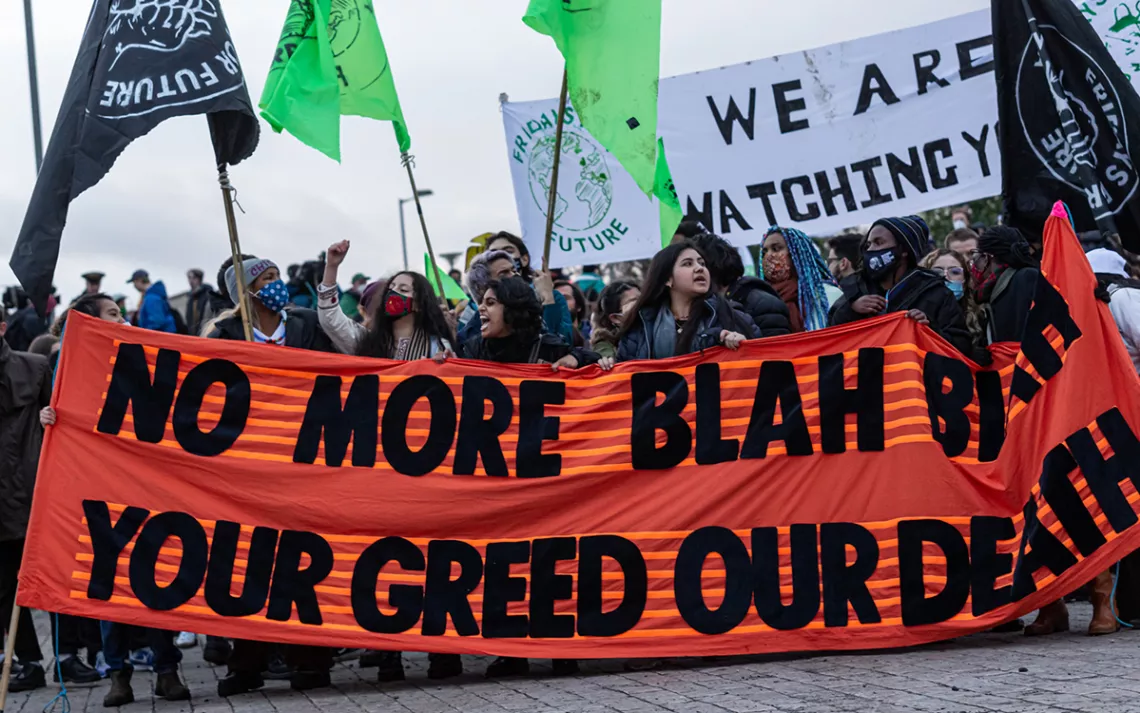
    People march through Glasgow, a demonstration led by Fridays for Future. | Photo courtesy of Extinction Rebellion Scotland and Simone Rudolphi
    People march through Glasgow, a demonstration led by Fridays for Future. | Photo courtesy of Extinction Rebellion Scotland and Simone Rudolphi

  • UK psychological warfare unit collaborated with Israeli army

    Spread the love

    …

    An IDF spokesman falsely claims Hamas has a command centre under Gaza’s largest hospital. (Photo: IDF)

    Britain secretly advised the Israeli military on psychological warfare techniques, Declassified has found.

    Leaked documents reveal how the British army’s 77th brigade discussed strategy and tactics with the Israel Defence Forces (IDF).

    The 77th brigade uses psychological operations and social media to help fight wars “in the information age”.

    It specialises in “non-lethal forms of psychological warfare” such as cyber-attacks, propaganda activities, and counter-insurgency operations online.

    Israel’s own information operations have involved using fabricated videos and fake social media accounts to defend the bombing of Gaza.

    Two exchanges with the IDF took place at the 77th brigade’s barracks in Hermitage, Berkshire, between 2018-19.

    Leaked documents about the encounters originate from a hack of the IDF by a group called “Anonymous for Justice”. The dataset was subsequently published by Distributed Denial of Secrets.

    Although some of the documents reference “secret” matters, there is strong public interest in reporting on their contents.

    Israel is being investigated by international courts for genocide and war crimes in Gaza, while the UK Ministry of Defence (MoD) refuses to answer freedom of information requests or parliamentary questions about its military assistance to Israel.

    Professor Paul Rogers, an honorary fellow of the Joint Services Command and Staff College, commented: “This is a highly significant revelation that shows the extent of high level links between Israeli and British counter-insurgency and psychological warfare operators – and, as ever, the need for greater transparency from the military right across the board”.

    An MoD spokesperson said: “We regularly conduct non-operational defence engagements at staff level with partners across the globe. All engagement focuses on best practices and is in compliance with International Humanitarian Law”.

    The department refused to clarify whether psychological warfare collaboration with Israel was ongoing.

    …

    Zionist Keir Starmer is quoted "I support Zionism without qualification." He's asked whether that means that he supports Zionism under all circumstances, whatever Zionists do.
    Zionist Keir Starmer is quoted “I support Zionism without qualification.” He’s asked whether that means that he supports Zionism under all circumstances, whatever Zionists do.
    UK Foreign Secretary David Lammy says that UK is suspeding 30 of 350 arms licences to Isreal. He also confirms the UK government's support for Israel's Gaza genocide.
    UK Foreign Secretary David Lammy says that UK is suspeding 30 of 350 arms licences to Israel. He also confirms the UK government’s support for Israel’s Gaza genocide.
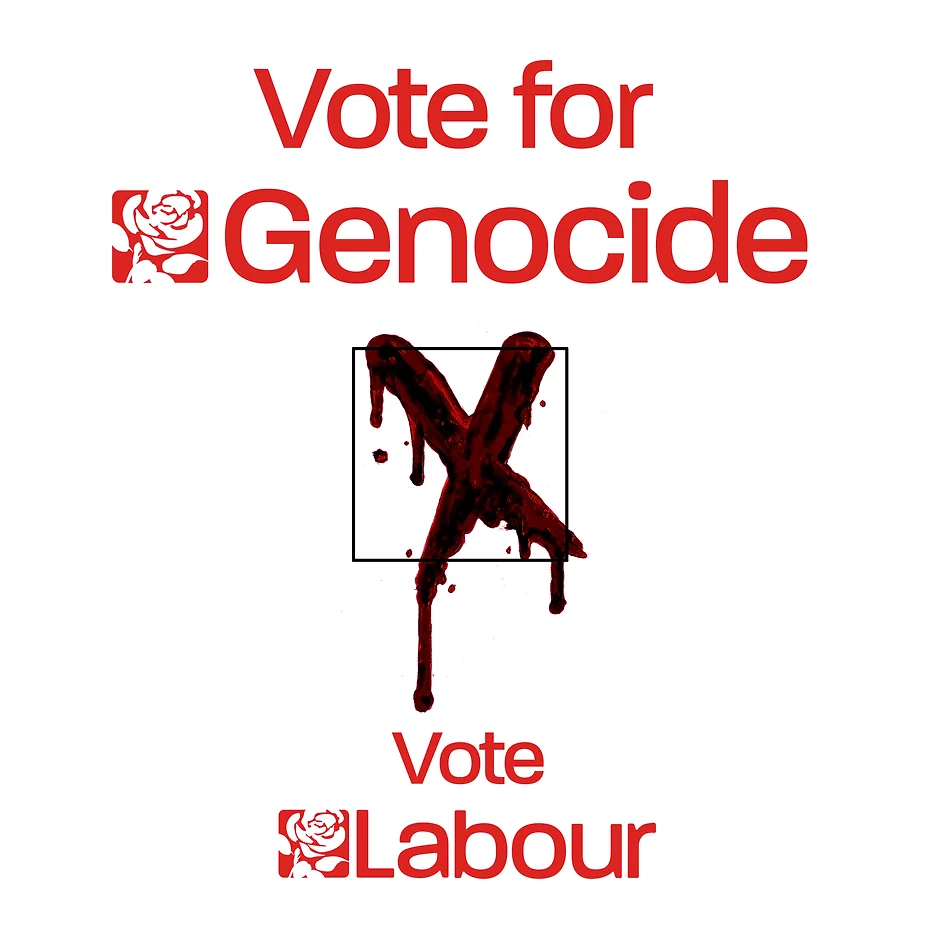
    Vote For Genocide Vote Labour.
    Vote For Genocide Vote Labour.
  • Keir Starmer’s 100 spy flights over Gaza in support of Israel

    Spread the love

    …

    Britain’s Labour government has ordered 100 spy flights over Gaza to aid Israeli intelligence, it can be revealed. 

    This amounts to an average of more than one a day since Keir Starmer became prime minister on July 5.

    Starmer’s administration suspended 30 arms export licences for Israel last month, citing “a clear risk” the weapons might be used in a “serious violation” of international law. 

    But the spy flights, which began in December under the previous Conservative government, have continued apace. 

    Although the Ministry of Defence (MoD) refused to give details, Declassified independently found the flights departing from Akrotiri – Britain’s sprawling air base on Cyprus – to fly over Gaza on Starmer’s watch. 

    During Labour’s first full month in office, in August, the Royal Air Force (RAF) flew 42 flights over the devastated Palestinian territory. 

    The new information is likely to raise further concerns about British complicity in war crimes in Gaza, with pro-Palestine activists protesting outside Akrotiri on Sunday. 

    International Criminal Court (ICC) chief prosecutor Karim Khan has requested arrest warrants for Israeli prime minister Benjamin Netanyahu and his defence minister Yoav Gallant.

    The World Court is also investigating Israel for what it has called a “plausible” genocide in Gaza.

    On Monday evening, as Israel invaded Lebanon, Starmer sent a huge A400M military transport plane from Akrotiri to Tel Aviv. The vehicle can carry 116 fully-equipped soldiers and a 81,600lb payload.

    Then on Tuesday evening, the UK dispatched Typhoon fighter jets from Cyprus to defend Israel against missiles from Iran.

    …

    Zionist Keir Starmer is quoted "I support Zionism without qualification." He's asked whether that means that he supports Zionism under all circumstances, whatever Zionists do.
    Zionist Keir Starmer is quoted “I support Zionism without qualification.” He’s asked whether that means that he supports Zionism under all circumstances, whatever Zionists do.
    UK Foreign Secretary David Lammy says that UK is suspeding 30 of 350 arms licences to Isreal. He also confirms the UK government's support for Israel's Gaza genocide.
    UK Foreign Secretary David Lammy says that UK is suspeding 30 of 350 arms licences to Israel. He also confirms the UK government’s support for Israel’s Gaza genocide.
    Vote For Genocide Vote Labour.
    Vote For Genocide Vote Labour.