Category: politics

  • DeSmog Launches Investigation Into Food and Farming Misinformation Ahead of EU Elections

    Spread the love

    Original article by Clare Carlile republished from DeSmog.

    Credit: Alberto Perinot/X

    The far right is set to piggyback on agricultural discontent to capture votes in June.

    A large blue billboard stands outside a park in the town of Conegliano in northern Italy. On the left, a man pops a vast cricket into his mouth. On the right, are the words, “Let’s Change Europe before it changes us” – and the dates of the upcoming elections.  

    The poster – an advert for the country’s radical right party Lega per Salvini Premier – refers to a conspiracy theory that has swept across Italy in the last 18 months. Elites in Brussels are planning to replace meat with bugs and are using environmental regulations to do so, or so the theory goes.

    As millions of voters across the EU prepare to head to the polls from 6-9 June, conspiracy theories and misinformation on food and farming could pull voters towards the far right and parties opposing climate-friendly laws.

    In the face of this onslaught of misinformation, DeSmog is launching a new series that investigates misleading claims and their impact on climate policy in the farming sector. 

    Over the next two months DeSmog will monitor the spread of misinformation across the continent, working in seven different languages. We will look to identify false claims and uncover who is spreading these narratives online.

    Agriculture accounts for 11 percent of carbon emissions in the EU, and has contributed to plummeting bird and bee numbers. But tackling the sector’s harms has become one of the most divisive issues on the continent, with tractors blocking highways across Europe during demonstrations this year. 

    The protests – attended by thousands of farmers in several countries – reflected a wide range of concerns, from unfair food prices to calls for protection from increasingly extreme weather. Yet this complexity was barely represented in the media where demonstrations were cast as opposition to environmental measures. 

    Far-right groups also weaponised the protests. In January, Jordan Bardella, lead EU candidate for France’s National Rally (formerly National Front), accused the country’s President Emmanuel Macron of pursuing “the death of agriculture” while Santiago Abascal, leader of Spain’s far-right party Vox, wrote to Macron demanding an end to “aggressions” against Spanish producers, who he described as “victims” of EU policy.

    In the eyes of its critics, green reforms agreed in the last EU term would destroy farming. Plans to cut chemical use and make farmers protect natural habitats would lead to monumental job losses, they claim. The same arguments are used by agricultural corporations that stand to lose out if green reforms are enacted.

    The most extreme opponents, including radical right think tanks and hardline farming groups, see green reforms as part of a plan by Brussels bureaucrats to control the industry and “grab land”. 

    These claims, however, contradict the facts: last year, more than 6,000 scientists said that such nature-friendly measures were “the cornerstone of food security and human health”. 

    The policies that are currently being attacked aim to tackle climate breakdown – the biggest threat to producers across the EU, who are already feeling the effects of global heating. A “staggering portion” of the continent has been exposed to high drought risk in recent years, according to the European Drought Observatory, leading to widespread crop losses.

    Right-wing and far-right groups stand to make massive gains from stoking these tensions. A recent study by the EU’s Committee of the Regions showed that discontented rural areas could be a major source of votes.  

    This series will shine a light on those candidates that are weaponising false claims for electoral gain.

    Original article by Clare Carlile republished from DeSmog.

  • South Asia sizzles: Record heatwave and extreme weather blamed on climate crisis

    Spread the love

    https://globalvoices.org/2024/05/06/south-asia-sizzles-record-heatwave-and-extreme-weather-blamed-on-climate-crisis/#

    Screenshot from YouTube video by Abhi and Niyu via Zoom.Earth. April 7, 2024. Fair use.

    A scorching heatwave is ravaging South and Southeast Asia, impacting hundreds of millions with its intense heat. With April temperatures shattering previous records, the region is witnessing extreme weather patterns, wildfires, and tragic heat-related deaths. Schools have been forced to close, agricultural production and storage of perishable foods have been disrupted, and the risk of heatstroke and other health problems has risen significantly.

    Climate scientist Roxy Koll tweeted:

    The scientists attribute the heatwave to the diminishing influence of the 2023–2024 El Niño event, which started in July 2023.

    Forest fires and heatstroke deaths in Bangladesh

    Bangladesh has experienced increasingly extreme weather conditions in recent years, and April 2024 stands out as the hottest month since 1948, with average temperatures ranging from 40–42 degrees Celsius (104–107.6 degrees Fahrenheit) in over 80 percent of the country.

    Climate journalist Rafiqul Montu posted on X (formerly Twitter):

    Wildfires erupt amid extreme heat and dry conditions

    Typically in April, Bangladesh receives 130.2 millimetres of rain, however, this year, there was almost none. The government announced the closure of government schools affecting 33 million students nationwide, while private schools with better facilities transitioned to online education. In just one week of April, over 10 deaths across the country were attributed to heatstroke.

    However, the most notable impact was the wildfires in different parts of the Sundarbans Reserve Forest, the world’s largest mangrove forest. Sundarbans is a remote area, lacking adequate firefighting resources nearby. The Forest Department, along with fire service personnel, local villagers, and other volunteers, could only start firefighting efforts 17 hours after the first fire. As of the time of writing this report, a significant portion of the huge fire in the Amurbunia area of the Chandpai range is still burning, posing a threat to its rich biodiversity.

    …

    Article continues at https://globalvoices.org/2024/05/06/south-asia-sizzles-record-heatwave-and-extreme-weather-blamed-on-climate-crisis/#

  • ‘War Criminals’: IDF Strikes Rafah After Hamas Agrees to Cease-Fire

    Spread the love

    [This article remains relevant despite having been published 2 days ago]

    Original article by JESSICA CORBETT republished from Common Dreams under Creative Commons (CC BY-NC-ND 3.0).

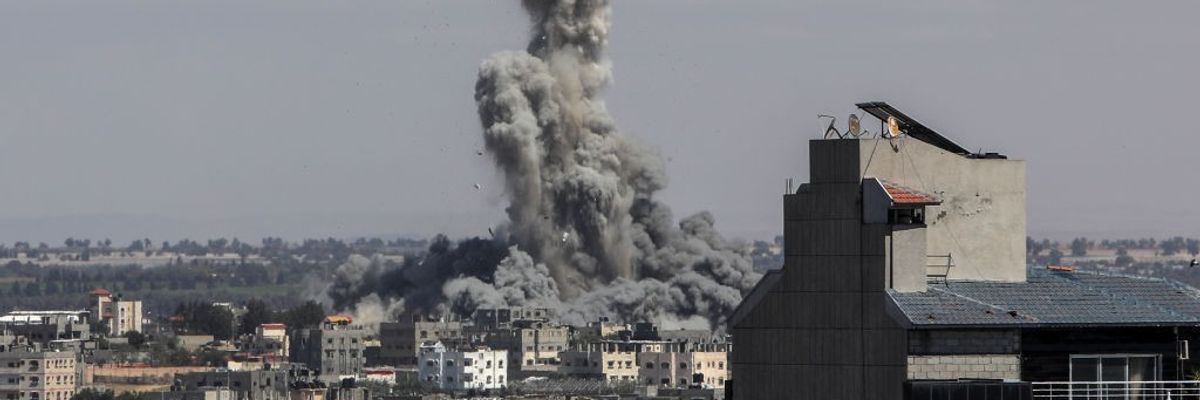
    Smoke rises from buildings after Israeli strikes on Rafah, Gaza on May 6, 2024.  (Photo: Abed Rahim Khatib/Anadolu via Getty Images)

    “Why?” asked Israeli lawmaker Ofer Cassif. “Because killing Palestinians is more important for the Israeli government than saving Israelis.”

    Israel on Monday launched long-awaited strikes on Rafah in the southern Gaza Strip despite Hamas publicly confirming it agreed to a cease-fire and hostage release proposal from Egyptian and Qatari mediators.

    The Israel Defense Forces said on social media that “the IDF is currently conducting targeted strikes against Hamas terror targets in eastern Rafah,” the city to which over a million Palestinians have fled since October 7, when Israel launched a retaliatory war that has already killed at least 34,735 people in Gaza and wounded another 78,108.

    Earlier Monday, the IDF had dropped leaflets directing residents and refugees in that part of Rafah to relocate to a strip along Gaza’s coast, ignoring warnings from the international community and humanitarian groups that a full-scale Israeli attack on the crowded city would further endanger civilians and relief efforts.

    “It is obvious Netanyahu wants this genocidal war to continue indefinitely so that he can remain in power.”

    In addition to sparking outrage around the world, the Israeli government’s Rafah attack and rejection of the Hamas-backed proposal was met with criticism from people across Israel. The Associated Press reported that “thousands of Israelis rallied around the country Monday night calling for an immediate deal to release the hostages still held in the Gaza Strip.”

    Ofer Cassif, a member of the Knesset who was almost expelled by fellow Israeli lawmakers earlier this year for backing South Africa’s ongoing genocide case against Israel at the International Court of Justice (ICJ), again called out his own government.

    “Israeli tanks and infantry enter east Rafah while planes bomb from above, just hours after Hamas’ decision to accept the hostages/prisoners exchange deal,” Cassif said Monday. “Why? Because killing Palestinians is more important for the Israeli government than saving Israelis. War criminals!”

    The office of Israeli Prime Minister Benjamin Netanyahu said Monday that “the War Cabinet unanimously decided this evening Israel will continue its operation in Rafah, in order to apply military pressure on Hamas so as to advance the release of our hostages and achieve the other objectives of the war.”

    Along with the prime minister, Israel’s War Cabinet includes Defense Minister Yoav Gallant and Benny Gantz, former IDF chief of the general staff, along with three observers.

    Netanyahu added that “while the Hamas proposal is far from meeting Israel’s core demands, Israel will dispatch a ranking delegation to Egypt in an effort to maximize the possibility of reaching an agreement on terms acceptable to Israel.”

    Reuters reported that “an Israeli official said the deal was not acceptable to Israel because terms had been ‘softened.’”

    According to the news outlet, the first part of a three-phase plan that Hamas—which has controlled Gaza for nearly two decades—agreed to includes a 42-day pause in fighting, the release of 33 hostages held by the group and some Palestinians in Israeli jails, a partial IDF withdrawal, and free movement in the besieged enclave.

    Phase two would be “another 42-day period that features an agreement to restore a ‘sustainable calm’ to Gaza, language that an official briefed on the talks said Hamas and Israel had agreed in order to take discussion of a ‘permanent cease-fire’ off the table,” Reuters detailed. This phase also includes withdrawing most Israeli troops and Hamas releasing some soldiers and reservists.

    The third phase would involve the exchange of bodies; reconstruction of Gaza overseen by Egypt, Qatar, and the United Nations; and ending the complete blockade on the strip, the outlet added.

    Shortly before Israel’s Monday night strikes on Rafah began, Stéphane Dujarric, a spokesperson for United Nations Secretary-General António Guterres, said that the U.N. chief “reiterates his pressing call to both the government of Israel and the leadership of Hamas to go the extra mile needed to make an agreement come true and stop the present suffering.”

    Expressing concern about the then-imminent Israeli operation in Rafah, the spokesperson said that “we are already seeing movements of people—many of these people are in desperate humanitarian condition and have been repeatedly displaced. They search safety that has been so many times denied. The secretary-general reminds the parties that the protection of civilians is paramount in international humanitarian law.”

    Other U.N. officials have been warning of what an assault on Rafah will mean for the over 1.4 million Palestinians there, among them 600,000 children. So have humanitarian and political leaders, including U.S. Sen. Bernie Sanders (I-Vt.)—who on Monday urged President Joe Biden to stand by his earlier position that attacking the city was a “red line” and “end all offensive military aid to Israel.”

    Council on American-Islamic Relations national executive director Nihad Awad issued a similar call Monday evening, warning that “the Israeli government is hellbent on using American financial, military, and diplomatic support to ethnically cleanse what remains of Gaza and commit another massacre.”

    “President Biden must stand up to Benjamin Netanyahu and take concrete action to end the genocide now,” Awad continued, nodding to the Israeli leader’s legal trouble. The prime minister faces not only potential consequences on a global scale for what the ICJ has deemed a “plausibly” genocidal war on Gaza but also a corruption trial in his own country.

    “It is obvious Netanyahu wants this genocidal war to continue indefinitely so that he can remain in power, avoid jail, and fulfill his racist, far-right Cabinet’s demands for the complete destruction of Gaza and the massacre of its people,” Awad said. “It is long past time for President Biden to end our nation’s complicity in this 21st-century genocide.”

    Biden spoke with Netanyahu by phone ahead of the IDF strikes on Monday and “reiterated his clear position on Rafah,” according to a White House readout. They also discussed the hostage negotiations, humanitarian aid, the Holocaust, and antisemitism.

    Trita Parsi, executive vice president of the Quincy Institute for Responsible Statecraft, also suggested that the Israeli prime minister wants the bloodshed in Gaza to continue for personal reasons.

    “Netanyahu does not want an end to the war because the moment the war ends, his political career ends as well. And his prison sentence will commence,” said Parsi. “Yet, Biden has for seven months deferred to Netanyahu.”

    Original article by JESSICA CORBETT republished from Common Dreams under Creative Commons (CC BY-NC-ND 3.0).

  • ‘How many more Palestinian children need to be killed before Westminster finally acts?’

    Spread the love

    https://morningstaronline.co.uk/article/how-many-more-palestinian-children-need-to-be-killed-before-westminster-finally-acts

    World calls on Israel to halt its slaughter of helpless refugees trapped in Rafah

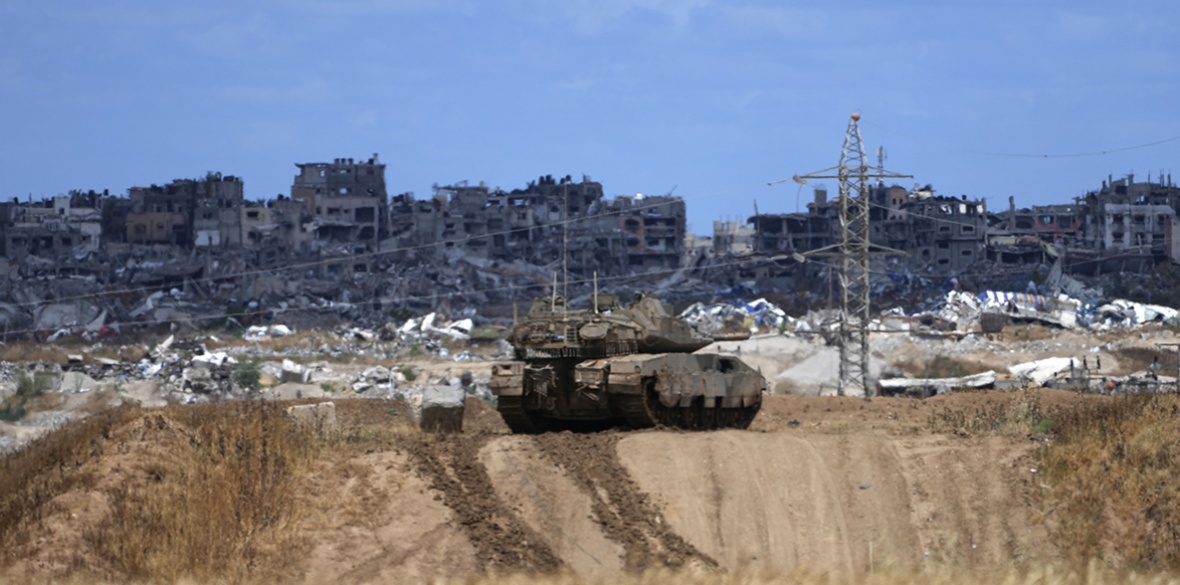
    An Israeli tank overlooks the Gaza Strip, as seen from southern Israel, May 6, 2024

    APPEALS to Israel to halt its merciless slaughter of helpless refugees trapped in the city of Rafah in Gaza rang out nationally and internationally today.

    Refugees began streaming out of the town on the Egyptian border after Israel warned 100,000 people to evacuate, saying it was planning to attack.

    An emergency demonstration has been called outside Downing Street for Tuesday night.

    After another night of bombardment which left more than 20 dead, Islington North MP Jeremy Corbyn said: “This is disgusting beyond belief, that Israel continues to bombard one million people stuck in Rafah and has now asked 100,000 to move to ‘humanitarian safe zones’.”

    “Thirty-four thousand lives have already been lost. Now is the time to cease fire and stop arms sales to Israel.”

    The Stop the War Coalition, which has called this evening’s Downing Street rally at 6pm, said: “As Israel continues its bombing of civilians trapped in Rafah and prepares a ground invasion, knowing nowhere is safe for the 1.7 million Palestinians trapped there, Sunak, Starmer and Biden continue to support Netanyahu’s genocide.

    “Rather than pulling their support, including by stopping arms sales, they attack our marches, attack student protests, and attack anyone who calls out Israel’s atrocities.

    …

    https://morningstaronline.co.uk/article/how-many-more-palestinian-children-need-to-be-killed-before-westminster-finally-acts

  • ‘Unlawful and Catastrophic’: IDF Begins Forced Evacuation of Rafah

    Spread the love

    Original article by JAKE JOHNSON republished from Common Dreams under Creative Commons (CC BY-NC-ND 3.0). 

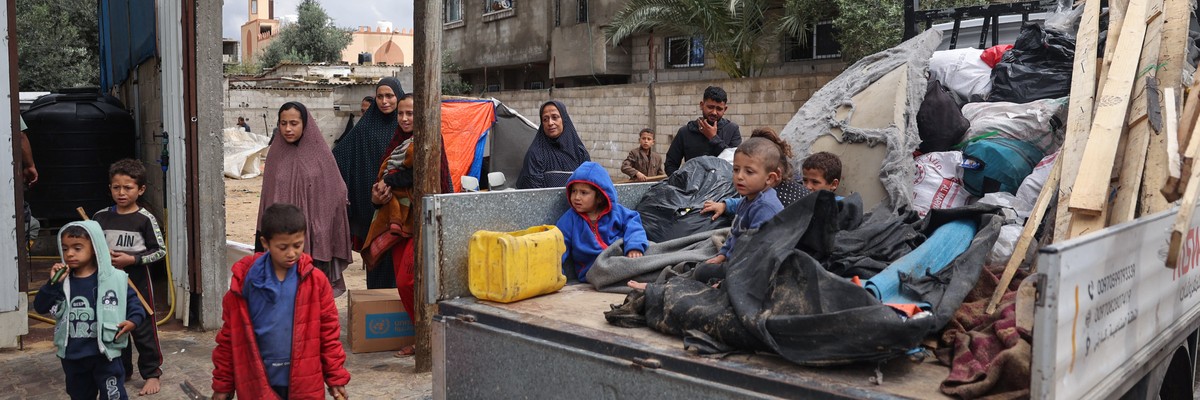
    Displaced Palestinians in Rafah in the southern Gaza Strip gather their belongings following an evacuation order by the Israeli military on May 6, 2024. (Photo: AFP via Getty Images)

    The head of one humanitarian group called the Israeli military’s directives “a serious violation of international law.”

    Israel’s army on Monday ordered roughly 100,000 people living in eastern Rafah to evacuate ahead of an imminent military assault on the area, terrifying families who have been forcibly displaced to the southern Gaza city in recent months and intensifying warnings of a bloodbath.

    The Israel Defense Forces (IDF) dropped leaflets over Rafah ordering some of its 1.4 million residents to move to a strip along Gaza’s coast, a signal that a long-feared ground assault on the overcrowded city is set to begin in the face of vocal opposition from the international community and humanitarian organizations.

    The U.S., Israel’s top arms supplier, has said it would oppose a Rafah assault without a credible plan to evacuate civilians from the city. Humanitarian groups and analysts have said such a plan is impossible because there is no genuinely safe place for Gazans to go. Israeli forces have repeatedly attacked so-called “safe zones” and designated routes Palestinians have used to flee in compliance with past IDF orders.

    “Israel’s military offensive in Rafah could lead to the deadliest phase of this conflict, inflicting horrific suffering on approximately 1.4 million displaced civilians in the area,” said Jan Egeland, secretary-general of the Norwegian Refugee Council. “The relocation orders issued by Israel today to thousands of Gazans, directing them to move to Al-Mawasi, are beyond alarming. The area is already overstretched and devoid of vital services. It lacks the capacity to house the number of people currently seeking refuge in Rafah, with no assurances of safety, proper accommodation, or return once hostilities end for those forced to relocate.”

    “The absence of these fundamental guarantees of safety and return, as required by international humanitarian law, qualifies Israel’s relocation directives as forcible transfer, amounting to a serious violation of international law,” Egeland said. “Any Israeli military operation in Rafah—which has become the largest cluster of displacement camps in the world—will cause potential mass atrocities.”

    “If large-scale military operations start, not only will children be at risk from the violence, but also from chaos and panic, and at a time where their physical and mental states are already weakened.”

    Israel reportedly notified the U.S. of the evacuation orders overnight, and CIA Director William Burns is set to arrive in Israel on Monday to discuss the operation in Rafah, a city along Gaza’s border with Egypt that has become a critical point of entry for humanitarian aid. The new evacuation orders, expected to be just the first round of directives, include Rafah’s largest medical facility.

    The United Nations Relief and Works Agency for Palestine Refugees in the Near East (UNRWA), the main relief agency in Gaza, said in response to the IDF’s orders that it would not leave Rafah.

    “An Israeli offensive in Rafah would mean more civilian suffering and deaths. The consequences would be devastating for 1.4 million people,” the organization wrote in a social media post. “UNRWA is not evacuating: The agency will maintain a presence in Rafah as long as possible and will continue providing lifesaving aid to people.”

    The far-right Israeli government, led by Prime Minister Benjamin Netanyahu, has been threatening a ground invasion of Rafah for months, characterizing the city as Hamas’ last major stronghold. Avichay Adraee, an IDF lieutenant colonel, said Monday that the Israeli military would use “extreme force” in the evacuation areas and warned that “anyone who is close to terrorist organizations puts his life and the life of his family at risk.”

    According to the United Nations Children’s Fund (UNICEF), around 600,000 children are currently sheltering in the city, including many who have been displaced multiple times since Israel’s assault began in October following a Hamas-led attack.

    “More than 200 days of war have taken an unimaginable toll on the lives of children,” Catherine Russell, UNICEF’s executive director, said Monday. “Rafah is now a city of children, who have nowhere safe to go in Gaza. If large-scale military operations start, not only will children be at risk from the violence, but also from chaos and panic, and at a time where their physical and mental states are already weakened.”

    Omar Shakir, Israel and Palestine director at Human Rights Watch, called the IDF’s evacuation push in Rafah “unlawful and catastrophic.”

    “There’s nowhere safe to go in Gaza,” Shakir added. “The international community should act to prevent further atrocities.”

    The IDF began issuing its evacuation orders in Rafah a day after the Netanyahu government voted to shut down Al Jazeera‘s operations in the country, a brazen attack on press freedom.

    “The fact that Israel banned Al Jazeera hours before beginning its assault on Rafah is not a coincidence,” said author and Middle East analyst Assal Rad. “After everything we’ve seen in the last seven months, imagine what they’ll do when they think no one is watching.”

    Original article by JAKE JOHNSON republished from Common Dreams under Creative Commons (CC BY-NC-ND 3.0). 

    Israeli Plan To Evacuate Rafah By Force Sparks Warnings Of ‘Ethnic Cleansing’