In an age of resurgent fascism, the left can fight back and win
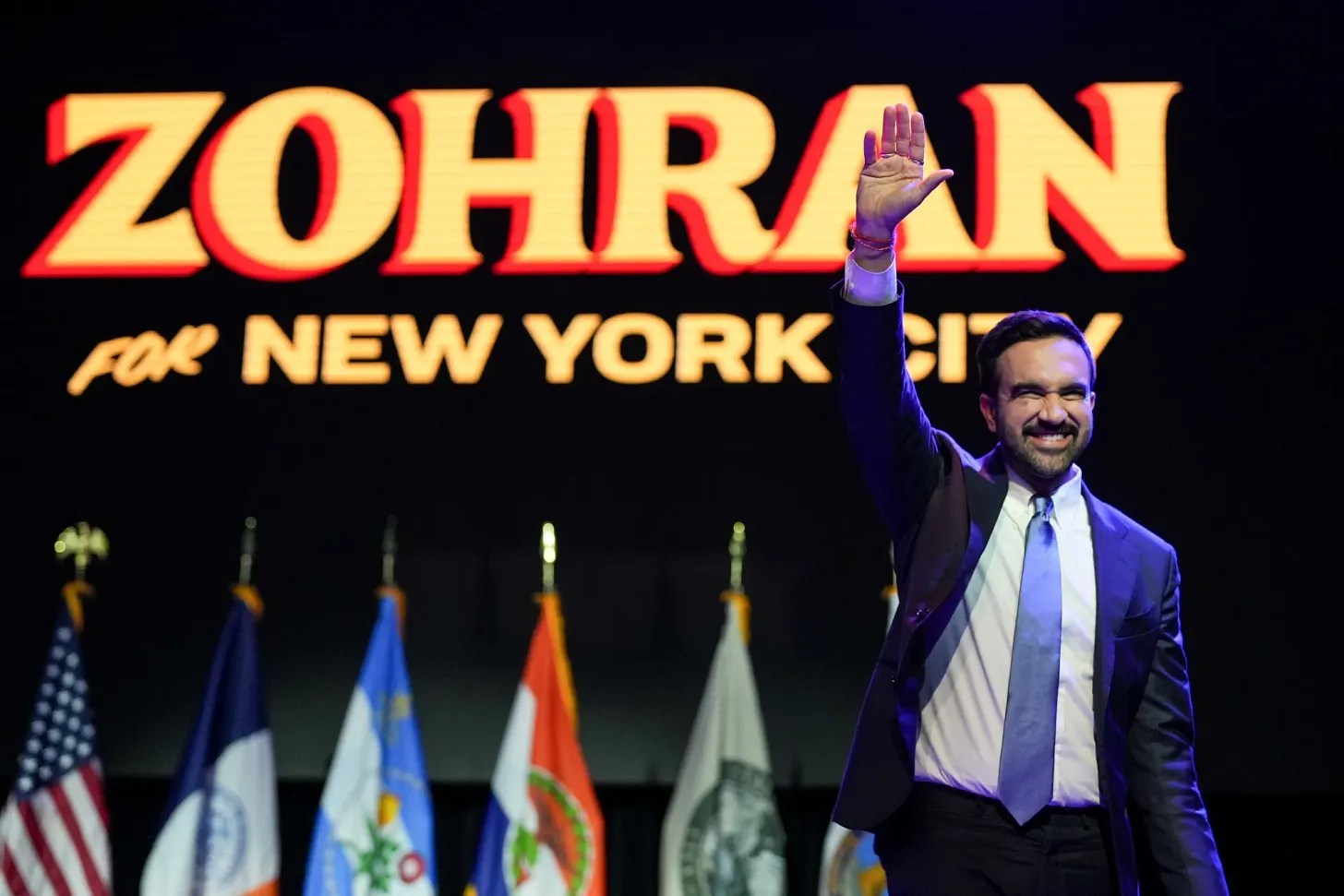
Zohran Mamdani’s triumph in the contest for the New York mayoralty is a historic moment. He has crushed Andrew Cuomo – but more importantly, the brand of politics that the Democratic Party establishment represents.
He now has the opportunity to ensure that it is the US left which assumes the leadership of the movement against Trumpism.
He has won over half the vote, defying the opinion polls, and he is the first mayoral candidate to win over a million votes since John Lindsay in 1969.
The socialist left – the authentic, real deal, unapologetic, loud and proud socialist left – will now take power in New York City, the biggest and important city in the United States. In age of darkness, one of the great centres of the Western world has elected a socialist who stands against capitalism, against racism, against genocide.
This is a historic moment – and the consequences will reverberate not just around the United States, but across the Western world and indeed beyond. There are so many lessons that we must now learn so that what is today triumphed in New York will tomorrow take power at national level across the West – and drive back the rising tide of fascism.
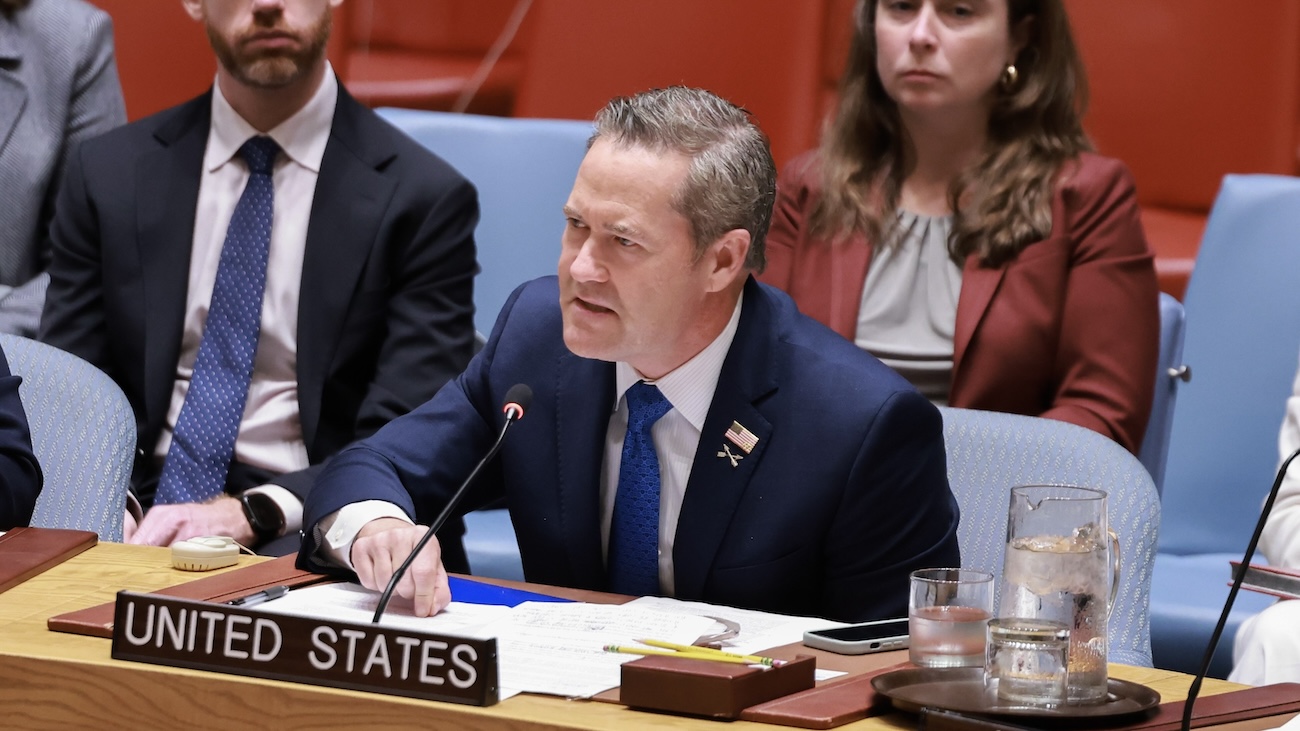
US Ambassador to the United Nations Mike Waltz speaking at a UNSC session. Photo: Mike Waltz / X
Ahead of the UN vote on the US-imposed blockade on Cuba, the US once again spread lies about the nature and intent of its coercive policy on Cuba
The United States Ambassador to the United Nations, Mike Waltz, told multiple lies during his speech in the debate on the resolution demanding an end to the blockade against Cuba.
His speech repeated – almost point by point – the repertoire of already debunked arguments that Washington typically uses to justify its sanctions regime that is condemned year after year by the international community.
Under the guise of “correcting misinformation,” Waltz repeated claims that do not stand up to confrontation with the facts nor with current US legislation itself, and which seek to shift the focus from the material responsibility of the blockade towards political accusations against Cuba.
“The Permanent Representative of the United States is not only lying, substantially straying from the topic, but he is also speaking rudely and, contrary to his president, against the dignity of the assembly and the member states. He is doing so in an uncivilized, crude, and rude manner. That is not acceptable in this democratic forum. Mr. Waltz, this is the United Nations General Assembly. It is not a Signal chat, nor is it the House of Representatives.”
The ten lies of the US Ambassador:
1. “The blockade does not exist.”
The US legislation that sustains the blockade – the Helms-Burton Act (including its Title III), the Torricelli Act, the “180-day rule,” sectoral and financial sanctions lists – exists and is in force. The Cuban Resolution against the blockade does not “invent” these rules: it documents them and shows their practical application. Furthermore, official US documents, such as the reissuance of Presidential Memorandum No. 5 (06/30/2025), confirm the continuity of the “maximum pressure” policy against Cuba.
2. “Cuba’s economic difficulties are the exclusive responsibility of the Havana government.”
The stated goal of US policy is to “strangle the economy” to provoke social unrest; this includes targeting fuel, finances, tourism, and medical cooperation. This siege impacts prices, investments, logistics, and liquidity, and explains a large part of the current economic tensions.
3. “The annual UN resolution is propaganda.”
The vote expresses a broad defense of international law and the UN Charter; the unusual deployment of US diplomatic pressures to alter votes underscores the isolation of this policy and the relevance of the multilateral pronouncement.
4. “The shortage of food and medicine is the fault of the Cuban government.”
There is a chain of bottlenecks caused by the US economic siege: in healthcare, the Basic Drug List (651 items) shows a 69% impact, with 364 drugs (56%) lacking due to payment obstacles, suppliers refusing to operate, and technological prohibitions blocking equipment or supplies with ≥10% US components. This prevents the acquisition or severely increases the cost of advanced medicines and critical devices (for example, percutaneous aortic valve prostheses or dialysis equipment), with a direct impact on care and health indicators.
Regarding food, the lack of financing and banking refusals forced the halt of imports of approximately 337,000 tons of corn and ~120,300 tons of soybeans (animal feed), leading to failures in the production of eggs for the Basic Food Basket. Even “authorized” purchases in the US are made under non-standard conditions: specific licenses, cash payment in advance (without credit), transport only on US ships and on one-way trips, which increases freight costs and delays deliveries. The lack of goods is due to lack of financing, limited access to credit, increased prices, high freight costs, and delays in arrivals, direct consequences of the blockade.
5. “The blockade allows for free export.”
There is no commercial “freedom”: the US legal framework establishes a policy of denial for exports/re-exports to Cuba (EAR) and prohibits subsidiaries of US companies in third countries from trading with Cuba; furthermore, the “180-day rule” is in effect, which discourages shipping companies from calling at Cuban ports, and permitted agricultural sales require cash payment in advance, without US financing. All this restricts and makes any operation more expensive, both for exporting and importing.
Added to this is extraterritorial financial persecution: fines and threats to banks and suppliers, refusals to open or maintain accounts, and blocked operations that cut off payment and collection flows. Cuba’s own report includes recent cases (OFAC fine to EFG; refusal to open an account for the EXPO Osaka; closures of embassy accounts) and quantifies widespread impacts on contracts, letters of credit, and transfers.
That is to say, far from “exporting freely,” Cuba trades under veto, licenses, and regulatory fear; in fact, the document lists measures that Washington could authorize – biomedicine, mining, tourism, easing of investment licenses, raising the 10% US component threshold, authorizing banking correspondents, removing Cuba from the SSOT list, and suspending Title III – and which it currently obstructs.
6. “Cuba has full freedom to trade with other countries.”
The US secondary (extraterritorial) measures deter and punish third parties (banks, shipping companies, insurers), increasing the costs and risks of operating with Cuba, which restricts real freedom of trade.
7. “The Cuban government traffics its medical personnel.”
Cuba maintains voluntary and widely recognized international cooperation; the US persecution seeks to cut off these revenues and deprive vulnerable populations of essential services, ignoring UN and PAHO standards.
8. “The Cuban government benefits from mercenarism.”
Cuba applies “zero tolerance” to mercenarism and has criminally prosecuted recruiters; it does not support or condone the participation of its nationals in external conflicts.
9. “Cuba destabilizes the hemisphere.”
What is destabilizing is the US military deployment and diplomatic blackmail in the Caribbean and the region; Cuba and CELAC uphold the principle of a “Zone of Peace”.
10. “Cuba contributes to the Russian ‘war machine’.”
Cuba does not participate in the war in Ukraine nor send troops; it has dismantled recruitment networks and sanctions mercenarism.
President Donald Trump speaks to reporters aboard Air Force One, October 19, 2025, en route to Joint Base Andrews, Md., as he returns from a trip to Florida
DONALD TRUMP upends Marx’s famous observation on history repeating itself. If his first term was farce, his second looks more like tragedy.
Trump’s second administration is more serious than his first in its assault on democratic rights in the United States, as well as in its marshalling of far-right forces worldwide to undermine democracy elsewhere. It is also more hegemonic, with centrist politicians from Britain and Europe who viewed him as a passing aberration before now accommodating to his hateful politics.
That means the US military build-up in the Caribbean, accompanied by lawless murders of boat crews in international waters, should be taken seriously.
Trump has long hated Venezuela’s socialist government. But his efforts to overthrow it in his first term were absurd, ranging from recognising unelected clown Juan Guaido as the head of an alternative government that controlled no people or territory (“president of Narnia,” as the actual Venezuelan government quipped) to backing a ludicrous “invasion” led by two former US commandos in a speedboat. These absurdities had deadly consequences, particularly in restricting access to medical aid and Venezuela’s own sovereign assets during the coronavirus pandemic — but they never looked likely to secure regime change.
By contrast, the current concentration of US forces off Venezuela is its biggest Caribbean deployment in decades, consisting of 10,000 troops, warships including amphibious assault vessels, a submarine, fighter jets and attack helicopters. Last week, three B-52 heavy bombers flew from Louisiana and circled for hours just off the Venezuelan coast.
That the US is really considering a military assault is suggested too by its deepening feud with Colombia’s left-wing President Gustavo Petro. Trump suspended military aid to Colombia on Wednesday, warning Petro to “watch it” and threatening “very serious action against him and his country.”
Trump claims Petro is complicit in the illegal drug trade. This, of course, is also the official excuse for bombing boats in the Caribbean.
Donald Fuhrump says that Amerikkka doesn’t bother with crimes or charges anymore, not being 100% Amerikkkan and opposing his real estate intentions is enough.Orcas discuss Donald Trump and the killer apes’ concept of democracy. Front Orca warns that Trump is crashing his country’s economy and that everything he does he does for the fantastically wealthy.Orcas discuss how Trump was re-elected and him being an obviously insane, xenophobic Fascist.
This article by republished from peoples dispatch under a Creative Commons Attribution-ShareAlike 4.0 (CC BY-SA) license.
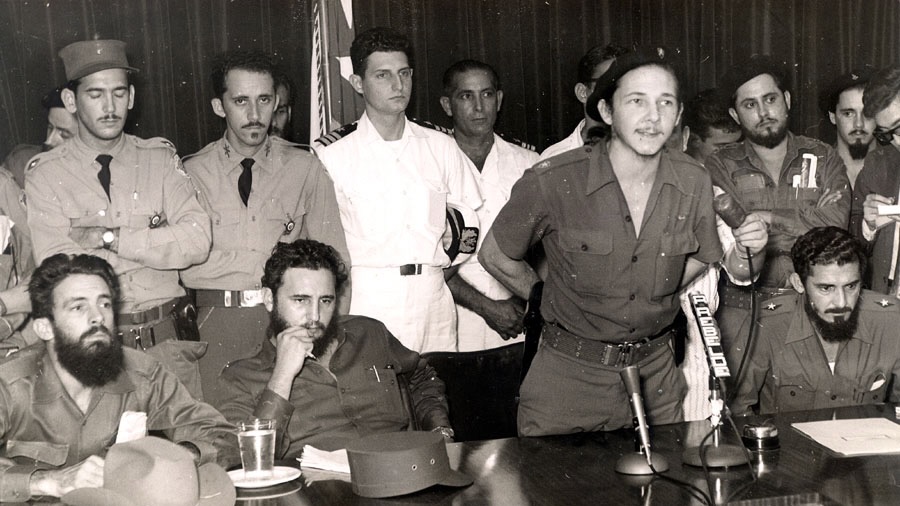
On February 16, 1959, Cuba established the Ministry of the Revolutionary Armed Forces, the executive body of their defense force, and its first Army General, Raúl Castro Ruz. Photo: Miguel Díaz-Canel/X
A recent webinar by Pan Africanism Today and the International Peoples’ Assembly looked at global struggles, from Africa to Latin America, showing how Cuba’s enduring resistance offers vital lessons in organization, unity, and internationalism for today’s movements fighting oppression and war.
The world is in an era marked by relentless wars and overlapping crises, from the devastating civil war in Sudan and violence in the Democratic Republic of Congo to the unfolding genocide in Palestine. The demand to end all wars has never carried greater urgency. And in the midst of all these visible battlegrounds persists a more enduring and insidious conflict; the hybrid war and economic blockade waged against the Cuban people and their revolution.
This was the central focus of a recent global webinar convened under the banner of Pan-African and internationalist solidarity, bringing together progressive voices to draw lessons from Cuba’s anti-imperialist struggle. The session, held on October 15, was facilitated by Mbali Gwenda from Pan Africanism Today, who situated the discussion within a broader historical and moral framework, invoking the revolutionary spirits of Thomas Sankara, martyred on the same date in 1987, and Assata Shakur who recently passed, and whose life consistently symbolized uncompromising resistance to oppression.
“We are dealing with the question of the hybrid war and blockade against the Cuban Revolution and her people,” Gwenda said. “A revolution that has been a source of inspiration for all oppressed peoples throughout the world till this day.”
The keynote address was delivered by Manolo De Los Santos, executive director of The People’s Forum and a researcher at the Tricontinental: Institute for Social Research, who framed Cuba’s defiance not as a miracle, but as the outcome of a centuries-long process of people’s struggle, organization, and consciousness.
The long arc of revolution
De Los Santos began by looking at Cuba’s revolution more than an event confined to the years 1953–1959, when Fidel Castro, Che Guevara, and others led the guerrilla war against the Batista dictatorship. Revolutions, he reminded the audience, are not events but processes, collective journeys of resistance that unfold across generations.
Cuba’s revolution, he argued, has roots reaching back to centuries of anti-colonial and anti-slavery resistance, when the island was still a colony of the Spanish Empire. Unlike many independence movements in Latin America, Cuban revolutionaries understood that genuine freedom required addressing three interlinked questions:
Could Cuba truly be independent if it remained a slaveholding society?
Could it be free if it continued under the exploitative system of capitalism?
Could it claim sovereignty while dominated by imperial powers, first Spain and later the United States?
These questions shaped the consciousness of generations of Cuban patriots, culminating in the 1959 triumph of the socialist revolution. But as he explained, the revolution’s endurance has rested on three essential pillars: organization, unity, and internationalism.
Organization: the bedrock of resistance
Organization, De Los Santos emphasized, has been the Cuban people’s greatest weapon against imperial aggression. From the early independence wars to the 26th of July Movement led by Fidel Castro, Cubans have understood that only a disciplined, organized people can confront an empire with infinite resources.
This organizational spirit persisted after 1959, with the creation of mass democratic structures that unite workers, women, peasants, students, and youth. The Federation of Cuban Women, for example, mobilizes millions in defense of gender equality and revolutionary ideals, while student and peasant organizations remain vital spaces for political education and collective problem-solving.
Even under today’s extreme shortages such as the lack of fuel to power garbage collection, Cuban communities respond not with despair but with collective initiative, a reflection of their revolutionary organization and social consciousness.
Unity, he continued, has been the second indispensable lesson from Cuba. Every time the people were divided, the empire gained the upper hand; every time they stood together, they won. This unity has transcended class, race, and regional divisions, dismantling the legacies of slavery and racism that imperialism imposed.
The Cuban Revolution’s unity was forged not just through ideology but through practice, through collective participation in building a new society. It remains, as Manolo put it, “the most important defense the Cuban people have.”
Internationalism is the soul of the revolution
If organization is the body and unity the shield, then internationalism is the soul of the Cuban Revolution.
Quoting Fidel Castro, the New York-based researcher reminded participants that “a people who are not willing to fight for the freedom of others will never be able to fully fight for their own freedom.”
This principle drove Cuba to send tens of thousands of its sons and daughters to fight alongside liberation movements in Angola, Namibia, and South Africa, contributing directly to the defeat of apartheid. As he noted, “Cuba doesn’t need gold or minerals from Africa, it knows that its freedom is tied to the freedom of the peoples of the African continent.”
Even today, with over 24,000 Cuban doctors working abroad, many across Africa, Cuba continues this legacy of solidarity. The US, in its campaign of distortion, now accuses Cuba of “human trafficking” for this very act of humanitarianism.
The United States’ war against Cuba has been fought through unconventional means. It is a hybrid war, a combination of economic blockade, financial strangulation, media disinformation, and covert sabotage.
For more than 65 years, the blockade has inflicted immense human and economic damage. In 2024 alone, it cost Cuba USD 7.5 billion, money that could have been used to buy food, medicine, or oil for its 11 million citizens.
The war is also fought in the terrain of ideas. US-funded media campaigns spread false narratives about repression and poverty in Cuba while erasing the country’s achievements in health, education, and solidarity.
Socialism and survival
When asked on how Cuba has managed to survive more than six decades of blockade, Manolo’s answer was clear: because Cuba made a socialist revolution.
Socialism, he said, allowed Cuba to create a system where the needs of the people come before profit. In capitalist societies, when crises hit, the rich survive and the poor starve. In Cuba, food, healthcare, and education are distributed equitably, even in times of scarcity. This social organization transforms a siege economy into a community of resilience.
This difference, he explained, is what makes Cuba unique among nations facing US aggression. It’s also what inspires global movements seeking alternatives to neoliberalism and imperial domination.
Cuba, Sankara, and the spirit of resistance
The session also honored Thomas Sankara linking a symbolic bridge between the African and Latin American revolutionary traditions. Both embodied a commitment to self-reliance, dignity, and international solidarity.
Sankara’s vision of a self-determined Africa resonated deeply with the Cuban experience. His assassination on October 15, 1987 marked a turning point in African politics, yet his ideas continue to inspire movements across the continent, just as Cuba continues to stand as living proof that another world is possible.
In closing, Manolo issued a clear call; the Cuban people will overcome the blockade, but they cannot and should not do it alone. Their survival depends on the solidarity of all who believe in justice, sovereignty, and equality.
Cuba’s endurance is not simply a Cuban story; it is a lesson for all peoples resisting imperial domination. As the world faces renewed militarization and economic warfare, the spirit of organization, unity, and internationalism must also be crucial as ever.
“When they stand with the Palestinians, when they stand with the Congolese, when they stand with the peoples of the African continent,” Manolo concluded, “they are breaking the blockade too.”
This article by republished from peoples dispatch under a Creative Commons Attribution-ShareAlike 4.0 (CC BY-SA) license.
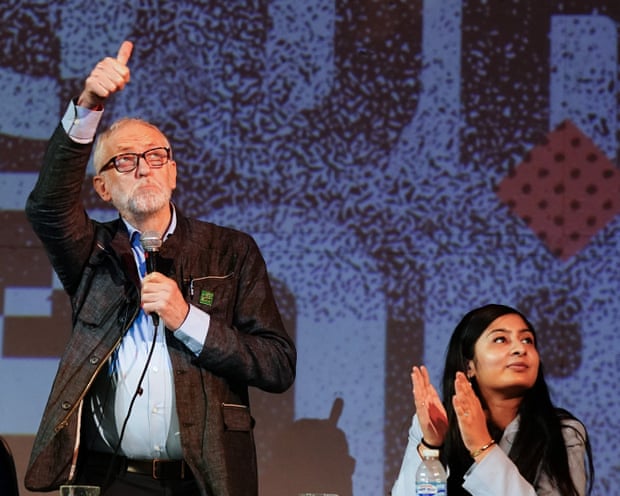
The movement, steered by Jeremy Corbyn and Zarah Sultana, plans to turn a loose and often fractious alliance into Britain’s first major party to the left of Labour in a generation. Photograph: Jacob King/PA
[Guardian] Exclusive: Proposals will bring ‘democratic revolution’ and transform ‘post-Labour left’ into formal political force, say organisers
Your Party, the leftwing movement steered by Jeremy Corbyn and Zarah Sultana, has set out draft constitution plans including a leadership contest in the new year and new governing structures, the Guardian has learned. …
The document introduces a digital democracy process, encouraging individual members to submit edits and suggestions online, with the text evolving “iteratively” over several weeks. Thousands of delegates will then be chosen by sortition (lottery) to vote on amendments at the Liverpool conference before the final version goes to an all-member vote.
Insiders said the draft would include recall clauses, allowing elected officers to be removed midterm if they lost the confidence of members, part of wider safeguards intended to prevent any leadership drift. They also confirmed that the constitution would contain strict procedures to guarantee that selection processes remained democratic and that “due diligence” could not be misused, a clear response to criticisms of candidate vetting under Labour’s current leadership.

 President Donald Trump speaks to reporters aboard Air Force One, October 19, 2025, en route to Joint Base Andrews, Md., as he returns from a trip to Florida