Have a look at these photos that are courtesy of the dailmail which is fixated with nonce:en:s:e photos: See if you can identify the minders. Sorry minders, Ces’t la vie (that’s life / that’s a lavy). Extra credit for noticing other things.


Have a look at these photos that are courtesy of the dailmail which is fixated with nonce:en:s:e photos: See if you can identify the minders. Sorry minders, Ces’t la vie (that’s life / that’s a lavy). Extra credit for noticing other things.
The government has vetoed an order by the independent freedom of information watchdog to release the minutes of cabinet meetings held immediately before the invasion of Iraq in March 2003.
The decision was announced on Tuesday by Dominic Grieve, the attorney general, the only minister to have access to papers of a previous administration, in this case Tony Blair’s Labour government.
Grieve said he issued a certificate under the Freedom of Information Act vetoing disclosure after consulting former Labour ministers, his cabinet colleagues, and the leader of the opposition, Ed Miliband.
He described the case as “exceptional” and one where, in his view, the public interest demanded the papers should be kept secret. He says he took into account “serious potential prejudice to the maintenance of effective cabinet government”.
The attorney said he also considered the fact that “the issue discussed was exceptionally serious, being a decision to commit British service personnel to an armed conflict situation”, that the issue “remains the focus of both domestic and international interest”, and that “Iraq remains very much a live political issue in its own right” with links to the “overall security situation in the Middle East and the perceived link between the terror threat to the UK and military action in Iraq”.
Grieve noted that most of those present at the cabinet meetings in March 2003 were still MPs or “otherwise active in public life”.
Christopher Graham, the information commissioner, had argued that the “exceptional gravity and controversy” of the matters discussed meant that minutes of the cabinet meetings on 13 and 17 March 2003, days before the invasion, should be disclosed.
One of the reasons Grieve gave for vetoing disclosure was that the Chilcot inquiry meant the invasion of Iraq was still a “live” issue. Yet the panel chaired by Sir John Chilcot is being prevented by Whitehall mandarins from disclosing key documents relating to the decision to invade Iraq.
The March 2003 cabinet minutes are believed to be among them. The continuing dispute between Chilcot and Whitehall officials over disclosure is a main reason why his report has been delayed.
In a separate move last week, the Foreign Office appealed against a judge’s ruling that extracts of a conversation between Blair and George Bush days before the invasion of Iraq must be disclosed. It argued that revealing Blair’s comments to Bush on the telephone on 12 March 2003 would present a “significant danger” to UK-US relations.
…
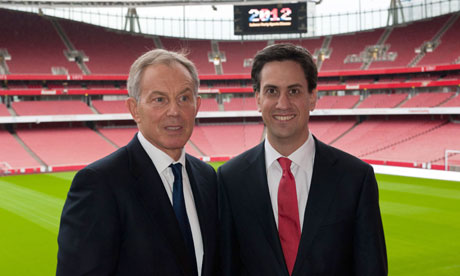
By David Cromwell
How many war crimes does a western leader have to commit before he is deemed persona non grata by the corporate media and the establishment? Apparently there is no limit, if we are to judge by the prevailing reaction to Tony Blair’s return to the political stage.
On July 11, it was announced that Blair would be ‘contributing ideas and experience’ to Labour leader Ed Miliband’s policy review. He will apparently provide advice on how to ‘maximise’ the economic and sporting legacies of the 2012 London Olympics.
The Guardian described the announcement mildly as a ‘controversial move’; not necessarily in the country at large, the paper claimed, but ‘perhaps especially within the Labour party’. One Guardian headline declared ‘Return of the king’.
The ‘left-wing’ John Harris did his bit in the Guardian to smooth Blair’s path:
‘He’s only 59, the picture of perma-tanned vitality and keen to “make a difference”. Could a fourth stint in No 10 even be on the cards? We shouldn’t rule it out.’
Harris declared ‘that for all his mistakes, transgressions and howling misjudgments, there remains something magnetic about his talents.’
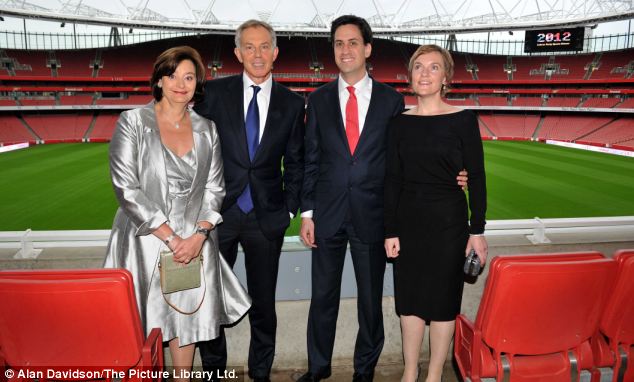
When Blair appeared at a Labour fundraising dinner at Arsenal’s Emirates stadium, Harris noted that:
‘He was greeted by the obligatory crowd of protesters, still furious about his role in the Iraq war.’
That’s the curious thing about peace protesters; endlessly ‘furious’ about the country being dragged into an illegal war that led to the deaths of around one million people, created four million Iraqi refugees, devastated Iraq’s infrastructure, generated untold suffering and burned obscenely huge sums of public money in times of ‘austerity’. Perhaps we Brits should simply display that famed stiff upper lip and move on. Certainly that’s what Richard Beeston, foreign editor of The Times, suggested in 2009:
‘All this happened six years ago. Get over it.’ (‘The war went wrong. Not the build-up. Stop obsessing about the legality of invading Iraq. The campaign itself was the real disaster’, The Times, February 26, 2009.)
A recent Times editorial welcomed Blair’s return:
‘Labour is coming together, drawing on its best available talent and starting to get serious again. (Editorial, ‘A year in politics’, The Times, July 14, 2012)
The second coming of Blair was launched by a friendly chat on the BBC’s Andrew Marr show. Marr, of course, is well-known as a totally impartial political analyst and a ‘congenial and knowlegable [sic] interviewer’ (to quote a cable from the US embassy in London to Hillary Clinton).
The PR onslaught continued when London’s Evening Standard published an interview with the former PM on the day he ‘guest-edited’ the paper. Would he like to be prime minister again one day? ‘Sure’, he replied. A supportive Financial Times interview with editor Lionel Barber proclaimed:
‘Five years after leaving power, Tony Blair wants back in. He is ready for a big new role. But what exactly is driving him? And can he persuade the world to listen?’
Unnamed ‘friends’ and ‘allies’ were quoted, no doubt passing on the Blair-approved message:
‘Friends say he is desperate to play a bigger role, not because he has any ambition to run for high office but because he wants to be part of the argument. “He would really like to be the centre of attention again,” says one long-time ally.’
A Guardian editorial did its bit to help:
‘he seems to have mellowed a touch since his book [‘A Journey’, published in 2011]; maybe he’s even learnt a little respect for international law.’ (‘Unthinkable? Tony Blair for PM again.’)
The paper continued:
‘Besides, this is no time to fret about the policy details – there is the showbiz to consider. In 2007 John Major likened Mr Blair’s long goodbye to Nellie Melba; the coming comeback must demonstrate he is more like Sinatra and Elvis. There can only be one true heir to Tony Blair, and that is Tony Blair II.’
Could the vanguard of British liberal journalism really be making an editorial call for the return of Blair? It shouldn’t be a total surprise. Recall that even in the wake of the supreme international crime of invading Iraq, the Guardian still called for its readership to re-elect Blair at the 2005 general election.
…
…
GDP figures yesterday showed the economy shrank for the third quarter in a row – down 0.7 per cent between April and June – meaning the UK is in its worst recession since 1955.
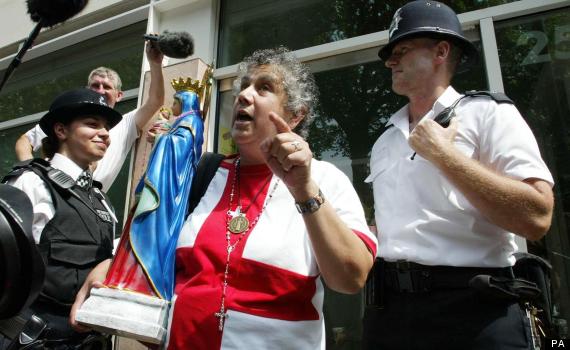
A nun has been found guilty of sending threatening letters containing white powder to parliamentary figures including Nick Clegg, whom she accused of being a “devil-worshipping Freemason”.
Sister Ruth Augustus, 71, was found guilty on six counts of hoaxes involving noxious substances before Harrow Crown Court on Wednesday after the jury took only two-and-a-half hours to deliver a verdict.
Augustus, of Leyton, east London, was found to have sent the letters to Clegg and three others, each with allegations scrawled on the envelopes.
Justifying why she sent the letters to the Lib Dem leader, Augustus said he had “lied about all the tuition fees and everything else, keeping those Tory millionaires and rats in government”.
“He boasted about all the women he’s had sex with. He’s an atheist singing hymns in the Albert Hall.”
…

The Commons Justice Select Committee has criticised former Prime Minister Tony Blair for failing to cooperate with its investigation into impact of Freedom of Information (FoI).
“We deplore Mr Blair’s failure to cooperate with a committee of the House,: Sir Alan Beth, the Chair of the Justice Select Committee said. “Former prime minister Tony Blair described himself as a ‘nincompoop‘ for his role in the legislation, saying that it was ‘antithetical to sensible government’. Yet when we sought to question Mr Blair on his change of opinion he refused to defend his views before us and submitted answers to our written questions only after our report was agreed, and after a press report had appeared, suggesting we might criticise his failure to give evidence.”
Mr. Blair was in office when the FoI law was brought in but since then the former Prime Minister has said it was one of the worst legislation his government brought in. However, the Justice Select Committee in its report concluded that FoI has been a “significant enhancement of democracy” and not hindering better governance.
…
He has been reported as saying that experience could make him a better prime minister the next time around, but the voters beg to differ with Tony Blair. According to a Guardian/ICM poll, if Blair were to return as leader, a prospect he acknowledges is “not likely to happen“, the party’s standing would sink by three points, from the 39% vote share under Ed Miliband, down to just 36%.
…
ED Milliband has revealed striking a coalition deal with the Liberal Democrats, after the next general election, would be “difficult” if Nick Clegg is still leader.
Mr Clegg has admitted that he would be “open” to a partnership with Labour in the event of a hung parliament.
• Ed Miliband has said that a coalition deal with Lib Dems would be “difficult” with Nick Clegg as leader
• Miliband calls Lib Dem leader a Tory “accomplice”
But Mr Miliband poured cold water on the idea by suggesting Mr Clegg was an an “accomplice” of the Conservatives.
“Clegg’s biggest problem is that he will say he is a brake on the Tories, but he is an accomplice,” he said.
“He chose not to kill the Health and Social Care Bill – a really bad bill doing damage to the NHS – and to pursue House of Lords reform.”
Asked if he could work with the Liberal Democrat leader, Mr Miliband replied: “I would find it difficult to work with him.”
On September 11, 2001, a bunch of mean nasty Arab terrorists — who hated our freedoms — hijacked American Airlines Flight 77, a Boeing 757 fully loaded with fuel, and crashed it through the first floor of the west side wall of the Pentagon.
…