ISRAELI police stormed the al-Aqsa mosque in Jerusalem today, firing stun grenades at Palestinians inside who responded by throwing stones and firecrackers.
Outside the mosque’s gate, police dispersed crowds of young men with stun grenades and rubber bullets.
People arrested and later released from the compound said police had burst in and attacked worshippers, using truncheons, rifles and even chairs to strike men, women and children, with video footage appearing to confirm their accounts.
…
Category: Zionism
50 wounded and 350 arrested as Israeli police storm al-Aqsa mosque

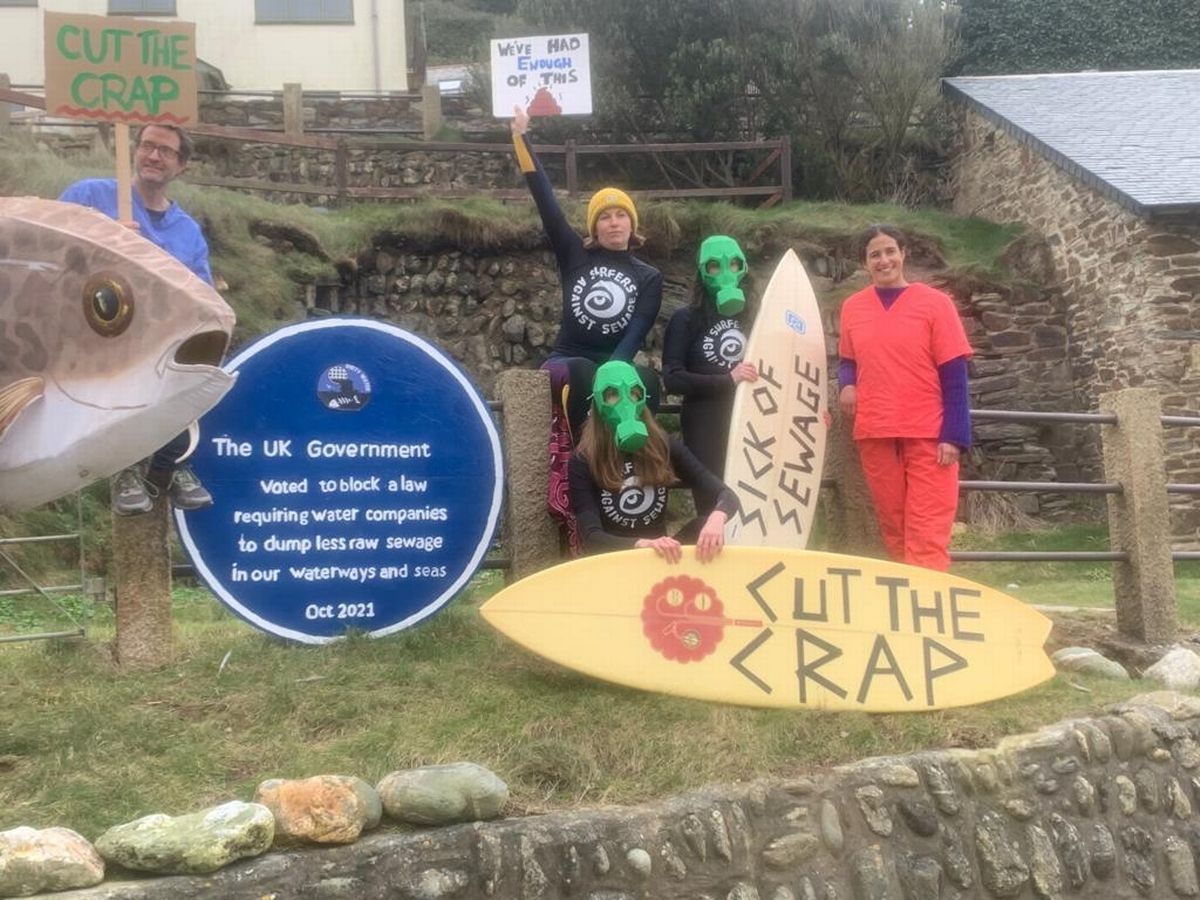
Starmer accuses government of ‘turning Britain’s waterways into an open sewer’ and where he got that idea from
Starmer accuses government of ‘turning Britain’s waterways into an open sewer’
Keir Starmer has accused the government of “turning Britain’s waterways into an open sewer”, as data showed raw discharges were sent into English rivers 825 times a day last year.
Private water companies have been consistently accused of failing to take action, and the Environment Agency admitted there were more than 300,000 spillages into rivers and coastal areas in 2022, lasting for more than 1.75m hours.
The alarming figures led to calls for the environment secretary, Thérèse Coffey, to resign, and added to the pressure on Rishi Sunak to do more to tackle the issue.
Clean water has become a politically charged topic in the runup to May’s local elections, and Labour and the Liberal Democrats are mounting campaigns against the government’s record on raw sewage.
…
and where he got that idea from?
UK Extinction Rebellion joins other groups to protest UK govt policy of open sewers throughout UK
Extinction Rebellion has been joining with other groups to campaign against UK government policy of treating rivers as “open sewers” but the phrase was originally mine. Granted it’s obvious but is there an earlier use of treating rivers as open sewers than mine?
Please be aware that I am opposed to UK Labour Party leader Keir Starmer because he’s a nasty Zionist Neo-Con who has hijacked the Labour Party.
Starmer’s war on the Labour left is class war

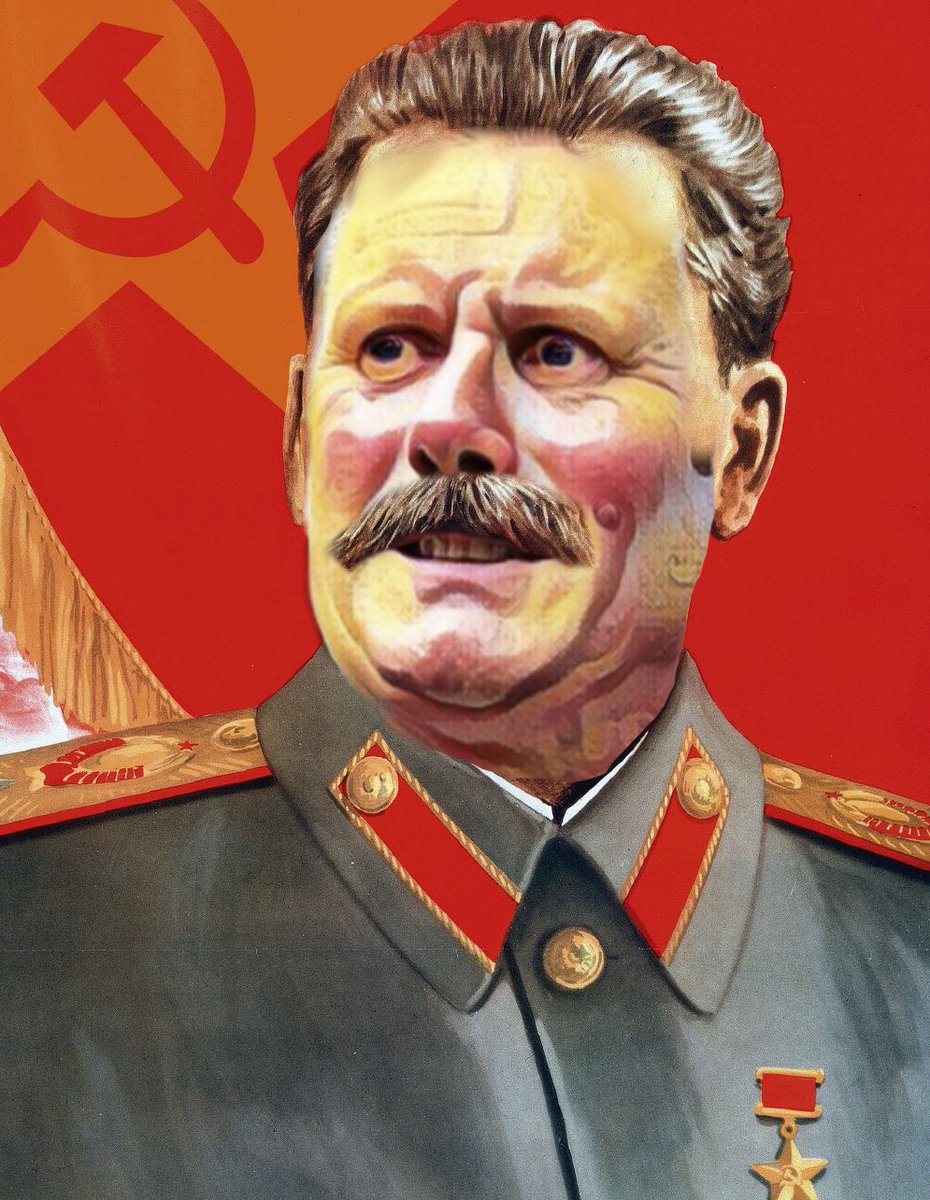
Starmer, image stolen from da web dizzy: An article discussing how Starmer is the other cheek on the Capitalist arse ;) I have no idea how such actions would be received, I hope that Corbyn seriously considers defecting to the Green Party.
Starmer’s war on the Labour left is class war
LABOUR’S national executive (NEC) is due to consider a motion in Keir Starmer’s name on Tuesday confirming that Jeremy Corbyn will not be endorsed as a candidate for the party at the next election.
Nobody will be surprised at this long-trailed development.
From Corbyn’s first, unjustifiable, suspension from the party in autumn 2020 and Starmer’s subsequent refusal to restore the whip once his membership status was reaffirmed by the NEC, the left has responded hesitantly and incoherently.
…
It is impossible — as union leaders frequently point out — to address the the crisis in the NHS, the rigged energy market or the causes of disputes from mail to rail without looking at the longer-term causes in privatisation, marketisation and outsourcing.
Corbyn is being exorcised for having demonstrated how popular these solutions are.
If our movement is serious about changing this country and the rotten deal it forces on workers, Starmer’s attacks on Corbyn are not an unfortunate aside. They are part of the class war being waged against us.
Labour bans NEC members from meeting with Forde
Original article republished from the Skwawkbox for non-Commercial use.
Elected representatives told they can’t meet with barrister commissioned to investigate leaked Labour report – who has said party is not tackling racism and treats other forms as less important than supposed antisemitism
As Skwawkbox reported last week, Martin Forde KC has gone public on the Starmer regime’s lack of response to his report – commissioned originally as part of Keir Starmer’s ‘long grass’ tactics after the leak of a party report exposing widespread racism, fraud and sabotage by Labour right-wingers but one that inconveniently confirmed the leaked report’s accuracy and the endemic racism of the Labour right.
Labour has tried to claim that its national executive (NEC) is engaging with the report and to persuade us that everything is in hand as it should be, with the unsurprising collusion of right-wing NEC members. But the nonsense of this claim has been exposed by one of the elected left-wing members still on the NEC, who revealed that the NEC members supposed to be addressing Forde’s report and his recommendations has been blocked from meeting him:

Black Labour MP Dawn Butler confirmed that this refusal to allow a meeting has nothing to do with Forde’s availability or willingness to meet:
The Starmer regime’s whitewash of the deep-rooted and unchecked racism of its faction continues – eagerly aided and abetted by its media allies, who have resolutely ignored every revelation of the Labour right’s racism, war on democracy and the sabotage of the Corbyn leadership, despite the recent and detailed ‘Labour Files’ documentary series by Al Jazeera.
Original article republished from the Skwawkbox for non-Commercial use.
Invading Iraq is what we did instead of tackling climate change
Original article well said by Adam Ramsay republished from openDemocracy under a Creative Commons Attribution-NonCommercial 4.0 International licence.
OPINION: Instead of launching a war, the US and UK could have weaned us off the fossil fuels that pay for the brutal regimes of dictators

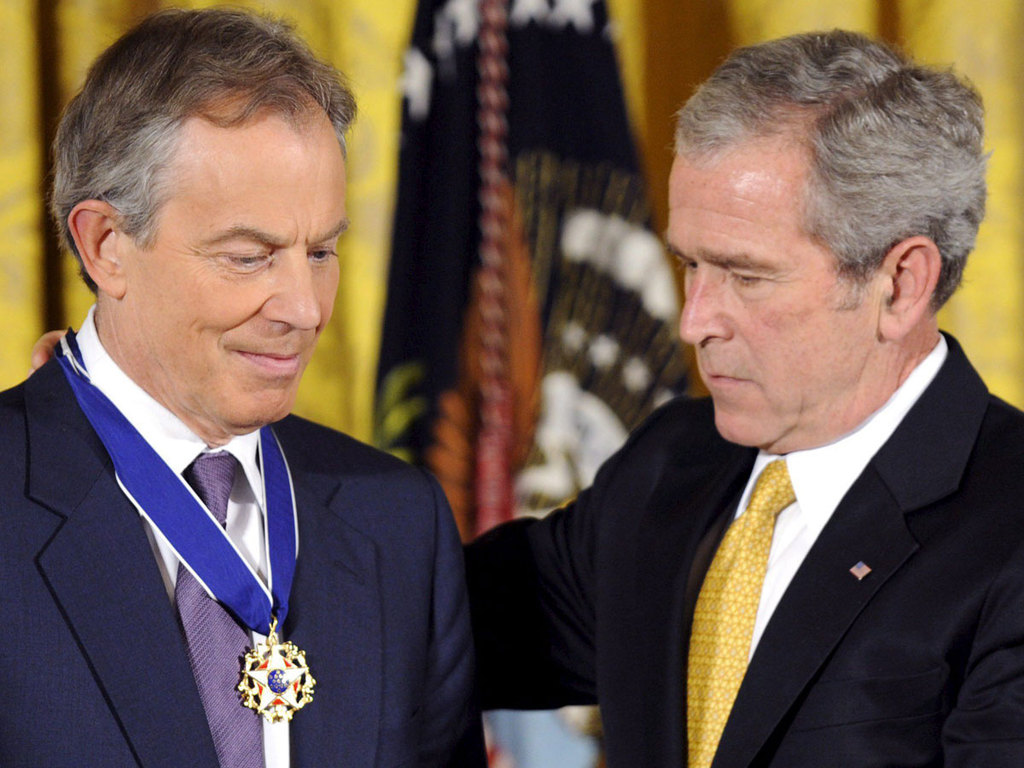
Traitor Tony Blair receives the Congressional Gold Medal of Honour from George ‘Dubya’ Bush Twenty years ago today, [20 March] war was once again unleashed on Baghdad. In the UK – and much of the rest of the world – people sat in front of their TVs watching the skies above the ancient city flash with flame as buildings were rendered to rubble, the limbs and lives inside crushed.
The real victims of George Bush and Tony Blair’s shock and awe were, of course, the people of Iraq. Estimates of violent deaths range from a hundred thousand to a million. That doesn’t include the arms and legs that were lost, the families devastated, the melted minds and broken souls, trauma that will shatter down generations. It doesn’t include anyone killed in the conflict since then: there are still British and US troops in the country. It doesn’t include the poverty resulting from crushed infrastructure, the hopes abandoned and the potential immolated.
And that’s just the 2003 war: Britain has bombed Iraq in seven of the last 11 decades.
But in far gentler ways, the war was to shape the lives of those watching through their TVs, too. The invasion of Iraq – along with the other post-9/11 wars – was a road our governments chose irrevocably to drive us down. And we, too, have been changed by the journey.
The financial cost of the Iraq war to the US government, up to 2020, is estimated at $2trn. The post-9/11 wars together cost the US around $8trn, a quarter of its debt of $31trn. Much of the money was borrowed from foreign governments, in a debt boom which, some economists have argued, played a key role in the 2008 crash.
It was in this period, in particular, that China bought up billions of dollars of US government debt. Just before Barack Obama was elected in 2008, Beijing had overtaken Tokyo as the world’s largest holder of US Treasury bonds. Today, America’s neoconservatives are obsessed with China’s power over the US. What they rarely mention is that this was delivered by their wars in Iraq, Afghanistan and Pakistan.
Britain’s financial contribution was more meagre – in 2015 the UK government estimated it had spent £8.1bn on the invasion of Iraq, and around £21bn on Afghanistan. But these are hardly figures to be sniffed at.
Also significant, in both cases, is where this money went: the Iraq war saw a revolution in the outsourcing of violence. In 2003, when the war began, the UK foreign office spent £12.6m on private security firms. By 2015, just one contract – paying G4S to guard Britain’s embassy in Afghanistan – was worth £100m.
Over the course of the wars, the UK became the world centre for private military contractors – or, to use the old fashioned word, mercenaries. While many of these are private army units, others offer more specialist skills: retired senior British spooks now offer intelligence advice to central-Asian dictators and, as we found out with Cambridge Analytica during the Brexit vote, psychological operations teams who honed their skills in Iraq soon realised how much money they could make trialling their wares on the domestic population.
This vast expansion of the military industrial complex in both the US and UK hasn’t just done direct damage to our politics and economy – affecting the living standards of hundreds of millions of people across the world. It has also distorted our society, steered investment into militarised technology when research is desperately needed to address the climate and biodiversity crises.
Similarly, the war changed British politics. First, and perhaps most profoundly, because it was waged on a lie, perhaps the most notorious lie in modern Britain, that Saddam Hussein had weapons of mass destruction.
Acres of text have been written about the rapid decline in public trust in politicians in the UK in recent years. Very few grapple with the basic point – that, within the memory of most voters, a prime minister looked us in the eye, and told us that he had to lead us into war, based on a threat that turned out to be fictional. There are lots of reasons people increasingly don’t trust politicians – and therefore trust democracy less and less. But the Iraq war is a long way up the list.
Obama – who had opposed the war – managed to rally some of that breakdown of trust into a positive movement (whatever you think of his presidency, the movement behind it was positive). So did the SNP in Scotland.
But often, it went the other way. If the war hadn’t happened, would Cleggmania have swung the 2010 election from Gordon Brown to David Cameron? Probably not. And this, of course, led to the second great lie of modern British politics, the one about tuition fees and austerity.
Without the invasion, would Donald Trump have won in 2016? Would Brexit have happened?
There is a generation of us – now approaching our 40s – who were coming into political consciousness as Iraq was bombed. Many of us marched against the war, many more were horrified by it. The generation before us – Gen X – were amazingly unpolitical. Coming of age in the 1990s, at the end of history, very few got involved in social movements or joined political parties.
When I was involved in student politics in the years following Bush and Blair’s invasion, student unions across the UK were smashing turnout records. Soon, those enraged by the war found Make Poverty History, the climate crisis, the financial crisis and austerity. A generation of political organisers grew up through climate camps and Occupy and became a leading force behind Bernie Sanders and Jeremy Corbyn, helping organise a magnificent younger cohort of Gen-Zers which arrived after us.
But I shouldn’t end on a positive note. The disaster predicted by the millions across the world who marched against the war has played out. Hundreds of thousands have died. The Middle East continues to be dominated by dictators.
This war was justified on the grounds that Saddam was a threat to the world. But while his weapons of mass destruction were invented, scientists were already warning us about a very real risk; already telling us that we had a few short decades to address the climate crisis.
Rather than launching a war that would give the West access to some of the world’s largest oil reserves, the US and UK could have channelled their vast resources into weaning us off the fossil fuels that pay for the brutal regimes of dictators. Instead, we incinerated that money, and the world, with it.
Original article well said by Adam Ramsay republished from openDemocracy under a Creative Commons Attribution-NonCommercial 4.0 International licence.