Israeli Plan to Evacuate Rafah by Force Sparks Warnings of ‘Ethnic Cleansing’

Spread the love

Original article by Jake Johnson republished from Common Dreams under Creative Commons (CC BY-NC-ND 3.0).
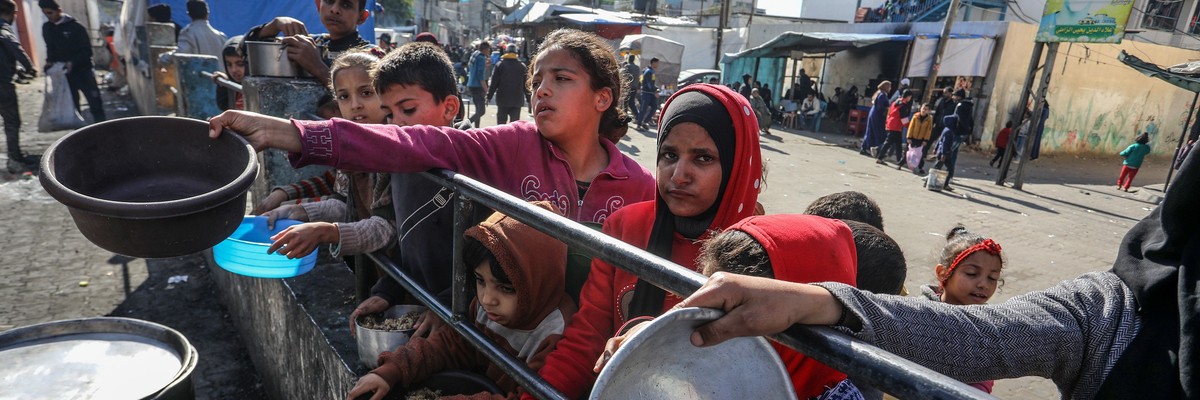
Palestinian children wait in line to receive food in Rafah, Gaza on February 09, 2024.  (Photo: Abed Rahim Khatib/Anadolu via Getty Images)

One Palestinian human rights group called Israel’s evacuation orders “a pretext to push Gaza’s population closer to the border with Egypt in preparation for their mass deportation.”

Israeli Prime Minister Benjamin Netanyahu on Friday ordered the Israel Defense Forces to craft a plan to “evacuate” the population of Rafah, a small city near Gaza’s border with Egypt that’s packed with at least 1.4 million people—most of whom fled there to escape Israeli bombs and troops.

Human rights advocates immediately sounded alarm, stressing that the forcible transfer of civilians is a crime against humanity and that there’s nowhere safe for Gazans to flee as Israeli forces bomb the area and snipers fire on civilians in Khan Younis, a city to Rafah’s north.

“Make no mistake—the entirety of Gaza is a ‘combat zone,'” Frankie Leach, head of media at ActionAid U.K., wrote Friday.

Kenneth Roth, former executive director of Human Rights Watch, was among those asking where the 1.4 million people currently in Rafah are supposed to move.

“Does he plan a mass deportation to Egypt (a blatant war crime)?” Roth wrote on social media.

The Al Mezan Center for Human Rights, a Palestinian organization, called Israel’s evacuation orders “a pretext to push Gaza’s population closer to the border with Egypt in preparation for their mass deportation.”

“Time is running out: The international community must act now to halt the ground invasion of Rafah,” the group added.

Humanitarian aid organizations and United Nations officials have been bracing for an Israeli invasion of Rafah for weeks, warning that any large-scale attack on the densely populated city would be a grave violation of international law.

“A full-scale military operation in Rafah would have devastating consequences for civilians in Gaza who have endured more than four months of trauma, extreme hunger, lack of water, disease, and extremely limited medical resources due to the conflict and siege of the enclave,” CARE International said Friday. “Such an escalation would also bring existing humanitarian operations to a standstill, impacting all of Gaza. The limited aid that is currently able to trickle into the enclave does so from Rafah, and most humanitarian organizations currently operate from there.”

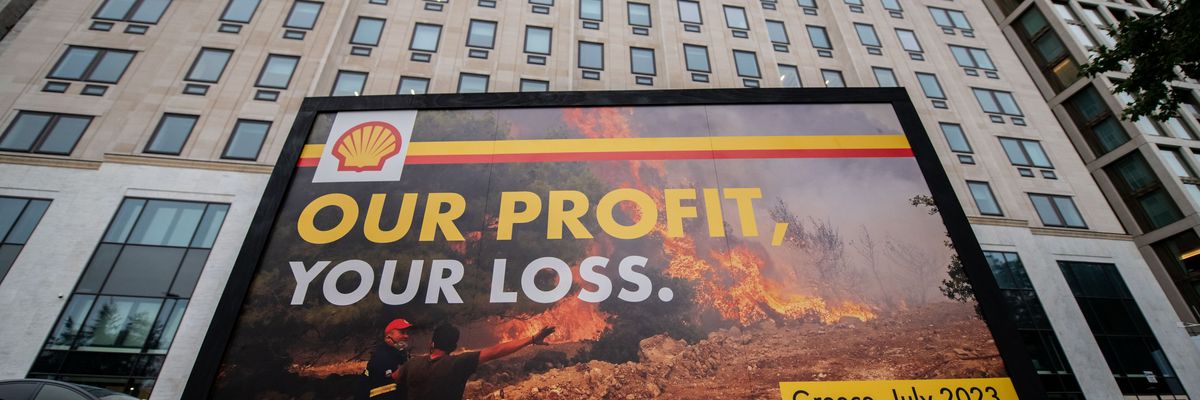
U.N. Secretary-General António Guterres said late Thursday that an Israeli ground assault on Rafah “would exponentially increase what is already a humanitarian nightmare with untold regional consequences.”

“The only thing that will stop this situation spinning even further out of control is an immediate and permanent cease-fire.”

Netanyahu’s office claimed in a statement Friday that “it is impossible to achieve the war objective of eliminating Hamas and leaving four Hamas battalions in Rafah.”

“On the other hand, it is clear that a massive operation in Rafah requires the evacuation of the civilian population from the combat zones,” the statement continued. “That is why the prime minister directed the IDF and the defense establishment to bring to the cabinet a dual plan for both the evacuation of the population and the disbanding of the battalions.”

Yousef Munayyer, a Palestinian American political analyst, wrote in response that “the Israeli PM is ordering ethnic cleansing of the Palestinian refugees amassed in Rafah.”

During the first week of its latest assault on the Gaza Strip, Israel instructed the entire population of northern Gaza—roughly 1.1 million people—to evacuate to the south, then proceeded to bomb evacuation routes and supposed “safe zones.”

Now Israel’s military is preparing to move on the enclave’s last-remaining refuge for displaced people. In recent days, Israeli forces have ramped up airstrikes on the Rafah, destroying houses and killing civilians—including children.

Overcrowding in Rafah, a city that’s about a quarter the size of Baltimore, has become so severe that many people are sleeping on the streets and outside of hospitals in makeshift tents. Hundreds of people have been forced to share a single toilet, and many are starving.

“Now, they may be forced to flee once more as Israeli forces prepare to invade the area. A military assault on the city would lead to thousands of new civilian deaths and injuries,” Medical Aid for Palestinians (MAP) said in a statement Friday. “Urgent action must be taken now if this new crisis in Rafah is to be averted. World leaders need to use all tools at their disposal to demand an immediate and permanent cease-fire, and protection for civilians in Gaza. We reiterate our continuous warnings about the very real prospect of mass displacement of Palestinians into Egypt.”

Rohan Talbot, director of advocacy and campaigns at MAP, wrote in response to Netanyahu’s order that “we’ve warned of this since week one.”

“This is what impunity gets you,” Talbot added.

The U.S., Israel’s top ally and arms supplier, has said it would oppose an Israeli military incursion into Rafah unless adequate steps were taken to protect civilians.

But aid groups warned that it’s impossible to protect civilians without an immediate end to Israel’s bombing and ground assault.

“Where on earth is Gaza’s exhausted and starving population supposed to go?” asked Riham Jafari, advocacy and communications coordinator at ActionAid Palestine, in a statement on Friday. “People are now so desperate that they’re eating grass in a last attempt to stave off hunger. Meanwhile, infections and diseases are running rampant amid such overcrowded conditions.”

“The only thing that will stop this situation spinning even further out of control,” Jafari added, “is an immediate and permanent ceasefire—it’s the only way to stop more lives being lost and to allow enough lifesaving aid to enter the territory.”

Original article by Jake Johnson republished from Common Dreams under Creative Commons (CC BY-NC-ND 3.0).
Continue ReadingIsraeli Plan to Evacuate Rafah by Force Sparks Warnings of ‘Ethnic Cleansing’

Fossil Fuel Giants to Lavish Shareholders With Record Paydays as Climate Crisis Deepens

Spread the love

Original article by JULIA CONLEY republished from Common Dreams under Creative Commons (CC BY-NC-ND 3.0). 
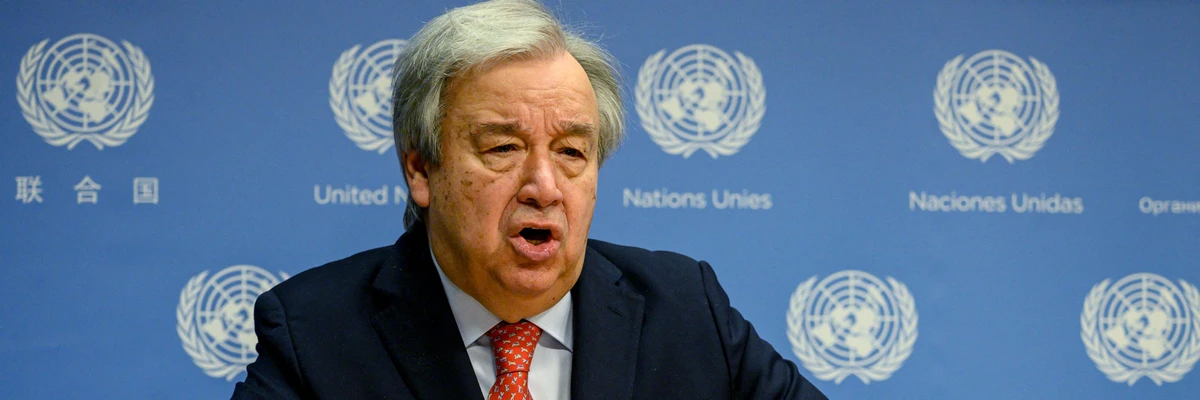
Greenpeace activists display a billboard during a protest outside Shell headquarters on July 27, 2023 in London.  (Photo: Handout/Chris J. Ratcliffe for Greenpeace via Getty Images)

“The global energy crisis has been a giant cash grab for fossil fuel firms,” said one campaigner. “And instead of investing their record profits in clean energy, these companies are doubling down on oil, gas, and shareholder payouts.”

The year 2023 was marked by weather events that made it increasingly clear that the Earth has entered what United Nations Secretary General António Guterres called the “era of global boiling,” with wildfires and prolonged heatwaves impacting millions of people and scientists confirming their suffering was the direct result of fossil fuel extraction and planetary heating.

But for the world’s five largest oil giants, the year marked record profits and the approval of several major new fossil fuel projects, allowing the companies to lavish their shareholders with payouts that are expected to exceed $100 billion—signaling that executives have little anxiety that demand for their products will fall, said one economist.

The companies—BP, Shell, Chevron,ExxonMobil, and TotalEnergies—spent $104 billion on shareholder payouts in 2022, and are expected to reward investors with even more in buybacks and dividends for 2023, The Guardian reported.

Shell announced plans in November to pay investors at least $23 billion—more than six times the amount it planned to spend on renewable energy projects—while BP promised shareholders a 10% raise in dividends and Chevron could exceed the $75 billion stock buyback it announced early last year.

Alice Harrison, a campaigner for Global Witness, noted that fossil fuel shareholders will be enjoying their paydays as households across Europe struggle with fuel poverty and the world faces the rising threat of climate disasters brought on by the industry.

“The global energy crisis has been a giant cash grab for fossil fuel firms,” Harrison told The Guardian. “And instead of investing their record profits in clean energy, these companies are doubling down on oil, gas, and shareholder payouts. Yet again millions of families won’t be able to afford to heat their homes this winter, and countries around the world will continue to suffer the extreme weather events of climate collapse. This is the fossil fuel economy, and it’s rigged in favor of the rich.”

In 2023 campaigners intensified their demands for accountability from the oil, gas, and coal industries, and as of last month had successfully pressured more than 1,600 universities, pension funds, and other institutions to divest from fossil fuels. In the U.S., provisions in the Inflation Reduction Act, which has been touted as the “largest investment in climate and energy in American history,” went into effect.

But Dieter Helm, a professor of economic policy at the University of Oxford, The Guardian that if the industry were truly fearful of policymakers phasing out fossil fuel extraction and expediting a transition to renewable sources, they would be spending far less on new projects and shareholder payouts.

“For this to be the case you would have to believe that the energy transition is happening, and that demand for fossil fuels is going to fall,” Helm told The Guardian.

In 2023, U.S. President Joe Biden infuriated climate campaigners by approving the Willow oil drilling project in Alaska, which could lead to roughly 280 million metric tons of heat-trapping carbon dioxide emissions. His administration also included in a debt limit deal language that would expedite the approval of the Mountain Valley Pipeline, which could emit the equivalent of more than 89 million metric tons of carbon dioxide, while the U.K. government greenlit a massive oil drilling field in the North Sea and French company TotalEnergies continued to construct the 900-mile-long East African Crude Oil Pipeline, which would transport up to 230,000 barrels of crude oil per day.

“These companies are investing a huge amount in new projects, and they’re handing out bigger dividends because they are confident that they’re going to make big returns,” Helm said. “And when we look at the state of our current climate progress, who’s to say they’re wrong?”

Climate campaigner Vanessa Nakate pointed out that the shareholder paydays are expected following a deal on a loss and damage fund at the 28th annual United Nations Climate Change Conference, aimed at helping developing countries to fight the climate emergency. That fund was hailed as “historic” and included a commitment of $700 million from wealthy countries—a sum that is expected to be dwarfed by fossil fuel investors’ profits.

“They have picked people’s pockets, fueled inflation and pollution, and deepened poverty,” U.K. House of Lords member and Tax Justice Network co-founder Prem Sikka said of the oil giants. “Governments do nothing to end their monopolistic control. Need to break-up this cartel.”

Original article by JULIA CONLEY republished from Common Dreams under Creative Commons (CC BY-NC-ND 3.0). 

Continue ReadingFossil Fuel Giants to Lavish Shareholders With Record Paydays as Climate Crisis Deepens

UN Chief Invokes Article 99 to Spur Security Council Action on Gaza

Spread the love
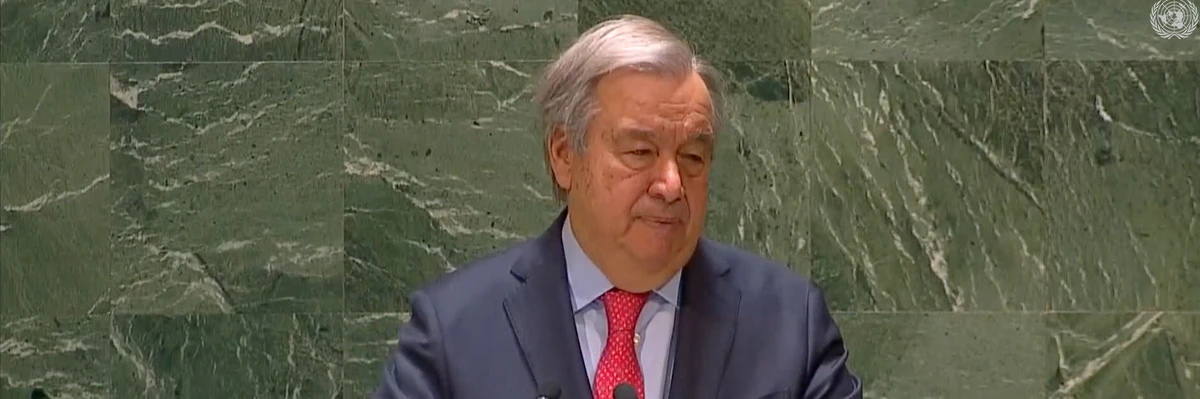
United Nations Secretary-General António Guterres discusses climate change at U.N. headquarters in New York City on July 27, 2023.

“Facing a severe risk of collapse of the humanitarian system in Gaza, I urge the council to help avert a humanitarian catastrophe and appeal for a humanitarian cease-fire to be declared.”

With over 16,000 Palestinians dead just two months into Israel’s war on the Gaza Strip, United Nations Secretary-General António Guterres on Wednesday demanded immediate action by the U.N. Security Council.

For the first time since becoming secretary-general nearly seven years ago, Guterres invoked Article 99, a rarely used section of the U.N. Charter empowering him to bring to the attention of the council “any matter which in his opinion may threaten the maintenance of international peace and security.”

U.N. spokesperson Stéphane Dujarric said that Guterres was invoking Article 99 “given the scale of the loss of human life in Gaza and Israel, in such a short amount of time.”

“I think it’s arguably the most important invocation,” Dujarric told reporters at U.N. headquarters, “in my opinion, the most powerful tool that he has.”

“The international community has a responsibility to use all its influence to prevent further escalation and end this crisis.”

Guterres wrote to José Javier De la Gasca Lopez Domínguez, the Ecuadorian president of the Security Council, that “more than eight weeks of hostilities in Gaza and Israel have created appalling human suffering, physical destruction and collective trauma across Israel and the occupied Palestinian territory.”

The U.N. chief reaffirmed his condemnation of the October 7 Hamas-led attack on Israel—in which around 1,200 people were killed and over 200 others were captured—that led to the war. He called accounts of sexual violence “appalling” and stressed that the remaining hostages “must be immediately and unconditionally released.”

He also emphasized that “civilians throughout Gaza face grave danger,” with the Israeli airstrikes and raids damaging more than half of all homes and displacing about 80% of the 2.3 million residents. Over a million of them have sought shelter at U.N. facilities, “creating overcrowded, undignified, and unhygienic conditions,” while others “find themselves on the street.”

“The healthcare system in Gaza is collapsing,” he noted, pointing out that only 14 of 36 hospitals are operating at all. “I expect public order to completely break down soon due to the desperate conditions, rendering even limited humanitarian assistance impossible. An even worse situation could unfold, including epidemic diseases and increased pressure for mass displacement into neighboring countries.”

Already, conditions in Gaza are making “it impossible for meaningful humanitarian operations to be conducted,” Guterres added. “The capacity of the United Nations and its humanitarian partners has been decimated by supply shortages, lack of fuel, interrupted communications, and growing insecurity.”

“The situation is fast deteriorating into a catastrophe with potentially irreversible implications for Palestinians as a whole and for peace and security in the region. Such an outcome must be avoided at all cost,” the U.N. leader warned. “The international community has a responsibility to use all its influence to prevent further escalation and end this crisis.”

“I urge the members of the Security Council to press to avert a humanitarian catastrophe,” he wrote. “I reiterate my appeal for a humanitarian cease-fire to be declared. This is urgent. The civilian population must be spared from greater harm.”

The United States—a supporter of Israel’s war and one of the U.N. Security Council’s five permanent members—vetoed a mid-October resolution condemning violence against civilians in Israel and Gaza and urging “humanitarian pauses” for aid delivery.

Roughly a month later, the Security Council approved a Gaza resolution that calls on all parties to abide by their obligations under international law and advocates for “urgent and extended humanitarian pauses and corridors.”

Dr. Christos Christou, international president of Médecins Sans Frontières, or Doctors Without Borders, said at the time that “the unacceptably jumbled and sluggish process finally led to the adoption of a text that does not come close to reflecting the severity of the humanitarian catastrophe in Gaza.”

Continue ReadingUN Chief Invokes Article 99 to Spur Security Council Action on Gaza

‘Not Reduce. Not Abate’: UN Chief Calls for Total Fossil Fuel Phaseout at COP28

Spread the love

Original article by Olivia Rosane republished from Common Dreams under Creative Commons (CC BY-NC-ND 3.0).

United Nations Secretary General Antonio Guterres.
United Nations Secretary General António Guterres.

“Humanity’s fate hangs in the balance,” said U.N. Secretary-General António Guterres at second day of global climate conference.

United Nations Secretary-General António Guterres repeated the call for a global phaseout of fossil fuels during his remarks at the opening of the World Climate Action Summit as the U.N. Climate Change Conference entered its second day on Friday.

Guterres delivered a dire warning to the 260 world leaders gathered for the two-day summit taking place within the two week COP28 conference in Dubaias heurged them to ramp up their climate ambitions in the name of the future of human civilization.

“The science is clear,” Guterres said. “The 1.5°C limit is only possible if we ultimately stop burning all fossil fuels. Not reduce. Not abate. Phaseout—with a clear timeframe aligned with 1.5°C.”

“Make this COP count. Make this COP a gamechanger. Make this COP the new hope in the future of humankind.”

Guterres began his remarks on a positive note, congratulating COP28 President Sultan Ahmed Al Jaber for a day-one agreement to operationalize the long-awaited “loss and damage” fund for developing nations. However, he quickly took a somber tone as he described recent visits to Antarctica and Nepal where he had seen ice and glaciers melt.

Guterres began his remarks on a positive note, congratulating COP28 President Sultan Ahmed Al Jaber for a day-one agreement to operationalize the long-awaited “loss and damage” fund for developing nations. However, he quickly took a somber tone as he described recent visits to Antarctica and Nepal where he had seen ice and glaciers melt.

He said the ice loss was “just one symptom of the sickness bringing our climate to its knees. A sickness only you, global leaders, can cure.”

“Earth’s vital signs are failing: record emissions, ferocious fires, deadly droughts, and the hottest year ever,” Guterres continued. “We can guarantee it even when we’re still in November. We are miles from the goals of the Paris agreement—and minutes to midnight for the 1.5-°C.”

The cure could come, Guterres said, with a successful “global stocktake.” The global stocktake is a mechanism of the Paris agreement whereby world leaders assess their progress to date and set new goals. The first global stocktake concludes with the current conference in Dubai, and the process will repeat every five years from here on out.

Guterres made three main recommendations for the first stocktake:

  1. Drastically” reducing emissions: Guterres pointed out that countries’ current nationally determined contributions under the Paris agreement put the world on track for around 3°C of warming and urged them to update their pledges in line with the 1.5°C goal. He said that G20 countries, which are responsible for 80% of emissions, should take the lead on this, and that richer nations should aim to reach net-zero by 2040 while less wealthy ones shoot for 2050.
  2. Speeding a “just transition”: In addition to phasing out fossil fuels, Guterres said countries should agree to triple renewable energy, double energy efficiency, and ensure everyone has access to renewable energy by 2030.
  3. Ensuring “long overdue” climate justice: Guterres called for a “surge in finance” to help poorer, climate vulnerable nations adapt to climate impacts they did little to cause and compensate for loss and damage. He also said that leaders should recommend reforms of the multilateral development banking system so that developing nations could access funds without increasing their debt burden. Finally, he said that wealthier nations must fulfill their promises to provide $40 billion a year in adaptation finance by 2025 and $100 billion a year in climate finance by 2020.

In his remarks on fossil fuels and clean energy, Guterres also addressed fossil fuel executives directly.

“Your old road is rapidly changing,” he said, quoting Bob Dylan’s “The Times They Are a-Changin.'”

Guterres cited International Energy Agency (IEA) figures finding that oil and gas companies provide only 1% of all clean energy investments.

“Do not double-down on an obsolete business model,” Guterres said, addressing fossil fuel CEOs and the hundreds of industry lobbysists in attendance at the conference. “Lead the transition to renewables using the resources you have available. Make no mistake—the road to climate sustainability is also the only viable pathway to economic sustainability of your companies in the future.”

Guterres ended his speech with a call to leadership.

“Humanity’s fate hangs in the balance,” he said. “Make this COP count. Make this COP a gamechanger. Make this COP the new hope in the future of humankind.”

Original article by Olivia Rosane republished from Common Dreams under Creative Commons (CC BY-NC-ND 3.0).

Come gather ’round people
Wherever you roam
And admit that the waters
Around you have grown
And accept it that soon
You’ll be drenched to the bone
If your time to you is worth savin’
And you better start swimmin’
Or you’ll sink like a stone
For the times they are a-changin’

Come writers and critics
Who prophesize with your pen
And keep your eyes wide
The chance won’t come again
And don’t speak too soon
For the wheel’s still in spin
And there’s no tellin’ who
That it’s namin’
For the loser now
Will be later to win
For the times they are a-changin’

Come senators, congressmen
Please heed the call
Don’t stand in the doorway
Don’t block up the hall
For he that gets hurt
Will be he who has stalled
The battle outside ragin’
Will soon shake your windows
And rattle your walls
For the times they are a-changin’

Come mothers and fathers
Throughout the land
And don’t criticize
What you can’t understand
Your sons and your daughters
Are beyond your command
Your old road is rapidly agin’
Please get out of the new one
If you can’t lend your hand
For the times they are a-changin’

The line it is drawn
The curse it is cast
The slow one now
Will later be fast
As the present now
Will later be past
The order is rapidly fadin’
And the first one now
Will later be last
For the times they are a-changin’

Bob Dylan

Continue Reading‘Not Reduce. Not Abate’: UN Chief Calls for Total Fossil Fuel Phaseout at COP28