
As disasters and heat intensify, can the world meet the urgency of the moment at the COP28 climate talks?

Spread the love

Shutterstock

Brendan Mackey, Griffith University

Eight years ago, the world agreed to an ambitious target in the Paris Agreement: hold warming to 1.5°C to limit further dangerous levels of climate change.

Since then, greenhouse gas emissions have kept increasing – and climate disasters have become front page news, from mega-bushfires to unprecedented floods.

In 2023, the world is at 1.2°C of warming over pre-industrial levels. Heatwaves of increasing intensity and duration are arriving around the world. We now have less than 10 years before we reach 1.5°C of warming.

This week, the COP28 climate talks will begin against a backdrop of evermore strident warnings from climate scientists and world leaders. United Nations chief António Guterres has warned climate action is “dwarfed by the scale of the challenge” and that we have “opened the gates of hell”. In his latest climate letter, Pope Francis quotes bishops from Africa who dub the climate crisis a “tragic and striking example of structural sin”.

Global monthly land and ocean anomalies from 1850, relative to the 1901-2000 average
Global monthly land and ocean anomalies from 1850, relative to the 1901-2000 average.
NOAA, CC BY-SA

In the United Arab Emirates, the 198 nations in the UN’s climate framework will gather for COP28. Can we expect to see real progress – or half-measures?

Watch for these three key issues facing negotiators.

1. Taking stock of progress on climate action

This year, a critical issue will be the global stocktake, the key mechanism designed to ratchet up climate ambition under the 2015 Paris Agreement. This is the first time each nation’s emission cut targets and benefits from climate adaptation or economic diversification plans have been assessed.

The stocktake reveals what track we are on. Do the combined emission cut promises from all countries mean we can limit warming to 1.5°C? If not, what is the “emissions gap” – and how much more ambitious do nation’s emission reductions need to be?

There’s been progress, but not nearly enough. If all national emissions pledges became a reality, global warming would peak between 2.1-2.8°C.

That leaves an emissions gap of around 22.9 gigatonnes of carbon dioxide equivalent over the period to 2030.

It is very good that the worst-case scenarios – unchecked warming and 4+ degrees of global heating by 2100 are now looking unlikely. But a 2°C world would bring unacceptable harm and irreversible damage.

We’ll need much more ambitious targets and support to cut global greenhouse gas emissions 43% by 2030 and 60% by 2035 compared with 2019 levels if we are to reach net zero CO₂ emissions by 2050 globally. A major measure of COP28’s success will be whether the major emitting nations agree on more ambitious emission reduction actions.

2. Who pays for climate loss and damage?

For decades, nations have wrestled over the fraught question of who should pay for loss and damage resulting from climate change.

Now we’re close to finalising arrangements for the new Loss and Damage Fund. This will be the second major issue for negotiators at COP28.

So far, governments have drawn up a blueprint for the new fund. Expect to see debate over who will manage the fund – the World Bank? A UN agency? – and whether emerging economies such as China will provide funds. To date, there’s no target for how much money the fund will hold and disburse. The blueprint must be formally adopted at COP28 before it can begin operating.

Why a new fund? Other climate finance commitments are aimed at cutting emissions or helping societies adapt to climate impacts. This fund deals specifically with the loss and damage from the unavoidable impacts of climate change, like rising sea levels, prolonged heatwaves, desertification, the acidification of the sea, extreme weather and crop failures.

Think of the damage from the unprecedented floods in Pakistan or Libya, for instance.

libya flood, image of destroyed city with floodwater from air
Libya’s devastating floods in September killed thousands.
Shutterstock

3. Where’s the climate finance?

A major issue in climate negotiations is how countries can transform their economies so they are “climate ready”, with lower emissions and boosted resilience. For developing countries, this requires massive levels of investment and new technologies to let them “leapfrog” fossil fuel dependency.

This is likely to be a critical sticking point. To date, climate finance has flowed too slowly. Under the Paris Agreement, rich countries promised to provide funds of A$150 billion a year every year. This has been slow in coming, though it is nudging closer, with $130 billion flowing in 2021.

Unless we see significant progress on climate finance – including making the Loss and Damage Fund a reality and meeting the existing commitments – we’re unlikely to see progress on other key issues such as ratcheting up emission cuts under the stocktake mechanism, phasing out fossil fuels and work on preserving biodiversity.

How do you build a 198-government consensus?

One reason climate negotiations advance slowly is the need for consensus.

All 198 governments must agree on each decision. This means any one nation or group of countries can block a proposal or force the wording to be changed in order for it to be approved.

The votes of less wealthy countries – including small island nations and least developed countries – therefore carry as much weight as the G20 nations, who account for about 85% of global GDP. This has in the past worked to increase the level of climate action, including the focus on 1.5°C as the global warming target.

The COP28 President is Sultan Ahmed al-Jaber, who has attracted controversy due to the fact he heads the Abu Dhabi National Oil Company. Expect to see considerable debate over wording. Will governments agree to the “phasing down of fossil fuels” or just the “phasing down of unabated fossil fuels”?

It might sound like quibbling but it’s not – the second option, for instance, implies the heavy use of yet-to-be-proven carbon capture and storage technologies and offsets.

Sultan al-Jaber has, to his credit, promoted some progressive agenda items including a focus on the conservation, restoration, and sustainable management of nature to help achieve the goals of the Paris Agreement.

Here, there are welcome commonalities with the major global biodiversity pact struck late last year, the Global Biodiversity Framework, aimed at stemming the extinction of species and degradation of ecosystems. Healthy ecosystems store carbon and help people adapt to the climate change already here.

As nations prepare for a fortnight of intense negotiation, the stakes are higher than they have ever been. Now the question is – can the world community seize the moment? The Conversation

Brendan Mackey, Director, Griffith Climate Action Beacon, Griffith University

This article is republished from The Conversation under a Creative Commons license. Read the original article.
Continue ReadingAs disasters and heat intensify, can the world meet the urgency of the moment at the COP28 climate talks?

World facing ‘hellish’ 3C of climate heating, UN warns before Cop28

Spread the love

https://www.theguardian.com/environment/2023/nov/20/world-facing-hellish-3c-of-climate-heating-un-warns-before-cop28

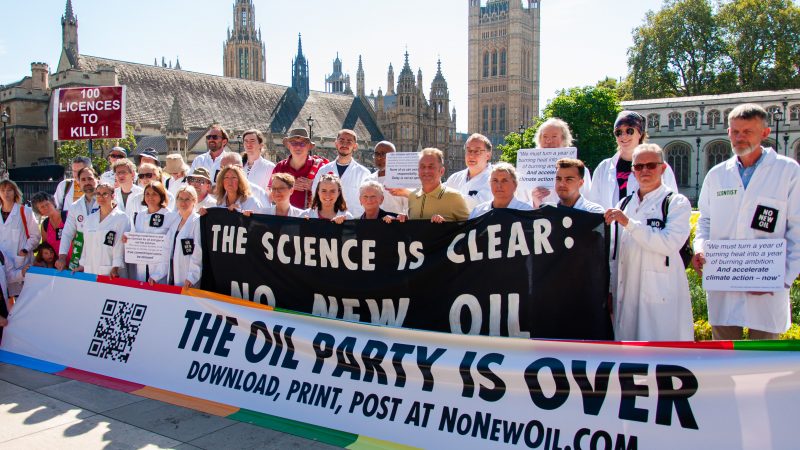
Scientists protest at UK Parliament 5 September 2023.

‘We must start setting records on cutting emissions,’ UN boss says after temperature records obliterated in 2023


World facing ‘hellish’ 3C of climate heating, UN warns before Cop28

‘We must start setting records on cutting emissions,’ UN boss says after temperature records obliterated in 2023

The world is on track for a “hellish” 3C of global heating, the UN has warned before the crucial Cop28 climate summit that begins next week in the United Arab Emirates.

The report found that today’s carbon-cutting policies are so inadequate that 3C of heating would be reached this century.

Temperature records have already been obliterated in 2023 and intensifying heatwaves, floods and droughts have taken lives and hit livelihoods across the globe, in response to a temperature rise of 1.4C to date. Scientists say far worse is to come if temperatures continue to rise. The secretary general of the UN, António Guterres, has said repeatedly the world is heading for a “hellish” future.

The UN Environment Programme (Unep) report said that implementing future policies already promised by countries would shave 0.1C off the 3C limit. Putting in place emissions cuts pledged by developing countries on condition of receiving financial and technical support would cut the temperature rise to 2.5C, still a catastrophic scenario.

To get on track for the internationally agreed target of 1.5C, 22bn tonnes of CO2 must be cut from the currently projected total in 2030, the report said. That is 42% of global emissions and equivalent to the output of the world’s five worst polluters: China, US, India, Russia and Japan.

https://www.theguardian.com/environment/2023/nov/20/world-facing-hellish-3c-of-climate-heating-un-warns-before-cop28

Continue ReadingWorld facing ‘hellish’ 3C of climate heating, UN warns before Cop28

‘Time to Do It for Real,’ Advocates Say as Biden Claims He’s ‘Practically’ Declared Climate Emergency

Spread the love
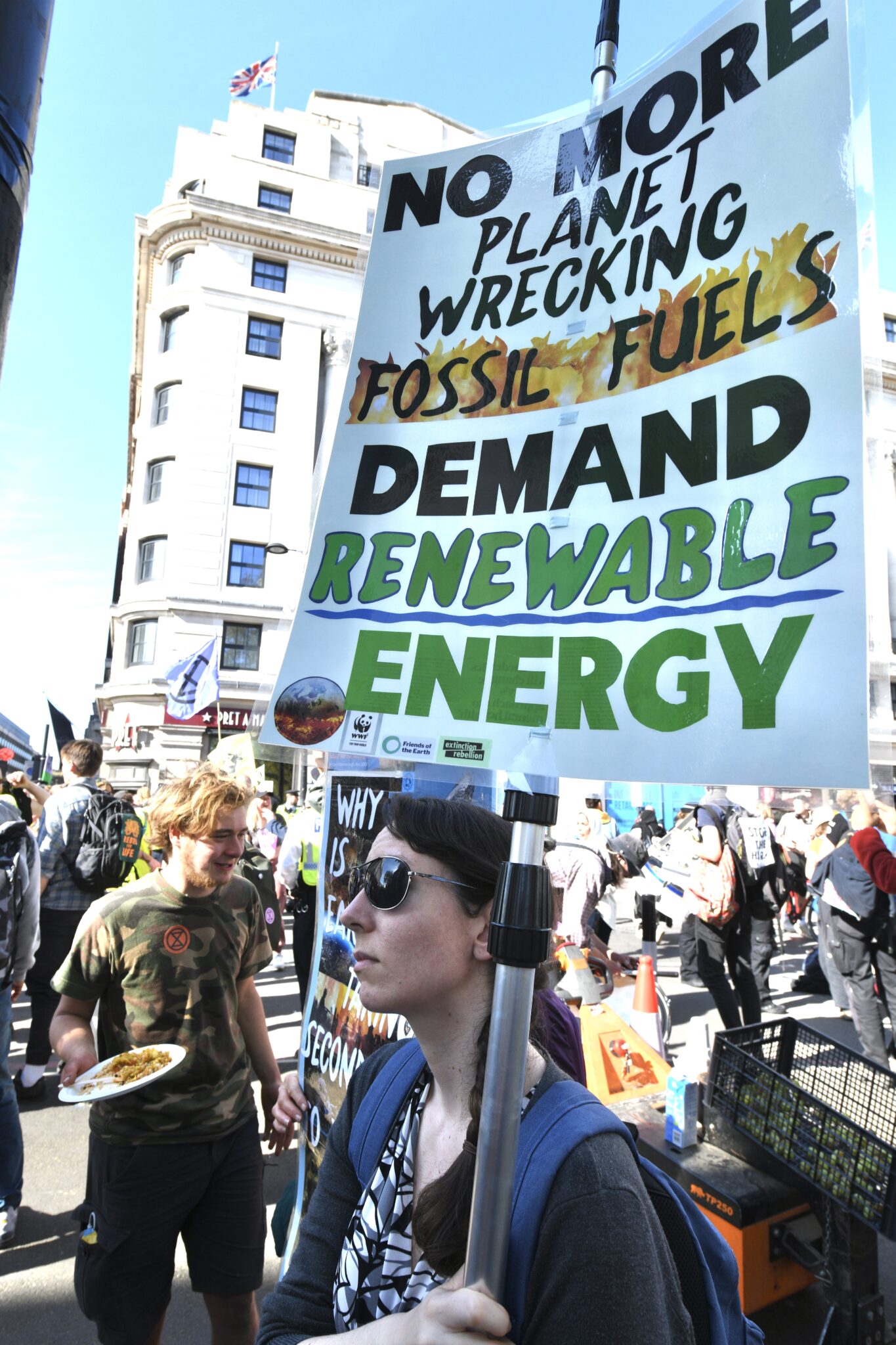
Extinction Rebellion protest, banner reads NO MORE PLANET WRECKING FOSSIL FUELS DEMAND RENEWABLE ENERGY

Original article by Julia Conley republished from Common Dreams under Creative Commons (CC BY-NC-ND 3.0).

“There’s nothing more important than what happens today,” said one environmental lawyer. “And there’s no person in the world with more power to do good than Joe Biden.”

In an interview with The Weather Channel Wednesday, U.S. President Joe Biden signaled he has no plans to formally declare a climate emergency, claiming that his climate policies are sufficient and that, “practically speaking,” a national emergency has already been declared.

When asked if he will take the unprecedented step in order to unlock executive powers to drastically cut fossil fuel emissions, Biden told correspondent Stephanie Abrams, “I’ve already done that.”

The president pointed to $368 billion that was included in the Inflation Reduction Act to invest in clean energy production, actions being taken to conserve land, and his decision to rejoin the Paris climate agreement as evidence that he is taking all the steps that experts have said are necessary to fight the climate crisis.

“We’re moving,” Biden said.

The interview aired days after a reporter asked White House Press Secretary Karine Jean-Pierre about the status of Biden’s reported climate emergency deliberations, noting that NASA climate scientist Peter Kalmus recently wrote in an op-ed that not declaring an emergency is “anti-science.”

Jean-Pierre did not directly address the question but defended Biden’s record, saying he “believes in science” and “talks about climate change.”

“And, you know, it is such a difference to what we see from Republicans who don’t even acknowledge climate change,” she added. “We’re going to continue to move forward to do everything that we can not just here in America, but globally, to be a leader in fighting climate change.”

Kalmus called Jean-Pierre’s response “barely coherent” and demanded to know why the White House won’t declare a climate emergency.

“It’s not enough for Biden to ‘practically’ declare a climate emergency,” said the Institute for Policy Studies on Wednesday after Biden’s interview aired. “It’s time to officially announce one.”

Last summer, Biden reportedly began considering declaring a climate emergency as extreme heat overtook much of the country.

As numerous climate action groups have outlined, a climate emergency declaration would be far from a symbolic gesture. The action, taken under the National Emergencies Act, would allow the White House to:

  • Reinstate the federal ban on crude oil exports—lifted by Congress in 2015—which could slash fossil fuel emissions by as much as 165 million metric tons per year;
  • End oil and gas drilling in more than 11 million acres of federal waters;
  • Halt the investment of hundreds of billions of dollars in fossil fuel projects abroad; and
  • Unlock federal funds that could be used to construct renewable energy infrastructure in communities that are especially vulnerable to climate disasters.

Biden’s comments came weeks after scientists said last month was the hottest month on record, with millions of people from Asia to Western Europe and the United States facing temperatures close to 130°F. The World Weather Attribution said in late July that the extreme heat would have been “virtually impossible” without the climate crisis and continued emissions of heat-trapping gases by the fossil fuel industry.

“As we suffer through these fossil fuel heatwaves, megafires, and floods, [Biden]’s leaving immense powers on the shelf for combating the crisis,” Kassie Siegel, director of the Climate Law Institute of the Center for Biological Diversity, told Common Dreams. “But now is the time for him to actually declare a climate emergency under the National Emergencies Act.”

Siegel added that by dismissing direct questions about an official climate emergency declaration, the White House appears to be employing “the oldest strategy in the book,” long used by administrations that have denied the climate crisis and the need to shift the renewable energy.

“The unfortunate reality is that doing some good things is simply not enough, because we are in a physical climate emergency,” Siegel said. “It is a question of survival and every day counts. There’s nothing more important than what happens today… And there’s no person in the world with more power to do good than Joe Biden.”

While the president has taken some steps to undo harm done to communities by extractive industries—announcing protections from uranium mining for one million acres near the Grand Canyon on Tuesday and launching a $20 billion initiative to invest private capital into clean technology projects last month—he also infuriated climate advocates and experts earlier this year when he approved the Willow drilling project in Alaska. The project could produce more than 600 million barrels of crude oil over three decades and lead to roughly 280 million metric tons of carbon emissions.

The White House also drew criticism last month for its announcement of new regulations for fossil fuel leasing, despite Biden’s campaign promise to ban oil and gas leases on federal lands.

“The truth is, the Biden administration has devastated communities and wildlife by backing disastrous fossil fuel projects from Alaska to Appalachia,” Siegel told Common Dreams. “And what he does today is going to make a huge difference for how much devastation comes in the future.”

Siegel added that with the United Nations set to convene a Climate Ambition Summit on September 20 in New York, “there has never been a better time for Biden to actually declare a climate emergency.”

At the summit, U.N. Secretary-General António Guterres aims to “accelerate action by governments, business, finance, local authorities, and civil society.”

The People vs. Fossil Fuels coalition, comprised of more than 1,200 advocacy groups, said it plans to mobilize ahead of the summit for a March to End Fossil Fuels in New York, aiming to “push President Biden to make a climate emergency declaration official and stop approving these deadly fossil fuel projects once and for all.”

“Now that President Biden says he’s ‘practically’ declared a climate emergency, it’s time to do it for real,” said the coalition. “The president should follow through on his rhetoric and immediately declare a national emergency that would unlock new executive powers to speed up the deployment of clean energy and halt fossil fuel expansion.”

Original article by Julia Conley republished from Common Dreams under Creative Commons (CC BY-NC-ND 3.0).

Continue Reading‘Time to Do It for Real,’ Advocates Say as Biden Claims He’s ‘Practically’ Declared Climate Emergency

As World Leaders Dither, Climate Coalition Announces Global Mobilization to ‘End Fossil Fuels

Spread the love

By JAKE JOHNSON Jun 15, 2023

Original article republished from Common Dreams under Creative Commons (CC BY-NC-ND 3.0). 

“The climate crisis is escalating but so is the global movement for climate justice. We need all hands on deck to win this fight.”

As the United Nations climate talks in Bonn, Germany became the latest in a string of high-profile negotiations to end with little substantive progress, a coalition of environmental groups on Thursday announced plans for a global mobilization that organizers say will bring millions into the streets to demand an end to planet-wrecking fossil fuel production.

The worldwide protests are set to take place on September 15 and 17, days ahead of U.N. Secretary-General António Guterres’ September 20 Climate Ambition Summit in New York City and weeks before the crucial COP28 talks in the United Arab Emirates, which will be overseen by the CEO of one of the world’s largest oil companies.

“The launch of today’s escalation campaign to fight back against fossil fuels builds on the legacy of a diversity of resistance movements from across the world who have been leading the fight against the fossil industry and its pernicious influence,” said Tasneem Essop, executive director of the Climate Action Network. “We expect all governments to implement a rapid, just, and equitable phaseout of fossil fuels together with a scaled-up phase-in of renewables.”

“They have to signal that this is the end of the fossil fuel era,” Essop added. “COP28 is a good place to start.”

“We expect all governments to implement a rapid, just, and equitable phaseout of fossil fuels together with a scaled-up phase-in of renewables.”

The coalition behind the mass mobilization invited people around the world to register local events and issued a list of straightforward demands that they say political leaders must embrace if there’s to be any hope of curbing runaway warming.

“The climate crisis is escalating but so is the global movement for climate justice,” the coalition says on its website. “We need all hands on deck to win this fight.”

The six demands are as follows:

1. No new fossil fuels—no new finance public or private, no new approvals, licenses, permits, or extensions. The provision of sufficient, consensual climate funding to realize this commitment everywhere.

2. A rapid, just, and equitable phaseout of existing fossil fuel infrastructure in line with the 1.5°C temperature limit and a global plan, like a Fossil Fuel Treaty, to ensure that each country does its part.

3. New commitments for international cooperation to drastically scale up financial and technology transfers to ensure renewable energy access, economic diversification plans, and Just Transition processes so that every country and community can phase out fossil fuels.

4. Stop greenwashing and claiming that offsets, carbon capture and storage, or geoengineering are solutions to the climate crisis.

5. Hold polluters responsible for the damage they’ve caused and make sure it’s coal, oil, and gas corporations that pay reparations for climate loss and damage and for local rehabilitation, remediation, and transition.

6. End fossil fuel corporate capture. No to corporations writing the rules of climate action, bankrolling climate talks, or undermining the global response to climate change.

Brenna TwoBears, coordinator of the Indigenous Environmental Network, said in a statement Thursday that “the time is now to end fossil fuels.”

“This has been centuries in the making, when colonizers brought the first extractive systems to Turtle Island and commodified the land,” she added. “But shutting down fossil fuels is only one strand among many to weave a basket to hold up the next seven generations. We need a just and equitable transition, where Indigenous people are leading. We need a culture shift to live in balance with our sky and land relatives. We need real solutions that address the problem at its root, not after the fact. A fossil fuel non-proliferation treaty is that real solution.”

Plans for the global days of action come amid growing frustration and alarm among climate advocates and scientists over world leaders’ continued failure to deliver any meaningful action to phase out fossil fuel use and production—the central driver of the planetary emergency—even as carbon emissions keep rising at a record pace and extreme weather wreaks havoc across the globe.

COP27 in Egypt late last year did not yield any meaningful progress toward a global fossil fuel phaseout, and campaigners feel COP28 is also poised to fail given the still-pervasive influence of the oil and gas industry and rich nations’ refusal to act.

Sultan Ahmed al-Jaber, COP28’s president-designate, is the CEO of the UAE’s state-owned Abu Dhabi National Oil Company.

The Guardian reported last week that “Majid Al Suwaidi, director-general of the COP28 climate talks for its host nation… said governments were not in agreement over whether the phaseout of fossil fuels should be on the agenda for the conference, which begins in November.”

“Al Suwaidi said fossil fuels would form a key part of the discussions at COP28,” the newspaper added, “but whether a phaseout would be discussed as part of the official agenda of the talks was still up for grabs.”

Romain Ioualalen, the global policy lead for Oil Change International, emphasized Thursday that “there is no room for additional fossil fuel expansion while limiting global temperature rise to 1.5°C” and implored world leaders to “urgently lay the path for the end of oil, gas, and coal” at COP28.

“People around the world have been fighting against the fossil fuel industry for years and will escalate this fight this September at the United Nations in New York and beyond to secure a full, fair, fast, and funded fossil fuel phaseout and massive expansion of renewable energy,” said Ioualalen.

Original article republished from Common Dreams under Creative Commons (CC BY-NC-ND 3.0). 

Continue ReadingAs World Leaders Dither, Climate Coalition Announces Global Mobilization to ‘End Fossil Fuels

Taking Aim at Industry, UN Chief Warns Fossil Fuels ‘Incompatible With Human Survival’

Spread the love

Original article republished from Common Dreams under Creative Commons (CC BY-NC-ND 3.0).

“The world must phase out fossil fuels in a just and equitable way—moving to leave oil, coal, and gas in the ground where they belong and massively boosting renewable investment in a just transition,” António Guterres said.

António Guterres (Image: ManfredFX licensed under the Creative Commons Attribution 3.0 Germany).

By Jessica Corbett Jun 15, 2023

As United Nations climate talks came to a disappointing conclusion in Germany on Thursday, U.N. Secretary-General António Guterres delivered remarks in New York City targeting “the polluted heart of the climate crisis: the fossil fuel industry.”

Guterres’ comments came just after he met with civil society leaders and ahead of his September Climate Ambition Summit in NYC, which is set to be followed in November by the U.N. conference COP28, hosted by the United Arab Emirates in Dubai.

“Countries are far off track in meeting climate promises and commitments. I see a lack of ambition. A lack of trust. A lack of support. A lack of cooperation. And an abundance of problems around clarity and credibility,” he said. “The climate agenda is being undermined. At a time when we should be accelerating action, there is backtracking. At a time when we should be filling gaps, those gaps are growing.”

“Meanwhile, the human rights of climate activists are being trampled. The most vulnerable are suffering the most,” Guterres continued, noting that current policies put the world on track for a 2.8°C temperature rise by the end of the century, nearly double the 2015 Paris climate agreement’s more ambitious 1.5°C goal. Hitting the higher number, he said, “spells catastrophe.”

“Yet the collective response remains pitiful. We are hurtling towards disaster, eyes wide open—with far too many willing [to bet it] all on wishful thinking, unproven technologies, and silver bullet solutions,” he declared. “It’s time to wake up and step up. It’s time to rebuild trust based on climate justice. It’s time to accelerate the just transition to a green economy.”

“It’s time to wake up and step up. It’s time to rebuild trust based on climate justice. It’s time to accelerate the just transition to a green economy.”

While acknowledging the important roles of governments and financial institutions—particularly from the Global No[r]th—in the worldwide transition to renewables, Guterres also said that “the fossil fuel industry and its enablers have a special responsibility.”

“The problem is not simply fossil fuel emissions. It’s fossil fuels—period,” he said in what was widely seen as a rebuke of recent remarks from Sultan Ahmed Al Jaber, whose selection as COP28’s president-designate is controversial around the world given that he is also the UAE’s industry minister and CEO of the country’s Abu Dhabi National Oil Company.

“The solution is clear: The world must phase out fossil fuels in a just and equitable way—moving to leave oil, coal, and gas in the ground where they belong and massively boosting renewable investment in a just transition,” Guterres asserted. However, just a tiny fraction of the oil and gas industry’s record $4 trillion windfall last year was put toward a clean future.

Stressing that “the world needs the industry to apply its massive resources to drive, not obstruct, the global move from fossil fuels to renewables,” Guterres called for “credible” transition plans “that chart a company’s move to clean energy—and away from a product incompatible with human survival.”

“Otherwise, they are just proposals to become more efficient planet-wreckers,” he said. Condemning plans that “rely on dubious offsets,” the U.N. leader said that they “must include reducing emissions from production, processing, transmission, refining, distribution, and use.”

While the press conference was far from the first time Guterres has called out the fossil fuel industry, his comments were lauded by campaigners preparing for a global mobilization in September, planned for just before the U.N. chief’s summit.

“The U.N. secretary-general’s speech echoes the call from people from across the world today demanding an end to the era of fossil fuels,” said Alex Rafalowicz, executive director of the Fossil Fuel Nonproliferation Treaty Initiative. “The time for rhetoric, empty promises, and greenwashing is over.”

“Governments must work together to put in place an action plan to move away from dependence on oil, gas, and coal in the fairest and fastest way possible,” Rafalowicz added. “We will be on the streets to ensure peoples’ demands are carried into the negotiation halls in September. Climate impacts are escalating, fossil fuel corporations are digging in, but people are stepping up to end fossil fuels; fair, fast, and forever.”

Guterres’ remarks came as negotiators finished gathering in the German city of Bonn to prepare for COP28.

Oil Change International (OCI) global policy lead Romain Ioualalen said Thursday that “this speech by the U.N. secretary-general is a wake-up call for the countries that wasted two weeks arguing over procedural matters at the Bonn climate conference instead of charting a path towards a COP28 decision to phase out fossil fuels.”

“Countries must step up and fulfill the promises they made in Paris in 2015 to halt fossil fuel expansion and agree to a fair, fast, and full transition away from oil, gas, and coal and towards renewables,” Ioualalen continued. “Over 70 countries have called for a COP28 decision on fossil fuel phaseout in Bonn. Countries like Colombia and the members of the Beyond Oil and Gas Alliance are doing the hard work of implementing measures to keep oil and gas in the ground.”

“The contrast between this leadership and the actions of the world’s biggest historic polluter, the United States, could not be more striking,” he argued, adding that under President Joe Biden, “the U.S. has failed in its responsibility to lead a global and just transition away from fossil fuels and avert further climate disaster and has instead actively promoted fossil fuel expansion including with public money.”

OCI was among over 500 groups that sent a letter Thursday to Biden and leaders of key U.S. federal agencies demanding executive action “to stop expanding oil, gas, and coal production, the core driver of the climate emergency,” by the September summit.

Original article republished from Common Dreams under Creative Commons (CC BY-NC-ND 3.0).

Continue ReadingTaking Aim at Industry, UN Chief Warns Fossil Fuels ‘Incompatible With Human Survival’