Michele Bullock uses speech to detail how central bank is preparing for increased risk of extreme weather events
Global heating will present the Reserve Bank with “acute” challenges, including heightened uncertainty around how the climate will change and the resulting impacts on the economy and financial system, the incoming governor, Michele Bullock, has said.
Bullock, now deputy RBA governor before her elevation to the top post on 18 September, used her Sir Leslie Melville lecture at the Australian National University on Tuesday – after a brief disruption from protesters – to detail how the central bank was preparing for a warming world and the increased risk of extreme weather events.
…
“Climate change and the actions taken in response will have broad-ranging implications for the economy, the financial system and society at large,” Bullock said, including affecting price stability, employment and stability of the financial system.
“The timing and intensity of effects are uncertain, and these could be severe and irreversible if tipping points are reached,” she said.
Patch of Tasman sea expected to warm over spring and summer to temperatures that risk significant losses to sea life
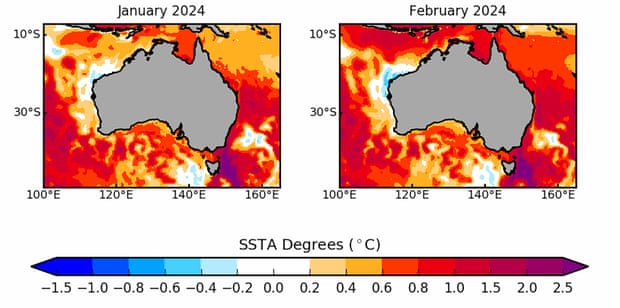
A Bureau of Meteorology map showing sea surface temperatures. The Bureau of Meteorology expects a patch of the Tasman Sea off Tasmania and Victoria will be at least 2.5C above average from September to February.
Australia’s south-east could be in for a marine heatwave that is literally off the scale, raising the prospect of significant losses in fishing and aquaculture.
The Bureau of Meteorology has forecast a patch of the Tasman Sea off Tasmania and Victoria could be at least 2.5C above average from September to February, and it could get hotter.
Oceanographer Grant Smith said the colour-coded scale the bureau uses to map forecast sea surface temperature anomalies stops at 2.5C.
“We didn’t account for anomalies that high when we developed this … it could be 3C, it could be 3.5C, but we can’t see how high it goes,” he said.
Two billion people, including many Australians, will find themselves living in dangerously hot places this century if global warming reaches 2.7℃, research released today reveals.
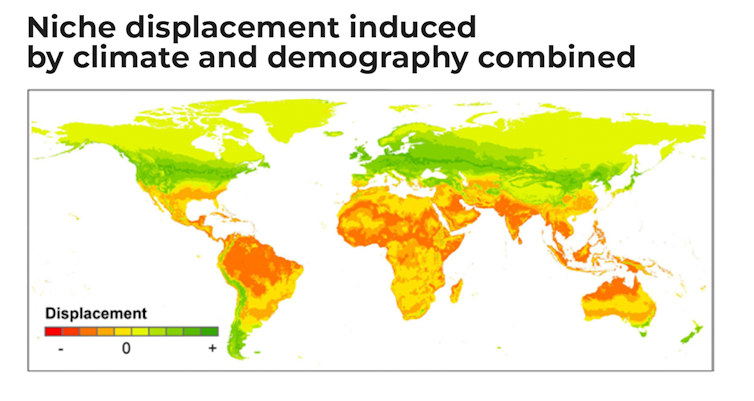
The authors calculated how many people would be left outside the “human climate niche” by 2100. The niche is defined as places with an average temperature of about 13℃, or about 27℃ in the tropics. Human population has historically peaked in these areas.
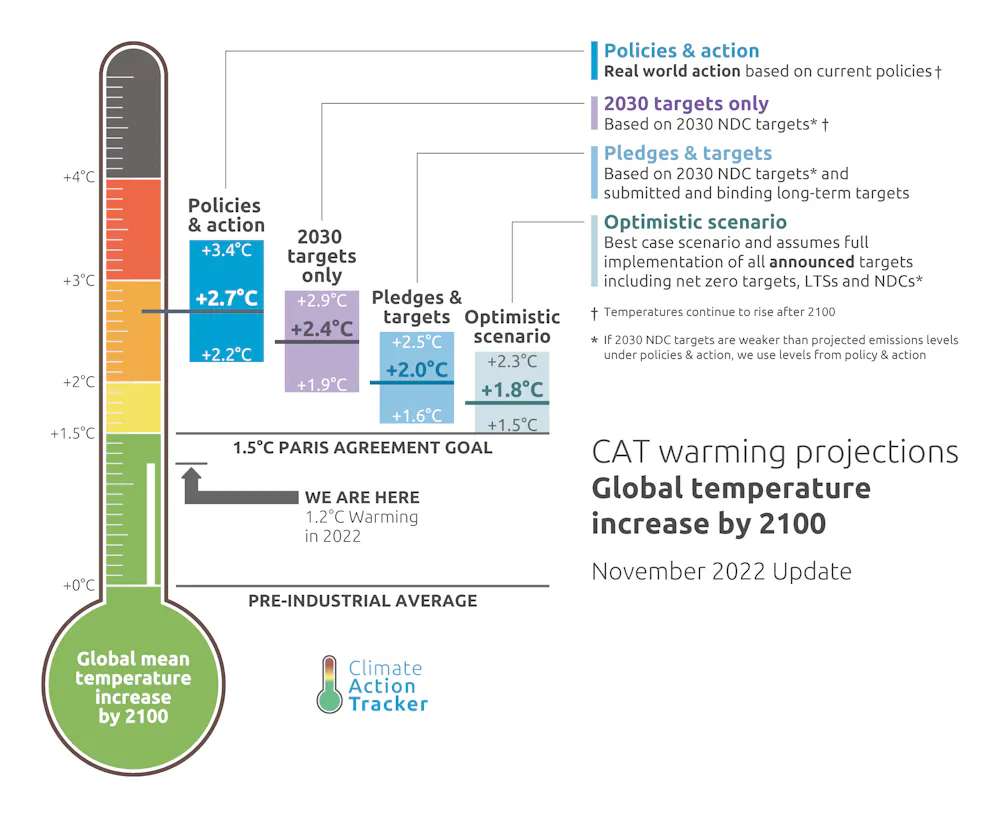
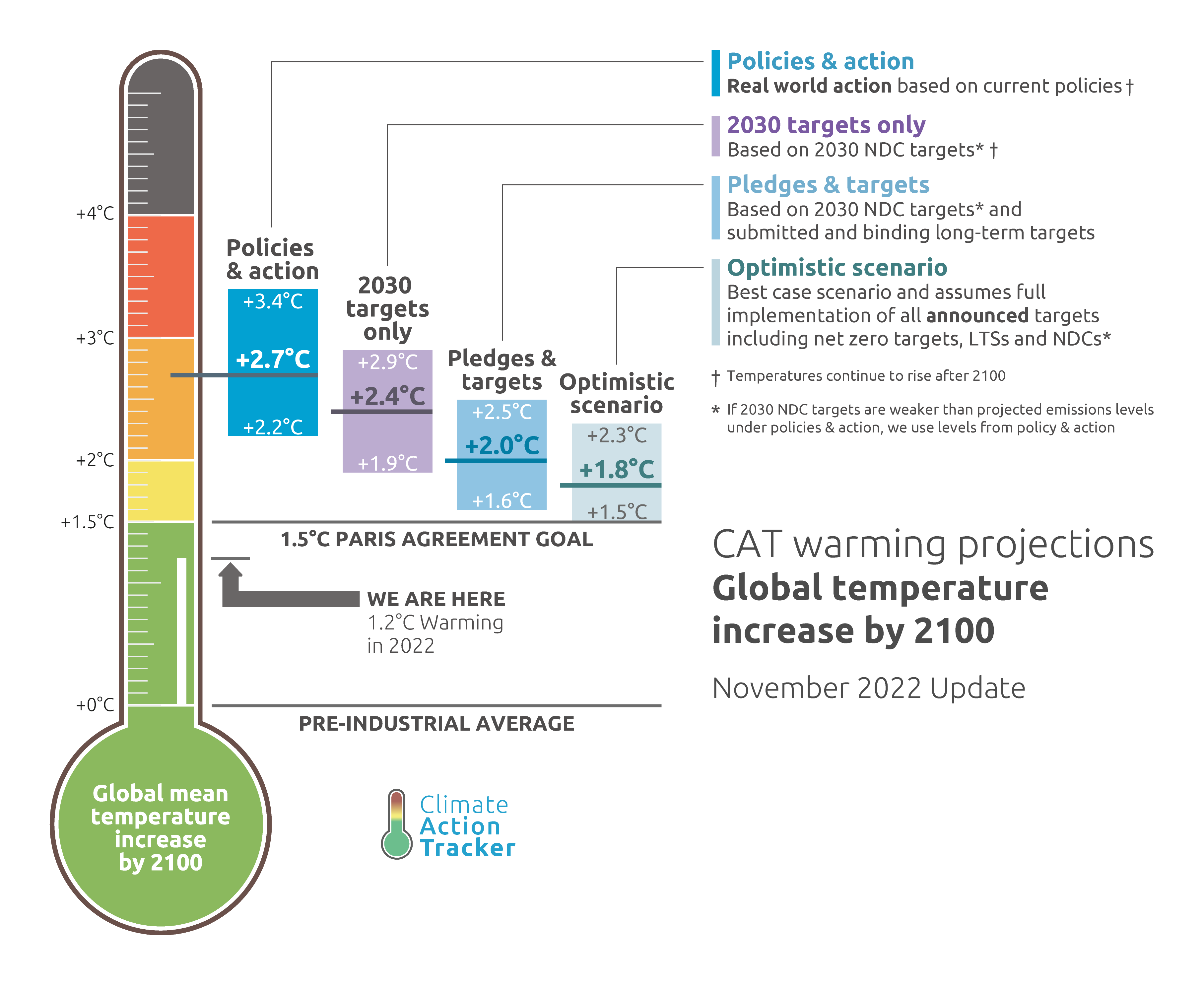
The world is on track for 2.7℃ of warming by 2100. This would push a third of people on Earth outside the human climate niche. This includes people in parts of northwest Australia such as Darwin, Broome and Port Hedland. It also includes parts of Southeast Asia, India, Africa and South America.
Limiting warming to 1.5℃ would substantially reduce the number of people exposed, including most of those affected in northwest Australia.
We were not involved in the research, which was conducted by researchers in the United Kingdom, China, Europe and United States. We are Australian experts in the health implications of global warming. Below, we discuss the broader implications of these globally significant findings.
What is the human cost of global warming?
The research calculated the number of people outside the “human climate niche” under different demographic scenarios and levels of warming. Exposure to unprecedented heat was the main factor pushing people out of the niche.
This includes an average temperature greater than or equal to 29℃, as well as a high number of days with a maximum temperature above 40℃ or in humid places, with a wet-bulb temperature greater than 28℃. The wet-bulb temperature (as opposed to the standard dry-bulb temperature) reflects humidity and is a method used to measure heat stress. That’s because it’s the point at which sweating is no longer effective as a means of cooling.
The study says a wet-bulb temperature of 35 ℃ can be fatal, especially for vulnerable people, because the body can no longer cool itself.
Above the present level of about 1.2 ℃ global warming, the authors found exposure to unprecedented average temperatures increased markedly, along with increased exposure to temperature extremes.
But 2.7 ℃ of warming threatens a third of the world’s population. The below map shows where in the world people will suffer the worst heat. Almost the entire area of some countries, such as Burkina Faso and Mali in West Africa, would be exposed to unprecedented heat.
Just last week, the World Meteorological Organization predicted global surface temperatures would rise to record levels within the next five years. The temperature is also likely to temporarily climb 1.5℃ above pre-industrial levels.
This spells trouble for human health. Even incremental warming increases exposure to health hazards including potentially deadly heatwaves, infectious diseases and diet-related health issues.
Let’s be clear. A 1.5℃ world will result in injury and death, particularly for people in Asia and Africa. Importantly, the people most at risk will be the least capable of protecting themselves: children, the elderly and those with existing health conditions.
While populations closer to the equator are more likely to experience heat-related harm, Australians are by no means immune.
For example, a 2019 study found heat-related health issues in Australia have been grossly underestimated. It found more than 36,000 deaths between 2006 and 2017 were attributable to heat.
And experts predict Darwin could experience an average 265 days a year above 35℃ in a 3℃ warmer world.
The risks to Australia of a 3℃ warmer world (Australian Academy of Science)
To date, the Earth’s average surface temperature has warmed 1.2℃ above pre-industrial levels. We must enact ambitious climate policies now if we are to change our dangerous trajectory.
Historically health has rarely been included in these economic assessments, much less ethical considerations. Emissions reduction policies need to consider health and equity issues, and in doing so can provide governments with a strategic rationale to act.
There are physiological limits to adaptation, particularly to heat. These limits can have negative consequences for labour productivity, especially for outdoor workers, and for health service demand, leading to increased hospital admissions, emergency department visits, and ambulance calls.
Pursuing adaptation measures in an effort to reduce the harmful effects of existing climate change is vital, but to protect the health of all, it is critical that we pursue strong emissions reduction measures.
A commitment to develop and implement a National Health and Climate Strategy and establish a National Sustainability and Climate Unit are promising initiatives. This will help to address our woeful performance in a recent assessment showing how national climate commitments don’t link with health.
Last week, the Victorian Government committed to reducing emissions by 75-80% compared with 2005 levels by 2035. Their analysis indicates it will lead to A$5.7 billion in health benefits from improved air quality between 2035 and 2045.
As today’s new research states, the findings highlight the need for “more decisive policy action to limit the human costs and inequities of climate change”. Australia, in particular, must protect children, the elderly and the broader population from the harms they face in a warmer world.
Annabelle Workman, Research Fellow, Melbourne Climate Futures and Melbourne School of Population and Global Health, The University of Melbourne and Kathryn Bowen, Professor – Environment, Climate and Global Health at Melbourne Climate Futures and Melbourne School of Population and Global Health, University of Melbourne, The University of Melbourne
Chris Barrie says global heating poses larger security threat than China, and Australians should be armed with this information
A former Australian defence force chief has called on the government to release its assessment of the security threats posed by the climate crisis, which he says they received late last year.
Guardian Australia understands the Office of National Intelligence’s “urgent climate risk assessment” looked at how global heating affected Australia’s national security, but relied in part on classified information.
This means the government would have to decide whether, and how, the assessment is released publicly.
The former ADF chief Chris Barrie said he was concerned climate security risks were “missing in action” in the public debate triggered by the Aukus nuclear-powered submarine announcement.
Barrie said it was “rather surprising” that the Albanese government was continuing the previous Morrison government’s framing of China as the predominate security threat to Australia.
“Climate change as a security threat seems to be totally overlooked,” he said.