They are calling it the largest civil disobedience climate protest in the history of Australia.
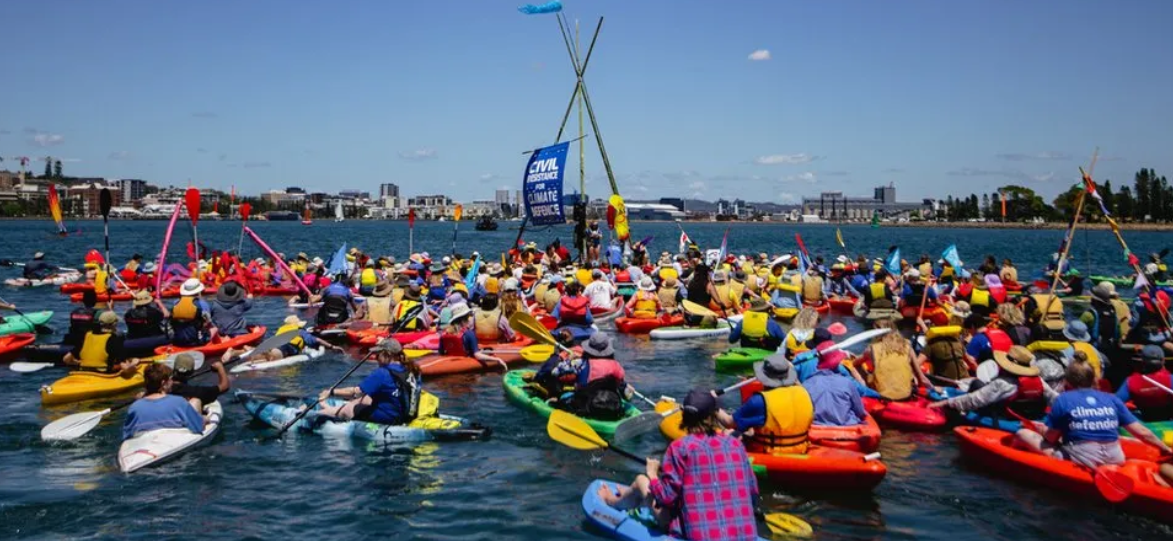
This weekend, thousands of activists, young and old, from across the country descended on the world’s largest coal port at Muloobinba (Newcastle), on Awabakal and Worimi land and water.
The organizers labeled it a family-friendly event with live music and speeches. The plan also included blockading the plant by a sea blockage by kayak, boat, or even surfboard. It was the first time a blockage was planned overnight.
The protest was a huge success. In the end, some three thousand people prevented coal ships leaving for thirty-two hours and stopped half a million tonnes of coal from being exported.
We are two hours in – 32 hours actually! of no coal ships leaving Newcastle harbour – this is cop telling us we shouldn’t be on a pontoon earlier – 6 people staying staunch – over 60 arrested so far for blocking shipping channel with @RisingTideAus#PeoplesBlockade#nonewcoalpic.twitter.com/4eoL6YLUOh
In total, one hundred people were arrested, including 97 year old Reverend Alan Stuart who said: “I am doing this for my grandchildren and future generations.” He became the oldest person ever to be arrested in Australia.
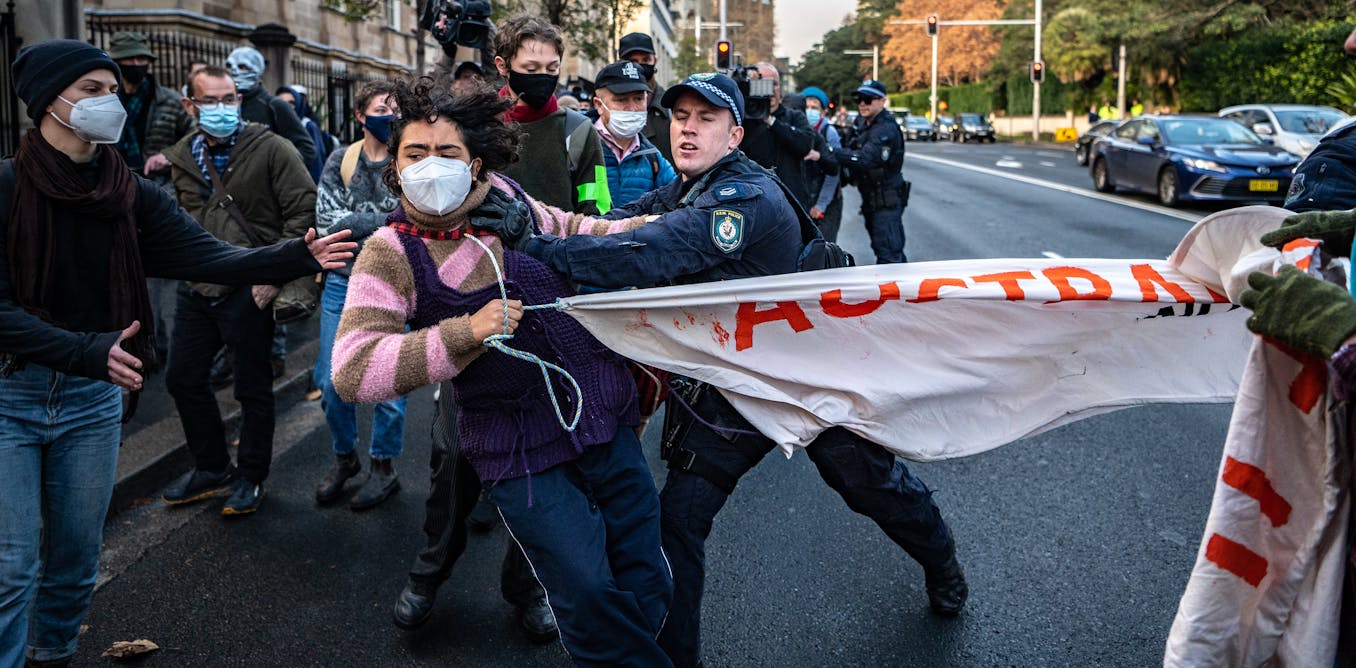
But disruptive protest also consistently generates one negative response: attempts to criminalise it.
Tasmania, Victoria and New South Wales have all recently proposed or introduced anti-protest bills targeting environmental and climate activists. This wave of anti-protest legislation has been described as draconian and undemocratic.
Let’s take a look at how these laws suppress environmental protesters – and whether criminalisation actually works.
How do governments criminalise protest?
The criminalisation of environmental protest in Australia isn’t new.
The bill was resurrected in 2019, but also voted down, an outcome described by the Human Rights Law Centre as a “win for democracy”.
But yet again in 2022, the freedom to protest in Tasmania is under threat. The Police Offences Amendment (Workplace Protection) Bill 2022 proposes fines of up to $21,625 and 18 months jail for peaceful protest.
Tasmania is not an outlier. After the Port of Botany and Sydney climate blockades in March this year, NSW passed the Roads and Crimes Legislation Amendment Bill 2022.
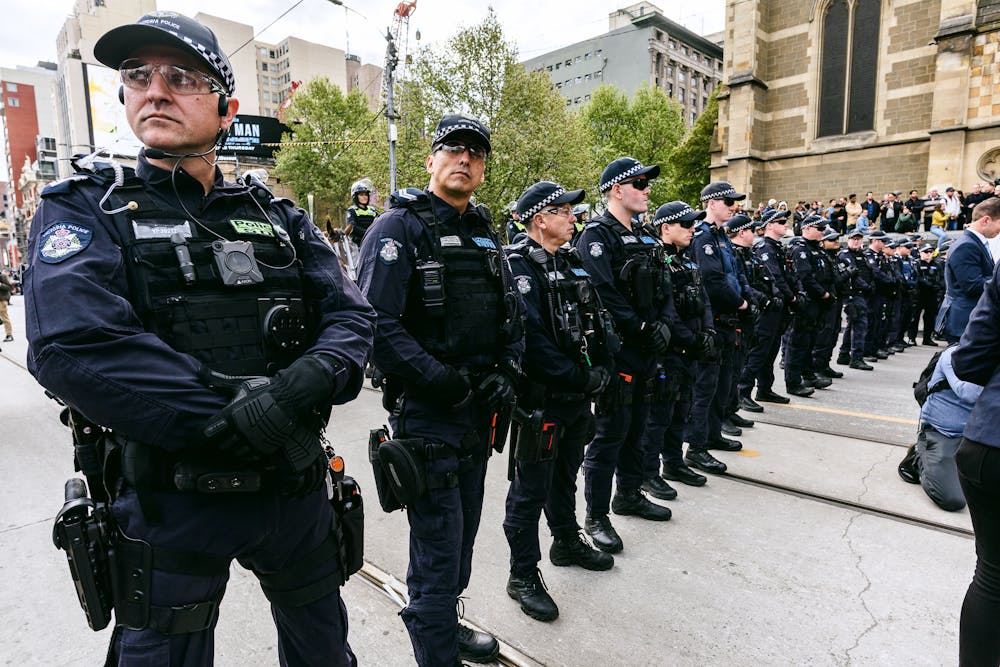
Legislation isn’t the only tool in the toolbox of protest criminalisation. The expansion of police and government discretionary powers is also often used. Examples include:
Corporations also use discretionary powers. Adani/Bravus coal mining company reportedly used private investigators to restrict Wangan and Jagalingou Traditional Owners’ access to their ceremonial camp.
In statements to the ABC and the Guardian, Adani says it is exercising its rights under the law to be protected from individuals and groups who act “unlawfully”.
Another tool for suppressing protest is the use of “othering” language. This language seeks to stigmatise activists, de-legitimise their concerns and frame them as threats to national security or the economy.
We see it frequently after disruptive protest. For example, ministers have recently described Blockade Australia protesters as “bloody idiots”, who should “get a real job”.
The Queensland Premier has described protesters as “extremists”, who were “dangerous, reckless, irresponsible, selfish and stupid”.
Why do governments feel the need to implement harsher penalties?
Some politicians have argued that anti-protest laws act as a “deterrent” to disruptive protest. Critics have also argued that government powers are used as a shield to protect corporate interests.
In its new report, for example, the Australian Democracy Network shows how corporations can manipulate government powers to harass and punish opponents through a process called “state capture”.
But it’s not only civil sector groups and protesters sounding the alarm. Increased repression of our rights to engage in non-violent protest have also been voiced by lawyers, scholars and observers such as the United Nations Special Rapporteur.
Does criminalisation reduce protest?
Numerous organisations have highlighted how criminalising protest and silencing charities threaten democratic freedoms that are fundamental to a vibrant, inclusive and innovative society.
But more than that, these strategies don’t appear to work.
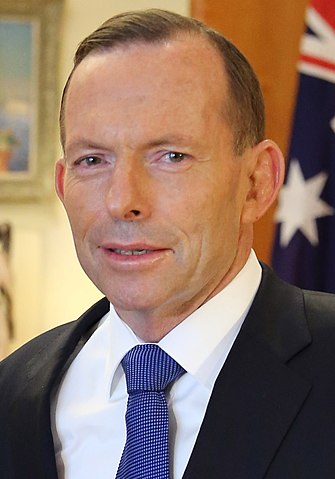
Tony Abbott, CC BY 2.0 <https://creativecommons.org/licenses/by/2.0>, via Wikimedia Commons
Government keeps the ex-Australian leader on the high profile advisory body despite previous calls to sack him over anti-green ties.
Former Australian prime minister Tony Abbott, a director of the UK’s principal climate science denial group, the Global Warming Policy Foundation (GWPF), has been reappointed by the government as an adviser to the prestigious Board of Trade.
Business and Trade Secretary Kemi Badenoch has today announced the 13 advisers who will provide counsel to the Board of Trade – one of the government’s most high profile economic advisory bodies.
The Board of Trade provides advice to the government on its trade deals with foreign countries, which often encompass environmental and climate standards.
The news of Abbott’s reappointment comes as Prime Minister Rishi Sunak is set to make a speech today setting out several delays to the government’s net zero policies. It is thought that he will announce that a ban on the sale of new petrol and diesel vehicles will be pushed back from 2030 to 2035, while also watering down schemes to phase out gas boilers and scrapping new energy efficiency regulations on homes.
Abbott, who was originally appointed to the Board of Trade in September 2020, is one of only four advisers reappointed by Badenoch, who has relaunched the board to focus on exports following her appointment as business and trade secretary earlier this year.
The former Australian leader has been retained despite opposition parties and campaigners calling in February for the government to remove Abbott after he joined the senior ranks of the GWPF.
Abbott has previously said that “climate change is probably doing good” and is a long-standing advocate for coal power, the most carbon-intensive fossil fuel.
Green Party peer Baroness Bennett told DeSmog that, by reappointing Abbott, “Sunak has lined himself up very firmly on the side of Trumpian populism – the direction that the prime minister is clearly increasingly taking as this chaotic Tory government desperately flails its way towards a general election.”
The GWPF was founded by the late Conservative chancellor Nigel Lawson with the purpose of combating what it describes as “extremely damaging and harmful policies” designed to mitigate climate change.
The GWPF has gained a number of high profile directors over the last year. New trustees include Tory peer Lord David Frost, the UK’s former chief Brexit negotiator, Conservative MP Andrea Jenkyns, and Daily Telegraph columnist Allison Pearson.
The GWPF said in 2015 that “policies to ‘stop climate change’ are based on climate models that completely failed to predict the lack of warming for the past two decades”. It has also expressed the view that carbon dioxide has been mis-characterised as pollution, when in fact it is a “benefit to the planet”.
In September 2022, Net Zero Watch – the GWPF’s campaigning arm – published a report which stated that “changing atmospheric carbon dioxide has minimal impact on Earth’s temperature and climate”, and “efforts to decarbonise in the hope of affecting global temperatures will be in vain”.
This year, the world experienced its hottest July on record, with climate change fuelingextreme weather events. The UN’s Intergovernmental Panel on Climate Change (IPCC), the world’s leading climate science body, has warned of the spread of climate misinformation which “undermines climate science and disregards risk and urgency” of cutting emissions.
Tory MP Chris Skidmore, a former energy minister who led a recent review into net zero by the government, said that Sunak risked making “the greatest mistake of his premiership”.
DeSmog has previously revealed that the Conservative Party received £3.5 million in donations from fossil fuel interests and climate science deniers in 2022, while two-thirds of the directors in charge of the party’s multi-million-pound endowment fund have a financial interest in oil, gas, and highly polluting industries.
Businessman David Meller has also been announced as a new adviser to the Board of Trade.
Meller is a Conservative Party donor whose company Meller Designs was given £160 million in personal protective equipment (PPE) contracts during the pandemic via the government’s notorious ‘VIP’ lane.
Meller has donated more than £70,000 to the Conservative Party and its politicians since 2009, including £3,250 to Michael Gove’s short-lived 2016 Conservative leadership bid, with Meller serving as Gove’s finance chair. Meller Designs was referred to the VIP lane by Gove’s office.
Meller has continued to donate to Conservative MPs following the pandemic. Electoral Commission records show that he gave £4,990 to Grant Shapps on 6 July, who was at the time serving as Energy Security and Net Zero Secretary.
There is no suggestion of wrongdoing on the part of David Meller or Meller Designs.
A Department for Business and Trade spokesperson said: “We’ve announced a revamped Board of Trade that brings together a wide range of private sector expertise to help boost British exports, identify barriers to trade and represent the best of Brand Britain to the world.
“All advisers to the board serve in personal capacities, do not speak on behalf of government and do not set government policy.”
Tony Abbott and the GWPF have been approached for comment. David Meller has been approached for comment via Meller Designs.
Prof Lesley Hughes and others says there is ‘cognitive dissonance’ between Labor’s stated commitment to the climate crisis and its policies
The Australian government is “missing half the equation” in acting on the climate crisis by backing a shift to renewable energy but having no plan to get out of fossil fuels, according to an author of a new scientific review.
Prof Lesley Hughes is a leading climate change scientist and member of the independent Climate Council and government advisory body the Climate Change Authority. Hughes said there is a “cognitive dissonance” between Labor’s stated commitment to addressing the problem and the pace at which it is moving.
“The two things are completely at odds with each other,” she said.
Hughes is the co-author of a Climate Council review, released on Wednesday, which found Australia should be cutting national carbon dioxide emissions by 75% by 2030. The government’s legislated target is a minimum 43% cut (compared with 2005 levels).
The report said the country should be aiming to reach net zero emissions by 2035 – much sooner than the current 2050 goal. The finding is broadly consistent with other analyses that have found Australia should be moving more rapidly.