A worker collects engine oil as he works at a degassing station in Zubair oil field near Basra, Iraq
ENERGY firms raked in an excess of £6 billion in Iran war windfall profits this year, it was revealed today as households brace for yet another bill rise at the end of the month.
Campaigners said profits generated in Britain by these companies equate to over £200 for every household in the country, while a further increase in gas prices is expected in the next Ofgem price cap announcement on August 26.
Financial results posted by the world’s top energy firms revealed their British profits are only one part of their global profits, totalling £95bn in 2026.
Analysis from the End Fuel Poverty Coalition (EFPC) revealed the excess profits linked to global energy market disruptions as a result of the US war on Iran, which has increased cost pressures on households in Britain, as well as other countries.
Researchers looked at financial results posted by BP, Centrica, Chevron, Equinor, ExxonMobil, Iberdrola, Shell and Total.
EFPC co-ordinator Simon Francis said windfall profits must be considered alongside previous findings saying a third of households are “on the brink of, or are in energy debt.”
“These price shock profiteers are doing very well out of the Iran conflict, but they are doing little to solve the underlying problems,” Mr Francis said.
“As people brace for the next price cap announcement on August 26 and a third of households are on the brink of or in energy debt, the energy industry watches the profits climb.”
Article by republished from Common Dreams under Creative Commons (CC BY-NC-ND 3.0).
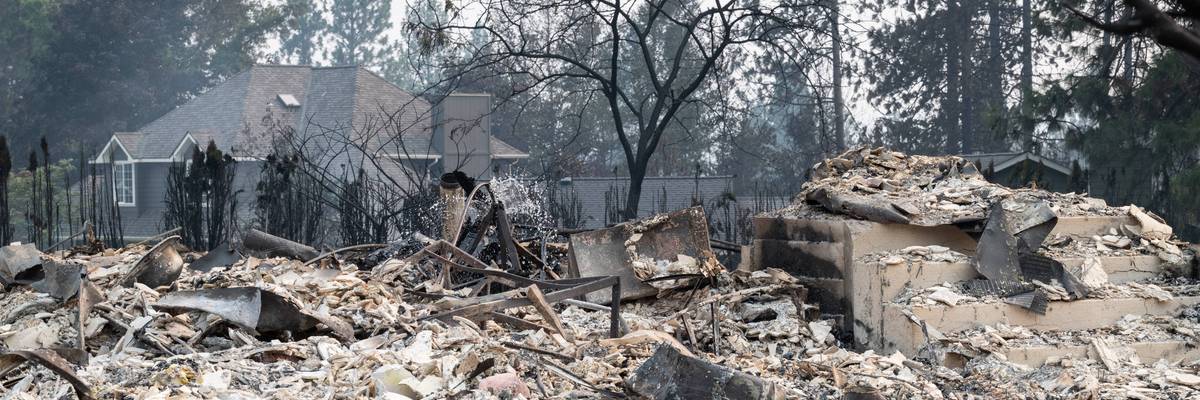
The rubble of a burned out residential home smolders in the Balboa neighborhood of Spokane, Washington, on August 2, 2026. (Photo by Erick Doxey/AFP via Getty Images)
“The fossil fuel industry may not have struck the match, but the climate crisis they drove has loaded our landscapes with tinder,” said an environmental activist.
Over 60,000 people were ordered to evacuate the Spokane area over the weekend as it was devastated by what Democratic Washington Sen. Maria Cantwell called the “top fire” in a nation currently being scorched by climate-fueled blazes.
Illustrating how the climate crisis is already impacting lives and communities across the country and the globe, three raging fires reportedly consumed over 600 structures as of Sunday, including homes and businesses, and reduced entire streets to their foundations.
At a briefing on Sunday afternoon, officials said more than 250,000 acres were burning across Washington, but reported no deaths or injuries.
Spokane Mayor Lisa Brown called it “the worst natural disaster our region has faced.”
Democratic Gov. Bob Ferguson has requested assistance from the Federal Emergency Management Agency (FEMA), which is under the Trump administration’s Department of Homeland Security (DHS).
Sen. Patty Murray (D-Wash.) wrote on social media that she had spoken with Homeland Security Secretary Markwayne Mullin and that he “made clear the federal government will do everything it can to support response and recovery,” though President Donald Trump has previously intervened to block disaster aid to Democrat-led states.
While the fires moderated over the weekend, on Monday they remained largely uncontained and continued to spread due to dry conditions from recent severe droughts in the region, exacerbated by rising global temperatures.
This is Spokane, Washington. Right now. First weekend of August.
“This is climate change playing out live in real time,” said meteorologist and Climate Central journalist Shel Winkley in a video about the Spokane fires.
Warmer temperatures, he explained, have caused a vicious cycle of “weather whiplash” in which greater winter rainfall facilitates plant growth before harsher summer heat domes suck moisture from these plants, turning them into a tinderbox.
“Northeastern Washington and central Oregon now see at least three more weeks of fire weather days each year than they did just back in the 1970s,” Winkley said. “More fire weather days means more chances for a spark, any spark, to turn into this.”
The blazes are part of a nationwide trend, with wildfires this year more severe on average than in previous years. Over the past decade, the average annual acreage burned in the US was more than double the average of the late 1980s and early 1990s, according to data from the National Interagency Fire Center.
Last week, an Oxfamanalysis of data published in the journal Nature found that emissions from just five oil companies—BP, Chevron, ExxonMobil, Shell, and TotalEnergies—were sufficient to cause around 1 in 4 heatwaves reported globally between 2000 and 2023—“heatwaves that would have been virtually impossible without human-made climate change.”
Using S&P Capital Trucost data, the group estimated that Big Oil was responsible for more than $60 billion in environmental damage last year.
But as costs fall on the public, oil companies like Chevron and ExxonMobil have reported record profits of $12.1 billion and $14.5 billion over the past quarter, in part due to global oil price spikes driven by Trump’s war with Iran.
“The fossil fuel industry may not have struck the match, but the climate crisis they drove has loaded our landscapes with tinder,” said Clémence Dubois, the campaigns director for the environmental group 350.org. “Chevron and Exxon are profiteering from a model of distraction, leaving ordinary people to pay the price with higher bills and devastating impacts such as these fires. These profits feel almost criminal.”
Jay Inslee, Washington’s former Democratic governor and a longtime advocate for policies to combat the climate crisis, said on Sunday that his friend, a legislator from Spokane, had been forced to flee his home due to the fires.
“Climate change isn’t some faraway threat,” Inslee said. “It’s happening right now, to our neighbors and friends. We have to fight for them.”
Nigel Farage urges you to ignore facts and reality and be a climate science denier like him and his Deputy Richard Tice. He says that Reform UK has received £Millions and £Millions from the fossil fuel industry to promote climate denial and destroy the planet.Donald Trump urges you to be a Climate Science denier like him. He says that he makes millions and millions for destroying the planet, Burn, Baby, Burn and Flood, Baby, Flood.Power-mad orange gasbag Donald Trump says Burn, Baby, Burn.
UK’s weak lobbying laws leave public in the dark about Flint Global’s vast access to government under James Purnell
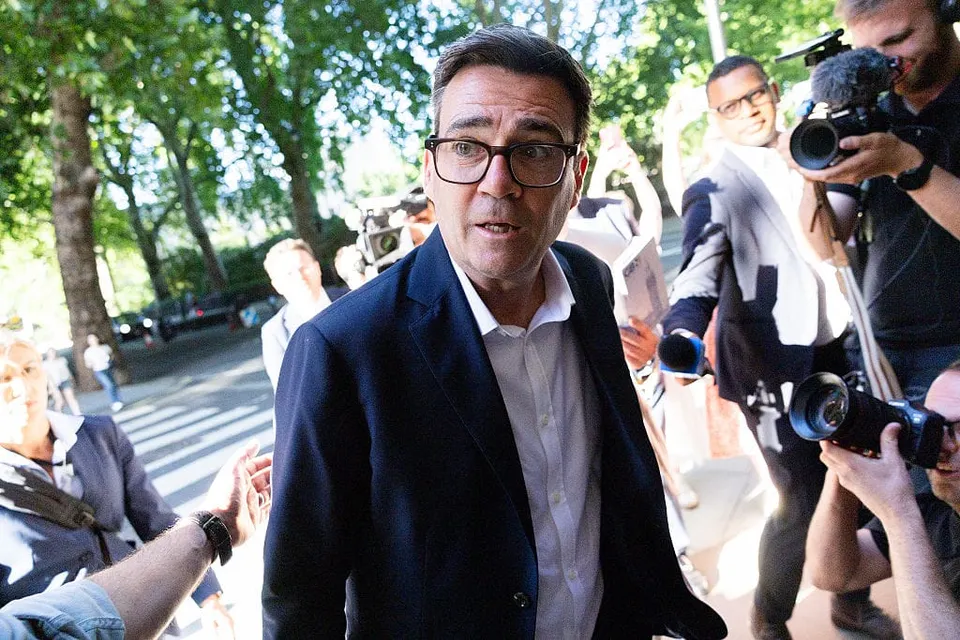
Flint Global, the lobbying firm run by Andy Burnham’s incoming chief of staff, James Purnell, held extensive meetings with ministers, senior officials and special advisers with minimal disclosure, openDemocracy can reveal.
Our analysis of public transparency releases revealed Flint’s staff members met with officials from at least nine government departments on 38 occasions – for meetings, breakfasts, lunches, dinners and roundtables – since Labour took office. Attendees included cabinet ministers Jonathan Reynolds, Douglas Alexander and Nick Thomas-Symonds. This figure is likely an undercount as records of such meetings are published months in arrears.
While Flint Global opts not to reveal its client list in the UK, EU transparency disclosures reveal it has lobbied politicians in Brussels on behalf of Microsoft, Apple, BP and Uber. In the UK, the firm is known to have advised Thames Water – the utility Burnham has said “should be” nationalised.
Our findings raise fresh questions about the interests of Purnell, a former Blair-era cabinet minister who is poised to become one of the UK’s most powerful unelected officials when Burnham enters No 10, and have sparked fresh calls for the UK’s weak lobbying laws to be reformed.
One government log appears to confirm just how routine its engagements with Flint were.
A September 2024 meeting between the lobbying firm and the Department for Business and Trade’s then top-ranking civil servant, Gareth Davies, is described as a “regular meeting to discuss latest business updates”. Purnell is also recorded as having hosted “evening drinks to discuss latest business updates” with Davies in March this year.
Yet despite this regular access to government officials, Flint’s quarterly entries to the Office of the Registrar of Consultant Lobbyists have only ever declared lobbying for two clients. The firm said it lobbied on behalf of the British Standards Institution, which produces technical standards on a range of products and services, in late 2024, and Hellen Systems, a tech firm working on long-range navigation, between July and September 2025.
Across the remaining six quarters that Labour has been in office – covering a total of 18 months – Flint declared having made “no communications which meet the definition of consultant lobbying”.
There is no suggestion that Flint has broken any rules. Rather, its near-empty register reflects major flaws in Westminster’s lobbying transparency rules. While few companies enjoy such extensive access to such wide-ranging government departments, much of Flint’s lobbying activity does not meet the threshold for statutory registration.
The 2014 Lobbying Act requires consultant lobbyists to register only direct communications with ministers or permanent secretaries made on a client’s behalf. They do not have to declare meetings with government special advisers, director generals and senior officials, nor roundtables and briefings that they attend or organise, nor strategic advice they give clients about who to speak to in government, what to say, and when to say it.
The result is that a firm such as Flint Global can maintain a regular presence across Whitehall – breakfasting with officials, dining with ministers, pre-briefing advisers – while lawfully declaring that it does no consultant lobbying at all. Many similar lobbying firms sign up to the industry body’s voluntary code of conduct, which requires them to publish a client list, but Flint has not opted to do so.
This means the public has no way of knowing whether decisions that cross Purnell’s desk in No 10 could benefit his former clients.
Duncan Hames, senior director of policy at Transparency International UK, told openDemocracy: “That a lobbying company can have dozens of meetings across government with so little public information about the purpose of these engagements shows how opaque Westminster remains.
“If the next prime minister wants change from the broken politics-as-usual, they should recognise that keeping things behind closed doors and poorly managing conflicts of interest are recipes for disaster.
“Government should create a firewall between any new appointments and their past interests in the private sector, as well legislating to bring lobbying out of the shadows.”
Vast access to Whitehall
Purnell, who resigned from Flint Global last week, joined the company as chief executive in June 2024 – weeks before Labour’s election win. Although the lobby firm had previously secured meetings with Conservative government officials, its engagement with the government appears to have ramped up that summer.
In July 2024, the firm hosted a roundtable with then-business secretary Jonathan Reynolds alongside Barclays, Google and Virgin Atlantic to discuss “opportunities and challenges relating to business growth”. It is not known whether Flint counts these firms among its UK clients, though EU transparency records reveal it has lobbied for Google in Brussels.
Over the following 20 months, Flint met ministers or officials from the Department for Business and Trade at least 13 times, including three meetings with trade minister Douglas Alexander and repeated meetings, breakfasts, dinners and drinks with civil servant Gareth Davies.
Over at the Treasury, Flint discussed the contents of the chancellor’s January 2025 growth speech with a senior official the day it was delivered, attended a roundtable on financial services policy with then City minister Emma Reynolds, and met a senior official to “discuss policy for Autumn Budget” in October 2025.
Department for Transport special adviser Stef Lehmann, who previously worked in Flint’s transport team, accepted lunch or dinner from Flint on three separate occasions, while the department’s permanent secretary, Bernadette Kelly, recorded a “speaking commitment” with the firm.
Flint also hosted or briefed senior officials at the Department for Science, Innovation and Technology on digital policy; met officials from the Department for Energy, Security and Net Zero to discuss new publicly owned energy investment firm Great British Energy; and discussed planning “blockers” with Chris Stark, the head of the government’s clean power mission.
The firm also had contact with the Cabinet Office, the Department for Education, the Ministry of Housing, Communities and Local Government and the Department for Health and Social Care, whose special adviser, Heather Iqbal – another ex-Flint employee – was taken to breakfast by Purnell in August 2025.
Several of the engagements were roundtables organised around Flint’s corporate network. A March 2025 meeting with Douglas Alexander to discuss “the current trading environment” brought together more than 20 companies, including Amazon, Uber, Diageo, Unilever, GSK and Quadrature – the hedge fund that donated £4m to Labour before the 2024 election. The British Standards Institution, one of the only two clients Flint has ever been required to declare, was also present, although Flint did not declare any consultant lobbying for the company in this quarter.
Following Purnell’s resignation, Flint Global said Purnell “has recused himself from all client activity and has no ongoing financial interest in the company of any kind.”
Flint Global and Andy Burnham’s team were approached for comment.
Commenting on the new energy price cap announced today by the Regulator Ofgem, that could see a 13% increase in a typical household’s energy prices, Hannah Spencer, Green MP for Gorton and Denton, said:
“Today’s Ofgem price cap announcement will leave so many people even more stressed out and worried about affording their energy bills. Millions of people are already struggling to make ends meet, and it is unacceptable that energy costs continue to shoot up whilst BP’s profits double.
“We need immediate government intervention. Rachel Reeves needs to step in and freeze the cap before energy bills go up on July 1st. And if she’s wondering how to pay for it, there are some people doing very well out of this crisis. The government should start by taxing every penny of the huge windfall profits oil and gas giants have made since the start of the illegal war on Iran.
“Our energy market is incredibly unfair, built to line the pockets of shareholders whilst working people foot the bill. It’s a damning indictment of rip off Britain that simply keeping our homes warm enough in winter and cool enough in summer has become a luxury very few people can afford. We need urgent action, now.”
The price of oil has surged as a result of the US-Israel war on Iran, up 60 per cent since it started on February 28.
BP said Brent crude prices averaged $81.13 (£60) a barrel over the first quarter as a whole, up from $63.73 (£47) a barrel in the previous three months.
The oil giant said that for every dollar increase in the price per barrel of oil results in a $340 million (£250m) rise in pre-tax operating profits.
Uplift deputy director Robert Palmer told the Star: “While millions of people are worrying over their energy bills, oil companies like BP are raking in billions of profits.
“It’s clear that the UK’s dependence on fossil fuels is making all of us poorer – all except for the oil and gas bosses and their shareholders who once again will cash in at our expense.
“The only way to insulate ourselves from energy shocks and protect the climate is to ramp up on renewables, and upgrade homes with solar power, batteries and heat pumps. We also need to support those who need it most with financial help.”
dizzy: It’s worth reflecting on whether the overarching intention is to inflate oil prices: Trump is hugely financially supported by the oil companies of course, they financed his second successful election campaign. The oil price is kept high and the Trump administration make some extremely dubious and unsubstantiated announcements to prevent it getting much above a hundred dollars a barrel. There’s the lies that Trump & Co are imposing a blockade on Iran or that there are negotiations going to happen soon for example. Unsubstantiated and extremely likely untrue but it appears adequate for oil traders to play along.
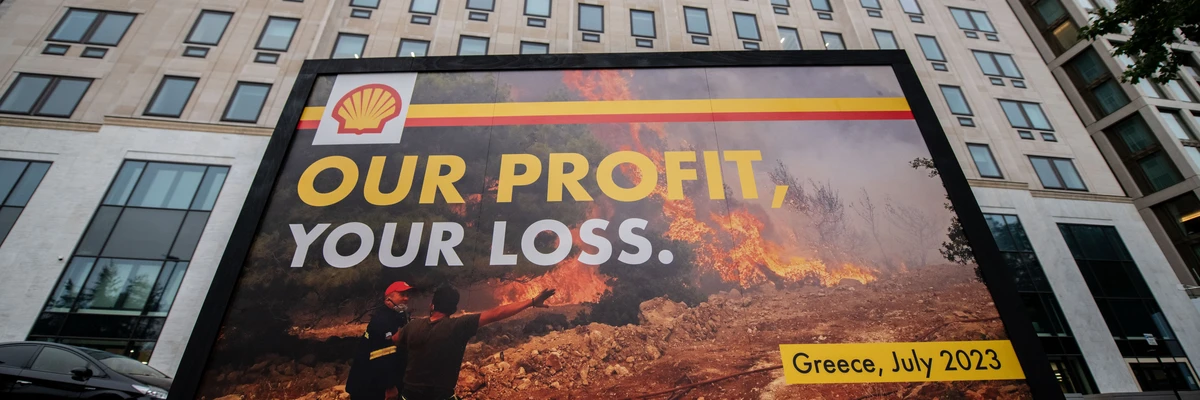
Greenpeace activists display a billboard during a protest outside Shell headquarters on July 27, 2023 in London. (Photo: Handout/Chris J. Ratcliffe for Greenpeace via Getty Images)Donald Trump urges you to be a Climate Science denier like him. He says that he makes millions and millions for destroying the planet, Burn, Baby, Burn and Flood, Baby, Flood.
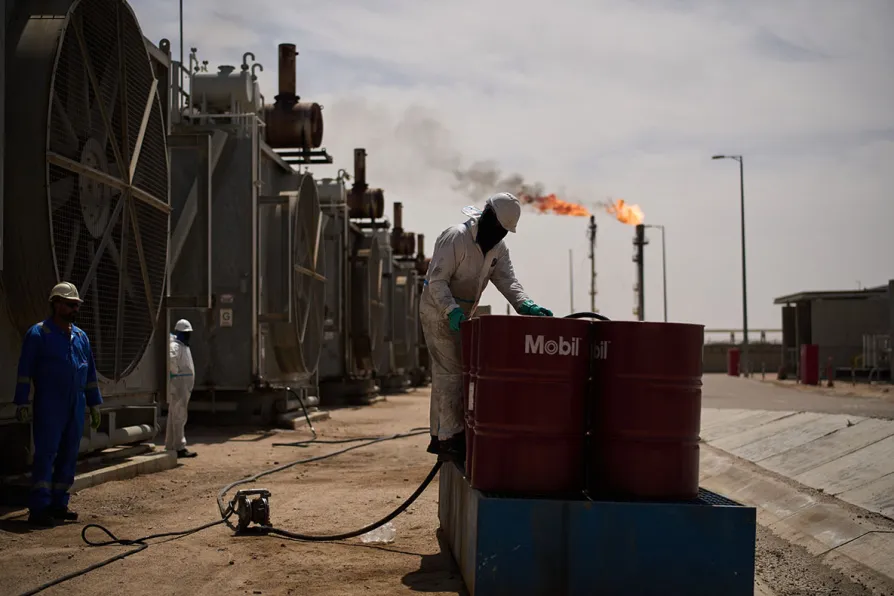
 A worker collects engine oil as he works at a degassing station in Zubair oil field near Basra, Iraq