NHS news review

Spread the love

Dave Prentis, UNISON General Secretary responds to Cameron’s Tory Party conferennce speech: “And health workers and patients up and down the country will not be fooled by his warm words on the health service. They know you can’t trust the Tories on the NHS.”

BMA renews it’s call for the Destroy the NHS / Health and Social Care bill to be rejected.

NHS ‘Big Weekend’ this weekend.

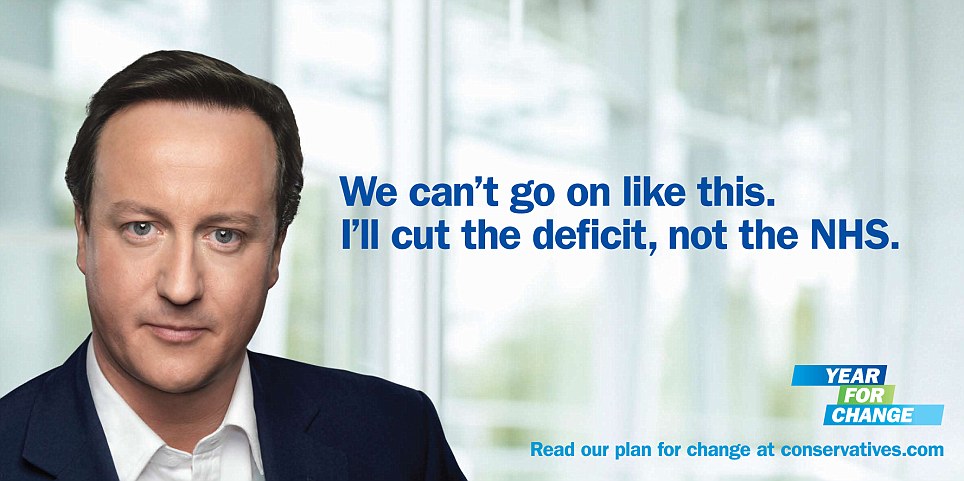
Conservative election poster 2010

A few recent news articles about the UK’s Conservative and Liberal-Democrat coalition government – the ConDem’s – brutal attack on the National Health Service.

UNISON Press | Press Releases Front Page

UNISON, the UK’s largest union, said today that David Cameron’s speech showed just how out of touch he is with hardworking people and their families. The union said he was wrong on the economy, wrong on the NHS, and wrong on public sector pensions.

Dave Prentis, UNISON General Secretary, said:

“David Cameron is out of touch with the reality of many working people’s lives. Thousands of families in the UK struggle to make ends meet, and many of them are worried about losing their jobs. Millions are out of work, with young people hit especially hard. This speech offers them no hope at all.

“And he is wrong to say that it’s fair to make public sector workers work longer and pay more for their pensions. There is no public sector pensions crisis – the schemes don’t need this drastic change. Government ministers’ plans are just an extra tax on public sector workers to pay down the deficit.

“While ordinary, hardworking families shoulder a huge burden for the crisis, bankers are still making off with billions in bonuses.

“And health workers and patients up and down the country will not be fooled by his warm words on the health service. They know you can’t trust the Tories on the NHS.”

BMA renews call for Health Bill withdrawal | GPonline.com

The BMA has approached the House of Lords in a renewed call for the Health Bill to be withdrawn.

In a letter to peers BMA chairman Dr Hamish Meldrum warned that the Bill still ‘poses an unacceptably high risk to the NHS in England’.

The BMA has sent letters and briefing papers to the every peer in the House Lords calling for the Bill to be withdrawn or substantially amended. Debate in the Lords begins on Tuesday.

Dr Meldrum said that the Bill will ‘make it harder to create the seamless, efficient care that everyone agrees is key to future sustainability.’

The BMA still had concerns over the lack of clarity on how the plans would be implemented, Dr Meldrum said.

He described reforms as ‘most radical restructuring of the NHS in a generation’, particularly in light of the rapid rollout taking place before the legislation has been enacted.

The Lords must address the need for an explicit provision that the health secretary will retain ultimate responsibility for the provision of comprehensive health services, the BMA said.

House of Lords Business (Thursday 6 October 2011 at 11.00am)

Health and Social Care Bill Second Reading [Earl Howe] 18th Report from the Constitution Committee

†Lord Rea to move, as an amendment to the motion that the bill be now read a second time, to leave out from “that” to the end and insert “this House declines to give the bill a second reading, in the light of the statement in the Coalition Agreement that we will stop the top-down reorganisations of the NHS that have got in the way of patient care.”

UNISON News | The public service union | UNISON prepares for Big Weekend in defence of NHS

UNISON members will be among those defending the NHS this weekend, as the House of Lords prepares to debate the government’s controversial shake-up of the health service.

They will be joining other trade union and Labour Party members for the NHS Big Weekend, organising street stalls, petitions and NHS-themed door-knocking across the country. The aim is to send a message to Tory and Lib-Dem MPs that they need to think again about their plans to destroy the NHS.

It’s also hoped that the NHS Big Weekend will make an impression on the House of Lords, which meets on Tuesday 11 October for the second reading of the health and social care bill. This precedes closer scrutiny of the bill by peers, which could continue for some weeks.

“We feel that the Lords will be a key moment in the life of this bill,” said UNISON national secretary for health Christina McAnea. “There are strong indications that peers are not happy with the bill and will try to amend it.”

The union believes that the bill should be scrapped in its entirety, as it presents real dangers for the future of the NHS, including a wholesale move towards competition and private providers.

Continue ReadingNHS news review

NHS news review

Spread the love

40 health care experts warn that the Destroy the NHS / Health and Social Care Bill will “[usher in] a significantly heightened degree of commercialisation and marketisation that will lead to the harmful fragmentation of patient care; aggravate risks to individual patient safety; erode medical ethics and trust within the healthcare system; widen health inequalities; waste much money on attempts to regulate and manage competition; and undermine the ability of the health system to respond effectively and efficiently to communicate disease outbreaks and other public health emergencies”.

David Cameron responds: “Of course there are doctors and others within the NHS that are wary about parts of our proposals, about greater choice for patients, about greater competition with the NHS.

“There have always been opponents to that, but the point of the exercise we held in the summer, when we paused and restarted the reforms, was to bring more of the health service on board, and many GPs, many doctors and many in the health service recognise that change is necessary if we are going to drive up standards in the health service, in which we invest and care about so much.”

He added: “I think the reforms are right, I think they will improve patient care. Above all, they will be good for patients. They are going to give you more power and control over the care you get, a greater choice too, which I think patients will welcome.”

It appears that there is a choice between 40 accomplished health professionals and a former Bullingdon Clubber with a track record of lying and broken promises to get elected.

Professor Norman Williams, head of the Royal College of Surgeons warns that rationing operations in the short term will cost more in the long term.

Andrew Lansley to address the NHS-destroying Conservative Party Conference today.

Conservative election poster 2010

A few recent news articles about the UK’s Conservative and Liberal-Democrat coalition government – the ConDem’s – brutal attack on the National Health Service.

Scrap NHS reforms, doctors tell Lords | Society | The Guardian

Experts including 40 directors of public health say government’s health and social care bill will cause ‘irreparable harm’

Sarah Boseley

More than 400 senior doctors and public health experts are calling on the House of Lords to throw out the government’s health and social care bill, saying it will do “irreparable harm to the NHS, to individual patients and to society as a whole”.

The signatories include Professor Sir Michael Marmot, the author of several reports on the links between wealth and health that suggest children born into poverty are penalised for life.

Marmot has until now not been openly critical of the coalition’s approach, and instead has offered encouragement for David Cameron and Andrew Lansley’s apparent enthusiasm for public health.

But Marmot and others in senior positions have now concluded the bill will damage all aspects of the health service.

“While we welcome the emphasis placed on establishing a closer working relationship between public health and local government, the proposed reforms as a whole will disrupt, fragment and weaken the country’s public health capabilities,” says the letter.

“The government claims that the reforms have the backing of the health professions. They do not. Neither do they have the general support of the public.”

The letter details the harms the experts believe the health reform bill will do.

“It ushers in a significantly heightened degree of commercialisation and marketisation that will lead to the harmful fragmentation of patient care; aggravate risks to individual patient safety; erode medical ethics and trust within the healthcare system; widen health inequalities; waste much money on attempts to regulate and manage competition; and undermine the ability of the health system to respond effectively and efficiently to communicate disease outbreaks and other public health emergencies,” the letter says.

In their judgment, the signatories say, the bill “will erode the NHS’s ethical and co-operative foundations” and “will not deliver efficiency, quality, fairness or choice”.

The signatories include around 40 directors of public health from around the country who have taken the difficult decision to go public with their concerns. There are also two senior members of the Faculty of Public Health, one of whom, Dr John Middleton, is a vice-president. Other well-known names include Professor John Ashton, director of public health in Cumbria, and Professor Michel Coleman from the London School of Hygiene and Tropical Medicine.

Dr David McCoy, consultant in public health medicine at the Inner North West London primary care trust, one of the organisers of the letter, said he was surprised at the number of people prepared to sign. “I think if we had continued to collect signatures, I’m quite sure we would have collected another 200 It is having a snowball effect,” he said. “I think the feeling is incredibly strong.”

There was a lot of debate about whether we should call for outright rejection or amendments, but there is a feeling the whole package of reforms is harmful and we need to express our position in the strongest terms. I think there was a feeling the forthcoming reading in the House of Lords is the last chance of minimising the harm and damage.”

The public health community has not spoken out in this way before. “I think there has been an attempt to work with the reforms and work behind the scenes to optimise the proposed reforms,” said Dr McCoy.

Dr Middleton said there was no great opposition to the planned move to place public health services such as smoking cessation within local authorities. “But the letter is a recognition from the public health community that the reforms proposed around the NHS are deeply damaging to the public health in themselves,” he said. There was concern that they would lead to inequalities in healthcare and less access for the poorest and most deprived to the services they need.

Cameron defends coalition NHS reforms – UK Politics, UK – The Independent


Mr Cameron told ITV1’s Daybreak: “Of course there are doctors and others within the NHS that are wary about parts of our proposals, about greater choice for patients, about greater competition with the NHS.

“There have always been opponents to that, but the point of the exercise we held in the summer, when we paused and restarted the reforms, was to bring more of the health service on board, and many GPs, many doctors and many in the health service recognise that change is necessary if we are going to drive up standards in the health service, in which we invest and care about so much.”

He added: “I think the reforms are right, I think they will improve patient care. Above all, they will be good for patients. They are going to give you more power and control over the care you get, a greater choice too, which I think patients will welcome.”

Commentary: these reforms will leave NHS a poorer service – Telegraph

* Dr David McCoy is a Consultant in Public Health Medicine in Inner North West London and Senior Clinical Research Fellow at the Centre for International Health and Development, University College London

[snipped a long but interesting section on the health service in Apartheid South Africa]

Now in the midst of the NHS’s transformation, I am struck by the contrasts to South Africa. Instead of strengthening the functional integrity of the health system, the reforms have created chaos and disorganisation.

Instead of protecting the public and patients from the corrosive effects of commercialisation, competition, private capital and the financial motive is being encouraged. And instead of directing more money towards benefiting patients, a rising proportion of expenditure will be siphoned out of the NHS as surplus value for private profit or on the infrastructure required to“manage competition”.

The NHS may remain publicly funded and mostly free at the point of service. But it will become a poorer service; and it will stop being a single, comprehensive and universal system for all. It will become a more fragmented and uneven collection of service points operating in parallel to systems of private insurance and with multiple tiers of care.

As for public health, when the reforms were first announced, many professionals saw the glint of a silver lining. The government was proposing to elevate the profile of public health by creating a dedicated public health agency and ringfencing public health budgets.

The proposal to move certain functions to local government was welcomed as a means of placing greater emphasis on ‘upstream’ determinants of health such as education, housing, diet, leisure and exercise. Even the ‘Big Society’ chimed with the evidence that social empowerment and solidarity underpin good health.

However, there are a many threats to public health. Organisational disruption has resulted in huge amounts of money, time and energy being diverted from real work, including the sustained development of shared knowledge, understanding and trust across the different elements of the health care system, local government and communities – vital for the building of participatory and integrated responses to rising unemployment, youth alienation, fuel poverty, social inequality and homelessness.

Public health will also be downsized and subjected to competition and commercialisation, including a ‘reductionism’ in which it will be broken up into discrete interventions, some of which will be commoditised and outsourced.

The direct involvement of businesses in the formulation of public health policy, contrary to professional advice and evidence,also signals a backward step in the urgent need to regulate the food, alcohol, sugar and tobacco industries.

The relationship between public health and clinical care may also become more distant. At the moment, local public health and clinical budgets are mostly held together within Primary Care Trusts.

But in the future, public health and clinical budgets will be spread across different organisations, potentially undermining the public health function of bridging clinical medicine with the social context and physical environment of families and patients. Cancer screening, immunisations and communicable disease control will become harder and more costly to deliver.

Critics of the reforms are frequently labelled as being ‘anti-privatisation’. But it is commercialisation, the intrinsic tendency for health care markets to fail and the damage that competition does to patient care, trust and ethical practice that lie at the heart of most objections.

Health is a lottery in out-of-control NHS, warns top surgeon – Health News, Health & Families – The Independent

A postcode lottery has returned to the NHS with “a vengeance”, the leader of Britain’s surgeons warned yesterday, as hospitals look to secretly cut costs without consulting doctors or patients.

Professor Norman Williams, the new head of the Royal College of Surgeons, said some hospitals were now rationing operations that would have otherwise saved the NHS money in the long term, because of a short-term desire to cut costs.

“We are back at the moment to a postcode lottery with a vengeance,” he told a fringe meeting at the Conservative party conference. “This is happening without any transparency of public debate and often without clinical involvement.”

Today Andrew Lansley, the Health Secretary, will address the conference and highlight some of the progress the NHS has made in investing in frontline services by taking away “bureaucracy” from the NHS. He will also announce new mandatory language checks for NHS doctors to ensure only those who can speak “a good level of English” are allowed to practise.

Highlighting some of the problems thrown up by the Government’s reorganisation of the NHS, Professor Williams said some health authorities were now unilaterally restricting operations which had significant clinical benefit.

Some were refusing to give gastric bands to morbidly obese patients while others who needed hip or hernia operations were also being denied them.


27/11/13 Having received a takedown notice from the Independent newspaper for a different posting, I have reviewed this article which links to an article at the Independent’s website in order to attempt to ensure conformance with copyright laws.

I consider this posting to comply with copyright laws since
a. Only a small portion of the original article has been quoted satisfying the fair use criteria, and / or
b. This posting satisfies the requirements of a derivative work.

Please be assured that this blog is a non-commercial blog (weblog) which does not feature advertising and has not ever produced any income.

dizzy
Continue ReadingNHS news review

NHS news review

Spread the love

GP magazine returns to the often recurring theme of NHS changes driving away GPs.

The Royal College of Nursing repeat their opposition to the Destroy the NHS / Health and Social Care Bill and say that MPs are not listening.

Health workers consider non-cooperation.

Health unions warn that a toxic combination of increasing demand, shrinking resources and the pay freeze, are putting staff under severe pressure.

Conservative election poster 2010

A few recent news articles about the UK’s Conservative and Liberal-Democrat coalition government – the ConDem’s – brutal attack on the National Health Service.

GPC update: NHS reforms are driving GPs away | GPonline.com

GP leaders have hit out at the government over its handling of the implementation of NHS reforms and warned even enthusiastic GPs were now being driven away.

GPC chairman Dr Laurence Buckman condemned the government’s failure to scrap plans to offer successful clinical commissioning groups (CCGs) a ‘quality premium’ bonus payment.

‘We are not going to have one. It is in the Bill still – it should not be, it is an inappropriate use of public money.’

Dr Buckman said the quality premium was ‘ethically dubious’ and not acceptable, suggesting that if the government had spare cash to hand out, it should ‘give it to the poor’.

‘We think it is utterly immoral to take some of the money out of patient care and give it to GPs.’

GPC negotiators questioned the logic behind growing pressure on CCGs not to form around small population sizes, and warned that the government was rapidly pushing the NHS back into structures similar to the ones it had just spent billions of pounds to dismantle.

In addition, many experienced managers ‘who know how to run an NHS’ had been expensively laid off and lost to the health service.

He pointed out that the government had initially had a ‘laissez-faire’ approach to the establishment of CCGs but had now performed a volte-face and was dictating how they should look.

RCN monitoring Health and Social Care Bill – Health News – News – ChronicleLive

AT the Royal College of Nursing, we have been keeping a close eye on the Health and Social Care Bill, as it works its way through Parliament.

And despite reforms to the Bill, in response to a public outcry, it seems politicians still haven’t listened.

While MPs say the new Health Bill will reform the NHS and provide considerable efficiency savings, we fear these promises could prove hollow, and it will be the quality of care in the North East that suffers as a result.

Hospital Trusts throughout the North East are already struggling to make unprecedented budget cuts, after NHS CEO Sir David Nicholson demanded the NHS in the North East save £800m over four years, as part of a £20b national cost efficiency drive.

At the same time, we are facing the dissolution of our Primary Care Trusts and Strategic Health Authority, which are being replaced by a large number of untested Clinical Commissioning Groups.

Ironically, the administration costs of running this new system of CCGs is forecast to be more expensive, and more complicated, than the one it is replacing. And if we get the commissioning of NHS services wrong, the delivery of care will not happen efficiently.

What this will mean for patients is a worryingly uncertain future for healthcare provision.

At the RCN, we’ve already identified the Government’s efficiency savings will result in 40,000 frontline NHS jobs being cut. This will result in understaffed and overstretched wards and practice centres across the country.

On top of this, the new Health Bill would remove the income cap for private patients, meaning there will no longer be a limit on the amount of money hospitals can make from private patients.

As a consequence, the access NHS patients have to services could become more limited.

The Government also hope by allowing ‘any qualified provider’ to supply healthcare services, they will drive up quality through competition.

However, this new policy could end up being a race to the bottom, with private sector companies undercutting the approved service tariffs of NHS providers.

At the RCN, we believe it is vitally important the new Health Bill puts safety guards in place to ensure the quality of patient care is not harmed by forced price competition.

Unions may call on members to resist reforms through ‘non-cooperation’ | News | Nursing Times

Unions may consider non-cooperation action against the government’s NHS reforms, a midwife leader has said.

Royal College of Midwives general secretary Cathy Warwick was asked about the prospect of action at a fringe event hosted by the Trades Union Congress at the Liberal Democrat autumn conference in Birmingham yesterday.

She said the organisation was still consulting with members about non-cooperation, although it was more likely to be in response to planned changes to pensions.

But she said: “It [non-cooperation] is something I think we maybe should be thinking about.”

Professor Warwick said the RCM was “close to thinking the only way forward is to ask for this [Health] Bill to be withdrawn”.

Her concerns include fragmentation of services and privatisation.

Ron Singer, a GP and Unite representative on the British Medical Association GP’s committee, said GPs were very unlikely to take action but it was becoming more likely in other health professions.

UNISON Press | Press Releases Front Page

Health unions* are warning today (20 September) that a toxic combination of increasing demand, shrinking resources and the pay freeze, are putting staff under severe pressure. The impact of the proposed pension changes and the massive programme of NHS reforms in the Health and Social Care Bill, are adding even more to the stress felt by staff.

In their joint evidence to the NHS Pay Review Body, the unions, which represent staff including nurses, midwives, paramedics, therapists, porters, cooks and cleaners, highlight increasing concerns about how they can maintain the quality of patient care.

High inflation and the Government’s pay freeze have resulted in a big drop in the value of NHS pay over the last few years. Many NHS staff are suffering financial hardship and the £250 given to the lowest paid has been soaked up by the impact of changes to tax credits, childcare fees and the rising cost of basic essentials such as food and fuel.

Christina McAnea, UNISON, NHS Staff-Side Chair said:

“Stability is vital in any workforce – more so during a period of change. The current turmoil in the NHS is undermining staff morale and threatening the delivery of high quality patient care. On top of job cuts and ward closures, growing waiting lists and an attack on their pension, staff face a reorganisation on an unprecedented scale.

“By imposing a pay freeze for the second year running, the Government is adding insult to injury. Pay has never been generous in the NHS and, with inflation rising, many families are struggling to cover the costs of even basic essentials.

Josie Irwin, RCN, Staff-Side Secretary said:

“Coalition policy means that nurses face suffering a second year of pay cuts. This comes on top of unprecedented change and upheaval in the NHS – leading to low morale, uncertainty and insecurity. The RCN calls on the pay review body to recognise that further attacks on pay will only do more damage to recruitment and retention in the NHS.”

Stephen Austin, Head of Employment Relations for the BDA Trade Union said:

“For years the public have supported the workers in the NHS to get a fair rate of pay for the caring and committed work that they do and this was achieved by the last government, but the current government under the disguise of necessary cuts are returning health workers back into the position of being poorly paid”.

Rehana Azam GMB National Officer, Head of NHS said

“At a time when working people are dealing with their own deficits as the cost of living increases including the essentials like childcare, fuel and food. Wage stagnation and the position directed from Government to Pay Review Bodies is unhelpful and unfair.

“Public Sector workers are being attacked on a daily basis by this Government and the propaganda distributed about public sector workers with the attempts to put private sector workers against public sector workers will reveal that this Government’s only agenda is to undermine the hard working people of this country by making them pay for a deficit which was not their making. All employers in this country are expected to negotiate, consult and agree changes to employment terms and conditions and the bullying tactics applied by this Government in imposing changes to public sector workers terms and conditions will be challenged and stopped”.

Rachael Maskell, Head of Health, Unite, said:

” The Pay Review Body continues to play an important role in providing independent and robust evidence on the remuneration of NHS employees. The NHS workforce are facing unprecedented challenges to their pay, in the midst of mass re-organisation and cuts, in some cases losing 25% in pay as a result. These cuts to services and employment terms are causing morale in the NHS to fall significantly. We are hopeful that this year’s Pay Review Body will ensure that NHS staff are remunerated fairly to ensure that they stop falling behind other sections of the workforce and economy. Unite further hopes that the Pay Review Body will address the recruitment and retention challenges for pharmacists, and estates and maintenance workers in this year’s review.”

*British Association of Occupational Therapists, British Dietetic Association, British Orthoptic Society, Chartered Society of Physiotherpists, Federation of Clinical Scientists, GMB, Royal College of Midwives, Royal College of Nursing, Society of Chiropodists and Podiatrists, Society of Radiographers, UCATT, UNISON, Unite.

Continue ReadingNHS news review

Voting Lib-Dem and police issues

Spread the love
Cleggeron

The Liberal-Democrats are engaging in allsorts of illiberal and anti-democratic gymnastics to avoid a vote on abolishing the NHS.

I’m sorry to admit that I actually voted(1) Liberal-Democrat at the last general election. I could never vote Tory and I couldn’t bring myself to vote Labour even though it was no longer hijacked by Blair & Co. I’m going to have real problems ever voting Labour. They willingly allowed themselves to be hijacked by a Fascist, psychopathic nutter totally divorced from reality and any concept of truth who quite clearly pursued an alien agenda for so many years. Unison and Unite were so supportive of Him. Is it so important to remain in power that you prostitute all your values? Today, the Liberal Democrats may be following the same path.

Back to voting Liberal-Democat at the last general election. It was a tactical vote but I’m pleased to say that it had no effect since my constituency is certain to return a Labour MP.

As I’m sure that you’re aware – while there was no overall winning party at the General Election the Conservatives and the Liberal-Democrats formed a coalition government, the ConDems. I was pleased that New Labour was eventually defeated and out of power and initially hoped that the Liberal-Democrats would restrain the Tories. No such luck. It turns out that Clegg is a Tory in everything except political party. A European Tory, immensely rich and privilleged and – although exactly the type that are repeatedly appointed – entirely the wrong person to hold any political office. Why oh why did they listen to the press and dump Campbell?

The ConDem coalition – essentially a Tory government – shit on the electorate. Tuition fees, the Education Maintenance Allowance that was so important to poor families and now the NHS. “No top down reorganisation”. What a Blair-faced lie that one was. “We’re not privatisng the NHS”. Well, you’re not selling shares but in every other sense the NHS is getting privatised. Foreign and UK companies running hospitals, the profitable bits getting cherry-picked and a cash-starved shell of an NHS having to pick up the pieces. Health insurance, pay or go without – isn’t that privatisation?. Opposed by all major healthcare associations and yet they continue in destroying the NHS.

“No top-down reorganisation”. There is quite obviously no mandate for change.

The Lib-Dems will and are getting blamed for this. Without them it would not be happening. The toxic comments they get on newspaper articles are instructive. Will it be fatal for them? I expect to be campaigning against the Lib-Dems with anti-Blair vigour unless they change their ways pretty quickly.

(1) To be continued.

19/9/11

DRAFT: to be expanded – particularly murders by police, the role of ACPO.

There are many issues.

I am regarded by oppressive state authorities as an anarchist and potential violent terrorist. This is really quite strange since I consider it important to vote and participate in the democratic process. There is something quite clearly wrong here.

It is clear that I regularly vote as some simple searches will demonstrate. Why then am I regarded as an anarchist? How can the official assessment be so absurdly wrong? Similarly, it is clear that I participate in the democratic process and that I have always participated within the discourse of politics. Why then am I regarded as a potential terrorist – a potential violent extremist? Again, how can the official assessment be so absurdly wrong?

I consider that a huge proportion of it is to do with my perspective and activity. As somebody who rejects fake, manufactured terrorism I have been cast as the enemy. As somebody who recognises and is able to identify the real terrorists, I am the enemy of those terrorists.

Accusations of terrorism used to involve issues such as making bombs and using bombs and the threats of such things. We have seen – particularly over the last decade – that terrorism is used by strong vested interests to promote and pursue a particular agenda. Accusations of terrorism are now cheapened and directed at those that oppose such strong vested interests.

Oppressive state authorities promote the official ideology of fake, manufactured terrorism while the true anti-terrorist is cast as the terrorist. Accusations of terrorism have come to be directed at percieved opponents of some powerful interest group.

The official assessment is so absurdly wrong because the world has been turned on its head. Those that should be concerned with fighting terrorism are the terrorists and those that are accused of being terrorists are the anti-terrorists.

20/9/11 Still in Draft: may be altered and to be expanded

The question remains: Why is the official police assessment of me so absurdly wrong despite clear and obvious evidence to the contrary?

While it is accepted that the police are capable of staggering incompetence, there is more than that. I think that the answer is harassment – it is obvious that suspected terrorists can be violently killed by police with complete impunity at any time. This is a continuation of the harassment I endured from Ian Blair and John Reid. The same bullshit is involved – homegrown terrorists, liquid explosives, etc.

I think that many murders by police that are similar to me are intended to reinforce this point i.e. we can kill people similar to you so we can kill you. The police involved and their superiors are responsible for these murders by police and they are likely to continue until they are held to account.


Continue ReadingVoting Lib-Dem and police issues

NHS news review

Spread the love

CONservative Prime Minister David Cameron claimed, last Thursday, in a factually incorrect, untrue and misleading way that “the whole health profession is on board for what is now being done”.

http://www.thisisdevon.co.uk/story-13207410-detail/story.html
The Prime Minister yesterday issued a passionate broadside in response to St Ives Liberal Democrat MP and Health Select Committee member Andrew George, who this week called on opponents to dig their heels in and derail service changes over concerns the NHS would become a profit-making machine at the expense of patient care.

And this is what St Ives Liberal Democrat MP and Health Select Committee member Andrew George has to say

BBC News – St Ives MP Andrew George rejects government health bill

St Ives Liberal Democrat MP Andrew George said he was concerned about the “potential risks” surrounding government policy on the NHS.

Mr George said he feared the health service would be “driven more by profit than by concern about patient care”.

Mr George said he would refuse to support the bill.

“This is a view not just of my own but of the British Medical Association, the Royal College of GPs, Royal College of Nursing and many others,” he said.

Conservative election poster 2010

A few recent news articles about the UK’s Conservative and Liberal-Democrat coalition government – the ConDem’s – brutal attack on the National Health Service.

BBC News – St Ives MP Andrew George rejects government health bill

An MP from Cornwall has called on fellow MPs and the public to speak out over government health reform plans.

St Ives Liberal Democrat MP Andrew George said he was concerned about the “potential risks” surrounding government policy on the NHS.

Mr George said he feared the health service would be “driven more by profit than by concern about patient care”.

Related: Lib Dems hint at rebellion on health bill vote | Politics | guardian.co.uk

Trust is ‘fined’ £400k after missing treatment targets | Wilmslow Express – menmedia.co.uk

[Part of the NHS is fined for not having enough money …]

Macclesfield’s NHS Trust has lost out on £400,000 for missing targets and treating readmitted patients and its chairman has admitted that there is ‘serious work to be done’.

East Cheshire NHS Trust, which runs Macclesfield’s hospital, must spend less money than it gets every year.

The trust has £167m to spend and planned a small surplus of £250,000 for this financial year.

But at the end of June the trust reported a surplus of only £7,000 – which it had hoped to be £283,000 for this quarter.

The trust is off-target because it was penalised for failing to treat enough patients within 18 weeks of referral.

Taxpayers losing out on PFI – MPs « Shropshire Star

Investors in firms providing public services could be making “excessive profits” by selling on shares in the schemes, a critical report by MPs has revealed.

The powerful cross-party Public Accounts Committee, which scrutinises Government spending, said taxpayers should get a “much better deal” from private finance initiative (PFI) schemes than they currently do.

The MPs found PFI investors were using off-shore arrangements to minimise tax, adding further cost to the projects. Almost three-quarters of the shares in Innisfree, one of the leading PFI investment firms, are held off-shore, the committee heard.

The report said: “Tax planning and the use of tax havens as a way of avoiding UK tax are not uncommon. We heard that 72% of Innisfree’s shares are held by shareholders based in Guernsey.”

The UK has 700 PFI contracts, with a further 61 in procurement and many more being considered. But the MPs said: “Some of Government’s case for using PFI has not been based on robust analysis, but on ill founded comparisons and invalid assumptions.”

Continue ReadingNHS news review