As Corals Bleach Worldwide, Some Outlets Are Willing to Name the Cause: Fossil Fuels

Spread the love

Original article by OLIVIA RIGGIO republished from FAIR under a Creative Commons Attribution-NonCommercial-NoDerivs 3.0 Unported License.

NOAA (4/15/24) found temperature levels in every ocean high enough to cause coral bleaching.

Record levels of heat in the ocean are causing once-colorful coral reefs around the world to bleach a ghostly white. In April, the National Oceanic and Atmospheric Administration (NOAA) announced the planet’s fourth mass coral-bleaching event on record—the second in the last decade.

While they might look like plants, corals are actually invertebrate animals related to jellyfish. They get their vibrant colors from tiny algae that live on them and provide them with food. But when ocean temperatures become too hot, corals get stressed and expel the algae, losing their food source and color. Starving coral can recover if their environments improve, but the International Panel on Climate Change (IPCC) predicts that even with the Paris Agreement’s allotted warming of 1.5°C over pre-industrial levels, 70–90% of the world’s coral reefs will still die.

Because coral reefs provide such vibrant ecosystems for sea life, mass coral death will impact economies and food security for humans as well. By protecting coasts, sustaining fisheries, generating tourism and creating jobs, it is estimated that coral reefs provide ecosystem services worth trillions of dollars each year (MIT Science Policy Review8/20/20; GCRMN, 10/5/21).

ABC News (7/25/23) reported last year that “ocean temperatures have a strong connection to climate change”—but didn’t mention what climate change is connected to.

In the past year alone, we’ve seen staggering and unprecedented ocean temperatures amid widespread heatwaves. Last summer, water temperatures of more than 100°F were recorded off the coast of Florida (ABC7/25/23). Scientists say the El Niño weather phenomenon, solar activity and a massive underwater volcanic eruption have played a role in recent supercharged ocean temperatures, but the biggest cause of this coral crisis is undisputed: climate change. The IPCC reports that it’s “virtually certain” ocean temperatures have risen unabated since 1970, absorbing more than 90% of excess heat from the climate system. We also know that the burning of fossil fuels changes the climate more than any other human activity does.

Therefore, in order to give the public the most complete understanding of what’s going on—and how we can fix it—reporting on coral bleaching should not only link the phenomenon to climate change, but link climate change to its main culprit: the fossil fuel industry. While much reporting deserves credit for clearly making this connection, some reports from major outlets were still behind, implying the climate crisis might be some sort of act of God, rather than something humans have caused—and have the power to mitigate.

Good news about bad news

Coral bleaching is bad news, but I’d like to take a rare moment to highlight the good news, too: A lot of reporting on this crisis was thorough, setting a solid example of how the increasing number of climate change-related phenomena should be reported on.

Vox (4/26/24) spells it out: “Ultimately, the only real solution is reducing carbon emissions. Period.”

Vox (4/26/24) dedicated a whole piece to climate change’s effects on coral, making that fossil fuel connection. Senior environmental reporter Benji Jones wrote:

Ultimately, the only real solution is reducing carbon emissions. Period. Pretty much every marine scientist I’ve talked to agrees. “Without international cooperation to break our dependence on fossil fuels, coral bleaching events are only going to continue to increase in severity and frequency,” [NOAA marine scientist Derek] Manzello said.

The New York Times (4/15/24) made the fossil fuel connection, too, in an article by Catrin Einhorn: “Despite decades of warnings from scientists and pledges from leaders, nations are burning more fossil fuels than ever and greenhouse gas emissions continue to rise.”

NPR dedicated an episode of All Things Considered (4/17/24) to scientists’ work to breed heat-tolerant corals and algae, in hopes that they can help restore reefs. The piece, by Lauren Sommer and Ryan Kellman, outlined this work’s promise—and its limitations. Heat-tolerant algae may not share as many nutrients with the coral, potentially causing the coral to grow more slowly and reproduce later. Regulators will need to assess whether these lab-grown corals are safe for wild populations and their ecosystems as a whole. Logistically, the sheer amount of heat-tolerant coral needed to replace affected reefs is vast, and it’s only a temporary solution.

“It’s not our ‘get out of jail free’ card,” said Australian coral biologist Kate Quigley:

Maybe that gets us to 2030, 2050, for a very few number of species that we can work with. If we don’t have an ocean to put them back in that’s healthy, no amount of incredible technology or money is worth it.

The episode ended with an acknowledgment that these scientific mitigations are meant only to buy time while humans work to halt climate change, which will require “cutting heat-trapping emissions from the largest source—burning fossil fuels—and switching to alternative energy sources like solar and wind.”

All Things Considered’s coverage of the scientists’ work was impactful because it took time to explain that creating these heat-tolerant corals was an important mitigation, but that the ultimate solution is to cut fossil fuels. Without the latter, the former would be in vain.

Capable of accountability

As a media critic for an organization that’s been at this since 1986, to me it’s heartening when news outlets’ work actually improves. It’s definitely not yet time to pop the champagne—there’s still a chronic lack of clear reporting linking climate disasters to fossil fuels, as FAIR has noted in coverage of last year’s wildfires (7/18/238/25/23), climate protests (9/29/23), the potential breakdown of a crucial Atlantic current (7/31/23), overstating the potential of new carbon-capture technology (1/4/24) and more. But these few coral-focused pieces offer hope that some outlets might be improving their climate reporting practices to include accountability. At the very least, it proves they are certainly capable.

Aside from the effects of the climate crisis becoming harder and harder to ignore each year, there is a commendable movement to train journalists on how best to report on climate through a number of initiatives and organizations. There’s a lot of work to do, but these stories indicate progress since Big Media was applauding Big Oil’s efforts to clean up the Exxon Valdez oil spill in 1989 (Extra!3–4/90) and giving platforms to “scientists” on Big Oil’s payroll who asserted climate change was not occurring (Extra!11–12/045–6/07).

The new denial

CNN (5/9/24) waited until the the 24th paragraph (out of 24) to tell readers that we “need to curb climate-warming carbon emissions.”

Climate denial today is more nefarious. Due to the unanimity and widespread knowledge of the scientific consensus, respectable outlets can no longer parrot views that the Earth isn’t warming. What they can do is bury or gloss over information on its primary cause, who profits off of it, and what needs to be done to prevent it from getting much worse.

In a piece on the potential of artificial reefs to mitigate this crisis that linked coral bleaching to climate change, CNN‘s Michelle Cohan (5/9/24) waited until the very last paragraph to mention the need to “curb climate-warming carbon emissions.” There’s nothing untrue about that statement, but it doesn’t tell you where those emissions come from, and leaves open the interpretation that “curbing” emissions can come from carbon capture and storage—a strategy that is largely industry greenwashing (FAIR.org1/4/24).

Despite likely short-form word limits, a solutions-oriented piece like this does a disservice to readers—and the scientists working on saving corals—by giving such an incomplete sketch of the necessary long-term change. It would benefit from a clear explanation that a) we need to phase out fossil fuels and b) alternative energy sources already exist, are reliable, and are more affordable than fossil fuels already. It’s not arduous or wordy to do so. All Things Considered did most of it in one sentence.

An ABC piece (4/15/24) by Leah Sarnoff and Daniel Manzo covered the coral-bleaching event, but only mentioned climate change in passing toward the end. Otherwise, “warming oceans” were just depicted as something that happened, with no clear connection or cause.

In an article expressing the dire condition of the reefs, the Washington Post‘s Rachel Pannett (4/18/24) likewise made the link to climate change only once: “Climate change is the greatest threat to the Great Barrier Reef, and coral reefs globally,” said Roger Beeden, the chief scientist of the Great Barrier Reef Marine Park Authority.  There was another quote from a research director with the Australian nonprofit Climate Council, who merely noted that the bleaching of the Great Barrier Reef is “a disaster at our doorstep.”

It’s important to express the dire condition the reefs are in, and the devastating risks it poses to ocean and human life. But by only mentioning “climate change” in passing, and not discussing its causes, it comes across as a natural but unfortunate phenomenon. Not highlighting its causes means not highlighting its solutions, either. The result is a potentially paralyzing doomsday narrative that is more likely to dampen than galvanize necessary climate action—especially against fossil fuels.

‘Heat stress’

The word “climate” never appears in this Washington Post piece (4/15/24).

Another Washington Post piece (4/15/24), by Amudalat Ajasa, mentioned the “heat stress” on corals, but not even climate change, let alone the culpability of fossil fuels. This piece quoted NOAA’s Manzello, saying that this global event should be a wake-up call, but didn’t elaborate on what that wake-up call would be for. Wake up to do what? This piece didn’t explain.

The piece also took a grave tone, describing the ghastly reefs off the coast of Florida, Australia and the Caribbean island of Bonaire. It quoted Francesca Virdis, a chief operating officer at Reef Renewal Bonaire: “It’s hard to find a silver lining or a positive note with everything happening.”

The article explained the role of El Niño—a naturally occurring climate pattern that warms areas of the Pacific every 2–7 years—and the hope that it will soon let up and give way to La Niña, its cooler counterpart, but did not explain that the phenomenon plays a smaller role than ongoing, human-caused warming. The aforementioned Vox piece also discussed the role of El Niño, but was sure to specify that reefs have been collapsing long before this current crisis.

The feeling of alarm is justified, but journalists should remind readers that the coral bleaching crisis—and climate change as a whole—are not totally uncontrollable acts of nature. We know what is to blame. While it may be too late to avoid breaching the 1.5°C limit even if we cut emissions tomorrow, the sooner we cease burning fossil fuels, the more catastrophic impacts we’ll avoid.

The message is urgent and dire, but there’s plenty that humans—especially those in power—can do, and there’s plenty journalists can do to make the public aware.


FEATURED IMAGE: NOAA photos of a coral before and after bleaching. (This particular coral recovered from the event.)

FAIR’s work is sustained by our generous contributors, who allow us to remain independent. Donate today to be a part of this important mission.

Original article by OLIVIA RIGGIO republished from FAIR under a Creative Commons Attribution-NonCommercial-NoDerivs 3.0 Unported License.

Continue ReadingAs Corals Bleach Worldwide, Some Outlets Are Willing to Name the Cause: Fossil Fuels

Week of Protests Over Equinor’s Media Sponsorship Greenwashing

Spread the love

Original article by Adam BarnettPhoebe Cooke and Ellen Ormesher republished from DeSmog

Eldar Saetre, CEO of Equinor. Credit: Jeff Gilbert / Alamy

Campaigners likened the fossil fuel company’s patronage of climate events to letting an “arsonist sponsor a fire safety conference”.

Major media companies have sparked a wave of criticism after allowing a Norwegian oil and gas company behind the UK’s largest new North Sea project to sponsor events on climate change.

Equinor was an official sponsor of two conferences on climate and energy this week, one run by the New Statesman magazine, and one run by Politico. Both saw MPs pull out over the sponsorship, while the first was interrupted by a climate activist. 

The Norwegian state-owned company has a majority stake in the Rosebank North Sea oil field, which has been dubbed a “carbon bomb” by environmental law charity ClientEarth. 

Equinor claims it supplies 27 percent of the UK’s energy from oil and gas, and is currently investing $6 billion (£4.8 billion) a year in fossil fuel exploration and drilling.

“Allowing fossil fuel companies like Equinor to sponsor and speak at climate conferences is as absurd as allowing an arsonist to sponsor and participate in fire safety conferences,” said Carys Boughton of the Fossil Free Parliament campaign. “At this critical time for climate and energy policy-making, we can’t afford this absurdity.”

Equinor’s sponsorship of these events is the latest example of fossil fuel companies using media partnerships to greenwash their polluting activities. 

An investigation by DeSmog and Drilled in December detailed how oil and gas companies are using media deals – including partnerships with Politico, the Economist, the Financial TimesReuters, and the Washington Post – to present a climate-friendly image. 

DeSmog also revealed this week, based on documents released by a powerful U.S. congressional committee, that fossil fuel companies believe these media partnerships help to protect their “social licence to operate”.

Michelle Amazeen, a mass communications researcher at Boston University, said that oil and gas sponsorship is “a strategic move by fossil fuel companies to compromise the integrity of events intended to foster dialogue and action around climate issues”. 

She added that, “While the sponsorship gives the impression of caring about the environment, it’s a veneer that’s like an oil slick obscuring the actual conduct of the fossil fuel industry.”

This week, a cross-party group of 50 MPs, including three Conservatives, wrote to Prime Minister Rishi Sunak urging him to end the licensing of new oil and gas fields, appoint a climate envoy, and back the Beyond Oil and Gas Alliance, an international coalition working to facilitate a global phase-out of oil and gas production.

Alice Baxter, Equinor’s UK spokesperson, said: “At Equinor we believe in openness and the importance of engaging in the complex conversations around the energy transition. We respect everyone’s right to protest and encourage robust debate.”

New Statesman Event 

Equinor was one of the sponsors of the New Statesman’s Energy and Climate Change Conference on 14 May at the Leonardo Royal Hotel in south London.

Green Party MP Caroline Lucas pulled out of the event last week due to Equinor’s sponsorship.

At the event, attended by DeSmog, the second panel discussion featured Equinor’s UK country manager Alex Grant. The session was entitled “How can the UK lead the world in the green transition?”

When it was Grant’s turn to speak, a Fossil Free London activist in the audience stood up and gave a speech criticising Equinor and its sponsorship of the event.

The activist said climate scientists “are warning us that we are headed towards a catastrophic 2.5C of global warming. Yet staggeringly, Equinor, that’s sponsoring this event, is opening the largest undeveloped oil field in the North Sea.” 

Labour MP Meg Hillier, who chairs the Public Accounts Committee and was on the panel, interjected: “Why don’t you let us talk about it, because I’m actually here to be pretty critical of the government, I’d quite like to get my points across.” 

The protester continued her speech, and was removed by security. Her comments received a round of applause from the audience. 

Grant replied by saying that Equinor takes a “pragmatic approach” to the energy transition, as opposed to one that “costs more than it needs to”. He also defended the Rosebank project, saying it would reduce carbon emissions over the long term.

Rosebank could produce around 300 million barrels of oil over its lifetime, emitting 200 million tonnes of carbon dioxide. 

Questions at the New Statesman event were submitted online, rather than asked in person by the audience. 

During the event’s final session with Chris Stark, the former chief executive of the Climate Change Committee, which advises the government on its climate policies, DeSmog submitted a question about Equinor and Rosebank’s impact on the climate. The question was not posed to the panel. 

The latest issue of the New Statesman magazine, which features an interview with climate scientist and author Michael Mann, includes advertorials from biomass company Drax, which is the UK’s largest single source of CO2 emissions, and Calor Gas, one of the UK’s largest suppliers of liquefied petroleum gas.

The New Statesman hosted a number of events at the 2023 Labour Party conference sponsored by fossil fuel companies and lobbying groups, including Cadent, National Gas, and Offshore Energies UK

The New Statesman did not respond to DeSmog’s request for comment. 

Politico Event

On 16 May, Politico held its own Energy and Climate Summit, also sponsored by Equinor. 

Labour MP Alex Sobel, who chairs the All-Party Parliamentary Group on Net Zero, last week pulled out of the event due to Equinor’s sponsorship. 

At the event, attended by DeSmog, a panel on Carbon Capture and Storage (CCS) featured David Cairns, a former British ambassador to Sweden and now Equinor’s vice president of political and public affairs. 

When questioned by the Politico chair, Cairns confirmed that the company had no plans to set targets for phasing out oil and gas.

He also said it was “debatable” whether the oil and gas industry was making large profits. Equinor reported £28 billion in profits in 2023. Cairns added that it was “really misplaced” to think that the oil and gas industry is an “easy business in which it’s easy to make money”.

A Politico spokesperson said: “This multi-sponsored Energy and Climate UK Summit is an extension of Politico’s ongoing and robust coverage of climate policy in the United Kingdom. 

“There is a clear division between Politico’s newsroom and our commercial operations. With critical milestones and a general election on the horizon, we continue to cover climate each day through our dedicated reporting.”

Politico’s influential London Playbook newsletter has this week been sponsored by the oil and gas giant BP. 

Michelle Amazeen said that fossil fuel sponsorship of media companies “has delegitimised their journalistic content, opened their journalists up for attack, and has even led to the resignation of journalists who are trying to write about climate issues”.

Equinor’s AGM 

Equinor also faced further public criticism this week, when on Tuesday the company was confronted by a climate activist at its annual general meeting (AGM).

Lauren MacDonald of the environmental group Uplift delivered a four minute speech about the company’s impact on the planet, and promised that campaigners would not stop opposing Rosebank or the company’s other fossil fuel projects.

At the meeting, shareholders rejected a resolution calling on the company to align its strategy and spending with climate goals.

“We invest in the energy the world needs now. That is oil and gas,” Equinor’s chief executive Anders Opedal said.

Tessa Khan, executive director at Uplift, told DeSmog: “Try as it might, Equinor can no longer ignore the scale of opposition to its climate-wrecking business model – it’s not just campaigners who are calling out its harmful mission, it’s also politicians pulling out of Equinor-sponsored events and shareholders demanding it ditch its plans of endless oil and gas expansion.

“Even if Equinor wants to stay silent, these demands for accountability will only get louder. Governments in the UK and Norway – who can’t afford to ignore this chorus of voices – must reject Equinor’s delay tactics and insist that their activities don’t further endanger our climate. As a first step, this means rejecting new oil and gas fields, and pulling the plug on disastrous projects like Rosebank.”

All-Energy and Dcarbonise

Equinor was not the only fossil fuel company to sponsor climate events this week. 

On Wednesday, climate protesters disrupted the All-Energy and Dcarbonise event in Glasgow, which describes itself as “The meeting place for the renewable and low carbon energy community”, yet featured paid exhibitions from oil and gas majors BP and Shell. 

Protesters from Stop Polluting Politics, and Fuel Poverty Action interrupted a speech by Scotland’s Net Zero and Energy Secretary Màiri McAllan, and a pre-recorded video of UK Energy and Net Zero Secretary Claire Coutinho. Both appeared alongside Louise Kingham, a senior vice president at BP. 

“As the lethal reality of climate breakdown becomes unmissable, the PR strategies of big fossil fuel companies like Equinor and Shell reveal their growing isolation, and an increasingly desperate attempt to buy friends,” said Andrew Simms, a director of the New Weather Institute and a co-founder of the Badvertising campaign.  

“They are the unwelcome guests at the party with everyone waiting for them to leave, but who keep buying rounds for anyone willing to drink with them in order to stay.”

Original article by Adam BarnettPhoebe Cooke and Ellen Ormesher republished from DeSmog

Rishi Sunak on stopping Rosebank says that any chancellor can stop his huge 91% subsidy to build Rosebank, that Keir Starmer is as bad as him for sucking up to Murdoch and other plutocrats and that we (the plebs) need to get organised to elect MPs that will stop Rosebank.
Image of InBedWithBigOil by Not Here To Be Liked + Hex Prints from Just Stop Oil's You May Find Yourself... art auction. Featuring Rishi Sunak, Fossil Fuels and Rupert Murdoch.
Image of InBedWithBigOil by Not Here To Be Liked + Hex Prints from Just Stop Oil’s You May Find Yourself… art auction. Featuring Rishi Sunak, Fossil Fuels and Rupert Murdoch.
Continue ReadingWeek of Protests Over Equinor’s Media Sponsorship Greenwashing

Canceled Canadian CCS Project Deemed ‘Not Economically Feasible’

Spread the love

Original article by Taylor Noakes republished from DeSmog.

https://www.desmog.com/2024/05/06/capital-power-generation-genesee-power-plant-canceled-canadian-ccs-project-not-economically-feasible/

Capital Power Generation pulled the plug on a $2.4 billion carbon capture and storage project at the Genesee Generating Station. Credit: Wikimedia Commons (CC BY-NC-ND 2.0)

Repeal accompanies a new report that confirms existing carbon capture projects continue to underperform.

Capital Power Generation has canceled a $2.4 billion carbon capture and storage (CCS) project at their Genesee Generating Station, claiming it is “technically viable but not economically feasible.”

The project aimed to capture and sequester up to 3 million tons of carbon dioxide emissions from the Genesee Power Plant, located southwest of Edmonton, Alberta, a plant that’s in the process of being converted from coal to natural gas.

Julia Levin, associate director of National Climate with Environmental Defence, characterized the cancellation as yet another failure for carbon capture.

“This decision is just the latest failure in carbon capture’s terrible track record,” Levin said in a statement. “It should serve as a lesson for governments on how reckless it is to be using taxpayer dollars to subsidize these projects.”

She indicated that the project had already received $5 million from the Government of Alberta, and was further eligible for additional tax breaks from both the federal and provincial governments.

“Carbon capture has not been successfully used in the power sector,” said Levin. 

“Most projects never make it off the ground,” she added. “The few that do, like the Boundary Dam coal plant, capture a fraction of the promised rate.” Levin also noted that equipping power plants with carbon capture makes fossil fuel-generated power even more expensive, while the cost of renewable energy has plummeted.

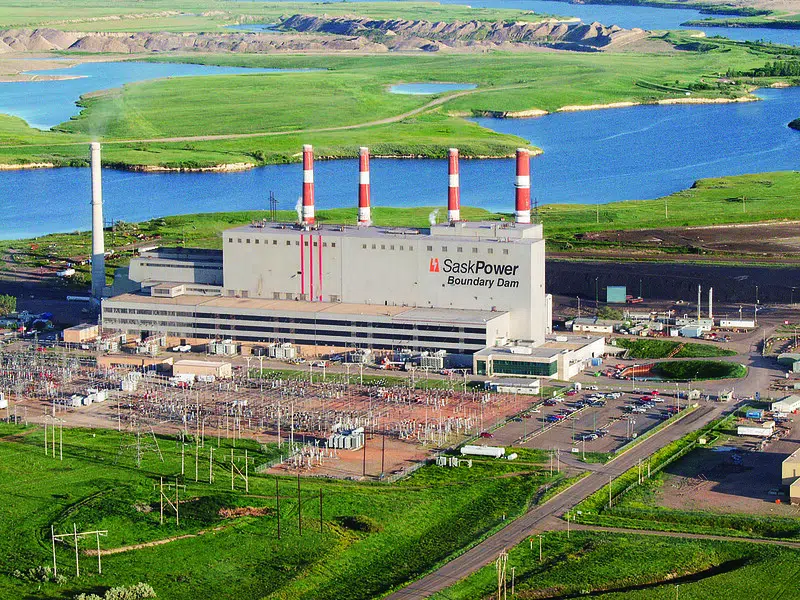
The Boundary Dam carbon capture and storage facility in Saskatchewan never met the 90 percent capture rate originally promised. Credit: SaskPower/Flickr

The Institute for Energy Economics and Financial Analysis (IEEFA) recently released new research that shows the failures of carbon capture in the Boundary Dam coal facility. After nine years and $1 billion spent retrofitting the plant with CCS equipment, the facility never met the 90 percent capture rate owner-operator SaskPower originally promised. 

Moreover, all the carbon that Boundary Dam captured was used for enhanced oil recovery (EOR), a process where carbon dioxide is pumped into old wells to extract otherwise unobtainable oil. The IEEFA study further reveals that the Boundary Dam facility’s carbon capture rate is below 60 percent in total over nine years of operation.

“Canadians should not be proud of the money and resources wasted on carbon capture, and they should be especially concerned about the billions of dollars now earmarked for additional carbon capture investments,” said the IEEFA report’s authors, David Schlissel, director of resource planning analysis at the organization, and Mark Kalegha, an IEEFA energy finance analyst, in a statement. 

“Carbon capture is not a solution to the world’s climate crisis, especially when coupled with enhanced oil recovery,” they said. 

Part of a Decarbonization Plan

Capital Power Generation is an independent power company based in Edmonton, Alberta’s capital city. The company has described the Genesee plant’s conversion from coal to natural gas as part of its decarbonization effort. The company set a goal to decarbonize by 2045. The conversion is also in line with the coal phase-out goals of the Canadian government.

Despite claims by politicians and industry that natural gas is a bridge fuel, or that it is cleaner than coal, the reality is that natural gas is not a carbon-neutral energy source, nor a viable method of decarbonizing the energy grid. Rather, natural gas is a destructive fossil fuel. Research from Robert W. Howarth, a professor of ecology and environmental biology at Cornell University, shows that methane emissions from natural gas is on par with coal’s.  

Natural gas is not considered a viable method of decarbonizing the energy grid. Credit: Felton Davis/Flickr

Emissions Reduction Alberta, a government funded group, previously claimed that the Genesee repowering and carbon capture projects could potentially remove about 6.4 million tons of carbon dioxide per year, with CCS projects handling about half that amount.

Though Capital Power Generation justified its decision to cancel the project by stating it wasn’t financially feasible, news reports show the company was holding out for additional financial support from various levels of government. As Global News reported, Altius Royalty Corp., owner of the coal mine that feeds the Genesee plant, had demanded $190 million in compensation from the federal and provincial governments to phase out coal. It argued that government efforts to terminate coal production for health and environmental reasons was equivalent to expropriation.

Altius filed the claim in 2018, and it was rejected by the Court of Appeal of Alberta in April.

In March, the Globe and Mail reported that Capital Power was considering shelving the Genesee CCS project because it couldn’t come to an agreement with the government to provide revenue certainty. The Canada Growth Fund (CGF), a $15 billion federal financing agency, is tasked with guaranteeing a minimum value for emissions-reduction credits earned under Canada’s industrial carbon-pricing system. The March news report claims that representatives from Capital Power argued that negotiations with the CGF had not produced a structure or price that would allow them to proceed with the project. A CGF representative countered that such frameworks and prices had already been negotiated with other companies.

Regardless of what specifics led Capital Power to cancel the Genesee CCS project, the fact remains that CCS is expensive, is often used for EOR, and has a long, well-documented history of under-delivering on the crucial issue of capturing carbon dioxide. Critics say the considerable amount of financial resources already dedicated to CCS have effectively been wasted, particularly when the means to cheaply decarbonize the grid – such as solar panels or wind turbines – are already available.

“The most effective way to deal with carbon dioxide emissions is to prevent them from ever being created,” said Levin with Environmental Defence, “rather than trying to pluck them from the air or smokestacks and inject them underground.”

Original article by Taylor Noakes republished from DeSmog.

Continue ReadingCanceled Canadian CCS Project Deemed ‘Not Economically Feasible’

UK professor condemns own university over collaboration with oil giant

Spread the love

Original article by Ben Webster republished from Open Democracy under a Creative Commons Attribution-NonCommercial 4.0 International licence.

Fawley oil refinery in Southampton

Southampton University slammed after openDemocracy uncovered its involvement in Exxon’s ‘greenwashing’ project

A senior professor has accused his own university of betraying its values by working with ExxonMobil on a project that has been condemned as greenwash.

Ian Williams, professor in applied environmental science at the University of Southampton, made the allegations after openDemocracy revealed that Exxon had made misleading claims about capturing carbon at the UK’s biggest oil refinery at Fawley in Hampshire.

We reported last month that Paul Greenwood, Exxon’s UK lead, had admitted that the oil giant would need a “magic wand” to deliver the project, which has no funding and no licence to store carbon.

Exxon refers prominently to its collaboration with the University of Southampton in publications about the scheme.

Williams suggested the university had been “fooled” into joining forces with the oil giant to launch the ‘Solent Cluster’, an industrial decarbonisation scheme focused on CCS.

Lindsay-Marie Armstrong, the academic cluster lead at the University of Southampton, has joined senior Exxon executives at several events to promote the scheme, including a reception at the House of Commons in February.

Williams hit out at the partnership during a lecture entitled “Working with the enemy: Why universities should not work with ‘Big Oil’” on 24 April, as part of the University of Southampton’s annual Green Week.

He said Exxon had a long history of undermining climate science and funding groups that promoted climate scepticism, asking: “Why does the University of Southampton work with companies that operate against our values and deny our research data?”

Williams pointed out the university’s collaboration with Exxon is at odds with two of its stated core values: its commitment to “embed environmental sustainability in everything we do” and its pledge to work with partners to “improve the environment”.

He added that his decision to speak out means he is “not very popular in some quarters of the university” and might be branded a “rogue academic”.

But Southampton University’s decision to partner with Exxon has also been criticised by many who study there. Heidi Wheatley, a second-year environmental science student, told openDemocracy that “the university’s relationship with the fossil fuel industry undermines my whole reasoning for studying this subject at this institution”.

Wheatley added: “Students are already calling for the university to re-evaluate its relationship with the industry through its research activities and are petitioning the university to withdraw its multimillion-pound investments in fossil fuel companies. I implore the university to listen to its students and live up to its own strategic commitments to sustainability.”

Williams quoted from openDemocracy’s investigation during his Green Week lecture, including our revelation that Exxon had so far refused to commit its own money to build the CCS plant and had instead focused investment on increasing diesel production at the refinery, spending £800m to produce an extra six million litres a day.

He also quoted Doug Parr, chief scientist for Greenpeace UK, who told openDemocracy that Exxon’s CCS scheme “stands out as greenwashing”.

openDemocracy revealed in November that fossil companies had ploughed more than £147m into British universities in seven years.

Williams said: “Universities must be robust and healthy enough to resist commercial lobbying and greenwash. We must not be fooled again.”

Urging Southampton University to extend its ban on working with tobacco companies to fossil fuel firms, he added: “Universities should say no to collaboration with fossil fuel companies, no to funding from or with fossil fuel companies, no to green washing, no to climate washing.”

He also recommended the university commit to “not work[ing] on any form of greenwash project”, including “CCS” and “blue hydrogen” – a product made from natural gas, where most of the carbon dioxide from the gas is captured and stored. Blue hydrogen has come under fire from scientists, who have branded it a distraction from proven low-carbon alternatives to fossil fuels based on renewable energy.

Williams also called on Southampton University to sign up to the People and Planet Fossil Free Campaign, which demands universities stop investing in and accepting funds from fossil fuel companies.

A University of Southampton spokesperson did not respond to any of Williams’ recommendations when contacted by openDemocracy.

Instead, they said: “Decarbonisation necessitates engagement with the sector that produces carbon and universities have a vital role to play in applying knowledge and expertise to address real areas of environmental concern.

“This is what the Solent Cluster was set up and receives government funding for, with our role here to work alongside 120 organisations and businesses, including nine local governments and three other universities.

“We uphold our value to embed environmental sustainability in everything that we do and require that all outputs from research undertaken with energy companies – and industry more widely – can be published, following our stated policies for responsible and open research.”

An Exxon spokesperson said the company would give further detail on the CCS project “in due course”.

Another recent openDemocracy investigation found that more than £281m of anonymous donations had poured into so-called Russell Group universities, including Southampton, since 2017. This prompted more than 120 academics, politicians and campaigners to sign an open letter calling for transparency over university funding in the UK.

The universities’ secrecy over donations means any potential conflicts of interest and commercial influences, including those related to fossil fuel production, remain hidden.

Some universities routinely invite fossil fuel companies to attend private meetings after donating millions of pounds.

Original article by Ben Webster republished from Open Democracy under a Creative Commons Attribution-NonCommercial 4.0 International licence.

Continue ReadingUK professor condemns own university over collaboration with oil giant

Corporate Media Fed COP 28 Carbon Capture Confusion

Spread the love

Original article by OLIVIA RIGGIO republished from FAIR under a Creative Commons Attribution-NonCommercial-NoDerivs 3.0 Unported License.

The COP 28 UN climate conference concluded with countries agreeing to a plan to transition away from fossil fuels, using language that fell short of calling for an explicit phaseout. In the debates over whether countries need to phase fossil fuels “out” or merely “down,” carbon capture and storage (CCS), a form of so-called fossil fuel “abatement,” played a central role.

Rather than exposing CCS as the greenwashing ploy it essentially is, some reporting placed disproportionate significance on the technology, adding to the confusion and misunderstandings about climate change that fossil fuel companies have been funding for decades.

An excuse to not eliminate

Scientific American: Don’t Fall for Big Oil’s Carbon Capture Deceptions

“Don’t be fooled,” writes Jonathan Foley in Scientific American (12/4/23): Carbon capture is “mostly a distraction from what we really need to do right now: phase out fossil fuels and deploy more effective climate solutions.”

Before COP 28 even began, climate activists were not hopeful. The conference, held in Dubai, capital of the oil-dependent United Arab Emirates, reeked of almost comedic irony. The conference’s president, Sultan Al Jaber, is the head of the petrostate’s national oil company.

During a November livestream event, Al Jaber falsely claimed there was “no science” indicating a phaseout of fossil fuels was necessary to keep warming levels below the 1.5°C threshold set by the Paris Agreement. He added that phasing out fossil fuels would “take the world back to the caves” (Guardian12/3/23).

CCS technology—which involves capturing carbon from sources like power plants and steel mills, and storing it underground—has become a key part of the fossil fuel industry’s arguments against the elimination of its environmentally devastating product. Instead of rapidly ending the extraction and burning of fossil fuels, the claim goes, we can simply “abate” the emissions with CCS.

The reality is that even optimistic estimates see CCS (also known as carbon capture and sequestration) as playing only a limited role in mitigating emissions from difficult-to-decarbonize sectors. But polluters aggrandize its potential contributions in order to keep expanding fossil fuel extraction while at the same time claiming to take action on climate (Scientific American12/4/23). In fact, most successful CCS projects are actually used to force more oil out from underground, in a process called “enhanced oil recovery” (Washington Post10/25/23).

Given the chokehold the fossil fuel industry had on this COP and subsequent conversations about climate change mitigation, journalists must be clear and realistic in their reporting about the capabilities of carbon capture, and its role in both climate crisis solutions and fossil fuel industry greenwashing.

‘A valuable role’

NYT: Can Carbon Capture Live Up to the Hype?

To back up the idea that carbon capture is a “valuable tool,” the New York Times (12/6/23) links to a study whose headline calls it “Too Little, Too Late, Too Slow.”

The New York Times’ headline, “Can Carbon Capture Live Up to the Hype?” (12/6/23), could have been most easily and accurately answered by a short “no.” Instead, the subheading misled about CCS’s plausibility as a climate change solution, claiming that “experts say it could play a valuable role.”

But what’s the evidence on offer? The article mostly described the failures of expensive carbon capture projects to even get off the ground. The only reference to that supposedly “valuable role” linked to three studies or reports. The titles of two were “[Carbon Capture]—Too Little, Too Late, Too Slow—It’s No Panacea” (S&P Global10/18/23) and “Heavy Dependence on Carbon Capture and Storage ‘Highly Economically Damaging,’ Says Oxford Report” (SSEE, 12/4/23).

A third, seemingly more optimistic, report came from the International Energy Agency (11/27/23). But that agency’s latest report actually offered the opposite message, its executive director explained (Toronto Star11/23/23): Oil companies’ plan to achieve “net zero”—removing as much carbon from the atmosphere as they emit—by capturing emissions while increasing production is an “illusion” based on “implausibly large amounts of carbon capture.” Lucky for those companies, New York Times headline writers are here to keep up that illusion.

The Times article itself even noted that “total fossil fuel use will have to fall sharply no matter what to keep global warming at relatively low levels,” and that carbon capture is “no silver bullet.” It cited the IEA’s roadmap to lowering carbon emissions to net zero by mid-century, noting that even in this ideal plan, CCS would account for just 8% of the world’s total emissions cuts, and that “the vast majority of reductions would come from countries shifting away from fossil fuels entirely.”

While CCS could play a part in mitigating emissions from industries like cement, steel and fertilizers, the benefit can only be realized if the technology’s logistical and financial limitations are addressed, explained Jonathan Foley in a piece for Scientific American (12/4/23). Food and Water Watch (7/20/21) characterizes CCS as an “expensive failure” that’s energy intensive and actually increases emissions.

Even while outlining CCS’s “limitations,” the Times managed to both-sides the issue:

One big dispute is over how big a role this technology, known as carbon capture and storage, should play in the fight against global warming. Some oil and gas producers say it should be central in planning for the future. Others, including many activists and world leaders, dismiss carbon capture as too unproven and too risky.

In a “dispute” about how to cut carbon emissions, oil and gas producers’ arguments should certainly not be taken at face value. And, while “activists and world leaders” are among those who “dismiss carbon capture,”crucially,  so are scientists.

The Times piece played down the many economic and logistical failures of CCS as “limitations.” While removing carbon will likely play a necessary—albeit small—role in meeting climate goals, CCS’s  success hinges on our abilities to phase out fossil fuels. The tone of the piece’s headline is overly optimistic, offering a false sense of hope—and “hype”—for a technology that’s used more as a fossil fuel fig leaf than a climate change solution.

‘Vital…but falling short’

Bloomberg: Why Carbon Capture Is Seen as Vital in Climate Fight But Falling Short

Bloomberg (12/6/23) notes without rebuttal that “CCS has been discussed as a way to limit the damage caused by fossil fuels without having to abandon them.”

An explanatory Bloomberg piece (12/6/23) about carbon capture, headlined, “Why Carbon Capture Is Seen as Vital in Climate Fight but Falling Short,” used similarly weak language.

In addition to CCS, the piece highlighted direct air capture (DAC), another carbon capture technology that removes carbon that is already in the atmosphere, rather than at the site of emission, and also performs at a tiny fraction of the scale that would be necessary for it to be an actual solution. According to the article, the largest DAC hub in the world, found in Iceland, only removes the equivalent of the annual emissions of 250 average US citizens.

For more context, the Regional Direct Air Capture Hubs that Biden’s Department of Energy is supporting are anticipated to suck only about 1 million metric tons of CO2 from the atmosphere annually. In 2022, global emissions of CO2 were 40.5 billion metric tons (Scientific American12/4/23)–adding more than 40,000 times as much carbon as the hubs are supposed to take out.

To say these technologies are “falling short” is quite the understatement.

To say they’re “vital” requires context. The Bloomberg piece explained:

Even if solar and wind energy largely supplant fossil fuels, holding temperatures down will require capturing large amounts of emissions produced by activities that are hard to decarbonize, such as making cement.

That much is true. However, it leaves out the most important part: Carbon capture can only make a difference in a world that drastically cuts emissions. Without that priority being met, its impacts are marginal at best—and, at worst, a distraction that permits fossil fuel companies to increase emissions and worsen the crisis.

In a press briefing with Covering Climate Now (11/9/23) regarding CCS and carbon dioxide removal, David King, former chief science adviser to the British government, emphasized that reducing greenhouse gas emissions was still the No. 1 priority, as human activity continues to emit the equivalent of about 50 billion tons of carbon dioxide into the atmosphere each year.

‘Some environmentalists’

WaPo: The two words island nations are begging to see in a global climate pact

Washington Post (12/11/23) attributes the idea that carbon capture is a “false climate solution” to “some environmentalists.”

Washington Post report (12/11/23), leading with the tearful remarks of Mona Ainuu, a climate activist from Niue, a small island nation, described the ultimate, disappointing outcome of the COP: The draft agreement to come out of the conference called not for the phaseout of fossil fuels, but for the mealy-mouthed “reducing both consumption and production of fossil fuels, in a just, orderly and equitable manner.”

The agreement also called for the rapid phase-down of “unabated coal.” The Post explained carbon capture and sequestration:

Some environmentalists view CCS as a false climate solution, saying it could prolong the life of polluting facilities for decades to come. They note that the International Energy Agency has warned that humanity cannot build any new fossil fuel infrastructure if it hopes to limit warming to 1.5°C.

Like the Times report, the Post framing failed to give readers the unvarnished truth they need, that CCS is only seen as a key climate solution by industries whose profitability depends upon the further burning of fossil fuels. No further information on the IEA report was given, or any information about the other litany of scientific studies, reports and information on the failures of CCS, allowing the specific concerns of “some environmentalists” to go unmentioned.

All of these pieces fail to mention why the fossil fuel industry is so gung ho about this dubious technology: While oil companies’ greenwashed PR campaigns tout CCS, corporations and governments continue to ramp up extraction.

Carbon capture and removal will likely play a small role in avoiding the most devastating effects of climate change, but it’s spitting in the ocean without a fossil fuel phaseout. It is journalists’ job to explain this accurately, while reminding audiences to not forget the No. 1 priority: eliminating fossil fuels.

Original article by OLIVIA RIGGIO republished from FAIR under a Creative Commons Attribution-NonCommercial-NoDerivs 3.0 Unported License.

Addition by dizzy: When Rishi Sunak says that every last drop of oil should be taken from the North Sea, he is showing his full support to the oil industry and it’s CCS misdirection. CCS or it’s original name ‘enhanced oil recovery’ is needed to get every last drop.

Continue ReadingCorporate Media Fed COP 28 Carbon Capture Confusion