The UK’s social security system falls way below international human rights standards: new report

Spread the love
9to9studio/Shutterstock

Koldo Casla, University of Essex

The right to social security is enshrined in several international agreements on human rights. But the UK’s system – even before the disability benefits cuts announced earlier this year – falls way below these standards.

For a new report published today, Amnesty International asked my colleague Lyle Barker and me to review the evidence about the state of the UK’s social security in relation to international human rights law.

The UK has signed and ratified a number of international agreements on human rights. One of these is the 1966 International Covenant on Economic, Social and Cultural Rights (ICESCR), which lays out the right to social security. An accompanying document defines the three key principles of this right as:

  • Availability A social security system established in law, administered publicly, and materially reachable by those who need it.
  • Adequacy Benefits must be suitable, both in amount and in duration, to realise essential socioeconomic rights.
  • Accessibility Everyone should be covered by the social security system, paying particular attention to disadvantaged and marginalised individuals and groups.

The conclusion of our study for Amnesty International is crystal clear: even disregarding the cuts announced in March, the UK’s social security system does not meet these standards.

Availability

Our review of the literature shows a widespread underclaiming of benefits. It has been estimated that in 2024, £22.7 billion in income-related benefits went unclaimed, a £4 billion increase from the previous year.

Gaps in official data hinder a clear understanding of why many people are missing out on the support they are entitled to. But qualitative evidence suggests this is largely due to fear, stigma, bureaucratic and digital hurdles, and eligibility cliff edges for means-tested benefits.

In recent years, the UK government has adopted a contentious and punitive stance toward benefit recipients. Media and political rhetoric have portrayed those who claim benefits as idle or undeserving scroungers.

This stigma harms the mental health and self-esteem of people experiencing poverty. It can result in shame and secrecy, and create barriers to people accessing support they are entitled to.

Our research for Amnesty International concludes that UK claimants do not get enough information and support about their rights to benefits. Combined with the stigma of claiming, the UK is falling far short of making benefits “available” in line with international standards.

Adequacy

Since the austerity policies of the 2010s, the UK’s social security system has become significantly less adequate in supporting vulnerable people and families. The basic rate of universal credit (the main benefit for working-age people on a low income) is at 40-year low in real terms amid a cost of living crisis.

Restrictive policies, such as the benefit cap (introduced in 2013 to set a maximum limit to the total benefits received by a household) and the two-child limit have curtailed access to essential benefits. Although inflation adjustments in the last two years provided some relief, many benefits still fail to keep up with rising living costs.

The two-child limit is the cruellest expression of the inadequacy of the UK’s social security system. Introduced by the Conservative government in 2017, the two-child limit restricts financial support through universal credit to two children. It is likely to be the most significant single cause of child poverty in the UK, including in families where adults work but do not earn enough to make ends meet.

When Labour returned to power, there was much speculation about whether they would reverse the two-child limit. But despite pleas from experts and people with direct experience, the government has persisted in retaining it.

Accessibility

Our study lays out the many barriers to accessibility in the UK’s system. For example, the bureaucratic hurdles in the assessment process, and the disproportionate impact of punitive sanctions on lone mothers and on minority ethnic claimants.

The UK operates a benefits sanction regime, which imposes penalties on claimants who fail to meet certain conditions. These include attending jobcentre appointments or accepting job offers. In general, sanctions and the fear of sanctions erode the trust between benefit claimants and the social security system.
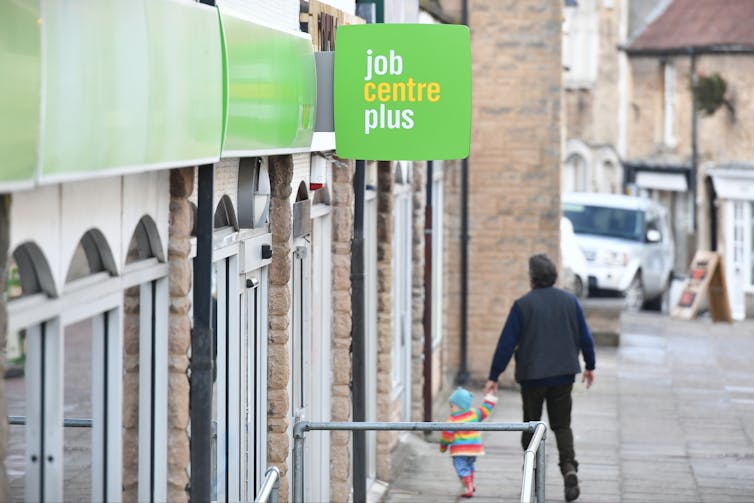
An adult holding a child's hand walk past a jobcentre
Benefits sanctions are just one of the barriers to accessing social security. 1000words/Shutterstock

As it did in its previous review in 2016, in February the UN Committee on Economic, Social and Cultural Rights recommended that the UK review the use of benefit sanctions to ensure they are used proportionately and are subject to prompt and independent dispute resolution mechanisms.

Another accessibility concern is the shift to a digital-by-default system in the 2010s. While intended to make accessing benefits more efficient, it has become an administrative barrier.

Many people, particularly the elderly and others who are less digitally literate, struggle to navigate the benefits system. It excludes people without reliable internet access, underscoring a digital divide that prevents meaningful access to social security.

Meeting standards

Given the evidence, it is no surprise that earlier this year, the UN Committee on Economic, Social and Cultural Rights urged the UK government to assess the cumulative effects of the austerity measures introduced in the 2010s.

In particular, the committee recommended reversing the two-child limit, the benefit cap and the five-week delay for the first universal credit payment, and increasing the budget allocated to social security. These recommendations were made before the changes announced in the spring statement.

To live up to the internationally recognised right to social security, the UK should recognise in law, policy and practice that social security is a human right. And, that it is essential to the fulfilment of other human rights.

Amnesty International recommends the government set up a commission with statutory powers, to produce a strategy for “wholesale reform” of the social security system. The UK must establish a minimum support level and an essentials guarantee, to ensure beneficiaries can consistently meet their basic needs. A good way to start would be abolishing the two-child limit once and for all.

Koldo Casla, Senior Lecturer, Essex Law School, University of Essex

This article is republished from The Conversation under a Creative Commons license. Read the original article.

Keir Starmer says that the Labour Party under his leadership all feel a small part of Scunthorpe.
Keir Starmer, Angela Rayner and Rachel Reeves wear the uniform of the rich and powerful. They have all had clothes bought for them by multi-millionaire Labour donor Lord Alli. CORRECTION: It appears that Rachel Reeves clothing was provided by Juliet Rosenfeld.
Continue ReadingThe UK’s social security system falls way below international human rights standards: new report

‘The whole policy is wrong’: rebellion among Labour MPs grows over £5bn benefits cut

Spread the love

https://www.theguardian.com/society/2025/apr/20/the-whole-policy-is-wrong-rebellion-among-labour-mps-grows-over-5bn-benefits-cut

‘We are being asked to take a leap of faith. It does not make sense’: Neil Duncan-Jordan, Labour MP for Poole. Photograph: Peter Flude/The Guardian

Dozens of MPs are angry at their party, despite frantic efforts by whips and government ministers to assuage them

Labour MPs opposed to the government’s massive £5bn of benefit cuts say they will refuse to support legislation to implement them, even if more money is offered by ministers to alleviate child poverty in an attempt to win them over.

Legislation will be introduced to the House of Commons in early June to allow the cuts to come into force. They will include tightening the criteria for personal independence payments (Pip) for people with disabilities, to limit the number of people who can claim it. Under the changes, people who are not able to wash the lower half of their body, for example, will no longer be able to claim Pip unless they have another limiting condition.

A major rebellion appears to be hardening on the Labour benches rather than subsiding, despite frantic efforts by whips and government ministers to talk MPs round.

One idea being floated as a way to win over rebels is for ministers to publish their long-awaited child poverty strategy shortly before the key Commons votes, and in it offer additional money for poor parents of children under five. Work and pensions secretary Liz Kendall is understood to be examining a proposal focused on the youngest children that would cost less than the £3.6bn needed to scrap entirely the controversial two-child limit on benefit payments. It is now accepted in government that, given the state of public finances, the cap cannot be scrapped in the short term.

https://www.theguardian.com/society/2025/apr/20/the-whole-policy-is-wrong-rebellion-among-labour-mps-grows-over-5bn-benefits-cut

Keir Starmer says that the Labour Party under his leadership all feel a small part of Scunthorpe.
Keir Starmer justifies why he has to travel abroad so much
Angela Rayner wears her "benefits in kind" donation from multi-millionaire Lord Alli.
Angela Rayner wears her “benefits in kind” donation from multi-millionaire Lord Alli.
Continue Reading‘The whole policy is wrong’: rebellion among Labour MPs grows over £5bn benefits cut

Credible child poverty strategy must see two-child limit axed, says Resolution Foundation think tank

Spread the love

https://morningstaronline.co.uk/article/credible-child-poverty-strategy-must-see-two-child-limit-axed-says

A preschool age child playing with plastic building blocks

SCRAPPING the two-child benefit cap is essential for any credible poverty strategy, a think tank has said.

The Resolution Foundation projected that a three-child limit on benefits could cut child poverty by 320,000 by the end of this parliament.

Labour has been under pressure, including from within the party, to abolish the policy amid record highs rates of child poverty.

The government’s child poverty taskforce is due to present a strategy in spring.

Before the next general election, child poverty will hit a record high of 4.6 million on current forecasts, according to the Resolution Foundation.

The two-child limit was first announced in 2015 by the Conservatives and came into effect in 2017.

It restricts child tax credit and universal credit to the first two children in most households.

Article continues at https://morningstaronline.co.uk/article/credible-child-poverty-strategy-must-see-two-child-limit-axed-says

Keir Starmer says pensioners can freeze to death and poor children can starve and be condemned to failure and misery all their lives.

Continue ReadingCredible child poverty strategy must see two-child limit axed, says Resolution Foundation think tank

Scottish budget vows to scrap two-child benefits cap

Spread the love

https://morningstaronline.co.uk/article/scottish-budget-vows-to-scrap-two-child-benefits-cap

Finance Secretary Shona Robison during a visit to Logan Energy Limited in Edinburgh ahead of the publication of the Scottish Budget, December 4, 2024

SCOTTISH Finance Secretary Shona Robison announced that the two-child cap on benefits will be scrapped in Scotland as she pledged record spending for both the NHS and councils in next year’s Budget today.

The moved to scrap the cap would lift 15,000 children out of poverty, Ms Robison said.

She told MSPs as she outlined her draft Budget plans in Holyrood: “Be in no doubt that the cap will be scrapped.”

Ms Robison slammed the UK Labour government’s inaction on a “pernicious” policy considered to be a key driver of child poverty by organisations such as the Poverty Alliance.

She challenged the UK government to work with them and share the necessary information to “build a system” to mitigate it “as early as we can in 2026.”

https://morningstaronline.co.uk/article/scottish-budget-vows-to-scrap-two-child-benefits-cap

Keir Starmer says pensioners can freeze to death and poor children can starve and be condemned to failure and misery all their lives.
Continue ReadingScottish budget vows to scrap two-child benefits cap

Eradicate child poverty in 20 years, coalition of children’s charities tell government

Spread the love

https://morningstaronline.co.uk/article/eradicate-child-poverty-20-years-coalition-childrens-charities-say

Stocks of food at the Trussell Trust Brent Foodbank, Neasden, London

A COALITION of 120 children’s charities today called for the complete eradication of child poverty in 20 years, increasing pressure for government to scrap the two-child benefit cap.

The End Child Poverty Coalition set out eight tests it said should be met by the government’s taskforce strategy if it is to succeed in tackling and ending child poverty.

Among them was that government must ultimately aim to halve child poverty in the next 10 years, and completely eradicate it in the next 20.

The coalition also said the two-child limit to benefit payments must be scrapped, estimating this could immediately lift around 300,000 children out of poverty, and that “further fundamental reform” to the social security system is needed.

End Child Poverty Coalition chair Joseph Howes said: “Child poverty is a blight on our society and is also completely avoidable.

“If the government is serious about tackling and ultimately eradicating child poverty in this country, it needs to be bold and ambitious in its investments, including immediately scrapping the two-child limit to benefit payments.

https://morningstaronline.co.uk/article/eradicate-child-poverty-20-years-coalition-childrens-charities-say

Continue ReadingEradicate child poverty in 20 years, coalition of children’s charities tell government