NHS news review

Spread the love

“Liberals” and “Democrats” to meet with whole-hearted NHS abolitionist and orange-booker (Tory) Nick Clegg.

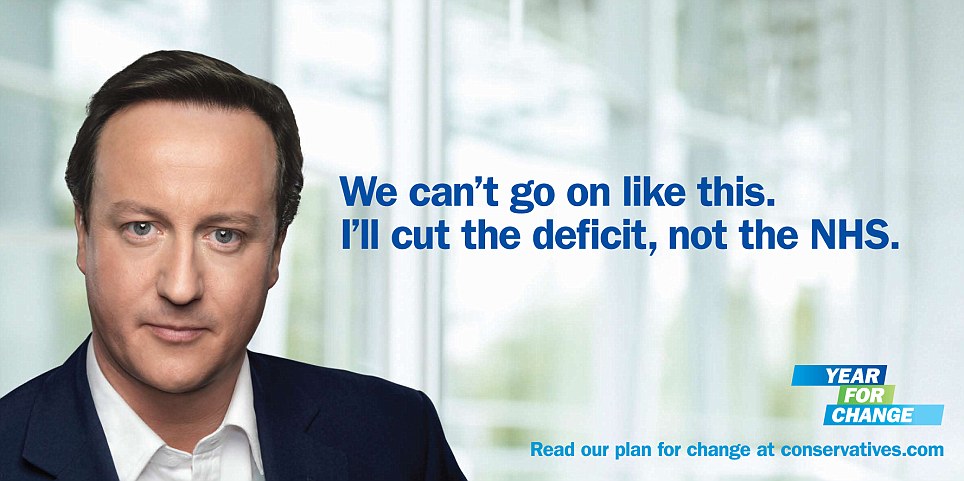
Conservative election poster 2010

Nick Clegg faces stormy conference as activists vent fury at NHS reform – UK Politics, UK – The Independent

Nick Clegg faces a challenge to his authority at the Liberal Democrats’ annual conference as party activists plan to rebel over four of the Coalition Government’s policies.

by Andrew Grice

When the Birmingham meeting opens tomorrow, grassroots members will challenge a ruling by conference managers to deny delegates a vote on the Government’s controversial NHS reforms. Although Mr Clegg extracted concessions from David Cameron, some Lib Dems believe they did not go far enough.

A conference vote in favour of further amendments to the NHS and Social Care Bill could undermine Mr Clegg’s attempt to convince the public that the Lib Dems are punching above their weight inside the Coalition.

The party is more democratic than the Conservatives or Labour and their conference decides party policy. Some activists fear that the current plan to stage a health debate without a formal vote would mark the first step towards the event becoming a “Conservative-style rally.”

Evan Harris, vice chairman of the party’s federal policy committee, said yesterday: “There is a lot of anxiety among party activists that the conference is being turned into an event where votes are avoided. That’s not our style.” Grassroots revolts are also in prospect over the Government’s plans to cut £350m from the legal aid budget and reduce state benefits for cancer patients and over its response to last month’s riots.

Lawyers plan to confront Mr Clegg over the withdrawal of legal aid from most cases of family breakdown, medical negligence, immigration, debt and welfare benefit, and to make claimants to pay legal fees out of compensation payments. The moves were rejected in a vote at the party’s spring conference.

Alistair Webster, chairman of the Liberal Democrat Lawyers’ Association, said: “I don’t think that, either inside the Government or in the parliamentary party, people have done anything like enough to push the [party’s] agenda. I’m more than disappointed – I’m appalled.”

27/11/13 Having received a takedown notice from the Independent newspaper for a different posting, I have reviewed this article which links to an article at the Independent’s website in order to attempt to ensure conformance with copyright laws.

I consider this posting to comply with copyright laws since
a. Only a small portion of the original article has been quoted satisfying the fair use criteria, and / or
b. This posting satisfies the requirements of a derivative work.

Please be assured that this blog is a non-commercial blog (weblog) which does not feature advertising and has not ever produced any income.

dizzy

Continue ReadingNHS news review

NHS news review

Spread the love

Colin Leys – co-author of ‘The Plot Against the NHS’ – has an article at Opendemocracy.

The NHS will be privatised – it doesn’t matter what the British people want | openDemocracy

In voting for the third reading of Andrew Lansley’s Health and Social Care Bill last week MPs voted to replace the NHS as a public service with a system of competing businesses – foundation trusts, social enterprises and for-profit corporations.

The government’s claim that the Bill does not mean privatisation is plainly specious: the truth of the matter is to be found in what Lansley’s health minister, Lord Howe, told a meeting of private health businessmen on the day the Bill was approved. He said it presented ‘huge opportunities’ for the private sector, and noted that commissioners of health care would be barred from favouring NHS providers. The truth is also to be found in the government’s leaked plans to hand over the management of NHS hospitals to private companies, and in the current and promised large-scale opening up of NHS work to ‘any qualified provider’.

Conservative election poster 2010

Lord Howe reiterated Tony Blair’s dictum that it doesn’t matter who provides care, so long as it is free to the patient. What this does is to treat as irrelevant everything that follows from introducing market dynamics. The basic fact about health care is that high quality care depends on a sufficient ratio of skilled staff to patients, whereas in the long run profits can only be made by reducing the skill-mix (to lower the wage bill) and cutting staff ratios. The resulting decline in care quality is already evident in privatised long term care and home care, and is now beginning to be seen in community health services and GP services. Once NHS trusts have to compete with for-profit companies they will be forced to follow suit.

The erosion of quality will be reinforced by two other powerful factors: a) the cuts being imposed in the NHS budget, leading to the withdrawal of some services and the scaling back of others; and b) rising costs due to marketisation.

The costs of market-based health care – from making and monitoring multiple and complex contracts, to advertising, billing, auditing, legal disputes, multi-million pound executive salaries, dividends, fraud, and numerous layers of regulation – will eventually consume 20 per cent or more of the health budget, as they do in the US. Neither the Care Quality Commission nor NHS Protect (the former NHS Counter-Fraud Unit) is remotely resourced enough, or empowered enough, to prevent the decline of care quality or the scale of financial fraud that the Bill will introduce.

The effect will be that people with limited means will be offered a narrowing range of free services of declining quality, and will once again face lengthening waits for elective care. To get high quality and more comprehensive care people will have to pay for private insurance and private care, if they can afford to. More and more NHS hospital beds will be occupied by private patients, further reducing the resources available for free care. Fixed personal budgets, like those already given to people for social care, are to be introduced for a growing range of chronic conditions, allowing those with resources to top up their allocations while leaving the rest to make do with ‘basic’ NHS provision.

None of this is wild speculation. It is either already happening or announced or readily foreseeable on the basis of current policy. To deny that the Bill means privatisation and the end of the NHS as a comprehensive service equally available to all is like denying that the earth is round.

The fact that MPs have nonetheless endorsed the Bill reveals something more serious than an ideological blind spot. It shows that they don’t really care that they are flouting the wishes of the electorate. Cameron promised categorically that there would be no further top-down reorganisation of the NHS, but is pushing through a reorganisation that amounts to a destruction of it, against the known wishes of a large majority of voters. Governments, we are told, must often take unpopular decisions. But this is not some incidental measure. We are talking about something fundamental to what, for more than half a century, has played a key part in making Britons equal citizens, and Britain a civilised and humane country. If democracy doesn’t mean that governments have to respect public opinion on something as important as this, what does it mean?

It is no less depressing that the Department of Health has been reduced to peddling more and more brazen lies, such as its ‘Department of Health Myth Buster’ document, published to coincide with the Third Reading debate. The principle seems to be that that if an official lie – such as that the Health Bill does not mean privatisation – is repeated often enough, most people will feel it must be true. Democracy depends on voters having trustworthy information. If we cannot trust departments of state, run by public servants, to tell the truth, who can we trust?

Selected excerpts from ‘The Plot Against the NHS’ by Colin Leys and Stewart Player. Chapter One is available here. I highly recommend this book available from Merlin Press for £10.

The Plot Against the NHS #1

The Plot Against the NHS #2

Continue ReadingNHS news review

NHS news review

Spread the love

Monitor to employ 600 at an average salary of over £50,000.

Private health firms are experiencing a boost in business from NHS cuts.

The ConDem coalition government eases information requirments for private healthcare providers.

The ConDem coalition government hides the cost of reforming the NHS until after the third reading of the Destroy the NHS / Health and Social Care Bill. It is disappointing that the government resorts to such subterfuge.

Conservative election poster 2010

A few recent news articles about the UK’s Conservative and Liberal-Democrat coalition government – the ConDem’s – brutal attack on the National Health Service.

NHS ‘watchdog’ set to become ‘bureaucratic monster’, says Unite

Monitor – the government’s revamped organisation to regulate competition in the NHS – is set to become ‘a bloated bureaucratic monster’, Unite, the largest union in the country, has warned.

Unite said that Monitor’s running costs were set to soar from £72 million-a-year to £82 million – with a 600-strong staff being paid twice the national average wage of £26,000.

Unite said that ministers were creating a bloated, old fashioned bureaucracy which would be responsible for handing over lucrative NHS contracts to the ‘government’s friends’ in the private healthcare sector.

Monitor was expecting to spend a further £14 million-a-year on consultants and £4 million in legal fees, according to the Department of Health’s own Impact Assessment report.

Monitor is a lynchpin of the government’s Health and Social Care Bill, currently before Parliament, with the remit of promoting choice, competition and collaboration – which Unite says are contradictory and confusing aims.

Unite national officer for health, Rachael Maskell said: ‘It is equally disgraceful that the Impact Assessment team have been unable “to develop a robust monetary estimate of the benefits of changes to the regulatory regime”.

‘All this indicates that a revamped Monitor is not being geared for the benefit of patients, but as a conduit to channel lucrative NHS contracts to private healthcare companies, many of whom have bankrolled the Tory party since David Cameron became leader.’

‘Monitor anticipates employing about 600 staff at an average cost of £84,000 each, which would include salaries, National Insurance contributions, any pension provision and other costs.’

‘This works out at average annual salary levels of more than £50,000 – double that of the average national salary of £26,000. A bloated bureaucratic monster is being created – so much for all the ministerial chatter about efficiency savings. This is being paid for by cuts to frontline services, as well as staff pay and terms and conditions.’

Grasp the nettle now – before it’s too late / Features / Home – Morning Star

As Andrew Lansley’s hugely controversial and largely unaltered Health and Social Care Bill faced its crucial vote in the Commons, unelected Tory Health Minister Lord Howe was smugly assuring a conference of grasping private-sector companies that the Bill offers them “genuine opportunities” to take over large chunks of the NHS.

There would be profitable opportunities galore – both in the provision of certain profitable services and in supplying management expertise to help GPs decide how to spend local budgets.

Howe recognised that “the NHS will not give up their patients easily.”

But of course that’s why the Bill, which sailed through a docile Commons with a majority of 65, will stack the odds against public-sector providers and open up most of the £100 billion NHS budget in England to cherry-picking private companies.

It will scrap any pretence at strategic planning or equitable provision by abolishing primary care trusts and strategic health authorities and strip away the thin veneer of local accountability, putting a new national body, the NHS Commissioning Board, and the regulator Monitor – led by pro-market fundamentalist and former McKinsey consultant David Bennett, who was also at the conference with Howe bigging up the private sector – firmly in charge.

Monitor will draw up the list of “any qualified providers” which GPs will have to offer as “choices” when patients need further treatment.

The Bill, coupled with the massive £20bn cuts programme to be achieved by 2014, will also pull the financial rug from under dozens of major NHS hospitals, forcing them to close services, merge with neighbouring trusts and axe staff to stay afloat.

At the same time it will encourage many foundation trusts to maximise the numbers of wealthy private patients they treat, by removing all limits on the amount of money they can make.

While David Cameron and his arrogant, lying ministers falsely claimed support from “the Royal College of GPs, the Royal College of Physicians, the nurses, people working in the Health Service,” we all know that quite the opposite is the case.

The Bill is even opposed by a large majority of GPs, who are the only people apparently set to benefit from its proposals, making Lansley possibly the first politician in history to seek to force £80bn in commissioning budgets into the hands of people who insist they don’t want it.

The Bill is also rejected by the BMA, which has promised to step up its lobbying against the Bill in the Lords, by Royal Colleges, and by almost every academic and think tank not in the pay of the neoliberal right wing.

Every health union is also against the Bill, but the mass campaign that was needed to stop it has still not taken off – a year after the TUC voted unanimously against the outlines of the Bill, as set out in Lansley’s white paper.

NHS rationing boosts private healthcare firms – report | Business | The Guardian

NHS costs squeeze means longer waiting lists – and growing numbers of patients opting to pay for operations, say private firms

by Denis Campbell

Private healthcare firms are experiencing an increase in business caused by the financial squeeze across the NHS in England, a new report on the sector shows.

Independent providers are benefitting from the growing number of patients who are choosing to pay for their own care after having treatment delayed or denied altogether by an NHS primary care trust (PCT).

In a survey of 101 influential industry figures – including chief executives, investors and advisers – 34% said budgetary pressure in the NHS had led to increased demand for private healthcare.

While the reasons were not given, experts said the NHS’s need to cut costs was prompting patients to fund their own hip or knee replacement, hernia repair or cataract removal. “We are certainly picking up that some patients are being asked to wait longer than they would have expected and are therefore deciding to pay for themselves rather than wait,” said David Worskett, chief executive of the NHS Partners Network, which represents more than 30 firms – both for-profit and not-for-profit – that work with the NHS.

Worskett said “misguided” decisions of many PCTs to force patients to wait many months for treatment, often until the next financial year, lay behind the growing trend. Many PCTs are rationing access to care as the NHS struggles to adjust to a 0.1% annual increase in its budget, after years of big rises, and the need to make £20bn of efficiency savings by 2015.

The trend is a boost for a UK private health market which that was hit hard by the downturn in 2008 and for which recovery since has lagged behind that seen elsewhere in Europe, according to Credit Suisse. It is contained in HealthInvestor magazine’s annual study of the industry’s fortunes in conjunction with law firm Nabarro, called The Healthcare Industry Barometer 2011, which is published today.

The NHS will soon be less accountable: that’s good news for the health reform lobby | openDemocracy

While battle rages over the government’s controversial reforms of the NHS, the Department of Health has sneaked out two toxic changes that could seriously damage your health by promoting ignorance and restricting your rights as a citizen.

The two changes appear to be unconnected but are extremely helpful to new private providers of NHS medical services. One will limit the information that the private firms have to provide under the Freedom of Information Act to patients and relatives, the other will help them by abolishing the collection of health statistics on the services they provide and the quality of staff they employ.

The first has been revealed by the authoritative Campaign for Freedom of Information who are rightly demanding that Andrew Lansley, the health secretary, amends the law so patients can be protected. See their letter .

The second comes from a very convoluted consultation exercise launched the day after the August bank holiday and trumpeted by Anne Milton, the public health minister, as a drive against “red tape”.

This proposes to slash the collection of statistics by the Department of Health by 25 per cent in a rather uneven and unclear way. But it is clear that the aim is to “minimise the burden” on the NHS and in particular the new private providers.

Half the statistics collected on the NHS workforce – which are used to improve staff training and forecast the need for skilled staff – are to be dropped. The consultation document says: “This will be of significance for non-NHS providers of NHS services as it will determine the minimum workforce information they would be required to provide.”

Ministers ”hid impact of NHS reforms” – Public Service

Labour’s shadow health secretary John Healey has attacked the government for slipping out details on the cost of reforming the NHS the day after the House of Commons finished debating the legislation.

The Department of Health published the revised impact assessment on 8 September but, Healey said, this was prepared and signed off on 1 September.

Healey said in the Commons: “Last week MPs were asked to debate, amend and pass the Health and Social Care Bill with no new information of the costs and consequences of the biggest reorganisation in NHS history because the government had promised a new impact assessment following the Future Forum recommendations.

“The day after the debate, the new impact assessment was then smuggled out with no press statement. It shows Monitor, the new economic regulator, plan to employ 600 staff at an average cost of £84,000. And most importantly, it shows a health minister signed off the assessment on 1 September – a full five days before the Bill was debated last week.

“It’s a disgrace these facts were kept hidden from MPs and the public before such a critical and controversial debate.”

UNISON News | The public service union | ‘Save the NHS – kill the bill’

“Save the NHS and kill the bill.” That was the rallying cry from UNISON president Eleanor Smith as the TUC debated the government’s NHS plans and the All Together for the NHS campaign to defeat them.

“Our NHS is number one in equity, number one in quality and number one in safety,” said Ms Smith, who works in the health service as a theatre nurse.

But just a week ago, she recalled: “MPs began a two-day debate to wash their hands of the NHS. And on Wednesday night they voted to pass the Health and Social Care Bill.”

Now, she said, in terms of Parliament “all that stands between the government and our NHS is the House of Lords.”

And make no mistake, she added, “the bill hasn’t changed. Yes, they had what they laughingly called a listening exercise. Yes, there have been tweaks. But all the essentials are still there.”

The bill still removes the health secretary’s responsibility to deliver a health service in England, “any qualified provider” remains, allowing private companies to provide services instead of the NHS and the cap on NHS hospitals treating private patients has been lifted.

And in an age of austerity and cuts, warned Ms Smith, “hospitals will be forced to do all they can to raise cash from whatever source”.

‘There is still time to protect the NHS,’ TUC Congress told | The Chartered Society of Physiotherapy

The government’s proposed health service changes have nothing to do with improving the NHS, promoting better integration, or keeping the NHS safe for future generations, the CSP told the TUC Congress today.

CSP industrial relations committee chair Alex MacKenzie said the Any Qualified Provider policy and the Health and Social Care Bill would put the free market above all other considerations, leading to fragmented services, a postcode lottery for care, rationing and the undermining of professional collaboration.

Seconding composite motion 10 at Congress, which ‘deplored’ the government’s health reforms because they would ‘break up the NHS and put profits ahead of patients’, Ms MacKenzie said ‘overseas healthcare companies are rubbing their hands. The Coalition is waving to them – ‘come over here, Britain’s open for business, the rest of the country might be struggling, but there’s money to be made on the NHS’.

Pointing out that the NHS was ranked number one in the world for quality, equity and safety despite costing less per head than many other major developing countries, Ms MacKenzie said there was no case for radical upheaval. The CSP and other health unions would continue to oppose the reforms, she said.

‘It isn’t all over yet.’

‘The Bill has still to go through the House of Lords and then back to the Commons.

‘There is still time to protect the NHS.’

The vote was carried.
 

Continue ReadingNHS news review

NHS news review

Spread the love

The Lancet on the failed NHS records IT project.

Corporate Watch investigates the Co-operation and Competition Panel (CCP) quango that supports privatisation and the abolition of public sector NHS provision.

Waiting times for Accident and Emergency treatment increase.

Conservative election poster 2010

A few recent news articles about the UK’s Conservative and Liberal-Democrat coalition government – the ConDem’s – brutal attack on the National Health Service.

Winner of world’s most mismanaged health project » Hospital Dr

This is an editorial from The Lancet.

If there were an award for the world’s most mismanaged national health project, England’s National Programme for IT in the NHS would be a strong contender, if not outright winner. Started in 2002, Tony Blair’s brainchild has, like the computer in 2001: A Space Odyssey, gone badly wrong.

The main aim of the project was to create a fully integrated centralised electronic care records system to improve services and patient care by 2007. The budget for the undertaking was a substantial £11·4 billion. Nine years on, the Department of Health has spent £6·4 billion on the project so far, failed to meet its initial deadline, and has had to abandon the central goal of the project because it is unable to deliver a universal system.

Given the ineptitude that has characterised this project, disaster was almost certain. According to a new report by the Public Accounts Committee (PAC), the Department has failed to get value for the vast sums of money that it has paid contractors. Of the two companies that are still involved in the project, one has yet to deliver the bulk of the systems that it was contracted to supply despite being paid £1·8 billion since 2002, and the other is being paid £9 million to implement systems at each NHS site that have cost other organisations outside the programme £2 million.

The Department seems to have been foolishly duped by commercial companies that promised the sun, cost the earth, and delivered not much more than hot air. Damningly, PAC’s report states: “The Department could have avoided some of the pitfalls and waste if they had consulted at the start of the process with health professionals.”

Corporate Watch : LATEST NEWS : Co-operating and competing to privatise the NHS

“NHS delays operations ‘as it waits for patients to die or go private’” thundered the front page of the Daily Telegraph after the release of the Co-operation and Competition Panel (CCP)’s report on choice and competition in elective care late last month. Most of the major papers and news broadcasters jumped on board, the majority repeating that Primary Care Trusts (PCTs), in an attempt to cut costs, are setting minimum waiting times for patients, who then either “die or go private.” A Daily Mail leader declared: “it’s hard to conceive of a more barbaric tactic than making patients wait so long for surgery that they either go private or die.”

But reading the report, it turns out they were getting all worked up for nothing. For a start, the report is looking into elective care. Elective care includes things like hip replacements, knee replacements, foot surgery, tinnitus, varicose veins and so on: “pre-arranged, non-emergency care that includes scheduled operations,” in the words of the Department of Health. Serious, painful conditions of course, but not ones that will kill you if you have to wait a couple more weeks for an operation. As a weary David Stout, director of the Primary Care Trust Network, told the Today programme: “the suggestion people are dying waiting for routine elective care doesn’t make sense.”

So what’s this “waiting for patient to die” claim? It comes from paragraph 131 of the report, in which the writers explain they were told: “increasing waiting times for patients did have the potential to save money overall” and then they quote someone who says: “Experience suggests that if patients wait longer then some will remove themselves from the list or will no longer require treatment when it is finally offered.”

This is footnoted, but not to explain who is being quoted.* Instead, the note says:

“We understand that patients will ‘remove themselves from the waiting list’ either by dying or by paying for their own treatment at private sector providers.”

And that’s what the fuss is about. One unsubstantiated footnote. We asked the CCP if they had based this on any evidence but they didn’t reply. So the Co-operation and Competition Panel – which, if the government’s reforms go through, will become a decision-making body within the NHS – is saying that if someone’s knee replacement is delayed by an extra two weeks they may choose to die rather than wait. As the Daily Mail put it: that is sickening.


We are told early on that it is based on “around 80 submissions from NHS providers, GPs, Primary Care Trusts, Strategic Health Authorities, independent and third sector providers, representative organisations and others,” but that those submissions made by the independent sector providers – i.e. private companies – will not be disclosed due to: “concerns that publication of these submissions would be likely to prejudice the commercial interests of the organisation which had made the submission.” This makes things difficult, because the report is based on the companies’ allegations that PCTs are unfairly denying them work by encouraging patients to use public healthcare providers. Quotes of no more than a couple of sentences are pulled out of the companies’ submissions, but we are never told which company made them or what context they were made in.

Reading through the submissions made by the PCTs which we are allowed to read, it seems they were kept in the dark too. Many seem confused because the CCP has told them they have been accused of something but they haven’t been told what. NHS Somerset, among others, says it is “difficult to comment directly on the points raised without sight of the specific allegations raised.” NHS North Yorkshire and York note: “without further detail or specific examples it is difficult to respond to this allegation.”

Recommendations for the whole NHS are conjured up from a combination of accusations from a few un-named companies, explanations from a few PCTs and the panel’s “understanding” of the issue, which, as we have seen, isn’t exactly foolproof. To show PCTs are encouraging GPs to restrict patients’ ability to choose which provider they go to for their treatment, for example, we are given two, single sentence quotes from un-named PCTs and three unsubstantiated allegations made by unnamed providers. There is no thorough analysis of all the evidence taken together and no suggestion of exactly how widespread this so-called anti-competitive behaviour is. Early on they say they saw “many” examples of PCTs “excessively constraining patients’ ability to choose” and then, later on: “a significant number of PCTs are restricting patient choice and competition in routine elective care,” but that’s about it.

If the Health and Social Care bill goes through the CCP’s remit will only widen. The Department of Health has already announced that the “any qualified provider” policy will be extended into community and mental health services and it will not stop there. David Cameron and his health secretary Andrew Lansley are always keen to say how their reforms will bring an end to the reign of pen-pushing bureaucrats in the NHS but they are quietly loading an unelected body run by bureaucrats (albeit pro-market bureaucrats) with the power to censure and overrule any doctors, managers or staff that try to keep healthcare public.

Number of NHS patients waiting more than four hours in A&E doubles | Society | The Guardian

The number of patients waiting more than four hours for treatment in accident and emergency departments has almost doubled in the space of a year, the latest statistics reveal.

Figures show 161,422 patients were left waiting over four hours for “major A&E” treatment between April and June 2011 – 91% more than during the same period in 2010.

A broader measure including minor injuries units and walk-in centres was also up 90%, to 165,279.

The increases come despite a slight fall in the number of patients using A&E services, from 3.6 million to 3.58 million, scotching past Department of Health assertions that the longer waits were down to increased pressure on services.

Continue ReadingNHS news review

NHS news review

Spread the love

A report confirms that the NHS is incredibly efficient and successful.

The decision to force the NHS to support Circle Health’s luxurious hospital in Bath provides a real insight into the Con-Dems’ NHS ‘reforms’. It is all about destroying the NHS and supporting expensive crap, getting those donations in and having grand lunches.

Conservative election poster 2010

A few recent news articles about the UK’s Conservative and Liberal-Democrat coalition government – the ConDem’s – brutal attack on the National Health Service.

NHS among developed world’s most efficient health systems, says study | Society | The Guardian

Report in the Journal of the Royal Society of Medicine finds health service second only to Ireland for cost-effectiveness

The NHS is one of the most cost-effective health systems in the developed world, according to a study (pdf) published in the Journal of the Royal Society of Medicine.

The “surprising” findings show the NHS saving more lives for each pound spent as a proportion of national wealth than any other country apart from Ireland over 25 years. Among the 17 countries considered, the United States healthcare system was among the least efficient and effective.

Researchers said that this contradicted assertions by the health secretary, Andrew Lansley, that the NHS needed competition and choice to become more efficient.

“The government proposals to change the NHS are largely based on the idea that the NHS is less efficient and effective than other countries, especially the US,” said Professor Colin Pritchard, of Bournemouth University, who analysed a quarter of a century’s data from 1980.

“The results question why we need a big set of health reform proposals … The system works well. Look at the US and you can see where choice and competition gets you. Pretty dismal results.”

The study will be a blow for Lansley, who argues that patients should choose between competing hospital services and GPs.

Pritchard’s last academic paper, which argued that surgeons were being distracted from frontline work by “unfunded” targets in the NHS, was used by Lansley to justify government reforms.

Using the latest data from the World Health Organisation, the paper shows that although Labour’s tax-and-spend strategy for the NHS saw health spending rise to a record 9.3% of GDP, this was less than Germany with 10.7% or the US with 15%.

Not only was the UK cheaper, says the paper, it saved more lives. The NHS reduced the number of adult deaths a million of the population by 3,951 a year – far better than the nearest comparable European countries. France managed 2,779 lives a year and Germany 2,395.

Bradford union chief fears staff won’t cope as NHS cuts (From Bradford Telegraph and Argus)

A union boss has hit out against job cuts at a Bradford health trust which she warned means “work simply won’t get done”.

A major national restructure of the NHS will see Primary Care Trusts disappear by April, 2013, when commissioning of services will be taken over by local clinical commissioning groups and national bodies such as Public Health England.

NHS Bradford and Airedale, which says it needs to save £2.9 million in management costs this year, has approved 34 applications for voluntary redundancy or early retirement but has warned that some staff are still at risk of losing their jobs.

Drawing a comparison with troubled care home company Southern Cross, Jackie Smith, Unison’s Bradford health branch secretary, said: “If you have a commissioning organisation that is so crippled by the Government’s cuts that we cannot be guaranteed that it is commissioning the right services and that it cannot police those services that they have commissioned because of lack of resources, you will end up with a Southern Cross scenario in health care.

“The restructure that we have been consulted on also looks very top heavy with lots of managers and fewer workers.”

NHS trust must save £12m by end of year – Health – Eastbourne Herald

cash-strapped East Sussex Healthcare NHS Trust is walking a financial tightrope which could have a major impact on frontline services.

It has been ordered to identify £30 million in savings by the end of the year – and so far only £18 million has been found. And the trust’s board was told at a recent meeting the organisation’s ‘run rate’ shows it spending out around £1million a month more than it is bringing in.

The situation has not been helped by a drop in income from patients being referred by GPs, which has piled more pressure on the trust’s already beleaguered purse. And in a further blow the trust is having to fork out £115,000 to pay for extra Microsoft licences for IT equipment across its sites – a cost which up until now has been met at a national level under an NHS deal.

Report critical of NHS rule on waiting times (From This Is Wiltshire)

NHS Wiltshire has been rapped for imposing a minimum waiting time of 15 weeks for people to receive hospital treatment.

The health trust imposed the 15-week limit to save money, to ensure patients are treated strictly in order and to prevent unfair competition on waiting times. But the move has been criticised by the Co-Operation and Competition Panel (CCP), an independent watchdog that advises the NHS.

In a report published last week, the CCP said: “The conduct of Wiltshire Primary Care Trust in setting uniform minimum waiting times, which in effect become minimum waiting times, restricts competition and distorts patient choice and this imposes material costs on patients and taxpayers.”

This is Bath | Bath circlebath hospital competition panel NHS wiltshire

The operator of a private hospital near Bath has won a ruling from a Government watchdog that the NHS is unfairly holding back potential patients.

Health Secretary Andrew Lansley will have to decide what sanctions should be taken against health chiefs in Wiltshire over their imposition of a minimum waiting time for patients in negotiations with Circle Health, over its hospital at Peasedown St John.

The row threatens to turn the Bath area into a test-bed for how far the Government is prepared to push the idea of increasing the private sector’s involvement in treating NHS patients.

Both the area’s biggest NHS hospital, the Royal United Hospital, and commissioning body NHS B&NES insist that no such minimum wait operates in the immediate Bath area.

But the ruling by the Cooperation and Competition Panel quango underlines the tension between patient choice and finite NHS budgets, and between private and specialist treatment centres performing routine surgery and acute hospitals such as the RUH which have to support emergency and intensive care.

Circle Health, which opened its hospital at the beginning of last year, had complained to the CCP that NHS Wiltshire – which commissions services for the county and in some cases for B&NES – was breaking health service rules on competition and co-operation.

This is Bath | Fear of favours to ‘Tory’ hospital as NHS ‘undermined’ by competition

A Government quango has ordered health chiefs across two counties to send more patients to a private hospital which is owned by two major donors to the Conservative Party.

Union bosses said the decree ‘stinks of cronyism’ and has demanded questions be asked about the relationship between the private hospital firm and the Government.

The Government’s new Co-operation and Competition Panel (CCP) was given the job of enforcing new competition rules within the NHS, which campaigners say is a ‘back door’ way of privatising the health service.

Earlier this year, CircleBath, a private hospital in Peasedown St John, near Bath, complained to the CCP that local health trusts weren’t sending enough patients to it for routine operations.

Circle said NHS Bath & North East Somerset and NHS Wiltshire, which commission services jointly at the Royal United Hospital in Bath, weren’t playing fair in setting a cap of £6 million on operations it would fund at the new private hospital, while it spent £160 million at the RUH.

The CCP has now ruled in Circle’s favour, saying the two NHS trusts had breached the new competition rules by favouring NHS hospitals like the RUH over private hospitals like Circle. It has now given health bosses in Bath and Devizes a fortnight to respond to the ruling and outline what they are going to do.

CCP director Andrew Taylor said setting a maximum spend on using private hospitals was unfair to CircleBath, and meant a worse deal for patients. “The panel considers that the majority of the aspects of conduct raised in this complaint impose costs on patients and taxpayers that are not outweighed by any of the benefits that may arise from such behaviour. We are now keen to consult on what would be an appropriate remedy to the conduct in question,” he said.

Cirle Bath by Foster & Partners
Cirle Bath 'hospital' by Foster & Partners


Foster + Partners

CircleBath is Foster + Partners’ first hospital and represents a radical departure from orthodox approaches to hospital planning. The three-storey building is set into the hills on the edge of protected green belt nine kilometres south east of Bath and its compact arrangement provides a ‘corridor-less’ environment, encouraging a sense of community and well-being.

The hospitable: Foster + Partners’ Circle Bath hospital | Magazine News | Building


“We wanted a building that looked more like a five-star hotel than a hospital,” says Ali Parsa, the managing partner of health provider Circle, the scheme’s client. “We’ve forgotten what the word ‘hospital’ means. It comes from ‘hospitality’ and visiting a hospital is a very important time in your life. To make it drab is really wrong.”

If you think this is the glossy prelude to a megabudget luxury spa-type experience for the super-rich, think again. Circle is hoping to capitalise on the government’s promise to allow NHS patients to choose where they go for non-emergency specialist treatment, as long as the provider meets NHS standards, and, crucially, costs (see box). [edit: I think that is incorrect & that it is not necessary to compete on cost.]

So does the building live up to its boutique hotel billing? With just 28 beds, it is certainly boutique in scale, and it cuts a strikingly cosmopolitan figure in the mundane surroundings.


Continue ReadingNHS news review