Tag: Climate denialism

  • As Corals Bleach Worldwide, Some Outlets Are Willing to Name the Cause: Fossil Fuels

    Spread the love

    Original article by OLIVIA RIGGIO republished from FAIR under a Creative Commons Attribution-NonCommercial-NoDerivs 3.0 Unported License.

    NOAA (4/15/24) found temperature levels in every ocean high enough to cause coral bleaching.

    Record levels of heat in the ocean are causing once-colorful coral reefs around the world to bleach a ghostly white. In April, the National Oceanic and Atmospheric Administration (NOAA) announced the planet’s fourth mass coral-bleaching event on record—the second in the last decade.

    While they might look like plants, corals are actually invertebrate animals related to jellyfish. They get their vibrant colors from tiny algae that live on them and provide them with food. But when ocean temperatures become too hot, corals get stressed and expel the algae, losing their food source and color. Starving coral can recover if their environments improve, but the International Panel on Climate Change (IPCC) predicts that even with the Paris Agreement’s allotted warming of 1.5°C over pre-industrial levels, 70–90% of the world’s coral reefs will still die.

    Because coral reefs provide such vibrant ecosystems for sea life, mass coral death will impact economies and food security for humans as well. By protecting coasts, sustaining fisheries, generating tourism and creating jobs, it is estimated that coral reefs provide ecosystem services worth trillions of dollars each year (MIT Science Policy Review, 8/20/20; GCRMN, 10/5/21).

    ABC News (7/25/23) reported last year that “ocean temperatures have a strong connection to climate change”—but didn’t mention what climate change is connected to.

    In the past year alone, we’ve seen staggering and unprecedented ocean temperatures amid widespread heatwaves. Last summer, water temperatures of more than 100°F were recorded off the coast of Florida (ABC, 7/25/23). Scientists say the El Niño weather phenomenon, solar activity and a massive underwater volcanic eruption have played a role in recent supercharged ocean temperatures, but the biggest cause of this coral crisis is undisputed: climate change. The IPCC reports that it’s “virtually certain” ocean temperatures have risen unabated since 1970, absorbing more than 90% of excess heat from the climate system. We also know that the burning of fossil fuels changes the climate more than any other human activity does.

    Therefore, in order to give the public the most complete understanding of what’s going on—and how we can fix it—reporting on coral bleaching should not only link the phenomenon to climate change, but link climate change to its main culprit: the fossil fuel industry. While much reporting deserves credit for clearly making this connection, some reports from major outlets were still behind, implying the climate crisis might be some sort of act of God, rather than something humans have caused—and have the power to mitigate.

    Good news about bad news

    Coral bleaching is bad news, but I’d like to take a rare moment to highlight the good news, too: A lot of reporting on this crisis was thorough, setting a solid example of how the increasing number of climate change-related phenomena should be reported on.

    Vox (4/26/24) spells it out: “Ultimately, the only real solution is reducing carbon emissions. Period.”

    Vox (4/26/24) dedicated a whole piece to climate change’s effects on coral, making that fossil fuel connection. Senior environmental reporter Benji Jones wrote:

    Ultimately, the only real solution is reducing carbon emissions. Period. Pretty much every marine scientist I’ve talked to agrees. “Without international cooperation to break our dependence on fossil fuels, coral bleaching events are only going to continue to increase in severity and frequency,” [NOAA marine scientist Derek] Manzello said.

    The New York Times (4/15/24) made the fossil fuel connection, too, in an article by Catrin Einhorn: “Despite decades of warnings from scientists and pledges from leaders, nations are burning more fossil fuels than ever and greenhouse gas emissions continue to rise.”

    NPR dedicated an episode of All Things Considered (4/17/24) to scientists’ work to breed heat-tolerant corals and algae, in hopes that they can help restore reefs. The piece, by Lauren Sommer and Ryan Kellman, outlined this work’s promise—and its limitations. Heat-tolerant algae may not share as many nutrients with the coral, potentially causing the coral to grow more slowly and reproduce later. Regulators will need to assess whether these lab-grown corals are safe for wild populations and their ecosystems as a whole. Logistically, the sheer amount of heat-tolerant coral needed to replace affected reefs is vast, and it’s only a temporary solution.

    “It’s not our ‘get out of jail free’ card,” said Australian coral biologist Kate Quigley:

    Maybe that gets us to 2030, 2050, for a very few number of species that we can work with. If we don’t have an ocean to put them back in that’s healthy, no amount of incredible technology or money is worth it.

    The episode ended with an acknowledgment that these scientific mitigations are meant only to buy time while humans work to halt climate change, which will require “cutting heat-trapping emissions from the largest source—burning fossil fuels—and switching to alternative energy sources like solar and wind.”

    All Things Considered’s coverage of the scientists’ work was impactful because it took time to explain that creating these heat-tolerant corals was an important mitigation, but that the ultimate solution is to cut fossil fuels. Without the latter, the former would be in vain.

    Capable of accountability

    As a media critic for an organization that’s been at this since 1986, to me it’s heartening when news outlets’ work actually improves. It’s definitely not yet time to pop the champagne—there’s still a chronic lack of clear reporting linking climate disasters to fossil fuels, as FAIR has noted in coverage of last year’s wildfires (7/18/23, 8/25/23), climate protests (9/29/23), the potential breakdown of a crucial Atlantic current (7/31/23), overstating the potential of new carbon-capture technology (1/4/24) and more. But these few coral-focused pieces offer hope that some outlets might be improving their climate reporting practices to include accountability. At the very least, it proves they are certainly capable.

    Aside from the effects of the climate crisis becoming harder and harder to ignore each year, there is a commendable movement to train journalists on how best to report on climate through a number of initiatives and organizations. There’s a lot of work to do, but these stories indicate progress since Big Media was applauding Big Oil’s efforts to clean up the Exxon Valdez oil spill in 1989 (Extra!, 3–4/90) and giving platforms to “scientists” on Big Oil’s payroll who asserted climate change was not occurring (Extra!, 11–12/04, 5–6/07).

    The new denial

    CNN (5/9/24) waited until the the 24th paragraph (out of 24) to tell readers that we “need to curb climate-warming carbon emissions.”

    Climate denial today is more nefarious. Due to the unanimity and widespread knowledge of the scientific consensus, respectable outlets can no longer parrot views that the Earth isn’t warming. What they can do is bury or gloss over information on its primary cause, who profits off of it, and what needs to be done to prevent it from getting much worse.

    In a piece on the potential of artificial reefs to mitigate this crisis that linked coral bleaching to climate change, CNN‘s Michelle Cohan (5/9/24) waited until the very last paragraph to mention the need to “curb climate-warming carbon emissions.” There’s nothing untrue about that statement, but it doesn’t tell you where those emissions come from, and leaves open the interpretation that “curbing” emissions can come from carbon capture and storage—a strategy that is largely industry greenwashing (FAIR.org, 1/4/24).

    Despite likely short-form word limits, a solutions-oriented piece like this does a disservice to readers—and the scientists working on saving corals—by giving such an incomplete sketch of the necessary long-term change. It would benefit from a clear explanation that a) we need to phase out fossil fuels and b) alternative energy sources already exist, are reliable, and are more affordable than fossil fuels already. It’s not arduous or wordy to do so. All Things Considered did most of it in one sentence.

    An ABC piece (4/15/24) by Leah Sarnoff and Daniel Manzo covered the coral-bleaching event, but only mentioned climate change in passing toward the end. Otherwise, “warming oceans” were just depicted as something that happened, with no clear connection or cause.

    In an article expressing the dire condition of the reefs, the Washington Post‘s Rachel Pannett (4/18/24) likewise made the link to climate change only once: “Climate change is the greatest threat to the Great Barrier Reef, and coral reefs globally,” said Roger Beeden, the chief scientist of the Great Barrier Reef Marine Park Authority.  There was another quote from a research director with the Australian nonprofit Climate Council, who merely noted that the bleaching of the Great Barrier Reef is “a disaster at our doorstep.”

    It’s important to express the dire condition the reefs are in, and the devastating risks it poses to ocean and human life. But by only mentioning “climate change” in passing, and not discussing its causes, it comes across as a natural but unfortunate phenomenon. Not highlighting its causes means not highlighting its solutions, either. The result is a potentially paralyzing doomsday narrative that is more likely to dampen than galvanize necessary climate action—especially against fossil fuels.

    ‘Heat stress’

    The word “climate” never appears in this Washington Post piece (4/15/24).

    Another Washington Post piece (4/15/24), by Amudalat Ajasa, mentioned the “heat stress” on corals, but not even climate change, let alone the culpability of fossil fuels. This piece quoted NOAA’s Manzello, saying that this global event should be a wake-up call, but didn’t elaborate on what that wake-up call would be for. Wake up to do what? This piece didn’t explain.

    The piece also took a grave tone, describing the ghastly reefs off the coast of Florida, Australia and the Caribbean island of Bonaire. It quoted Francesca Virdis, a chief operating officer at Reef Renewal Bonaire: “It’s hard to find a silver lining or a positive note with everything happening.”

    The article explained the role of El Niño—a naturally occurring climate pattern that warms areas of the Pacific every 2–7 years—and the hope that it will soon let up and give way to La Niña, its cooler counterpart, but did not explain that the phenomenon plays a smaller role than ongoing, human-caused warming. The aforementioned Vox piece also discussed the role of El Niño, but was sure to specify that reefs have been collapsing long before this current crisis.

    The feeling of alarm is justified, but journalists should remind readers that the coral bleaching crisis—and climate change as a whole—are not totally uncontrollable acts of nature. We know what is to blame. While it may be too late to avoid breaching the 1.5°C limit even if we cut emissions tomorrow, the sooner we cease burning fossil fuels, the more catastrophic impacts we’ll avoid.

    The message is urgent and dire, but there’s plenty that humans—especially those in power—can do, and there’s plenty journalists can do to make the public aware.


    FEATURED IMAGE: NOAA photos of a coral before and after bleaching. (This particular coral recovered from the event.)

    FAIR’s work is sustained by our generous contributors, who allow us to remain independent. Donate today to be a part of this important mission.

    Original article by OLIVIA RIGGIO republished from FAIR under a Creative Commons Attribution-NonCommercial-NoDerivs 3.0 Unported License.

  • Exxon’s Own Research Confirmed Fossil Fuels’ Role in Global Warming Decades Ago

    Spread the love

    https://insideclimatenews.org/news/02052024/from-the-archive-exxon-research-global-warming/

    Exxon’s Richard Werthamer (right) and Edward Garvey (left) are aboard the company’s Esso Atlantic tanker working on a project to measure the carbon dioxide levels in the ocean and atmosphere. The project ran from 1979 to 1982. Credit: Courtesy of Richard Werthamer

    Top executives were warned of possible catastrophe from greenhouse effect, then led efforts to block solutions.

    …

    At a meeting in Exxon Corporation’s headquarters, a senior company scientist named James F. Black addressed an audience of powerful oilmen. Speaking without a text as he flipped through detailed slides, Black delivered a sobering message: carbon dioxide from the world’s use of fossil fuels would warm the planet and could eventually endanger humanity.

    “In the first place, there is general scientific agreement that the most likely manner in which mankind is influencing the global climate is through carbon dioxide release from the burning of fossil fuels,” Black told Exxon’s Management Committee, according to a written version he recorded later.

    It was July 1977 when Exxon’s leaders received this blunt assessment, well before most of the world had heard of the looming climate crisis.

    A year later, Black, a top technical expert in Exxon’s Research & Engineering division, took an updated version of his presentation to a broader audience. He warned Exxon scientists and managers that independent researchers estimated a doubling of the carbon dioxide (CO2) concentration in the atmosphere would increase average global temperatures by 2 to 3 degrees Celsius (4 to 5 degrees Fahrenheit), and as much as 10 degrees Celsius (18 degrees Fahrenheit) at the poles. Rainfall might get heavier in some regions, and other places might turn to desert.

    …

    https://insideclimatenews.org/news/02052024/from-the-archive-exxon-research-global-warming/

  • Reform UK leader gets owned on BBC Question Time over climate change

    Spread the love

    https://leftfootforward.org/2024/04/reform-uk-leader-gets-owned-on-bbc-question-time-over-climate-change/

    Image of Richard Tice, leader of Reform UK. BBC Question Time.

    ‘What makes you think you understand how climate change works better than all of the world’s scientific experts?’

    The leader of Reform UK was dealt a humiliating hand on BBC Question Time after facing a backlash against his arguments on climate change and climate denial. 

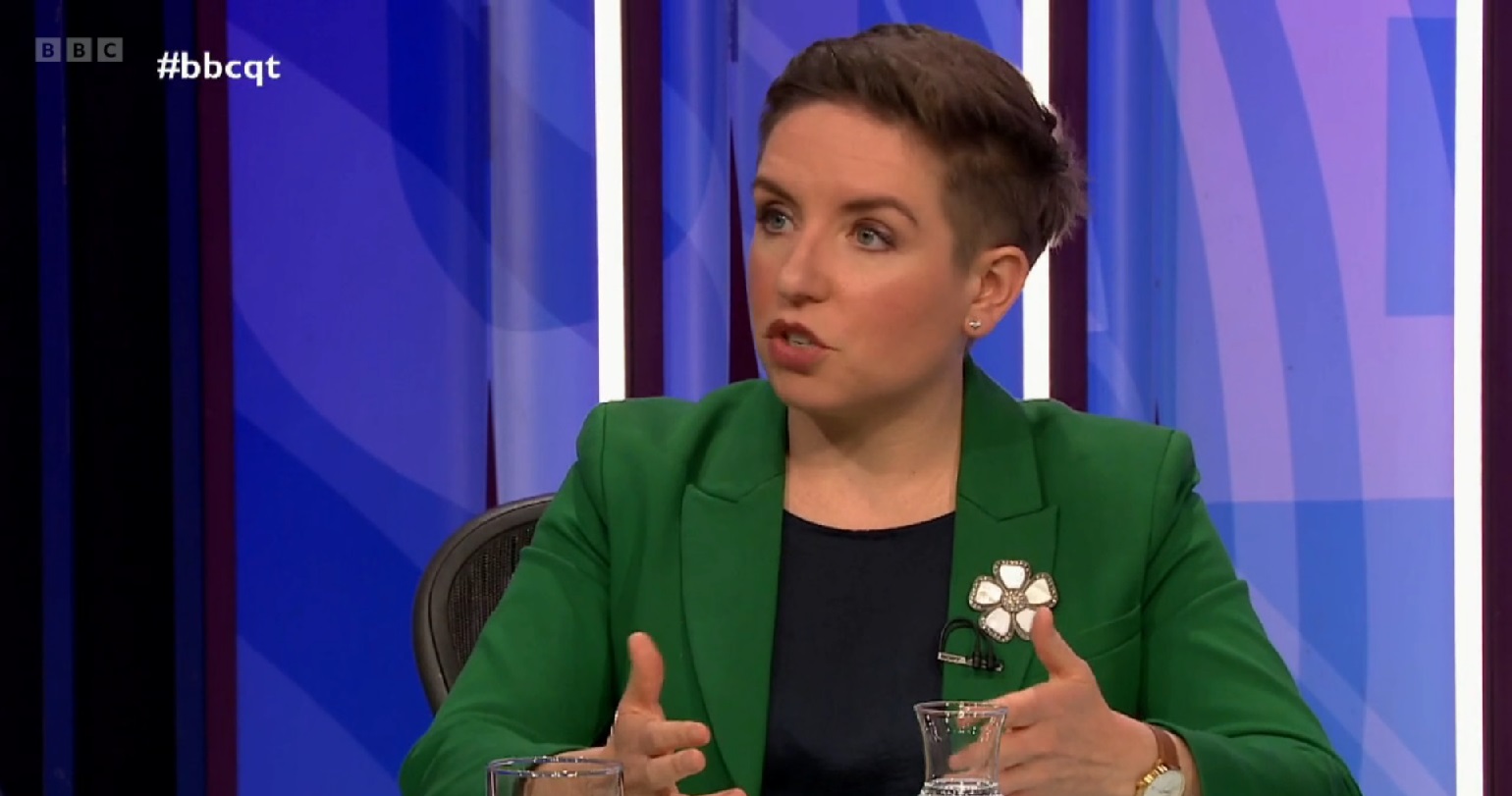
    Richard Tice got owned by leader of the Green Party Carla Denyer during a lively exchange about what action needs to be taken to combat the climate crisis. 

    The leader of the right-wing populist party, who’s been known to make bizarre and inaccurate statements on climate science denial, instigated some eye rolls when he stated, “the climate has changed for millions and millions of years.. way before man-made CO2 emissions”.

    He went on to face ridicule when questioned on his understanding of climate science and his lack of scientific background by Green Party leader and engineer by trade, Carla Denyer.

    …

    Image of the Green Party's Carla Denyer on BBC Question Time.
    Image of the Green Party’s Carla Denyer on BBC Question Time.

    The Green MP said: “The news has been full of pretty alarming evidence that climate change is not a concern that is going to come down the track sometime in the future, it’s here right now. 

    “And the best time that we could have brought in the policies to tackle this was of course decades ago. We’ve known about climate change my whole life. Successive governments in the UK and internationally largely failed to do that. So the second best time to do it is right now.”

    She added: “I’m an engineer by background. I didn’t want to be a politician, I’m in this because I realised the people in power making the decisions were not making the right ones to tackle this crisis.”

    https://leftfootforward.org/2024/04/reform-uk-leader-gets-owned-on-bbc-question-time-over-climate-change/

  • Liz Truss Book Calls for Climate Laws to be Abolished and Boasts of Effort to Cancel UK COP Summit

    Spread the love

    Original article by Adam Barnett republished from DeSmog.

    Liz Truss and former Prime Minister of Kazakhstan Asqar Mamin at the COP26 summit in Glasgow. Credit: Karwai Tang/UK Government (CC BY-NC-ND 2.0)

    The former prime minister attacks flagship climate deals and makes false claims about electric vehicles, Russia’s influence on energy policies, and net zero.

    The new book by former Prime Minister Liz Truss urges the UK, U.S. and EU to drop their landmark climate change laws, spreads falsehoods about green policies, and fondly recalls an attempt to cancel a major climate conference.

    Truss, who is the Conservative MP for South West Norfolk, resigned as prime minister in October 2022 after just 49 days in office.

    Since leaving 10 Downing Street, Truss has attempted to expose the “deep state” forces that allegedly brought down her premiership, while advocating for “free market” ideas within the Conservative Party, helping to launch the Popular Conservatives group.

    In her book, Ten Years to Save the West, which she is promoting widely this week, Truss writes that “the zealous drive to net zero”, the UK’s legally binding 2050 climate target, amounts to “unilateral economic disarmament” and is “a drag on economic growth”. She also claims that, while serving in the Treasury, she attempted to cancel the 2021 COP26 climate summit in Glasgow.

    Truss writes: “We should abolish the Climate Change Act and instead adopt a new Climate Freedom Act that enables rather than dictates technology”. She adds that “the U.S. should reverse the Inflation Reduction Act, and the EU should abandon its equivalent measures”.

    The Climate Change Act legalised the UK’s commitment to reducing carbon dioxide emissions by at least 80 percent by 2050 from 1990 levels. The Inflation Reduction Act is a $369 billion package of grants and subsidies by the U.S. government to spur green technology investment. 

    Scientists at the Intergovernmental Panel on Climate Change (IPCC) have said that without “immediate and deep emissions reductions across all sectors” limiting global heating to 1.5C is beyond reach.

    Restricting global temperatures to this threshold – the target agreed by the UK as part of the 2015 Paris Agreement – would prevent the worst and most irreversible effects of climate change, including floods, droughts, heatwaves, and wildfires.

    In the book, Truss also attacks climate advocates, writing that “the environmental movement is fundamentally driven by the radical left”, adding: “This ‘watermelon’ tendency is green on the outside, red on the inside – a modern rebranding of socialism. It features the same instincts of collectivism and authoritarianism.”

    Truss writes that “we should cancel” the United Nations annual COP climate summit, and falsely claims that electric vehicles are worse for the environment than those powered by fossil fuels.

    “In recent years, more radical forms of climate misinformation and disinformation have become mainstreamed”, said Jennie King, director of climate research and policy at the Institute of Strategic Dialogue think tank. “Such content continues to grow in virality and engagement online, but its impacts are vastly increased when platformed in the media or by politicians.”

    King said “the normalisation of wild and outlandish claims”, with climate action “being framed through a conspiratorial, tribalist and anti-scientific lens”, can lead to “real-world harm”. 

    “When such ideas are conveyed from the very corridors of power, it sets a dangerous precedent”, she added. 

    The IPCC warned in 2022 that efforts to tackle climate change were being delayed by “rhetoric and misinformation that undermines climate science and disregards risk and urgency”.

    Truss Claims ‘Couldn’t be Further from the Truth’

    Truss’s book is published by Biteback Publishing, a company owned by former Conservative deputy chair and major party donor Michael Ashcroft. 

    The former prime minister dedicates a chapter to green policies, titled ‘A Hostile Environment’, apparently a play on the term used by the Conservative government about its anti-immigration policies. 

    Truss writes that current environmental policies should be scrapped in favour of a “free market” approach. On energy, she calls for more fossil fuel extraction, advocating a mix of “oil and gas as well as nuclear and renewables”, adding: “The use of North Sea oil and gas is crucial, so there needs to be investment in that too. There also should be fracking in the UK.”

    Fracking for shale gas is a controversial practice that risks causing air, water, and noise pollution.

    She fails to mention that oil and gas firms receive major subsidies and tax breaks from the government, which would logically be removed in a “free market” energy system. The UK government has given £20 billion more in support to fossil fuel producers than renewables companies since 2015.

    Truss’s book also attacks the multilateral UN COP process, which has seen agreements on transitioning away from fossil fuels, and financial support for poorer countries suffering the worst effects of climate change. 

    Truss writes that “we should cancel the COP gravy train”. She claims that, in 2018, when she was chief secretary to the Treasury, she made “11th-hour attempts to ditch COP26”, the UN climate summit hosted by the UK in 2021, arguing that it was not a spending priority. 

    At COP26, nearly 200 countries agreed to ramp up efforts to cut emissions, also calling on wealthy countries to double their funding to poorer nations that have contributed the least to climate change. More than 40 countries also pledged to quit coal, the dirtiest fossil fuel and the world’s largest source of carbon dioxide emissions.

    The book also spreads false claims about climate policies. Truss writes that “in the UK and Europe, Russia has funded anti-fracking campaigns”, a claim which is not supported by any evidence.

    Truss claims that policies like “the switch from petrol to diesel in cars or the use of electric vehicles, have either harmed the environment in other ways or empowered our polluting adversaries elsewhere in the world”. 

    Colin Walker, head of transport at the Energy and Climate Intelligence Unit think tank, told DeSmog: “The notion that the switch to electric vehicles will have little discernible environmental impact, and make us dependent on imported gas and coal, couldn’t be further from the truth.

    “The total lifetime CO2 emissions of an electric vehicle, from being built to being driven, are three times lower than a petrol vehicle – a figure that will only get higher as our grid becomes cleaner. And while older technologies like petrol cars and gas boilers rely on fossil fuels imported from abroad, EVs and heat pumps can be powered by electricity generated by British wind and solar farms.”

    Truss also writes of “ludicrous claims that pursuing a net zero agenda … will boost the economy and drive growth”. 

    Walker added: “The UK’s net zero economy is now worth £74 billion, and grew by nine percent in 2023.  The wider economy grew just 0.1 percent. Talking down the economic opportunities net zero has to offer the UK is at odds with a growth agenda when the U.S., EU and China are all competing for clean industries.” 

    Truss’s Climate Denial Ties

    Truss has a long history of opposing climate policies. In the 2022 Conservative Party leadership contest, she attacked solar farms on agricultural land and, during her brief time in 10 Downing Street, she overturned the UK’s ban on fracking. (A policy reversed by her successor, Rishi Sunak.)

    As DeSmog reported at the time, Truss’s leadership campaign received £30,000 from a pro-fracking lobby group, £10,000 from a climate denial activist, and £100,000 from the wife of a former BP oil executive. Truss received a further £5,000 from Lord Vinson, a Tory peer who has provided funding to the UK’s leading climate science denial group, the Global Warming Policy Foundation. 

    Since leaving office, Truss has received £250,000 in speaking fees, including £7,600 last April from the Heritage Foundation, a right-wing U.S. think tank that has long promoted climate science denial. Heritage President Kevin Roberts provides a long and glowing blurb for Truss’s book. 

    Earlier this year, Truss helped to launch the Popular Conservatives (PopCon), a new initiative run by Truss-ally Mark Littlewood, the former director general of the Institute of Economic Affairs, a think tank which received funding from oil major BP for at least 50 years. 

    At the PopCon launch, Truss attacked “net zero zealotry”, claiming voters “don’t like the net zero policies which are making energy more expensive”

    .Additional reporting by Sam Bright

    Original article by Adam Barnett republished from DeSmog.

  • IEA Think Tank Contributes to Climate Science Denial Documentary

    Spread the love

    Original article by Sam Bright republished from DeSmog.

    The Institute of Economic Affairs has its headquarters on Lord North Street, Westminster. Credit: Des Blenkinsopp (CC BY-SA 2.0)
    The Institute of Economic Affairs has its headquarters on Lord North Street, Westminster. Credit: Des Blenkinsopp (CC BY-SA 2.0)

    A senior figure at the influential Institute of Economic Affairs (IEA) think tank contributed to a new documentary that spread numerous myths about climate change. 

    Stephen Davies, an academic who has worked in educational outreach roles at the IEA since 2010, appeared several times in Climate The Movie: The Cold Truth – a new film directed by climate science denier Martin Durkin. 

    In the documentary, Davies claims that climate activists want to impose an “austere” life on ordinary people. “Behind all the talk about a climate emergency, climate crisis” is “an animus and hostility towards” working-class people, “their lifestyle, their beliefs and a desire to change it by force if necessary,” he says.

    According to the website Skeptical Science, which debunks climate misinformation, Climate The Movie contains more than two dozen myths about climate change. The film suggests that we shouldn’t be worried about greenhouse gas emissions, because plants need carbon dioxide. “We’re in a CO2 famine,” one interviewee claims.

    The UN’s Intergovernmental Panel on Climate Change (IPCC), the world’s foremost climate science body, has stated that carbon dioxide “is responsible for most of global warming” since the late 19th century, which has increased the “severity and frequency of weather and climate extremes, like heat waves, heavy rains, and drought”.

    Climate The Movie producer Thomas Nelson told DeSmog that “I see the misguided fight against carbon dioxide as being as crazy as fighting against oxygen or water vapour, and I think scaring innocent children about this is deeply evil”.

    The IEA said that “Steve firmly believes that climate change is happening and carbon emissions are having an impact. His view that climate policy imposes costs, particularly on working-class communities, is entirely mainstream. IEA publications and spokespeople have supported action on climate change, including carbon pricing.”

    A screenshot of Stephen Davies of the Institute of Economic Affairs in Climate The Movie: The Cold Truth. Credit: Climate The Movie / YouTube
    A screenshot of Stephen Davies of the Institute of Economic Affairs in Climate The Movie: The Cold Truth. Credit: Climate The Movie / YouTube

    In 2018, Greenpeace’s investigative journalism unit Unearthed revealed that the IEA had received funding from oil major BP every year since 1967. In response to the story, an IEA spokeswoman said: “It is surely uncontroversial that the IEA’s principles coincide with the interests of our donors.” 

    The IEA also received a £21,000 grant from U.S. oil major ExxonMobil in 2005.

    The IEA has extensive influence in politics and the media. It was pivotal to Liz Truss’s short-lived premiership as prime minister, and has boasted of its access to Conservative ministers and MPs. During the year ending March 2023, the IEA appeared in the media on 5,265 occasions, a figure 43 percent higher than its previous peak in 2019.

    The group has also received donations from a number of philanthropic trusts accused of channelling funds from the fossil fuel industry and helping to support climate science denial groups. The IEA is a member of the Atlas Network – an international collaboration of “extreme” free market groups that have been accused of promoting the interests of fossil fuel companies and other large corporations.

    It’s not known if the IEA has received funding from BP since 2018.

    The IEA is a prominent supporter of the continued and extended use of fossil fuels. The group has advocated for the ban to be lifted on fracking for shale gas, calling it the “moral and economic choice”. The IEA has also said that a ban on new North Sea oil and gas would be “madness”, has criticised the windfall tax imposed on North Sea oil and gas firms, and said that the government’s commitment to “max out” the UK’s fossil fuel reserves is a “welcome step”.

    The IEA is part of the Tufton Street network – a cluster of libertarian think tanks and pressure groups that are in favour of more fossil fuel extraction and are opposed to state-led climate action. These groups are characterised by a lack of transparency over their sources of funding. The IEA does not publicly declare the names of its donors. 

    “From Brexit to Trussonomics, the IEA has consistently peddled and promoted destructive and damaging policies,” Green Party MP Caroline Lucas told DeSmog. “Yet perhaps nothing will prove more dangerous long term than the stream of climate denialism and calls to delay action that have been pouring out of Tufton Street for many years.

    “Clearly the IEA is now ramping up its climate culture war and the Conservative Party has been following suit. The cross-party consensus on climate action we used to have in Parliament is under strain like never before.”

    The IEA and Stephen Davies were approached for comment. 

    Climate The Movie

    During the documentary, Davies suggests that action to reduce greenhouse gas emissions is being used to limit the freedom of individuals. He claims that climate activists want to impose “a much more austere simple kind of lifestyle” on people “in which the consumption choices of the great bulk of the population are controlled or even prohibited.”

    Davies adds that: “What you have here is a classic example of class hypocrisy and self-interest masquerading as public spirited concern. You could take these kinds of green socialist more seriously if they lived off grid, they cut their own consumption down to the minimum, they never flew. Instead you get constant talk about how human consumption is destroying the planet but the people making all this talk show absolutely no signs of reducing their own.”

    The documentary also features an interview with Benny Peiser, the director of the Global Warming Policy Foundation (GWPF) – the UK’s leading climate science denial group. Peiser has previously claimed that it would be “extraordinary anyone should think there is a climate crisis”, while the GWPF has expressed the view that carbon dioxide has been mischaracterised as pollution, when in fact it is a “benefit to the planet”. 

    The film was favourably reviewed by commentator Toby Young in The Spectator magazine, who described it as “a phenomenon”. Young has previously said that he’s sceptical about the idea of human-caused climate change. 

    The IPCC has stated it is “unequivocal that human influence has warmed the atmosphere, ocean and land”, while scientists at NASA have found that the last 10 years were the hottest on record. Earth’s average surface temperature in 2023 was the warmest since records began in 1880. 

    The IPCC has also warned that false and misleading information “undermines climate science and disregards risk and urgency” of climate action.

    The documentary also features Claire Fox, a member of the House of Lords who was nominated for a peerage by former prime minister Boris Johnson in 2020. 

    Fox used the documentary to claim that, by tackling climate change, people will be forced to pay more “to simply live the lives that they were leading”.

    She suggests that supporters of climate action are trying to “take away what we consider to be not luxuries but necessities.”

    The UK’s Climate Change Committee, which advises the government on measures to achieve net zero emissions by 2050, estimates that the combined policies will cost less than one percent of the country’s national output.

    The Office for Budget Responsibility, the UK’s independent economic forecaster, has also said that “the costs of failing to get climate change under control would be much larger than those of bringing emissions down to net zero”.

    Those suffering during the cost of living crisis have seen their energy bills increase by nearly £2.5 billion, in turn reducing their disposable incomes, due to successive governments failing to implement green reforms. 

    Claire Fox and the GWPF were approached for comment. 

    A Charitable Cause?

    The IEA is a registered charity, meaning that it receives generous tax breaks. 

    The group justifies this charitable status partly on the basis of its educational outreach programme, which aims to “equip tomorrow’s leaders with a deep understanding of free market economics”.

    The IEA claims that: “Our aim is to change the climate of opinion in the long term and our work with students is a key part of this.”

    In the year ending March 2023, the group claimed to have engaged with 3,500 students and 1,200 teachers via its seminars, internships and summer schools.

    Formerly the IEA’s head of education and now a senior education fellow, Davies is a senior member of the group’s outreach programme. He is the first person listed in the IEA’s student speakers brochure, which advertises the IEA staff members who are available to speak at schools or universities. 

    The brochure also lists the IEA’s chief operating officer Andy Mayer, who has said that the government should “get rid of” its target of achieving net zero emissions by 2050, which he called a “very hard left, socialist, central-planning model”.

    The non-profit Good Law Project recently made a complaint to the Charity Commission about the IEA, claiming that the libertarian group had breached charity rules. Namely, the Good Law Project claims that the IEA is in breach of rules stating that charities must avoid presenting “biased and selective information in support of a preconceived point of view”.

    The Charity Commission rejected this complaint, stating that: “We have assessed the concerns raised and have not identified concerns that the charity is acting outside of its objects or the Commission’s published guidance.” 

    Good Law Project campaigns manager Hannah Greer told DeSmog: “It won’t be a surprise to anyone that the IEA is cementing its role as a major mouthpiece for climate change scepticism. It’s a huge scandal that the IEA is still allowed to peddle fringe views under the guise of being an ‘educational charity’ while benefiting from taxpayer subsidies.

    “This has been allowed to happen because we have seen alarming and unambiguous regulatory failure from the Charity Commission – who have been presented with evidence of how the IEA is flouting charity law, but have chosen to look the other way.”

    Original article by Sam Bright republished from DeSmog.