Tag: Donald Trump

  • The climate is changing so fast that we haven’t seen how bad extreme weather could get

    Spread the love
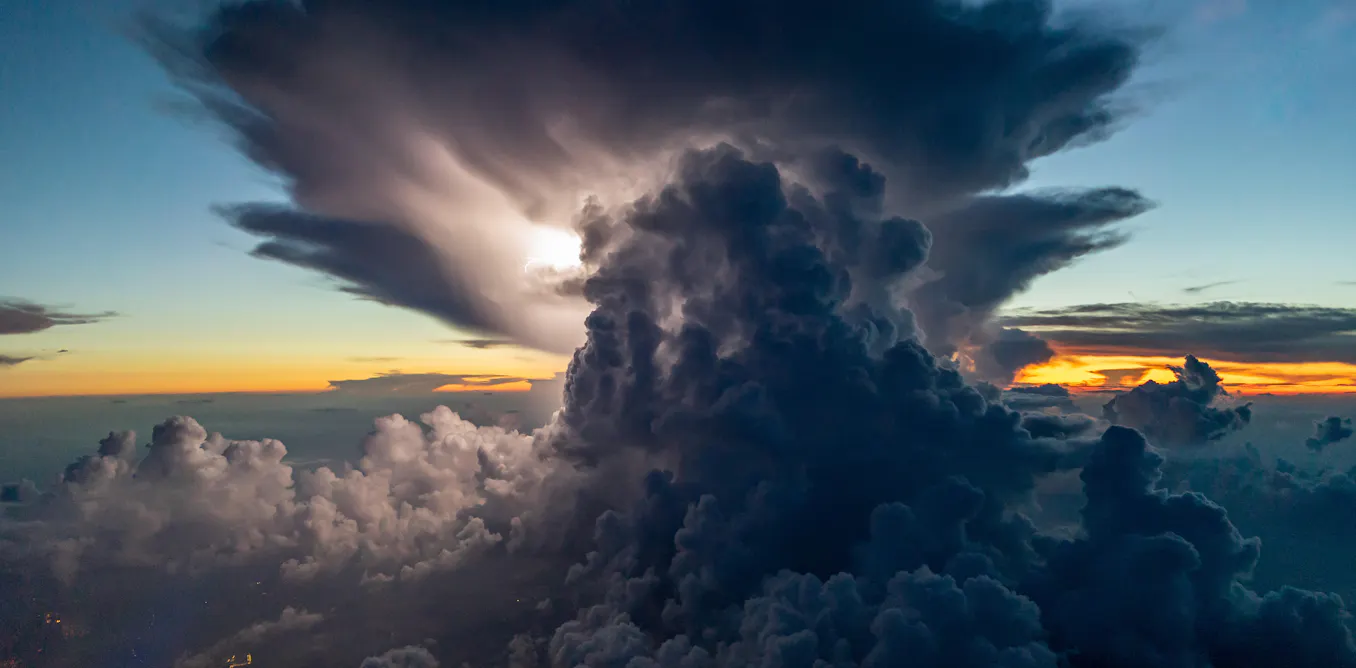
    Andreas Thaller/Alamy Stock Photo

    Simon H. Lee, University of St Andrews; Hayley J. Fowler, Newcastle University, and Paul Davies, Newcastle University

    Extreme weather is by definition rare on our planet. Ferocious storms, searing heatwaves and biting cold snaps illustrate what the climate is capable of at its worst. However, since Earth’s climate is rapidly warming, predominantly due to fossil fuel burning, the range of possible weather conditions, including extremes, is changing.

    Scientists define “climate” as the distribution of possible weather events observed over a length of time, such as the range of temperatures, rainfall totals or hours of sunshine. From this they construct statistical measures, such as the average (or normal) temperature. Weather varies on several timescales – from seconds to decades – so the longer the period over which the climate is analysed, the more accurately these analyses capture the infinite range of possible configurations of the atmosphere.

    Typically, meteorologists and climate scientists use a 30-year period to represent the climate, which is updated every ten years. The most recent climate period is 1991-2020. The difference between each successive 30-year climate period serves as a very literal record of climate change.

    This way of thinking about the climate falls short when the climate itself is rapidly changing. Global average temperatures have increased at around 0.2°C per decade over the past 30 years, meaning that the global climate of 1991 was around 0.6°C cooler than that in 2020 (when accounting for other year-to-year fluctuations), and even more so than the present day.

    A moving target for climate modellers

    If the climate is a range of possible weather events, then this rapid change has two implications. First, it means that part of the distribution of weather events comprising a 30-year climate period occurred in a very different background global climate: for example, northerly winds in the 1990s were much colder than those in the 2020s in north-west Europe, thanks to the Arctic warming nearly four times faster than the global average. Statistics from three decades ago no longer represent what is possible in the present day.

    Second, the rapidly changing climate means we have not necessarily experienced the extremes that modern-day atmospheric and oceanic warmth can produce. In a stable climate, scientists would have multiple decades for the atmosphere to get into its various configurations and drive extreme events, such as heatwaves, floods or droughts. We could then use these observations to build up an understanding of what the climate is capable of. But in our rapidly changing climate, we effectively have only a few years – not enough to experience everything the climate has to offer.

    Extreme weather events require what meteorologists might call a “perfect storm”. For example, extreme heat in the UK typically requires the northward movement of an air mass from Africa combined with clear skies, dry soils and a stable atmosphere to prevent thunderstorms forming which tend to dissipate heat.

    Such “perfect” conditions are intrinsically unlikely, and many years can pass without them occurring – all while the climate continues to change in the background. Based on an understanding of observations alone, this can leave us woefully underprepared for what the climate can now do, should the right weather conditions all come together at once.

    Startling recent examples include the extreme heatwave in the Pacific north-west of North America in 2021, in which temperatures exceeded the previous Canadian record maximum by 4.6°C. Another is the occurrence of 40°C in the UK in summer 2022, which exceeded the previous UK record maximum set only three years earlier by 1.6°C. This is part of the reason why the true impact of a fixed amount of global warming is only evident after several decades, but of course – since the climate is changing rapidly – we cannot use this method anymore.

    Playing with fire

    To better understand these extremes, scientists can use ensembles: many runs of the same weather or climate model that each slightly differ to show a range of plausible outcomes. Ensembles are routinely used in weather prediction, but can also be used to assess extreme events which could happen even if they do not actually happen at the time.

    When 40°C first appeared in ensemble forecasts for the UK before the July 2022 heatwave, it revealed the kind of extreme weather that is possible in the current climate. Even if it had not come to fruition, its mere appearance in the models showed that the previously unthinkable was now possible. In the event, several naturally occurring atmospheric factors combined with background climate warming to generate the record-shattering heat on July 19 that year.

    The highest observed temperature each year in the UK, from 1900 to 2023
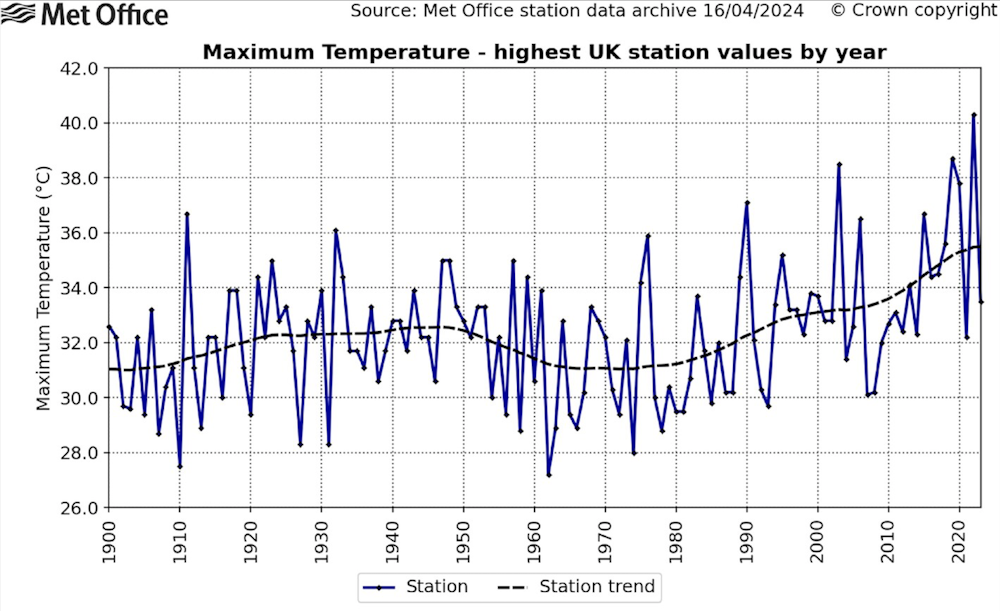
    A graph showing the highest observed temperature in the UK between 1900 and 2023.
    The hottest days are getting hotter in the UK. Met Office/Kendon et al. 2024

    Later in summer 2022, after the first occurrence of 40°C, some ensemble weather forecasts for the UK showed a situation in which 40°C could be reached on multiple consecutive days. This would have posed an unprecedented threat to public health and infrastructure in the UK. Unlike the previous month, this event did not come to pass, and was quickly forgotten – but it shouldn’t have been.

    It is not certain whether these model simulations correctly represent the processes involved in producing extreme heat. Even so, we must heed the warning signs.

    Despite a record-warm planet, summer 2024 in the UK has been relatively cool so far. The past two years have seen global temperatures far above anything previously observed, and so potential extremes have probably shifted even further from what we have so far experienced.

    Just as was the case in August 2022, we’ve got away with it for now – but we might not be so lucky next time.

    Imagine weekly climate newsletter

    Don’t have time to read about climate change as much as you’d like?
    Get our award-winning weekly roundup in your inbox instead. Every Wednesday, The Conversation’s environment editor writes Imagine, a short email that goes a little deeper into just one climate issue. Join the 35,000+ readers who’ve subscribed so far.


    Simon H. Lee, Lecturer in Atmospheric Science, University of St Andrews; Hayley J. Fowler, Professor of Climate Change Impacts, Newcastle University, and Paul Davies, Chief Meteorologist, Met Office and Visiting Professor, Newcastle University

    This article is republished from The Conversation under a Creative Commons license. Read the original article.

    Orcas discuss Donald Trump and the killer apes' concept of democracy. Front Orca warns that Trump is crashing his country's economy and that everything he does he does for the fantastically wealthy.
    Orcas discuss Donald Trump and the killer apes’ concept of democracy. Front Orca warns that Trump is crashing his country’s economy and that everything he does he does for the fantastically wealthy.
    Neo-Fascist Climate Science Denier Donald Trump says Burn, Baby, Burn.
    Neo-Fascist Climate Science Denier Donald Trump says Burn, Baby, Burn.
    Elon Musk urges you to be a Fascist like him, says that you can ignore facts and reality then.
    Elon Musk urges you to be a Fascist like him, says that you can ignore facts and reality then.
  • Nayib Bukele’s El Salvador Dictatorship: Made in Israel

    Spread the love

    Original article by Alan Macleod republished from MPN under a Creative Commons Attribution-NonCommercial-ShareAlike 3.0 International License.

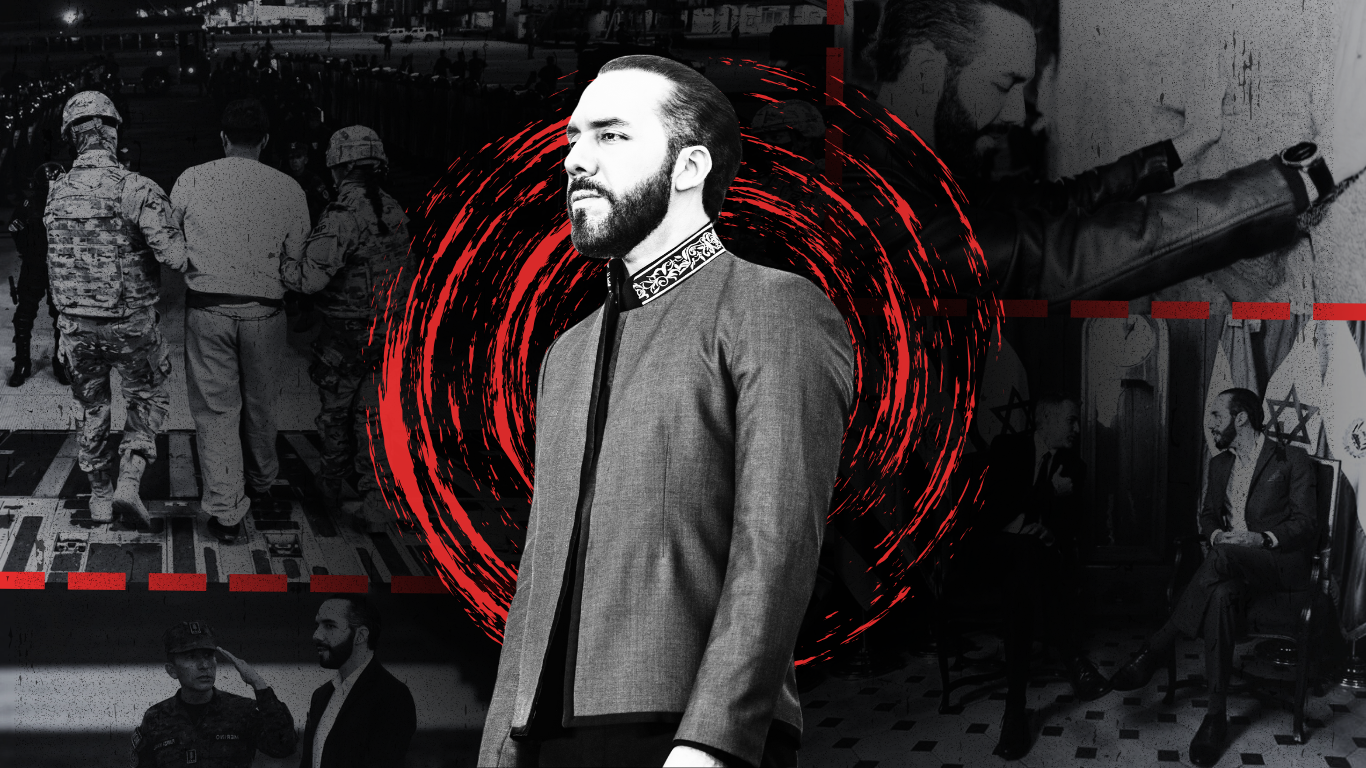
    Nayib Bukele may be Palestinian, but the dictatorship he has built in El Salvador is very much made in Israel. From arming his security forces to supplying him with weapons and high-tech surveillance tools, MintPress explores the Israeli influence helping to prop up the man who calls himself “the world’s coolest dictator.”

    Arming a Dictatorship

    Since Bukele’s ascension to the presidency in 2019, Israeli exports to El Salvador have been rapidly advancing, growing at an annual rate of more than 21%. This increase consists primarily of weapons. Salvadoran forces are well supplied with Israeli hardware. The military and police use the Israeli-made Galil and ARAD 5 rifles, the Uzi submachine gun, numerous Israeli pistols, and ride in AIL Storm and Plasan Yagu armored vehicles.

    Some equipment Salvadoran forces use comes free, courtesy of Israeli sources. In 2019, an Israeli NGO, the Jerusalem Foundation (a group that builds illegal settlements on Palestinian land), announced that it would donate $3 million worth of supplies to the Salvadoran police and military.

    For others, however, the Bukele administration is paying top dollar, meaning that this relationship is extremely profitable for the high-tech Israeli defense sector.

    In 2020, the Salvadoran police paid around $3.4 million for one year’s use of three Israeli spyware products. These tools include GEOLOC, a program that intercepts calls and texts from targeted phones, and Web Tangles, which uses individuals’ social media accounts to build up files on people, including using their photos for facial recognition. A third, Wave Guard Tracer (marketed in some regions as Guardian), tracks users’ movements through the GPS on their phone.

    Perhaps the most notorious piece of spyware used, however, is Pegasus, developed by the NSO Group, an outgrowth of the Israeli Defense Forces’ Unit 8200. The app hit the headlines in 2022, when it was revealed that repressive governments the world over had used it to surveil thousands of public figures, including kings, presidents, politicians, activists, and reporters. El Salvador was one of the most heavily penetrated nations.  A report from Citizen Lab found that the Bukele administration was using it to secretly monitor dozens of public figures critical of the president, including 22 journalists from the independent outlet El Faro.

    Incarceration Nation

    Bukele has used these Israeli tools and weapons to crack down on dissent and opposition to his rule. Since 2022, when he declared a State of Exception, suspending rights and civil liberties, he has imprisoned at least 85,000 people, a staggering figure for such a small country. Today, around 2% of the adult population — along with over 3,000 children — languish behind bars in dangerously overcrowded jails.

    The most well-known of these is the Terrorism Confinement Center (Centro de Confinamiento del Terrorismo, or CECOT), which is by far and away the largest prison in world history. Built to incarcerate over 40,000 people, it is to this center that the Trump administration has been sending migrants rounded up by ICE. In a meeting with Bukele in the Oval Office, President Trump stated that U.S. nationals would be sent there next.

    El Salvador holds vastly more people in prisons per capita than any other country, and conditions are among the worst in the world. Food is sparse, lights are kept on 24 hours a day, and cells are frequently packed with more than 100 occupants. Those incarcerated at CECOT are allowed no contact with the outside world, not even with their families or lawyers.

    Often, the first thing a Salvadoran family hears about their disappeared relative is news that he died while incarcerated. Torture is commonplace. Osiris Luna, the director of El Salvador’s prison system, has even been sanctioned by the U.S. government for his role in “gross human rights abuses.”

    Bukele has justified the mass imprisonment of his countrymen as a necessary step to break the power of organized gangs and drug cartels. Yet a significant portion of those held are his political opponents. Among those detained are union leaders, politicians, and human rights defenders.

    Facing the threat of imprisonment or other punishment, El Faro has moved its operations to neighboring Costa Rica.

    A Palestinian Who Loves Israel

    Amid the chaos, Bukele has fired tens of thousands of public service workers and reduced taxes on the business community. He has also reoriented El Salvador’s foreign policy from a progressive, anti-imperialist stance to allying itself with right-wing governments around the world, including Israel.

    Despite coming from a prominent Palestinian family that emigrated from Jerusalem in the early 20th century, throughout his political career, he has made a point of vocally supporting Israel, its culture, and its foreign policy. As far back as 2015, when he was Mayor of San Salvador, the Israeli Embassy had identified him as a “partner for cooperation.”

    Three years later, in February 2018, he visited Israel on a trip organized by Deputy Minister for Foreign Affairs, Tzipi Hotovely, and American Jewish Congress President, Jack Rosen. There, he participated in a security conference attended by Prime Minister Benjamin Netanyahu and President Reuven Rivlin, and made a public appearance at the Western Wall.

    https://cdn.iframe.ly/api/iframe?_showcaption=false&app=1&url=https%3A%2F%2Fwww.instagram.com%2Fp%2FBfEiHGhHVEz%2F&key=bab15327a66f873fa9c0d80b90a8205a

    In the wake of the October 7 assault, Bukele voiced his support for Israel and condemnation of Hamas. “As a Salvadoran of Palestinian ancestry, I’m sure the best thing that could happen to the Palestinian people is for Hamas to completely disappear,” he wrote, describing Hamas as “savage beasts” and comparing them to MS-13, one of El Salvador’s most violent gangs.

    El Salvador is home to a large Palestinian population; some 100,000 live in the small country. And yet, the Central American nation is far from a stronghold of support for anti-colonial struggles. Palestinians in El Salvador have generally done very well and entered society’s upper echelons. Bukele is actually the third Palestinian to become president.

    Historically, the Latin American business community has sided with conservative or reactionary forces, and the Palestinian diaspora has shied away from supporting resistance movements in the Middle East.

    “Bukele’s culture is not so much Palestinian as it is neo-fascist. That’s his culture. So he is going to identify with repressive governments around the world,” Roberto Lovato, a Salvadoran-American writer and professor at the University of Nevada, Las Vegas, told MintPress News.

    The country is also home to a large and active evangelical Christian community, for whom Israel’s rise is a key issue. Despite being the son of the country’s most notable imam — one who claimed his son is a practicing Muslim — Bukele has positioned himself as a Christian conservative, and his evangelical supporters say he was chosen by God to rid the nation of gang violence. “I believe in God, in Jesus Christ. I believe in His word, I believe in His word revealed in the Holy Bible,” he said.

    Dirty Wars and Dirty Politics

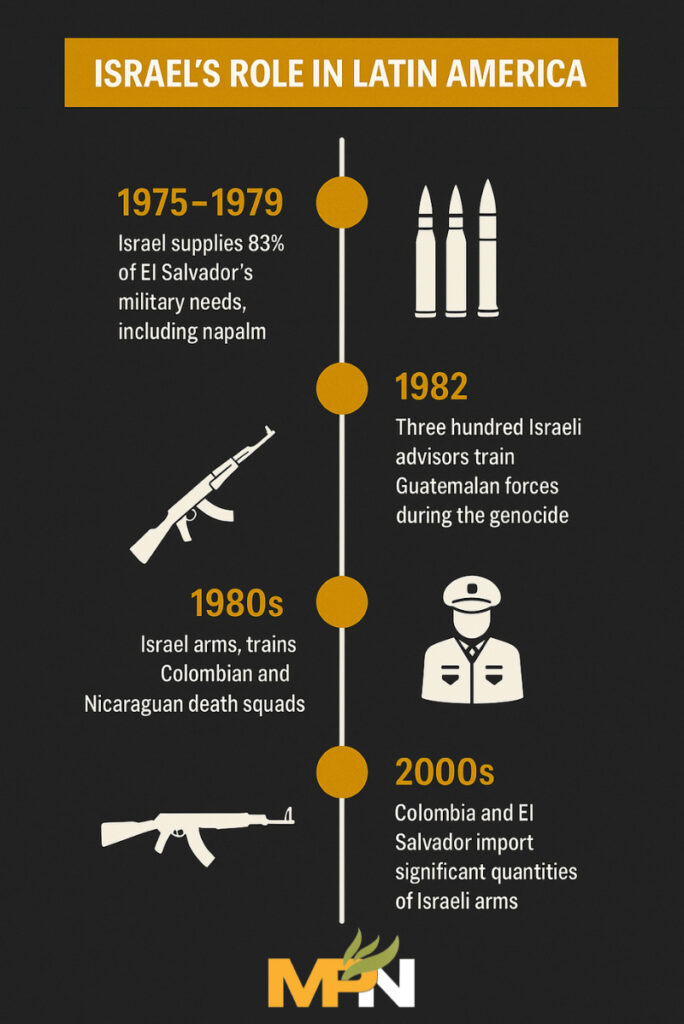
    The connections between Israel and El Salvador, however, predate Bukele by decades. During the 1970s and 1980s, the country was a hotspot in the Cold War, and U.S.-backed death squads battled the leftist FMLN rebels. The military regime killed around 75,000 civilians in a dirty war that scars the region to this day. The violence was so extreme and so well-publicized that even the United States sought to distance itself from it. Into that void stepped Israel, providing 83% of El Salvador’s military needs from 1975 to 1979, including napalm. In return, El Salvador moved its embassy to Jerusalem, legitimizing Israel’s claim to the city.

    Lovato, a former member of the FMLN, told MintPress that the country was turned into a “laboratory for repression.”

    During the Civil War, the U.S. government aligned a whole panoply of different practitioners of torture and mass murder. You had trainers from Taiwan, Israel, and other countries going to El Salvador to train the Salvadoran government to do what they had learned how to do.”

    Timeline infographic showing Israel’s military and intelligence support to Latin American regimes from the 1970s to the 1990s, including Guatemala, Colombia, Chile, Argentina, and El Salvador.

    One of the most notable individuals who received Israeli training was Major Roberto D’Aubuisson, leader of a far-right death squad. D’Aubuisson is known to have ordered the assassination of Archbishop Oscar Romero. Nicknamed “Blowtorch Bob” for his penchant for using the tool on his opponents’ genitals, his death squad is thought to have killed some 30,000 people, many of whom were tortured to death. Thus, it is no stretch to say that El Salvador’s repressive state apparatus has long been sustained by Israeli money, tech, and know-how.

    But this is far from an isolated example. Indeed, Israel has supplied weapons and training to repressive governments around the world, honing the skills acquired suppressing the Palestinian population and taking them global.

    In Guatemala, Israel sold planes, armored personnel carriers and rifles to the military, and even built them a domestic ammunition factory. General Efraín Ríos Montt thanked Israel for its participation in a coup that brought him to power in 1982, stating that it went so smoothly “because many of our soldiers were trained by Israelis.” Around 300 Israeli advisors worked to train Ríos Montt’s forces into genocidal death squads who systematically killed over 200,000 Mayans. A sign of the deep connections between the two groups is that Ríos Montt’s men began referring to the indigenous Mayans as “Palestinians” during their attacks.

    It is a similar story in Colombia, where the country’s most notorious death squads were trained by Israeli operatives, such as General Rafael Eitan. To this day, Colombian police and military make extensive use of Israeli weaponry. So normalized has the Israeli influence become in Colombian society that, in 2011, sitting President Juan Manuel Santos appeared in an advertisement for Israeli mercenary firm Global CST. “They are people with a lot of experience. They have been helping us to work better,” he stated.

    Israel also armed and supported the military dictatorships of Chile and Argentina in the 1970s and 1980s, even as the latter explicitly targeted over 1,000 Jews in the largest slaughter of Jews since the Holocaust.

    In Nicaragua, Israel supplied the Somoza dictatorship, helping it carry out a dirty war. In Rwanda, it sold weapons to the Hutu government as it was carrying out a genocide against the Tutsi population. Israeli weapons were used by Serbia during the Yugoslav civil war in the 1990s. And successive administrations in Tel Aviv also helped sustain the Apartheid government of South Africa, sending it weapons and sharing intelligence with it.

    Therefore, it should come as little surprise that Bukele’s administration has sought and established such close ties to the Israeli government. These weapons and techniques, honed on the Palestinian population, are going global, helping a government thousands of miles away crack down on civil liberties. While Bukele — a Palestinian — is very much in charge of El Salvador, it is clear that his dictatorship has a distinct Israeli flavor.

    Feature photo | Illustration by MintPress News

    Alan MacLeod is Senior Staff Writer for MintPress News. He completed his PhD in 2017 and has since authored two acclaimed books: Bad News From Venezuela: Twenty Years of Fake News and Misreporting and Propaganda in the Information Age: Still Manufacturing Consent, as well as a number of academic articles. He has also contributed to FAIR.org, The Guardian, Salon, The Grayzone, Jacobin Magazine, and Common Dreams. Follow Alan on Twitter for more of his work and commentary @AlanRMacLeod.

    Original article by Alan Macleod republished from MPN under a Creative Commons Attribution-NonCommercial-ShareAlike 3.0 International License.

    Climate Science Denier Donald Trump says Burn, Baby, Burn.
    Climate Science Denier Donald Trump says Burn, Baby, Burn.
    Elon Musk urges you to be a Fascist like him, says that you can ignore facts and reality then.
    Elon Musk urges you to be a Fascist like him, says that you can ignore facts and reality then.

  • Thames Water’s Prospective New Owner Donated $1 Million to Trump’s Inauguration

    Spread the love

    Original article by Sam Bright and Adam Barnett republished from DeSmog.

    U.S. President Donald Trump next to the Thames Water and KKR logos. DeSmog collage. Credit: Gage Skidmore / Thames Water / KKR

    The U.S. private equity firm KKR, which has been selected as the ‘preferred bidder’ for the takeover of Thames Water, gave a seven-figure sum to Donald Trump’s inauguration committee, DeSmog can report.

    Official records show that Kohlberg Kravis Roberts Co LP (KKR) donated $1 million to the Trump Vance Inaugural Committee on 7 January. The committee is appointed by the president-elect to arrange the inauguration ceremony, when a U.S. president is formally sworn into office.

    The embattled London-based utilities provider Thames Water, in debt to the tune of £20 billion, is attempting to secure new investment to save it from nationalisation. In March, KKR was granted preferred bidder status, giving it a 10-week period to raise the equity to buy the water company.

    KKR is reported to have lodged an initial £4 billion bid in exchange for a majority stake in Thames Water, which serves 16 million customers.

    However, campaigners have raised concerns about KKR’s suitability to own Thames Water, given its financial ties to Trump.

    “KKR recently donated $1 million to the inauguration fund of President Trump, a man who has repeatedly called the climate crisis a hoax,” said Matthew Topham, lead campaigner at the pro-nationalisation campaign group We Own It. “Let’s not kid ourselves that this company will swoop in and clean up our rivers and lakes.

    “The government has ducked the issue for too long – special administration to slash the rotten debt, then full public ownership, is the only way to reverse this catastrophe.”

    The new Trump administration has initiated a bonfire of clean air and water regulations – rules that were set to save the lives of 200,000 people according to The Guardian. Gina McCarthy, chair of the Environmental Protection Agency (EPA) under former U.S. President Barack Obama, said the announcement of the mass rollbacks was the “most disastrous day in EPA history”. During his first term, from 2017 to 2021, Trump repealed more than 100 environmental regulations.

    Since being inaugurated for a second time, Trump has pledged to once again withdraw the U.S. from the flagship 2015 Paris Agreement, which set an international target for limiting global warming, and has declared a “national energy emergency” to allow the U.S. to “drill, baby, drill” for new fossil fuels. 

    KKR’s prospective ownership of a vital public utility has also been questioned on the basis of the U.S. firm’s business model. Private equity firms – which buy and restructure companies – are known to cut costs, and increase prices for consumers, in order to maximise their profits.

    KKR was infamously dubbed the “Barbarians at the Gate” in the late 1980s for its takeover of U.S. conglomerate RJR Nabisco.

    “It beggars belief that anyone could seriously think this is a business model and owner who will truly fix the crisis at Thames Water,” said Mathew Lawrence, director of the think tank Common Wealth. “It is exactly the behaviour of loading Thames Water up with debt, extracting money, and underinvesting that has led us to this point. What is needed is long-term stewardship, patient investment, and putting the public and our water system first for once – not the interests of elite financial firms.”

    These sentiments were reflected in Parliament this week, through a House of Lords address by Labour peer Prem Sikka. “Thames Water was put on the road to ruin by private equity,” he said. “Now its shareholders have designated KKR, another private equity group, as their preferred bidder. KKR’s business model is profiteering, high leverage, low investment, asset stripping and high cash extraction. That will inevitably multiply Thames’s problems.”

    KKR and Thames Water were approached for comment.

    Debt and Donations

    Thames Water’s debt ballooned under the ownership of Australian private equity firm Macquarie, increasing from £3.4 billion in 2006 to £10.8 billion when the firm sold its stake in 2017.

    During Macquarie’s ownership of Thames Water, the private equity firm extracted roughly £2.7 billion in dividends and a further £2.2 billion in loans. Despite this, Macquarie has recently said that it is “very proud” of its ownership record.

    KKR’s preliminary bid proposed a mechanism that would allow the holders of Thames Water debt – including the U.S. hedge fund Elliott Management – to become Thames Water shareholders.

    Elliott Management is an activist hedge fund that recently built up a large stake in BP and has urged the British fossil fuel major to ditch a number of its green commitments. BP’s profits recently dropped by 48 percent amid this pivot back to oil and gas. The hedge fund is run by Paul Singer, who also donated $1 million to Trump’s inauguration committee.

    Turning around the performance of Thames Water will take considerable investment and business acumen. Thames Water reported a 40 percent increase in pollution incidents in the first half of 2024, while the firm has been allowed to raise customer bills by 35 percent on average over the upcoming years. Senior KKR Europe executive Johannes Huth said last year that water bills must rise to boost investment in ageing infrastructure.

    KKR also has a 25 percent stake in Northumbrian Water, which it acquired in 2022.

    KKR’s Connections

    In addition to its donation to Trump’s inauguration fund, KKR has other ties to fossil fuels and those who oppose climate action.

    Analysis by the investigative group Private Equity Climate Risks published in April 2024 reported that KKR has a large fossil fuel portfolio, with 188 assets in 21 countries.

    KKR has also created a $50 billion fund with Energy Capital Partners to invest in artificial intelligence (AI) data centre energy infrastructure. Data centres are heavily energy intensive, and DeSmog recently revealed that AI executives have told major polluters that the nascent industry can keep fossil fuels alive.

    KKR is also the co-owner of Marshall Wace, a hedge fund co-founded by UK media baron Paul Marshall, holding a 39.9 percent stake as of June 2023. The same month, Marshall Wace reported investments of at least £1.8 billion in fossil fuels companies, including in the oil and gas giants Shell, Chevron, and Equinor.

    Marshall is the co-owner of GB News, a broadcaster that has frequently given a platform to climate falsehoods, and is an opponent of policies to reach net zero emissions.

    Speaking at a conference in February hosted by the Alliance for Responsible Citizenship (ARC), a group funded by Marshall, he said that the UK’s net zero plans are “leading the way in wrecking our industrial base”, “impoverishing people”, “sacrificing our energy security”, and “sacrificing our ancient rural landscape.”

    The UK’s net zero sector is growing at three times the rate of the rest of the economy, according to the Confederation of British Industry (CBI).

    DeSmog also revealed that Warren Stephens, Trump’s ambassador to the UK, donated $4 million to the president’s inauguration fund on the day that he was nominated for the diplomatic position.

    The inauguration committee raised a record $239 million, including from fossil fuel giants Chevron ($2 million), ExxonMobil ($1 million), the U.S. branches of BP and Shell ($500,000 each), and Valero ($250,000).

    Original article by Sam Bright and Adam Barnett republished from DeSmog.

  • Global food prices surge amid Trump’s tariff war

    Spread the love

    Original article by Abdul Rahman republished from peoples dispatch under a Creative Commons Attribution-ShareAlike 4.0 (CC BY-SA) license.

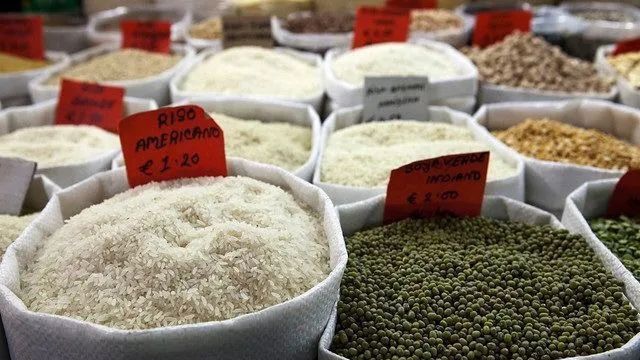
    Photo: UN Food and Agriculture

    The United Nations Food and Agriculture Organization’s (FAO) food price index registered a 1% rise in April in comparison to March and a 22% rise compared to the same month last year.

    Global food prices recorded an increase in April largely due to the tariff war waged by Donald Trump’s administration in the US, the UN agency Food and Agricultural Organization (FAO) said in a report last week. 

    Major food products such as cereals, dairy products, and meat registered a rise in their prices across the globe in April in comparison to March.

    Grains and cereals such as wheat, rice, and maize make the largest component of FAO’s food price index. Their prices increased the most, raising its index by 1% month over month. 

    The price of dairy products increased by 2.4% month over month while the price of meat soared by 3.2%, making life significantly more difficult for people. Compared to the same month last year, dairy prices rose by 22.9%.

    Year over year, the global food prices were higher by 7.6% in comparison to April last year.

    The rise in food prices is attributed to several factors, including the seasonal rise in demands. However, the FAO notes that the main driver of the increase is the tariff policies announced by the Trump administration in the US in early April.

    “Adjustments to the US’ import tariff policies-including the exemption to Mexico, the leading importer of US maize, and a 90 day pause on import tariffs above 10% for several other trading partners-further contributed to the upward price pressure,” the FAO said.

    Fulfilling his threats to impose high tariffs on most of its trade partners Trump announced its “reciprocal tariff” policy in early April. Imports from most of the countries faced tariffs ranging between a minimum 10% to a whopping 145% against China. 

    Trump later suspended the imposition of reciprocal tariffs for three months, seeking bilateral agreements with several countries. However, the announcement of the high tariffs has already created uncertainty in the global economy. 

    Rise in food prices impacts the poor the most

    Though the FAO acknowledged there were several factors impacting the rise in global food prices, such as the reduction in wheat exports from Russia due to sanctions, the war in Ukraine, and a weaker US dollar, the tariff war made the “strongest impact.”

    Several economists and experts have already warned of a rise in local food prices, due to the Trump administration’s tariff policies creating a similar or worse impact than the war in Ukraine did in its initial months. 

    The global food markets are closely interconnected so major global events may affect prices at the local level – just as they did in the initial days of the war in Ukraine, after European and US sanctions led to a reduction in Russian wheat. 

    According to the FAO, its food price index recorded its highest jump in March 2022, immediately after the war in Ukraine started. The rise in prices at the time intensified a cost of living crisis even in relatively richer countries in Europe and intensified food insecurity in the developing and poorest countries.

    Increases in food prices affect the poor the most as their share of expenditure on food is higher. It is expected to intensify the existing food crisis situation in most of the developing and poorer countries in Asia and Africa.

    If Trump’s tariff war drags on, the prices of fertilizers will also see a jump, affecting agricultural production in the developing world and affecting the prices of food products further, claims Lotanna Emediegwu, who teaches economics at Manchester Metropolitan University. 

    US and European sanctions have already negatively affected the global supply of fertilizers from Russia.

    Original article by Abdul Rahman republished from peoples dispatch under a Creative Commons Attribution-ShareAlike 4.0 (CC BY-SA) license.

    Neo-Fascist Climate Science Denier Donald Trump says Burn, Baby, Burn.
    Neo-Fascist Climate Science Denier Donald Trump says Burn, Baby, Burn.
    Elon Musk urges you to be a Fascist like him, says that you can ignore facts and reality then.
    Elon Musk urges you to be a Fascist like him, says that you can ignore facts and reality then.
  • Trump says he ‘doesn’t rule out’ using military force to control Greenland

    Spread the love

    https://www.theguardian.com/us-news/2025/may/04/trump-greenland-denmark-military-force

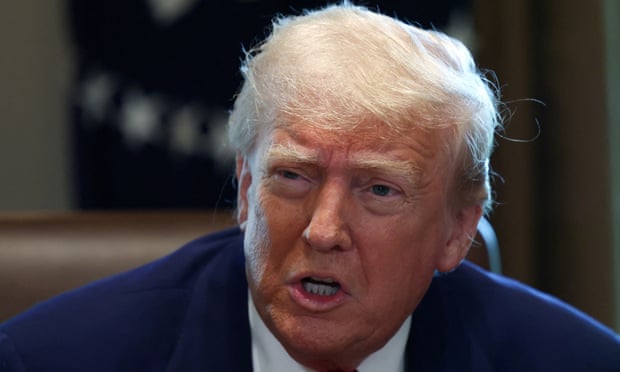
    Donald Trump speaks during a cabinet meeting at the White House in Washington DC, on Wednesday. Photograph: Evelyn Hockstein/Reuters

    President has repeatedly expressed idea of expansion into autonomous territory within fellow Nato member Denmark

    Donald Trump would not rule out using military force to gain control of Greenland, the world’s largest island and an autonomous territory within Denmark, a fellow Nato member with the US.

    Since taking office, the US president has repeatedly expressed the idea of US expansion into Greenland, triggering widespread condemnation and unease both on the island itself and in the global diplomatic community. Greenland is seen as strategically important both for defense and as a future source of mineral wealth.

    In an interview on NBC’s Meet The Press on Sunday, Trump was asked whether he would rule out using force against the territory.

    “I don’t rule it out. I don’t say I’m going to do it, but I don’t rule out anything. No, not there. We need Greenland very badly. Greenland is a very small amount of people, which we’ll take care of, and we’ll cherish them, and all of that. But we need that for international security,” Trump said.

    …

    Article continues at https://www.theguardian.com/us-news/2025/may/04/trump-greenland-denmark-military-force

    Neo-Fascist Climate Science Denier Donald Trump says Burn, Baby, Burn.
    Neo-Fascist Climate Science Denier Donald Trump says Burn, Baby, Burn.
    Elon Musk urges you to be a Fascist like him, says that you can ignore facts and reality then.
    Elon Musk urges you to be a Fascist like him, says that you can ignore facts and reality then.