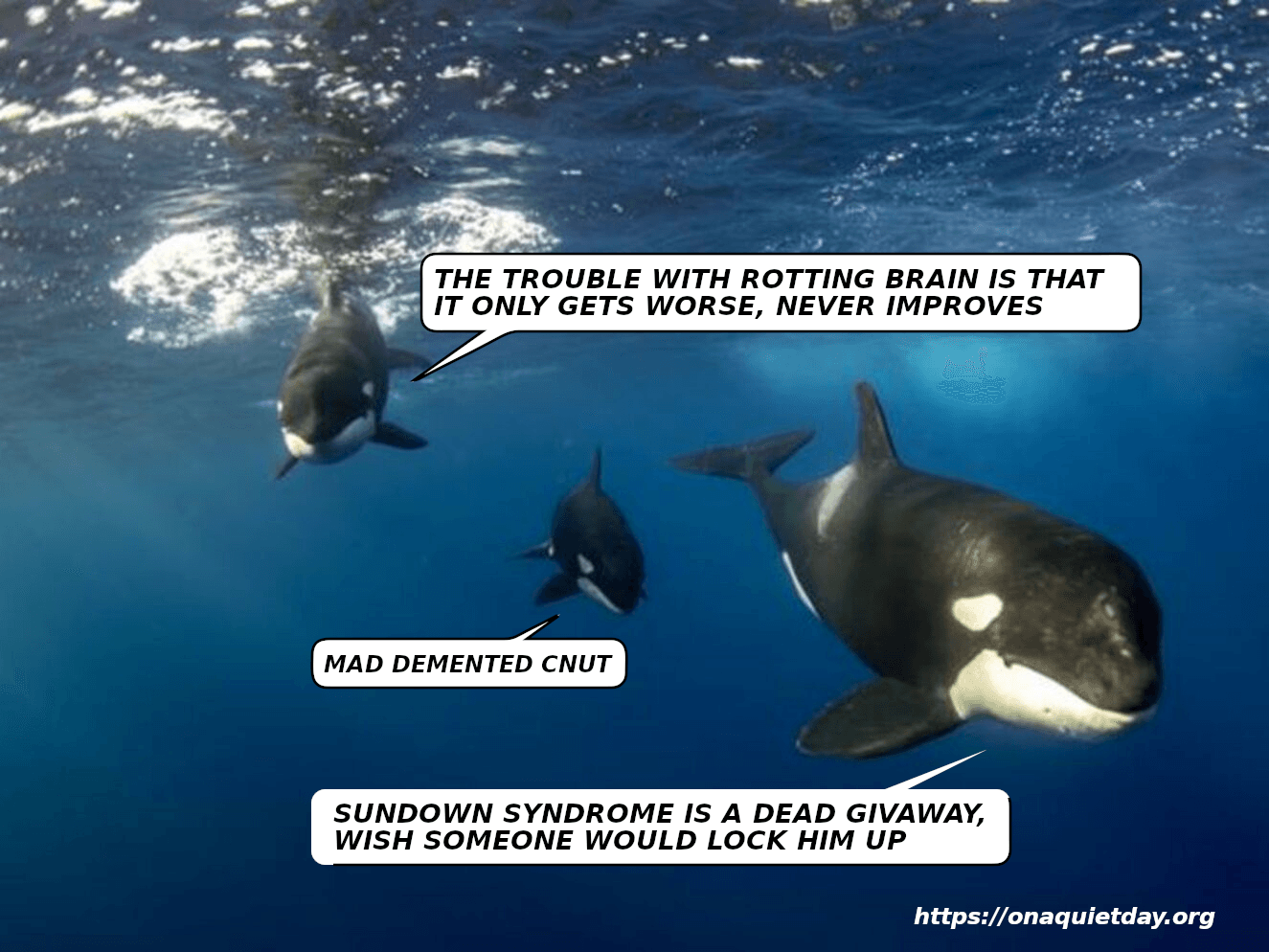
It’s all about Nigel Farage, it’s what Farage decides on a whim.
Reform is a limited company – Reform 2025 Ltd – rather than political party. There is no internal democracy – party members deciding policy – just the board and the leader Nigel Farage deciding.
I certainly get the impression that Farage’s Reform are total whores to money. Just like Donald Trump they are businessmen approaching politics as a business with the intention of achieving power and then trading that power, simply being whores.
Reform’s policies follow Donald Trump’s very closely e.g. a UK Doge to make swinging cuts, denial of the climate crisis when it’s blatantly obvious to anyone who’s awake and has a functioning brain.
Nigel Farage likes to present himself as anti-establishment as Donald Trump does. It’s total nonsense, Farage attended posh boys schools, was employed as a stockbroker, gets £5MILLION ‘gifts’ from foreign billionaires.
This work by Middle East Monitor is licensed under a Creative Commons Attribution-NonCommercial-ShareAlike 4.0 International License.
Trucks loaded with humanitarian aid on the Egyptian side of the Rafah crossing wait to cross into the Gaza Strip early on October 15, 2025, after Israel said it would allow the crossing to reopen for humanitarian aid to enter from Egypt into the Palestinian territory. [STR/AFP via Getty Images]
Egypt is pressing for the reopening of the Rafah border crossing with Gaza to allow goods into the enclave, the Israeli Broadcasting Authority reported Wednesday, Anadolu reports.
“By contrast, Israel insists on limiting the entry of goods to the Kerem Shalom crossing, which is under its control,” the broadcaster said.
Israel’s security establishment and political leadership have informed the US and Nikolay Mladenov, the high representative of the Peace Council, of their unified position “not to allow the entry of goods into the Gaza Strip except through the Kerem Shalom crossing,” the broadcaster said, citing an unnamed Israeli source.
On Feb. 2, Israel reopened the Palestinian side of the Rafah crossing, which it has occupied since May 2024, on a limited basis and under tight restrictions.
Following a closure of nearly 20 days after the outbreak of the US-Israeli war on Iran on Feb. 28, Israel reopened the crossing on March 19 under the previous operating mechanism and with strict restrictions.
The crossing currently operates on a limited basis for pedestrians only. Dozens of patients, wounded Palestinians and other humanitarian cases are intermittently allowed to leave under tight Israeli monitoring and restrictions.
Thousands of Palestinians in Gaza are still awaiting permission to travel for medical treatment.
Egypt had not officially commented on the Israeli broadcaster’s report as of 0930GMT.
Before Israel’s genocide in Gaza, hundreds of Palestinians traveled daily through Rafah to Egypt, while hundreds of others returned to the enclave. The crossing was operated by Gaza’s Interior Ministry and Egyptian authorities without Israeli intervention.
Since the start of Israel’s genocide in Gaza on Oct. 8, 2023, around 73,000 Palestinians have been killed and more than 173,000 injured, while nearly 90% of the enclave’s civilian infrastructure has been destroyed.
This work by Middle East Monitor is licensed under a Creative Commons Attribution-NonCommercial-ShareAlike 4.0 International License.
Israel’s Prime Minister Benjamin Netanyahu gives a statement during a visit to the site of the Weizmann Institute of Science, which was hit by an Iranian missile barrage, in the central city of Rehovot on June 20, 2025. [Photo by Jack GUEZ / POOL / AFP / Getty Images]
Israeli Prime Minister Benjamin Netanyahu on Wednesday hinted that Israel could take unilateral military action against Iran as diplomatic efforts continued to secure an agreement aimed at ending the conflict between Tehran and Washington, Anadolu reports.
“We heard today the commander of Iran’s Islamic Revolutionary Guard Corps, Ahmad Vahidi, declare that Iran intends to continue developing a nuclear weapon,” Netanyahu said.
“As Israel’s prime minister, I am determined to prevent Iran from obtaining a nuclear weapon,” he added.
Describing the US as “Israel’s greatest ally,” the Israeli premier said, however, that he was “determined to do whatever is necessary to ensure” Israel’s security.
On Tuesday, Qatari Foreign Ministry spokesperson Majed Al-Ansari said mediation efforts between the US and Iran had reached “advanced stages,” with the two sides exchanging draft proposals.
Speaking at the ministry’s weekly press briefing, Al-Ansari said efforts remained underway with all parties to reach a diplomatic solution.
On Feb. 28, the US and Israel launched a war against Iran that, according to Iranian authorities, killed more than 3,000 people.
Iran responded with attacks on regional countries hosting US assets.
In June, Qatar joined Pakistan as part of a mediation team between Washington and Tehran, leading to the signing of a memorandum of understanding on June 18 and the start of negotiations toward a final agreement.
The talks later stalled over disagreements related to maritime security and freedom of navigation in the Strait of Hormuz.
Between July 8 and July 24, tensions escalated again as the US carried out attacks on Iran, prompting Tehran to target what it said were US military facilities and equipment in several Arab countries, particularly Jordan, Bahrain and Kuwait.
This work by Middle East Monitor is licensed under a Creative Commons Attribution-NonCommercial-ShareAlike 4.0 International License.
Volkswagen plant in Osnabrück, Germany. [Photo/AA]
As Volkswagen explores converting one of its German factories from civilian vehicle production to manufacturing components for an Israeli missile defense system, local peace activists are stepping up efforts to stop the move, Anadolu reports.
The campaign comes amid reports that Volkswagen is in discussions with Israel’s state-owned Rafael Advanced Defense Systems about repurposing its Osnabruck plant after passenger car production ends in 2027.
The site could manufacture components for Israel’s Iron Dome air defense system, including launchers, transport vehicles and power generators, according to the Financial Times. Volkswagen has not confirmed any agreement and says no decision has been made on the plant’s future.
Even without a confirmed agreement, Osnabruck Peace Initiative (OFRI) said it plans to intensify its grassroots campaign to stop the deal, organizing rallies, public events and demonstrations while working with local groups to build support for keeping the factory focused on civilian production.
“We’re working with various coalition partners to build support in the city for the civilian use of the factory, and we’re explaining why we don’t approve of arms production,” OFRI spokesperson Marie Dominique Guyard told Anadolu.
She said the group’s biggest challenge is convincing people that expanding arms production undermines rather than strengthens security.
“We are in favor of peaceful conflict resolution, diplomacy, ending conflicts through diplomacy, and respect for international law – and attracting arms companies to the city is the exact opposite of that,” Guyard said.
She argued that Rafael’s reported involvement makes the proposal particularly controversial.
“Israel is not known for its respect for international law,” she said. “The establishment of an Israeli state-owned company is, in effect, support for Israel’s wars.”
Guyard also criticized reports that public funds could support the project.
A call for worker resistance
Prominent German peace activist Reiner Braun echoed those concerns, calling the reported proposal “criminal.”
“Such a deal must be rejected outright,” he told Anadolu. “Of course, if Volkswagen, an industrial company, manufactures a component for Rafael, it is complicit in the policy of genocide and cannot absolve itself of that responsibility.”
“They know what they are doing, and they do it deliberately because they believe they can make more short-term profits. It is immoral, unethical, and one could actually say it is a criminal deal.”
Braun urged Volkswagen employees to oppose any move toward military production.
”The most important thing is resistance within the plant itself,” he said. “All employees at all Volkswagen plants must raise their voices and say, ‘We do not want to participate in the development of weapons of genocide.’”
He said Germany’s peace movement would continue supporting workers who oppose the reported plans.
Where the talks stand
Volkswagen has not confirmed reports that it is negotiating with Israel’s Rafael Advanced Defence Systems over defense production at its Osnabruck plant.
A company spokesperson previously told Anadolu that Volkswagen is evaluating options for the factory after passenger car production ends in 2027 and remains in discussions with various market participants.
“There are currently no concrete decisions or conclusions regarding the future direction of the site,” the spokesperson said. “The production of weapons by Volkswagen AG remains ruled out for the future, and we do not engage in speculation regarding further plans for the Osnabruck site.”
Since then, media reports have offered conflicting accounts of the future of the proposed deal.
Last month, German newspaper Bild reported that Qatar’s sovereign wealth fund, Volkswagen’s third-largest shareholder with a 17% stake, had blocked management’s proposal to partner with Rafael to manufacture missile components and military vehicles at the Osnabruck plant.
However, German business magazine WirtschaftsWoche later reported that negotiations were continuing despite Qatar’s reported objections.
The magazine said the head of the works council at the Osnabruck plant, which employs about 2,400 people, had urged the German state of Lower Saxony – Volkswagen’s second-largest shareholder – to acquire a majority stake in the factory itself, a move that could allow the Rafael partnership to proceed.
The reported negotiations come as Volkswagen undergoes a broad restructuring program amid mounting competition from Chinese automakers and slower-than-expected growth in the electric vehicle market.
Rafael, meanwhile, has been expanding its European footprint as governments across the continent boost defense spending and procurement following the war in Ukraine.
This work by Middle East Monitor is licensed under a Creative Commons Attribution-NonCommercial-ShareAlike 4.0 International License.
A view of the vessels passing through Strait of Hormuz following the two-week temporary ceasefire reached between the United States and Iran on the condition that the strait be reopened, seen in Oman on April 08, 2026. [Shadi J. H. Alassar – Anadolu Agency]
Iran’s deputy foreign minister said Wednesday that Iran and Oman have reached an understanding on nearly all issues on future Strait of Hormuz arrangements, adding that a final understanding is “on the verge of being finalized.”
Their understanding includes the location of entry and exit routes for maritime traffic, Kazem Gharibabadi said in remarks carried by Iran’s state-run news agency IRNA.
He added, however, that “this understanding does not mean the complete opening of the Strait of Hormuz.”
It represents “rather a new and different model from the past 60-year practice,” he said.
“In order to enter a second phase, Iran needs to assess whether the US is truly prepared to return to its commitments or not,” he said.
Iran’s ongoing talks with Oman are also focused on “future administration arrangements” aimed at defining a long-term framework for managing the Strait of Hormuz, he added.