Tag: Ed Miliband

  • Starmer has taken more freebies than all Labour leaders since 1997 combined

    Spread the love

    Original article by Adam Ramsey republished from Open Democracy.

    Labour leader’s 28 junkets include Spurs hospitality, two Coldplay concerts and a £380 dinner from Google at Davos

    Image of Keir Starmer and a poor child.
    Image of Keir ‘Kid Starver’ Starmer. Image thanks to The Skwawkbox

    Keir Starmer has accepted more free tickets to events such as sports matches, concerts and parties than the combined total of every other Labour leader since records began in 1997, openDemocracy analysis has found.

    While the Labour leader spent his first year and a half in the role under lockdown, he has quickly made up for it, accepting gifts from donors including multi-millionaires, gambling giants, the online shopping app GETIR and the construction giant Mulalley & Co on 28 separate occasions. The gifts include days at the races, hospitality at Chelsea and Tottenham Hotspur matches, an Adele gig, and two separate Coldplay concerts. In total, they are worth nearly £30,000.

    In his five years as Labour leader, Jeremy Corbyn only accepted one such freebie: tickets to Glastonbury, where he spoke on the pyramid stage in 2017. Former Corbyn adviser Andrew Fisher told openDemocracy the Islington North MP had made a point of turning down corporate hospitality.

    “Politicians at any level shouldn’t be beholden to corporate interests,” he said. “They’re elected to represent the people, and are well paid for it.”

    His predecessor, Ed Miliband, only accepted tickets to the London Olympics and Paralympics opening and closing ceremonies, and a number of the contests during the games. Gordon Brown accepted no such gifts during his time as Labour leader and prime minister.

    While Tony Blair led a jet-setting lifestyle – including accepting summer holidays with the regional president of Tuscany and in Cliff Richard’s holiday home in the Caribbean – he accepted fewer gifts than Starmer in his whole time as prime minister, and usually donated the value of any such freebie to a relevant charity.

    ‘An indulgent retreat’

    Companies giving Starmer and his office gifts include the groceries delivery app GETIR, the fast food delivery company Just Eat, and Matthew Moulding, chief exec of the online retail warehouse firm The Hut Group, which has recently expanded into the hotels business.

    openDemocracy understands Moulding put Starmer and three others up in his luxury Manchester hotel The King Street Townhouse on the night of 1 June. The boutique hotel has an infinity pool with views over Manchester’s iconic town hall. Its restaurant advertises “a dining experience you’ll remember forever” while The Telegraph has described it as “an indulgent retreat in the city centre”.

    A spokesperson for The Hut Group would not comment on why they provided Starmer and others with free accommodation in their hotel.

    Meanwhile, GETIR gave Starmer “four tickets with hospitality for Tottenham Hotspur vs Arsenal,” worth £1,600. The match attended by Starmer, who is an Arsenal fan, took place at the Spurs stadium, where the executive suite advertises “private gourmet dining” and “beautifully crafted menus… crafted by world famous chefs”.

    Speaking to openDemocracy, a staff collective of GETIR employees in Germany, where the firm is more established than the UK, said it was “like working in a cartel”, and that employees are often too afraid to speak out against the violation of their rights. GETIR didn’t respond to openDemocracy’s request for comment.

    Just Eat handed Starmer two sets of tickets in 2021 – to the British Kebab Awards, and the ‘Taste of London’ event, both of which he gave to staff in his office. The firm is currently facing legal action from lawyers representing thousands of its workers over allegations that it denies them basic rights like holiday pay and minimum wage by categorising them as self-employed.

    Recent reports have indicated that Starmer is now considering rolling back on previous commitments to enhance rights for workers in sectors like the online delivery market, where jobs are notoriously precarious.

    In total, Starmer has accepted tickets to 11 football matches, in most cases in exclusive executive suites, and also two rugby matches.

    Starmer has also attended two glamorous days at the races, including six tickets with hospitality for Doncaster Races in autumn 2022 worth more than £3,000, thanks to the Arena Racing Company. The race course’s fine dining restaurant offers a package which includes a glass of prosecco on arrival, a “three course plated lunch” and exclusive views of the track for the day.

    In June this year, Starmer accepted a “private box for four people at Epsom Downs Racecourse, including catering and admission tickets, total value £3,716”, courtesy of the Jockey Club. Epsom Downs’ VIP experience includes a champagne reception, free bar and a four-course meal, as well as exclusive views of the race track.

    Speaking to openDemocracy, Matt Zarb-Cousin, director of Clean Up Gambling, said: “The same Labour leader that refuses to meet with climate justice campaigners is selling off his time to the highest bidder. Concerning for gambling reform campaigners is his willingness to accept hospitality from the gambling industry, including racing which has actively lobbied against affordability checks in defence of the operators. Policy drafted by the vested interests that have Starmer’s ear will only benefit corporations at the expense of protecting consumers.”

    In January this year, Starmer accepted a meal for himself and an aide worth £380, as a gift from Google while he was in Davos at the World Economic Forum. In June, the Labour Party abandoned plans to introduce a digital tax on big tech firms like Google, which had been estimated to be worth £3bn.

    North of Tyne mayor Jamie Driscoll, who quit the Labour Party last month and has spoken out against Starmer’s leadership, said: “I’ve been offered tickets for the executive boxes at [Newcastle United stadium] St James’ Park, expensive dinners by lobbyists, hospitality for sporting events – and I turn them all down. It’s wrong to take perks when you’re elected to do a job.

    “Why does an MP need free tickets to the football or Coldplay concerts to do their job? At best it’s a culture of entitlement.”

    Starmer is paid £149,682 a year for his work as an MP and as leader of the opposition, and also received an £18,450 advance for a book in 2022 from the Rupert Murdoch-owned publishing house Harper Collins. The Labour Party did not respond to openDemocracy’s request for comment.

    Original article by Adam Ramsey republished from Open Democracy.
    https://www.opendemocracy.net/en/keir-starmer-freebies-junkets-tottenham-hotspur-chelsea-coldplay-adele-google/

  • The World’s End

    Spread the love
    Jonathan Pie: The World’s End (COP26 short film with George Monbiot, Caroline Lucas & Ed Miliband)

    Just Stop Oil

    Extinction Rebellion

    International – A22 Network
    Sweden – Återställ Våtmarker
    USA – Declare Emergency
    Germany – Letzte Generation (Don),
    Canada – Save Old Growth (Tue/Thu), ,
    Switzerland – Renovate Switzerland
    Norway – Stopp Oljeletinga!
    Italy – Ultima Generazione
    France – Dernière Rénovation
    Australia – Stop Fossil Fuel Subsides

  • What nationalising energy companies would cost – and how to do it

    Spread the love

    UK could bring National Grid and retailers in-house and build public renewable energy, says ex-Labour policy chief

    Andrew Fisher

    17 August 2022, 12.01am

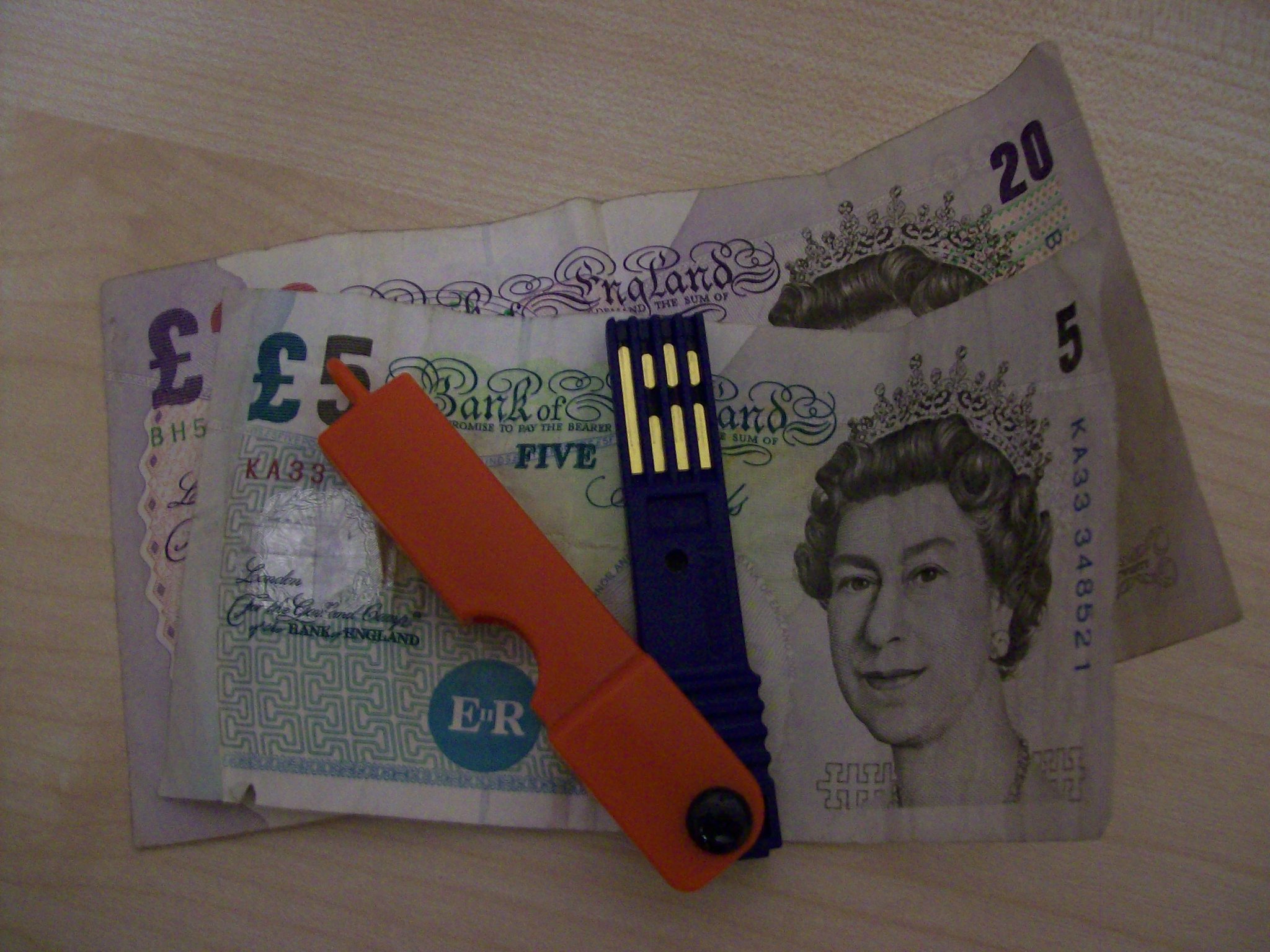
    Image of banknotes and a prepayment meter key by Lydia, https://creativecommons.org/licenses/by/2.0/

    Republished from OpenDemocracy under Creative Commons Attribution-NonCommercial 4.0 International licence.

    When 62% of Conservative voters want energy run in the public sector, it’s fair to say the left has won the argument (75% of Labour voters agree, 68% of Lib Dems).

    Yet public ownership is opposed passionately by the Conservative government, while the leader of the opposition has said he is “not in favour” of it – despite his election on a platform that committed to “bring rail, mail, water and energy into public ownership to end the great privatisation rip-off and save you money on your fares and bills”.

    Public ownership is on the media’s radar, too. When Labour leader Keir Starmer announced his policy to freeze bills this week, he was asked why he wouldn’t also nationalise energy, replying that: “In a national emergency where people are struggling to pay their bills … the right choice is for every single penny to go to reducing those bills.”

    But so long as energy remains privatised, every single penny won’t. Billions of pennies will keep going to shareholders instead.

    The energy market was fractured under the mass privatisations of the Thatcher governments in the 1980s. It contains three sectors: producers or suppliers (those that produce energy), retailers (those that sell you energy), and distribution or transmission (the infrastructure that transports energy to your home).

    It is important to bear this in mind when we’re talking about taking energy into public ownership. We need to be clear about what we want in public ownership and why.

    By 2019, Labour had a detailed plan on how to do this – worked up by the teams around then shadow business and energy secretary Rebecca Long Bailey and then shadow chancellor John McDonnell. The plan is not the only way, but it illustrates what exists and how one could go about re-establishing a public energy ecosystem, run for people not profit.

    The recent TUC report shows the cost of nationalising the ‘Big 5’ energy retailers – British Gas, E.ON, EDF, Scottish Power and Ovo – to be £2.8bn, which would go on buying all the companies’ shares. That’s a lot of money, equivalent to more than the annual budget of the Sure Start programme in 2009/10 (its peak year). But it’s a one-off cost, not an annual one.

    And it’s not like the current privatised system doesn’t have its costs: since June 2021, the UK government has spent £2.7bn bailing out 28 energy companies that collapsed because they put short-term profits ahead of long-term stability – companies like Bulb Energy. We have spent billions of pounds already to get nothing in return. So £2.8bn is not a large amount of money to pay to gain these assets, rather than just bailing them out.

    The big energy retail companies made £23bn in dividends between 2010 and 2020 according to Common Wealth, and £43bn if you include share buy-backs. What you choose to do with that surplus in public ownership is another matter: you could use it to invest in new clean energy or to lower bills or fund staff pay rises, rather than subject your workers to fire-and-rehire practices as British Gas did last year.

    Labour’s previous plan also involved taking the distribution networks – the National Grid – into public ownership. This would end the profiteering at this level, too – with £13bn paid out in dividends over the five years prior to 2019. As Long Bailey said at the time, we need “public driven and coordinated action, without which we simply will not be able to tackle climate change”. Like previous nationalisations, the purchase of the grid and distribution networks could be achieved by swapping shares for government bonds. By international accounting standards, the cost is fiscally neutral as the state gains a revenue-generating asset, which more than pays for the bond yield.

    The final part of the plan – and the most complicated – is production and supply. It would be impossible to nationalise the oilfields of Saudi Arabia or Qatar – and for good reasons we should want to leave fossil fuels in the ground, anyway, rather than contest their ownership.

    And so what Labour proposed in 2019 was a mass investment in new renewable energy generation projects, with the public sector taking a stake and returning profits to the public. For example, under the ‘People’s Power Plan’, we proposed 37 new offshore wind farms with a 51% public stake, delivering 52GW alone by 2030, equivalent to 38 coal power stations. There were additional proposals for onshore wind, solar, and tidal schemes, as part of a 10-year £250bn Green Transformation Fund, which included other schemes like the Warm Homes insulation initiative.

    Labour’s new shadow chancellor Rachel Reeves has promised a similar level of investment – a £28bn a year climate investment pledge.

    Any surplus energy would then be sold on international markets, with a People’s Power Fund – a sort of sovereign wealth fund – to deliver public investment in local communities’ social infrastructure: a genuine levelling-up fund, perhaps.

    Many people will say this can’t be done, but of course it has been before. The 1945 Attlee government nationalised energy and successive Conservative governments – including those of Churchill, MacMillan and Heath – were happy to have a nationalised asset. Harold MacMillan famously accused Margaret Thatcher of “selling off the family silver” when she privatised state industries.

    When I was born in 1979, the National Coal Board, British Gas and British Petroleum were all publicly-owned or majority publicly-owned companies. Between them, they were the major suppliers of our energy. Our gas bills came from British Gas and our electricity bills from our regional electricity board (in my case Seeboard, the South Eastern Electricity Board), and coal and oil fuelled our power stations.

    The regional electricity boards had been brought into being by the Attlee government’s Electricity Act 1947, when electricity companies were forcibly merged into regional area boards and nationalised. The Coal Industry Nationalisation Act 1946 and the Gas Act 1948 had together brought energy into public ownership.

    Seeboard was privatised in 1990, and later became part of EDF Energy – ironically, the nationalised French energy company, whose profits from the UK’s stupidity are used to subsidise French consumers.

    The French government has now fully nationalised EDF (previously it was 84% publicly owned), and household energy bills rose by just 4% this year – compared to over 50% in the UK and a forecast 200% by January 2023.

    If Starmer doesn’t want to listen to me (or his own commitments from 2020), perhaps emulating the centrist Emmanuel Macron in this instance would be palatable?

    From the depletion of fish stocks to the burning of the Amazon, profit has proved a failed regulator for use of our natural resources

    In his later years, Robin Cook argued: “The market is incapable of respecting a common resource such as the environment, which provides no price signal to express the cost of its erosion nor to warn of the long-term dangers of its destruction.”

    From the depletion of fish stocks to the burning of the Amazon, profit has proved a failed regulator for use of our natural resources. The market has also failed to decarbonise at pace, or to end the scourge of fuel poverty.

    On the media this week, shadow energy secretary Ed Miliband said Labour is “continuing to look at what the right long-term solution is for our energy system”. It is up to all of us to campaign for that solution to be public ownership – whether that’s from within the Labour Party (like me) or from the outside.

    Republished from OpenDemocracy under Creative Commons Attribution-NonCommercial 4.0 International licence.

    Related at OpenDemocracy

    Revealed: UK household energy debt hit record high even before price hikes

    Revealed: Energy crisis has made 30 House of Lords members wealthier

    On energy strategy, the government is leaving women in the cold

  • COP26 News review day 4

    Spread the love

    COP26: Nicola Sturgeon urged to intervene in policing of protests

    FIRST Minister Nicola Sturgeon has been urged to intervene to stop “over the top” policing of climate protests at COP26.

    Environmental campaigners have claimed that there have been “numerous incidents” of abuse of power tactics by officers from forces all over the UK.

    Around 10,000 officers a day have been deployed on the streets of Glasgow for the duration of the summit.

    Activists have sent an open letter to the First Minister asking her to intervene to ensure the right to protest is upheld ahead of a mass climate march on Saturday, expected to draw in thousands and spark other protests across the country.

    …

    Cop26 protest demands end to the hostile environment and the arms trade

    A MARCH for peace travelled through Glasgow during Cop26 today, demanding an end to the hostile environment and the arms trade.

    The demonstration, led by activists from Extinction Rebellion (XR) and XR Peace, travelled from the Home Office to BAE Systems to highlight the links between the climate crisis, Britain’s racist immigration policies and the arms trade — and in solidarity with climate and war refugees.

    The event featured speakers from the Faslane Peace Camp, CND, and participants from the Greenham Common Women’s Peace Camp.

    XR said that Britain’s military-industrial sector annually emits more greenhouse gases than 60 individual countries — such as Uganda, which has a population of 45 million people — while poorer countries suffer a huge injustice in climate and conflict.

    …

    If Fighting Climate Crisis Is the Goal, Critics Say COP26 Coal Reduction Deal ‘Falls Spectacularly Short’

    COP26 officials on Thursday are heralding developments they say signal that “the end of coal is in sight”—but advocates for strong climate action suggest holding the applause.

    “Agreed at COP26 is an inadequate agreement that allows coal to continue for nearly 20 more years,” tweeted Extinction Rebellion. “But that’s excluding major nations who refuse to sign at all.”

    Among the key developments at the ongoing climate summit in Glasgow, Scotland is the new Global Coal to Clean Power Transition Statement signed by nearly four dozen countries, though notably not the U.S., China, or Australia——among the world’s top coal producers.

    …

    COP26: UK has failed to lead on energy

    The UK Government has failed to lead COP26 talks on energy because it does not practice what it preaches, the Scottish Greens have said.

    Today’s announcements on energy include a coal commitment that excludes the biggest polluters like the US, Australia, China and India and overseas finance plans that won’t cover projects already in the pipeline, like the UK’s planned investment in a gasfield in Mozambique.

    Commenting, Scottish Greens climate spokesperson Mark Ruskell said: “Today marks a colossal failure of leadership by the UK Government, just days after the Prime Minister flew from Glasgow to London on a private jet.

    …

    Ed Miliband Says Ministers’ “Flirting” With New Coal Mine Project Is Undermining COP26 Progress

    Ed Miliband, the shadow energy secretary, has accused the government of “double speak and double standards” after they announced a series of commitments at COP26 to reduce the use of coal despite “flirting” with a new UK-based colliery.

    …

    Speaking to PoliticsHome, Miliband said the refusal to scrap the project was “undermining” their ability to press other countries to take tougher acion on phasing out the use of coal.

    …

    https://youtu.be/27wstLWEvwg
  • Cameron, Clegg and Ed sneak in a snoopers’ charter by the back door

    Spread the love

    A snoopers’ charter by the backdoor: One day until Drip is forced through

    by Ian Dunt

    Privacy campaigners are frantically trying to brief MPs about the implications of the data retention and investigatory powers bill (Drip), before it is forced through all of its Commons stages tomorrow.

    The more experts look at the bill, the more convinced they’ve become that it provides authorities with the spine of the snoopers’ charter, but without any of the public debate or parliamentary scrutiny which were supposed to accompany it.

    The charter – known as the draft communications bill before it was killed off – would have forced internet service providers and mobile operators to keep details of their customers’ behaviour for 12 months.

    Analysis of Drip, which was supposed to only extend the government’s current powers for another two years, suggests it forces through many of those requirements on internet firms without any of the political outrage which derailed the earlier effort.

    Clause four of the bill appears to extend Ripa – the Regulation of Investigatory Powers Act (basically Britain’s Patriot Act) – so that the UK government can impose severe penalties on companies overseas that refuse to comply with interception warrants. It also lays out situations in which they may be required to maintain permanent interception capacity.

    Clause five then provides a new definition of “telecommunications service”, which includes companies offering internet-based services. That seems to drag services like Gmail and Hotmail into the law, and very probably social media sites like Facebook too.

    The government insists the extraterritoriality clause merely makes explicit what was previously implicit. It’s tosh. As the explanatory notes for the legislation – released very quietly on Friday night – make clear, overseas telecommunications companies did not believe they were necessarily under Ripa’s jurisdiction.

    “Regarding the amendments to Ripa, in view of the suggestion by overseas telecommunications service providers that the extra-territorial effect of Ripa is unclear, it is considered necessary to amend the legislation to put the issue beyond doubt,” it reads.

    “This includes clarifying the definition of a ‘telecommunications service’ to ensure the full range of telecommunications services available to customers in the United Kingdom are included in the definition.”

    David Cameron, Nick Clegg and Ed Miliband insist Drip merely extends their current powers for two years. That’s nonsense. These two clauses, which have nothing to do with the purported aim of the bill, provide the spine of the snoopers’ charter.

    They also appear to provide a legal basis for programmes like Tempora, the project revealed by Edward Snowden to allow GCHQ to tap into transatlantic fibre-optic cables and stored data.

    Notably, Privacy International, Liberty and others are taking the government to a tribunal this week on whether Tempora is legal, even though the government won’t even admit its existence. Drip could make the tribunal ruling irrelevant.

    …

    read more