Tag: EU

  • Oil and gas lobbyists have deep pockets and access to politicians, but an EU ban could be in the pipeline

    Spread the love

    Original article by Will Dinan republished from The Conversation under a Creative Commons Attribution-No Derivatives licence.
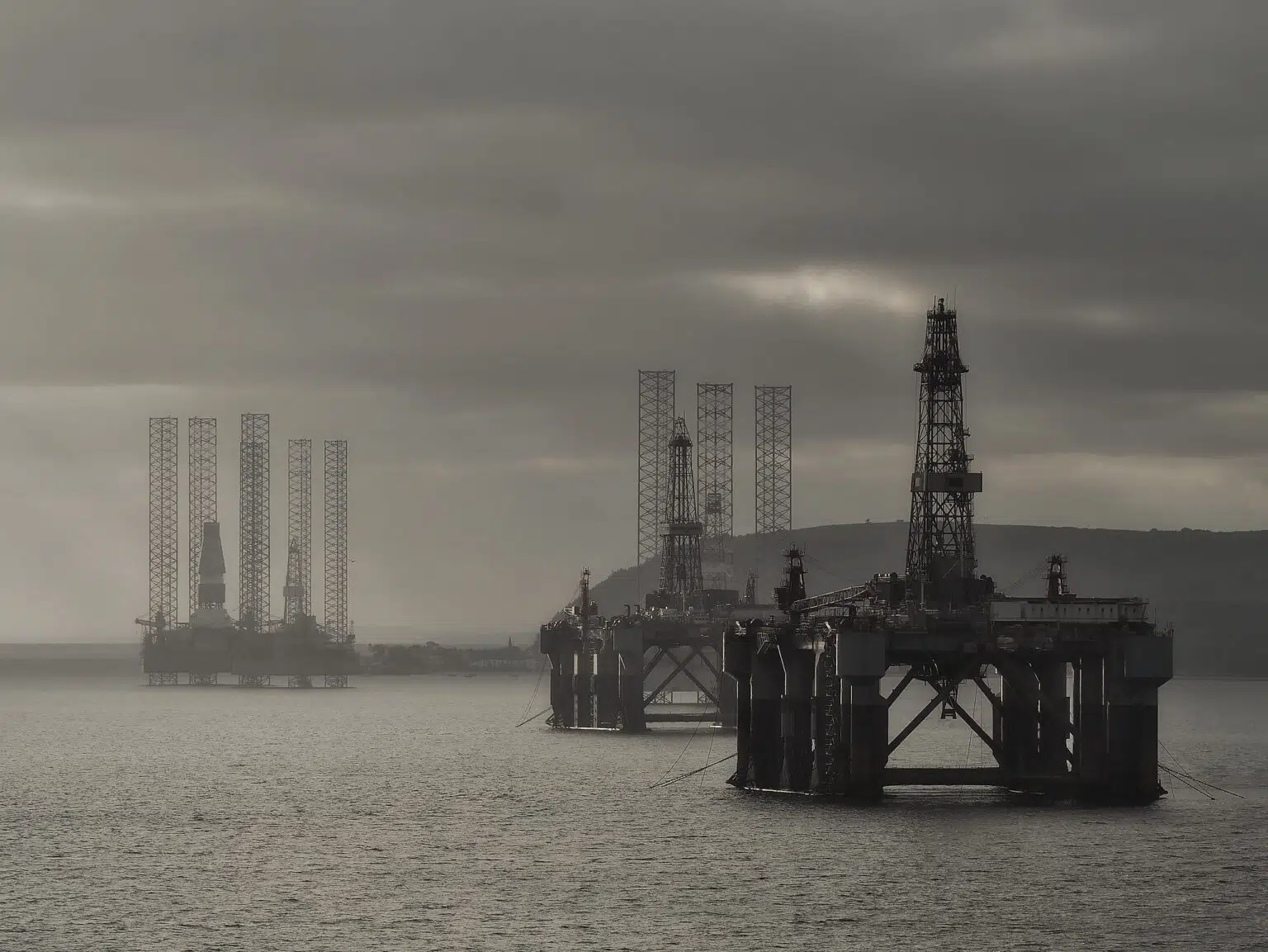
    North Sea oil rigs in Cromarty Firth, Scotland. Credit: joiseyshowaa (CC BY-SA 2.0)
    North Sea oil rigs in Cromarty Firth, Scotland. Credit: joiseyshowaa (CC BY-SA 2.0)

    A public interest ban on big oil and gas companies engaging with and influencing politicians could be in the pipeline as the European Parliament is hosting a hearing on fossil fuel lobbying on February 14.

    Something similar is already in place for the tobacco industry in order to safeguard public health. The European Parliament is set to examine what lessons can be learned to protect the environment from the harms associated with continued use of fossil fuels.

    The context here is important. Restrictions on tobacco lobbyists, known as the Framework Convention on Tobacco Control (FCTC), came into force in 2005 and are legally binding in 182 countries. Among other relevant restrictions, Article 5.3 of the convention states that: “Parties shall act to protect [their public health] policies from commercial and other vested interests of the tobacco industry.”

    The restrictions were promoted by the World Health Organization to protect public health, in the wake of class action lawsuits in the US demonstrating clearly that the tobacco industry had misled governments and regulators, and covered up the scientific evidence pointing to tobacco harms.
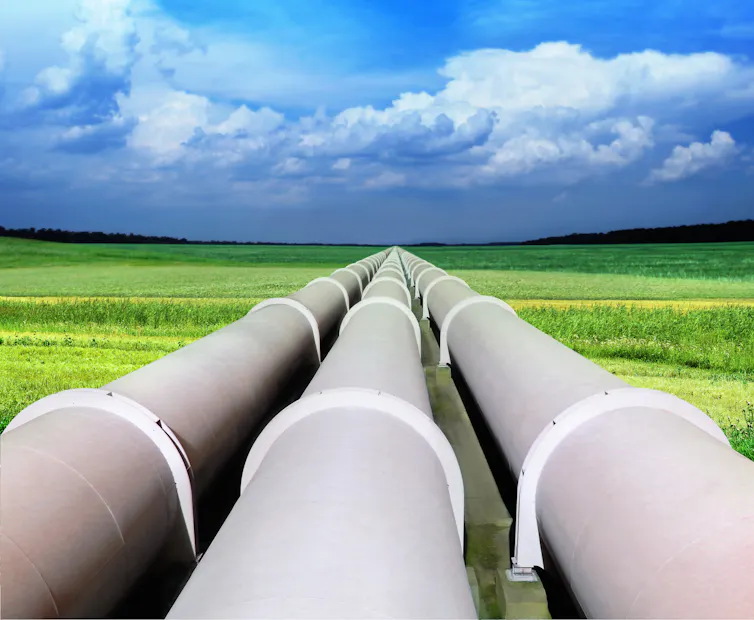
    Tobacco-style regulations in the pipeline? ssuaphotos / shutterstock

    The parallels with Big Oil are increasingly obvious. Litigation in the US has shown that some of the major oil companies actively engaged in deception, denial and increasingly now delay tactics. But delaying policies to address the climate emergency pose a huge societal risk. This is what is at stake in Brussels.

    The oil industry insists on its right to democratic participation. But the European Parliament hearing will consider whether the industry has acted in bad faith, and whether it is time to develop new laws and guidelines to manage the risks and harms associated with fossil fuels.

    Dominating discussions

    There is increased awareness that current climate policies are not addressing the scale of the climate crisis. Fossil fuel interests dominated recent COP meetings, promoting a number of industry-friendly narratives such as an emphasis on reducing emissions rather than fossil fuel production itself, and a commitment to tackling only “unabated” fossil fuel use. This is code for continuing to burn fossil fuels, but to try to abate some of the emissions using as yet unproven carbon capture technologies.

    Many leading climate scientists are growing increasingly concerned about the continued influence of oil and gas lobbyists. The industry still enjoys privileged access to the highest reaches of decision making in Europe. The EU’s delegation to the recent COP28 included over 130 oil and gas industry lobbyists.

    For the past few years some of the leading environmental groups in Brussels have been boycotting events where oil and gas lobbyists are participating, to try to disrupt what they term the capture of energy policy by fossil fuel interests through sponsorships, partnerships and official collaborations. Lobbying disclosures on the EU’s Transparency Register show that fossil fuel interests are among the biggest spenders and most active lobbyists in Brussels.

    The industry has unfettered access to senior officials and politicians, and has the deepest of pockets to pay for lobbyists, event sponsorships and employ experts to participate in technical and regulatory meetings in Brussels that inform EU policy. It is therefore little wonder that environmentalists and some Members of the European Parliament want to rethink the relationship between the fossil fuel industry and politics.
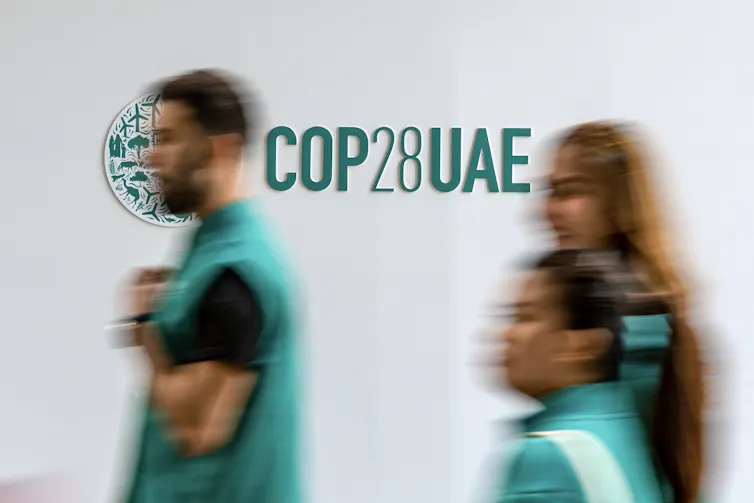
    There were at least 2,456 fossil fuel lobbyists at COP28, outnumbering every national delegation bar two. Martin Divisek / EPA

    Those working for oil and gas interests in Brussels are unlikely to welcome parallels being drawn between their sector and the tobacco industry. They insist that all interests have the right to legitimately participate in policy making (and in so doing they are defending their privileged position), and that the technical expertise of oil and gas companies is needed in the energy transition.

    Recently, the industry has used concerns about energy supply since the conflict in Ukraine to propose renewed gas exploration within Europe. This is part of a new policy agenda that prioritises Europe’s “strategic autonomy” on energy issues, and in the view of oil and gas lobbyists necessitates increased reliance on fossil fuels – and existing infrastructure – in the short to medium term.

    Another parallel with the tobacco industry is perhaps instructive here. The tobacco industry has been accused of promoting vaping as a health tool (since it claims vaping is an effective smoking cessation technology). But vaping has had the impact of hooking a huge number of young people into a new habit and creating another generation of tobacco industry customers.

    Similarly, the fossil fuels industry has been heavily promoting the idea of gas as a transition fuel, and lobbying for the continued investment in gas exploration and exploitation, which will mean continued use of pipelines and industry infrastructure for many years to come.

    With industry lobbyists working to “lock in” fossil fuels, and environmentalists considering how to “lock out” fossil fuels from policy making, the hearing in the European Parliament should be instructive. What happens with lobbying will give a sense of how Europe will grapple with the challenges of the transition to low carbon energy.

    Original article by Will Dinan republished from The Conversation under a Creative Commons Attribution-No Derivatives licence.

    You might also like
    From the Paris agreement to COP28, how oil and gas giants try to influence the global climate agenda
    Electrifying offshore platforms targets a tiny fraction of the oil industry’s emissions

    Big Tobacco is funding the anti-smoking lobby – but leaked documents reveal the real reason why
    The oil industry has succumbed to a dangerous new climate denialism

  • A million undecided voters believe Brexit has failed and want Labour to pursue closer ties to the EU

    Spread the love

    https://leftfootforward.org/2024/01/a-million-undecided-voters-believe-brexit-has-failed-and-want-labour-to-pursue-closer-ties-to-the-eu/

    In all but one constituency in the UK, more voters said they wanted Keir Starmer to seek a closer UK-EU relationship

    Party positions on Brexit could play a major role in winning over a million undecided voters at the next general election, a new poll has found.

    The poll, carried out for campaign group Best for Britain, found that a million undecided voters could be persuaded to vote Labour, if it pledges to pursue closer ties with the European Union.

    The poll findings come at a time when public regret at Brexit is at an all-time high. The latest poll by Best for Britain found that in all but one constituency in the UK, more voters said they wanted Keir Starmer to seek a closer UK-EU relationship, with undecided voters – who will be crucial in the general election – even more critical of Brexit.

    https://leftfootforward.org/2024/01/a-million-undecided-voters-believe-brexit-has-failed-and-want-labour-to-pursue-closer-ties-to-the-eu/

  • Brexit may leave each Brit ‘up to £2,300 worse off’, new data suggests

    Spread the love

    https://leftfootforward.org/2023/11/brexit-may-leave-each-brit-up-to-2300-worse-off-new-data-suggests/

    ‘Productivity is also down as a result of Brexit, along with a ‘permanent reduction in the willingness to invest’ in the United Kingdom’

    Brexit has had a disastrous impact on the UK economy and could leave each person up to £2,300 worse off, new data has suggested.

    The decision to leave the EU has had a major impact on UK economic performance, with the  

    OBR estimating that the economic hit caused by Brexit to the UK economy will mean GDP is reduced by 4%.

    Now new data from the National Institute of Economic & Social Research (NIESR), shows that UK GDP is estimated to be 3% lower as a result of Brexit.

    Britain’s oldest independent economic research institute, the NIESR, also says that the average British citizen is now £850 worse off as a result of the decision to leave the EU.

    The group also highlighted that productivity is also down as a result of Brexit, along with a ‘permanent reduction in the willingness to invest’ in the United Kingdom.

    https://leftfootforward.org/2023/11/brexit-may-leave-each-brit-up-to-2300-worse-off-new-data-suggests/

  • Diane Abbott received half of all abusive tweets sent to women MPs

    Spread the love

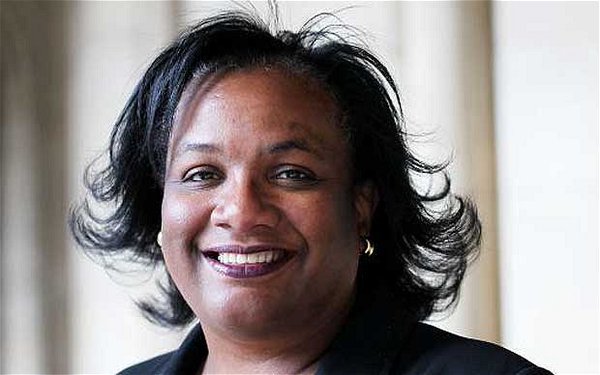
    Image of Dianne Abbot

    by Emma Bean

    The shadow home secretary experienced the vast majority of online abuse sent to women MPs, and had 10 times more abusive tweets sent to her than any other figure in the run up to the election. She also suffered eight times more abuse in the whole six month period which was analysed.

    The research, conducted by Amnesty International, looked at messages sent in the period between January 1 and June 8. In this time she received almost a third of all the abuse directed at women political figures.

    The list of the five female politicians who received the most abuse included two other Labour MPs, with Emily Thornberry, the shadow foreign secretary, and Jess Phillips, chair of the women’s PLP, coming in third and fourth respectively. Joanna Cherry, SNP MP, got the second most abuse and Anna Soubry, Conservative MP for Broxtowe and a prominent Europhile, being placed fifth in the ranking.

    However, Abbott’s level of abuse far outstrips those mentioned, with the trailblazing Hackney North MP receiving 31.6 per cent of abusive tweets, and the rest of the top five getting nearer three per cent of abusive tweets. She also received more abusive tweets than all the women in the SNP and Conservative party combined in the six month period.

    Ethnic minority women politicians, excluding Abbott, received 35 per cent more abuse than white women. Some 5.8 per cent of all tweets sent mentioning Abbott’s twitter handle were classified as abusive.

    The report found that “intersectional discrimination” meant that a figure who had more than one identity, e.g. if LGBT, BAME or disabled, meant that they were then more likely to face abuse.

    In a New Statesman article describing the report, Amnesty’s researcher in technology and human rights Azmina Dhrodia writes: “Diane Abbott standing out in our analysis is an acute example of how intersectional discrimination works. The abuse that she faces is not just sexist and misogynistic; it’s also incredibly racist.”

    “Nearly 90 years after women won the right to vote, there is a real danger that the high levels of online abuse against women MPs will have a chilling effect on women taking part in public life  —  particularly women of colour. This is not only detrimental in terms of the possible long-term effect on the representation of women in politics in the UK but also continues to deepen societal inequality between genders.”

    ©LabourList