Citing Bogus ‘Threats’ to US, Trump Expands Already Devastating Sanctions on Cuba

Spread the love

Article by Brett Wilkins republished from Common Dreams under Creative Commons (CC BY-NC-ND 3.0).
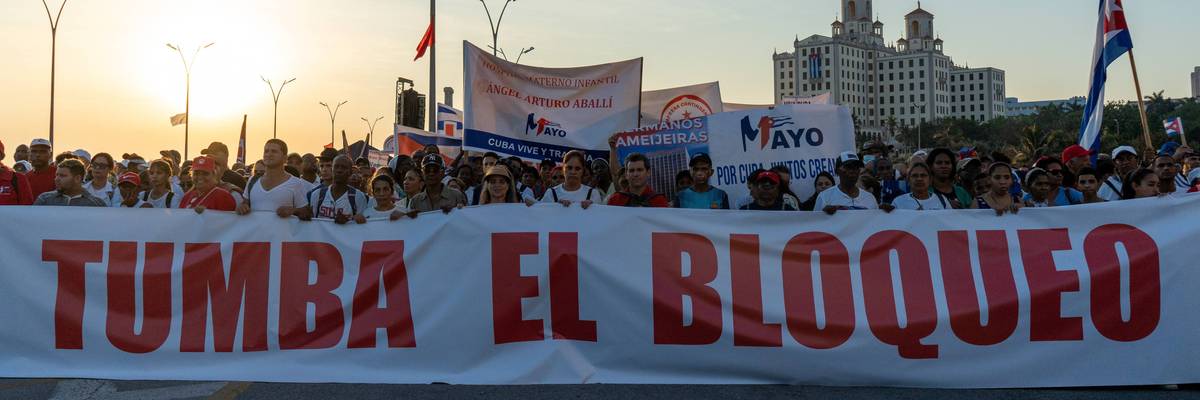
Cubans hold a banner reading, “Knock Down the Blockade” during an International Workers’ Day rally near the US Embassy in Havana on May 1, 2026. (Photo by Magdalena Chodownik/Anadolu via Getty Images)

The president’s latest aggression toward Cuba comes amid his repeated threats to “take” the island.

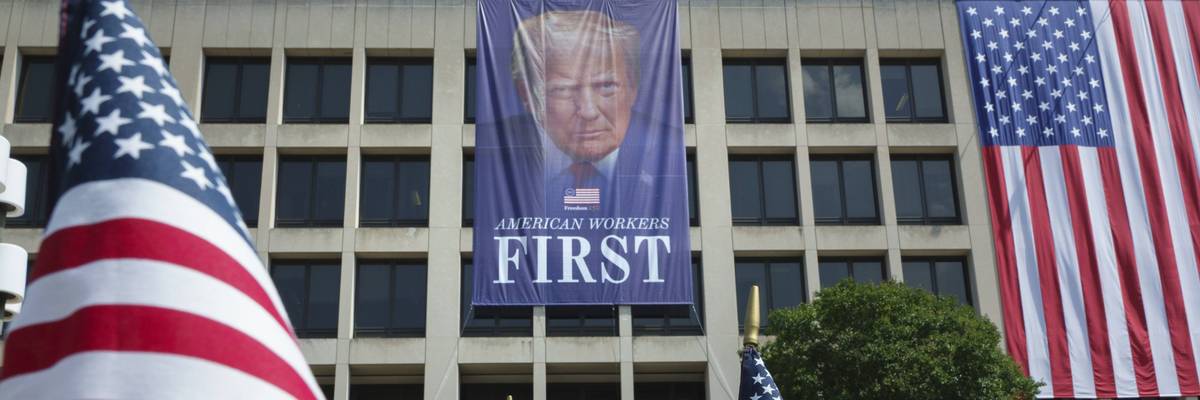
Citing Cuba’s ties with its ally Iran, President Donald Trump on Friday signed an executive order expanding the already crippling US sanctions regime against Cuban officials, as the US administration has the island in its crosshairs after ousting Venezuela’s socialist leader.

Trump’s executive order cites highly dubious “national security threats posed by the communist Cuban regime,” including Havana’s alignment “with countries and malign actors hostile to the United States.”

RECOMMENDED…

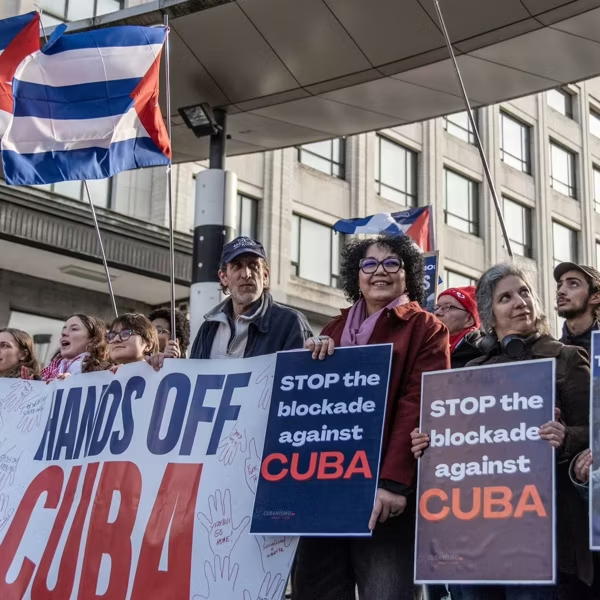
People protest against Trump aggression against Cuba with signs reading "Stop the Blockade Against Cuba"

‘This Is Insane’: Alarm Bells Follow New Report of Looming US Plan to Attack Cuba

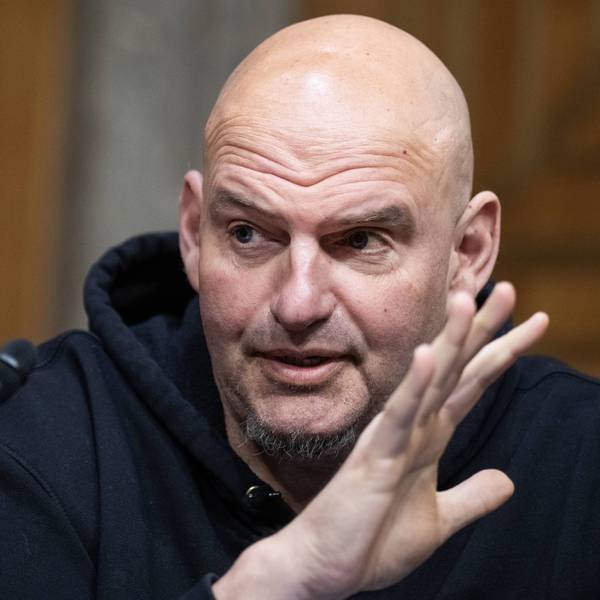
US Sen. John Fetterman in his hoodie in the Senate

Fetterman Helps GOP Senators Sink Democrat Effort to Block Trump War on Cuba

The directive “imposes new sanctions on entities, persons, or affiliates that support the Cuban regime’s security apparatus, are complicit in government corruption or serious human rights violations, or are agents, officials, or material supporters of the Cuban government,” without identifying any of the affected groups or individuals.

For 65 years, the US has imposed an economic embargo on Cuba that has adversely affected all sectors of the socialist island’s economy and severely limited Cubans’ access to basic necessities including food, fuel, healthcare, and medicines—with disastrous results. The Cuban government claims the blockade cost the country’s economy nearly $5 billion in just one 11-month period in 2022-23 alone. United Nations member states have perennially—and overwhelmingly—condemned the embargo.

The Trump administration also imposed a fuel blockade and reinstated Cuba on the US State Sponsors of Terrorism list, from which former President Joe Biden removed the country before leaving office in 2021. Cuba was initially added to the list during the Reagan administration amid a decadeslong campaign of US-backed Cuban exile terrorismfailed assassination attemptseconomic warfare, and covert operations large and small in a futile effort to overthrow the revolutionary government of longtime leader Fidel Castro.

Cuba says US-backed terrorism has killed or wounded more than 5,000 Cubans and cost its economy billions of dollars.

The Cuban government—which was celebrating International Workers’ Day on Friday—did not immediately respond to the expanded sanctions.

Experts warned that the new sanctions are worryingly broad, with Georgetown Law visiting scholar Peter Harrell writing on X that “basically any non-US person or company doing any business in/with Cuba could be sanctioned.”

Harrell noted that the edict “gives the Trump administration a fair amount of easy-to-deploy firepower to drive remaining international businesses out of Cuba.”

“The questions will be in implementation,” he added. “For example, will Trump sanction a Chinese firm installing renewable energy in Cuba?”

Trump’s edict comes months after the president ordered the invasion of Venezuela and abduction of socialist President Nicolás Maduro and amid the ongoing US-Israeli war on Iran, the 10th country bombed during the course of Trump’s two terms in office.

Trump last month declared that “we may stop by Cuba after we’re finished with this,” referring to war on Iran that’s left thousands of people dead or wounded, including hundreds of children. The president has also said that he believes he’ll “be having the honor of taking Cuba,” language echoing the 19th century US imperialists who conquered the island along with Puerto Rico, Guam, and the Philippines from Spain in another war waged on dubious pretense.

“Whether I free it, take it—I think I can do anything I want,” Trump said of the island and its 11 million inhabitants.

Article by Brett Wilkins republished from Common Dreams under Creative Commons (CC BY-NC-ND 3.0).

Orcas discuss how Trump was re-elected and him being an obviously insane, xenophobic Fascist.
Donald Fuhrump says that Amerikkka doesn't bother with crimes or charges anymore, not being 100% Amerikkkan and opposing his real estate intentions is enough.
Donald Fuhrump says that Amerikkka doesn’t bother with crimes or charges anymore, not being 100% Amerikkkan and opposing his real estate intentions is enough.
Donald Trump sings and dances, says that it's fun to kill everyone ...
Donald Trump sings and dances, says that it’s fun to kill everyone …

Continue ReadingCiting Bogus ‘Threats’ to US, Trump Expands Already Devastating Sanctions on Cuba

‘As much as the United States would wish otherwise, Cuba is not alone’

Spread the love

https://morningstaronline.co.uk/article/much-united-states-would-wish-otherwise-cuba-not-alone

 Activists wave Cuban and Palestinian flags from the vessel Maguro, arriving from Mexico with humanitarian aid as part of the “Nuestra America,” or Our America convoy, in Havana Bay, Cuba, March 24, 2026
Over 100 MPs call on PM to oppose Trump’s oil blockade on Cuba

MORE than 100 MPs have voiced “grave concern” over Donald Trump’s Cuba oil blockade, calling on PM Sir Keir Starmer to oppose the US president’s “collective punishment” of its civilian population.

Ministers were urged to reject Washington’s threat to slap tariffs on any other country that ships fuel to the island after it kidnapped Venezuelan leader Nicolas Maduro in January.

The US has blocked Venezuelan oil supplies to Cuba’s socialist government, which said last week that it had not received any ​fuel in three months. 

Your Party leader Jeremy Corbyn, Labour, SNP, Plaid Cymru, Green, SDLP, and Lib Dem MPs have now signed an early day motion by Labour MP for Montgomeryshire and Glyndwr Steve Witherden.

Mr Corbyn told the Morning Star: “The aim of the criminal and inhumane blockade by the US is clear: to starve the Cuban people into submission. They will not succeed.

“As much as the United States would wish otherwise, Cuba is not alone.”

They collectively called on the government to reject the “unjustifiable” sanctions and US claims that Cuba poses an “extraordinary” threat.

Socialist MP Richard Burgon, who was in Cuba this weekend delivering humanitarian aid with an international delegation, said: “In Cuba I saw the cruel consequences of Trump’s total ban on fuel entering the country, including its impact on the ability to provide healthcare to those in need. 

“Cutting off fuel to an entire country is an inhumane attempt by Trump to strangle the Cuban people into submission. It is illegal and it’s putting lives at risk.

“The UK rightly votes against the US blockade at the UN each year, but that must now be matched with action. It should follow Spain’s example and provide emergency humanitarian aid.”

Green Party parliamentary leader Dr Ellie Chowns said: “Trump has intensified his threats against Cuba following the collapse of the island nation’s energy grid under a US-imposed oil blockade, declaring just yesterday that he believes he will ‘take’ the country and ‘could do anything [he] want[s] with it. This cannot continue.”

Cuba Solidarity Campaign director Rob Miller said his group is delighted with the number of MPs who have signed the motion, saying: “Together they represent over seven million UK constituents. 

“We now hope the UK government will move quickly to send humanitarian support to Cuba, a country with which we have had full diplomatic and friendly relations for over 120 years.”

Original article at https://morningstaronline.co.uk/article/much-united-states-would-wish-otherwise-cuba-not-alone

Donald Fuhrump says that Amerikkka doesn't bother with crimes or charges anymore, not being 100% Amerikkkan and opposing his real estate intentions is enough.
Donald Fuhrump says that Amerikkka doesn’t bother with crimes or charges anymore, not being 100% Amerikkkan and opposing his real estate intentions is enough.
Elon Musk urges you to be a Fascist like him, says that you can ignore facts and reality then.
Orcas discuss how Trump was re-elected and him being an obviously insane, xenophobic Fascist.

Continue Reading‘As much as the United States would wish otherwise, Cuba is not alone’

For the Cuban people, surrender is not an option

Spread the love

Original article by Manolo De Los Santos republished from peoples dispatch under a Creative Commons Attribution-ShareAlike 4.0 (CC BY-SA) license.

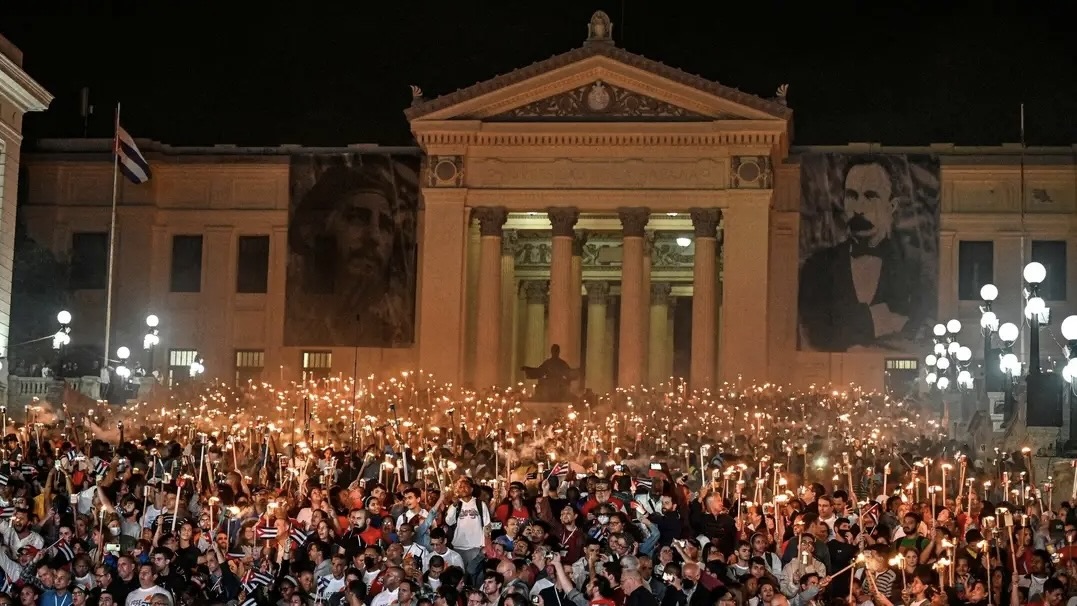
Thousands marched on January 26, 2026 in Havana, Cuba, to honor José Martí’s legacy. Photo: Progressive International

Claims by officials in Washington that “Cuba’s collapse is imminent” usually coincide with a tightening of the blockade. Yet, once again, Cubans have reaffirmed their commitment to the revolution and their creative resistance in the face of the latest US attacks.

The halls of power in Washington are echoing with a familiar, predatory chorus. Once again, the White House, various think-tank experts, and US politicians are predicting the “imminent collapse” of Cuba. This is a tune the world has heard for over sixty years, usually sung at its highest volume whenever the United States decides to tighten the economic noose around the island’s neck. However, in 2026, the rhetoric has shifted from sanctions to an overt campaign of total strangulation. Under a new executive order signed in late January, the second Trump administration has escalated the decades-long blockade into a proactive fuel blockade.

Cuban President Miguel Díaz-Canel laid bare the intended consequences in a press conference on February 5, 2026: “Not allowing a single drop of fuel to enter our country will affect transportation, food production, tourism, children’s education, and the healthcare system.” The objective is clear: to induce systemic failure, sow popular discontent, and create conditions for political destabilization. The White House rhetoric confirms this intent. Press Secretary Karoline Leavitt’s statement on the same day, that “the Cuban government is on its last leg and its country is about to collapse,” is not an analysis but public signaling, a psychological operation meant to reinforce the narrative of inevitable doom and pressure Cuban leadership into unilateral concessions.

This policy is not merely a “sanction” in the traditional sense; it is a calculated attempt to suffocate a nation by blocking every drop of fuel from reaching its shores. The administration has authorized aggressive tariffs and sanctions on any foreign country or company that dares to trade oil with the island, effectively treating Cuban territorial waters as a zone of exclusion. Since December, multiple oil tankers headed to Cuba have been seized by US naval forces in the Caribbean or forced to return to their ports of origin under threat of asset forfeiture. In direct response to this intensifying siege, Cuba has announced sweeping fuel rationing measures designed to protect essential services. The plan prioritizes fuel for healthcare, water, food production, education, public transportation, and defense, while strictly limiting sales to private drivers. To secure vital foreign currency, the tourism sector and key export industries, such as cigar production, will continue operating. Schools will maintain full in-person primary education, with hybrid systems implemented for higher levels. The leadership of the Cuban Revolution has affirmed that Cuba “will not collapse.”

To the planners in the White House, Cuba is a 67-year-old problem to be solved with starvation and darkness. But to the Cuban people, the current crisis is a continuation of a long-standing refusal to trade their sovereignty for Washington’s demands of submission.

The ghost of the “Special Period” 

To understand why the Cuban people have not descended into the chaos Washington predicted, one must look to the historical precedent of the “Special Period in Time of Peace.” Following the collapse of the Soviet Union in 1991, Cuba experienced an economic shock that would have toppled almost any other modern state. Overnight, the island lost 85% of its international trade and nearly all of its subsidized fuel imports. The resulting statistics were staggering: the Gross Domestic Product plummeted by 35%, and the daily caloric intake of the average citizen dropped from over 3,000 calories to roughly 1,800. During this era, the lights went out across the island for more than 16 hours a day, and the bicycle became the primary mode of transportation as the public transit system collapsed.

At the same time, Washington escalated its assault through the Torricelli Act (1992) and the Helms-Burton Law (1996), each tightening the noose around Cuba’s economy. However, instead of fracturing under the weight of this tightened blockade, Cubans developed “Option Zero”, a survival plan designed to keep hospitals running and children fed without any fuel, and the Cuban social fabric tightened. The government prioritized the distribution of remaining resources to the most vulnerable, ensuring that infant mortality rates remained lower than those in many parts of the United States despite the scarcity. This period proved that when a population is politically conscious of the external forces causing their suffering, they become extraordinarily resilient. The “Special Period” was not just a time of hunger; it was a period of forced innovation that gave rise to the world’s first national experiment in organic urban farming and mass-scale energy conservation.

The return of the energy crisis

The crisis of 2026 is, in many ways, a sequel to the 1990s, but with higher stakes and more advanced technological targets. The roots of the current energy shortage can be traced back to the first Trump administration’s decision in 2019 to target Cuban oil imports as a means of punishing the island for its solidarity with Venezuela. By designating Cuba as a “State Sponsor of Terrorism” and activating Title III of the Helms-Burton Act, the US successfully scared off international shipping lines and insurance companies. This was followed by a focused campaign against the PDVSA (Venezuela’s state oil company) and the shipping firms involved in the trade agreement between countries in the region known as ALBA-TCP.

By 2025, the impact on Cuba’s energy grid was catastrophic. The island’s thermal power plants, most of which were built with aging Soviet technology, were never designed to burn the heavy, sulfur-rich crude that Cuba produces domestically without constant maintenance and expensive imported additives. The lack of foreign exchange, caused by the tightening of the blockade, meant that spare parts were non-existent. By the time the 2026 fuel blockade began, the national grid was already operating at 25% below its required capacity. President Miguel Díaz-Canel has been transparent with the public, noting that without fuel, everything from the morning school bus to the refrigeration systems for the nation’s advanced biotech medicines is under constant threat, a reality that has now precipitated the stringent new rationing regime.

The threat of intervention: from Caracas to Havana

The current US stance toward Cuba cannot be viewed in isolation from its recent military interventions in the Middle East and Latin America. The “regime change” efforts in Cuba are being modeled after the maximum pressure campaigns used against Iran and the military incursions seen in Venezuela on January 3, 2026. The threat of a US military attack is no longer a rhetorical flourish used by Havana to drum up nationalism; it is a documented strategic option discussed in Washington.

The logic behind such an intervention is twofold. First, there is the ideological drive to eliminate the “contagion” of a country that questions the Monroe Doctrine and US domination in the region. Cuba’s existence serves as a reminder that sovereignty is possible even in the shadow of a superpower. Second, and more pragmatically, the US is motivated by a thirst for strategic minerals. Cuba sits on some of the world’s largest reserves of nickel and cobalt, essential components of lithium-ion batteries that power the global transition to electric vehicles and advanced weaponry. In a world where the US is scrambling to compete with China for control of the mineral and energy supply chain, a sovereign Cuba that controls its own mines is seen as an obstacle to American hegemony. If the US can force a collapse, these minerals would no longer belong to the Cuban people; they would be auctioned off to US corporations as it was before 1959.

The new resistance: extraordinary efforts in renewable energy

However, the Cuban response to this renewed strangulation is not a white flag of surrender. Recognizing that fossil fuel dependence is a vulnerability the US will always exploit, Cuba has, in recent years, launched an extraordinary national effort to transform its energy matrix. Building on this momentum, the country completed 49 new solar parks in 2025 alone. This massive undertaking added approximately 1,000 megawatts of power to the national grid, marking a 7% increase in total grid capacity and accounting for a remarkable 38% of the nation’s energy generation. By the end of March 2026, with support from China, the island is on track to add over 150 MW of renewable power to its grid through the rapid deployment of solar parks.

The strategy is clear: if the empire can shut off the oil, Cuba will harvest the sun. “The way the US energy blockade has been implemented reinforces our commitment to the renewable energy strategy,” President Miguel Díaz-Canel declared. The government has committed to a plan to generate 24% of the country’s electricity from renewable sources by 2030, with a long-term goal of achieving total energy independence. This involves not just large-scale solar farms, but the decentralization of the grid through the installation of thousands of small-scale solar panels on homes and state buildings. This “energy sovereignty” movement is the 21st-century equivalent of the 1990s urban gardens. It is a way of overcoming the US blockade by removing the very commodity, oil, that Washington uses as a leash.

The narrative of Cuba’s “imminent collapse” has been written a thousand times by people who do not understand the depth of the island’s historical memory. The 2026 fuel blockade is a brutal crime against a civilian population, designed to create the very chaos that the US media then reports on as “proof” of government failure. It is the arsonist blaming the house for being flammable. The newly imposed fuel rationing is not a sign of surrender, but a tactical maneuver of national defense, a structured effort to outlast the assault while safeguarding the pillars of Cuban society that precisely make it an alternative to the US model.

Yet, Cuba’s message to the world remains consistent. They are willing to talk and trade, but not to be owned or become a neo-colony of the United States. The story of Cuba is not one of a failed state, but of a people who have decided that the most potent fuel for their future isn’t oil, it’s the will to remain independent. As the sun rises over the new solar arrays in the Cuban countryside, it serves as a silent, glowing testament to a nation that refuses to disappear.

Manolo De Los Santos is Executive Director of The People’s Forum and a researcher at Tricontinental: Institute for Social Research. His writing appears regularly in Monthly Review, Peoples Dispatch, CounterPunch, La Jornada, and other progressive media. He coedited, most recently, Viviremos: Venezuela vs. Hybrid War (LeftWord, 2020), Comrade of the Revolution: Selected Speeches of Fidel Castro (LeftWord, 2021), and Our Own Path to Socialism: Selected Speeches of Hugo Chávez (LeftWord, 2023).

Original article by Manolo De Los Santos republished from peoples dispatch under a Creative Commons Attribution-ShareAlike 4.0 (CC BY-SA) license.

Donald Fuhrump says that Amerikkka doesn't bother with crimes or charges anymore, not being 100% Amerikkkan and opposing his real estate intentions is enough.
Donald Fuhrump says that Amerikkka doesn’t bother with crimes or charges anymore, not being 100% Amerikkkan and opposing his real estate intentions is enough.
Elon Musk urges you to be a Fascist like him, says that you can ignore facts and reality then.

Continue ReadingFor the Cuban people, surrender is not an option

Israel murders Gaza journalists Hossam Shbat, Mohammad Mansour

Spread the love

Original article by Aseel Saleh republished form peoples dispatch under a Creative Commons Attribution-ShareAlike 4.0 (CC BY-SA) license.

Attacks on journalists and hospitals continue in Gaza. Pictured here are Hossam Shabat and Mohammad Mansour who were killed on Monday, March 24 in airstrikes. Photos via X

Israel’s genocide in Gaza is in full swing as the Trump administration unleashes its ally and provides it with all the weapons it needs.

One week after the resumption of Israel’s genocidal aggression on Gaza, Netanyahu appears determined to continue on a path of massacres and devastation rather than return to negotiations to restore the ceasefire.

For almost a year and a half, using the most advanced military technology, Israel systematically targeted journalists and media workers, hospitals, and shelters full of civilians. The attacking of such “strategic” targets across Gaza by Israeli forces has resumed with the return to genocide.

Bombardment of hospitals 

The Turkish-Palestinian Friendship Hospital

On Friday, March 21, the IOF blew up the only cancer health facility in the war-torn enclave; the Turkish-Palestinian Friendship Hospital in central Gaza. The Palestinian Health Ministry in Gaza clarified that the IOF detonated the hospital after using it “as a headquarters” for its troops throughout the time they have been occupying the Netzarim Corridor, which separates the northern part of the Gaza strip from its south.

The ministry described the bombardment of the hospital as a “heinous crime” and affirmed that “this criminal behavior by the occupier is consistent with the systematic destruction of the healthcare system and is part of the ongoing genocide.”

For its part, the Turkish Foreign Ministry denounced the destruction of the hospital, which was built by Türkiye and operated by local authorities in Gaza, in a statement on Friday. The ministry said that the attack is part of Israel’s broader policy that aims at “making Gaza uninhabitable”.

“The deliberate targeting of a hospital providing healthcare services to civilians in Gaza is part of Israel’s policy to render Gaza unlivable and force the Palestinian people to displacement,” the statement said.

The ministry further urged the international community to take “firm and effective steps against Israel’s unlawful attacks and systematic state terrorism.”

Nasser Hospital

Israel’s systematic targeting of hospitals and healthcare workers has continued with a new deadly air strike that hit the surgical unit at Nasser Medical Complex in Khan Younis in Northern Gaza on Sunday, March 23.

The assault killed at least two people and injured several staff members. One of those killed was identified as Ismail Barhoum, a member of Hamas’s political bureau in the Gaza strip, who was receiving medical treatment in the surgical unit at the time of the assault. The other slain person is a 17-year-old boy.

Barhoum was reportedly admitted to Nasser hospital as he had sustained critical injuries in an Israeli airstrike around one week ago.

Many believe the attack was launched to assassinate Barhoum. However, analysts and activists suggest that it also targeted four non-Palestinian physicians, who were frequently interviewed by western media outlets about the crimes committed by the IOF that they witnessed during the genocide in Gaza.

These physicians are:

  • Dr. Mark Perlmutter
  • Dr. Feroze Sidwha
  • Dr. Tanya Haj Hassan
  • Dr. Tammy Abughnaim

They were operating for hundreds of days on ICU patients and saving lives with limited medical supplies amid daily power outages.

Analyzing the attack, the Palestinian Youth Movement highlighted the significant role these physicians would play as witnesses at future international tribunals against Israeli officials via a post published on Instagram.

“The ability of these world-class surgeons to serve as highly educated, Western-based, ‘credible’ outside witnesses to the genocide, put their lives at existential risk from the moment they began their work during the genocide. The doctors knew this, yet despite the grave danger they continued to be under, they never stopped working and serving their patients, refusing to abandon them even after Israel’s ceasefire violations that caused the all-out war to resume,” the group wrote.

Surviving the attack, American trauma surgeon Dr. Feroze Sidwha wrote on his account on X: “I was at Nasser Hospital in Gaza when it was bombed today. One of my patients, a 17-year-old boy, was killed. He would have gone home tomorrow. If I had been changing his dressings, as I planned to this evening, I probably would have been killed too. Attacking hospitals is a war crime, and it needs to stop.”

Two Palestinian journalists killed in one hour

Amidst the resumption of its genocidal aggression on the Gaza strip, Israel has resumed the systematic targeting of journalists in an attempt to silence the truth. On Monday, March 24 two Palestinian journalists were assassinated in two separate attacks in one hour.

Palestine Today correspondent Mohammad Mansour was killed in an Israeli airstrike north of Khan Younis, before another airstrike hit the car of Al Jazeera Mubasher correspondent Hossam Shabat in Salah al-Din Street in the northern Gaza strip.

Videos of Mansour’s family bidding him a farewell were posted online. The videos showed the journalist’s grief-stricken father carrying his microphone and trying to make Mansour hold it again with his lifeless hands.

“Speak up, speak up, tell the whole world about what has been happening, the image can express everything,” Mansour’s father said as he was sobbing over his son’s dead body.

Hossam Shabat’s team shared his final message via his official X account, which he seems to have requested be published after his death.

“If you’re reading this, it means I have been killed—most likely targeted—by the Israeli occupation forces. When this all began, I was only 21 years old—a college student with dreams like anyone else. For the past 18 months, I have dedicated every moment of my life to my people. I documented the horrors in northern Gaza minute by minute, determined to show the world the truth they tried to bury. I slept on pavements, in schools, in tents—anywhere I could. Each day was a battle for survival. I endured hunger for months, yet I never left my people’s side,” he wrote.

“By God, I fulfilled my duty as a journalist. I risked everything to report the truth, and now, I am finally at rest—something I haven’t known in the past 18 months. I did all this because I believe in the Palestinian cause. I believe this land is ours, and it has been the highest honor of my life to die defending it and serving its people.”

“I ask you now: do not stop speaking about Gaza. Do not let the world look away. Keep fighting, keep telling our stories—until Palestine is free,” Hossam urged the free people of the world at the end of his message.

The Committee to Protect Journalists (CPJ) condemned the assassination of the two journalists in a statement on Monday.

“CPJ is appalled that we are once again seeing Palestinians weeping over the bodies of dead journalists in Gaza,” CPJ’s Program Director Carlos Martinez de la Serna said.

“This nightmare in Gaza has to end. The international community must act fast to ensure that journalists are kept safe and hold Israel to account for the deaths of Hossam Shabat and Mohammed Mansour. Journalists are civilians and it is illegal to attack them in a war zone,” De la Serna added.

Israel appears indifferent about the lives of its captives

Since October 2023, Israeli fighter jets have been launching arbitrary shelling across the Gaza strip putting the lives of everyone there at imminent risk, including Israeli captives.

The Al-Qassam Brigades, the military wing of Hamas, released a new video on Monday showing the two Israeli captives Elkana Bohbot and Yosef Haim Ohana, speaking to the Israeli public about their suffering.

Ohana emphasized that the video was not broadcast as an act of psychological warfare on Hamas’ part, but was instead something that he and Bohbot requested from their captors to have their voices heard by their people.

The captive stressed that closing the border-crossings and blockading humanitarian aid to Gaza by their government has left them with no food to consume. He also affirmed that Hamas fighters were “keen and concerned”, providing them with everything they needed.

Ohana said that he received a “severe blow” by his government when it decided to resume its aggression on Gaza on March 18, as the IOF’s aerial attacks could have killed them, and that they saw death before their eyes.

With an obvious outrage at the Israeli government, Bohbot said: “Enough with this government silencing our voice.”

“The prisoners who were with us before and now released, give them a chance to speak and express their opinions. Stop silencing their voices. Let them Speak. Let the truth come out,” he added.

Ohana and Bohbot called on released captive Ohad Ben Ami to recount his experiences in captivity, thus, that would pressure the Israeli government for speeding up their release.

The US has “unleashed Israel” with all the weapons it needs to proceed with genocide

Confirming the US’s full support and partnership in the renewed genocide in Gaza, Deputy US Special Envoy to “the Middle East” Morgan Ortagus told Fox News on Sunday, that the Trump administration “has unleashed Israel and provided all the weapons needed to continue the war.”

While the US seeks to reaffirm its partnership in murdering Palestinians, Israel continues to commit daily massacres across the Gaza strip, raising the official death toll to over 50,021 people killed since October 2023, according to the latest report published by Palestinian health authorities.

Widely respected institutions such as The Lancet medical journal, and UN human rights bodies have asserted that the death tally is likely severely undercounted, with the actual number being up to 40% higher.

Original article by Aseel Saleh republished form peoples dispatch under a Creative Commons Attribution-ShareAlike 4.0 (CC BY-SA) license.

Neo-Fascist Climate Science Denier Donald Trump says Burn, Baby, Burn.
Elon Musk urges you to be a Fascist like him, says that you can ignore facts and reality then.
Continue ReadingIsrael murders Gaza journalists Hossam Shbat, Mohammad Mansour

100,000 protest in Brussels against Arizona coalition’s austerity and attacks on rights

Spread the love

Original article by Ana Vračar from peoples dispatch under a Creative Commons Attribution-ShareAlike 4.0 (CC BY-SA) license.

Trade union youth bloc during protest against austerity and cuts. Source: MPLP-GVHV/Facebook

A mass protest filled the streets of Brussels, rejecting the Arizona coalition’s plans to attack social and labor rights

100,000 people, led by trade unions, took to the streets of Brussels on Thursday, February 13, to protest the anti-worker policies of the newly appointed Arizona coalition government. The demonstrators demanded respect for labor rights, including pension policies that ensure dignified lives, as well as the protection of the right to protest. They called for a society built on solidarity, peace, and social progress, rejecting the “every-man-for-himself” mentality promoted by the government.

Workers who joined the protest expressed their fears of losing their livelihoods under the new administration but also spoke of the inspiration they felt in standing together. “It’s incredible to see so many people—firefighters, soldiers, childcare workers, warehouse workers,” an Industeel worker told the Workers’ Party of Belgium (PTB-PVDA) during the protest. “I even ran into one of my old teachers who is now retired. I hadn’t seen him in years.”

If implemented, the government’s program is expected to deal serious blows to the working class. Planned changes to the pension system would force many to work longer, including in physically demanding sectors like construction and healthcare, where exhaustion takes an early toll. At the same time, protections in the workplace would be reduced, including through the liberalization of night work and overtime, while social services crucial to workers’ well-being would face severe cuts.

Read more: Belgium’s Arizona coalition threatens more austerity and attacks on civil rights

According to a brief published by Medics for the People (MPLP-GVHV), healthcare services are projected to suffer half a billion euros in losses compared to earlier plans—and approximately 1.5 billion euros less than what is actually needed. This is despite claims from the governing majority that healthcare funding will remain stable or increase. The cuts will undoubtedly impact both workers and patients. Healthcare staff, already stretched to their limits, will face further strain, while patients will experience declining service quality and accessibility. Similar repercussions are expected across other sectors, while the wealthiest will remain unaffected.

Another major shift outlined by the Arizona government targets trade unions. Under the pretense of ensuring accountability for trade union actions—framed as preventing “economic damage” by the administration—the government seeks to weaken organized labor. “The aim is for trade unions to be held liable for any economic impact arising from their actions, forcing them into costly and time-consuming legal battles,” the PTB-PVDA stated in its analysis. “This way, unions will have less money and time to engage with workers.”

These attacks on labor rights come as no surprise, given the widespread opposition workers across Belgium have already voiced against Bart De Wever’s cabinet. The protests have been supported by collectives of health and education workers, international solidarity groups, civil society organizations, and youth networks—all of whom expect to bear the burden of the reforms. The administration is also planning to limit public dissent. “To push through its plan for social destruction, the Arizona government is launching an unprecedented attack on democratic rights in Belgium,” PTB-PVDA warned. “The objective is clear: to weaken and silence any opposition.”

However, social movements are ready to fight back. Following this week’s protest, they have already announced new actions, including mobilizations on March 8, International Working Women’s Day, and a general strike on March 31.

Original article by Ana Vračar from peoples dispatch under a Creative Commons Attribution-ShareAlike 4.0 (CC BY-SA) license.

Continue Reading100,000 protest in Brussels against Arizona coalition’s austerity and attacks on rights