This work by Middle East Monitor is licensed under a Creative Commons Attribution-NonCommercial-ShareAlike 4.0 International License.
Pro-Palestinian demonstrators gather outside the United Nations headquarters, in front of the U.S. Mission to the UN, during an emergency picket titled “Hands off Gaza: Reject U.S.-Israeli Occupation,” in New York City, United States, on November 17, 2025. [Selçuk Acar – Anadolu Agency]
The Euro-Mediterranean Human Rights Monitor has accused the United States of providing political cover that allows Israel to perpetuate genocide in the Gaza Strip and impose a “slow death” on the civilian population.
In a statement published on Sunday, the Geneva-based organisation said US support has enabled Israel to maintain the status quo in Gaza, despite the catastrophic humanitarian situation. It argued that Washington has effectively made any progress towards a ceasefire conditional on the return of the last body from Gaza, a position the group described as “shameful complicity” in ongoing crimes.
The Monitor said such US-backed conditions contribute directly to continued ceasefire violations, the sustained siege, mass displacement of civilians, and the destruction of what remains of homes and livelihoods across the Gaza Strip.
It stressed that “the fate of more than two million people in Gaza should never be tied to political or military conditions that may be difficult, or even impossible, to fulfil on the ground,” adding that fundamental human rights must be guaranteed “immediately and unconditionally”.
The organisation said the scale of devastation in Gaza, combined with the systematic destruction of search-and-rescue equipment and emergency vehicles, has made fulfilment of Israeli conditions for progress on the ceasefire extremely difficult. It said these conditions are being used as a pretext to prolong the siege and deepen humanitarian suffering.
The Monitor added that US support for Israel in this context reinforces an illegitimate conflation between negotiation processes and guaranteed human rights. It said such rights must be implemented without conditions, compromises or political exploitation, regardless of the circumstances.
This work by Middle East Monitor is licensed under a Creative Commons Attribution-NonCommercial-ShareAlike 4.0 International License.
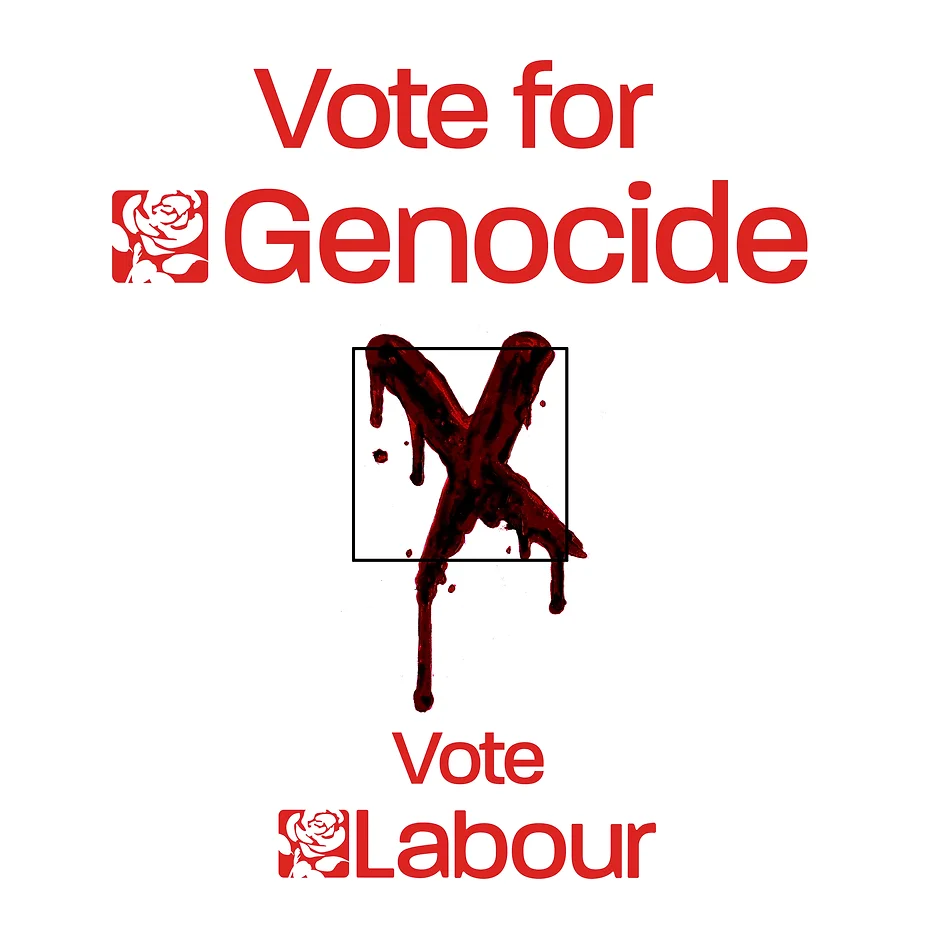
Vote Labour for Genocide.Keir Starmer objects to criticism of the IDF. He asks how could anyone object to them starving people to death, forced marches like the Nazis did, bombing Gaza’s hospitals and universities, mass-murdering journalists, healthworkers and starving people queuing for food, killing and raping prisoners and murdering children. He calls for people to stop obstructing his genocide for Israel.Orcas discuss Genocide-supporting and complicit Zionists. Donald Trump, Keith Starmer, David Lammy, Rachel Reeves, Angela Rayner and Wes Streeting are acknowledged as evil genocide-complicit and supporting cnuts.
Donald Fuhrump says that Amerikkka doesn’t bother with crimes or charges anymore, not being 100% Amerikkkan and opposing his real estate intentions is enough.
There are many facets or aspects to Fascism: racist ideology; disregard and disdain for justice, human rights and the rule of law; what ‘Il Duce’ Benito Mussolini termed corporatism, “Fascism should more appropriately be called Corporatism because it is a merger of state and corporate power.”
Xenophobe President Donald Trump often demonstrates racism and a disdain for due process, democracy, human rights and the law .
Deporting Venezuelans to San Salvador’s CECOT prison.
Deploying National Guard and ICE in US cities. “Everyday is Halloween.”
Murdering fishermen
Project 2025 pursues a huge corparist agenda, hugely extending deregulation for the benefit of unaccountable corporations. Trump pursued huge corporate support for his reelection particularly from the fossil fuel industry. Now he’s intending to invade Venezuela for “all that oil.”
Demented assole Donald Trump urges you to be a Climate Science denier like him. He says that he makes millions and millions for destroying the planet, Burn, Baby, Burn, Flood, Baby, Flood.
When discussing Trump it is worth considering whether his obvious prejudices and limited abilities are further affected by senility. I suggest that senior officers of the wider US administration have due regard for other demands and obligations on them.
Orcas discuss how Trump was re-elected and him being an obviously insane, xenophobic Fascist.
This work by Eko Ernada is republished from Middle East Monitor under a Creative Commons Attribution-NonCommercial-ShareAlike 4.0 International License.
Volunteers organize an event in the Jawazat area of western Gaza City to entertain children and help them momentarily escape the effects of war through various performances and games, on November 28, 2025. [Khames Alrefi – Anadolu Agency]
Human Rights Day, commemorated annually on 10 December, is intended to reaffirm the principles of dignity, equality, and universal protection enshrined in the 1948 Universal Declaration of Human Rights (UDHR). Yet in the age of Gaza, these principles ring hollow. The world marks Human Rights Day with speeches and ceremonies, even as an entire civilian population endures bombardment, displacement, starvation, and the collapse of basic infrastructure—with almost complete impunity.
Gaza has become the starkest mirror of our time. It reveals a world in which “universal” rights are selectively defended, in which civilian lives can be extinguished during declared humanitarian pauses, and in which the international system proves unable—or unwilling—to enforce its own norms. The tragedy is not only that Gaza burns, but that it burns while the world insists it still believes in human rights.
The bitter paradox of Gaza is that even a “ceasefire” no longer guarantees safety. Israel announces pauses in fighting, yet strikes hospitals, refugee shelters, and residential blocks hours later. These are not accidents or isolated incidents; they signal a global shift. We live in an era where restraint has eroded, legality has weakened, and the protection of civilians has become politically negotiable. Each broken ceasefire broadcasts a dangerous message: the laws of war no longer function as limits for those powerful enough to ignore them.
Political theorist Carl Schmitt once argued that the sovereign is the one who decides the exception. Israel’s conduct in Gaza reflects this logic with unsettling clarity. By invoking “self-defence” without temporal or ethical boundaries, it asserts the authority to determine when international law applies and when it can be suspended. This produces a permanent state of exception—an elastic zone where lethal force can be justified regardless of circumstances, even during declared humanitarian pauses.
The post–World War II international order, built on the promise that war would be limited and civilians protected, now appears fragile and deeply inconsistent. The UN Charter and Geneva Conventions were meant to bind all states equally. Gaza shows that they do not. Instead, the enforcement of international law has become hierarchical and contingent on geopolitics rather than principles. Human Rights Day, intended as a celebration of universality, arrives as a glaring reminder of selective morality.
The double standards reveal themselves with painful clarity. Violations of ceasefires in Ukraine generate swift Western condemnation and calls for accountability. When similar violations occur in Gaza, they are reframed as “security measures,” “precision targeting,” or unfortunate collateral damage. This asymmetry destroys the credibility of the so-called “rules-based order” and reduces human rights to political rhetoric. It exposes a disturbing truth: rights are vigorously defended for some populations and quietly disregarded for others.
Israel’s repeated breaches of truces must also be understood as a philosophical act. Giorgio Agamben’s idea of the state of exception—a space where the law is suspended while still invoked to legitimise violence—describes Gaza with eerie accuracy. Ceasefires are transformed from humanitarian obligations into strategic intervals: time to reposition forces, tighten control, and resume bombardment. The truce becomes a tool of war rather than a reprieve from it.
Layered onto this political and legal impunity is a new technological dimension of violence. Israel’s military operations increasingly rely on AI-assisted targeting, biometric surveillance, predictive analytics, and real-time data extracted from Palestinians. Warfare is merging with digital governance; civilian life becomes a set of data points, and killing becomes “efficient.” Hannah Arendt’s “banality of evil” has evolved into a digital form—violence rendered algorithmic, bureaucratic, and shrouded in technological inevitability.
This raises a profound question for Human Rights Day: can human rights survive in a world where death can be administered through algorithms, where narratives are weaponised globally, and where geopolitics shields one state from accountability? Gaza suggests that without radical change, the answer may be no.
The UDHR proclaims the right to life, dignity, medical care, protection from collective punishment, and freedom from arbitrary violence. Yet in Gaza, families are bombed in their homes, displaced repeatedly under fire, denied water and electricity, and deprived of medical treatment even inside hospitals. These are not mere violations—they are the unravelling of the moral foundation on which Human Rights Day rests.
The crisis is not confined to Gaza. The collapse of enforcement in one place accelerates the decay of norms everywhere. When international law becomes optional for one state, it effectively becomes optional for all. The precedent now being set—that mass civilian casualties can be justified through political alliances—will reverberate globally. Other states will follow the model of impunity, confident that geopolitical alignment can shield them from scrutiny.
The Middle East has already begun to absorb the consequences. Across the region, the publics witness the destruction in Gaza with a sense of moral injury and political disillusionment. Trust in the international system—already strained by decades of selective intervention and unfulfilled resolutions—has further eroded. The perceived hypocrisy of global powers deepens instability and fuels the belief that justice cannot be obtained through institutions supposedly designed to deliver it.
Human Rights Day, in this context, risks becoming an empty ritual. States will issue statements praising the UDHR while declining to defend its principles in practice. International organisations will call for accountability, yet they are structurally unable to enforce it. And global powers will continue to speak the language of human rights while acting in ways that betray them.
In the age of Gaza, the meaning of Human Rights Day must be re-examined. It cannot remain a commemoration of ideals disconnected from reality. It must become a call to confront the political, legal, and technological structures that have allowed rights to erode so dramatically. That means addressing the paralysis of the UN Security Council, the political shielding of certain states, and the growing use of digital systems that dehumanise the populations they surveil.
Ultimately, the question for this Human Rights Day is not whether Israel has crossed the limits of lawful conduct. That question has been answered repeatedly, with every bomb dropped during a ceasefire, every hospital struck, and every civilian family buried. The real question is whether humanity still believes that limits must exist at all. If the world continues to tolerate the destruction of Gaza under the language of security and self-defence, then universality—the core promise of human rights—will not survive.
In Gaza, a city burns. And with it burns the credibility of the global human rights order. Whether Human Rights Day remains meaningful or becomes mere symbolism will depend on how the world chooses to respond to this moment.
The views expressed in this article belong to the author and do not necessarily reflect the editorial policy of Middle East Monitor.
Keir Starmer objects to criticism of the IDF. He asks how could anyone object to them starving people to death, forced marches like the Nazis did, bombing Gaza’s hospitals and universities, mass-murdering journalists, healthworkers and starving people queuing for food, killing and raping prisoners and murdering children. He calls for people to stop obstructing his genocide for Israel.Orcas discuss Genocide-supporting and complicit Zionists. Donald Trump, Keith Starmer, David Lammy, Rachel Reeves, Angela Rayner and Wes Streeting are acknowledged as evil genocide-complicit and supporting cnuts.Genocide denier and Current UK Prime Minister Keir Starmer is quoted that he supports Zionism without qualification. He also confirms that UK air force support has been essential in Israel’s mass-murdering genocide. Includes URLs https://www.declassifieduk.org/keir-starmers-100-spy-flights-over-gaza-in-support-of-israel/ and https://youtu.be/O74hZCKKdpA
The UK has announced much harsher rules for asylum seekers including the prospect of more deportations for those whose applications fail. The US is trebling the size of its deportation force. The EU is doubling its border budgets. And in the coming decades, hundreds of millions of people might be displaced by ecological changes.
In the face of this challenge, those countries which are most responsible for climate change have two options. Either they can share resources more equitably, and fund adaptation plans on a massive scale. Or they can prevent others from accessing resources and liveable land through physical and regulatory walls, enforced through mass deportation.
Recent events show that, faced with this choice, many governments are choosing not to share resources to anywhere near the extend needed, and are instead building higher walls.
Climate change is already making life unliveable in some parts of the world. According to a 2020 report from thinktank the Institute for Economics and Peace (IEP), 2.6 billion people face high or extreme water stress. By 2040, this may jump to 5.4 billion. Droughts, heatwaves, floods, cyclones, food shortages and related conflicts will force millions from their homes.
Most of these people will move internally within nations, but this too is likely to mean more walls and borders. In very unequal countries, internal migration has already triggered security-driven responses, with a rise in gated communities and other segregated living arrangements to keep the poorer away from the wealthy.
Many other climate migrants will be pushed to travel internationally. It’s likely their motivation will be characterised by many as economic rather than due to climate change. But it’s misleading to separate “economic” from “climate” migrants. When drought kills crops in Somalia or floods wash away farmland in Pakistan, the loss of income is inseparable from the climate shocks that caused it.
Even before the worst impacts hit, climate change is already woven into the economic pressures that push people to move – shrinking harvests, emptying wells and ruining livelihoods. The most severe climate-driven displacement is still ahead, but it has already begun.
Importantly, these pressures come with inequalities in causing climate change and bearing the costs. The richest 1% of the world’s population produces as much carbon as the poorest two-thirds, according to a study of global emissions in 2019 by Oxfam. Northern Europe and the US alone account for 92% of historical emissions.
Those who have contributed the least to climate change are the worst affected and often have the fewest resources to adapt, forcing many people to migrate.
More walls, more deportations
In this context, governments of wealthier countries are massively increasing spending on migration policing. In the US, proposed funding levels are extraordinary.
Recent legislation allocates nearly US$30 billion (£22 billion) to the Immigration and Customs Enforcement agency (Ice) for enforcement and deportation operations – roughly three times its current budget.
The US has also authorised US$45 billion for new detention centres – a 265% increase, more than the entire defence budget of Italy – and US$46.6 billion for additional border walls. Under this plan, Ice would become the largest US law enforcement agency, three times the size of the FBI.
Donald Trump’s policies can be easily labelled as the excess of one would-be autocrat, but this is a global trend across the political spectrum, albeit implemented with more acceptable language by the centre-left.
Introducing the UK Labour government’s new asylum and returns policy, Prime Minister Keir Starmer said: “We need an approach with a stronger deterrent effect and rules that are robustly enforced.” But previously-supportive MPs from his own party have warned this will mean “Ice-style raids” to deport asylum seekers.
The European Commission’s 2028–34 budget proposal earmarks €25.2 billion (£21.7 billion) for border management and €12 billion for migration, plus €11.9 billion for the Frontex border agency – more than double its current resources.
All this effectively triples current migration and border spending. In 2024, the EU ordered 453,000 non-EU nationals to leave, and actually deported 110,000 of them.
This is part of a much wider pattern, with borders today being far more militarised than at the end of the cold war. After decades of globalisation, states are now reterritorialising, building armoured fortifications against unwanted flows.
In the past two decades, more than 70 new international barriers have gone up, including Poland’s barbed-wire fence with Belarus, Greece’s steel wall on the Turkish border, Turkey’s stone wall on its Iranian border, and the new sections of the infamous wall between the US and Mexico.
Israel has built an “iron wall” around Gaza and border fences through much of the West Bank. Supposedly built to prevent Palestinians moving into Israel, these barriers have become a clear example of migration control tied to power grabs for land and resources.
A crossroads for human rights
Resource-driven migration pressures are rising just as the world is hardening its borders. In July 2025, the International Court of Justice declared that countries have a legal responsibility to address and compensate for climate change – and can be held accountable for their emissions. It is another signal that as humanity, we are at a crossroads.
The world can either prioritise universal human rights by sharing resources. Or it can attempt to protect a small, wealthy minority through walls, mass deportations and border violence on an unprecedented scale.
Keir Starmer refuses to be outcnuted by Nigel Farage’s chasing the racist bigot vote.Climate science denier Nigel Farage explains that it’s simple to blame asylum-seekers or Muslims for everything.
Orcas discuss Genocide-supporting and complicit Zionists. Donald Trump,
Keith Starmer, David Lammy, Rachel Reeves, Angela Rayner are called
evil genocide-complicit and supporting cnuts.