

This work by Middle East Monitor is licensed under a Creative Commons Attribution-NonCommercial-ShareAlike 4.0 International License.

Assets and infrastructure linked to companies owned by Elon Musk in the Gulf and Israel are being reviewed for inclusion in Iran’s list of military targets, Iranian media said on Thursday, Anadolu reports.
Fars News Agency said the move is being considered following what it described as evidence that US and Israeli forces have used infrastructure operated by Musk-linked companies, including the Starlink satellite network and the X social media company, in attacks against Iran.
Fars said previous reports had revealed military cooperation involving Musk-linked projects, including Starshield and the launch of military satellites used for earth observation, encrypted communications and secure data transmission.
READ: Iranian military source claims missiles penetrated US defences and hit majority of targets
The agency said infrastructure associated with Starlink in Israel, Qatar, Jordan, the United Arab Emirates and Oman, as well as SpaceX-related facilities and investments, were among the assets under review.
An unnamed source cited by Fars claimed that the US military, with support from companies linked to Musk, had been involved in actions, including attacks on water infrastructure in southern Iran.
The source said Iran “reserves the right to target facilities linked to holding companies under Musk’s management across the region and in Israel.”
READ: Trump says US will be hitting Iran ‘very hard tonight’
This work by Middle East Monitor is licensed under a Creative Commons Attribution-NonCommercial-ShareAlike 4.0 International License.


https://yorkshirebylines.co.uk/politics/farage-harborne-5mn-and-reforms-cryptocurrency-bill/

[which has since been withdrawn (unpublished) form Reform’s website]
The previously undisclosed £5mn ‘gift’ that Nigel Farage received from the British-born, Thailand-based cryptocurrency billionaire Christopher Harborne in mid-2024, shortly before reversing his decision not to stand as an MP in the coming general election, has certainly raised a few questions. Farage claims he was under no obligation to declare it since he wasn’t an MP at the time and, anyway, it was simply a no-strings-attached gift.
I’m sure we are all very pleased for him. Parliamentary authorities, however, are sceptical and have launched an investigation. Farage may eventually face a recall petition and a by-election if the standards commissioner hands out a lengthy suspension.
Not being a details man, he probably didn’t realise the rules require new members, within one month of their election, to declare “any registrable benefits (other than earnings) received in the 12 months before their election”. Personal gifts can be ignored, but only if they are from family members and even then, “the possible motive of the giver and the use to which the gift is to be put should be considered. If there is any doubt, the benefit should be registered”.
Registrable means anything that “might reasonably be thought by others to influence his or her actions, speeches or votes in Parliament, or actions taken in his or her capacity as a Member of Parliament”.
The money is reported to have been accompanied by a legal document declaring it to be “unconditional and irrevocable”. The Reform UK leader also suggested it was for his personal security, saying: “This money is the only way I can look after myself, and protect myself for the rest of my life”. That explanation barely survived the week with Farage later telling The Sun instead that it was “a reward for campaigning for Brexit for 27 years”.
Some, including Farage’s former colleague Ben Habib, suggest the purpose of the £5mn was to persuade Farage to stand as MP for Clacton. Farage formally announced on 23 May 2024 that he would not be a candidate in the general election that PM Rishi Sunak had announced the previous day. By 3 June, Farage had changed his mind. He would stand after all, and he was elected on 5 July with a 45% swing, the largest for any seat at a UK general election.
…
Article by Anthony Robinson continues at https://yorkshirebylines.co.uk/politics/farage-harborne-5mn-and-reforms-cryptocurrency-bill/. There is more to the story of Nigel Farage, Reform UK and cryptocurrency …

Article by Mitch Anderson republished from DeSmog.
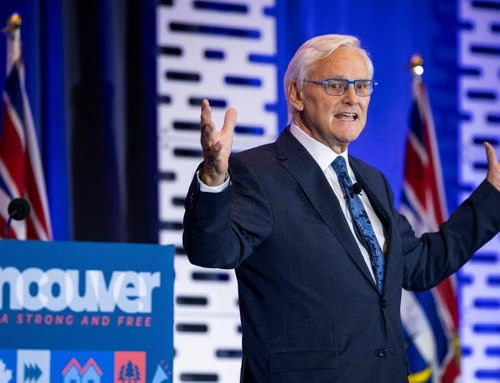
For years, Canadian officials and oil industry backers have pitched carbon capture and storage (CCS) as the solution that would allow Alberta’s oil sands — and the nation’s proposed west coast pipeline — to proceed with a lower climate impact. Now, in a speech at this year’s Canada Strong and Free Network (CSFN) conference in Vancouver, keynote speaker and former British Columbia Premier Gordon Campbell warned the costly, troubled technology has failed to deliver, undercutting a central justification for billions in public subsidies and new oil infrastructure.
This reporter was there in person at the April 24 CSFN gathering. Formerly the Manning Centre for Building Democracy, the CSFN self-describes as supporting “conservative and libertarian activists and ideas in Canada”. Imagine a MAGA-adjacent gabfest featuring speakers mostly cheerleading extractive industries or fear-mongering about First Nations rights. My already low expectations were not exceeded.
However, there was an unexpected utterance of truth from Campbell, who was the first elected leader in North America to bring in a carbon tax. And what does he think about the technology being touted to clean up ballooning emissions from the Alberta oil sands and justifying a new pipeline to the BC coast?
“It’s time to take off the blinders. Carbon capture and storage is something we’ve talked about in Canada for more than a generation, more than 25 years,” he told the conference. “We’ve invested billions of dollars trying to convince ourselves that carbon capture and storage will work. It doesn’t work. It costs money. And that money is money that we take out of other potential productive resources that we could have for Canadians.”
Campbell was certainly not suggesting that fossil fuel extraction be scaled back. His comments instead pointed out that pretending to solve emissions problems with expensive and ineffective carbon capture and storage is an unwise waste of scarce public resources. This unusual truth-bomb from a public figure stands in stark contrast to the theater playing out in Alberta and Ottawa, where CCS is being heavily promoted and backed by billions in public money as a panacea for oil sands climate costs.
Even a Pathways Alliance co-founder is now publicly coming out against the CCS project in a recent Globe and Mail op-ed, equating long-delayed efforts by the oil patch to limit its massive carbon emissions with a cash-strapped household wasting money on a vacation or meal deliveries. Is Big Oil now pivoting away from a marquee carbon capture project it never intended to build?
Meanwhile the government of Prime Minister Mark Carney claims that the $20 billion CCS project being promoted by the Pathways Alliance will make “Alberta oil among the lowest carbon intensity-produced barrels of oil in the world.” This multi-billion-dollar boondoggle has been offered as a “grand bargain” between Ottawa and Alberta to facilitate a new bitumen pipeline outlined in their now-overdue memorandum of understanding.
This confident public posturing was made despite internal briefing notes accessed by DeSmog showing Pathways had “…few front end engineering (FEED) studies done and initial cost estimates based on very limited project information”.
DeSmog previously reviewed 12 large scale CCS projects around the world and found “a litany of cost-overruns and missed targets, with a net increase in emissions.” Only 50MT of CO2 are sequestered each year by CCS, representing a mere 0.1 percent of global greenhouse gases.
A recent study published in the prestigious journal Nature showed that a shortage of suitable geological formations worldwide limit CCS to mitigating only a puny portion of dangerous emissions. And even if injecting all production emissions underground was somehow perfectly effective, it would do nothing to alleviate the other 80-90 percent of downstream tailpipe greenhouse gases.
Such shaky fundamentals have apparently had little impact on government enthusiasm for throwing billions in public money towards dubious CSS schemes. The federal government has committed to covering half of the $20 billion estimated cost of the Pathways CCS project in tax credits, and the Alberta government is pledging to shovel billions more towards the highly profitable members of the Pathways Alliance.
Pathways Alliance companies — recently renamed as the Oil Sands Alliance — include Canada Natural Resources Ltd, Cenovus, ConocoPhillips, Imperial Oil, MEG Energy, and Suncor, representing 95 percent of Alberta’s bitumen production. These giants enjoyed $37 billion in combined profit in 2023 and will reap billions more in windfall profits with oil above $100 per barrel due to Trump’s war on Iran.
A good yardstick of whether the Pathways project is credible is revealed in action, not words. Despite years of public spin and lobbying by Pathways members, the largest bitumen producers still stubbornly refuse to pony up any of their own money towards beginning construction even as Canadians struggle with historically high prices at the gas pump.
If carbon capture is so safe, why has the oil patch lobbied to wash its hands of long-term CCS liabilities? In a system unique to Alberta, the province assumes the long-term risks associated with CO2 storage once a closure certificate has been issued, a concession to the oil industry described as one of the most “generous transfer provisions” of any CCS scheme in the world.
Documents obtained by the Narwhal also revealed that Pathways Alliance president Kendall Dilling asked Ottawa for “assurance that the Pathways pipeline, hub and capture projects would not require a federal review under the Impact Assessment Act.”
In Alberta, regulators allowed the largest CCS project in the world to be broken into over 120 separate proposals to avoid triggering a provincial environmental assessment. Does this kind of maneuvering inspire confidence?
Not for local residents facing risks of a potentially deadly CO2 leak from a pipeline rupture, as occurred in Sataria, Mississippi where 49 people were hospitalized in 2020. Rural Albertans living close to the proposed 600 kilometre CO2 pipeline from the oil sands to Cold Lake have recently come together in an unlikely alliance of farmers and Indigenous leaders opposed to the Pathways project called “No CO2 Pipelines.”
“Thousands of Albertans like me live directly in this project’s ‘hazard zone’”, said Penny Fox, No CO2 Pipelines co-founder, in a press release. “In an explosion, people in our communities are facing anything from breathing issues to brain damage to instant death. So I have one question for the Prime Minister: if you wouldn’t live next to this pipeline, why should we?”
“We’re talking about hundreds of kilometers of pipeline that pass directly through areas where we live, hunt, fish and exercise our treaty rights”, Chief Allan Adam of the Athabasca Chipewyan First Nation has said. “This project endangers our people, our land, our water and wildlife. And yet there has been no consultation, no information sharing, and no formal environmental assessment.”
Gordon Campbell makes a good point. The Pathways project will cost the taxpayers billions and do nothing to contain the vast majority of ultimate oil sands emissions. Other Canadian industries have managed to cut greenhouse gases by one quarter since 2005, while bitumen producers have seen their emissions explode by 143 percent over the same period.
Why should highly profitable oil industry laggards still expect public handouts before cleaning up their own mess?
Article by Mitch Anderson republished from DeSmog.


Article by Adam Barnett and Sam Bright republished from DeSmog.
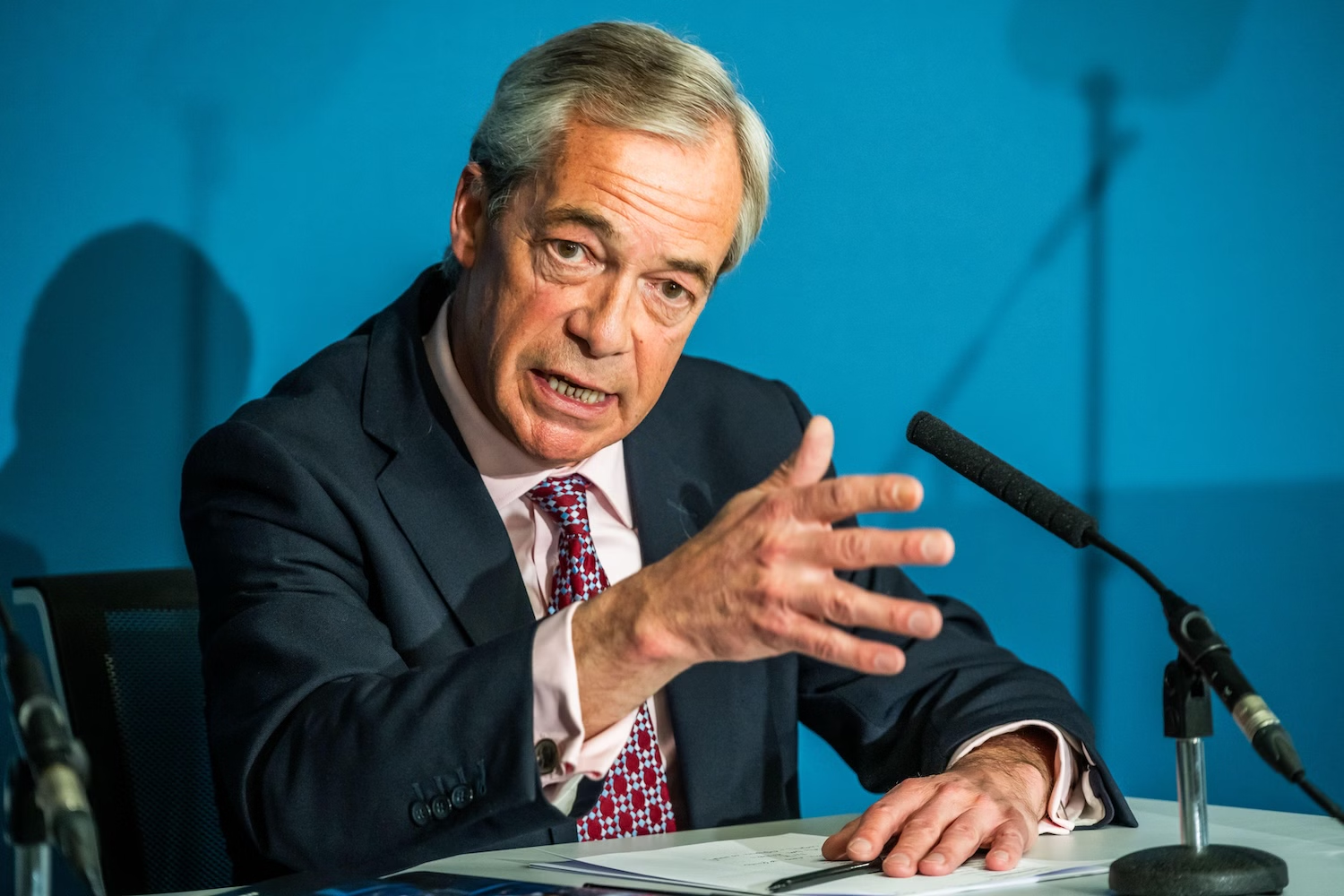
Reform UK has received £24 million from oil and gas interests, accounting for more than two thirds of its total income, DeSmog can reveal.
Led by Nigel Farage, the party is calling for new North Sea oil and gas drilling ahead of UK-wide elections in May on the ill-founded claim that it will cut energy bills.
DeSmog’s analysis reveals that 67 percent of Reform’s funding to date has come from donors with financial interests in fossil fuels, totalling more than £24 million.
A further £2.4 million has been donated by individuals who have disputed basic scientific facts about climate change.
“What these extraordinary numbers make clear is that Reform is less a political party and more a very highly paid public-facing lobby group for oil and gas interests,” said Jolyon Maugham, executive director of the Good Law Project campaign group.
The biggest chunk (£22 million) has been gifted by Thailand-based crypto billionaire Christopher Harborne, whose firm AML Global sells jet fuel, which is made from crude oil. More than half (£12 million) of this figure was donated in 2025.
Another £1.7 million has come from hedge fund boss Jeremy Hosking, whose investment firm Hosking Partners has $440.8 million (around £326.5 million) invested in oil, gas, and coal. As revealed by DeSmog, Hosking Partners has ramped up its fossil fuel investments in recent months during the war in Iran, which has caused energy shortages and windfall profits for oil giants.
Reform has received more than £2 million from its deputy leader Richard Tice, a property millionaire who has denied that man-made carbon dioxide (CO2) emissions are causing climate change – instead calling it “plant food”.
Farage has himself claimed it’s “absolutely nuts” for CO2 to be considered a pollutant.
The party has also accepted £230,000 from management consultancy First Corporate Consultants, whose owner Terence Mordaunt is a former chair of the Global Warming Policy Foundation (GWPF). The GWPF is the UK’s foremost climate denial group, and has claimed CO2 emissions are a “benefit to the planet”.
In total, Reform has received almost £26.7 million from climate deniers and fossil fuel interests since it was set up by Farage as the Brexit Party in 2019 – roughly three quarters (74 percent) of its total £36 million income.
| Christopher Harborne | Fossil fuel interest | £22,190,000 |
| Richard Tice | Climate science denier | £2,257,919 |
| Jeremy Hosking | Fossil fuel interest | £1,718,000 |
| Terence Mordaunt | Climate science denier | £230,000 |
| Ashley Mark Levett | Fossil fuel interest | £200,000 |
| Jacques J. Tohme | Fossil fuel interest | £50,000 |
| TOTAL | £26,652,919 |
Reform – which is leading UK-wide polls at 25 percent – has vowed to “scrap net zero”, end subsidies for wind and solar power, approve new oil and gas exploration, lift the ban on fracking for shale gas, and open new coal power plants.
The party has doubled down on these policies during the Iran war. Earlier this month, Tice called for the UK to extract “every last drop” of oil and gas in the North Sea, and described new drilling as “our patriotic duty”.
Green Party MP Ellie Chowns told DeSmog: “When you receive nearly two thirds of your funding from vested interests, it is no surprise you dance to their tune.
“This exposes precisely why Reform wants to promote fossil fuels and undermine the green transition to renewables that would provide us with cheaper, secure energy.”
New climate modelling has indicated that a critical Atlantic current is significantly more likely to collapse than previously thought, while scientists have warned of a “rapidly closing window” to limit temperatures rises to 1.5C and avoid the worst impacts of climate change.
In March, the UK’s independent Climate Change Committee said the entire cost of cutting emissions to net zero by 2050 would be less than a single fossil fuel price shock – two of which have been experienced by the UK in the past five years.
Meanwhile, a report by the New Economics Foundation last year concluded that Reform’s anti-renewables agenda could cost 60,000 jobs and wipe £92 billion off the economy.
“It isn’t exactly a shock to discover that the party most reliant on fossil fuel funding is also ignoring climate science and claiming that more drilling will solve all of our energy problems,” Angharad Hopkinson, political campaigner for Greenpeace UK, told DeSmog.
“But can they continue to hold that line as Trump’s war in Iran makes it more and more obvious that our dependence on oil and gas gives control over our energy prices to dictators and petrostates with no loyalty to the UK?”
Hopkinson added: “Reform is trying to walk a tightrope, presenting themselves as the party of patriotism while working to preserve foreign influence, rather than saving Britain money by switching to home-grown renewable energy and taking back control.”
Reform was approached for comment.
Reform’s biggest donor is crypto investor Harborne, whose company AML Global supplies aviation and maritime fuel to a distribution network that includes “main and regional oil companies”, according to its website.
As reported by Private Eye, the price of jet fuel has doubled since the start of the war in Iran, which would benefit Harborne’s business interests.
One of AML Global’s past clients is the U.S. military, which made payments worth £115 million to AML Global’s Hong Kong division between 2020 and January 2026. It’s unclear if the U.S. military is still a client.
Harborne and AML Global didn’t respond to DeSmog’s request for comment. In response to a similar enquiry in 2024, he posted a lengthy statement on the AML Global website, stating: “Firstly, I am not a climate science denier and secondly, I do not seek to influence any government through donations or lobbying regarding their policies on climate change or in favour of corporate interests.”
However, Harborne is by far the biggest donor to the UK’s leading anti-climate party. In addition to his £22 million in donations to Reform, The Guardian has revealed that he gave £5 million personally to Farage before the 2024 general election.
Copy: Farage’s foreign money
Infogram
DeSmog analysed Electoral Commission data going back to Reform’s founding, along with company accounts and investment registers.
Reform has also received £1.7 million from hedge fund boss Hosking, whose firm Hosking Partners has extensive fossil fuel holdings.
Its latest filings at the U.S. Securities and Exchange Commission show the hedge fund has $369.7 million (around £273.7 million) invested in oil and gas companies, and $71 million (around £52.6 million) invested in coal firms.
Hosking’s total fossil fuel investments increased by almost 54 percent in the first three months of 2026.
Hosking previously told DeSmog: “I do not have millions in fossil fuels; it is the clients of Hosking Partners who are the beneficiaries of these investments.”
Reform also received £50,000 last year from Nova Venture Holdings. The company’s sole director, Jacques J. Tohme, is an oil executive with a long history in the industry. He is founder and managing partner at Samos Energy, which finances oil and gas projects in Southeast Asia. He previously founded Tailwind Energy – later merged with Serica Energy – an oil and gas company which operated in the North Sea and which “transacted” with Shell, BP, and ExxonMobil.
In November, the party accepted a further £200,000 from Ashley Mark Levett. He currently sits on the board of Monaco-based company, Levmet – a global commodities trader whose interests include fossil fuels.
Reform has also received more than £2.5 million from donors who have promoted climate science denial.
The party’s deputy leader Tice has provided £2.3 million via his companies TISUN investments, Britain Means Business, and Leave Means Leave since the party’s founding in 2019.
Tice has described carbon dioxide as “plant food”, and told Sky News: “There’s no evidence that man-made CO2 is going to change the climate. Given that it’s gone on for millions of years, it will go on for millions of years.”
The UN’s Intergovernmental Panel on Climate Change (IPCC), the world’s leading climate science body, has said it is “unequivocal” that human influence has caused “unprecedented” global warming.
Tice has been accused of hypocrisy for calling renewable energy “a massive con” while fitting solar panels and electric vehicle charging stations on his commercial properties.
In 2023, Reform received £230,000 from First Corporate Consultants, a company owned by Terence Mordaunt, who chaired the GWPF from November 2019 to October 2021.
The GWPF has claimed that carbon dioxide has been “mercilessly demonised” when in fact it should be “two or three times” higher than current levels.
In reality, the IPCC has said CO2 emissions are causing dangerous climate change, fuelling extreme weather, crop failure, and excess deaths around the world.
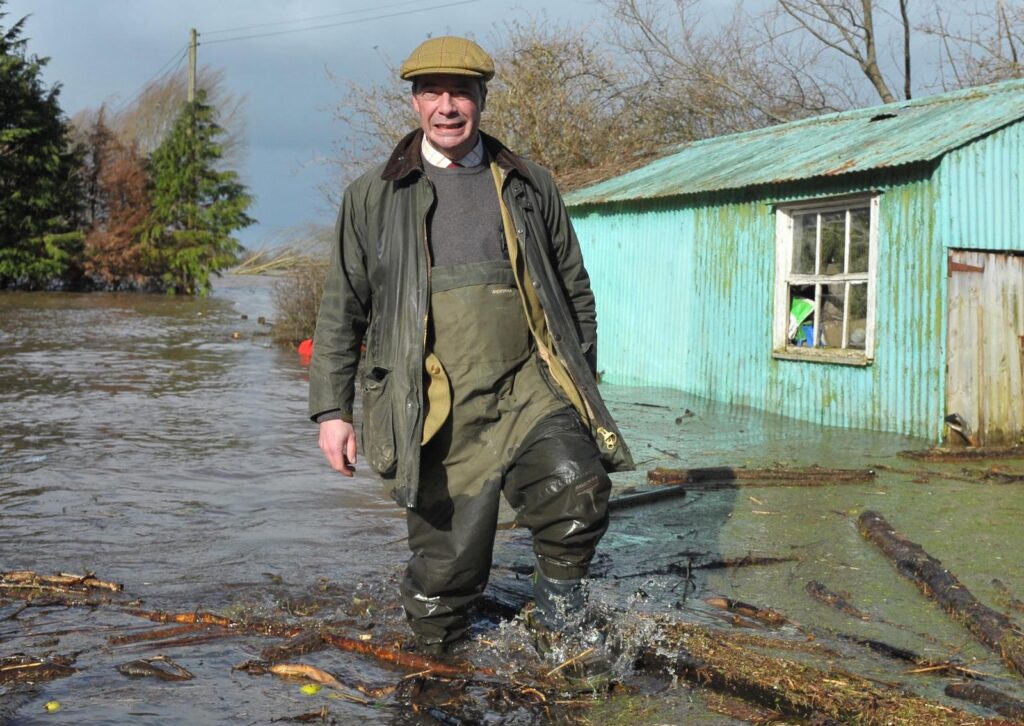
Despite their opposition to climate science and their fossil fuel donations, Reform MPs represent some of the constituencies most at risk from extreme heat and flooding, including Farage’s constituency of Clacton and Tice’s seat of Boston and Skegness.
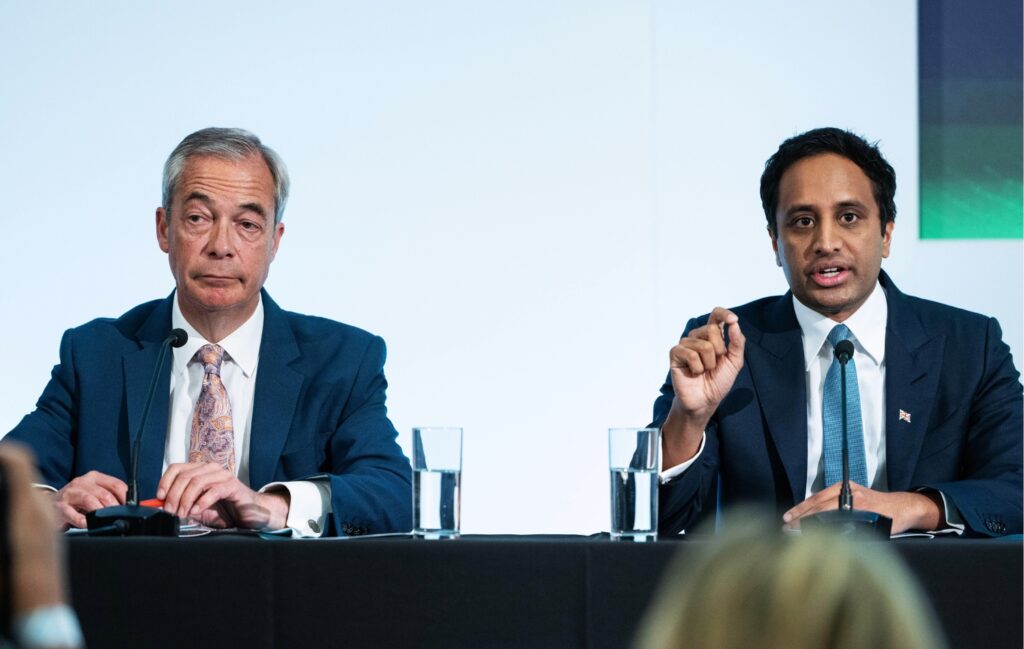
Outside the scope of this analysis is Zia Yusuf, a multi-millionaire former tech entrepreneur and Reform’s home affairs spokesman, who has donated £206,000 to the party.
While he has attacked climate action, Yusuf has not explicitly denied the role of man-made CO2 emissions to global warming.
Yusuf donated to Reform ahead of the 2024 election, after which he was appointed as the party’s chairman.
Following the election, Yusuf attacked the Labour Party’s clean energy policies, saying: “Labour champagne socialists are restricting supply of the cheapest form of energy for ordinary citizens.”
He has called net zero “religious madness” and described North Sea oil and gas as “a gift from god”. He welcomed Donald Trump’s election as U.S. president in 2024 as a rejection of “net zero fanaticism”.
The same year, Reform received £247,000 from David Lilley, a metals and mining executive and a director at the investment firm Drakewood Capital. The company holds a 20 percent stake in VSA Capital, which claims to have “a deep knowledge of mining and oil and gas” and which provides banking and brokerage services to the industry.
Lilley – an old friend of Farage – is also a director of Resolute 1850, a Reform-linked think tank rebranded as the Centre for a Better Britain. It was launched last year by right-wing academic James Orr to “support Reform with policy development, briefing and rebuttal”. Orr joined Reform as head of policy in February, having previously been a senior advisor to the party.
Reform has received a further £990,000 from property billionaire Nick Candy, who is Reform’s treasurer and who claims to have sought party funding from oil and gas executives.
As DeSmog has reported, Candy also has financial interests in the United Arab Emirates (UAE), a Gulf petrostate. In late 2024, his firm Candy Capital entered into a “strategic joint venture partnership” with Modon Holding, which is chaired by a board member of the Abu Dhabi National Oil Company (ADNOC).
Between 2023 and 2025, the party accepted £95,000 from Panther Securities, a property investment company chaired by former UKIP donor Andrew Perloff, who has blamed rising inflation on climate policies and defended climate science deniers.
In June 2022, Perloff wrote: “Whilst they [scientists], of course, could be correct that global warming is happening, I feel it is worrying that those with different opinions are often prevented from presenting them for consideration.”
Reform has also received £36,000 from Heathrow Airport, which was found to be the world’s second most carbon-emitting airport in 2019. Heathrow has also donated to Labour and the Conservatives in recent years.
Alongside these donations, Farage has received £664,000 since July 2024 from the anti-climate broadcaster GB News, which employs him as a presenter. The platform is co-owned by Paul Marshall, whose hedge fund had £1.8 billion invested in fossil fuels as of June 2023.
As revealed by DeSmog, Farage has received gifts from the UAE, and has been lavished with £150,000 worth of flights to give speeches to U.S. anti-climate groups.
Last year, Farage helped launch a UK-Europe branch of the Heartland Institute, a U.S. climate denial group which has described itself as “the world’s most prominent think tank supporting skepticism about man-made climate change”.
In total, Farage has received almost £2 million in earnings and gifts since his election in 2024, including £675,000 from foreign sources.
Article by Adam Barnett and Sam Bright republished from DeSmog.
