Article by Julia Conley republished from Common Dreams under Creative Commons (CC BY-NC-ND 3.0).
“Allowing corporations to make political payments in order to make enforcement go away is hardly a model for governing that supposedly prioritizes ‘law and order,’” said one researcher.
The Trump administration’s canceled enforcement actions against at least 205 corporations accused of wrongdoing have been cases of powerful companies “getting what they paid for,” according to a new report by government watchdog Public Citizen.
Building on an analysis it released earlier this week regarding hundreds of canceled investigations and dismissed lawsuits against companies, many of which have ties to the administration, the group on Thursday published a follow-up report detailing just how much some of the corporations paid to have their legal troubles wiped away.
RECOMMENDED…
Report Details How Trump Has Handed Get-Out-of-Jail-Free Card to Wall Street and Big Tech
Swapping One Illegal Scheme for Another, Trump Says Super PAC Cash Will Now Fund Propaganda Ads
Companies that have benefited from the cancellation of enforcement have given $210.5 million in contributions and pledges to MAGA, Inc. and other super political action committees (PACs) that worked to elect President Donald Trump and other Republicans in 2024 and are continuing to back right-wing candidates in the midterms.
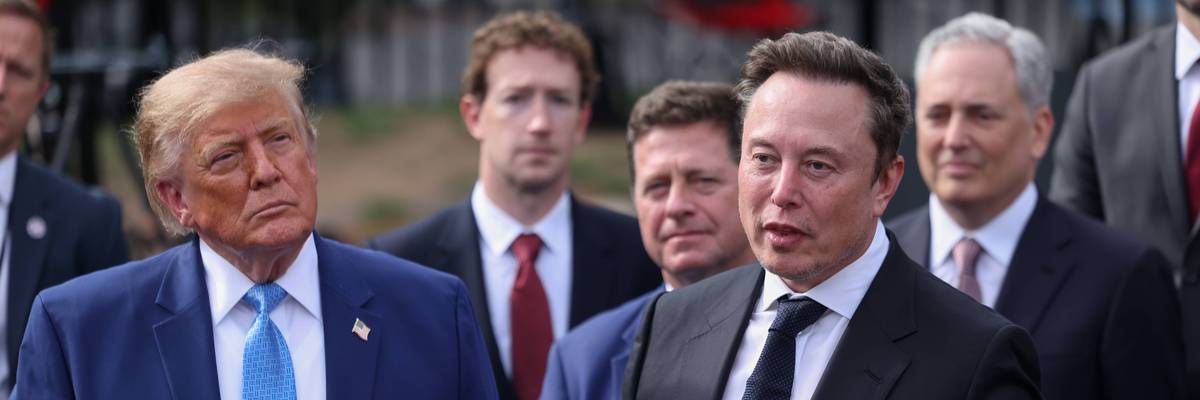
As Common Dreams reported Wednesday, SpaceX and Tesla CEO Elon Musk has benefited from at least eight canceled actions, with lawsuits filed against the former company by the Department of Justice’s Civil Rights Division and the National Labor Relations Board dismissed and an investigation into data center pollution presumably closed. Tesla has avoided three investigations that the National Highway Traffic Safety had begun and one that the Department of Labor has opened into contract compliance.
The cancellations didn’t come for free, Public Citizen said. Musk—who also served in the administration last year and is now helping with a Pentagon project—donated $5 million to MAGA, Inc. and has pledged to spend $100 million to help elect Republicans this year.
“Corporations and ultrawealthy executives with enormous financial interests before the federal government are pouring extraordinary sums into the president’s political operation,” said Public Citizen co-president Robert Weissman. “Once the check is cashed, the administration is pulling back enforcement actions meant to punish corporate misconduct. It’s a great deal for the corporate wrongdoers—at the expense of their victims and the American people.”
Crypto.org is another top beneficiary of Trump’s favorable treatment of the cryptocurrency industry, Wall Street, Big Tech, and large corporations that have pledged to help push his far-right agenda in the elections.
The Securities and Exchange Commission had been investigating allegations that the crypto platform was trading unregistered securities. The probe was abruptly closed in March 2025, after the company gave $35 million to MAGA, Inc. and $2 million to Keep America Great, another super PAC aligned with the president.
“Once the check is cashed, the administration is pulling back enforcement actions meant to punish corporate misconduct.”
Gemini, co-founded by Tyler and Cameron Winklevoss, had been facing a similar investigation, but it was also closed after the company gave $20 million to MAGA, Inc.—on top of $10 million each that the two founders personally donated.
“Allowing corporations to make political payments in order to make enforcement go away is hardly a model for governing that supposedly prioritizes ‘law and order,’” wrote Rick Claypool, research director for Public Citizen, in the report. “On the contrary, it is indicative of a profoundly unjust and arbitrary mode of enforcement organized around the principles of rewarding insiders, punishing outsiders, and concentrating power in the hands of an increasingly authoritarian president.”
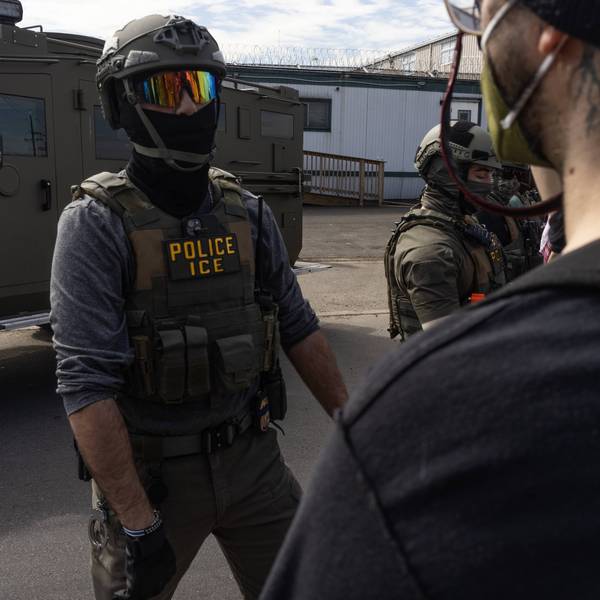
He noted that while the Trump administration has demonstrated little interest in addressing corporate wrongdoing, “enforcement personnel and resources are being channeled toward punishing immigrants, activists, and perceived political opponents.”
“Restoring the rule of law will be a challenge for the future,” wrote Claypool, “and the path forward will require a rebalance of priorities that ensures that corporations and the powerful cannot pay to protect themselves from federal enforcement that holds them accountable when they break the law.”
Article by Julia Conley republished from Common Dreams under Creative Commons (CC BY-NC-ND 3.0).
Mob rule?